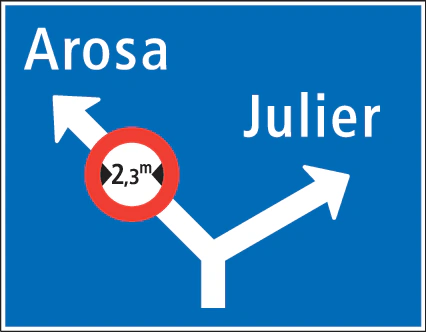
This Swiss direction sign, code 4.40, announces an upcoming junction on the main road, specifically indicating a restriction on the left route, such as a maximum width limit. It's crucial to read this sign well in advance to select the correct lane, destination, or detour without abrupt manoeuvres. Always confirm your intended path aligns with the sign's guidance and your vehicle's category.
Hide the name and meaning, look at the sign and check whether you know what it means.
This directional sign announces a junction ahead on a main road, specifically detailing a restriction for the left route. Understanding its specific meaning is crucial for safe navigation and passing your Swiss theory test, ensuring you correctly interpret traffic flow and lane requirements.
This direction sign is part of Swiss route guidance. It is meant to be read before the decision point so drivers can select a lane, exit, route number, destination, detour, or road category without sudden steering or braking. The safe response is to plan the manoeuvre calmly, confirm that the lane and vehicle category match the sign, and avoid crossing lanes late. Official catalogue code: 4.40.
The "Announcement of junction on main road with restriction for the left route (here: maximal width)" sign guides drivers toward announcement of junction on main road with restriction for the left route or explains the route arrangement ahead. Use it to choose the correct lane, destination, route number, or detour in good time. Catalogue code 4.40.
Get clear, practical answers to the most common questions about the 4.40 - Announcement of junction on main road with restriction for the left route (here: maximal width) road sign. Learn how the sign works, what rules it represents, and how it affects real driving situations. This FAQ strengthens your understanding and supports accurate decision making for the Swiss driving theory exam in Switzerland.
Sign 4.40 is a direction sign that informs drivers about an upcoming junction on the main road, highlighting a specific restriction on the left-hand route, often related to maximum width. Its purpose is to allow drivers to choose the correct lane or destination well in advance.
Upon seeing sign 4.40, you should immediately assess your route and destination. Plan your lane change or exit smoothly if the sign indicates your intended path. It's essential to confirm that your lane and vehicle are permitted on the indicated route before reaching the junction.
This means that while the junction may offer multiple routes, the path to the left has a specific limitation, most commonly a restriction on the maximum width of vehicles allowed. Other restrictions like height or weight are also possible, depending on what the sign specifically denotes or supplementary panels indicate.
A common trap is failing to notice or react to the sign in time, leading to sudden lane changes at the junction. Learners might also incorrectly assume the restriction applies to all routes, or they might not check if their vehicle's dimensions fit the indicated width limit on the left route.
No, if sign 4.40 specifically indicates a 'maximal width' restriction for the left route, and your vehicle exceeds that width, you must not use that route. You would need to choose an alternative lane or route that does not have this restriction, or a different exit if applicable.
You should only follow the arrow on sign 4.40 if it corresponds to your intended destination, route, or vehicle category. If the sign indicates a restriction on a particular route (like the left one) and your destination is that way, ensure your vehicle complies with the restriction. Otherwise, choose a different indicated route or lane.
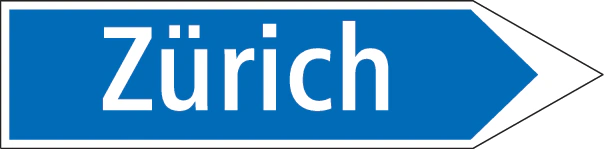
A clear reference image of the 4.40 - Announcement of junction on main road with restriction for the left route (here: maximal width) road sign used in Switzerland.
The 4.40 - Announcement of junction on main road with restriction for the left route (here: maximal width) road sign may also be known by these alternative names or terms.
The 4.40 - Announcement of junction on main road with restriction for the left route (here: maximal width) road sign is part of the Swiss Direction Signs category, which groups together signs with similar rules and functions.
Reviewing related road signs side-by-side helps cement your understanding and reduces confusion during your theory test revision. Comparing similar traffic signs and understanding their distinctions is key to accurate sign recognition and successful exam preparation.
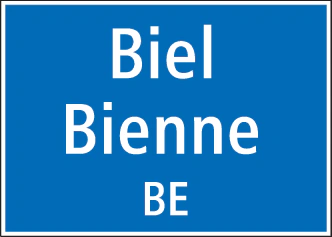
Prepare for Town Entry with the 4.27 Direction Sign
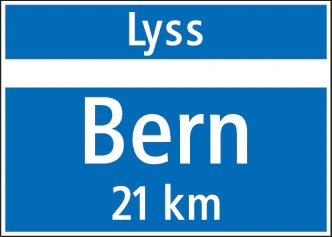
Prepare to exit town limits with the 'End of town/village on main road' sign (4.28).
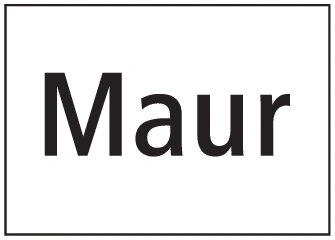
Entry of Town/Village on Minor Road Sign (4.29): Navigate Your Route Ahead
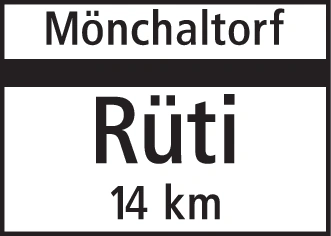
Sign 4.30: Navigating the End of a Town or Village on a Minor Road
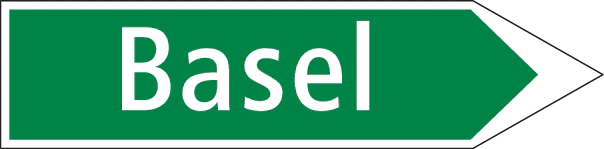
Navigating with the Expressway Route Signpost (4.31)
Prepare to choose your lane with the Signpost to Destination via Main Route (4.32).

Navigate your route with the Signpost to destination via minor route sign (4.33).

Follow This Sign: Detour to Your Destination Ahead
Mastering the meaning of specific road signs is essential for navigating Switzerland's complex infrastructure safely. These resources link visual markers to the official traffic rules and priority procedures required for your driving theory test.
Navigating Switzerland's frequent fog, snow, and heavy rain requires a clear understanding of its specific fog light rules. This article details when front fog lights can be used and the strict 50-meter visibility requirement for rear fog lights, directly referencing Swiss traffic legislation. Mastering these rules is essential for safe driving and passing your theory test, ensuring you handle adverse weather conditions correctly.
In Switzerland, every driver is required to be fully fit to operate a vehicle, and driving while fatigued is classified as a form of impaired driving. This guide explains how Swiss law, specifically Article 31 SVG, handles fatigue-related accidents and why even brief moments of microsleep can lead to criminal prosecution and license suspension. Whether you are a private driver or a professional HGV operator, understanding your responsibility to remain alert is essential for both your safety and your theory exam preparation.
Elevate Your Riding: Conquer Advanced Hazards and Secure Your Swiss Category A License.
Master the Complexities of Towing and Ensure Road Safety Under Pressure.
This direction sign is part of Swiss route guidance. It is meant to be read before the decision point so drivers can select a lane, exit, route number, destination, detour, or road category without sudden steering or braking. The safe response is to plan the manoeuvre calmly, confirm that the lane and vehicle category match the sign, and avoid crossing lanes late. Official catalogue code: 4.55.
This direction sign is part of Swiss route guidance. It is meant to be read before the decision point so drivers can select a lane, exit, route number, destination, detour, or road category without sudden steering or braking. The safe response is to plan the manoeuvre calmly, confirm that the lane and vehicle category match the sign, and avoid crossing lanes late. Official catalogue code: 4.51.2.
After reviewing the full list of Swiss road signs, delve deeper into specific categories, practice recognition with quizzes, or explore detailed explanations for each sign. Continue your comprehensive preparation for the official theory driving test.
View All Swiss Road Signs