
The 'Loose Chippings' road sign (1.12) is a crucial advance warning sign in Switzerland. It alerts drivers to a hazard ahead, such as gravel or small stones on the road surface, which can reduce tyre grip. Seeing this sign means you should proactively reduce your speed, increase your following distance, and be ready to adjust your driving before reaching the actual danger zone, ensuring a safer journey and better control.
This Swiss warning sign alerts you to upcoming loose chippings, a hazard requiring immediate speed and distance adjustment. Mastering this road sign meaning is crucial for your theory test revision and safe driving in Switzerland.
This warning sign is used as an early planning cue, not as a last-second prompt. On Swiss roads it appears before the relevant hazard so the driver can adjust speed, following distance, lane position, and observation before the situation becomes demanding. In theory training, the expected answer should connect the sign with a concrete behaviour change: anticipate the hazard, keep control, and avoid overtaking or sudden manoeuvres where the warning reduces the safety margin. Official catalogue code: 1.12.
The "Loose chippings" sign is an advance hazard warning. It gives the driver time to lower speed if needed, widen observation, and prepare for the signed hazard before reaching the danger point. Catalogue code 1.12.
Get clear, practical answers to the most common questions about the 1.12 - Loose chippings road sign. Learn how the sign works, what rules it represents, and how it affects real driving situations. This FAQ strengthens your understanding and supports accurate decision making for the Swiss driving theory exam in Switzerland.
The 1.12 'Loose Chippings' sign is an advance warning. It alerts you to a stretch of road where there may be loose stones or gravel, which can affect your vehicle's grip and steering. You should anticipate this hazard by reducing speed and widening your observation.
When you encounter the 1.12 'Loose Chippings' sign, your primary action is to prepare for reduced grip. This involves early speed reduction, increasing the distance to the vehicle in front, and avoiding sudden manoeuvres like overtaking or sharp steering. This allows you to maintain control and safety.
The sign is designed as an early planning cue. It gives you sufficient time to adjust your driving behaviour – speed, lane position, and observation – *before* you reach the area with loose chippings. This proactive approach is key to safe driving, especially on Swiss roads where conditions can change rapidly.
Yes, you should avoid overtaking or making abrupt lane changes when the 'Loose Chippings' sign is displayed. These actions can be dangerous due to reduced grip. Also, don't ignore the warning; react to it promptly rather than waiting until you are directly at the hazard.
Loose chippings significantly reduce the traction between your tyres and the road surface. This means your braking distance will increase, and your steering will be less responsive. Be particularly cautious if you need to brake, steer, or accelerate suddenly, as these actions can easily lead to skidding.
Theory exams will test your understanding of this sign's purpose as an advance warning. Expect questions asking about the correct reaction, such as reducing speed *before* the hazard and maintaining a safe distance. Misinterpreting this sign or failing to react proactively are common exam pitfalls.
A clear reference image of the 1.12 - Loose chippings road sign used in Switzerland.
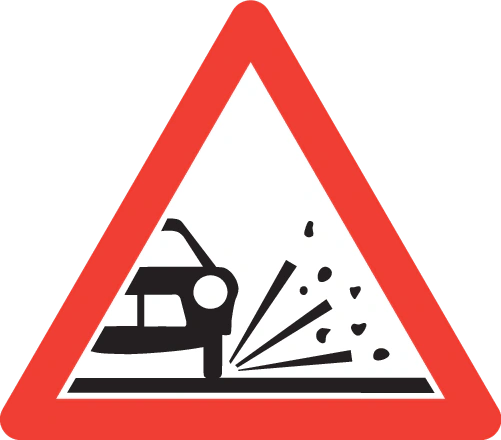
The 1.12 - Loose chippings road sign may also be known by these alternative names or terms.
The 1.12 - Loose chippings road sign is part of the Swiss Warning Signs category, which groups together signs with similar rules and functions.
By reviewing related road signs, you reinforce your learning and improve your ability to distinguish between similar warnings. This comparative approach to theory test revision sharpens your sign recognition and helps you make safer decisions on Swiss roads.

Understand the "Bend to Right" warning sign (1.01) and how to react safely.

Prepare for the upcoming bend to the left with this advance warning sign.

Prepare for a double bend starting to the right with this advance warning sign.

Prepare for a Double Bend, Starting with a Left Turn
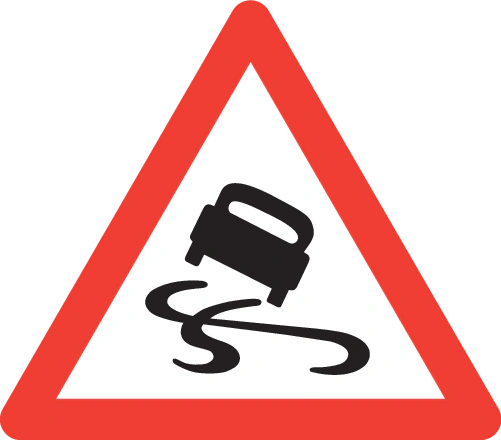
Prepare for reduced grip with the Slippery Road warning sign (1.05).
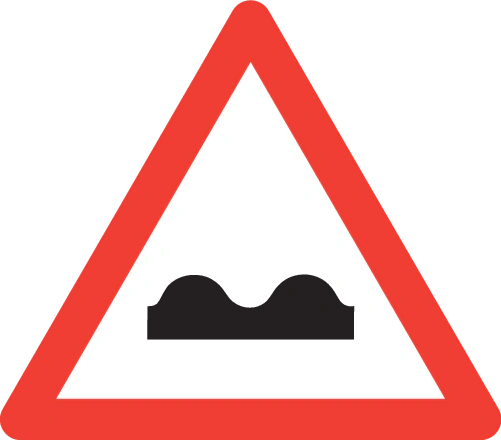
Prepare for an Uneven Road Surface Ahead with the 1.06 Warning Sign
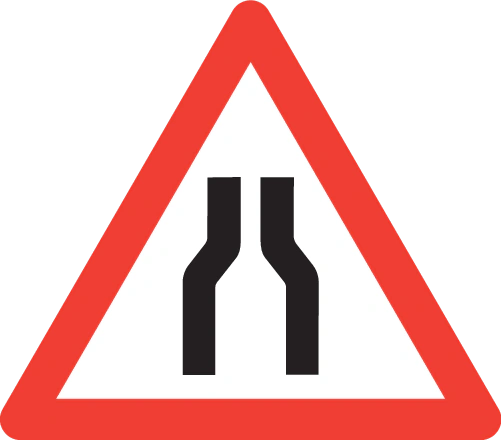
Prepare for a road that narrows from both sides with this advance warning sign.
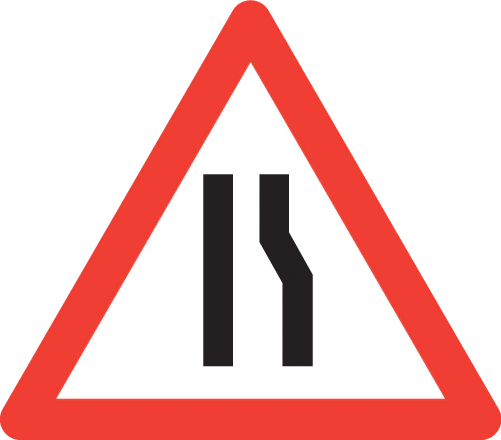
Prepare for a narrowing road ahead with the "Road Narrows on Right" warning sign (1.08).
Mastering the meaning of specific road signs is essential for navigating Switzerland's complex infrastructure safely. These resources link visual markers to the official traffic rules and priority procedures required for your driving theory test.
Understanding Switzerland's strict parking regulations is critical for both the theoretical exam and everyday driving. This article breaks down how to navigate blue and white zones, explains when and how to display a parking disc, and clarifies the legal significance of yellow road markings. Following these rules will help you avoid common pitfalls, such as improper disc settings or unauthorized parking in restricted areas.
Unravel the Toughest Swiss Traffic Scenarios and Avoid Common Exam Mistakes.
On Swiss motorways, the hard shoulder is strictly reserved for emergencies and breakdown situations and is never permitted as a general driving lane. This guide outlines the legal requirements for keeping the Pannenstreifen clear during congestion, how it functions alongside the emergency corridor (Rettungsgasse), and the potential penalties for unauthorized use. Mastering these rules is essential for both your safety on the road and success in the Swiss driving theory exam.
Recognise Key Swiss Road Signs at a Glance and Drive Confidently
This warning sign is used as an early planning cue, not as a last-second prompt. On Swiss roads it appears before the relevant hazard so the driver can adjust speed, following distance, lane position, and observation before the situation becomes demanding. In theory training, the expected answer should connect the sign with a concrete behaviour change: anticipate the hazard, keep control, and avoid overtaking or sudden manoeuvres where the warning reduces the safety margin. Official catalogue code: 1.15.
This warning sign is used as an early planning cue, not as a last-second prompt. On Swiss roads it appears before the relevant hazard so the driver can adjust speed, following distance, lane position, and observation before the situation becomes demanding. In theory training, the expected answer should connect the sign with a concrete behaviour change: anticipate the hazard, keep control, and avoid overtaking or sudden manoeuvres where the warning reduces the safety margin. Official catalogue code: 1.16.
After reviewing the full list of Swiss road signs, delve deeper into specific categories, practice recognition with quizzes, or explore detailed explanations for each sign. Continue your comprehensive preparation for the official theory driving test.
View All Swiss Road Signs