
Road work zones are active areas where construction, maintenance, or repair activities are taking place on or near the roadway. These temporary environments introduce altered traffic flow, reduced speed limits, and the presence of workers or heavy equipment. As a driver in Switzerland, it is crucial to understand and adhere to special regulations and exercise extreme caution to ensure everyone's safety.
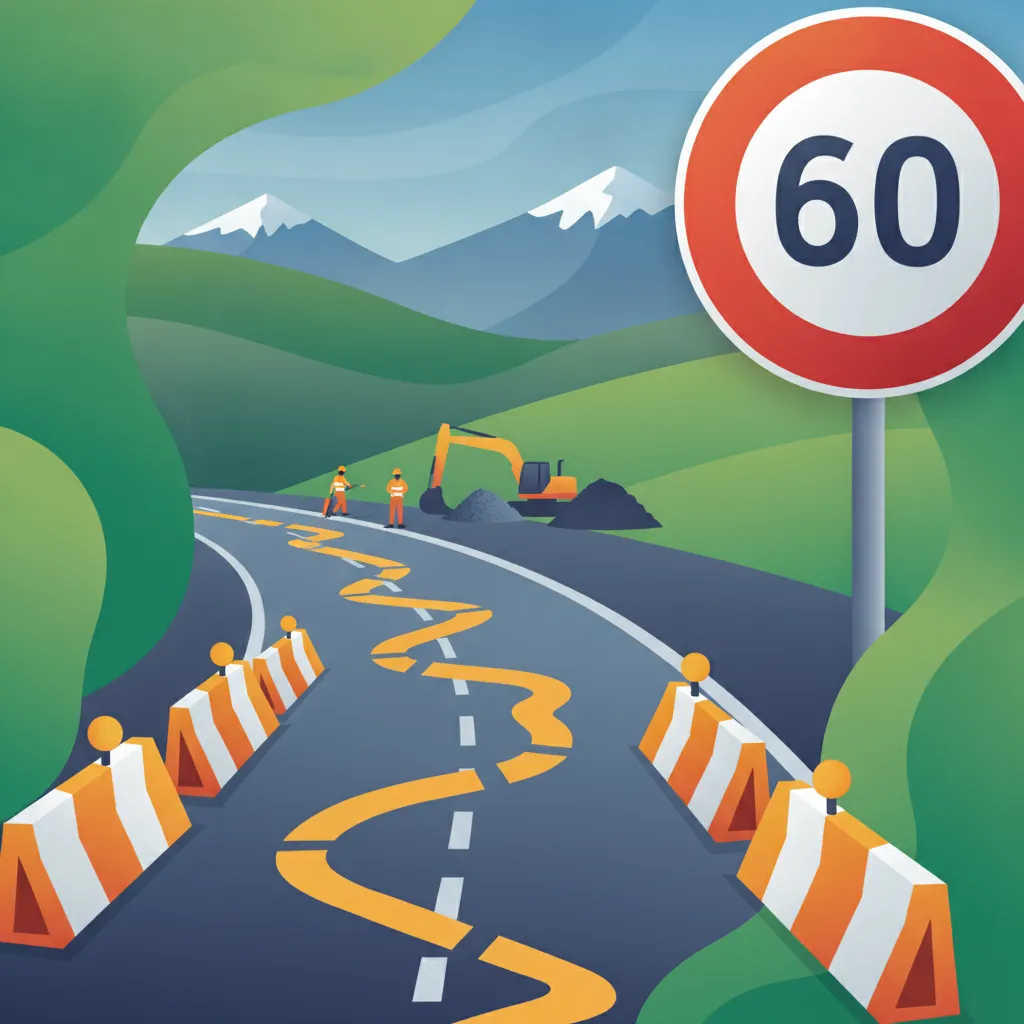
Theory topic content overview
Read the full theory topic guide for Road Work Zone Rules with structured, easy-to-scan content built for learners in Switzerland. This detailed section explains the exact rule, meaning, traffic context, comparison points, and exam logic behind this Swiss driving theory topic so you can study faster, understand the concept more clearly, and avoid common interpretation mistakes on the theory test.
Road work zones, often marked by the signal "Baustelle" (1.14), are temporary sections of the road where maintenance, construction, or repair activities are actively underway. These areas are dynamic and unpredictable, fundamentally altering the usual driving environment. In Switzerland, with its extensive network of motorways ("Autobahnen"), national roads ("Nationalstrassen"), and intricate urban infrastructure, encountering such zones is a frequent occurrence. Mastering the rules and behaviors required for driving safely through them is not only crucial for your driving theory exam but also for everyday safety on Swiss roads.
The presence of road work zones introduces several layers of risk not typically found on undisturbed roadways. For drivers in Switzerland, understanding these risks and adapting accordingly is paramount:
Safe driving through road work zones requires a proactive and cautious approach. Here are the key principles:
The Swiss approach to road work zones emphasizes clarity and safety, reflected in its regulations and signage:
Learners and even experienced drivers often make specific errors when driving through road work zones:
When you encounter a road work zone in Switzerland, remember these three core principles: Anticipate, Adapt, and Prioritize Safety.
Always apply the Reissverschlussprinzip at merge points and assume that workers might make unexpected movements. These habits will ensure you navigate road work zones safely and confidently, both in your driving exam and on the road.
Driving in Swiss road work zones requires heightened alertness due to altered road conditions, reduced lane widths, and the presence of workers and equipment. Key rules include adhering to temporary speed limits, following yellow-orange markings that override white ones, and applying the zipper principle at merge points to ensure smooth traffic flow. The Baustelle warning sign (signal 1.14) signals upcoming work zones, allowing drivers to prepare by scanning ahead and adjusting speed and following distance. Exam questions frequently test knowledge of temporary signage, marking hierarchy, and the zipper principle—mastering these ensures both exam success and safe real-world driving.
A short set of high-value points that capture the most important ideas from this theory explanation.
Yellow-orange temporary road markings always override permanent white markings in Swiss work zones
The zipper principle (Reissverschlussprinzip) requires using both lanes up to the merge point then alternating, not merging too early
Drivers must anticipate hazards far ahead by scanning for signs, workers, cones, and barriers when approaching work zones
Temporary speed limits in road work zones are legally binding and must be strictly observed
Worker safety is the primary concern—reduce speed, maintain distance, and be prepared for sudden movements from personnel and equipment
Signal 1.14 (Baustelle) is the triangular warning sign indicating road work ahead with a worker and shovel
Yellow-orange markings take legal priority over white markings whenever both are present
The Reissverschlussprinzip means both lanes should be used until the merge point, then drivers alternate like a zipper
Speed must be appropriate for conditions even if no specific temporary limit is posted
Cones, barriers, and guiding elements should be treated as road boundaries, especially when obstacles exceed 0.5 metres
Merging too early into the closing lane, leaving one lane underutilised and creating longer queues
Following white permanent road markings instead of the overriding yellow-orange temporary markings
Failing to maintain sufficient following distance, reducing reaction time on uneven surfaces or during sudden braking
Not scanning far enough ahead and reacting only at the last moment to signs, lane changes, or workers
Driving distracted through work zones, diverting attention from the complex and unpredictable environment
Start with a short, direct summary of Road Work Zone Rules before reading the full explanation below.
When approaching or driving through a road work zone in Switzerland, drivers must reduce their speed, pay close attention to temporary traffic signs and yellow-orange road markings, and maintain a safe distance from other vehicles and workers. Be prepared for sudden lane changes, narrow passages, and uneven road surfaces. Always observe the zipper principle when lanes merge to ensure smooth traffic flow.
Review the most important terms, rule signals, and traffic concepts linked to Road Work Zone Rules.
Explore related theory topic pages connected to Road Work Zone Rules and continue with the next useful rule explanation.
See the common search queries learners use when trying to understand Road Work Zone Rules in Switzerland.

Continue your preparation by exploring specific Swiss traffic rules, road signs, and essential driving concepts. Strengthen your knowledge of official legislation and practical application to ensure complete readiness for your driving licence theory examination.
Explore Swiss Driving Theory TopicsTheory topic content overview
A short set of high-value points that capture the most important ideas from this theory explanation.
Yellow-orange temporary road markings always override permanent white markings in Swiss work zones
The zipper principle (Reissverschlussprinzip) requires using both lanes up to the merge point then alternating, not merging too early
Drivers must anticipate hazards far ahead by scanning for signs, workers, cones, and barriers when approaching work zones
Temporary speed limits in road work zones are legally binding and must be strictly observed
Worker safety is the primary concern—reduce speed, maintain distance, and be prepared for sudden movements from personnel and equipment
Signal 1.14 (Baustelle) is the triangular warning sign indicating road work ahead with a worker and shovel
Yellow-orange markings take legal priority over white markings whenever both are present
The Reissverschlussprinzip means both lanes should be used until the merge point, then drivers alternate like a zipper
Speed must be appropriate for conditions even if no specific temporary limit is posted
Cones, barriers, and guiding elements should be treated as road boundaries, especially when obstacles exceed 0.5 metres
Merging too early into the closing lane, leaving one lane underutilised and creating longer queues
Following white permanent road markings instead of the overriding yellow-orange temporary markings
Failing to maintain sufficient following distance, reducing reaction time on uneven surfaces or during sudden braking
Not scanning far enough ahead and reacting only at the last moment to signs, lane changes, or workers
Driving distracted through work zones, diverting attention from the complex and unpredictable environment
Start with a short, direct summary of Road Work Zone Rules before reading the full explanation below.
When approaching or driving through a road work zone in Switzerland, drivers must reduce their speed, pay close attention to temporary traffic signs and yellow-orange road markings, and maintain a safe distance from other vehicles and workers. Be prepared for sudden lane changes, narrow passages, and uneven road surfaces. Always observe the zipper principle when lanes merge to ensure smooth traffic flow.
Review the most important terms, rule signals, and traffic concepts linked to Road Work Zone Rules.
Explore related theory topic pages connected to Road Work Zone Rules and continue with the next useful rule explanation.
See the common search queries learners use when trying to understand Road Work Zone Rules in Switzerland.
Continue your preparation by exploring specific Swiss traffic rules, road signs, and essential driving concepts. Strengthen your knowledge of official legislation and practical application to ensure complete readiness for your driving licence theory examination.
Explore Swiss Driving Theory TopicsUse this exam-focused revision tip to understand how Road Work Zone Rules is likely to appear in theory questions for learners in Switzerland. This section helps you identify the most testable part of the rule, avoid common traps, and remember the concept more effectively during Swiss driving theory exam preparation.
In the Swiss theory exam, pay close attention to questions involving temporary road signs and yellow-orange markings in road work zones. Remember that yellow markings always override white ones, and the zipper principle is essential for smooth merging. Always anticipate reduced speed limits and the presence of workers.
Read direct answers to the most common learner questions about Road Work Zone Rules in Switzerland. This FAQ focuses on rule confusion, practical meaning, comparison with similar concepts, and the exact uncertainties that appear most often in Swiss driving theory revision and exam preparation.
Primary hazards include reduced visibility, temporary and confusing lane configurations, uneven road surfaces, loose debris, heavy machinery, and the presence of workers near active traffic lanes. Drivers must remain highly alert.
Road work zones are typically announced by warning signs like "Baustelle" (construction site), temporary yellow-orange road markings that override permanent white ones, and physical barriers such as traffic cones, barrels, or temporary fences.
Speed limits in road work zones are almost always reduced and clearly indicated by temporary speed limit signs. It is crucial to strictly adhere to these reduced limits, which are often 80 km/h or lower, depending on the specific conditions and road type.
The zipper principle (Reissverschlussprinzip) is used when two lanes merge into one, often seen in road work zones. Drivers should use both lanes up to the merge point and then take turns, alternating one car from each lane, similar to how a zipper closes.
Yes, in Switzerland, temporary yellow-orange road markings always take precedence over permanent white markings. Drivers must follow the temporary yellow lines and instructions even if they conflict with the white ones.
If you see workers, reduce your speed even further, be prepared to stop, and give them ample space. Avoid sudden movements and be aware that they might move unexpectedly. Their safety is paramount.
On Swiss motorways, especially when lanes merge due to road work, maintain a safe distance, use the zipper principle, and merge smoothly and early where traffic allows, or at the latest point indicated by signs. Never force your way in.
Pinpoint specific Swiss traffic rules, road signs, or driving situations you need to master. Use the practice search to start a focused revision session now and build confidence for your official driving theory exam.