Preparing for your driving license in Turkey requires more than just memorizing facts; it requires a deep understanding of how traffic laws are applied in real-world scenarios. This guide helps you navigate the complexities of the MTSK e-sınav, ensuring you correctly interpret official terminology like stop lines and right-of-way rules. You will learn to recognize recurring exam traps that often mislead students, ultimately building the confidence needed to pass your theory test on the first attempt.
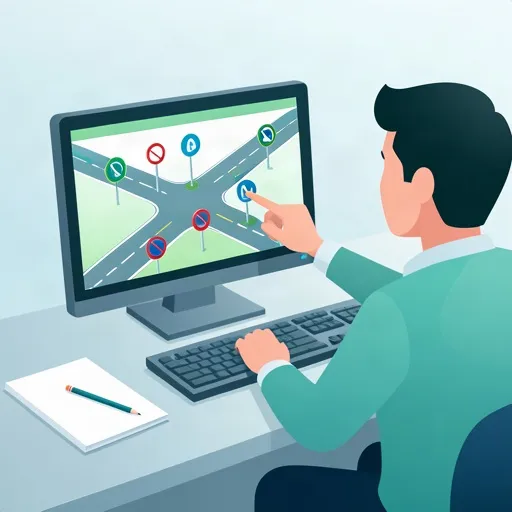
Article content overview
Preparing for the Turkish driving license theory exam, known as the MTSK e-sınav, requires more than just memorizing a manual. Many candidates stumble because they rely on common sense or "driving habits" rather than the strict, codified traffic legislation enforced by the Ministry of National Education (MEB). Understanding the logic behind official traffic rules is the most effective way to navigate the complexities of the exam and secure your ehliyet.
The theory exam is designed to test your knowledge of traffic and environment rules, first aid, and vehicle technique. A frequent pitfall is the assumption that "practical driving" in Turkey matches "exam-correct" behavior. In reality, the exam requires you to demonstrate knowledge of the legal requirement, even if that requirement is often ignored in daily, informal traffic flow.
For instance, understanding the difference between a stop line and a general intersection, or knowing the precise hierarchy of priority when no signs are present, is essential. Questions are often structured to present a familiar situation, such as a crowded intersection, and then ask for the strictly legal course of action, which may differ from how most drivers actually behave.
Always answer based on the official traffic legislation, not on the aggressive or non-compliant behaviors you might observe on Turkish roads. The exam expects strict adherence to rules, such as waiting behind the dur çizgisi (stop line) at a red light, regardless of whether other vehicles have moved forward.
Intersections are the most common source of confusion for learners. Many students fail because they do not correctly identify who has the right of way when signs are missing or confusing. The key is to apply the universal rules of traffic priority as defined in Turkish law, which prioritize vehicles coming from the right in uncontrolled intersections and give absolute priority to emergency vehicles with active signals.
Recognition of road signs is a pillar of the ehliyet sınavı. Often, test questions will feature an image of a sign and ask for the correct behavior. It is important not just to recognize the sign, but to understand its legal scope. For example, a sign indicating the end of a speed restriction does not mean there are no speed limits at all; it means the road returns to the general speed limit of that particular road type.
Beyond traffic laws, the MTSK e-sınav covers vehicle mechanics and safety protocols. Many candidates overlook the importance of understanding dashboard warning lights and the basic maintenance requirements that keep a vehicle safe in Turkish driving conditions. Questions about the trafik ve çevre bilgisi often include scenarios where you must decide the safest course of action when a vehicle develops a technical fault in heavy traffic.
To excel in your exam, you must be comfortable with the following terms as they are used in the official Turkish educational material:
By internalizing these definitions and focusing on the legal, rather than the practical, expectations of the exam, you will be well-prepared to pass. Consistency in your study routine and reviewing official practice sets will help reinforce these concepts.
The Turkish driving theory exam requires knowledge of strict traffic legislation, not everyday driving customs. At intersections without signals or signs, apply the priority hierarchy: check for signs first, then identify ana yol vs tali yol, then give way to vehicles from the right, and always yield to emergency vehicles. Understanding key terms like dur çizgisi, ana yol, and tali yol is essential, as is knowing that traffic signs carry specific legal meanings that go beyond simple visual recognition. Candidates commonly fail by applying practical experience rather than legal requirements, making it critical to study official legislation over observed road behavior.
A short set of high-value points that capture the most important ideas from this article.
The MTSK e-sınav tests strict legal knowledge, not practical driving habits observed on Turkish roads
At uncontrolled intersections, the vehicle approaching from the right always has priority over vehicles on the left
Emergency vehicles with active lights or sirens have absolute priority regardless of traffic signals or signs
Speed limit signs ending a restriction return you to the general speed limit for that road type, not unlimited speed
A stop sign requires a complete halt at the dur çizgisi even if the road appears clear
Dur çizgisi (stop line) is the thick white line where you must come to a complete stop, not the intersection itself
Ana yol (main road) has priority over tali yol (secondary road) when signs are absent
When no signs or lights exist at an intersection, apply the right-of-way hierarchy before proceeding
Traffic signs indicate legal requirements, not suggestions—know their exact scope for the exam
Dashboard warning lights and vehicle safety knowledge are testable topics under vehicle technique
Assuming that how most Turkish drivers behave matches what the exam considers correct
Failing to stop fully behind the dur çizgisi at red lights when other vehicles creep forward
Not recognizing that end-of-speed-limit signs mean returning to road-type limits, not unlimited driving
Forgetting that emergency vehicle priority overrides all other priority rules
Confusing which vehicle has right-of-way when approaching from the right at uncontrolled intersections
Article content overview
A short set of high-value points that capture the most important ideas from this article.
The MTSK e-sınav tests strict legal knowledge, not practical driving habits observed on Turkish roads
At uncontrolled intersections, the vehicle approaching from the right always has priority over vehicles on the left
Emergency vehicles with active lights or sirens have absolute priority regardless of traffic signals or signs
Speed limit signs ending a restriction return you to the general speed limit for that road type, not unlimited speed
A stop sign requires a complete halt at the dur çizgisi even if the road appears clear
Dur çizgisi (stop line) is the thick white line where you must come to a complete stop, not the intersection itself
Ana yol (main road) has priority over tali yol (secondary road) when signs are absent
When no signs or lights exist at an intersection, apply the right-of-way hierarchy before proceeding
Traffic signs indicate legal requirements, not suggestions—know their exact scope for the exam
Dashboard warning lights and vehicle safety knowledge are testable topics under vehicle technique
Assuming that how most Turkish drivers behave matches what the exam considers correct
Failing to stop fully behind the dur çizgisi at red lights when other vehicles creep forward
Not recognizing that end-of-speed-limit signs mean returning to road-type limits, not unlimited driving
Forgetting that emergency vehicle priority overrides all other priority rules
Confusing which vehicle has right-of-way when approaching from the right at uncontrolled intersections
Explore related topics, search based questions, and concepts that learners often look up when studying Turkish Theory Exam Tips. These themes reflect real search intent and help you understand how this topic connects to wider driving theory knowledge in Turkey.
Find clear and practical answers to common questions learners often have about Turkish Theory Exam Tips. This section helps explain difficult points, remove confusion, and reinforce the key driving theory concepts that matter for learners in Turkey.
The most common mistake is failing to apply the correct hierarchy of right-of-way rules, often confusing unmarked intersection protocols with those governed by signs or signals.
A stop line signifies a mandatory halt point. In the exam, always assume that your vehicle must come to a complete stop before this line, regardless of traffic density, unless otherwise directed.
Yes. While some drivers might develop relaxed habits, the MTSK e-sınav strictly tests compliance with official Turkish traffic legislation. Always answer based on the letter of the law rather than observed road behavior.
Analyze the scene for traffic signs, lane markings, and the presence of priority vehicles first. Always check for specific road signs that override standard priority rules.
After finding the specific Turkish driving theory articles you need, dive deeper into related topics or challenge your knowledge with practice questions. Enhance your understanding of trafik işaretleri, road rules, and vehicle safety to ensure you are fully prepared for the official ehliyet sınavı.