Preparing your vehicle correctly is a fundamental requirement for every driver in Turkey, especially before embarking on long intercity trips. This guide clarifies which systems you must inspect to ensure roadworthiness and helps you internalize technical concepts often tested in the MTSK e-exam. By mastering these maintenance procedures, you enhance your safety on the road and improve your readiness for the vehicle technique section of your theory test.
Article content overview
Embarking on a long journey across Türkiye, whether heading from Istanbul to the Aegean coast or navigating the mountainous roads of the interior, requires more than just a valid driver’s license. As a candidate for the MTSK e-sınav, you must understand that vehicle maintenance is a core component of traffic safety and a frequent subject of the "Vehicle Technique" section of your theory exam. Ensuring your vehicle is prepared for high-speed motorway driving and varying intercity road conditions is not only a legal responsibility but a life-saving practice.
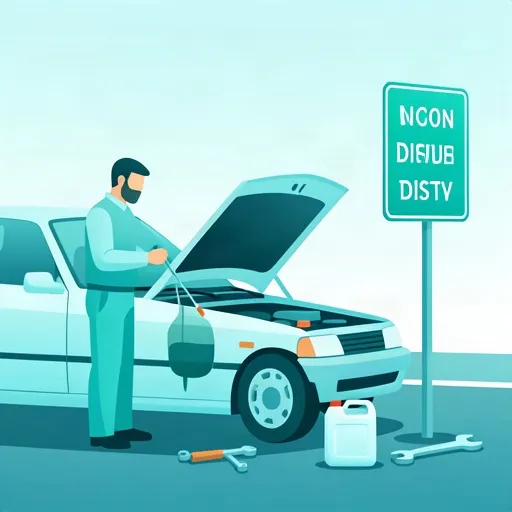
Before any intercity trip, your first priority should be the "life fluids" of your vehicle. The MTSK theory exam often tests your knowledge of how to check and maintain these levels, as improper fluid management is a leading cause of roadside breakdowns on Turkish motorways.
You must inspect the engine oil, coolant, brake fluid, and windshield washer fluid. Engine oil is essential for lubricating moving parts and preventing internal damage during the sustained engine heat generated during long-distance driving. Coolant levels are equally critical; low levels can lead to rapid overheating, especially when climbing steep inclines or driving under the intense Turkish sun. Always perform these checks on a flat surface while the engine is cool to ensure accurate readings on the dipstick or reservoir indicators.
Braking efficiency is paramount when driving on long stretches of road where speeds are higher. In the context of the Turkish theory test, you should be familiar with the warning signs of a failing brake system. If you notice a "spongy" feel when pressing the brake pedal, it may indicate air in the brake lines or dangerously low fluid levels.
Furthermore, ensure that your tire pressure is set to the manufacturer's recommended level for the load you are carrying. If your vehicle is fully loaded with luggage for an intercity trip, your tires will require higher pressure than for standard urban commutes. Incorrect tire pressure significantly impacts your braking distance and overall vehicle stability at high speeds.
The vehicle technique section of the theory exam frequently asks about the purpose of various vehicle components. You should be able to identify where these components are located and understand their basic functions. For instance, knowing how the engine cooling system works—circulating coolant through the radiator to dissipate heat—is a standard expectation for any licensed driver in Turkey.
| Check Point | Frequency | Importance |
|---|---|---|
| Engine Oil | Before long trips | Prevents engine seizure |
| Coolant Level | Before long trips | Prevents overheating |
| Brake Fluid | Every 5,000-10,000 km | Ensures stopping power |
| Tire Pressure | Before long trips | Stability and fuel economy |
One common trap in the MTSK exam involves confusing the different warning lights on the dashboard. You must be able to recognize the red warning lights, which usually indicate an immediate mechanical failure that requires you to pull over safely. For example, if the oil pressure warning light illuminates while you are driving on a motorway, you must stop the engine immediately to prevent catastrophic mechanical failure.
This article covers essential pre-journey vehicle checks required for safe long-distance driving in Turkey and the MTSK theory exam. Key inspections include verifying engine oil, coolant, brake fluid, and windshield washer fluid levels, with all checks performed on a flat surface while the engine is cool. The article emphasizes that tire pressure must be adjusted for vehicle load and that spongy brake pedals signal air in the lines or low fluid. Red dashboard warning lights demand immediate pulling over, while the included checklist and common exam traps help learners prepare for both practical driving and the vehicle technique section of the Turkish theory test.
A short set of high-value points that capture the most important ideas from this article.
Engine oil, coolant, brake fluid, and windshield washer fluid must be checked before every long-distance trip in Turkey
Fluid levels must always be checked on a flat surface with a cool engine to ensure accurate readings
Fully loaded vehicles require higher tire pressure than standard urban commutes for safe braking at high speeds
A spongy brake pedal indicates air in the brake lines or critically low brake fluid levels
Red dashboard warning lights signal immediate mechanical failures requiring you to pull over safely
Never open the radiator cap or coolant expansion tank while the engine is hot due to pressurized steam risk
Engine oil level must fall between the minimum and maximum marks on the dipstick
Brake fluid should be inspected every 5,000-10,000 km to maintain stopping power
Check battery terminals for corrosion and ensure all exterior lights function before motorway driving
The MTSK e-sınav includes vehicle technique questions testing knowledge of component locations and functions
Checking fluid levels immediately after driving instead of waiting for the engine to cool, resulting in inaccurate readings
Confusing red warning lights with less urgent amber or yellow indicators on the dashboard
Assuming tire pressure settings remain constant regardless of vehicle load for intercity trips
Neglecting to check the spare tire when performing pre-journey tire inspections
Failing to test all exterior lighting, including brake lights, before merging onto motorways
Article content overview
A short set of high-value points that capture the most important ideas from this article.
Engine oil, coolant, brake fluid, and windshield washer fluid must be checked before every long-distance trip in Turkey
Fluid levels must always be checked on a flat surface with a cool engine to ensure accurate readings
Fully loaded vehicles require higher tire pressure than standard urban commutes for safe braking at high speeds
A spongy brake pedal indicates air in the brake lines or critically low brake fluid levels
Red dashboard warning lights signal immediate mechanical failures requiring you to pull over safely
Never open the radiator cap or coolant expansion tank while the engine is hot due to pressurized steam risk
Engine oil level must fall between the minimum and maximum marks on the dipstick
Brake fluid should be inspected every 5,000-10,000 km to maintain stopping power
Check battery terminals for corrosion and ensure all exterior lights function before motorway driving
The MTSK e-sınav includes vehicle technique questions testing knowledge of component locations and functions
Checking fluid levels immediately after driving instead of waiting for the engine to cool, resulting in inaccurate readings
Confusing red warning lights with less urgent amber or yellow indicators on the dashboard
Assuming tire pressure settings remain constant regardless of vehicle load for intercity trips
Neglecting to check the spare tire when performing pre-journey tire inspections
Failing to test all exterior lighting, including brake lights, before merging onto motorways
Explore related topics, search based questions, and concepts that learners often look up when studying Vehicle Checks for Long-Distance Driving. These themes reflect real search intent and help you understand how this topic connects to wider driving theory knowledge in Turkey.
Find clear and practical answers to common questions learners often have about Vehicle Checks for Long-Distance Driving. This section helps explain difficult points, remove confusion, and reinforce the key driving theory concepts that matter for learners in Turkey.
You must check engine oil, coolant, brake fluid, and windshield washer levels to ensure the vehicle remains safe and functional during high-speed, long-distance travel.
High-speed motorway driving increases engine temperature significantly; a properly maintained cooling system prevents overheating, which can lead to engine failure or accidents.
Check for appropriate brake fluid levels and ensure there is no sponginess in the pedal feel, which could indicate air in the hydraulic system or worn pads, both of which are critical for safe emergency stopping.
The MTSK exam includes a section on 'Vehicle Technique' where you are expected to know the purpose of various vehicle systems, the importance of periodic maintenance, and basic checks required for driver safety.
After finding the specific Turkish driving theory articles you need, dive deeper into related topics or challenge your knowledge with practice questions. Enhance your understanding of trafik işaretleri, road rules, and vehicle safety to ensure you are fully prepared for the official ehliyet sınavı.