Navigating school zones requires heightened vigilance and strict adherence to traffic laws designed to protect vulnerable road users. This guide explains the behavioral expectations for Turkish drivers, including how to handle school buses and speed restrictions, ensuring you are prepared for both the e-sınav and the practical driving test.
Article content overview
Driving in school zones requires more than just following the posted speed limit; it demands a heightened level of awareness and a proactive safety mindset. In Türkiye, the safety of students and children near schools is a critical component of both the traffic law and the MTSK e-sınav requirements. As a driver, you are expected to recognize specific hazards, anticipate unpredictable pedestrian movements, and understand the legal priorities involving school transport vehicles.
When you approach a school zone, your primary duty is to protect the most vulnerable road users. Children often lack the peripheral vision and spatial judgment of adults, meaning they may step onto the road suddenly or without checking for oncoming traffic. The law mandates that drivers reduce their speed significantly when entering these zones, even if the road appears clear.
In your theory exam, you will likely encounter scenarios requiring you to identify the correct behavior in these areas. It is not sufficient to simply maintain the legal speed; you must demonstrate defensive driving techniques, such as covering the brake pedal and scanning the sidewalks for children preparing to cross.
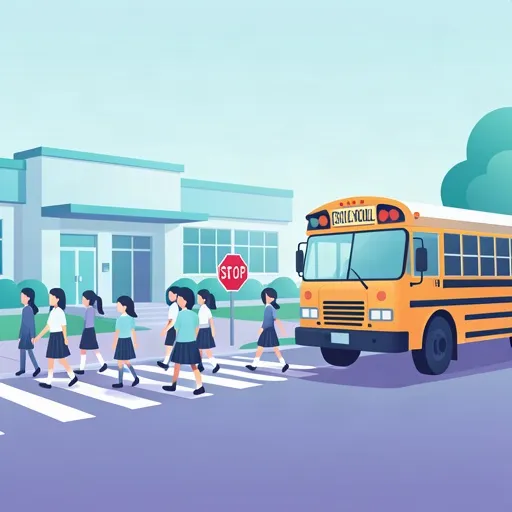
One of the most frequently misunderstood topics in the Turkish driving theory curriculum involves interacting with school buses (okul servisi). When a school bus is loading or unloading students, it often activates its "STOP" sign or warning lights. As a driver, you have specific legal obligations to ensure these children can enter or exit the vehicle safely without being startled by passing traffic.
If you fail to yield or if you attempt to overtake a school bus while its lights are active, you are not only committing a traffic violation but also significantly endangering lives. In the practical direksiyon sınavı, examiners look for your ability to identify these vehicles early and adjust your speed and lane position accordingly.
The MTSK e-sınav often presents questions designed to test your hazard awareness. You might be asked how to react to a student waiting near a pedestrian crossing or what the safest way to pass a school bus is in a crowded urban area. The correct answer almost always prioritizes safety over convenience.
Consistency is key when developing good driving habits. By applying these rules during your training, you naturally integrate the safety principles required for both the theory exam and real-world driving. Remember that your conduct behind the wheel reflects your understanding of traffic etiquette and your commitment to public safety.
Article content overview
Explore related topics, search based questions, and concepts that learners often look up when studying Safe Driving in School Zones. These themes reflect real search intent and help you understand how this topic connects to wider driving theory knowledge in Turkey.
Find clear and practical answers to common questions learners often have about Safe Driving in School Zones. This section helps explain difficult points, remove confusion, and reinforce the key driving theory concepts that matter for learners in Turkey.
Drivers must significantly reduce their speed, exercise maximum vigilance for unpredictable child behavior, and prioritize the safety of students crossing the road.
Drivers should exercise extreme caution, maintain a safe distance, and be prepared to stop as children may step into the road suddenly from behind or in front of the vehicle.
Yes, questions regarding vulnerable road users, speed limits in school areas, and appropriate traffic etiquette are frequent topics in the e-sınav and assessment criteria for the practical driving test.
After finding the specific Turkish driving theory articles you need, dive deeper into related topics or challenge your knowledge with practice questions. Enhance your understanding of trafik işaretleri, road rules, and vehicle safety to ensure you are fully prepared for the official ehliyet sınavı.