
Starting with recent regulatory updates, all new and re-registered vehicles in Türkiye must feature standardized license plates containing a unique QR code and identification number. This guide clarifies the legal importance of these measures, the clear distinction between official and unauthorized plates, and the heavy penalties for document forgery that could arise from non-compliance. These topics are highly relevant for the MTSK e-sınav, particularly within the vehicle and environment safety modules.
Article content overview
Navigating the complexities of vehicle documentation is a vital part of preparing for the MTSK e-sınav. Among the most significant recent updates to Turkish traffic legislation is the mandatory implementation of the QR code and identification number system on all new and re-registered vehicle license plates. This regulation, which came into effect on January 1, 2024, is not merely a bureaucratic change but a critical security measure designed to ensure vehicle traceability and combat the proliferation of illegal or counterfeit plates.
For learner drivers, understanding these requirements is essential. The integration of modern technology into vehicle identification helps authorities prevent document forgery, which is a severe criminal offense under the Turkish Penal Code. By familiarizing yourself with these standards, you ensure that the vehicle you eventually drive—or the one you register—complies fully with the law, helping you avoid both administrative fines and more serious legal consequences.
The primary objective behind the transition to plates featuring unique QR codes and identification numbers is to centralize and secure the tracking of vehicles. Previously, non-standard plates, often referred to as "APP" (customized or visually modified) plates, were frequently used by individuals looking to bypass traffic enforcement or create false vehicle identities. These plates often lacked the holographic security stamps and the standardized font required by the Turkish Road Traffic Law.
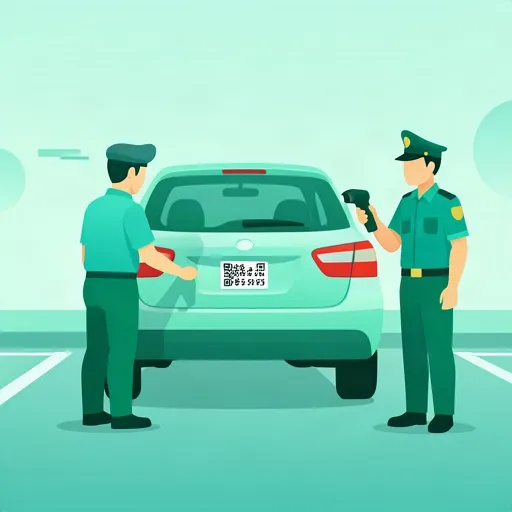
By mandating that all new registrations include a government-verified QR code and an identification number, the Turkish authorities have created a digital "fingerprint" for each plate. If a law enforcement officer scans this code during a traffic stop, they can immediately access the vehicle’s registration details, owner information, and current insurance status. This minimizes the risk of fraudulent documentation and ensures that every vehicle on the road is properly accounted for within the NVİ database.
A common theme in the theory exam involves distinguishing between minor administrative infractions and serious criminal behavior. It is important to realize that using unauthorized license plates is not just a simple traffic violation; it sits on a spectrum of severity that can lead to life-altering legal outcomes.
Using non-standard, altered, or counterfeit plates can result in a fine of 2,647 TL for the administrative use of non-compliant equipment. However, if the license plate is determined to be a forgery, the driver may face a criminal charge of "document forgery," which carries a penalty of 2 to 5 years of imprisonment.
This distinction is crucial for your exams. While questions regarding "trafik ve çevre bilgisi" often focus on road rules, questions concerning vehicle equipment and documentation are equally common. Always remember that official plates are issued by authorized stamping workshops under the supervision of the Turkish Notaries Union (TNB), and any attempt to replicate them—regardless of the visual style or font—is strictly prohibited.
| Feature | Standard Plate | Illegal "APP" or Counterfeit Plate |
|---|---|---|
| QR Code | Mandatory (New/Re-reg) | Absent or Faked |
| Identification Number | Mandatory | Missing or Invalid |
| Legal Standing | Compliant | Illegal |
| Consequence | None (Lawful) | Fines or Prison Sentences |
For any driver, the golden rule is to obtain license plates exclusively through authorized channels. When you purchase a vehicle or renew your registration, ensure that the plates provided bear the necessary official symbols and the specific QR code required by the latest regulations. If you suspect that a vehicle you are driving—perhaps a shared family car or a work vehicle—is using non-standard plates, it is your responsibility to report this to the owner or the relevant transport authorities to avoid being caught in a traffic control check.
In the context of the MTSK e-sınav, remember that vehicle safety extends beyond mechanics like brakes or tires; it includes the documentation that identifies the vehicle. A vehicle that is not correctly identified cannot be insured or held accountable in the event of an accident, which makes these regulations a cornerstone of road safety and traffic etiquette in Türkiye.
Türkiye's mandatory QR code and identification number system for license plates, effective since January 1, 2024, represents a critical security measure to combat vehicle document forgery and ensure traceability. Standard plates must include the QR code and identification number, be issued by TNB-authorized workshops, and carry holographic security stamps—features absent in illegal APP plates. The legal consequences are severe: administrative fines of 2,647 TL for non-compliance, but 2-5 years imprisonment for forgery under the Turkish Penal Code. For the MTSK e-sınav, remember that plate compliance falls under vehicle and environment safety, and that obtaining plates through official channels only is non-negotiable.
A short set of high-value points that capture the most important ideas from this article.
Since January 1, 2024, all new and re-registered vehicles in Türkiye must have license plates with a government-verified QR code and unique identification number.
The QR code system creates a digital 'fingerprint' that allows law enforcement to instantly access vehicle registration, owner, and insurance details.
Non-standard 'APP' plates lack holographic security stamps and standardized fonts required by Turkish Road Traffic Law.
Official license plates are issued exclusively through authorized stamping workshops supervised by the Turkish Notaries Union (TNB).
Vehicle documentation compliance is a core component of road safety alongside mechanical aspects like brakes and tires.
QR code and identification number are mandatory on all new and re-registered vehicle plates since January 1, 2024.
Administrative fine for non-compliant plates is 2,647 TL, but forgery of plates constitutes a criminal offense carrying 2-5 years imprisonment.
APP plates (customized or visually modified) are illegal regardless of their visual appearance.
Plates must be obtained only through authorized channels; any attempt to replicate official plates is prohibited.
If driving a vehicle with non-standard plates, you share legal responsibility during traffic stops.
Assuming that using custom or aesthetically modified plates is a minor traffic violation rather than a potential criminal offense.
Believing that visually similar plates without the official QR code satisfy the legal requirement.
Confusing administrative fines (monetary penalties) with criminal charges (imprisonment) when both can result from plate violations.
Overlooking that vehicle safety includes documentation and identification, not just mechanical components.
Failing to verify whether a borrowed or shared vehicle has compliant plates before driving it.
Article content overview
A short set of high-value points that capture the most important ideas from this article.
Since January 1, 2024, all new and re-registered vehicles in Türkiye must have license plates with a government-verified QR code and unique identification number.
The QR code system creates a digital 'fingerprint' that allows law enforcement to instantly access vehicle registration, owner, and insurance details.
Non-standard 'APP' plates lack holographic security stamps and standardized fonts required by Turkish Road Traffic Law.
Official license plates are issued exclusively through authorized stamping workshops supervised by the Turkish Notaries Union (TNB).
Vehicle documentation compliance is a core component of road safety alongside mechanical aspects like brakes and tires.
QR code and identification number are mandatory on all new and re-registered vehicle plates since January 1, 2024.
Administrative fine for non-compliant plates is 2,647 TL, but forgery of plates constitutes a criminal offense carrying 2-5 years imprisonment.
APP plates (customized or visually modified) are illegal regardless of their visual appearance.
Plates must be obtained only through authorized channels; any attempt to replicate official plates is prohibited.
If driving a vehicle with non-standard plates, you share legal responsibility during traffic stops.
Assuming that using custom or aesthetically modified plates is a minor traffic violation rather than a potential criminal offense.
Believing that visually similar plates without the official QR code satisfy the legal requirement.
Confusing administrative fines (monetary penalties) with criminal charges (imprisonment) when both can result from plate violations.
Overlooking that vehicle safety includes documentation and identification, not just mechanical components.
Failing to verify whether a borrowed or shared vehicle has compliant plates before driving it.
Explore related topics, search based questions, and concepts that learners often look up when studying Turkish QR License Plate Rules. These themes reflect real search intent and help you understand how this topic connects to wider driving theory knowledge in Turkey.
Find clear and practical answers to common questions learners often have about Turkish QR License Plate Rules. This section helps explain difficult points, remove confusion, and reinforce the key driving theory concepts that matter for learners in Turkey.
QR codes and identification numbers are mandatory for new and re-registered vehicles to prevent forgery, ensure vehicle traceability, and eliminate the use of illegal, non-standard 'APP' plates.
Using non-standard 'APP' plates results in an administrative fine. However, using completely fake or forged license plates can lead to severe criminal charges, including 2 to 5 years of imprisonment for document forgery.
The current requirement specifically applies to newly registered vehicles and those requiring re-registration; it is a standard procedure for new vehicle documentation protocols.
After finding the specific Turkish driving theory articles you need, dive deeper into related topics or challenge your knowledge with practice questions. Enhance your understanding of trafik işaretleri, road rules, and vehicle safety to ensure you are fully prepared for the official ehliyet sınavı.