
Proper tyre maintenance is a critical component of the vehicle technique section in the Turkish driving theory exam. This guide provides a detailed look at how to check your vehicle's tyres, the importance of correct inflation pressure, and the specific requirements for different driving environments across Türkiye. Mastering these technical details ensures you can confidently answer exam questions regarding vehicle safety and prepare for real-world driving challenges.
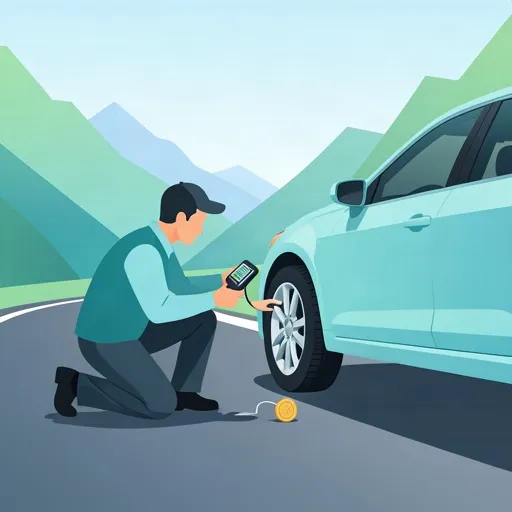
Article content overview
Understanding the mechanics of your vehicle is a cornerstone of the MTSK e-sınav (Electronic Exam). Among the various components of vehicle technique, none are as critical to road safety as the tyres. In Türkiye, where drivers face everything from the intense heat of Mediterranean summers to the challenging snow-covered mountain passes of Eastern Anatolia, knowing how to interpret tyre condition is a vital skill for both the exam and real-world driving.
In the Turkish theory exam, questions regarding vehicle technique often focus on the relationship between tyre pressure and fuel efficiency, as well as the impact of worn treads on braking distance during rainy conditions.
Tyre pressure is perhaps the most frequently tested aspect of vehicle maintenance in the Turkish driving theory curriculum. Maintaining the manufacturer-recommended PSI or Bar level is essential not only for the longevity of the tyre but for the stability of the vehicle. If your tyre pressure is too low, the sidewalls flex excessively, leading to overheating and an increased risk of a blowout, especially when driving at high speeds on Turkish motorways (Otoyol).
Conversely, over-inflated tyres reduce the contact patch with the road, leading to uneven wear and a harsh, unstable ride. During your theory test, you may be asked how pressure affects vehicle handling; remember that correct inflation is the primary defense against hydroplaning and loss of control on wet asphalt. Always consult your vehicle's handbook or the placard typically found on the driver-side door frame for the correct specifications.
The legal tread depth is a mandatory safety requirement enforced on all vehicles in Türkiye. Worn tyres significantly increase your stopping distance, which can be the difference between avoiding an accident and becoming a statistic. For the MTSK exam, you should be familiar with the minimum tread depth requirements, which are designed to ensure sufficient water drainage from beneath the tyre.
If you find that your tyre tread is below the legal limit, it is no longer safe for driving. This is particularly dangerous in regions of Türkiye that experience heavy autumn and winter rains. In snowy conditions, standard summer tyres lose their grip rapidly; hence, the legal mandate for winter tyres (kış lastiği) during designated winter months is a common topic in the traffic and environment rules section of the exam.
Türkiye’s geography offers a unique challenge to drivers. You might be driving through scorching heat in the Aegean region in the morning and climbing mountain passes in cooler, high-altitude terrain by the afternoon. Heat causes air inside the tyre to expand, slightly increasing pressure, while cold mountain air causes it to contract.
Exam questions often test your ability to recognize signs of damage. You should be vigilant for:
Many learners make the mistake of focusing only on the exterior look of the tyre while ignoring the "vehicle technique" logic required by the exam board. For instance, a common trap involves questions about "what to do when a tyre bursts." Always remember: never slam on the brakes. Instead, hold the steering wheel firmly, keep the vehicle in its lane, and allow the car to slow down gradually by lifting your foot off the accelerator.
This article covers the essential tyre knowledge required for the Turkish driving theory exam, focusing on pressure management, tread depth requirements, and climate-specific maintenance for Türkiye's diverse terrain. Key exam topics include the relationship between tyre pressure and safety, legal minimum tread depth, winter tyre (kış lastiği) requirements, and proper inspection procedures. Learners should memorize the step-by-step tyre health check and understand the correct response during a tyre burst—hold steering firmly and allow gradual deceleration rather than braking sharply. The content prepares students for MTSK vehicle technique questions while building practical knowledge for real-world driving in Turkish conditions.
A short set of high-value points that capture the most important ideas from this article.
Tyre pressure must match manufacturer specifications (PSI or Bar) found on the driver-side door placard or handbook.
Under-inflation causes sidewall flexing, overheating, and increased blowout risk on high-speed motorways.
Over-inflated tyres reduce the contact patch, causing uneven wear and poor handling.
Minimum legal tread depth is mandatory for safe driving in Türkiye, especially in heavy rain and winter conditions.
Temperature changes significantly affect tyre pressure—heat expands air (increasing pressure) while cold contracts it.
Always check tyre pressure when tyres are cold using the vehicle's recommended specification.
Winter tyres (kış lastiği) are legally mandated during designated winter months in Turkey.
Signs of damage include bulges, lumps, cracking/dry rot, and uneven wear patterns.
During a tyre burst, do not brake hard—hold the wheel firmly, stay in lane, and let the vehicle slow gradually.
Tyre wear indicators must not be flush with the tread surface before replacement is required.
Focusing only on the tyre's exterior appearance while ignoring internal structural issues like bulges or sidewall damage.
Assuming tyre pressure can be checked accurately immediately after driving when tyres are still warm.
Forgetting that summer tyres lose grip rapidly in snowy conditions and are not compliant with winter tyre mandates.
Neglecting to check for embedded objects like nails or stones after inspecting tread depth.
Confusing the procedure for a flat tyre versus a sudden blowout—slamming brakes on a blowout causes loss of control.
Article content overview
A short set of high-value points that capture the most important ideas from this article.
Tyre pressure must match manufacturer specifications (PSI or Bar) found on the driver-side door placard or handbook.
Under-inflation causes sidewall flexing, overheating, and increased blowout risk on high-speed motorways.
Over-inflated tyres reduce the contact patch, causing uneven wear and poor handling.
Minimum legal tread depth is mandatory for safe driving in Türkiye, especially in heavy rain and winter conditions.
Temperature changes significantly affect tyre pressure—heat expands air (increasing pressure) while cold contracts it.
Always check tyre pressure when tyres are cold using the vehicle's recommended specification.
Winter tyres (kış lastiği) are legally mandated during designated winter months in Turkey.
Signs of damage include bulges, lumps, cracking/dry rot, and uneven wear patterns.
During a tyre burst, do not brake hard—hold the wheel firmly, stay in lane, and let the vehicle slow gradually.
Tyre wear indicators must not be flush with the tread surface before replacement is required.
Focusing only on the tyre's exterior appearance while ignoring internal structural issues like bulges or sidewall damage.
Assuming tyre pressure can be checked accurately immediately after driving when tyres are still warm.
Forgetting that summer tyres lose grip rapidly in snowy conditions and are not compliant with winter tyre mandates.
Neglecting to check for embedded objects like nails or stones after inspecting tread depth.
Confusing the procedure for a flat tyre versus a sudden blowout—slamming brakes on a blowout causes loss of control.
Explore related topics, search based questions, and concepts that learners often look up when studying Tyre Knowledge for Turkish Theory. These themes reflect real search intent and help you understand how this topic connects to wider driving theory knowledge in Turkey.
Find clear and practical answers to common questions learners often have about Tyre Knowledge for Turkish Theory. This section helps explain difficult points, remove confusion, and reinforce the key driving theory concepts that matter for learners in Turkey.
Correct tyre pressure is vital for vehicle stability and fuel efficiency. Improper pressure can lead to uneven tyre wear, increased braking distances, and loss of vehicle control, especially on high-speed roads.
According to general vehicle inspection standards, the minimum tread depth required for summer tyres is 1.6 mm, though it is highly recommended to replace tyres before they reach this limit to ensure safety in rain.
Mountain driving increases stress on your tyres due to sharper turns and elevation changes. You must regularly monitor pressure and check for sidewall damage, as heat and terrain intensity can cause premature wear.
After finding the specific Turkish driving theory articles you need, dive deeper into related topics or challenge your knowledge with practice questions. Enhance your understanding of trafik işaretleri, road rules, and vehicle safety to ensure you are fully prepared for the official ehliyet sınavı.