
Understanding how to safely enter, navigate, and exit a roundabout is a fundamental requirement for the Turkish driving theory exam. This guide clarifies the official regulations regarding right-of-way, proper signaling, and lane discipline to ensure you are fully prepared for exam day scenarios.
Article content overview
Mastering the rules of roundabouts is a critical component of the Turkish driving theory exam, or MTSK e-sınav. Roundabouts are designed to facilitate smooth traffic flow, but they remain a frequent source of confusion for new drivers and a common topic for tricky exam questions. Understanding the legal requirements for entry, lane positioning, and priority is not just about passing the test; it is a fundamental skill for ensuring safety on Turkish roads.
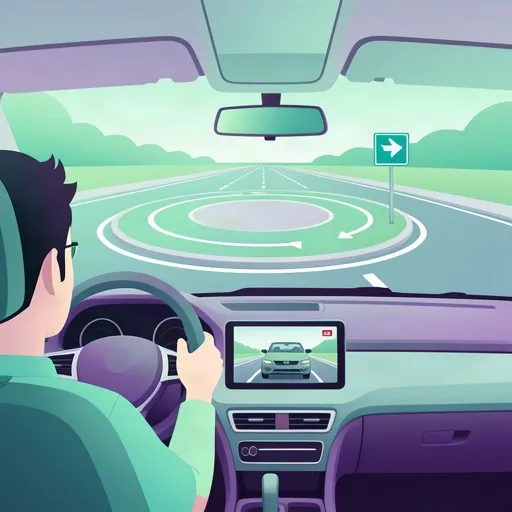
A circular junction where traffic moves in a counter-clockwise direction around a central island, governed by specific priority and signage rules defined in the Turkish Highway Traffic Regulation.
A common misconception among learners is that vehicles entering the roundabout have the right of way. In Turkey, the standard rule is that vehicles already circulating within the roundabout have priority over vehicles attempting to enter. You must observe all incoming traffic and only enter when there is a safe gap, ensuring you do not force other drivers to brake or change course.
When approaching a roundabout, you should always look for regulatory signs that dictate priority. In some cases, a "Give Way" sign will be present at the entry point, explicitly reminding you that you must yield to the traffic flow inside. Even in the absence of a specific sign, the general rule of yielding to those already in the intersection applies.
Lane discipline is essential for safe navigation through roundabouts. If the roundabout has multiple lanes, you must choose your lane based on your intended exit. Generally, if you plan to take the first or second exit (turning right or going straight), you should remain in the outer lane. If you intend to take a later exit (such as turning left or completing a full U-turn), you should occupy the inner lane.
Signaling is the most common area where students lose marks in the MTSK e-sınav. You must indicate your intention clearly to other road users. Always signal right as you approach the exit you intend to take. Failing to signal, or signaling too early, can lead to dangerous situations and is considered a failure to comply with traffic etiquette.
The MTSK e-sınav often features questions about specific scenarios, such as where a motorcyclist is positioned or who has the right of way when an emergency vehicle is entering the roundabout. Always remember that emergency vehicles with sirens and flashing lights have absolute priority, even if they are entering the roundabout against the standard flow.
Another frequent trap involves the "lane-changing" rule inside the roundabout. While it is technically possible to change lanes within a large roundabout, it is highly discouraged unless necessary for an exit. If you must change lanes, ensure you signal, check your blind spots, and confirm that it is safe to do so before maneuvering.
Never overtake another vehicle while inside a roundabout. The circular design and constant merging create high-risk blind spots that make overtaking a violation of safe driving practices and a common cause of accidents.
| Situation | Priority Rule | Action Required |
|---|---|---|
| Entering Roundabout | Yield to circulating traffic | Slow down and wait for a safe gap |
| Within Roundabout | Vehicles inside have priority | Maintain lane and check mirrors |
| Exiting Roundabout | Signal right before exit | Signal early and move to the outer lane |
Roundabout navigation is a high-priority topic in the Turkish driving theory exam (MTSK e-sınav) because it combines priority rules, lane discipline, and signaling into a single practical scenario. The fundamental principle to remember is that you must always yield to vehicles already inside the circular junction, select your lane before entering based on your exit direction, and signal right before leaving the roundabout. Common exam traps involve emergency vehicle priority exceptions, the prohibition against overtaking inside roundabouts, and the distinction between outer and inner lane usage. Thorough understanding of these rules not only helps pass the exam but ensures safe driving behavior at these complex junctions.
A short set of high-value points that capture the most important ideas from this article.
In Turkey, vehicles already circulating within a roundabout always have priority over vehicles attempting to enter
Lane selection depends on your intended exit: use the outer lane for first/second exits and the inner lane for later exits or U-turns
You must signal right before your exit point, not earlier, to indicate your intention to other road users
Emergency vehicles with sirens and flashing lights have absolute priority over standard roundabout flow rules
Never overtake another vehicle while inside a roundabout due to significant blind spots and collision risks
The definition of a roundabout (Döner Kavşak) is a circular junction where traffic moves counter-clockwise around a central island
If no Give Way sign is present, the general rule of yielding to circulating traffic still applies by default
Lane changing inside a roundabout is technically possible but highly discouraged and rarely necessary
Motorcyclists and cyclists are particularly vulnerable at roundabouts and require extra mirror and blind spot monitoring
The B-20 road sign warns that you are approaching a roundabout where you must yield to traffic already inside
Assuming vehicles entering the roundabout have priority, when in fact circulating vehicles always have right of way
Failing to signal or signaling too early before reaching the intended exit point
Attempting to change lanes inside the roundabout when remaining in the original lane would have sufficed
Overtaking another vehicle while already inside the roundabout, which creates dangerous blind spot situations
Not checking mirrors and blind spots for motorcycles and cyclists before and during lane changes
Article content overview
A short set of high-value points that capture the most important ideas from this article.
In Turkey, vehicles already circulating within a roundabout always have priority over vehicles attempting to enter
Lane selection depends on your intended exit: use the outer lane for first/second exits and the inner lane for later exits or U-turns
You must signal right before your exit point, not earlier, to indicate your intention to other road users
Emergency vehicles with sirens and flashing lights have absolute priority over standard roundabout flow rules
Never overtake another vehicle while inside a roundabout due to significant blind spots and collision risks
The definition of a roundabout (Döner Kavşak) is a circular junction where traffic moves counter-clockwise around a central island
If no Give Way sign is present, the general rule of yielding to circulating traffic still applies by default
Lane changing inside a roundabout is technically possible but highly discouraged and rarely necessary
Motorcyclists and cyclists are particularly vulnerable at roundabouts and require extra mirror and blind spot monitoring
The B-20 road sign warns that you are approaching a roundabout where you must yield to traffic already inside
Assuming vehicles entering the roundabout have priority, when in fact circulating vehicles always have right of way
Failing to signal or signaling too early before reaching the intended exit point
Attempting to change lanes inside the roundabout when remaining in the original lane would have sufficed
Overtaking another vehicle while already inside the roundabout, which creates dangerous blind spot situations
Not checking mirrors and blind spots for motorcycles and cyclists before and during lane changes
Explore related topics, search based questions, and concepts that learners often look up when studying Roundabout Rules and Signaling. These themes reflect real search intent and help you understand how this topic connects to wider driving theory knowledge in Turkey.
Find clear and practical answers to common questions learners often have about Roundabout Rules and Signaling. This section helps explain difficult points, remove confusion, and reinforce the key driving theory concepts that matter for learners in Turkey.
Vehicles already inside the roundabout generally have priority over vehicles waiting to enter, provided there are no specific signs or signals stating otherwise.
Usually, you do not signal when entering unless you are turning at the first exit, but you must always signal when preparing to leave the roundabout.
Lane changing inside a roundabout is generally discouraged and should only be done if road markings clearly permit it and if it is safe to do so.
Many students fail to signal their exit early enough or fail to yield to pedestrians or vehicles already circulating in the roundabout.
After finding the specific Turkish driving theory articles you need, dive deeper into related topics or challenge your knowledge with practice questions. Enhance your understanding of trafik işaretleri, road rules, and vehicle safety to ensure you are fully prepared for the official ehliyet sınavı.