
Navigating busy Turkish streets requires a deep understanding of the unpredictable nature of public transport vehicles like taxis and minibuses. This guide provides the theoretical foundation for identifying potential risks, such as sudden stops for passengers and blind spot dangers, helping you align your driving habits with official MTSK curriculum standards.
Article content overview
Navigating busy Turkish streets requires more than just knowing traffic signs; it demands a high level of situational awareness, specifically regarding public transport vehicles. Buses, taxis, and minibuses (dolmuş) are the lifeblood of urban mobility in Türkiye, but their frequent stops, sudden lane changes, and passenger-focused maneuvers make them significant hazards for new drivers. Mastering hazard perception is a core requirement for the MTSK e-sınav, and understanding the unpredictable nature of these vehicles is essential for your success.
Public transport vehicles often operate under the pressure of schedules and passenger demand, which can lead to abrupt stops or merging maneuvers without adequate signaling. In the context of the Turkish driving theory exam, you must learn to identify the signs of an impending stop before it happens. Drivers who maintain a safe following distance and remain observant of passenger clusters at designated stops or popular transit points significantly reduce their risk of collision.
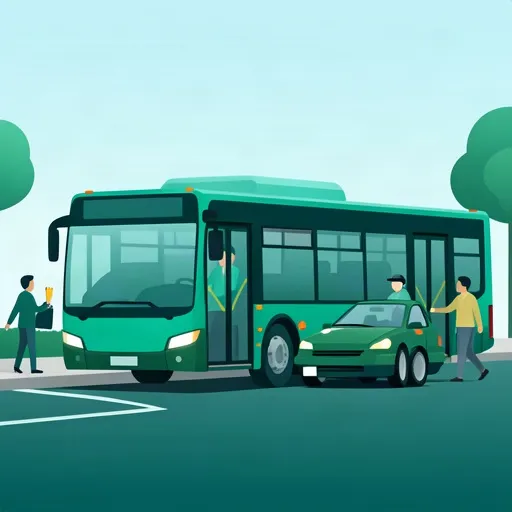
When you observe a minibus slowing down near a curb, your first instinct should be to increase your following distance and prepare to brake. These vehicles frequently pull into traffic flow without checking blind spots thoroughly, relying on the assumption that other drivers will yield. Defensive driving in this scenario means scanning not only the vehicle itself but the environment around it, including pedestrians who might dash toward a stopping minibus.
A major theme in the MTSK curriculum is the protection of vulnerable road users, such as cyclists, pedestrians, and scooter riders. Large vehicles like city buses possess significant blind spots that can easily hide a cyclist or a motorcyclist attempting to pass on the right. As a driver, you are expected to understand that if you are positioned behind or alongside a bus, you must avoid lingering in these areas where the driver cannot see you, or conversely, be hyper-aware of vulnerable users hiding near such vehicles.
Always remember that public transport vehicles often stop in areas not designated for parking. Never assume a bus will pull all the way into a bus bay; be prepared for them to stop partially in the travel lane, forcing following traffic to wait or change lanes safely.
According to official traffic legislation in Türkiye, drivers must adjust their speed and keep a distance that allows for safe reaction when following vehicles that are prone to sudden stops. When approaching an area with high passenger traffic, such as a busy intersection or a commercial zone, you should proactively scan for taxis and minibuses. If you see a taxi with its indicators flickering or a minibus slowing down, do not attempt to overtake them in a narrow street or near a crosswalk.
In the MTSK e-sınav, hazard awareness questions often present a scenario where a vehicle ahead changes behavior abruptly. You might be asked how to react when a taxi suddenly pulls to the side of the road to pick up a fare. The correct response in these theoretical scenarios is almost always to reduce speed, ensure your own lane is clear, and monitor the surroundings for sudden pedestrian movement. Prioritizing safety over maintaining your current speed is the hallmark of a defensive driver.
| Scenario | Expected Driver Action |
|---|---|
| Minibus pulling away from a stop | Reduce speed, allow space for it to merge. |
| Taxi slowing down near a hotel or cafe | Increase distance, watch for opening doors. |
| Bus merging from a stop into your lane | Slow down; do not accelerate to block the bus. |
This article teaches hazard perception skills specifically for navigating around public transport vehicles in Turkish cities, which is a key component of the MTSK e-sınav. You learn to recognize early warning signs—such as a minibus approaching a curb or a taxi's flickering indicators—that signal imminent stops or lane changes. The core defensive driving principle is maintaining safe following distances and being prepared to brake, rather than assuming public transport drivers will always signal or use designated stops. Understanding blind spots around large vehicles and the heightened risk to vulnerable road users like cyclists and pedestrians forms an essential part of this knowledge. Mastery of these anticipatory skills helps you respond correctly to hazard perception questions and apply them safely in real urban traffic.
A short set of high-value points that capture the most important ideas from this article.
Public transport vehicles in Turkey frequently make sudden stops to pick up or drop off passengers, requiring you to anticipate their actions before they occur.
Maintaining an adequate following distance behind buses and minibuses is critical because their large blind spots can hide vulnerable road users.
Vulnerable road users such as cyclists and pedestrians are at highest risk when near large public transport vehicles that cannot see them.
When you observe a taxi or minibus slowing down, immediately reduce speed and increase your following distance rather than waiting for a confirmed stop.
Defensive driving in this context means prioritizing safety over maintaining speed when encountering unpredictable public transport behavior.
Public transport vehicles may stop in non-designated areas, not just proper bus bays—always be prepared for partial stops in travel lanes.
Never linger alongside or directly behind a bus where the driver's blind spots prevent them from seeing your vehicle.
Passengers boarding or alighting from minibuses often dash toward the curb or street unexpectedly.
A flickering taxi indicator is a warning sign to increase distance and prepare for a sudden maneuver.
The correct theoretical response to any erratic public transport behavior is to reduce speed, ensure your lane is clear, and monitor for pedestrians.
Assuming buses will always pull completely into a designated bus bay before stopping, leading to rear-end collisions.
Attempting to overtake a slowing minibus in a narrow street near a crosswalk, endangering boarding passengers.
Failing to check mirrors for vehicles behind you before braking suddenly to avoid a collision yourself.
Lingering in a bus's blind spot on either side, believing the bus driver will yield or signal before moving.
Assuming a taxi that has slowed down will not make a sudden lane change to pick up a fare.
Article content overview
A short set of high-value points that capture the most important ideas from this article.
Public transport vehicles in Turkey frequently make sudden stops to pick up or drop off passengers, requiring you to anticipate their actions before they occur.
Maintaining an adequate following distance behind buses and minibuses is critical because their large blind spots can hide vulnerable road users.
Vulnerable road users such as cyclists and pedestrians are at highest risk when near large public transport vehicles that cannot see them.
When you observe a taxi or minibus slowing down, immediately reduce speed and increase your following distance rather than waiting for a confirmed stop.
Defensive driving in this context means prioritizing safety over maintaining speed when encountering unpredictable public transport behavior.
Public transport vehicles may stop in non-designated areas, not just proper bus bays—always be prepared for partial stops in travel lanes.
Never linger alongside or directly behind a bus where the driver's blind spots prevent them from seeing your vehicle.
Passengers boarding or alighting from minibuses often dash toward the curb or street unexpectedly.
A flickering taxi indicator is a warning sign to increase distance and prepare for a sudden maneuver.
The correct theoretical response to any erratic public transport behavior is to reduce speed, ensure your lane is clear, and monitor for pedestrians.
Assuming buses will always pull completely into a designated bus bay before stopping, leading to rear-end collisions.
Attempting to overtake a slowing minibus in a narrow street near a crosswalk, endangering boarding passengers.
Failing to check mirrors for vehicles behind you before braking suddenly to avoid a collision yourself.
Lingering in a bus's blind spot on either side, believing the bus driver will yield or signal before moving.
Assuming a taxi that has slowed down will not make a sudden lane change to pick up a fare.
Explore related topics, search based questions, and concepts that learners often look up when studying Public Transport Hazard Perception. These themes reflect real search intent and help you understand how this topic connects to wider driving theory knowledge in Turkey.
Find clear and practical answers to common questions learners often have about Public Transport Hazard Perception. This section helps explain difficult points, remove confusion, and reinforce the key driving theory concepts that matter for learners in Turkey.
They frequently make sudden stops to pick up or drop off passengers without sufficient warning, creating collision risks for drivers who do not maintain a safe following distance.
Maintain an increased following distance, watch for indicators that a vehicle is pulling over, and always be aware of the blind spots where pedestrians or cyclists might emerge.
Developing the ability to scan for potential hazards early allows you to recognize dangerous scenarios presented in the MTSK exam and choose the correct defensive action.
After finding the specific Turkish driving theory articles you need, dive deeper into related topics or challenge your knowledge with practice questions. Enhance your understanding of trafik işaretleri, road rules, and vehicle safety to ensure you are fully prepared for the official ehliyet sınavı.