
Understanding how to correctly position your vehicle on multi-lane roadways is a fundamental component of the Turkish driving curriculum. This guide breaks down the essential legal requirements for lane alignment, signaling, and situational awareness at intersections, helping you prepare for the specific challenges of the MTSK e-sınav.
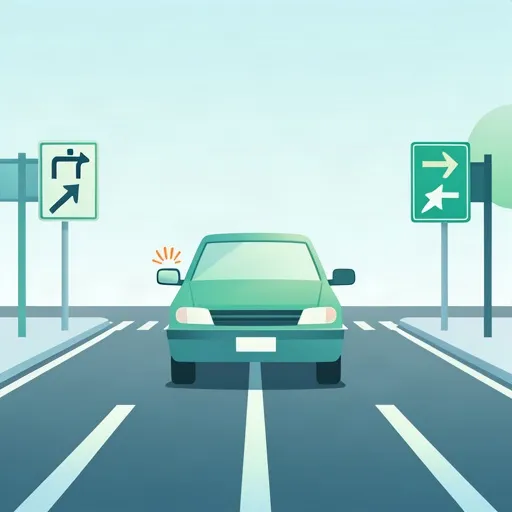
Article content overview
Navigating multi-lane roads in Türkiye requires a disciplined approach to positioning, signaling, and mirror usage. Whether you are preparing for the MTSK e-sınav or gaining confidence for your practical driving exam, understanding the legal requirements for lane selection is non-negotiable. Turkish traffic legislation mandates that drivers must select their lane well in advance of an intersection to ensure smooth traffic flow and to minimize the risk of collisions. Failure to prepare for a turn by moving into the appropriate lane early is a frequent cause of both test failures and real-world road accidents.
According to the Turkish traffic regulations, every maneuver—whether turning, exiting a roundabout, or changing lanes—must be preceded by a deliberate assessment of your position on the road. When you approach a multi-lane intersection, you must anticipate your direction and move into the designated lane long before the turn. If you find yourself in the wrong lane as you approach the intersection, you are legally required to continue in the direction dictated by the lane markings rather than cutting across traffic to make an abrupt turn.
Attempting to change lanes within the immediate vicinity of an intersection or crossing a solid white line is a severe violation of Turkish traffic rules and will likely result in an automatic failure during your practical driving test.
Lane markings serve as the primary communication tool between road authorities and drivers. You must observe the markings painted on the road surface, which indicate whether a lane is designated for straight travel, turning, or both. These markings are often reinforced by overhead signage or side-mounted indicators. In the context of the MTSK e-sınav, questions often focus on the driver’s ability to interpret these symbols correctly.
To perform a turn safely and legally in Turkey, you must follow a consistent sequence of actions. This process, often referred to as the "Mirrors-Signal-Maneuver" routine, ensures you remain aware of your surroundings throughout the change in trajectory.
Many learners lose points in the theory exam by misinterpreting "priority" at intersections where multiple lanes are turning simultaneously. If you are in a lane marked for both straight and right-turning traffic, you must yield to those whose path you might cross if you are planning to change your alignment. Furthermore, always remember that traffic lights apply to specific lanes; stopping before the dur çizgisi (stop line) is mandatory, even if your lane is not the first one waiting.
Defensive driving in Türkiye includes constant vigilance regarding the behavior of other drivers. Even when you are in the correct lane, other motorists may attempt illegal maneuvers. By maintaining your position and adhering to the lane markings, you minimize your own liability and contribute to the predictability of the road environment. Always prioritize the safety of vulnerable road users, such as pedestrians crossing at intersections, before completing your turn.
This article covers the essential Turkish traffic rules for lane discipline and turning procedures on multi-lane roads, which are critical for passing the MTSK e-sınav. It emphasizes the legal requirement to position your vehicle in the correct lane well before reaching an intersection and mandates following lane markings rather than forcing an illegal maneuver. The content outlines the Mirrors-Signal-Maneuver routine as the standard turning procedure, highlighting mirror checks, proper signaling distance, speed adjustment, and blind spot verification. Common exam traps include priority conflicts at multi-lane turns, incorrect lane changes near intersections, and violations of stop line requirements. Understanding lane markings, their reinforcement by signage, and defensive driving awareness completes the practical knowledge needed for both the theory exam and safe real-world driving.
A short set of high-value points that capture the most important ideas from this article.
Drivers must select the correct lane well in advance of an intersection to ensure smooth traffic flow and comply with Turkish traffic legislation.
If you are in the wrong lane approaching an intersection, you must continue in the direction dictated by lane markings rather than cutting across traffic.
The Mirrors-Signal-Maneuver routine provides the standard sequence: check mirrors, signal clearly, adjust speed, verify blind spots, then complete the turn.
Lane markings are the primary communication tool indicating whether a lane is for straight travel, turning, or both, reinforced by overhead or side-mounted signage.
Traffic lights apply to specific lanes, and stopping before the dur çizgisi (stop line) is mandatory regardless of your position in the queue.
Turkish regulations prohibit changing lanes within the immediate vicinity of an intersection or crossing solid white lines.
At multi-lane intersections, yield to vehicles whose path you might cross when turning, even if your lane allows multiple directions.
Overhead and side-mounted signs reinforce the lane markings painted on the road surface—always check both.
The dur çizgisi is the solid stop line; stopping beyond it is a violation even if your lane is not first in the queue.
Vulnerable road users such as pedestrians must be prioritized for safety before completing any turn.
Moving into the wrong lane and then attempting to cut across traffic to make an abrupt turn instead of following the lane markings.
Changing lanes too close to the intersection, which violates Turkish traffic rules and results in automatic test failure.
Misinterpreting priority at intersections where multiple lanes are turning simultaneously, failing to yield appropriately.
Stopping beyond the dur çizgisi at signalized intersections because your lane is not the first to proceed.
Failing to check blind spots for motorcycles or cyclists before initiating a turn, assuming mirrors alone provide sufficient awareness.
Article content overview
A short set of high-value points that capture the most important ideas from this article.
Drivers must select the correct lane well in advance of an intersection to ensure smooth traffic flow and comply with Turkish traffic legislation.
If you are in the wrong lane approaching an intersection, you must continue in the direction dictated by lane markings rather than cutting across traffic.
The Mirrors-Signal-Maneuver routine provides the standard sequence: check mirrors, signal clearly, adjust speed, verify blind spots, then complete the turn.
Lane markings are the primary communication tool indicating whether a lane is for straight travel, turning, or both, reinforced by overhead or side-mounted signage.
Traffic lights apply to specific lanes, and stopping before the dur çizgisi (stop line) is mandatory regardless of your position in the queue.
Turkish regulations prohibit changing lanes within the immediate vicinity of an intersection or crossing solid white lines.
At multi-lane intersections, yield to vehicles whose path you might cross when turning, even if your lane allows multiple directions.
Overhead and side-mounted signs reinforce the lane markings painted on the road surface—always check both.
The dur çizgisi is the solid stop line; stopping beyond it is a violation even if your lane is not first in the queue.
Vulnerable road users such as pedestrians must be prioritized for safety before completing any turn.
Moving into the wrong lane and then attempting to cut across traffic to make an abrupt turn instead of following the lane markings.
Changing lanes too close to the intersection, which violates Turkish traffic rules and results in automatic test failure.
Misinterpreting priority at intersections where multiple lanes are turning simultaneously, failing to yield appropriately.
Stopping beyond the dur çizgisi at signalized intersections because your lane is not the first to proceed.
Failing to check blind spots for motorcycles or cyclists before initiating a turn, assuming mirrors alone provide sufficient awareness.
Explore related topics, search based questions, and concepts that learners often look up when studying Lane Discipline and Turning. These themes reflect real search intent and help you understand how this topic connects to wider driving theory knowledge in Turkey.
Find clear and practical answers to common questions learners often have about Lane Discipline and Turning. This section helps explain difficult points, remove confusion, and reinforce the key driving theory concepts that matter for learners in Turkey.
You must position your vehicle in the correct lane well in advance of the intersection, following road markings and signs, to avoid last-minute lane changes which are dangerous and prohibited.
Signaling is mandatory to inform other road users of your intention to turn. It must be activated early enough to provide sufficient warning without misleading drivers about the specific point of your turn.
The exam often includes scenario-based questions where you must identify the correct lane positioning based on arrows on the road and regulatory signs to ensure a safe and legal maneuver.
No, you must maintain your lane discipline throughout the entire turning maneuver. Changing lanes within an intersection is a violation of traffic rules and a common cause of accidents.
After finding the specific Turkish driving theory articles you need, dive deeper into related topics or challenge your knowledge with practice questions. Enhance your understanding of trafik işaretleri, road rules, and vehicle safety to ensure you are fully prepared for the official ehliyet sınavı.