
Understanding the difference between the reality of Turkish street driving and the formal requirements of the e-exam is essential for every candidate. This article breaks down how to identify 'exam traps' created by common rule-breaking and reinforces the importance of applying official traffic legislation correctly to your test answers.
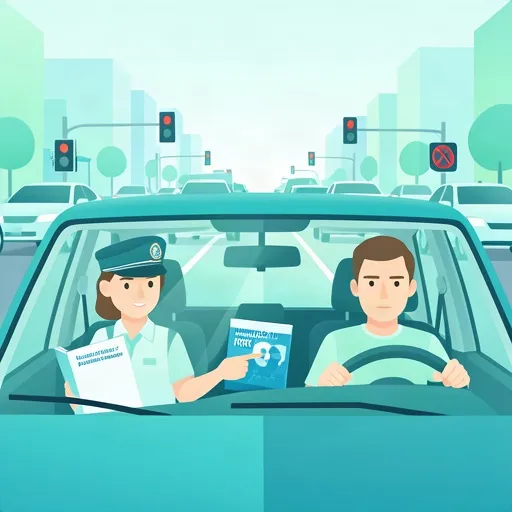
Article content overview
When you prepare for the MTSK e-sınav, you might be tempted to rely on your observations of drivers in Turkey. You see cars cutting corners, ignoring stop lines, or treating yellow lights as a suggestion to speed up. However, these common, often illegal, road habits are the primary reason many candidates fail their theory exam. The official Turkish driving theory test is designed to measure your knowledge of the law as defined by the 2918 Sayılı Karayolları Trafik Kanunu, not the chaotic reality you might see on the streets.
To pass your exam, you must learn to distinguish between "how people drive" and "how the law mandates you drive." The Ministry of National Education expects you to answer according to strict, codified traffic legislation. When a question asks for the correct behavior at a red light, it is not asking you to describe the behavior of the average driver; it is asking for the specific legal requirement that keeps the road system functioning safely.
One of the most dangerous traps for students is the "normalization of deviance." Because you see other drivers routinely creeping past the stop line at a signalized intersection, your brain may classify this as acceptable behavior. In the context of the MTSK e-sınav, this is an automatic error. The rule is absolute: you must stop before the stop line, and you must remain there until the light changes to green. Any attempt to interpret this based on local "culture" will lead to a failed question.
Many students fail because they try to apply "real-world" defensive driving habits that actually contradict specific, rigid traffic laws. When in doubt during the exam, always prioritize the literal text of the legislation over common road practices.
Traffic etiquette, or trafik adabı, is often misunderstood by learners as a set of polite suggestions. In the official curriculum, however, it is a formal component of the safety framework. It encompasses the psychological aspect of driving, including patience, empathy, and the ability to manage your own aggression. The theory exam tests whether you understand that your behavior affects the safety of others, particularly vulnerable road users.
Professional driving, especially for C and D class vehicle categories, requires a heightened sense of responsibility. You are not just managing your own vehicle; you are responsible for the safety of passengers, the proper use of indicators, and maintaining professional decorum even when others break the rules.
To help you clarify these legal requirements, consider the following distinctions between common perceptions and official rules.
| Scenario | Common Observation | Official Legal Requirement |
|---|---|---|
| Red Light | Creeping over the stop line | Mandatory stop before the line |
| Roundabout | Ignoring lane discipline | Correct signaling and lane usage |
| Following Distance | Tailgating for speed | Maintaining safe gap based on speed |
| Pedestrian Crossing | Failing to yield | Mandatory yielding to pedestrians |
Your success in the Turkish driving theory exam depends on your ability to set aside the "everybody does it" mentality. By focusing on the official curriculum and understanding that the exam tests legal knowledge rather than anecdotal experience, you gain a significant advantage. Use the available practice resources to reinforce these legal distinctions consistently. When you view traffic through the lens of regulation, you not only prepare yourself to pass the exam but also commit to the professional standards required for safe driving in Turkey.
This article highlights the critical distinction between what drivers actually do on Turkish roads and what traffic law requires, emphasizing that the MTSK e-sınav tests legal knowledge from 2918 Sayılı Karayolları Trafik Kanunu rather than real-world driving observations. Candidates must guard against 'normalization of deviance,' where witnessing illegal habits makes them seem acceptable. The key exam strategy is to look for legal markers in questions, consider vehicle category, and always select the answer representing the safest and most legally compliant course of action. Traffic etiquette is a formal curriculum component, not optional courtesy, and applies to all vehicle categories with heightened responsibility for C and D class drivers.
A short set of high-value points that capture the most important ideas from this article.
The MTSK e-sınav tests knowledge of 2918 Sayılı Karayolları Trafik Kanunu, not observed driving behavior
Seeing other drivers break rules (creeping over stop lines, ignoring lane discipline) does not make it legally correct
Professional driving standards require strict adherence to codified traffic legislation regardless of what others do
The exam expects literal application of traffic law, not defensive driving interpretations
Vehicle category matters—rules for C and D class vehicles often differ from standard car rules
Stop before the stop line at signalized intersections and remain until green—no exceptions
Roundabouts require correct signaling and proper lane usage by law
Mandatory yielding to pedestrians at crossings is a legal requirement, not optional etiquette
Look for legal markers in questions: 'must', 'mandatory', or 'prohibited' indicate the correct path
Trafik Adabı (traffic etiquette) is a formal safety component, not just polite suggestions
Assuming observed driver behavior reflects legal requirements—many road habits are actually violations
Interpreting yellow lights as permission to speed up when stop lines and safe stopping are required
Treating traffic etiquette as optional rather than as codified professional standards
Failing to consider vehicle category when answering questions about heavy vehicles
Answering based on defensive driving logic that contradicts specific rigid traffic laws
Article content overview
A short set of high-value points that capture the most important ideas from this article.
The MTSK e-sınav tests knowledge of 2918 Sayılı Karayolları Trafik Kanunu, not observed driving behavior
Seeing other drivers break rules (creeping over stop lines, ignoring lane discipline) does not make it legally correct
Professional driving standards require strict adherence to codified traffic legislation regardless of what others do
The exam expects literal application of traffic law, not defensive driving interpretations
Vehicle category matters—rules for C and D class vehicles often differ from standard car rules
Stop before the stop line at signalized intersections and remain until green—no exceptions
Roundabouts require correct signaling and proper lane usage by law
Mandatory yielding to pedestrians at crossings is a legal requirement, not optional etiquette
Look for legal markers in questions: 'must', 'mandatory', or 'prohibited' indicate the correct path
Trafik Adabı (traffic etiquette) is a formal safety component, not just polite suggestions
Assuming observed driver behavior reflects legal requirements—many road habits are actually violations
Interpreting yellow lights as permission to speed up when stop lines and safe stopping are required
Treating traffic etiquette as optional rather than as codified professional standards
Failing to consider vehicle category when answering questions about heavy vehicles
Answering based on defensive driving logic that contradicts specific rigid traffic laws
Explore related topics, search based questions, and concepts that learners often look up when studying Legal Rules vs Road Habits. These themes reflect real search intent and help you understand how this topic connects to wider driving theory knowledge in Turkey.
Find clear and practical answers to common questions learners often have about Legal Rules vs Road Habits. This section helps explain difficult points, remove confusion, and reinforce the key driving theory concepts that matter for learners in Turkey.
The MTSK e-exam tests your knowledge of the official legislation as defined by the Highway Traffic Law No. 2918. Examiners expect you to demonstrate an understanding of the legal standard, not the informal or non-compliant behaviors frequently observed in real-world traffic.
A classic exam trap involves the assumption that it is acceptable to cross a stop line if no other cars are moving. The official rule dictates that you must stop entirely behind the designated stop line at a red light, regardless of surrounding traffic flow.
Trafik adabı is a formal part of the MTSK curriculum, focusing on empathy, patience, and professional conduct. These questions test your ability to handle social situations and responsibilities as a driver, which are mandatory components of the assessment.
After finding the specific Turkish driving theory articles you need, dive deeper into related topics or challenge your knowledge with practice questions. Enhance your understanding of trafik işaretleri, road rules, and vehicle safety to ensure you are fully prepared for the official ehliyet sınavı.