This lesson provides the essential knowledge required for riding safely after dark on French roads. By mastering lighting protocols, visibility techniques, and fatigue prevention, you will be prepared for the specific night-riding questions featured in the French motorcycle theory exam for A, A1, and A2 licenses.
Lesson content overview
Riding a motorcycle after dark is one of the most demanding tasks a rider can face. Statistics consistently show that while traffic volume decreases substantially after sunset, the rate of severe and fatal accidents increases disproportionately. For candidates preparing for the French Motorcycle Theory Course (Category A, A1, A2), mastering the legal rules, physical realities, and behavioral adaptations of night riding is vital to passing the exam and staying alive on the road.
Operating a motorcycle under reduced ambient lighting requires a deep understanding of how light behaves, how the human eye adapts, and how to operate your motorcycle's lighting systems in compliance with the Code de la route. This lesson provides a comprehensive breakdown of the technical and practical skills needed to navigate French roads safely after dark.
Safe night riding begins with understanding how your eyes process information in the dark. Human vision is adaptive, but it has severe limitations when transitioning between light and dark environments.
The human retina contains two primary types of photoreceptor cells: cones and rods. Cones are responsible for color vision and high-detail acuity, functioning best in bright light. Rods are highly sensitive to light and are responsible for peripheral vision and motion detection in low-light environments.
When you transition from a brightly lit room or daylight into darkness, your eyes begin the process of dark adaptation. Rod cells take between 10 to 30 minutes to reach their maximum sensitivity. During this transition period, your ability to perceive contrast, depth, and distance is significantly compromised.
The physiological process by which the eyes increase their sensitivity to low levels of illumination, primarily through the chemical adaptation of rod cells in the retina.
When your eyes are dark-adapted, your pupils dilate to let in as much light as possible. If a bright light source—such as the high-beam headlights of an oncoming car—suddenly enters your field of vision, it instantly overwhelms the retina.
This exposure causes "photopigment bleaching" in your rod cells, leading to temporary blindness or "visual white-out."
Because light adaptation (adjusting to bright light) happens almost instantly, your rod cells are instantly deactivated. However, once the vehicle passes, your eyes must restart the slow process of dark adaptation. During those subsequent seconds or minutes, you are riding virtually blind to hazards in the shadows.
In France, the use of motorcycle lighting is strictly regulated to ensure you can see the road ahead while remaining visible to others without causing dangerous glare.
Motorcycles must be operated with specific lighting systems depending on the level of ambient light and the presence of other road users.
The Code de la route mandates when and how you must alternate between your high and low beams:
Sunset to Sunrise: You must activate your low-beam headlights (feux de croisement) immediately at dusk, continuing through to dawn, regardless of whether the street lighting is active.
Rural, Unlit Roads: You may use your high beams (feux de route) to maximize your forward line of sight, provided there is no oncoming traffic or vehicles directly ahead of you.
Approaching Oncoming Traffic: You must switch from high beams to low beams as soon as an oncoming vehicle is within approximately 150 metres to prevent dazzling the driver.
Following Another Vehicle: When riding behind another vehicle, you must switch to your low beams to prevent your headlights from reflecting blindingly in their rearview mirrors.
Urban Environments: In well-lit urban areas, high beams are strictly prohibited. The ambient street lighting is deemed sufficient for general visibility, and low beams must be used solely to ensure your motorcycle is visible to others.
Failing to switch from high-beam to low-beam headlights when approaching oncoming traffic or following another vehicle is a violation of the French highway code and can result in a significant class fine and a deduction of points from your driving licence.
Even if you follow the rules perfectly, other drivers may fail to dim their high beams. You must employ defensive riding techniques to manage glare and protect your vision.
If you are confronted by the blinding headlights of an oncoming vehicle, do not look directly into the light source. Instead, divert your gaze slightly downward and to the right.
Use the white edge line (ligne de rive) on the right side of your lane as a visual guide to maintain your lane positioning. This allows you to track the road trajectory using your peripheral vision while shielding your sensitive central vision from the worst of the glare.
Furthermore, keep your visor perfectly clean. Micro-scratches, dirt, and road grime on your helmet visor act as tiny prisms, scattering incoming light and turning a single headlight into a massive, blinding starburst.
If you wear prescription glasses under your helmet, ensure they have an anti-reflective coating to prevent secondary reflections inside your helmet.
A highly illuminated dashboard or GPS unit inside your cockpit will severely limit your night vision adaptation. The high contrast between a bright digital screen and the pitch-black road forces your eyes to adjust constantly.
Most modern motorcycles allow you to adjust the instrument panel brightness. Set your dashboard lights to the lowest comfortable level to ensure your eyes remain tuned to the external environment.
Because motorcycles have a narrow profile, they are notoriously difficult for other drivers to detect at night. To combat this, French law mandates the use of retro-reflective materials to maximize your visual signature.
Standard bright colors (such as neon yellow or orange) rely on ambient light to appear bright. At night, when there is no sun, these colors lose their effectiveness.
Retro-reflective materials, however, are engineered with microscopic glass beads or prisms that bounce incoming light (such as a car's headlights) directly back to the source with minimal scattering. This means a driver using low beams will see a retro-reflective patch hundreds of metres before they would see standard colored fabric.
Under French law, riders must adhere to specific visibility standards:
Independent safety studies indicate that riders wearing retro-reflective clothing at night are detected up to three times sooner by oncoming drivers, reducing rear-end collisions by approximately 29%.
Riding a motorcycle requires intense physical coordination and continuous cognitive processing. At night, these demands multiply, while your body's natural clock works against you.
As darkness falls, your brain naturally increases the production of melatonin, a hormone that induces sleep. Your body enters its circadian trough—typically peaking between 02:00 and 06:00—during which cognitive function, spatial awareness, and physical reaction times drop sharply.
For a motorcyclist, fatigue is not merely an inconvenience; it is a critical safety hazard. You must learn to recognize the early warning signs of rider fatigue:
If you must ride long distances after dark, rely on structured fatigue-management protocols:
The mechanical state of your motorcycle's lighting system directly dictates how safely you can navigate at night. Regular maintenance is a legal and practical necessity.
If your headlight is misaligned, it will either point too low—severely shortening your forward visibility—or point too high, blinding oncoming traffic and failing to illuminate the pavement directly in front of you.
Your headlamp alignment can change dynamically depending on the load your motorcycle is carrying. Adding a passenger (passager) or heavy luggage compresses the rear suspension, lifting the front of the motorcycle and raising the headlight beam into the eyes of oncoming drivers.
Before embarking on a night ride with a passenger or luggage, adjust your suspension preload or manually recalibrate your headlight assembly in accordance with the manufacturer's guidelines and French regulatory standards (normes d'homologation).
Road grime, salt, and bugs accumulate on your headlight lens, scattering the light output and reducing its effective illumination by up to 50%. Make it a habit to wipe down your headlight and auxiliary lenses before every night journey.
Additionally, check that all turn signals, brake lights, and license plate lights are fully operational. A single blown bulb can render you virtually invisible from the rear, exposing you to catastrophic rear-end collisions.
Understanding the consequences of your decisions when riding at night is key to safe operation:
Explore all units and lessons included in this driving theory course.
Lesson content overview
Explore all units and lessons included in this driving theory course.
Explore search topics learners often look for when studying Night Riding: Illumination, Glare, and Fatigue Management. These topics reflect common questions about road rules, driving situations, safety guidance, and lesson level theory preparation for learners in France.
Browse additional driving theory lessons that cover connected traffic rules, road signs, and common driving situations related to this topic. Improve your understanding of how different rules interact across everyday traffic scenarios.
Learn the legal requirements for motorcycle visibility including retro-reflective helmet stickers and the use of high-visibility vests under Article R412-6. This lesson explores the physics of retro-reflectivity and how to maximize your visual signature to prevent accidents in low-light conditions and urban traffic environments.
This lesson explores practical methods to make yourself visible to other road users, preventing the classic 'sorry mate, I didn't see you' hazard. You will analyze the use of high-visibility yellow or orange retro-reflective waistcoats, which are legally required to be carried on board in France. Additionally, you will study optimal headlight utilization and correct placement of auxiliary indicators to capture driver attention.

This lesson addresses the distinct safety considerations for riding during daylight hours versus nighttime, covering topics such as managing glare from the sun and ensuring adequate lighting after dark. Learners will learn strategies to maintain visibility, stay alert, and adapt riding techniques to varying light conditions, including the use of reflective gear. Emphasis is placed on proactive planning to mitigate risks associated with reduced visibility, thereby fostering safe riding practices.
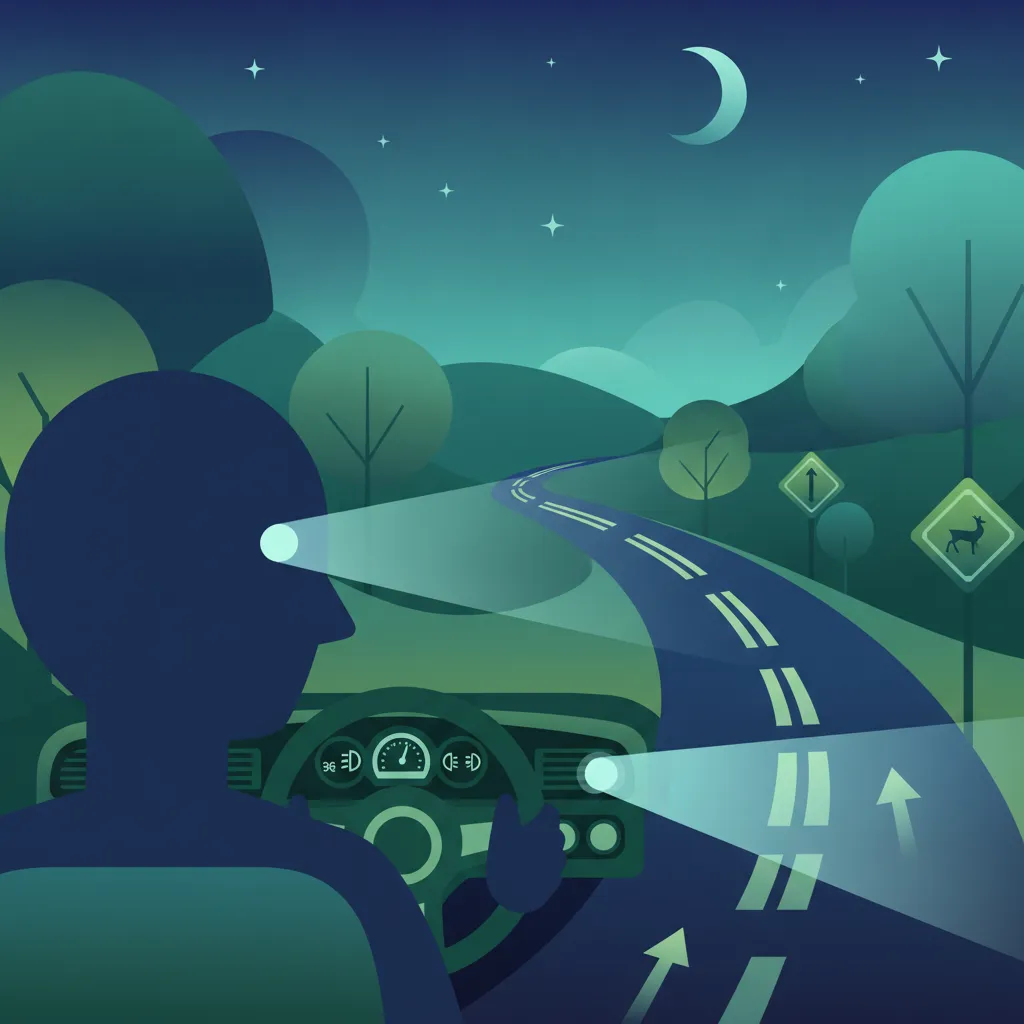
This lesson provides guidance on safe riding practices during nighttime, emphasizing proper headlamp usage, reflective clothing, and strategies to manage glare from oncoming traffic. Learners will learn to compensate for reduced peripheral vision and increased fatigue, as well as to identify common night road hazards in France. By applying these techniques, riders can enhance their visibility and safety after dark.
This lesson focuses on the importance of wearing appropriate protective clothing and gear, such as jackets, CE-certified gloves, and durable boots, that meet safety standards for impact and abrasion resistance. Learners will examine the material properties that provide optimal protection while ensuring comfort and adaptability to various weather conditions. Selecting correct gear helps mitigate injury severity and promotes long-term safety habits among AM riders.
This lesson focuses on the defensive value of CE-certified motorcycle apparel, including jackets, trousers, gloves, and boots. You will learn about the technical properties of abrasion-resistant materials like Cordura or leather, and the integration of armor inserts. Crucially, the lesson covers the French legal mandate requiring riders and passengers to wear certified protective gloves, detailing the legal fines for non-compliance.

This lesson teaches the fundamental differences between helmet types, highlighting full-face, modular, and jet configurations. You will learn about the strict European ECE certification standards and how to secure a perfect anatomical fit to maximize deceleration protection. It also addresses the specific French legal requirement of applying retro-reflective stickers to the helmet for enhanced visibility.
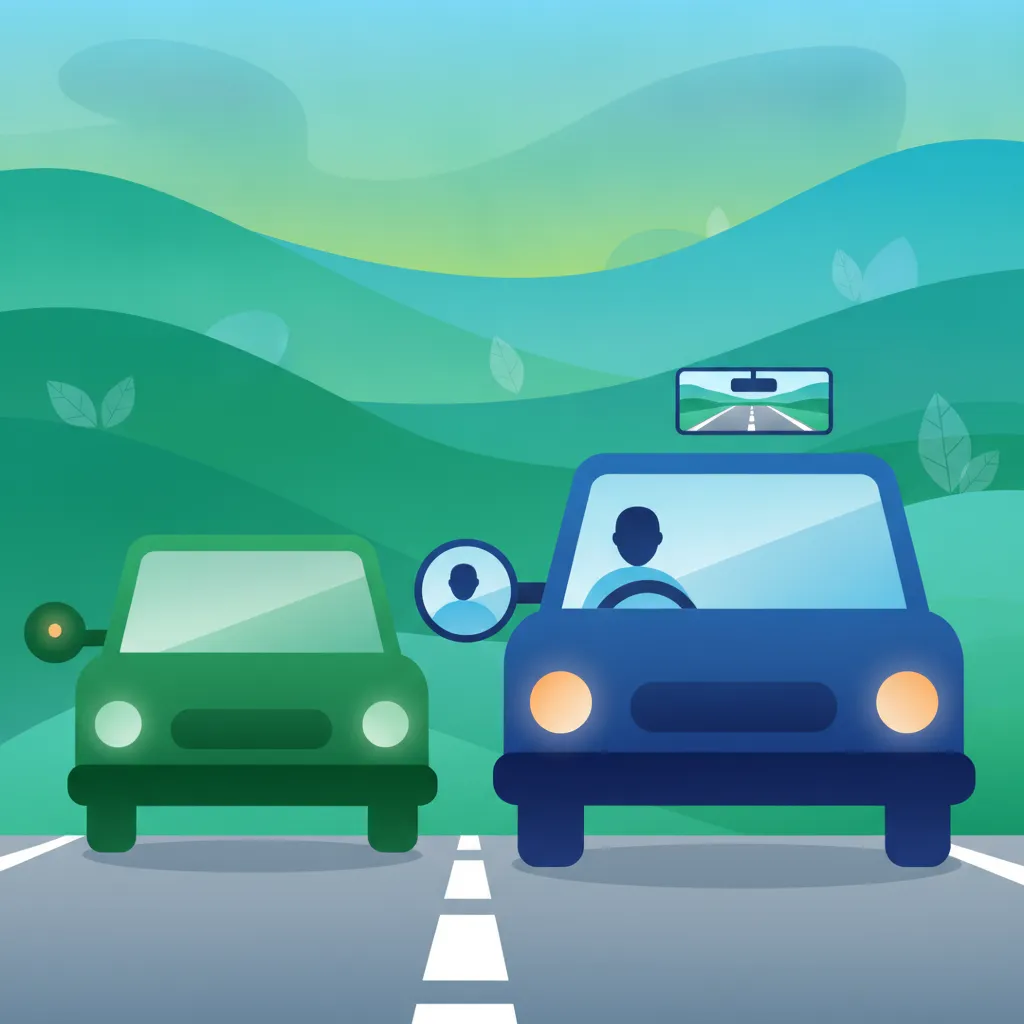
This lesson covers the strict legal conditions under which you may overtake other vehicles on French roads, including necessary visibility criteria. You will master the step-by-step process of checking rearview mirrors, performing head checks, signaling, and maintaining a safe speed differential during the pass. It also details when overtaking is strictly forbidden, such as before intersections, near pedestrian crossings, or across solid lines.
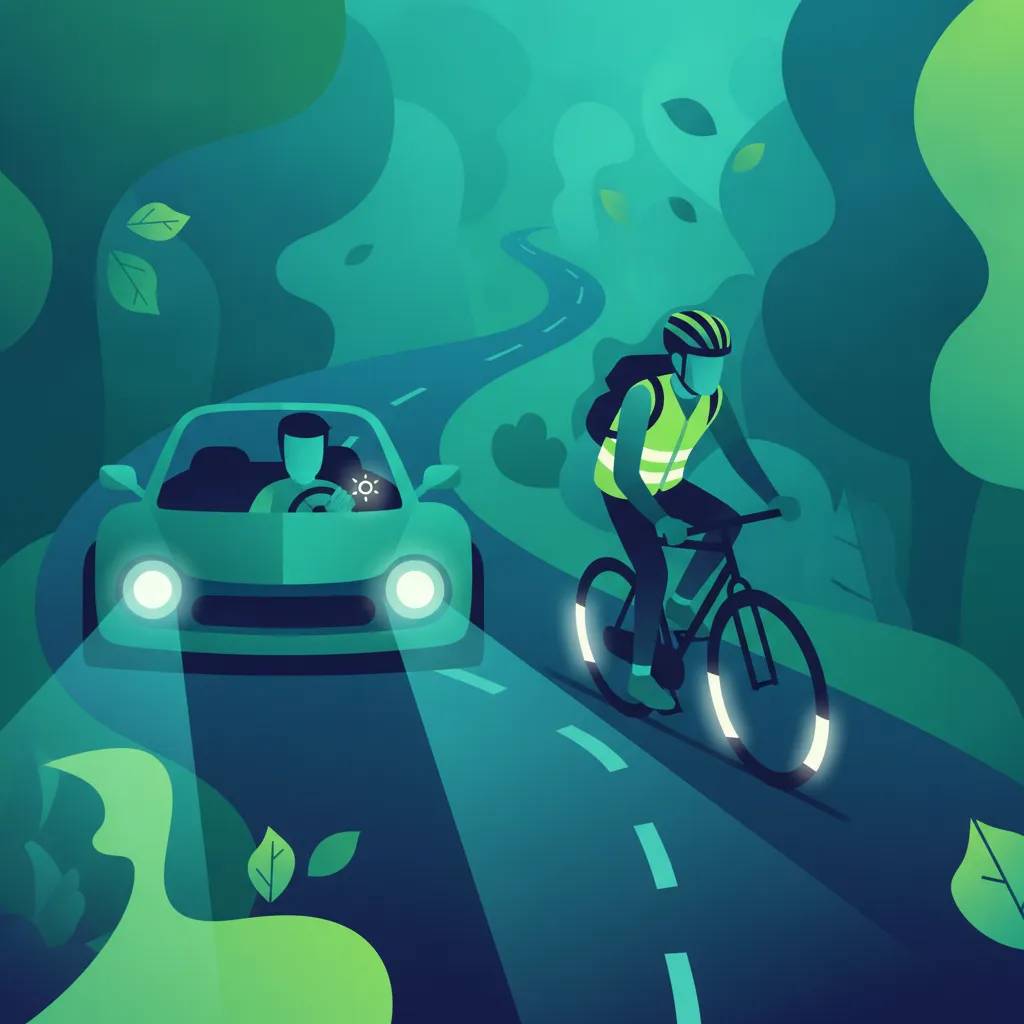
Learners will examine how the strategic use of lighting and reflectors significantly enhances rider visibility to other road users, especially in low-light conditions. The lesson outlines the legal requirements for front and rear lights, the benefits of daytime running lights, and the role of retroreflective strips on clothing. By following these guidelines, AM riders can improve their conspicuity, reducing the risk of collisions during both day and night riding in France.
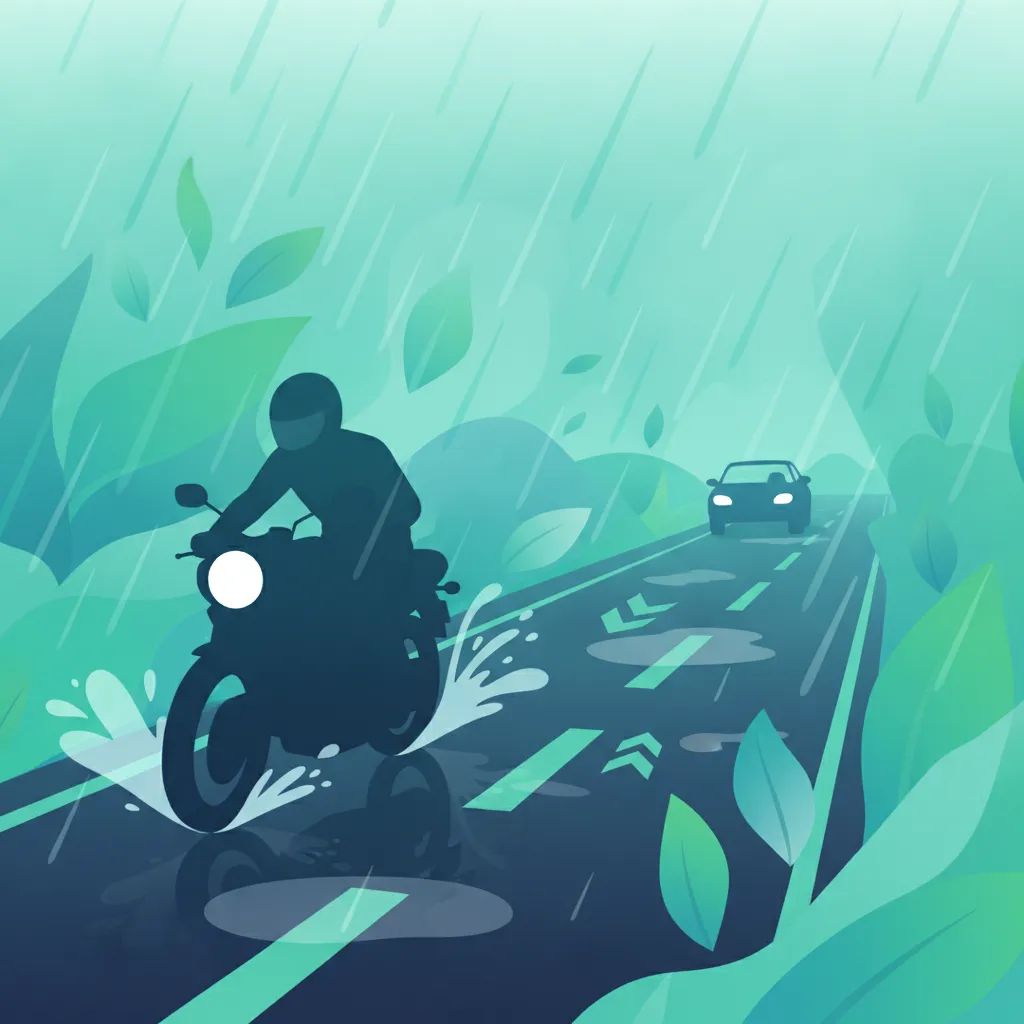
Learners will explore techniques for maintaining control and safety while riding in rain, focusing on reduced braking efficiency, hydroplaning prevention, and visibility challenges. The lesson emphasizes appropriate speed reduction, tire condition checks, and the use of rain gear to enhance rider comfort and protection. By mastering these adaptations, riders can navigate wet French conditions with confidence.
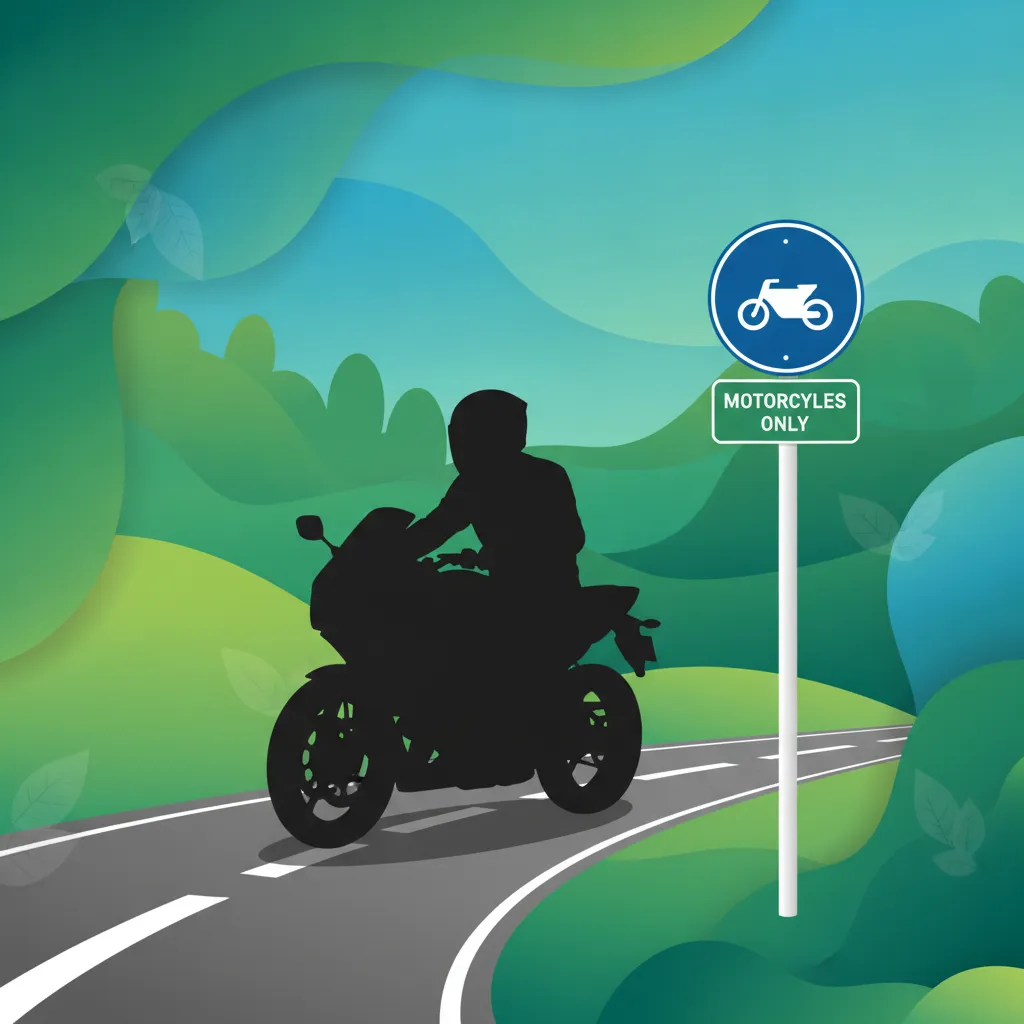
This lesson focuses on identifying regulatory signs, which are circular signs with red borders for prohibitions or blue backgrounds for obligations. You will learn about specific restrictions that impact motorcycle paths, including narrow lane access bans, motorcycle-specific speed limits, and overtaking prohibitions. Mastering these symbols is vital to ensuring compliance with French road law and avoiding immediate traffic penalty points.
Understand how to maintain protective space and perform continuous risk assessment while riding in complex traffic. This lesson explains how to mitigate hazards caused by fatigue, impaired visibility, and other road users by applying proactive defensive riding techniques relevant to the French category A, A1, and A2 license.
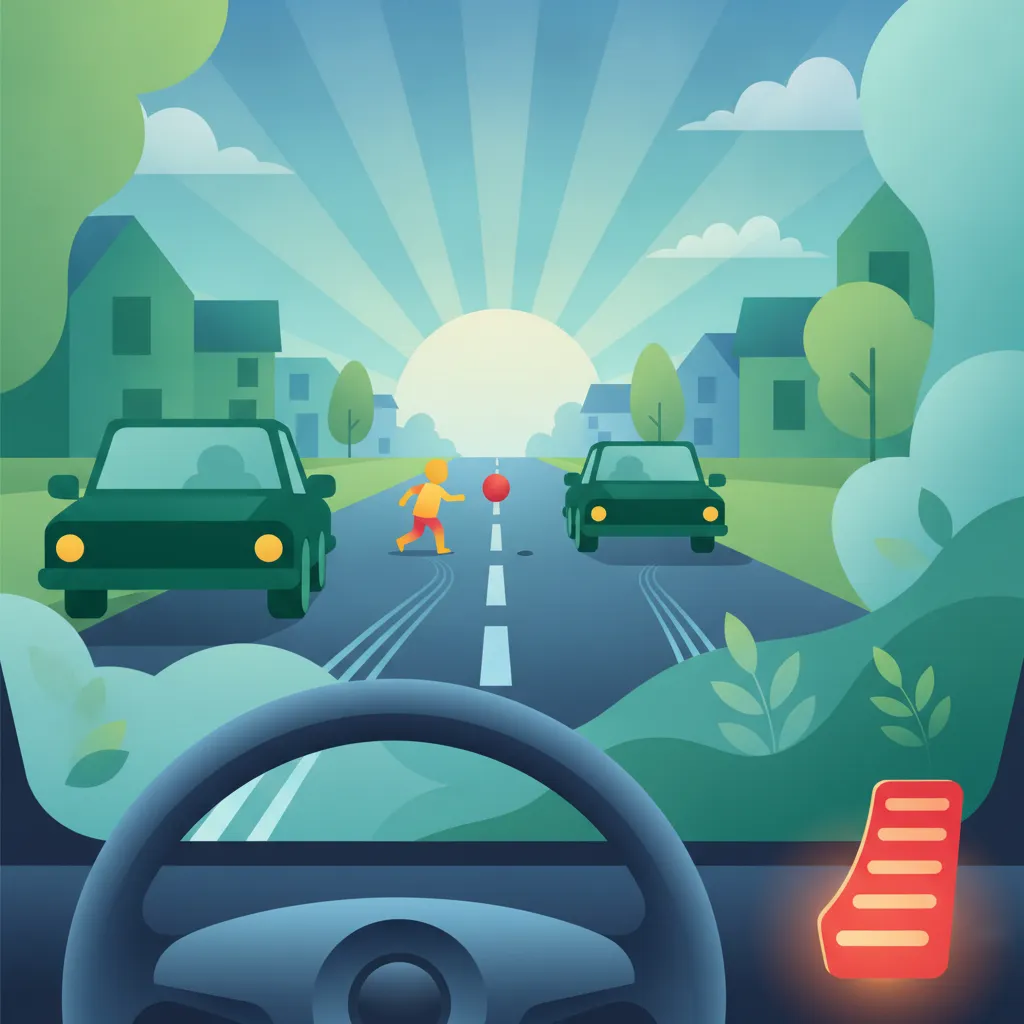
Learners will develop the ability to anticipate potential hazards on the road, enhancing reaction times and defensive riding strategies. The lesson emphasizes constant scanning, early identification of threats such as sudden stops, pedestrian crossings, or unexpected lane changes, and appropriate response measures. By cultivating proactive risk assessment, AM riders can significantly reduce accident likelihood.
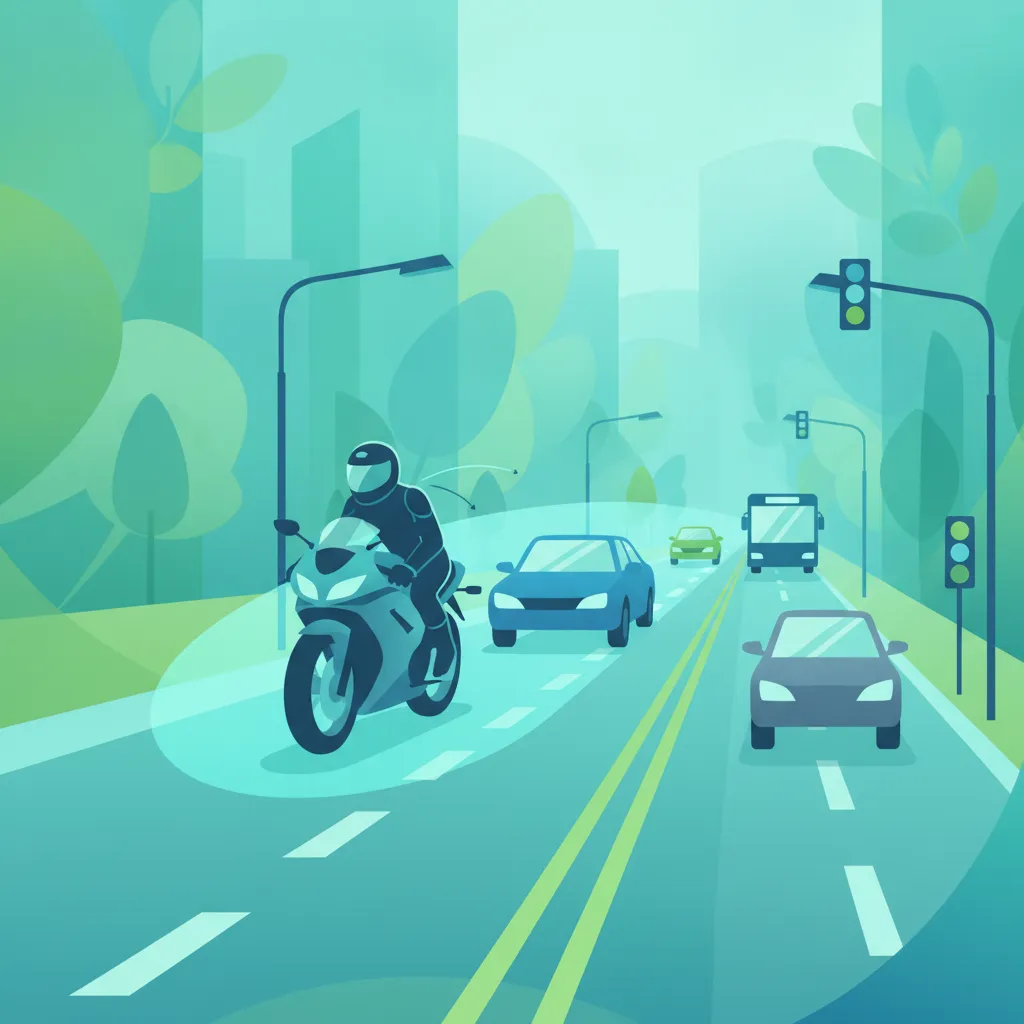
This final lesson integrates all course concepts into a single, cohesive approach to defensive riding and continuous risk assessment. You will study how to maintain a high-mileage visual lead, continuously scanning the road ahead for warning signs of conflict. By learning to assume that other motorists may not see you, you will build the proactive slowing habits and situational awareness needed to remain safe throughout your riding life.
This lesson teaches you how to establish and preserve a dynamic cushion of safety on all sides of your motorcycle. You will study how to apply the 'two-second rule' to keep a safe following distance, extending it to three or more seconds in adverse weather. Additionally, you will discover how to manage tailgating motorists safely without resorting to dangerous speed increases, ensuring you always maintain a clear escape route.
This lesson teaches critical emergency response maneuvers to help you avoid sudden, unexpected obstacles on the roadway. You will learn the exact step-by-step process of executing a rapid, controlled swerve, keeping braking forces separate from steering inputs to prevent a slide. Additionally, the lesson addresses the psychological challenge of 'target fixation' and provides techniques to keep your eyes focused on your clear escape route.

This lesson addresses the critical psychological elements that often lead to hazardous riding decisions, especially among newer motorcyclists. You will examine the dangers of overestimating your personal control limits and downplaying common road risks during group rides. The lesson provides practical strategies to resist peer pressure, maintain your own safe pace, and prioritize professional defensive habits over showing off.
This lesson breaks down triangular warning signs, which warn of upcoming safety hazards like reverse curves, narrowing lanes, or loose gravel. You will learn to translate these visual markers into proactive riding techniques, such as adjusting your entry speed or choosing an alternative lean angle. Special attention is given to signs indicating temporary roadworks or variable grip conditions, which pose elevated dangers to motorcycles.
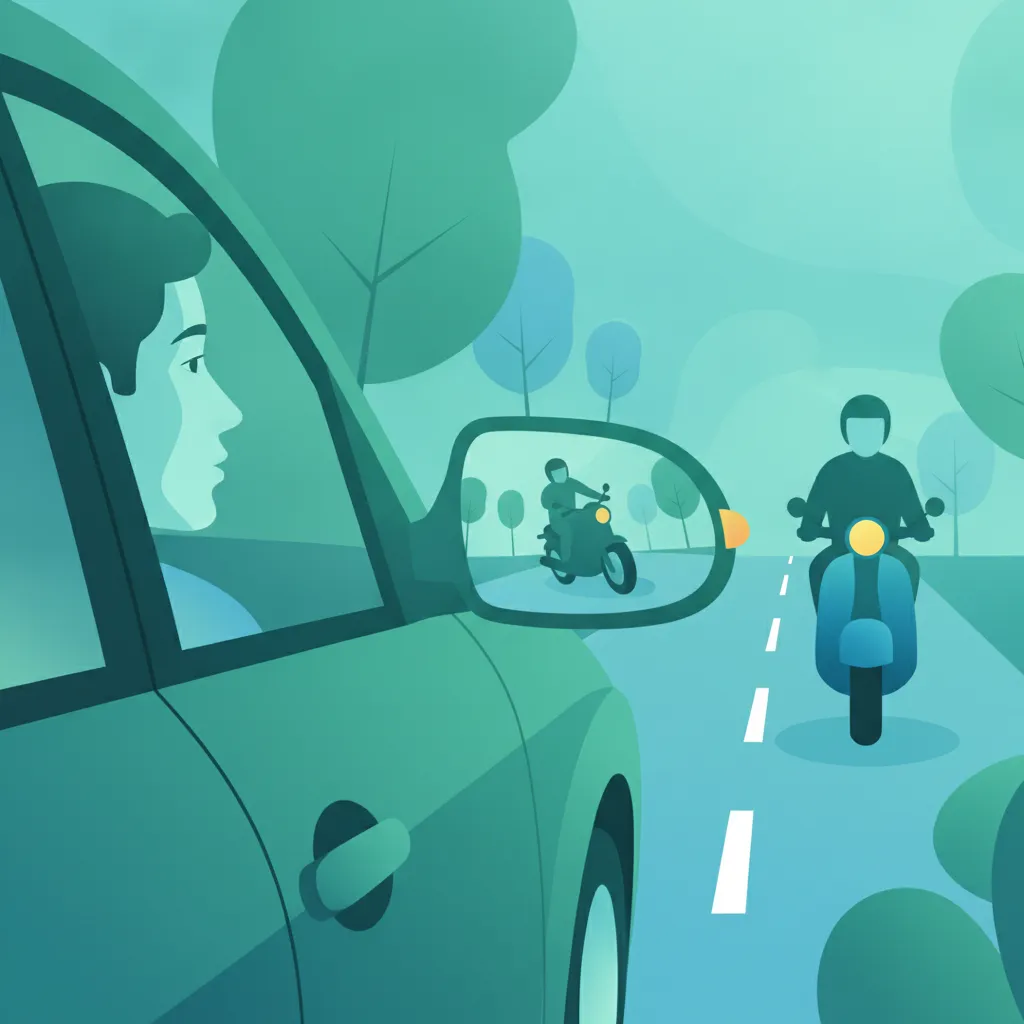
In this lesson, drivers will learn how to safely share the road with motorcycles and scooters, focusing on the specific blind spots and speed differentials that create risk. The content highlights proper lane positioning, caution when overtaking, and strategies for predicting motorcycle trajectories. Learners will also be introduced to the importance of being aware of scooter movements, especially in narrow streets.
This lesson teaches riders how to approach and cross both controlled and uncontrolled intersections in urban settings. You will practice the 'scanning cycle' technique to identify cross-traffic hazards and manage your defensive line of sight around physical obstructions. The lesson also highlights the critical importance of early signaling and positioning to ensure that turning passenger cars do not violate your safety zone.

This lesson focuses on French warning signs that alert drivers to potential hazards ahead, such as curves, animal crossings, or slippery surfaces, with particular attention to signs relevant to AM riders. Learners will examine how to interpret these signs, understand the associated risks, and adapt riding behavior accordingly. By mastering warning sign recognition, riders can proactively manage safety risks in diverse road conditions.

This lesson explores how dividing your travel lane into three distinct vertical zones allows you to adjust your positioning for optimal safety. You will learn to shift your line to avoid oil slicks in the lane center, road debris at the edges, and wind blasts from passing trucks. Crucially, the lesson covers how to adapt your lane position on blind bends to widen your field of vision and stay clear of oncoming traffic.
Find clear answers to common questions learners have about Night Riding: Illumination, Glare, and Fatigue Management. Learn how the lesson is structured, which driving theory objectives it supports, and how it fits into the overall learning path of units and curriculum progression in France. These explanations help you understand key concepts, lesson flow, and exam focused study goals.
You must switch to low beams whenever you approach oncoming traffic or follow another vehicle closely to prevent dazzling other drivers. In well-lit urban areas, you should use low beams, while high beams are reserved for unlit roads where no other vehicles are present.
The theory exam often tests your awareness of the 'circadian dip' and the effects of darkness on reaction times. You must recognize that fatigue reduces your concentration and decision-making speed; the correct answer usually involves identifying early signs of drowsiness and planning breaks accordingly.
France has strict standards for rider safety. Retro-reflective elements are highly visible when illuminated by headlights, significantly increasing your detection distance by other drivers in the dark, which is a key focus for safe riding in the Code de la route.
You should avoid looking directly at the source of the light. Instead, shift your focus to the right side of the road, following the white edge line or the curb to maintain your lane position until the vehicle has passed.
Ready to focus your study? Use the practice search to find exactly the French driving theory questions you need for the Code de la route and permis de conduire ETG. Refine your knowledge on specific topics or challenging rules to boost your confidence and exam readiness.