
This lesson guides you through the critical adjustments needed when environmental conditions change on French roads. By mastering these techniques, you will be prepared to handle everything from reduced visibility to sudden traction loss, ensuring your safety and success in the theory exam.

Lesson content overview
Riding a motorcycle offers an unparalleled sense of freedom and a direct connection to the surrounding environment. However, this direct exposure means that motorcyclists are exceptionally vulnerable to sudden weather shifts. Unlike car drivers, who are shielded by a steel chassis, climate control, and four wide contact patches, a rider relies on just two small patches of rubber—each barely larger than a credit card—to maintain stability, traction, and control.
In the context of the French Motorcycle Theory Course (Category A, A1, A2), mastering environmental adaptation is not just a safety recommendation; it is a legal requirement governed strictly by the Code de la route. This lesson teaches you how to read the road, anticipate meteorological hazards, adjust your physical riding inputs, and comply with French traffic laws when conditions deteriorate.
To understand why environmental adaptation is critical, you must understand the physical laws that dictate motorcycle stability. Your tires' grip is determined by the coefficient of friction () between the tire rubber and the road surface.
When weather conditions change, this coefficient drops instantly. Any sudden mechanical input—such as sharp braking, rapid throttle adjustments, or aggressive steering—will easily exceed the available traction limit, resulting in a low-side or high-side crash.
Tire rubber is engineered to operate within a specific thermal window (typically between 40°C and 60°C for standard road tires). Within this temperature range, the rubber becomes pliable enough to mechanically interlock with the microscopic textures of the asphalt. Cold ambient temperatures, damp roads, and cold wind-chill prevent your tires from reaching or maintaining this optimal temperature, leaving the rubber stiff and slick.
Fog is one of the most hazardous meteorological conditions for a motorcyclist. Suspended micro-droplets of water scatter light, destroying your depth perception and making you nearly invisible to other road users.
In France, the Code de la route (Article R413-4) enforces a strict, universal speed limit whenever visibility drops below 50 metres, regardless of the road type or the normal speed limit:
The 50-Metre Rule: If you cannot see beyond 50 metres due to fog, snow, or heavy rain, your maximum speed is legally capped at 50 km/h on all roads, including motorways (autoroutes) where the speed limit is normally 130 km/h.
Under Articles R416-1 to R416-7 of the Code de la route, you must manage your motorcycle's lighting precisely to maximize visibility without blinding others:
Widen your safety margin: Increase your following distance behind the preceding vehicle to at least 4 to 5 seconds to compensate for delayed braking reactions.
Keep your visor clear: Fog creates condensation on the outside and inside of your visor. Use an anti-fog Pinlock double-shield insert, open your visor slightly to promote airflow, or use a glove wiper to clear droplets.
Track road markings: Use the solid white edge lines on the right side of the lane as visual guides rather than staring into the center of the road, which can cause highway hypnosis and disorientation.
Strong winds, particularly lateral gusts (vent de travers), present a unique aerodynamic hazard to motorcyclists. A motorcycle acts as a sail; wind forces push against the fairings, the wheels, and your body, threatening to push you out of your lane or off the road entirely.
Crosswinds are most dangerous where they occur suddenly, catching the rider off guard. Be highly alert in the following areas:
To combat a crosswind, you must actively apply aerodynamic counter-measures:
To counteract a wind pushing you from the right, apply gentle, continuous pressure to the right handlebar grip. This counter-steers the motorcycle, causing it to lean slightly to the right (into the wind) while maintaining a straight path of travel.
Seasonal temperature drops, particularly during autumn and winter, alter road characteristics and tire performance dramatically.
As ambient temperatures fall below 10°C, the asphalt loses its residual warmth. Standard motorcycle street tires struggle to warm up because the cold road constantly siphons heat away from the tire carcass.
The Weaving Myth: Many riders believe that rapidly zigzagging (weaving) back and forth across the lane warms tires up quickly. This is highly dangerous on cold public roads. Weaving on cold tires often leads to immediate traction loss.
To warm tires safely and effectively, use progressive, straight-line acceleration and braking. This flexes the internal steel belts and carcass of the tire, generating internal heat that spreads outward to the rubber tread.
In addition to cold temperatures, autumn introduces organic hazards that require immediate riding modifications:
Rain reduces grip and visibility simultaneously. When rain first begins to fall, it mixes with oil, rubber residue, and fuel deposits on the road surface. This creates a highly slick, soapy film known in France as "summer ice" (verglas d'été), which is incredibly dangerous.
The Code de la route mandates reduced speed limits for all drivers during rain or wet pavement conditions (Article R413-2):
| Road Type | Dry Speed Limit | Wet Speed Limit |
|---|---|---|
| Motorways (Autoroutes) | 130 km/h | 110 km/h |
| Dual Carriageways (Voies rapides) | 110 km/h | 90 km/h |
| Standard Non-Urban Roads | 80 km/h or 90 km/h | 80 km/h |
Hydroplaning occurs when a wedge of water builds up between the tire tread and the road surface, lifting the motorcycle completely off the ground. When this happens, all traction is lost; steering and braking inputs have zero effect.
Transitions in lighting place extreme demands on your eyes, requiring rapid visual accommodation.
At dawn and dusk, a low sun can completely blind you. Dirt, scratches, and road grime on your visor scatter the sunlight, magnifying the glare.
Entering and exiting French road tunnels requires immediate adaptation:
Turn on Dipped Beams: Ensure your dipped beams are on before entering the tunnel (even if the tunnel is illuminated). This is a legal requirement under French law.
Retract Sun Visor: If you are wearing sunglasses or have an internal drop-down sun visor engaged, lift it immediately upon entry to prevent temporary blindness.
Anticipate Glare at the Exit: When exiting a dark tunnel into bright sunlight, your eyes will take several seconds to adjust (pupil constriction). Slow down slightly and prepare for temporary visual impairment.
Adapting to your environment requires proactive, defensive riding decisions rather than reactive panic maneuvers.
Your safety margin is your lifesaver. In ideal, dry conditions, you should maintain a 2-second following distance. In poor conditions, you must scale this distance proportionally:
[ Dry Conditions ]  -->  2 Seconds Minimum Following Distance
[ Wet / Rain ]      -->  4 Seconds Minimum Following Distance
[ Fog / Low Vis ]   -->  5+ Seconds / Match to Visibility Limit
Certain man-made road elements become slick as ice when wet. Always adjust your line to avoid:
To deepen your understanding of motorcycle dynamics and prepare thoroughly for the French theoretical license exam, explore the following resources and practice sessions:
Explore all units and lessons included in this driving theory course.
Lesson content overview
Explore all units and lessons included in this driving theory course.
Explore search topics learners often look for when studying Adapting Riding Style to Weather and Environmental Changes. These topics reflect common questions about road rules, driving situations, safety guidance, and lesson level theory preparation for learners in France.
Browse additional driving theory lessons that cover connected traffic rules, road signs, and common driving situations related to this topic. Improve your understanding of how different rules interact across everyday traffic scenarios.
Learn how to proactively manage risks and adjust riding behavior to improve safety on French roads. This guide covers scanning techniques, gap management, and mental preparation required for the motorcycle theory exam and safe riding in various traffic conditions.
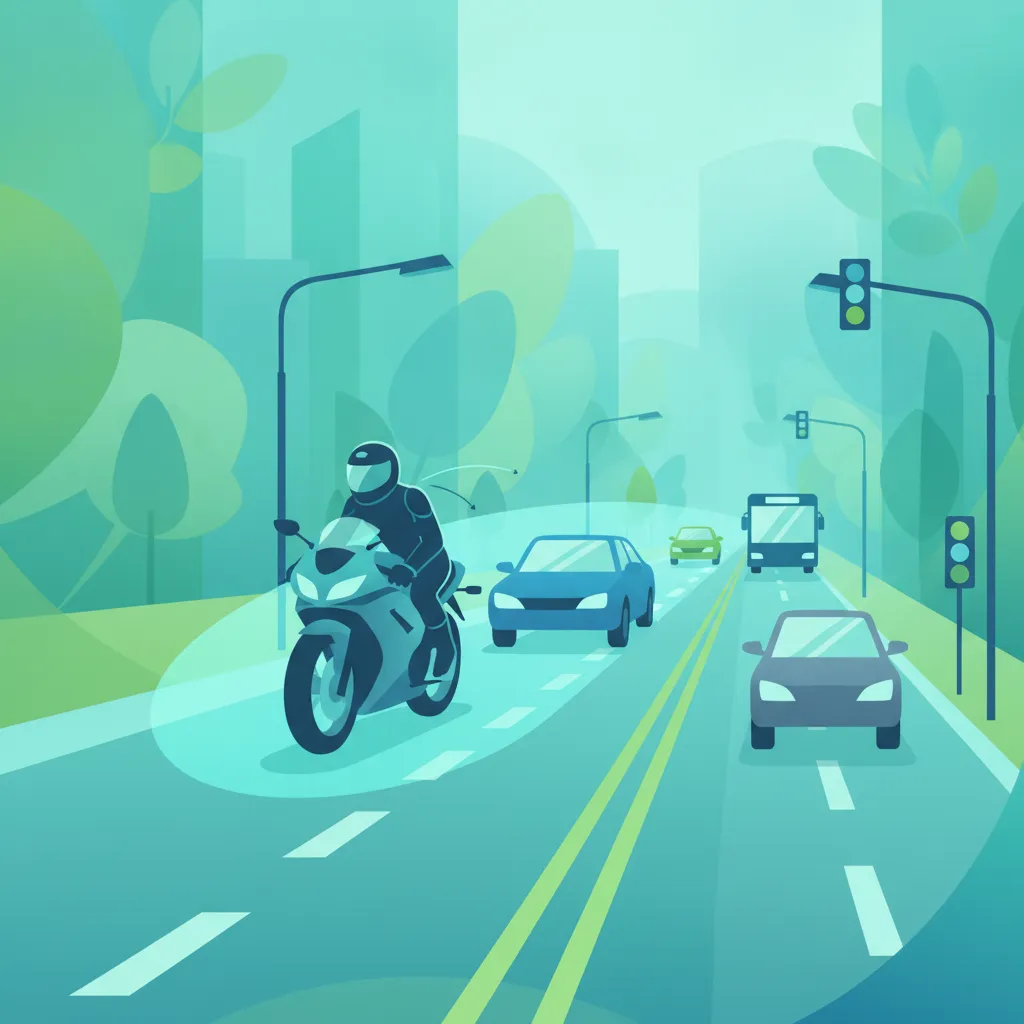
This final lesson integrates all course concepts into a single, cohesive approach to defensive riding and continuous risk assessment. You will study how to maintain a high-mileage visual lead, continuously scanning the road ahead for warning signs of conflict. By learning to assume that other motorists may not see you, you will build the proactive slowing habits and situational awareness needed to remain safe throughout your riding life.

This lesson teaches you how to establish and preserve a dynamic cushion of safety on all sides of your motorcycle. You will study how to apply the 'two-second rule' to keep a safe following distance, extending it to three or more seconds in adverse weather. Additionally, you will discover how to manage tailgating motorists safely without resorting to dangerous speed increases, ensuring you always maintain a clear escape route.

Learners will develop the ability to anticipate potential hazards on the road, enhancing reaction times and defensive riding strategies. The lesson emphasizes constant scanning, early identification of threats such as sudden stops, pedestrian crossings, or unexpected lane changes, and appropriate response measures. By cultivating proactive risk assessment, AM riders can significantly reduce accident likelihood.

This lesson addresses the critical psychological elements that often lead to hazardous riding decisions, especially among newer motorcyclists. You will examine the dangers of overestimating your personal control limits and downplaying common road risks during group rides. The lesson provides practical strategies to resist peer pressure, maintain your own safe pace, and prioritize professional defensive habits over showing off.

This lesson teaches critical emergency response maneuvers to help you avoid sudden, unexpected obstacles on the roadway. You will learn the exact step-by-step process of executing a rapid, controlled swerve, keeping braking forces separate from steering inputs to prevent a slide. Additionally, the lesson addresses the psychological challenge of 'target fixation' and provides techniques to keep your eyes focused on your clear escape route.

This lesson addresses the unique physiological demands of operating a heavy motorcycle, requiring high muscular coordination, core stability, and rapid reaction times. You will learn to perform self-assessments of your current health status and identify how minor physical ailments can impair balance. The lesson also covers cognitive load management, ensuring that mental stress does not compromise your reaction patterns on the road.

This lesson emphasizes that driving a motorcycle in France involves unique moral and social responsibilities towards vulnerable road users like cyclists and pedestrians. You will examine the importance of defensive riding habits, civil road etiquette, and the prioritizing of shared road safety. Understanding these principles helps to prevent dangerous situations, respect local communities, and lower overall accident statistics.
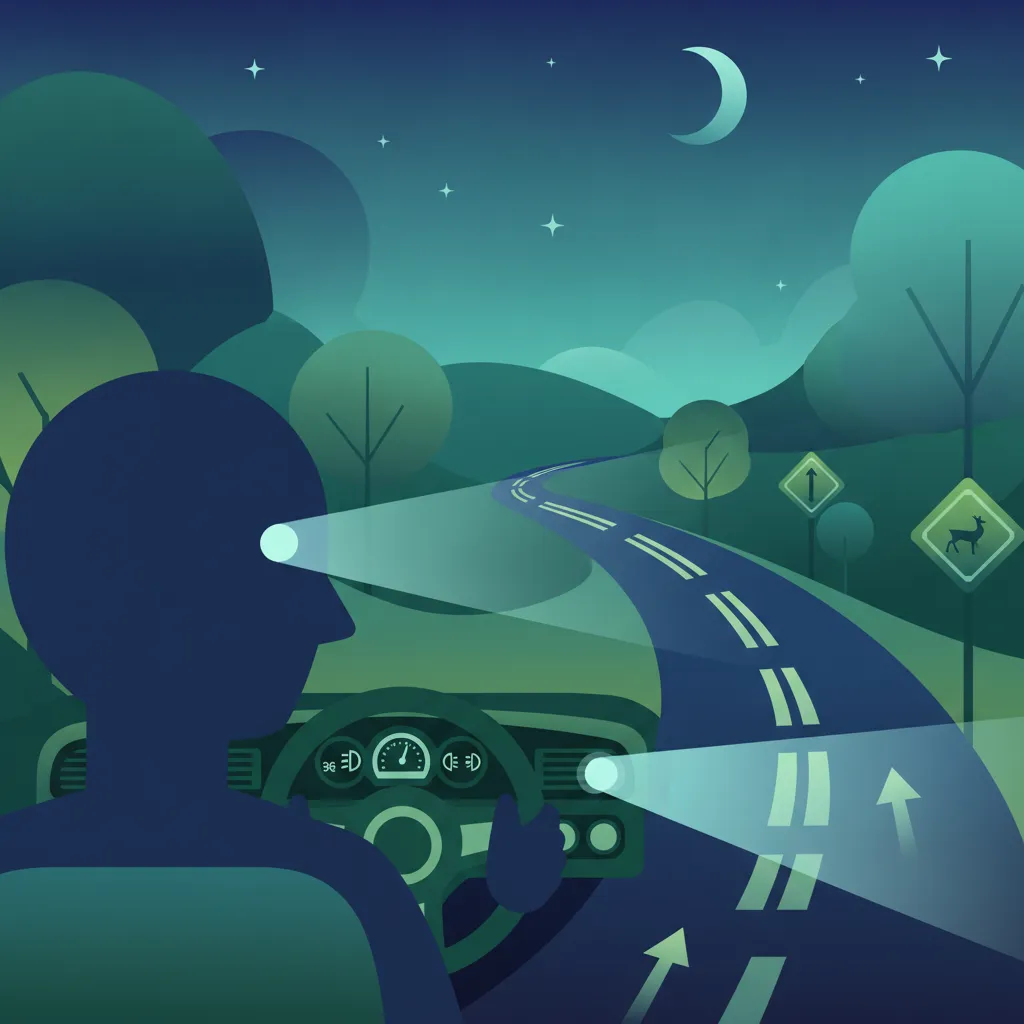
This lesson provides guidance on safe riding practices during nighttime, emphasizing proper headlamp usage, reflective clothing, and strategies to manage glare from oncoming traffic. Learners will learn to compensate for reduced peripheral vision and increased fatigue, as well as to identify common night road hazards in France. By applying these techniques, riders can enhance their visibility and safety after dark.
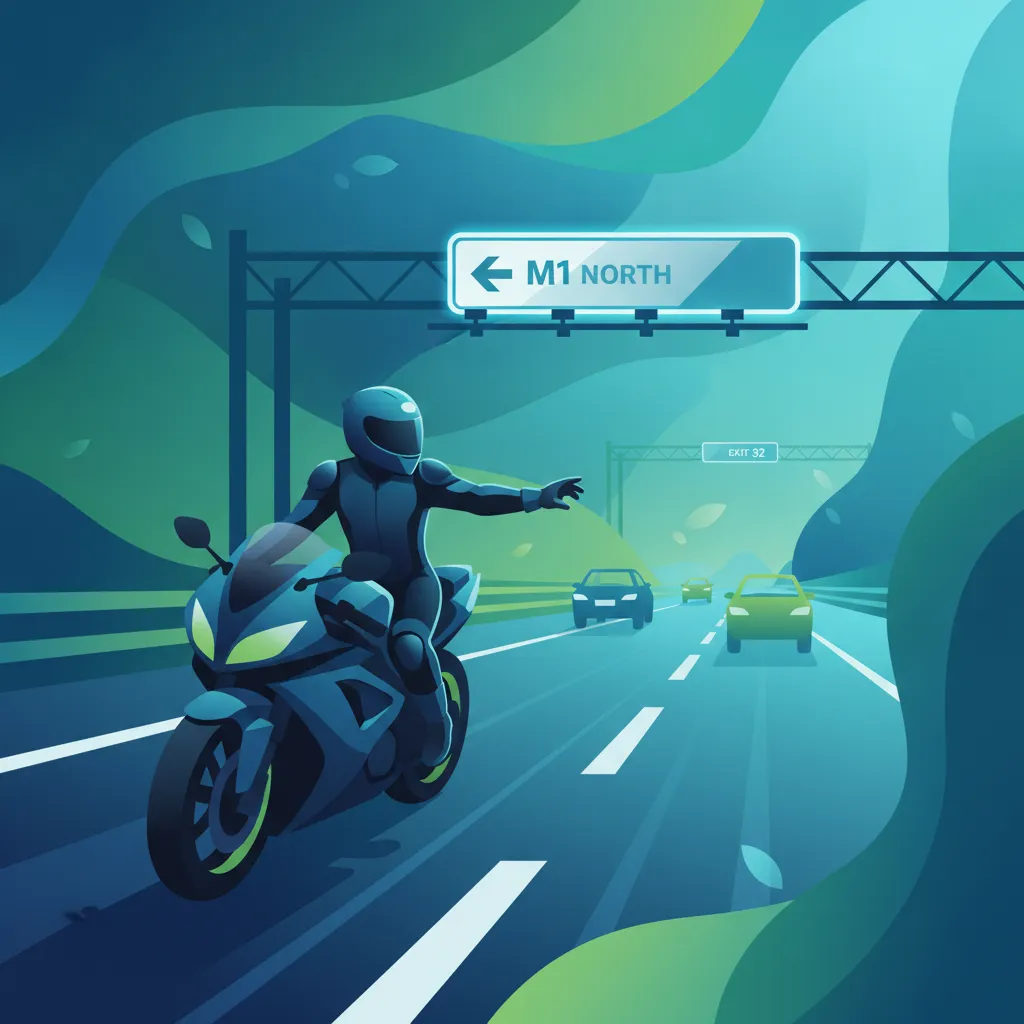
This lesson details how to safely enter, cruise on, and exit French motorways, known as autoroutes, which feature high-speed traffic flows. You will master the process of matching highway speeds in the acceleration lane and performing blind spot checks before merging. The lesson also explains correct lane positioning to avoid aerodynamic turbulences from large semi-trucks, and how to safely prepare for decelerating at exit ramps.

Learners will explore techniques for maintaining control and safety while riding in rain, focusing on reduced braking efficiency, hydroplaning prevention, and visibility challenges. The lesson emphasizes appropriate speed reduction, tire condition checks, and the use of rain gear to enhance rider comfort and protection. By mastering these adaptations, riders can navigate wet French conditions with confidence.
Understand the specific rules for entering, positioning, and exiting motorways in France on a motorcycle. This lesson explains lane discipline, managing high-speed airflow, and adapting to motorway traffic environments while adhering to the official Code de la route.
This lesson details how to safely enter, cruise on, and exit French motorways, known as autoroutes, which feature high-speed traffic flows. You will master the process of matching highway speeds in the acceleration lane and performing blind spot checks before merging. The lesson also explains correct lane positioning to avoid aerodynamic turbulences from large semi-trucks, and how to safely prepare for decelerating at exit ramps.

This lesson explains the correct procedures for entering, circulating, and exiting roundabouts, which are highly prevalent throughout France. You will learn the exact lane choice strategies based on your intended exit, and how to use your turn indicators at each stage of the maneuver. The content also addresses the critical task of performing over-the-shoulder blind spot checks to avoid conflicts with overtaking vehicles when exiting.

This lesson covers the strict legal conditions under which you may overtake other vehicles on French roads, including necessary visibility criteria. You will master the step-by-step process of checking rearview mirrors, performing head checks, signaling, and maintaining a safe speed differential during the pass. It also details when overtaking is strictly forbidden, such as before intersections, near pedestrian crossings, or across solid lines.

French motorways (autoroutes) are fast, controlled-access roads with unique laws regulating lane discipline and emergencies. This lesson teaches standard lane-use: cruising in the right lane and reserving the middle or left lanes exclusively for passing. You will study emergency procedures, the use of orange emergency call boxes, safety barrier rules, and navigating toll booths (peages) safely.

This lesson covers the operational logic of traffic light signals in France, emphasizing the legal implications of the red, amber, and green cycles. You will study how to safely manage the amber phase to avoid rear-end collisions from vehicles behind while maintaining control. Additionally, you will discover the unique challenge of electromagnetic induction loops, which sometimes fail to detect lightweight motorcycles at quiet intersections.
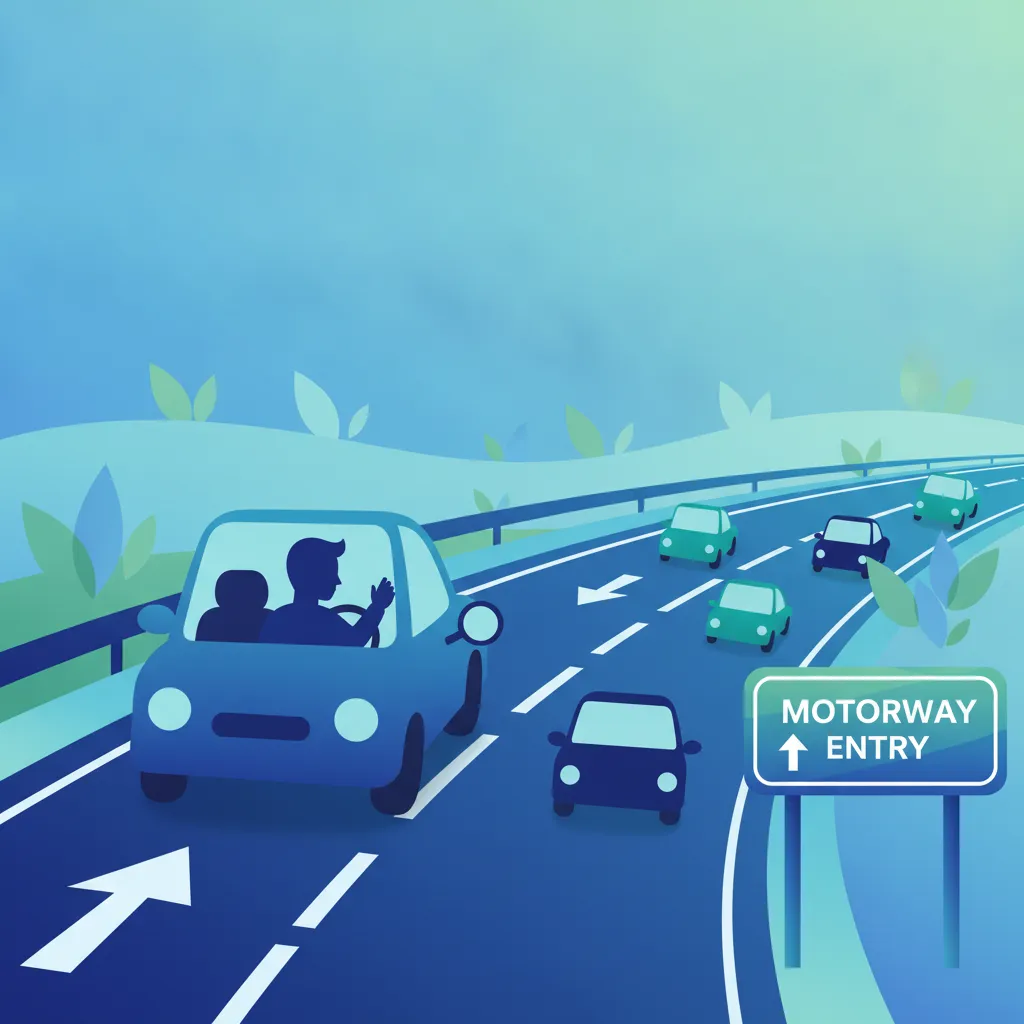
Merging onto a motorway or dual carriageway requires precise coordination of speed, lane observation, and indicator signalling. This lesson explains how to utilize the acceleration lane (voie d'insertion) to match the speed of highway traffic before merging. You will learn how to assess traffic gaps in your side mirrors, signal your intentions, and execute the merge without disrupting the traffic flow.
This lesson focuses on identifying regulatory signs, which are circular signs with red borders for prohibitions or blue backgrounds for obligations. You will learn about specific restrictions that impact motorcycle paths, including narrow lane access bans, motorcycle-specific speed limits, and overtaking prohibitions. Mastering these symbols is vital to ensuring compliance with French road law and avoiding immediate traffic penalty points.

This lesson provides a comprehensive breakdown of priority rules under French law, with special focus on the default rule of priorité à droite. You will learn to recognize when this rule applies, even in the absence of explicit signage, and how to verify that entering vehicles see you. It also explains how to read priority road indicators, stop signs, and yield signs, helping you manage right-of-way safely and confidently.

This lesson explores how dividing your travel lane into three distinct vertical zones allows you to adjust your positioning for optimal safety. You will learn to shift your line to avoid oil slicks in the lane center, road debris at the edges, and wind blasts from passing trucks. Crucially, the lesson covers how to adapt your lane position on blind bends to widen your field of vision and stay clear of oncoming traffic.

This lesson covers the rules of driving passenger vehicles on high-speed French motorways (autoroutes). Learners will study entry-ramp merging protocols, lane restrictions for vehicles over 3.5 tonnes, and motorway-specific speed limits. The lesson also highlights the correct use of toll booths (péages), emergency hard-shoulder safety procedures, and accessing dedicated coach rest areas.
Find clear answers to common questions learners have about Adapting Riding Style to Weather and Environmental Changes. Learn how the lesson is structured, which driving theory objectives it supports, and how it fits into the overall learning path of units and curriculum progression in France. These explanations help you understand key concepts, lesson flow, and exam focused study goals.
In cold conditions, the rubber compound in motorcycle tires takes longer to reach its optimal operating temperature. This significantly reduces your grip levels during the first few kilometers of your ride, so you must ride more cautiously and avoid aggressive acceleration or braking.
You must significantly reduce your speed and increase your following distance to compensate for the reduced visibility. Ensure your lights are set correctly, avoid sudden maneuvers, and use road markings as a guide to stay centered in your lane.
Leaning slightly into the wind can help keep your motorcycle tracking straight. Keep a relaxed grip on the handlebars to prevent jerky inputs, and be prepared for 'wind blasts' when you emerge from behind buildings or hedges that previously sheltered you.
Gravel and sand act like ball bearings under your tires, drastically reducing friction and making it easy for your wheels to slip. You should identify these hazards early, stay upright, and avoid any abrupt changes in speed or direction while passing over them.
Ready to focus your study? Use the practice search to find exactly the French driving theory questions you need for the Code de la route and permis de conduire ETG. Refine your knowledge on specific topics or challenging rules to boost your confidence and exam readiness.