
This lesson establishes the foundation for your Category AM studies by defining exactly which vehicles fall under this licence category in France. You will learn the specific technical criteria, such as engine displacement and maximum speeds, that distinguish these vehicles under the Code de la route.

Lesson content overview
In France, the Category AM licence represents the first official step into motorized road mobility for young and new road users. Serving as the modern, European-harmonized successor to the old Brevet de Sécurité Routière (BSR), this licence category regulates the operation of small, low-powered vehicles.
Understanding which vehicles fall under Category AM is not just a matter of passing your driving theory exam; it is a fundamental requirement for legal compliance, road safety, and selecting a vehicle that matches your legal rights. Operating a vehicle that exceeds the technical limits of Category AM without the appropriate higher-class licence is a severe offense under the French Code de la route (Highway Code).
The Category AM licence is specifically designed to allow individuals as young as 14 years old in France to operate light, low-speed motorized vehicles. The establishment of this category balances personal mobility with public safety by restricting riders to vehicles with low kinetic energy and limited top speeds.
Historically, the BSR was a simple training certificate. Today, Category AM is a formal, harmonized European licence category. While it does not use the points-based system applied to standard French driving licences, it is a official driving credential that can be suspended or invalidated by judicial authorities for serious infractions.
The strict technical boundaries of Category AM are legally defined to protect both the driver and other vulnerable road users. By limiting speed, weight, and engine displacement, the law minimizes the potential severity of collisions.
Vehicles permitted under the Category AM licence are divided into three main classifications based on their wheels, frame design, and technical specifications: cyclomoteurs, scooters, and light quadricycles (commonly known in France as voitures sans permis or VSPs).
A cyclomoteur is traditionally defined as a two- or three-wheeled motor vehicle with a highly restricted engine size and speed.
A two- or three-wheeled motorized vehicle equipped with an internal combustion engine not exceeding 50 cm³ (or an electric motor with equivalent power) and engineered to reach a maximum design speed of no more than 45 km/h.
Historically, this subcategory included classic "mopeds" equipped with pedals to assist the small engine. Today, it covers modern 50cc two-wheelers. To be legally operated on public roads with an AM licence, a cyclomoteur must meet the following baseline conditions:
While technically classified as cyclomoteurs under French law, scooters are distinguished by their structural design. They typically feature a step-through frame, a flat floorboard for the rider's feet, smaller wheel diameters, and an automatic CVT (Continuously Variable Transmission) gear system.
A light quadricycle (quadricycle léger à moteur) is a compact, four-wheeled vehicle designed for low-speed transport. Often called "microcars" or voitures sans permis, they have become highly popular in France for both rural teenagers and urban commuters.
A four-wheeled motor vehicle with an unladen weight not exceeding 350 kg, a maximum design speed capped at 45 km/h, and an engine displacement of 50 cm³ or less for spark-ignition engines (or a maximum continuous power output of 4 kW for electric or diesel engines).
The legal boundary between a Category AM vehicle and a vehicle requiring a higher-level licence (such as A1, A2, or B) relies on three primary technical criteria:
Measured in cubic centimeters (cm³), engine displacement represents the volume swept by the engine's pistons. For combustion engines in the AM category, this volume must never exceed 50 cm³. A vehicle with a 49 cm³ engine is legal, whereas a 51 cm³ engine immediately reclassifies the vehicle, requiring a higher licence class.
The maximum design speed is the top speed the vehicle is engineered and certified to achieve under standard testing conditions. For all Category AM vehicles, this limit is set strictly at 45 km/h. Manufacturers install speed limiters (mechanical or electronic) to comply with this regulation.
Unladen weight refers to the weight of the vehicle structure and its standard mechanical components, excluding passengers, payload, and fuel. For light quadricycles, keeping the unladen weight under 350 kg (excluding battery packs for electric models) ensures the vehicle retains low mass. Low mass combined with low speed significantly reduces the kinetic energy of the vehicle during an impact, complying with the safety standards of the Code de la route.
To legally operate an AM vehicle on French roads, you must strictly adhere to the following codified regulations:
All vehicles driven under an AM licence must have a maximum design speed of 45 km/h.
Two-wheeled cyclomoteurs must have an engine displacement of ≤ 50 cm³ or an electric motor of ≤ 4 kW.
Light quadricycles must maintain an unladen weight of ≤ 350 kg (excluding batteries) and a maximum continuous power of ≤ 4 kW.
Every Category AM vehicle must be equipped with compliant, functional safety equipment, including:
When riding a two- or three-wheeled cyclomoteur, both the driver and any passenger must wear:
Riding a two-wheeled cyclomoteur or scooter without an approved helmet or certified gloves is an infraction of the French Highway Code. It results in a fixed fine, loss of licence points (if the driver holds a point-based licence), and immediate immobilization of the vehicle.
Operating a low-speed vehicle requires acute awareness of where you can and cannot ride. Category AM vehicles are highly vulnerable due to their speed differential compared to standard automobile traffic.
Under French law, Category AM vehicles are strictly prohibited from driving on:
The speed differential between a 45 km/h scooter and a 130 km/h car or 90 km/h heavy truck is extremely dangerous, making these routes highly hazardous for light vehicles.
Violating the technical boundaries or equipment requirements of Category AM carries severe legal and safety consequences in France:
Before operating any vehicle under your Category AM licence, perform the following verification steps:
Check the Registration Certificate (Carte Grise): Verify section J.1 (Vehicle Category) displays "CL" (for a two-wheeled cyclomoteur) or "L6e" (for a light quadricycle).
Verify the Engine Displacement: For combustion engines, ensure section P.1 displays a value of 50 cm³ or less.
Verify the Power Output: For electric models, ensure section P.2 displays a maximum continuous rated power of 4 kW or less.
Confirm the Factory Speed Limiter is Active: Ensure the vehicle cannot exceed 45 km/h on flat ground under its own power.
Inspect Required Safety Markings: Ensure your helmet is ECE/CE certified, and your gloves carry the motorcycle-approved CE icon.
To help solidify these rules, let's look at how they apply in common daily scenarios:
You are riding a 50cc scooter to school on a bright, dry morning. You enter a zone where the local speed limit for cars is 30 km/h.
You are driving a light quadricycle from a rural village to a nearby town. Your GPS suggests taking a dual-carriageway Voie Rapide to save time.
To prepare for your theory exam, memorize this comparison of the two primary vehicle types under Category AM:
| Feature / Criteria | Two-Wheeled Cyclomoteur / Scooter | Light Quadricycle (Voiture Sans Permis) |
|---|---|---|
| Max Engine Displacement | ≤ 50 cm³ (Combustion) | ≤ 50 cm³ (Spark-ignition engines) |
| Max Continuous Power | ≤ 4 kW (Electric) | ≤ 4 kW (Electric / Diesel) |
| Maximum Design Speed | 45 km/h | 45 km/h |
| Maximum Unladen Weight | N/A | ≤ 350 kg (excluding electric batteries) |
| Mandatory PPE | CE Helmet + CE Gloves | Seatbelt (if fitted/required) |
| Motorway Access | Strictly Prohibited | Strictly Prohibited |
To build a complete understanding of driving theory and prepare for your official French AM theory test, explore our related study units and practice exams.
Explore all units and lessons included in this driving theory course.
Lesson content overview
Explore all units and lessons included in this driving theory course.
Explore search topics learners often look for when studying Introduction to Category AM and Eligible Vehicles. These topics reflect common questions about road rules, driving situations, safety guidance, and lesson level theory preparation for learners in France.
Browse additional driving theory lessons that cover connected traffic rules, road signs, and common driving situations related to this topic. Improve your understanding of how different rules interact across everyday traffic scenarios.
Learn the legal requirements for personal protective equipment, including CE-certified helmets and gloves for moped and light quadricycle riders. This guide explains the essential safety gear required by the French Code de la route to protect new drivers and ensure full regulatory compliance during every journey.

This lesson focuses on the importance of wearing appropriate protective clothing and gear, such as jackets, CE-certified gloves, and durable boots, that meet safety standards for impact and abrasion resistance. Learners will examine the material properties that provide optimal protection while ensuring comfort and adaptability to various weather conditions. Selecting correct gear helps mitigate injury severity and promotes long-term safety habits among AM riders.
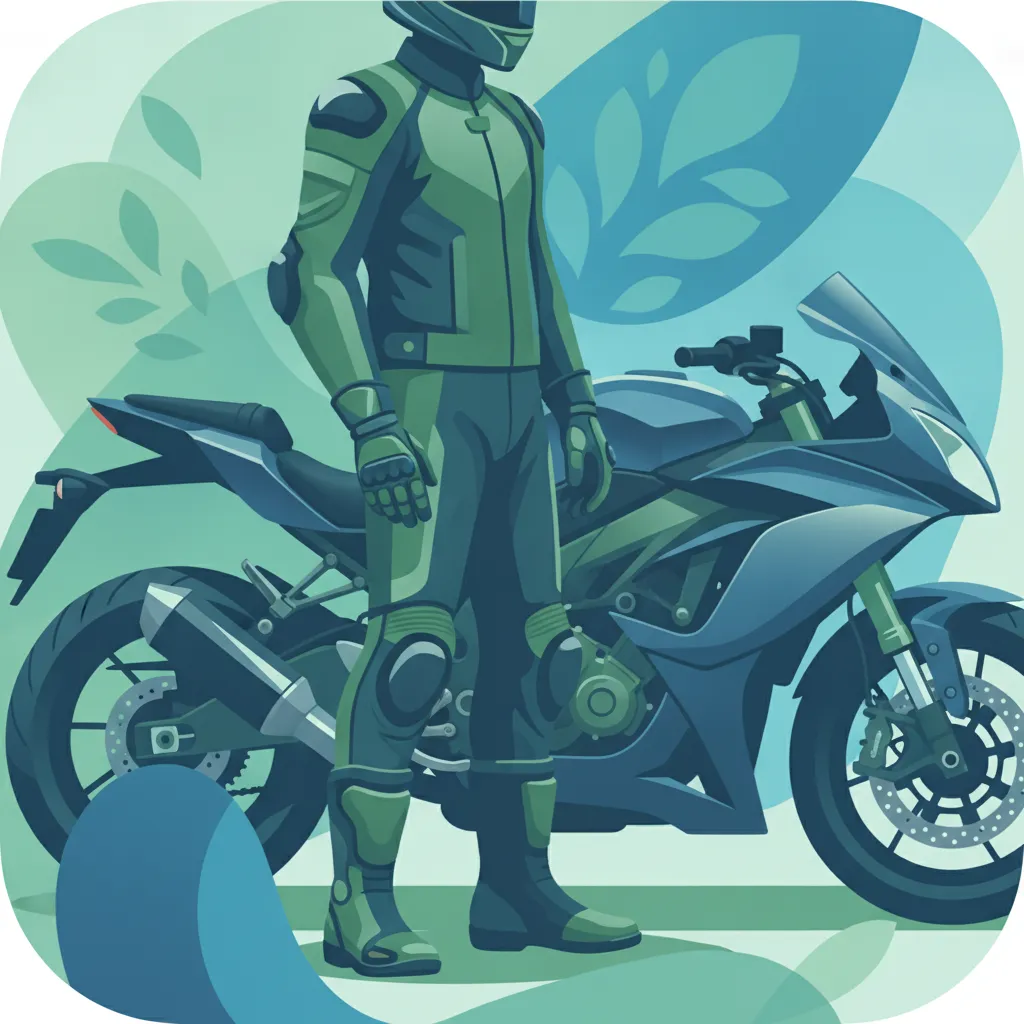
This lesson focuses on the defensive value of CE-certified motorcycle apparel, including jackets, trousers, gloves, and boots. You will learn about the technical properties of abrasion-resistant materials like Cordura or leather, and the integration of armor inserts. Crucially, the lesson covers the French legal mandate requiring riders and passengers to wear certified protective gloves, detailing the legal fines for non-compliance.
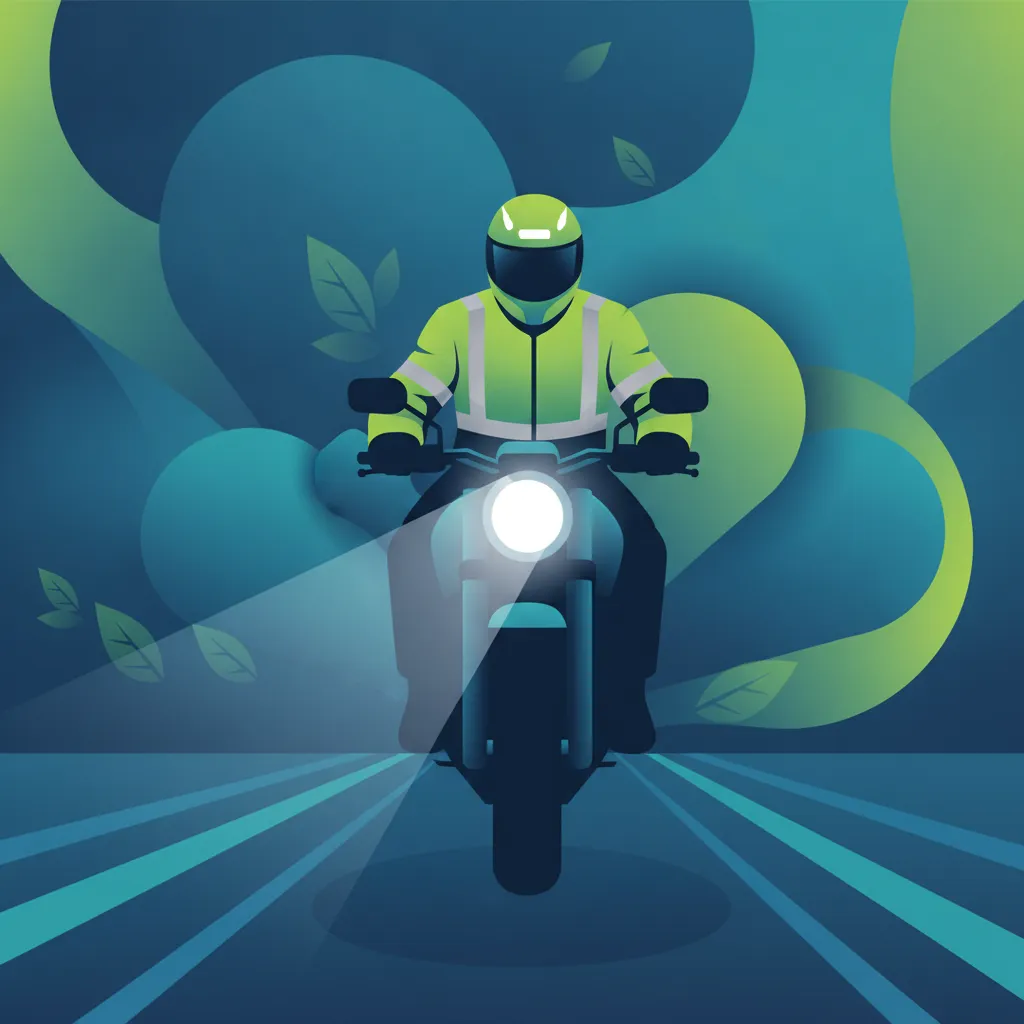
This lesson explores practical methods to make yourself visible to other road users, preventing the classic 'sorry mate, I didn't see you' hazard. You will analyze the use of high-visibility yellow or orange retro-reflective waistcoats, which are legally required to be carried on board in France. Additionally, you will study optimal headlight utilization and correct placement of auxiliary indicators to capture driver attention.

This lesson teaches the fundamental differences between helmet types, highlighting full-face, modular, and jet configurations. You will learn about the strict European ECE certification standards and how to secure a perfect anatomical fit to maximize deceleration protection. It also addresses the specific French legal requirement of applying retro-reflective stickers to the helmet for enhanced visibility.

This lesson addresses the distinct safety considerations for riding during daylight hours versus nighttime, covering topics such as managing glare from the sun and ensuring adequate lighting after dark. Learners will learn strategies to maintain visibility, stay alert, and adapt riding techniques to varying light conditions, including the use of reflective gear. Emphasis is placed on proactive planning to mitigate risks associated with reduced visibility, thereby fostering safe riding practices.

This lesson focuses on the legal requirement to yield to pedestrians on or about to step onto zebra crossings, a major focus of French road safety. You will learn how to approach school zones and pedestrian islands with heightened vigilance and reduced speed. Additionally, the lesson explores shared urban spaces, explaining how to maintain safe lateral distances when overtaking cyclists or personal electric scooters.

Learners will explore techniques for maintaining control and safety while riding in rain, focusing on reduced braking efficiency, hydroplaning prevention, and visibility challenges. The lesson emphasizes appropriate speed reduction, tire condition checks, and the use of rain gear to enhance rider comfort and protection. By mastering these adaptations, riders can navigate wet French conditions with confidence.

This lesson teaches you how to establish and preserve a dynamic cushion of safety on all sides of your motorcycle. You will study how to apply the 'two-second rule' to keep a safe following distance, extending it to three or more seconds in adverse weather. Additionally, you will discover how to manage tailgating motorists safely without resorting to dangerous speed increases, ensuring you always maintain a clear escape route.
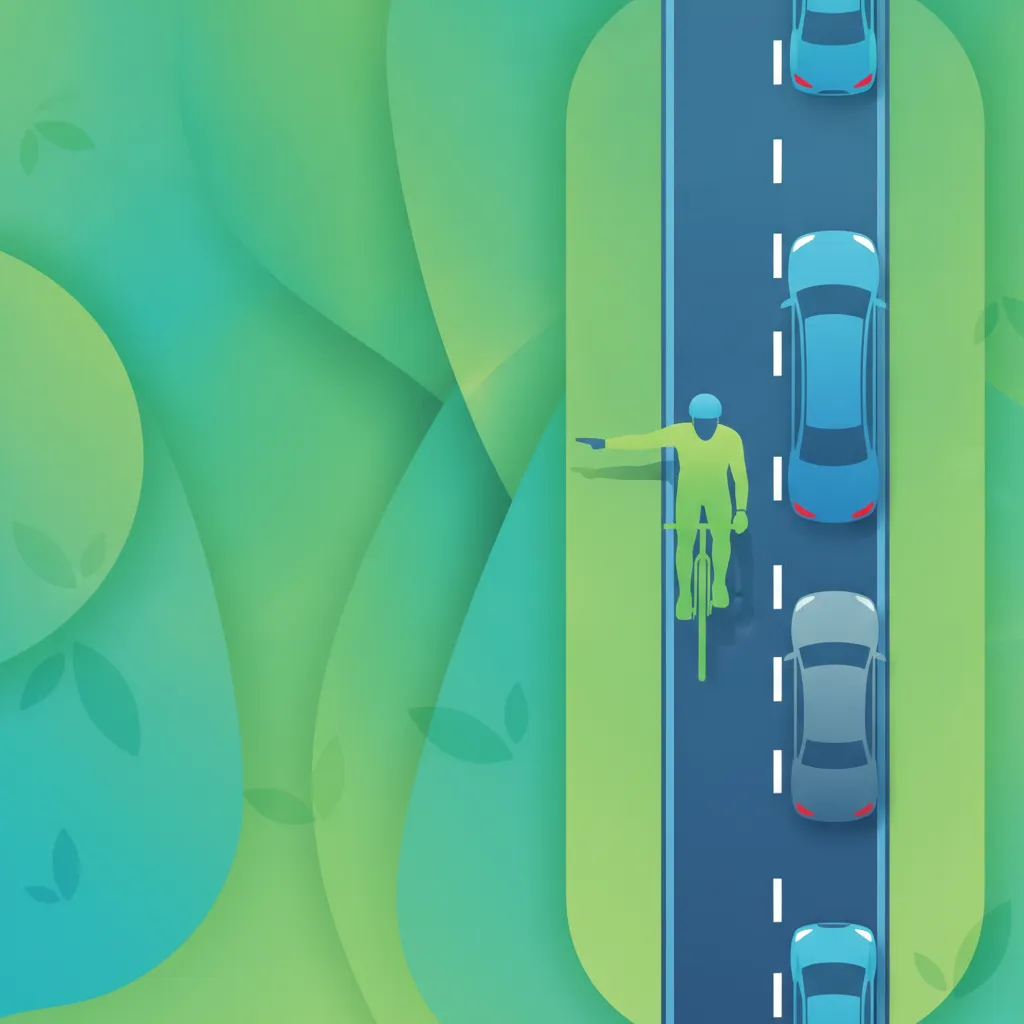
Bicycles represent an eco-friendly transport method with specific rights on French public roadways. This lesson teaches you how to identify dedicated cycle paths, respect bike lanes, and understand cyclist turning privileges at intersections. You will learn the legal minimum safety distance required when overtaking a cyclist: 1 meter in urban areas and 1.5 meters outside city limits.

This lesson emphasizes that driving a motorcycle in France involves unique moral and social responsibilities towards vulnerable road users like cyclists and pedestrians. You will examine the importance of defensive riding habits, civil road etiquette, and the prioritizing of shared road safety. Understanding these principles helps to prevent dangerous situations, respect local communities, and lower overall accident statistics.
Understand the legal restrictions regarding road types, including motorway and expressway prohibitions for 50cc scooters and light quadricycles. This theory lesson provides clarity on safe route selection and explains why certain roads are restricted based on vehicle speed limits and engine power output in the French driving system.

Learners will explore the specific speed limits applicable to AM vehicles across different road environments, including urban streets, residential zones, school areas, and highways in France. The lesson emphasizes interpreting speed sign information and adhering to the legally mandated maximum speeds, particularly the 45 km/h cap for light mopeds. Understanding and respecting these limits is vital for lawful and safe operation of AM vehicles.

This lesson details the functioning of French traffic lights, including standard red, amber, and green phases, as well as flashing amber and dedicated cyclist phases. Learners will learn how to anticipate light changes, understand the implications for starting and stopping, and recognize the specific timing considerations for small, nimble AM vehicles at intersections. Mastery of traffic light interpretation contributes to smoother and safer crossing of intersections.
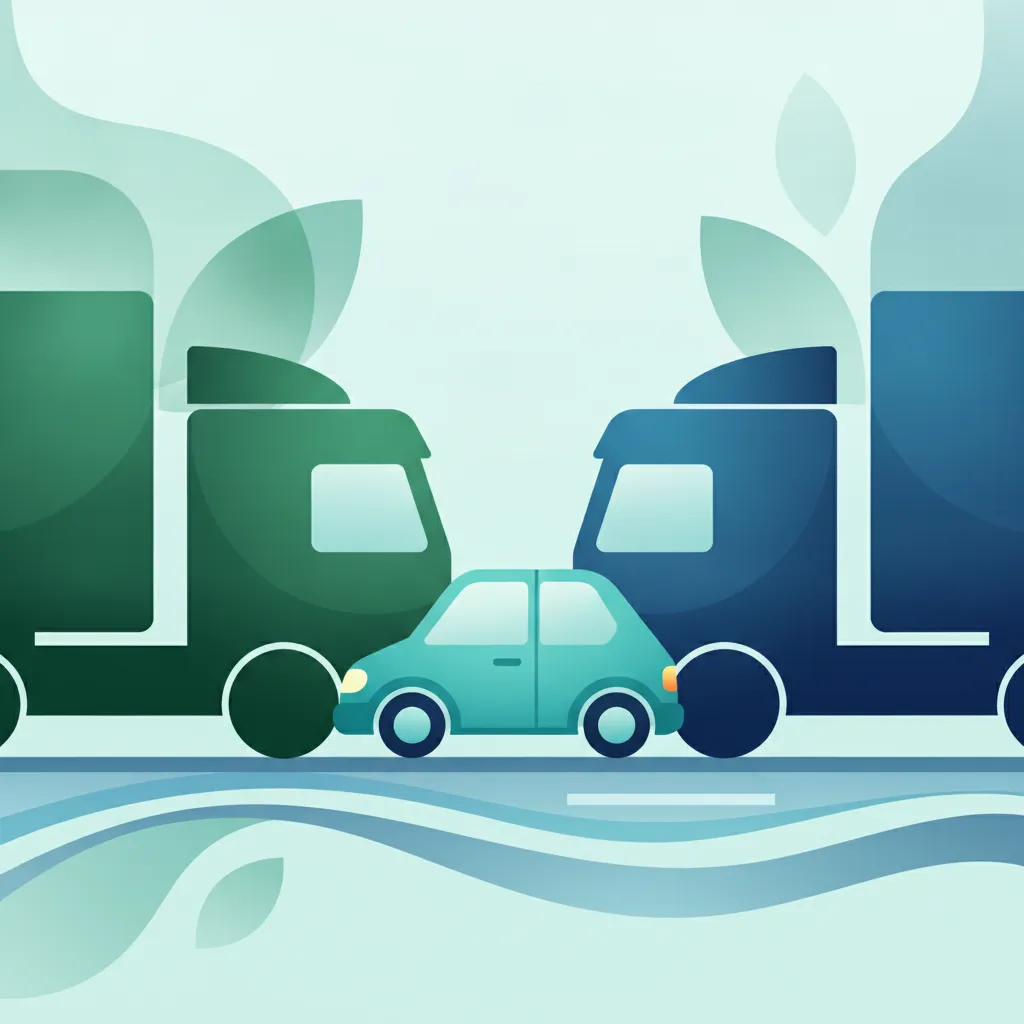
This lesson focuses on the inherent vulnerability of AM vehicles due to their limited mass, exposure, and visibility within mixed traffic flows on French roads. Learners will examine how blind spots, sudden lane changes by larger vehicles, and higher impact severity affect small vehicle safety. The content underscores the necessity for riders to adopt proactive safety measures, maintain safe distances, and be constantly aware of surrounding traffic dynamics.
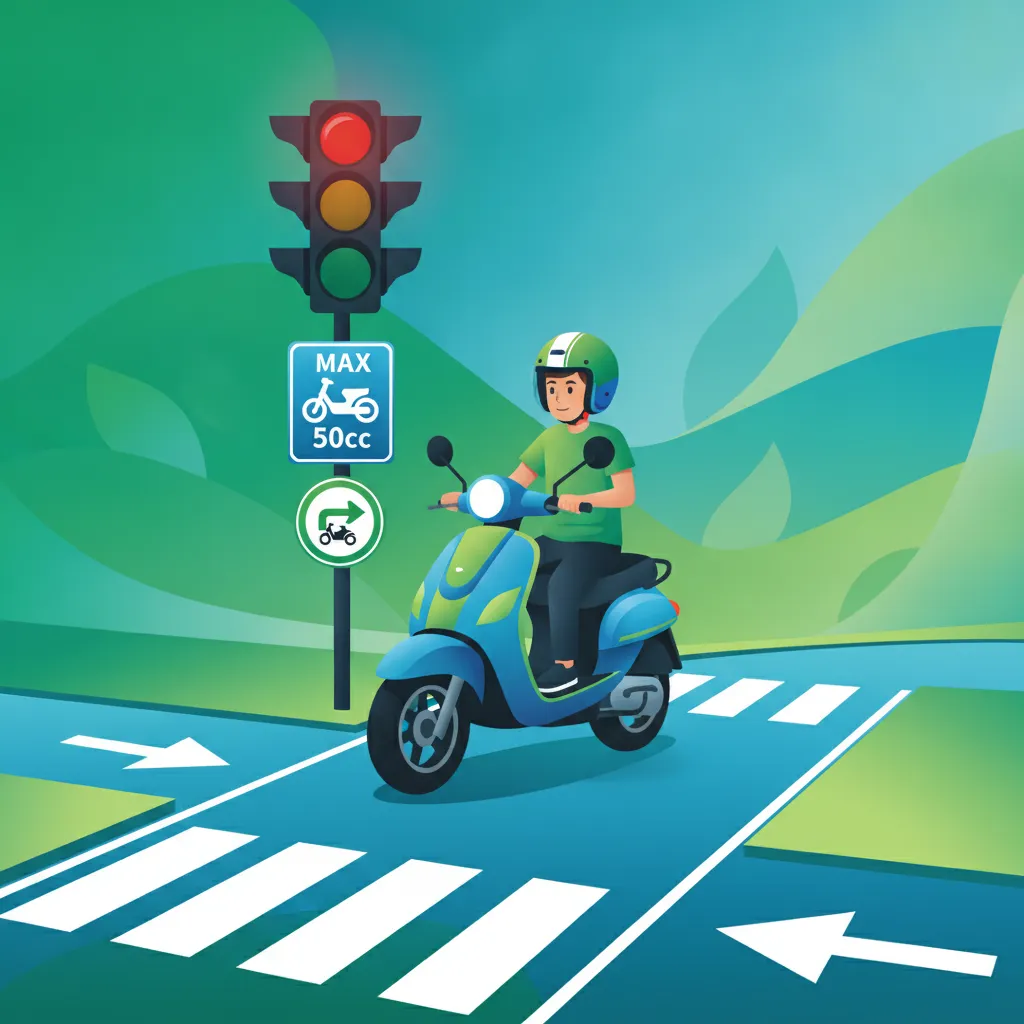
In this lesson, learners receive an overview of the Code de la route, with a focus on rules and regulations directly applicable to AM licence holders. Topics include specific speed limits for light vehicles, priority rules, permissible road markings, and mandatory lighting requirements. By mastering these particularities, riders will be equipped to navigate French roads safely and legally, ensuring full compliance with national traffic standards.

Learners explore the specific responsibilities that accompany operating a small, exposed vehicle, emphasizing the need for heightened defensive driving techniques under French law. The lesson stresses the importance of maintaining visibility and predictability, adhering strictly to the Code de la route, and understanding the dynamics of sharing the road safely. By internalizing these responsibilities, riders can significantly reduce risks and contribute to a safer traffic environment for all users.

This lesson outlines the complete administrative process required to obtain an AM licence, from acquiring a NEPH number through the ANTS portal to registering for the theoretical exam. Learners will gain insight into the necessary documentation, the role of France Titres in the licence issuance, and the legal obligations that accompany licence acquisition. Understanding this framework ensures that candidates are prepared for both the procedural and legal aspects of becoming licensed AM drivers in France.

Learners will be introduced to effective braking techniques tailored for AM vehicles, emphasizing progressive pressure application and the importance of maintaining grip. The lesson covers how to estimate stopping distances, execute emergency stops safely, and understand the limitations of light vehicle braking systems in France. Mastery of these techniques ensures riders can stop promptly and maintain control in various traffic scenarios.
This lesson examines the regulatory limits and environmental controls applied to large passenger vehicles operating in dense French urban centers. Drivers will study the Crit'Air clean air sticker system and low-emission zones (ZFE) that restrict access for older, high-polluting vehicles. It also addresses navigating physical constraints, such as narrow streets, tight turning radii, and strict municipal weight limits.

This lesson addresses the challenges of positioning near larger vehicles such as cars, vans, buses, and lorries on French roads. Learners will learn to identify blind spots (angles morts), maintain a safe distance, and position themselves to maximize visibility and predictability. Understanding these dynamics is crucial for AM riders to avoid dangerous situations and ensure safe overtaking and lane sharing.
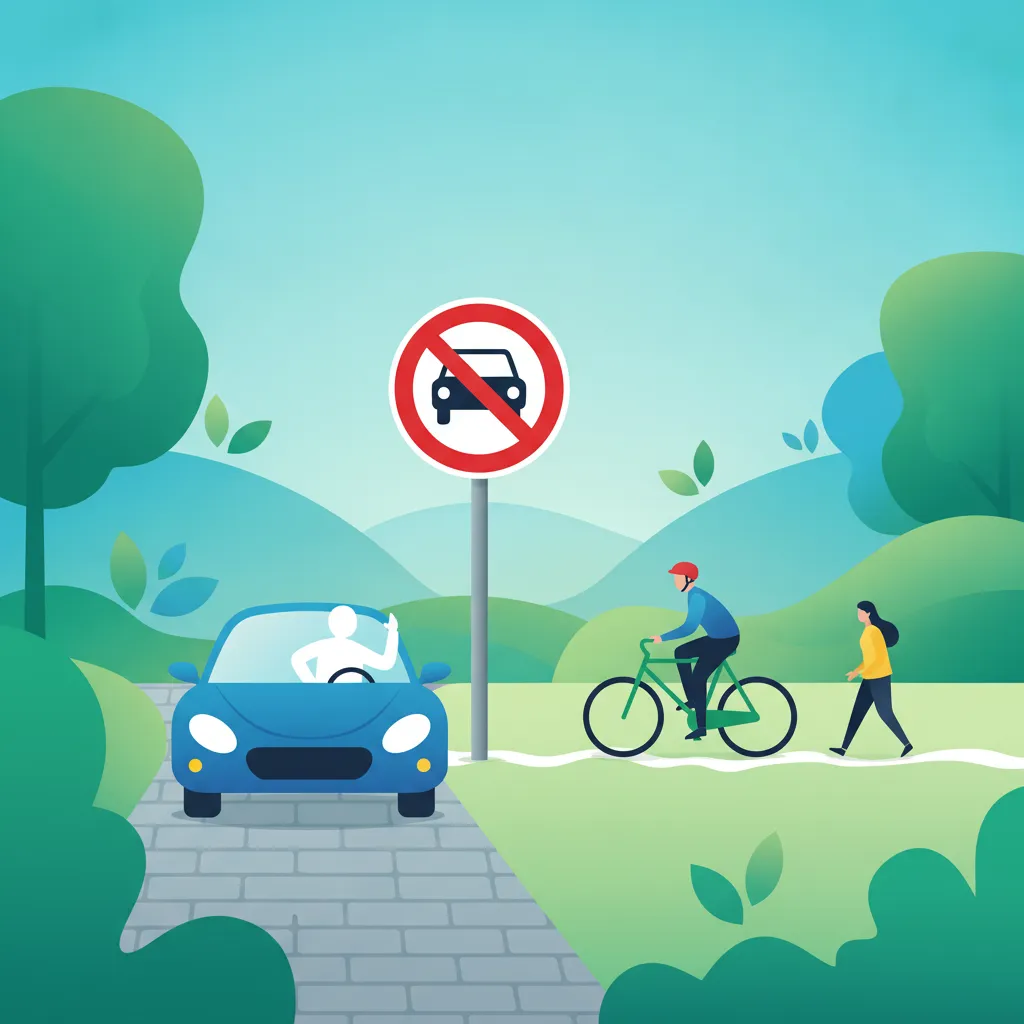
In this lesson, learners will explore the various access restrictions that apply to goods vehicles in France, such as low emission zones and weight-restricted areas. The focus is on understanding the process to obtain necessary access permits and authorisations, and how these restrictions influence route planning and operational decisions. Learners will also be introduced to specific regulations governing vehicle entry into city centres and environmentally sensitive zones.
Find clear answers to common questions learners have about Introduction to Category AM and Eligible Vehicles. Learn how the lesson is structured, which driving theory objectives it supports, and how it fits into the overall learning path of units and curriculum progression in France. These explanations help you understand key concepts, lesson flow, and exam focused study goals.
Under French regulations, vehicles in the Category AM category are limited to a maximum design speed of 45 km/h.
No, a Category AM licence is strictly for vehicles with an engine displacement not exceeding 50cc for internal combustion engines, or a maximum power output of 4kW for electric motors.
Yes, light motor quadricycles, often referred to as voiturettes, are included in the Category AM licence, provided they meet specific weight and power restrictions defined by French law.
The exam frequently features scenario-based questions where knowing the legal limitations of your vehicle is crucial to determining the correct, safe, and legal response.
Ready to focus your study? Use the practice search to find exactly the French driving theory questions you need for the Code de la route and permis de conduire ETG. Refine your knowledge on specific topics or challenging rules to boost your confidence and exam readiness.