This lesson explores the vital safety protocols for navigating mixed traffic alongside cyclists and pedestrians. As a Category AM rider, understanding these defensive interactions is essential for passing your official French theory exam and protecting yourself on the road.

Lesson content overview
Sharing the public highway safely is the cornerstone of the French Code de la route. When operating a Category AM vehicle—such as a light moped (cyclomoteur under 50cc) or a light quadricycle—you are riding a highly maneuverable but relatively unprotected motorized vehicle. In the hierarchy of the road, however, there are road users even more vulnerable than you: cyclists and pedestrians.
Understanding how to interact safely, legally, and predictably with these Vulnerable Road Users (VRUs) is not just a requirement for passing your French AM theory test; it is a life-saving daily practice. In this lesson, we will explore the precise overtaking rules, legal safety margins, and defensive habits required to navigate mixed urban and suburban French traffic safely.
Under French traffic law, a Vulnerable Road User (usager vulnérable) is defined as any road participant who lacks a protective passenger compartment or "crumple zone." This category primarily includes:
Road participants who do not have protective bodywork or airbags around them. Because of this lack of physical protection, any impact—even at low speeds—can result in severe bodily injury.
The Code de la route operates on a principle of shared responsibility, where heavier, faster, and motorized vehicles bear a greater duty of care toward lighter, slower, non-motorized users. As an AM rider, you must always anticipate that pedestrians and cyclists might make sudden, unpredictable movements due to road hazards (such as potholes, puddles, or car doors opening) that you might not immediately notice.
Pedestrian crossings in France are marked by thick white longitudinal stripes painted on the road surface, commonly known as passages piétons.
In France, the law regarding pedestrian priority is exceptionally strict. Under the Code de la route, a driver of any motorized vehicle must yield to a pedestrian who has already entered the crossing, or who clearly manifests the intention to cross.
The "Manifested Intention" Rule: You do not have to wait for a pedestrian to physically step off the curb onto the road before you slow down. If a pedestrian is standing near the edge of a zebra crossing, looking in your direction, or moving toward the curb, you are legally required to slow down and prepare to bring your moped to a complete stop.
Cyclists have a legal right to use the main roadway unless a specific sign indicates that a cycle path is mandatory. Understanding where cyclists ride and why is critical for avoiding collisions.
When there is no dedicated cycling infrastructure, cyclists must ride on the right side of the lane. However, they are permitted to move toward the center of the lane under several circumstances:
In many French cities, zones with a speed limit of 30 km/h or less (Zones 30) feature two-way cycling on otherwise one-way streets. This means a cyclist may legally ride toward you, traveling "the wrong way" down a narrow street. Always stay to your right and reduce your speed to allow safe passage.
Overtaking (dépassement) a cyclist requires careful calculation of lateral safety margins, speed, and visibility. Because bicycles can wobble due to wind gusts or uneven pavement, you must never pass too closely.
Under Article R414-4 of the French Code de la route, when overtaking any two-wheeler, pedestrian, or animal, you must maintain a strict minimum lateral safety distance:
| Environment | Minimum Lateral Distance | Why it matters |
|---|---|---|
| Inside Built-up Areas (En agglomération) | 1.0 Metre | Space is tighter, speeds are lower, but unexpected movements are frequent. |
| Outside Built-up Areas (Hors agglomération) | 1.5 Metres | Speeds are higher, and the aerodynamic draft from passing vehicles can destabilize cyclists. |
When preparing to pass a cyclist on your moped, follow this safety sequence:
Assess the Situation: Ensure you have sufficient visibility ahead. Check for oncoming traffic, upcoming intersections, or road narrowing.
Check Your Mirrors and Blind Spot: Turn your head slightly (contrôle direct) to ensure another vehicle is not already overtaking you.
Signal Your Intention: Activate your left turn indicator well in advance to alert drivers behind you and the cyclist ahead.
Position Your Vehicle: Move out to the left lane or cross into the opposite lane, ensuring you will maintain the legal lateral gap (1m or 1.5m).
Pass and Return: Maintain a steady speed. Once you can see the cyclist fully in your rear-view mirror, signal right and smoothly return to the right side of the lane.
To prevent motorized vehicles from getting stuck behind slow-moving cyclists, French traffic law allows an exception regarding solid white lines:
On two-way roads where the maximum speed limit is 50 km/h or less, you are legally permitted to straddle or cross a solid white line (ligne continue) to overtake a cyclist, provided that:
To coexist safely with cyclists and pedestrians, you must make your intentions transparent and ensure you are highly visible at all times.
Because you cannot easily speak to other road users while riding, your vehicle's positioning, indicators, and your physical body language serve as your primary communication tools:
During times of poor visibility—such as dusk, dawn, heavy rain, or fog—vulnerable road users become incredibly difficult to spot.
Under Article R313-1 of the Code de la route, your moped must have its dipped beam headlights (feux de croisement) switched on at all times, both day and night. This is not only for you to see, but primarily so that pedestrians looking across a road or cyclists checking their mirrors can instantly distinguish your motorized profile from non-motorized traffic.
Understanding the consequences of common errors helps reinforce safe driving habits.
Before you proceed, ensure you have committed these fundamental principles to memory:
Explore all units and lessons included in this driving theory course.
Lesson content overview
Explore all units and lessons included in this driving theory course.
Explore search topics learners often look for when studying Safe Interaction with Cyclists and Pedestrians. These topics reflect common questions about road rules, driving situations, safety guidance, and lesson level theory preparation for learners in France.
Browse additional driving theory lessons that cover connected traffic rules, road signs, and common driving situations related to this topic. Improve your understanding of how different rules interact across everyday traffic scenarios.
Learn the legal definitions of cycle lanes and paths within the French Code de la route. This lesson details how to identify different road markings and navigate shared infrastructure safely, ensuring you understand the specific limitations and rights of AM category vehicles on public highways.
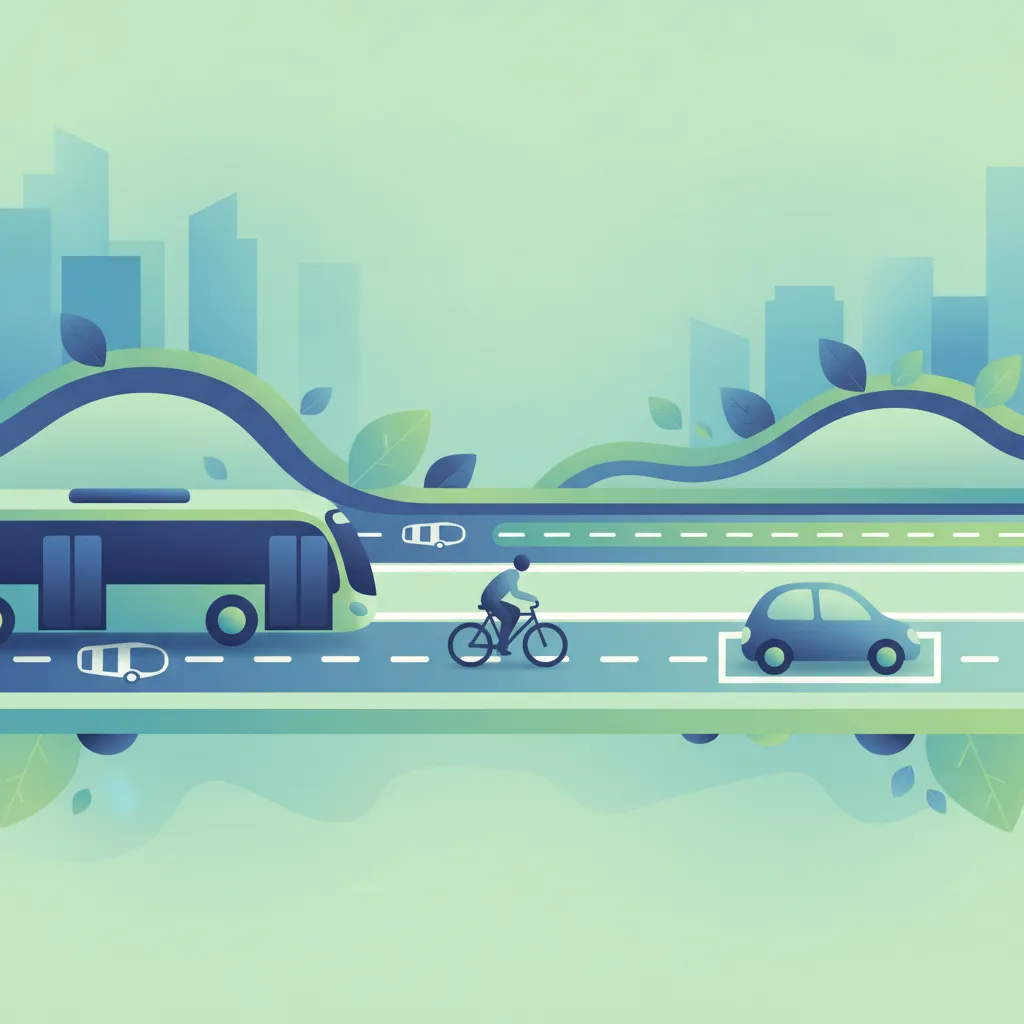
Urban roads in France feature specialized lanes reserved for public transit, micro-mobility, and distinct parking options. This lesson covers how to recognize bus lanes, cycling lanes, and the specific rules that prohibit general traffic from blocking them. You will also learn to interpret parking bay outlines, loading zones, and spots reserved for electric charging or drivers with disabilities.
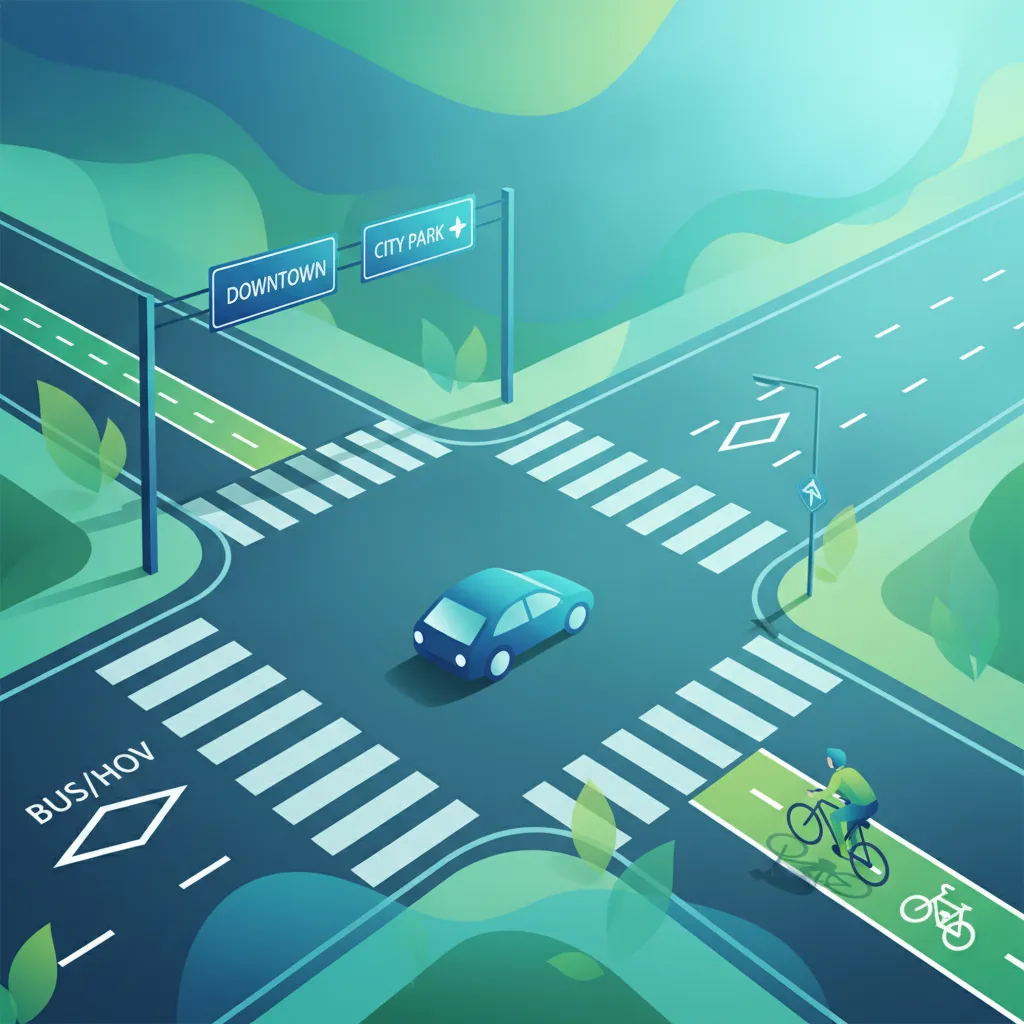
Learners will explore the variety of road surface markings that indicate lane boundaries, reserved spaces for different users, and pedestrian crossings in France. The lesson emphasizes how AM riders should interpret solid and broken lines, bike lane markings, and zebra crossings, ensuring appropriate lane usage and adherence to traffic flow. Understanding these markings is essential for maintaining order and safety on shared roadways.

Longitudinal road markings are painted along the length of the road to divide lanes and regulate overtaking maneuvers. This lesson teaches the strict legal prohibition of crossing solid white lines and the specific spacing of broken lines that permit lane changes. You will also learn how to interpret dual lines, warning arrows, and how to maintain proper lane discipline in heavy traffic.

This lesson details the legal and physical implications of horizontal markings, including solid white lines, broken warning lines, and cycle lane dividers. You will learn about the strict prohibition against crossing solid lines and how directional arrows dictate correct lane choices at complex junctions. Importantly, the lesson teaches you to recognize the physical hazard of wet road paint, which drastically reduces tire grip during braking.

Lateral road markings run across or along the sides of roadways, signaling limits such as stop lines, yield lines, and pedestrian zones. This lesson explains how painted curbs restrict parking, including continuous or broken yellow lines which signal stopping or parking prohibitions. You will learn how to identify pedestrian zone boundaries and ensure you never obstruct pedestrian or cyclist paths.
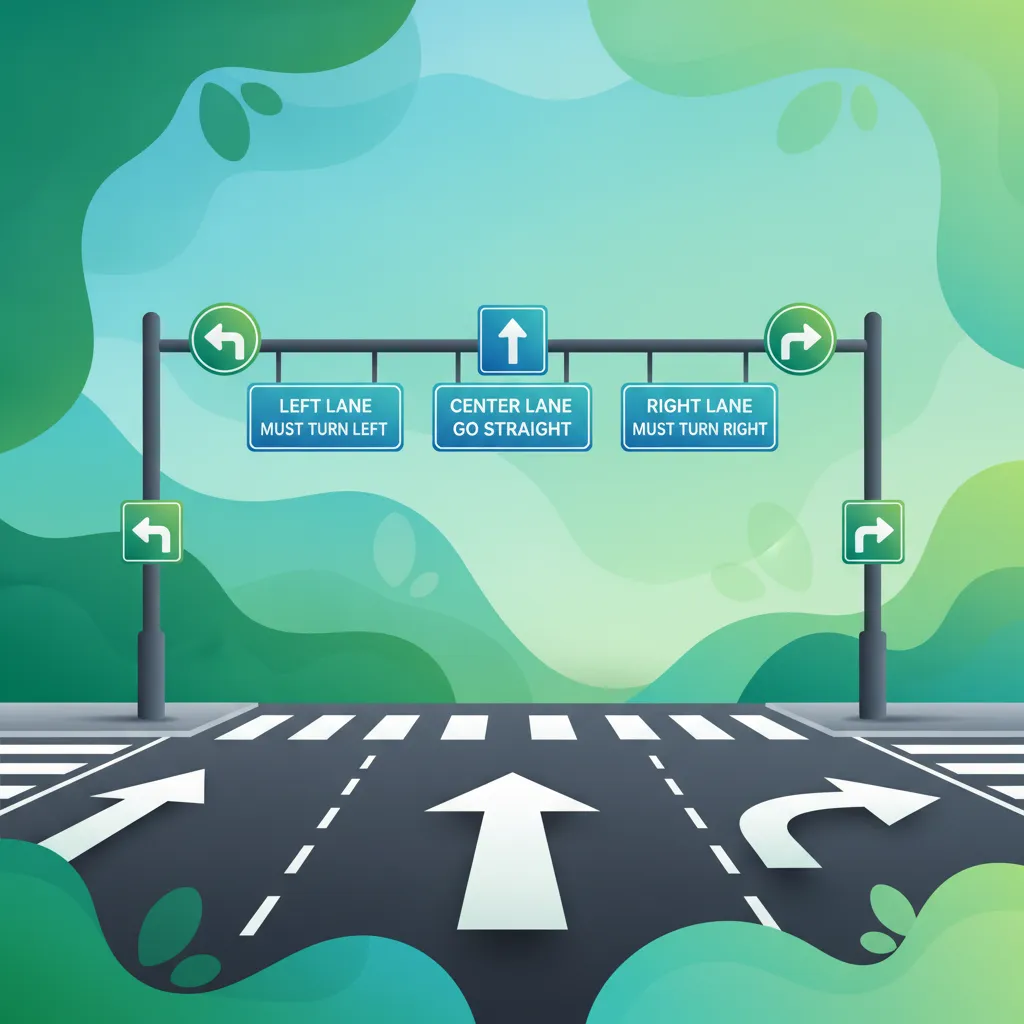
Preselection and direction arrows painted on the road surface instruct drivers on lane-specific movements at upcoming intersections or merges. This lesson teaches you how to interpret these arrows so you can position your vehicle correctly well in advance of a turn. You will learn the rules for lane merging, following curved guidance lines, and avoiding sudden, dangerous lane adjustments.
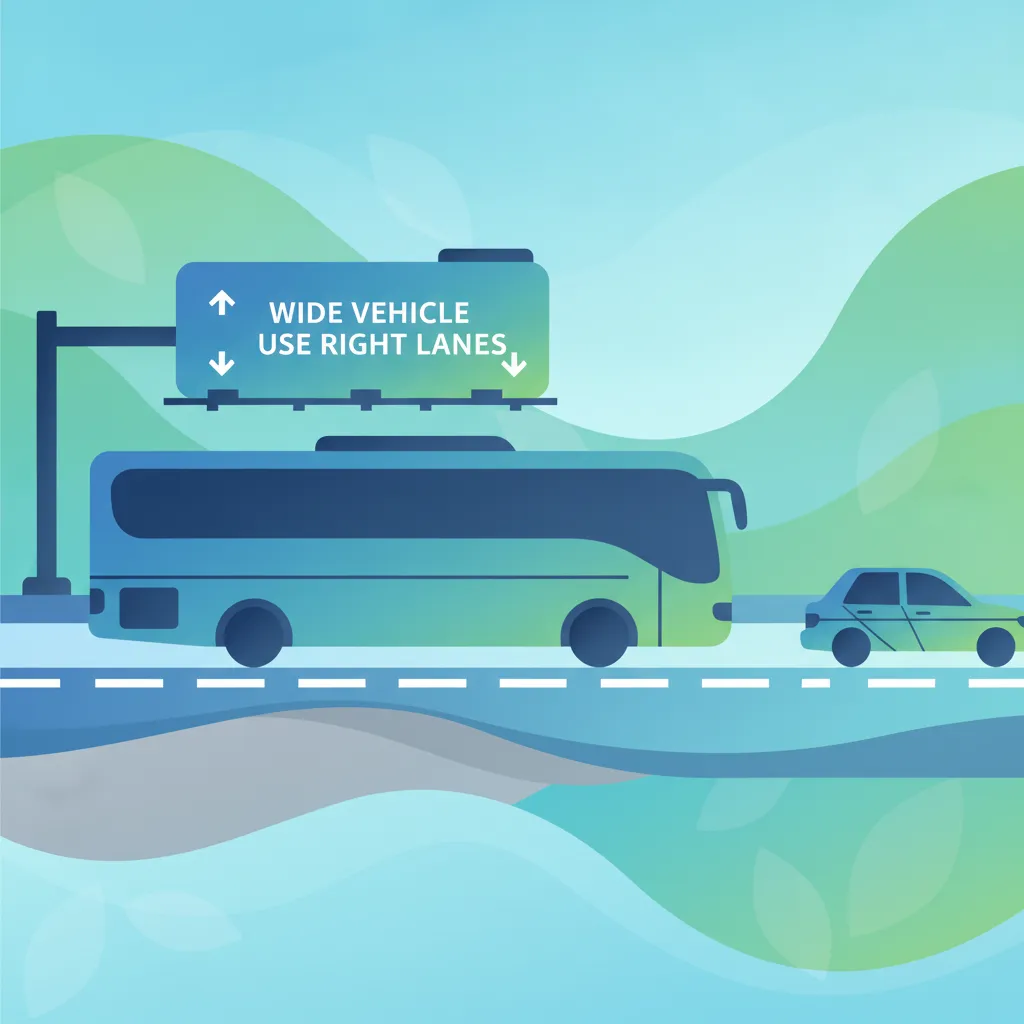
This lesson details the rules of lane discipline for operating wider and longer passenger transport vehicles on highway and city networks. Learners will explore proper lane positioning to prevent encroachment on adjacent lanes or sidewalks. It also covers the step-by-step visual and signaling sequence required to perform safe lane changes, avoiding sudden movements that could startle other drivers.
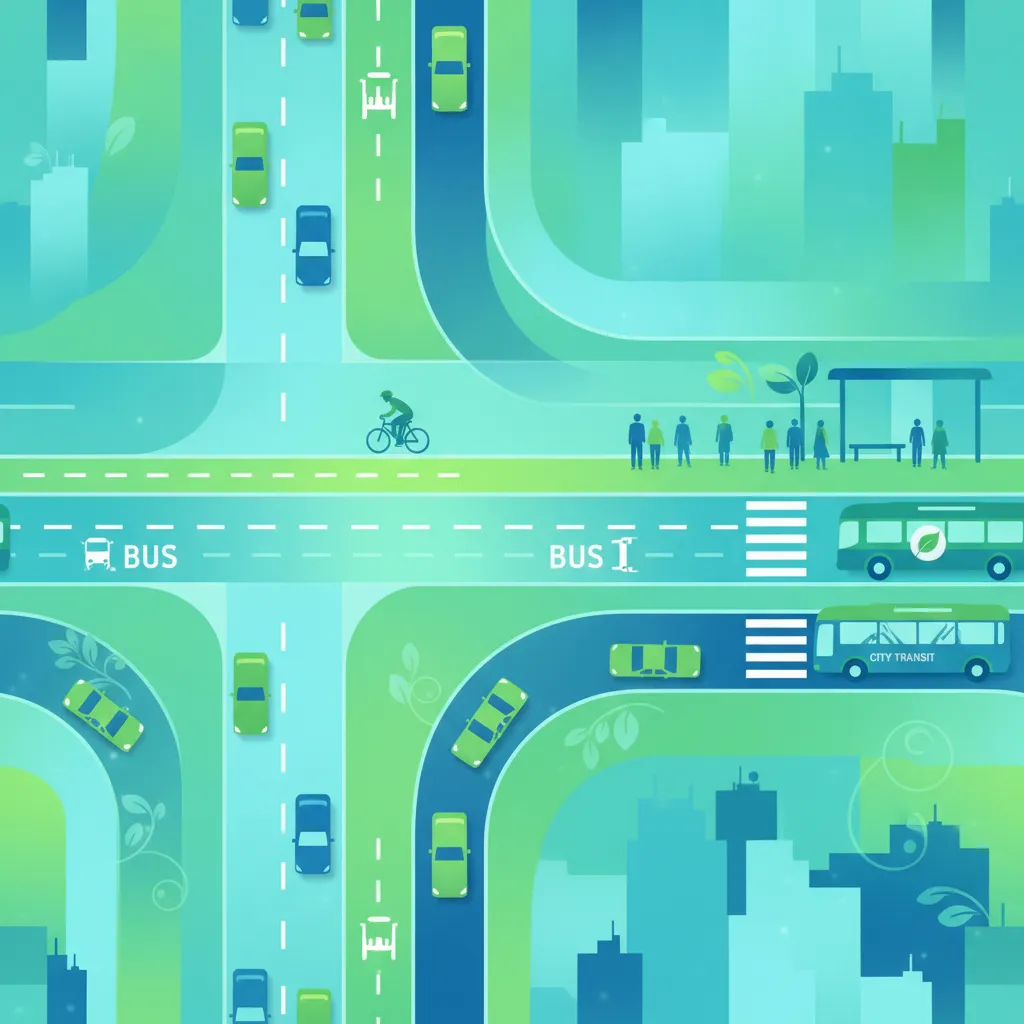
This lesson clarifies the legal boundaries of urban infrastructure, highlighting the strict ban on riding motorcycles within bus lanes or cycle paths. You will study French regulations concerning traffic flow, including where and when experimental lane filtering is permitted between lines of stationary cars. Understanding these boundaries ensures you can keep moving through congested areas without risking heavy fines or dangerous collisions.

France features a vast network of roundabouts (carrefours a sens giratoire) governed by specific entry and lane-use regulations. This lesson explains that vehicles entering a roundabout must yield to traffic already circulating inside. You will learn how to select the correct lane depending on your exit, use direction indicators properly, and yield to pedestrians and cyclists near roundabout exits.
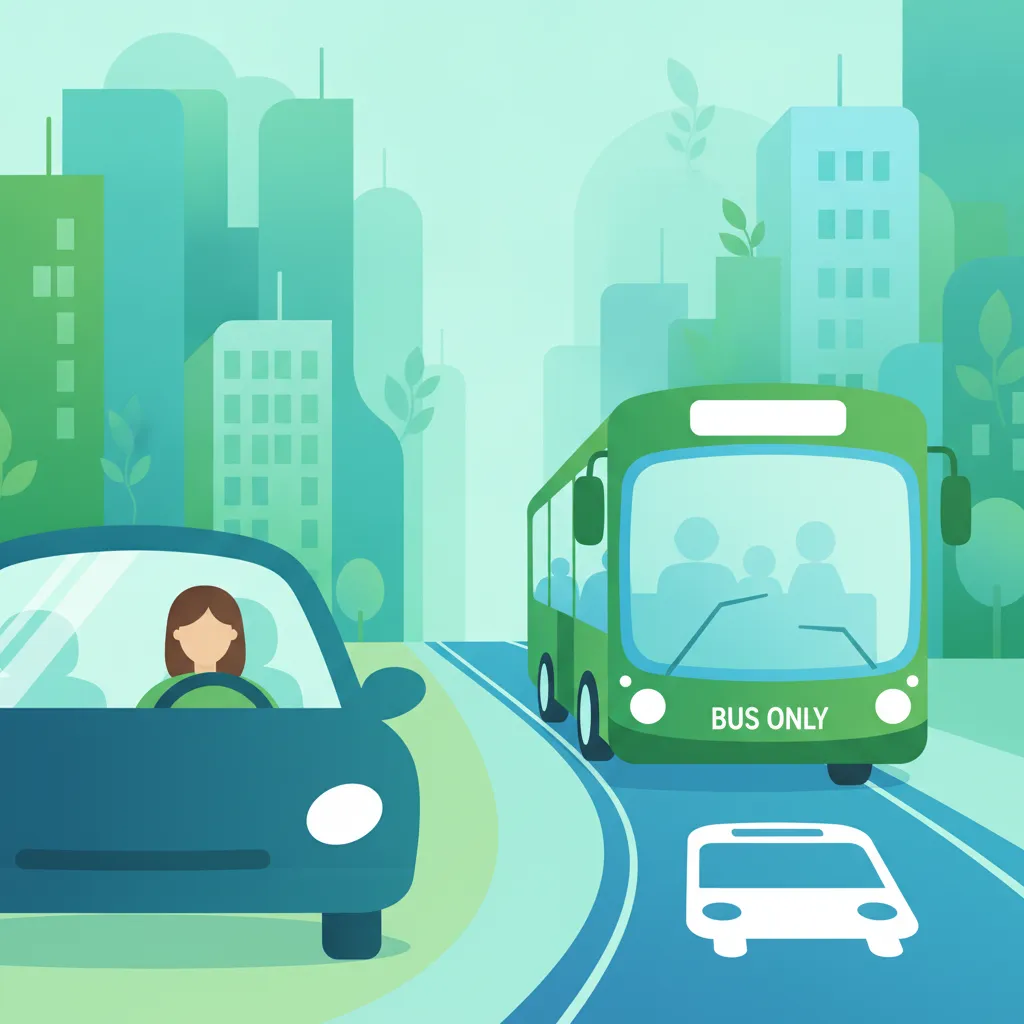
This lesson detail the exact laws governing the use of reserved bus lanes, detailing who may enter them and during what hours of operation. Drivers will study the penalties for unauthorized passenger cars occupying these lanes and the safety protocols for lane sharing with taxi cabs or cyclists. The lesson also highlights safe lane-merging practices when exiting reserved spaces to merge back into general urban traffic.
Explore common road scenarios where motorized and non-motorized users interact in French urban areas. This guide provides an overview of hazard anticipation techniques, communication through light usage, and defensive positioning to effectively navigate complex traffic situations while protecting vulnerable road users.

Certain groups of road users require heightened defensive attention from drivers due to physical limitations or unpredictable behaviors. This lesson covers how to recognize signs of visual impairment (white canes), mobility challenges, and the unpredictability of young children. You will learn to reduce your speed, extend yielding patience, and proactively secure extra space to protect these vulnerable users.

Learners will develop the ability to anticipate potential hazards on the road, enhancing reaction times and defensive riding strategies. The lesson emphasizes constant scanning, early identification of threats such as sudden stops, pedestrian crossings, or unexpected lane changes, and appropriate response measures. By cultivating proactive risk assessment, AM riders can significantly reduce accident likelihood.
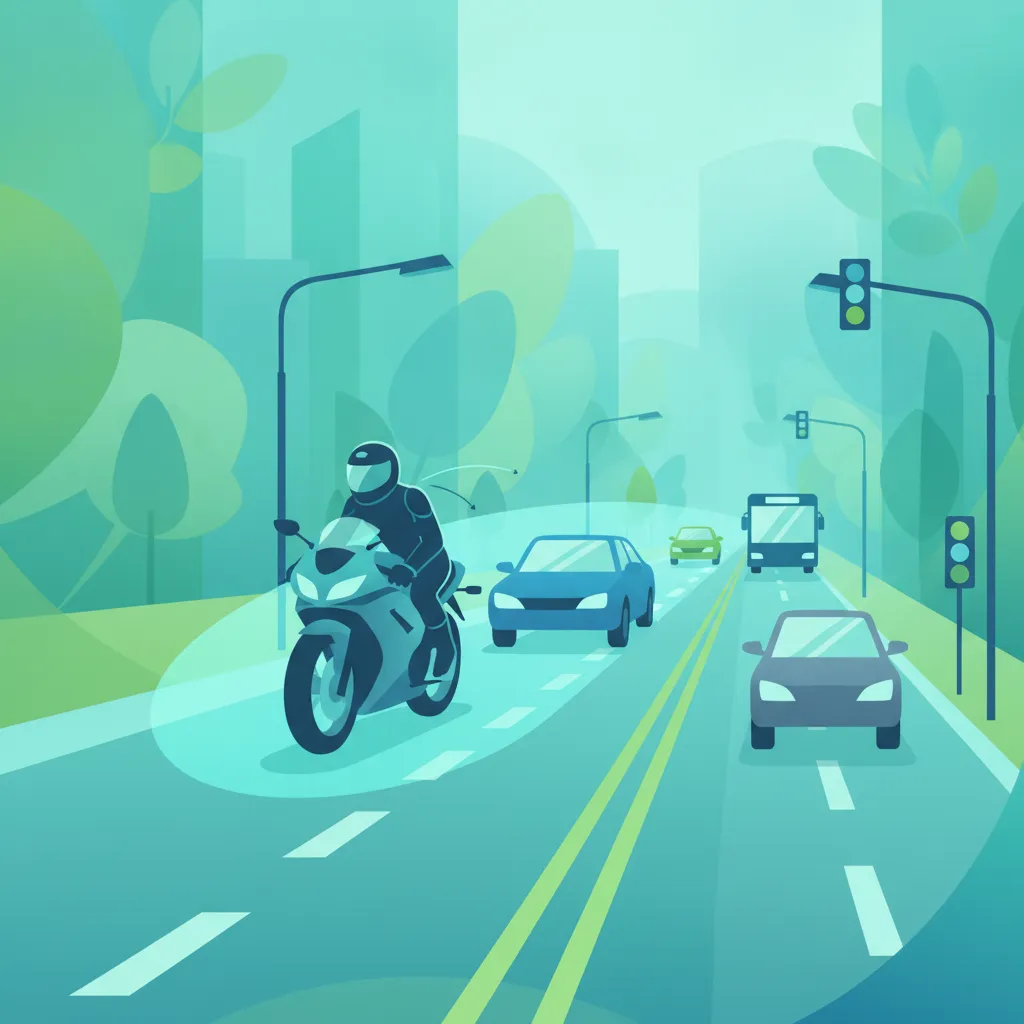
This final lesson integrates all course concepts into a single, cohesive approach to defensive riding and continuous risk assessment. You will study how to maintain a high-mileage visual lead, continuously scanning the road ahead for warning signs of conflict. By learning to assume that other motorists may not see you, you will build the proactive slowing habits and situational awareness needed to remain safe throughout your riding life.

This lesson provides global defensive driving strategies to minimize collision risks for all non-motorized and vulnerable road users. Drivers will learn to systematically lower vehicle speed in dense pedestrian zones, even when no active hazards are visible. By cultivating an anticipatory mindset and maintaining generous safety margins, professional drivers establish a protective safety envelope around their vehicle.

This lesson teaches riders how to approach and cross both controlled and uncontrolled intersections in urban settings. You will practice the 'scanning cycle' technique to identify cross-traffic hazards and manage your defensive line of sight around physical obstructions. The lesson also highlights the critical importance of early signaling and positioning to ensure that turning passenger cars do not violate your safety zone.

This lesson focuses on the inherent vulnerability of AM vehicles due to their limited mass, exposure, and visibility within mixed traffic flows on French roads. Learners will examine how blind spots, sudden lane changes by larger vehicles, and higher impact severity affect small vehicle safety. The content underscores the necessity for riders to adopt proactive safety measures, maintain safe distances, and be constantly aware of surrounding traffic dynamics.

In this lesson, drivers will learn how to safely share the road with motorcycles and scooters, focusing on the specific blind spots and speed differentials that create risk. The content highlights proper lane positioning, caution when overtaking, and strategies for predicting motorcycle trajectories. Learners will also be introduced to the importance of being aware of scooter movements, especially in narrow streets.

This lesson teaches you how to establish and preserve a dynamic cushion of safety on all sides of your motorcycle. You will study how to apply the 'two-second rule' to keep a safe following distance, extending it to three or more seconds in adverse weather. Additionally, you will discover how to manage tailgating motorists safely without resorting to dangerous speed increases, ensuring you always maintain a clear escape route.
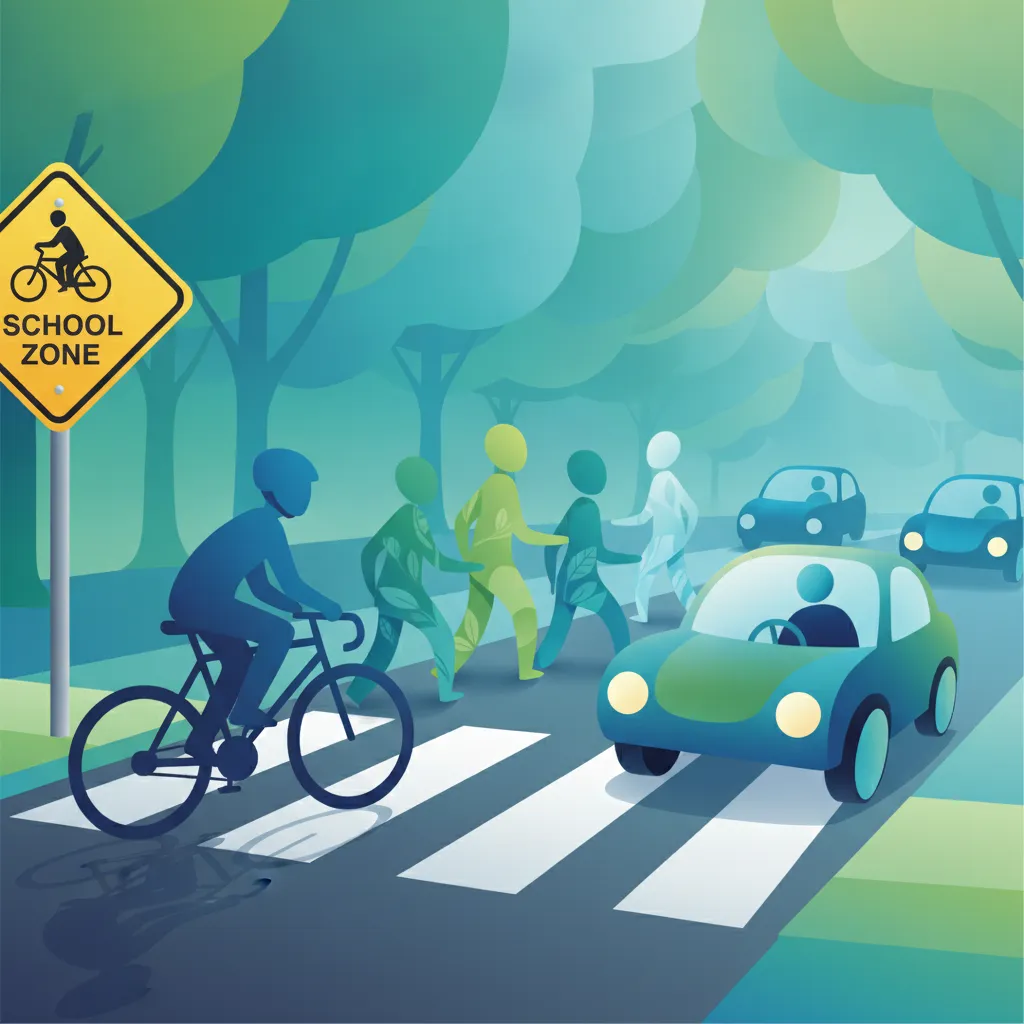
This lesson focuses on the legal requirement to yield to pedestrians on or about to step onto zebra crossings, a major focus of French road safety. You will learn how to approach school zones and pedestrian islands with heightened vigilance and reduced speed. Additionally, the lesson explores shared urban spaces, explaining how to maintain safe lateral distances when overtaking cyclists or personal electric scooters.

This lesson provides practical strategies for managing the physical demands of slow, heavily congested city traffic. You will learn how to maintain excellent low-speed balance through correct body posture, rear brake modulation, and smooth clutch control. It also emphasizes the importance of preserving an adequate safety buffer when stopping behind other vehicles, allowing an immediate escape route if you face a rear-end threat.
Find clear answers to common questions learners have about Safe Interaction with Cyclists and Pedestrians. Learn how the lesson is structured, which driving theory objectives it supports, and how it fits into the overall learning path of units and curriculum progression in France. These explanations help you understand key concepts, lesson flow, and exam focused study goals.
In urban areas, you must maintain a lateral distance of at least 1 meter when overtaking a cyclist. Outside of urban areas, this distance increases to 1.5 meters.
Cyclists follow the same priority rules as other vehicles unless there are specific signs or markings indicating otherwise, such as a cycle path intersection. Always remain vigilant as they are harder to see and more vulnerable.
No, you must never drive or park in a lane reserved exclusively for cyclists. Doing so is an infraction and poses a significant danger to those road users.
You must yield and stop if a pedestrian has started to cross or is clearly indicating an intention to do so. Failing to yield to a pedestrian at a crossing is a serious penalty and a common cause for exam failure.
Ready to focus your study? Use the practice search to find exactly the French driving theory questions you need for the Code de la route and permis de conduire ETG. Refine your knowledge on specific topics or challenging rules to boost your confidence and exam readiness.