Reversing is a fundamental skill that requires precise control and constant vigilance. This lesson covers the essential techniques for maneuvering safely in various contexts, helping you navigate parking bays and driveways according to the French Code de la route.

Lesson content overview
Reversing a motor vehicle—known in French as la marche arrière—is one of the most demanding low-speed maneuvers you will perform as a driver. Because passenger cars are designed primarily for forward movement, reversing dramatically restricts your physical field of vision, introducing significant blind spots (les angles morts) behind your vehicle. Whether you are backing out of a private driveway, maneuvering in a busy supermarket parking lot, or performing a precise parallel park during your Category B practical test, safety must remain your absolute priority.
Under the French Code de la route, reversing is classified as an exceptional and high-risk maneuver. It requires a complete understanding of vehicle geometry, strict control of your speed, and absolute yielding priority to all other road users, especially vulnerable ones like pedestrians and cyclists. This guide provides the deep theoretical foundation and practical procedures needed to master reversing safely and pass the French driving theory exam (Examen de l'Éthique Générale or ETG).
To safely guide a vehicle backward, you must first comprehend the severe spatial limitations imposed by your vehicle's structural design. The pillars of your car (the A, B, and C-pillars), the height of the rear window, headrests, and passengers all combine to create large areas where objects, animals, or children can remain completely hidden.
These blind spots are divided into two primary zones:
Relying solely on your vehicle’s mirrors creates a false sense of security. Mirrors show a compressed, flat, or slightly distorted perspective of the road behind you and cannot capture objects positioned directly underneath the rear window line.
To overcome these blind spots, drivers must combine multiple viewing methods. This includes adjusting their posture, performing direct over-the-shoulder checks, consulting mirrors dynamically, and utilizing electronic aids as supplementary tools rather than primary vision sources.
A safe reverse maneuver begins before the vehicle even moves an inch. Your physical posture dictates your line of sight. If your seat is poorly adjusted, your ability to turn your body and see through the rear window will be severely compromised.
Before initiating any backing maneuver, ensure your seating position is optimized:
Adjust Seat Height and Distance: Ensure you can fully depress the clutch, brake, and accelerator pedals while maintaining a slight bend in your knees. Raise your seat slightly if necessary to improve your vertical perspective through the rear window.
Set the Backrest Angle: Your backrest should be upright enough to support your spine while allowing your shoulders to rotate freely when you turn to look backward.
Adjust the Rétroviseurs (Mirrors): Your interior rear-view mirror and both exterior side mirrors must be positioned correctly. Side mirrors should be adjusted to show just a sliver of your own vehicle's flank, maximizing the lateral view of the road.
Once the vehicle is stationary and your surroundings are clear, you must adopt the reversing posture:
The ultimate rule of reversing under the Code de la route is the absolute requirement for direct over-the-shoulder viewing (la vision directe). This physical action cannot be replaced by mirrors, sensors, or cameras.
The act of physically turning your head and torso to look directly through the side and rear windows of the vehicle, bypassing mirrors to eliminate blind spots.
Direct shoulder checks allow your eyes to perceive depth, speed, and peripheral movement accurately. While reversing, a child could run or a cyclist could ride into your path in a fraction of a second. A quick glance in a side mirror might miss them entirely due to the narrow field of view.
You must perform a full 360-degree sweep of your surroundings before shifting into reverse, and continue to look directly behind you while the vehicle is moving. If you must steer or adjust your angle, stop the vehicle, look over the opposite shoulder to check front-end swing (the front of your car swings outward when you steer in reverse), and then proceed.
While vision directe is your primary visual source, your rétroviseurs (mirrors) act as essential supplementary tools.
The Danger of Camera Overreliance: Modern reversing cameras (caméras de recul) and parking sensors are excellent technological aids, but they have lenses that can become dirty, distorted by rain, or blind in extreme lighting. They must only be used to double-check the space directly behind your bumper, never as a replacement for looking out the rear window.
The Code de la route dictates strict legal standards for reversing. Any incident occurring while a vehicle is in reverse is almost always blamed entirely on the reversing driver, as reversing is legally considered an active disruption to the normal flow of traffic.
This article states that any driver moving backward must maintain complete control of their vehicle and travel at a speed that allows them to stop instantly under any circumstances. In practice, this means your foot should constantly be ready to brake, and your speed should be kept extremely low.
Unless local ordinances or specific road signs indicate otherwise, the maximum safe speed for performing a reversing maneuver on public roads is 5 km/h—often referred to as a "walking pace" (l'allure de marche).
At 5 km/h, your vehicle travels approximately 1.4 meters per second. Given an average driver reaction time of 1 to 1.5 seconds, reversing at a walking pace ensures your total stopping distance remains under 2 meters, allowing you to stop safely if an obstacle or pedestrian suddenly appears.
This regulation mandates that drivers must yield to any pedestrian crossing behind the vehicle while reversing. Pedestrians always have absolute priority. If you observe a pedestrian standing near or walking toward the path behind your vehicle, you must immediately halt the maneuver and wait until they have completely cleared the area.
Under French law, reversing must only be performed when absolutely necessary (e.g., exiting a parking space, executing a three-point turn, or clearing a narrow block). Unnecessarily reversing on a public road to bypass an obstacle that could be cleared by driving forward is a violation of traffic safety principles and can result in penalties.
Reversing requirements change depending on your surroundings. Below are three common scenarios Category B drivers encounter.
Exiting a driveway requires crossing a sidewalk, making it one of the most hazardous daily maneuvers.
In a busy parking lot, you must contend with both passing vehicles and distracted shoppers.
Adverse weather and darkness compound the difficulty of reversing.
Understanding what not to do is just as important as knowing the correct steps. The following table highlights common reversing errors, why they occur, and their legal and physical consequences.
| Violation / Mistake | Why It’s Dangerous | Correct Defensive Behavior | Consequence / Penalty |
|---|---|---|---|
| Reversing with mirrors only | Creates massive blind spots directly behind the car; misses low-profile obstacles and children. | Always perform a physical vision directe check over your shoulder. | High risk of collision; full liability in accidents; failure on the ETG practical. |
| Excessive speed in reverse | Dramatically increases stopping distance and reduces steering control. | Keep speed below 5 km/h using clutch and brake modulation. | Loss of control, severe property damage, or pedestrian injury; potential reckless driving charges. |
| Failing to yield to pedestrians | Directly violates Article R412-20; endangers highly vulnerable road users. | Pause the maneuver completely if any pedestrian is detected behind your vehicle. | Immediate test failure; heavy fines; potential criminal prosecution if injury occurs. |
| Ignoring front-end swing | When you turn the wheel in reverse, the front of your car swings out in the opposite direction, hitting obstacles. | Periodically pause reversing to check the clearance of your front bumper. | Collision with parked cars, garage doors, or utility poles. |
| Reversing on motorways (Autoroutes) | High-speed traffic cannot react to a vehicle moving backward or standing still on an exit ramp. | Never reverse on a highway. If you miss an exit, proceed to the next one. | Severe multi-vehicle collisions; heavy fines, points deducted, and immediate license suspension. |
Why does the Code de la route treat reversing with such caution? The answer lies in vehicle dynamics and human reaction limits.
By understanding these principles, you protect yourself, your passengers, and the public, ensuring a safe driving record throughout your Category B license journey.
Explore all units and lessons included in this driving theory course.
Lesson content overview
Explore all units and lessons included in this driving theory course.
Explore search topics learners often look for when studying Reversing Safely in Various Contexts. These topics reflect common questions about road rules, driving situations, safety guidance, and lesson level theory preparation for learners in France.
Browse additional driving theory lessons that cover connected traffic rules, road signs, and common driving situations related to this topic. Improve your understanding of how different rules interact across everyday traffic scenarios.
Learn the theory behind executing safe parking manoeuvres including parallel, perpendicular, and angled parking. Understand vehicle positioning, reference points, and how to maintain safety around other road users while performing these fundamental driving maneuvers in various urban and private settings according to the French road regulations.
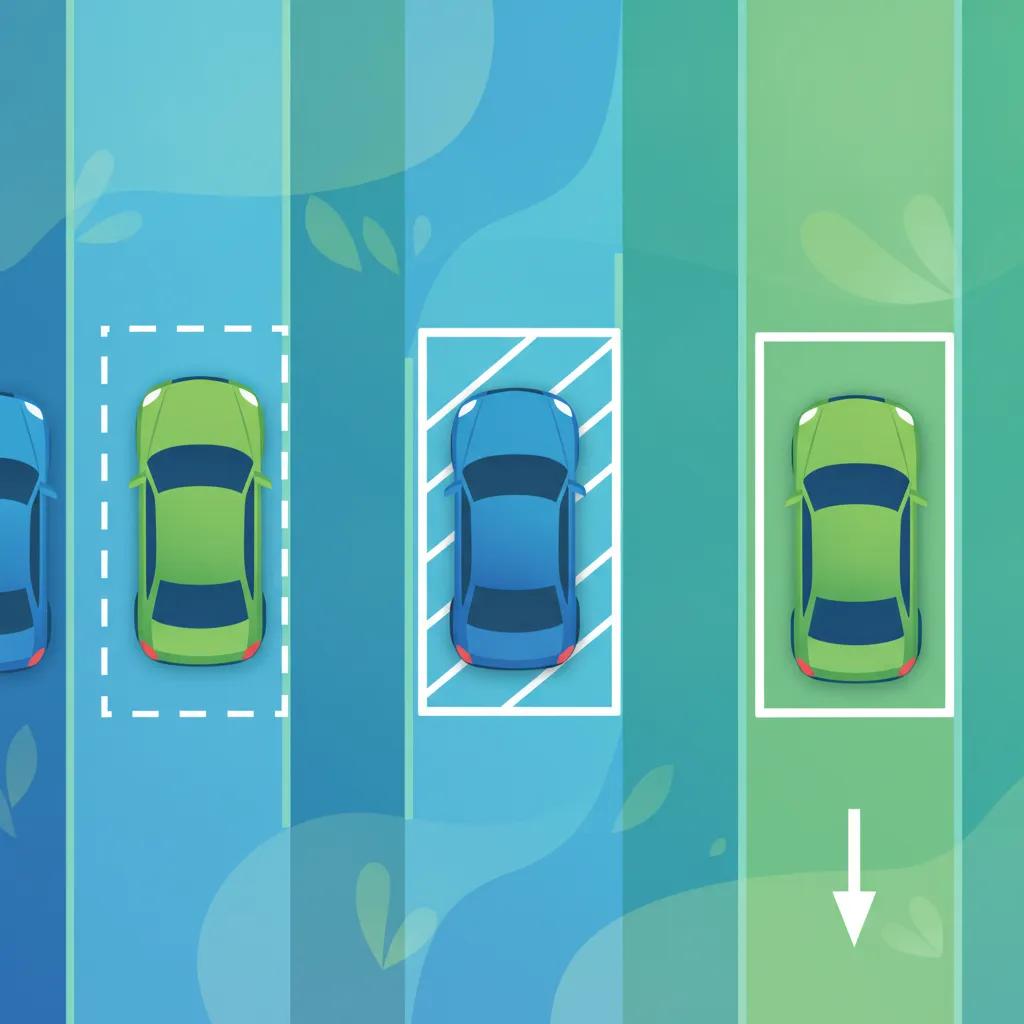
Parking your vehicle requires spatial awareness, reference point alignment, and knowledge of localized municipal parking codes. This lesson teaches you how to execute parallel, perpendicular, and angled parking maneuvers safely using your car's mirrors and gear control. You will also learn about blue zone parking rules, paid parking schemes, and proper driver responsibilities when securing a parked car.
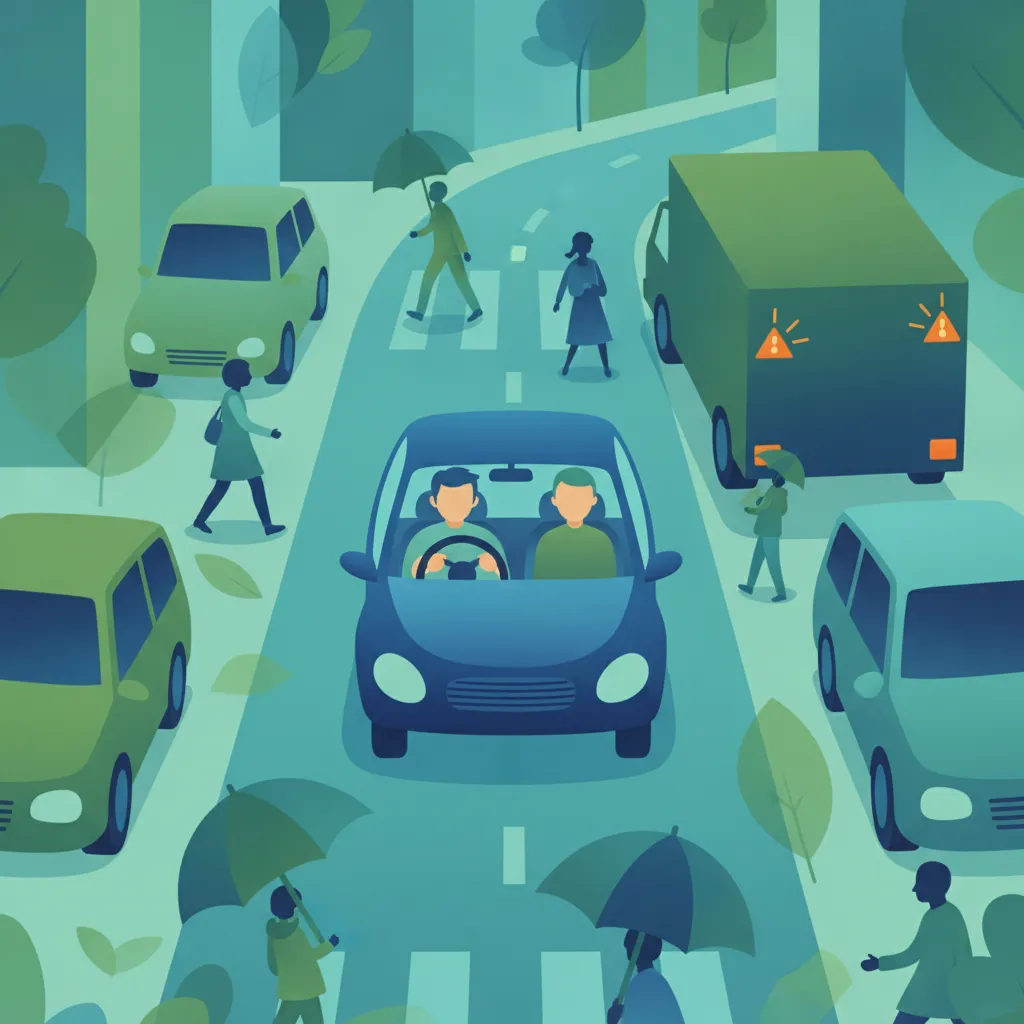
This lesson focuses on maneuvering in extremely crowded areas, passenger terminals, or narrow streets blocked by parked vehicles and obstacles. Drivers will learn to assess clearance distances precisely before committing to narrow pathways. The content teaches steering techniques that maintain stability, optimize space usage, and prioritize public safety during slow-speed, high-difficulty maneuvers.
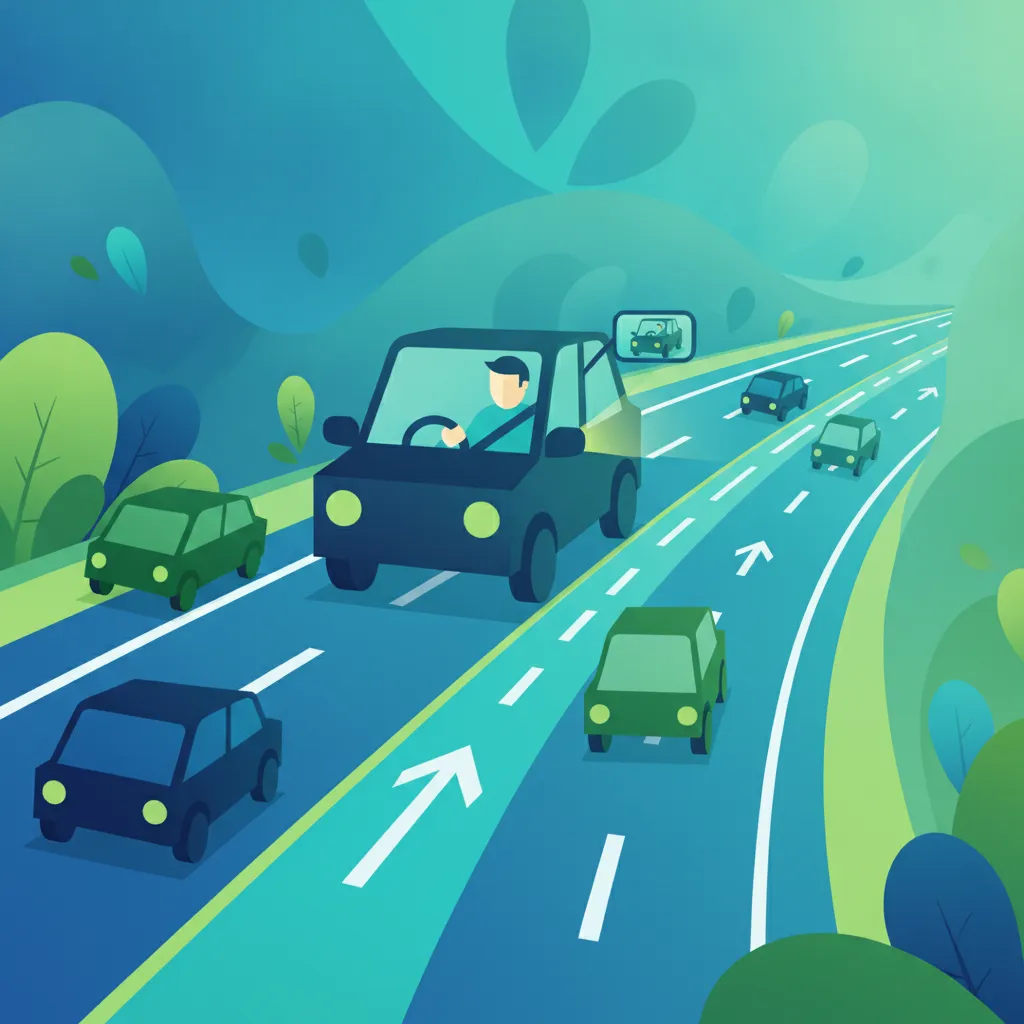
Changing lanes or executing turns requires a structured visual and physical procedure to prevent interrupting surrounding traffic. This lesson explains the key steps: checking the center mirror, exterior mirrors, turning on direction indicators, and performing blind-spot checks. You will learn correct vehicle positioning for both left and right turns, and how to execute safe turning circles without cutting corners.

In this lesson, drivers will learn best practices for manoeuvring goods vehicles into loading docks and other confined spaces. The content covers the use of spotting aids, guidance markings, and reverse assistance technologies. Learners will understand how to align the vehicle and trailer correctly with dock doors, maintain situational awareness, and use proper signaling for safety. The lesson also emphasizes the importance of communication with dock personnel.
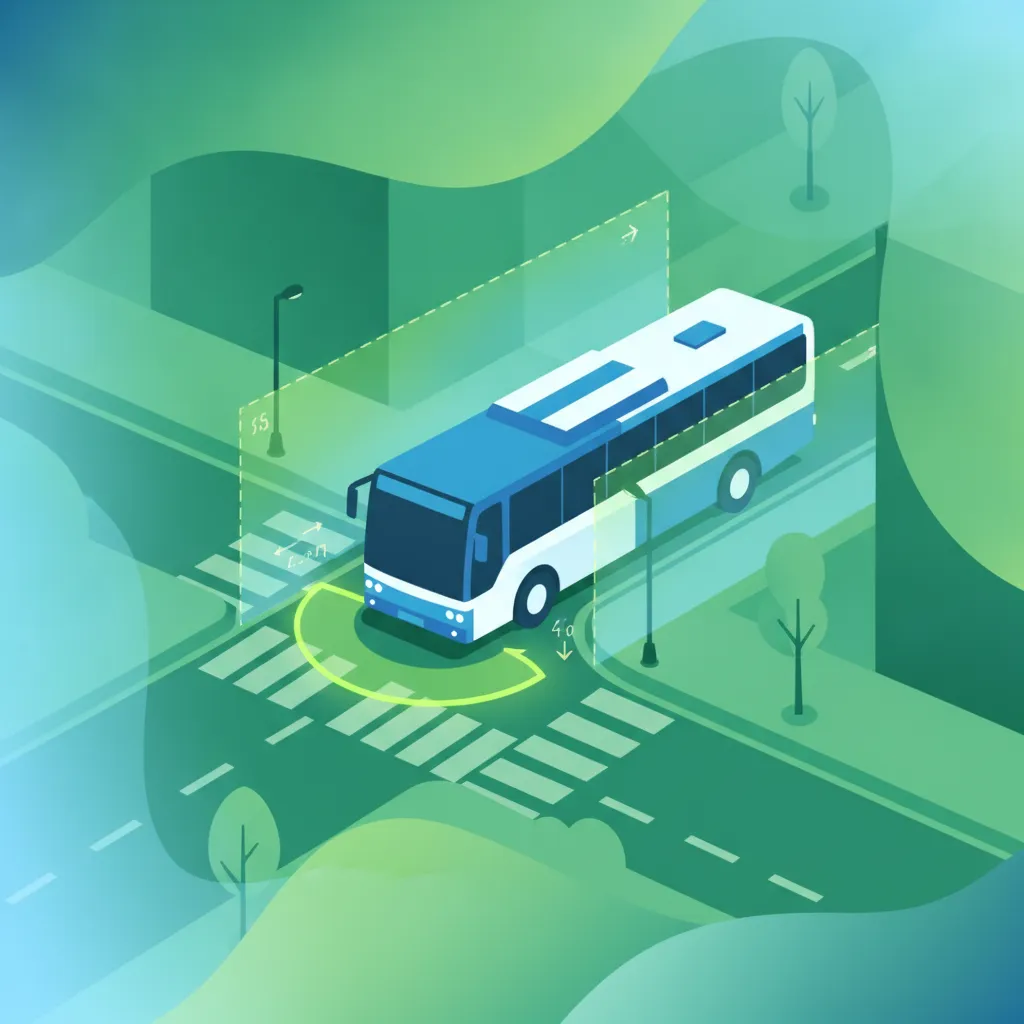
This lesson covers the physical dimensions of passenger vehicles and how their high profile, length, and width alter spatial awareness on the road. Learners will study tail-swing mechanics and track the path of the rear wheels during sharp turns to avoid hitting roadside obstacles. Accurate measurement of overhead structures, bridges, and underpass clearances is taught to prevent catastrophic structural collisions.

This lesson analyzes the technical path a long wheelbase vehicle must take when turning at intersections and navigating roundabouts. Drivers will learn to calculate tail swing and rear-wheel tracking, intentionally swinging wide to clear roadside curbs and poles safely. The lesson emphasizes yielding protocols for pedestrians and cyclists who may be crossing the target street during the turn.

This lesson outlines the step-by-step safety checks and physical controls required to reverse a bus or coach in confined areas. Learners will study the use of rear-view cameras, mirror angles, and acoustic backing alarms to detect obstacles. It highlights the mandatory use of a trained ground guide (guide de manoeuvre) to assist in blind zones, ensuring zero contact with structures or people.

This lesson details the dangerous blind spots (angles morts) that surround heavy passenger vehicles and explains how to mitigate them. Drivers will master the systematic mirror check sequence (retro-information) before executing any turns or lane changes. It also covers the mandatory French "Angles Morts" warning stickers displayed on the vehicle exterior to alert vulnerable road users of danger zones.

In this lesson, drivers will learn strategies to avoid conflicts with smaller vehicles, such as cars and vans, which may not be as visible in large vehicle blind spots. The content emphasizes maintaining adequate spacing, using proper lane discipline, and being aware of small vehicles' behavior during lane changes and turns. Learners will also be introduced to communication techniques, such as signalling and eye contact.

This lesson teaches you how to establish and preserve a dynamic cushion of safety on all sides of your motorcycle. You will study how to apply the 'two-second rule' to keep a safe following distance, extending it to three or more seconds in adverse weather. Additionally, you will discover how to manage tailgating motorists safely without resorting to dangerous speed increases, ensuring you always maintain a clear escape route.
Understand the legal obligations and defensive driving techniques required when interacting with pedestrians and cyclists in different traffic environments. This lesson covers yielding, shared road spaces, and anticipation strategies to ensure maximum safety for vulnerable individuals in compliance with the French driving theory standards.
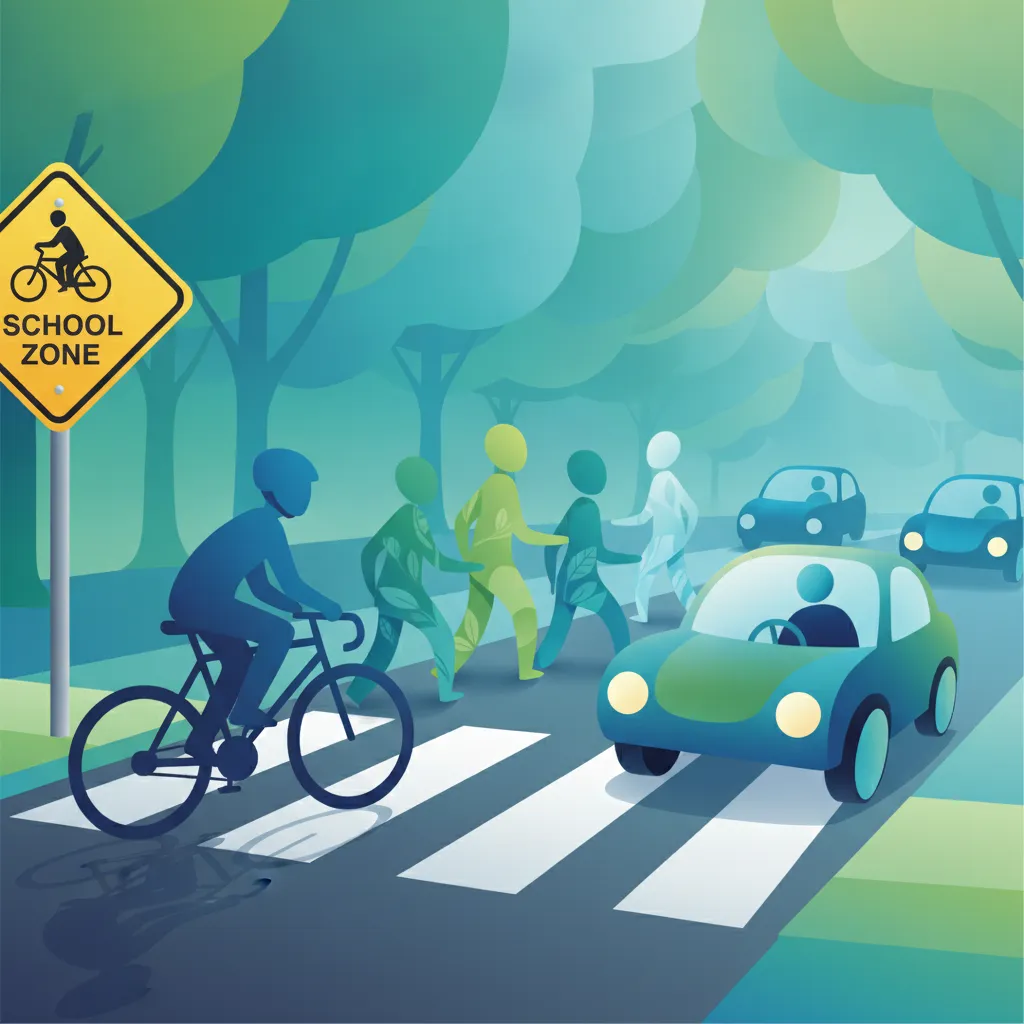
This lesson focuses on the legal requirement to yield to pedestrians on or about to step onto zebra crossings, a major focus of French road safety. You will learn how to approach school zones and pedestrian islands with heightened vigilance and reduced speed. Additionally, the lesson explores shared urban spaces, explaining how to maintain safe lateral distances when overtaking cyclists or personal electric scooters.
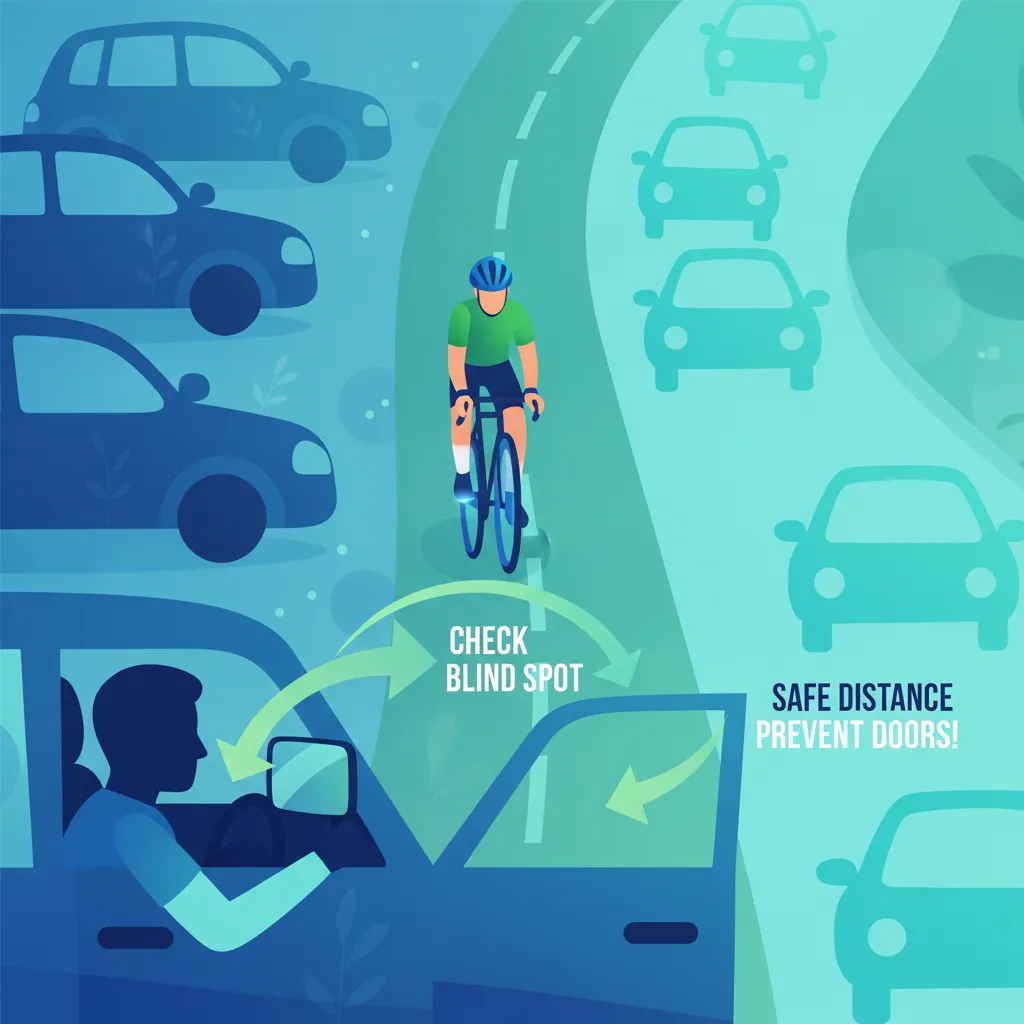
This lesson explains how to share the road safely with cyclists in both urban and rural environments. Drivers will study the legal minimum passing distances when overtaking cyclists, which is one meter in cities and one and a half meters outside urban areas. It also covers recognizing specialized cycling infrastructure, bike boxes at intersections, and preventing blind-spot collisions during right turns.
Learners will focus on the best practices for interacting safely with cyclists and pedestrians in mixed traffic environments. The lesson covers proper lane usage, overtaking protocols, maintaining adequate safety gaps, and non-verbal communication techniques in the French urban landscape. By applying these principles, AM riders can coexist harmoniously with vulnerable road users, reducing the likelihood of accidents.
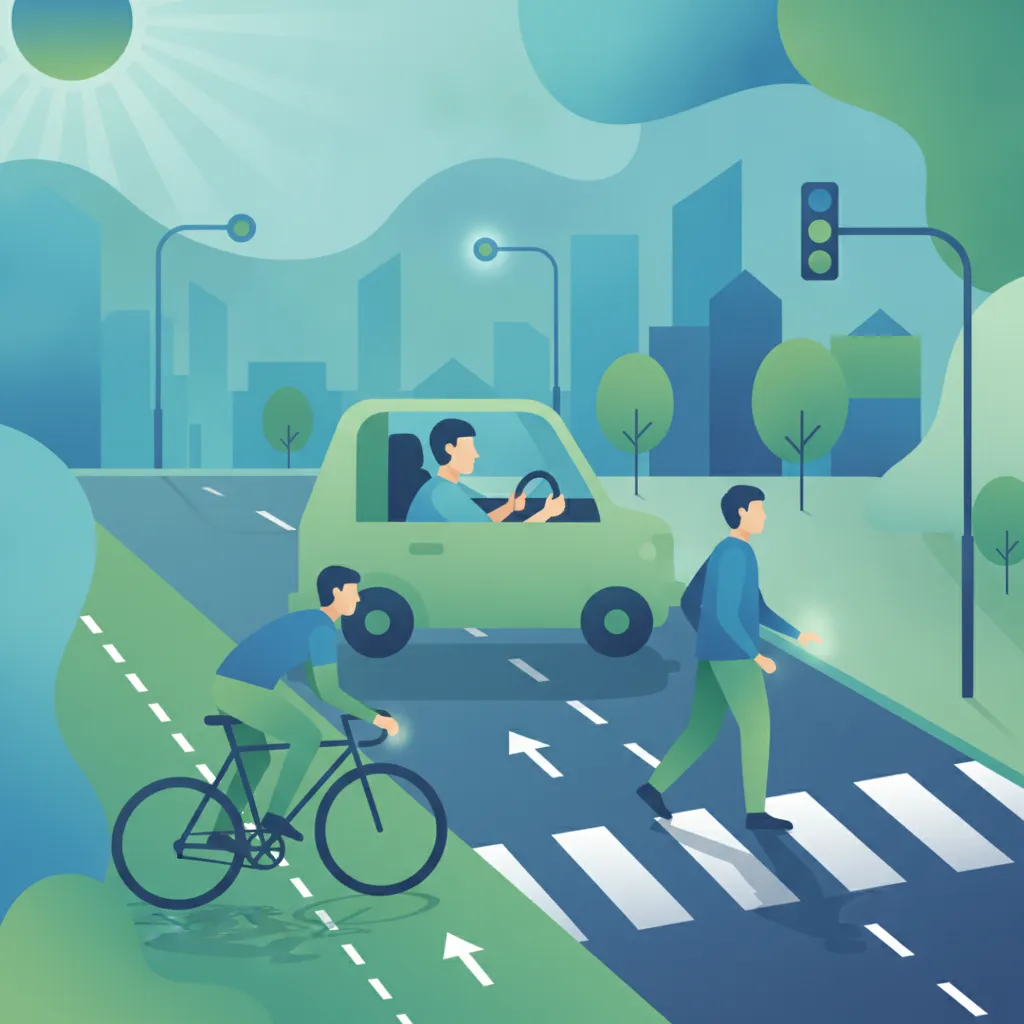
This lesson examines the specific challenges and responsibilities goods vehicle drivers face when interacting with pedestrians and cyclists in urban environments. Learners will understand right-of-way rules, the importance of yielding at pedestrian crossings, and safe turning practices that protect cyclists. The content emphasizes heightened driver vigilance, especially when navigating bike lanes and crowded sidewalks.
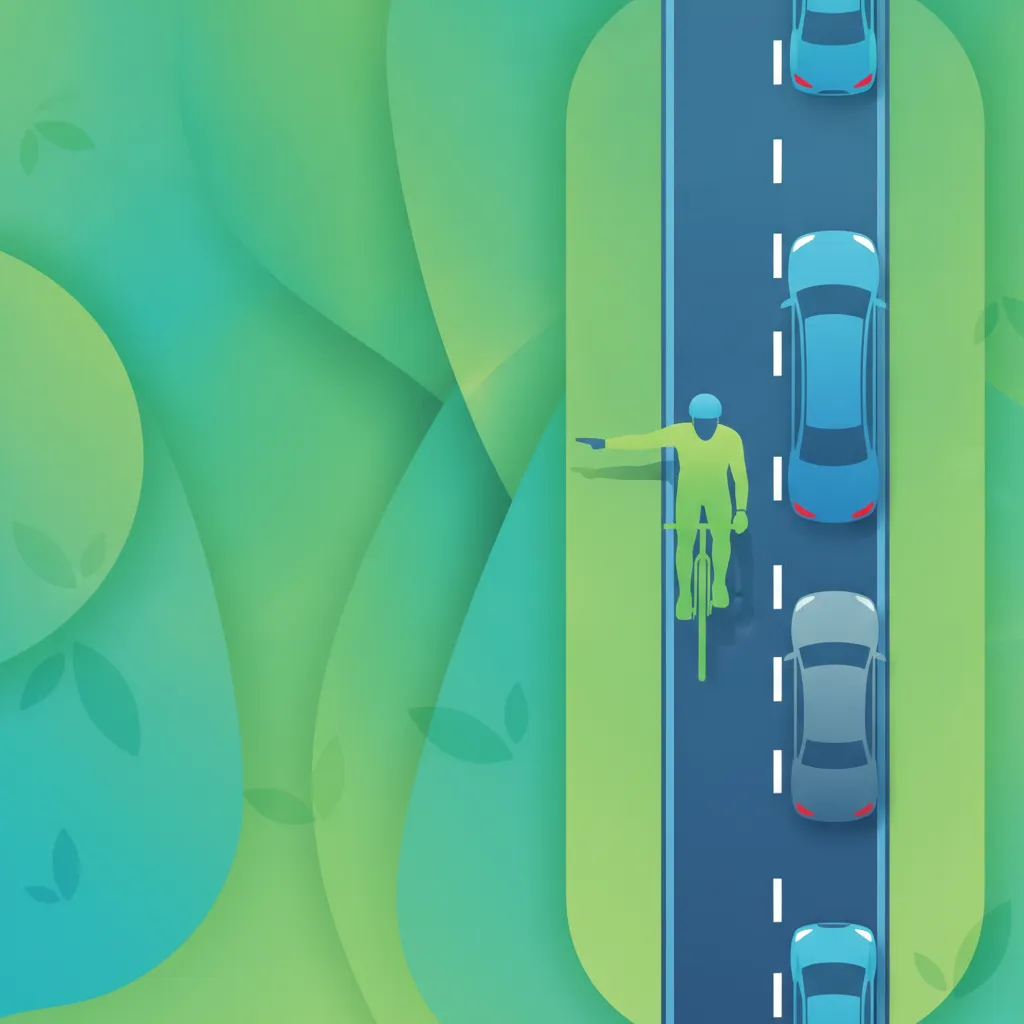
Bicycles represent an eco-friendly transport method with specific rights on French public roadways. This lesson teaches you how to identify dedicated cycle paths, respect bike lanes, and understand cyclist turning privileges at intersections. You will learn the legal minimum safety distance required when overtaking a cyclist: 1 meter in urban areas and 1.5 meters outside city limits.

Certain groups of road users require heightened defensive attention from drivers due to physical limitations or unpredictable behaviors. This lesson covers how to recognize signs of visual impairment (white canes), mobility challenges, and the unpredictability of young children. You will learn to reduce your speed, extend yielding patience, and proactively secure extra space to protect these vulnerable users.

Learners will explore the rules related to pedestrian crossings, focusing on the obligation to yield to pedestrians at zebra crossings and flashing pedestrian signals. The lesson highlights the importance of stopping before the stop line, reducing speed, and maintaining vigilance for pedestrian movement. Mastery of these practices ensures the safety of both pedestrians and AM riders at crossing points.

In France, pedestrians have clear legal priority when stepping onto or indicating an intent to use a crossing (passage pieton). This lesson details standard zebra crossings, refuge islands, and pedestrian crossings managed by synchronized traffic light systems. You will learn to scan crossings ahead, anticipate pedestrian movements, and safely come to a stop whenever a pedestrian attempts to cross.

This lesson details how to manage high-risk interactions with pedestrians who may step off curbs or cross the road near bus stops. Learners will study French Code de la route laws regarding pedestrian priority at crosswalks and near stopping transit vehicles. Developing heightened spatial awareness around blind zones near the front of the bus is emphasized to prevent tragic pedestrian collisions.

This lesson examines French Code de la route laws regarding pedestrian right-of-way, emphasizing the driver's legal duty to yield to any pedestrian engaged in crossing. It outlines proper approach speeds when approaching zebra crossings with obstructed views. Candidates will learn to maintain a safe physical buffer zone and verify that crosswalks are entirely clear of pedestrians before accelerating.
Find clear answers to common questions learners have about Reversing Safely in Various Contexts. Learn how the lesson is structured, which driving theory objectives it supports, and how it fits into the overall learning path of units and curriculum progression in France. These explanations help you understand key concepts, lesson flow, and exam focused study goals.
Mirrors have inherent blind spots that can hide small children, pets, or low obstacles. The Code de la route requires you to perform direct shoulder checks to ensure the area behind and around your vehicle is completely clear before and during the maneuver.
You must reverse at the speed of a walking pace. This allows you maximum time to react if a pedestrian or another vehicle enters your path unexpectedly.
No, vehicles moving on the road always have priority over a vehicle emerging from a driveway or private property. You must ensure the path is entirely clear before you begin your maneuver.
Failing to check the front corners of the car. When you turn the wheel while reversing, the front of the vehicle will swing outward, potentially striking objects or vehicles beside you.
Ready to focus your study? Use the practice search to find exactly the French driving theory questions you need for the Code de la route and permis de conduire ETG. Refine your knowledge on specific topics or challenging rules to boost your confidence and exam readiness.