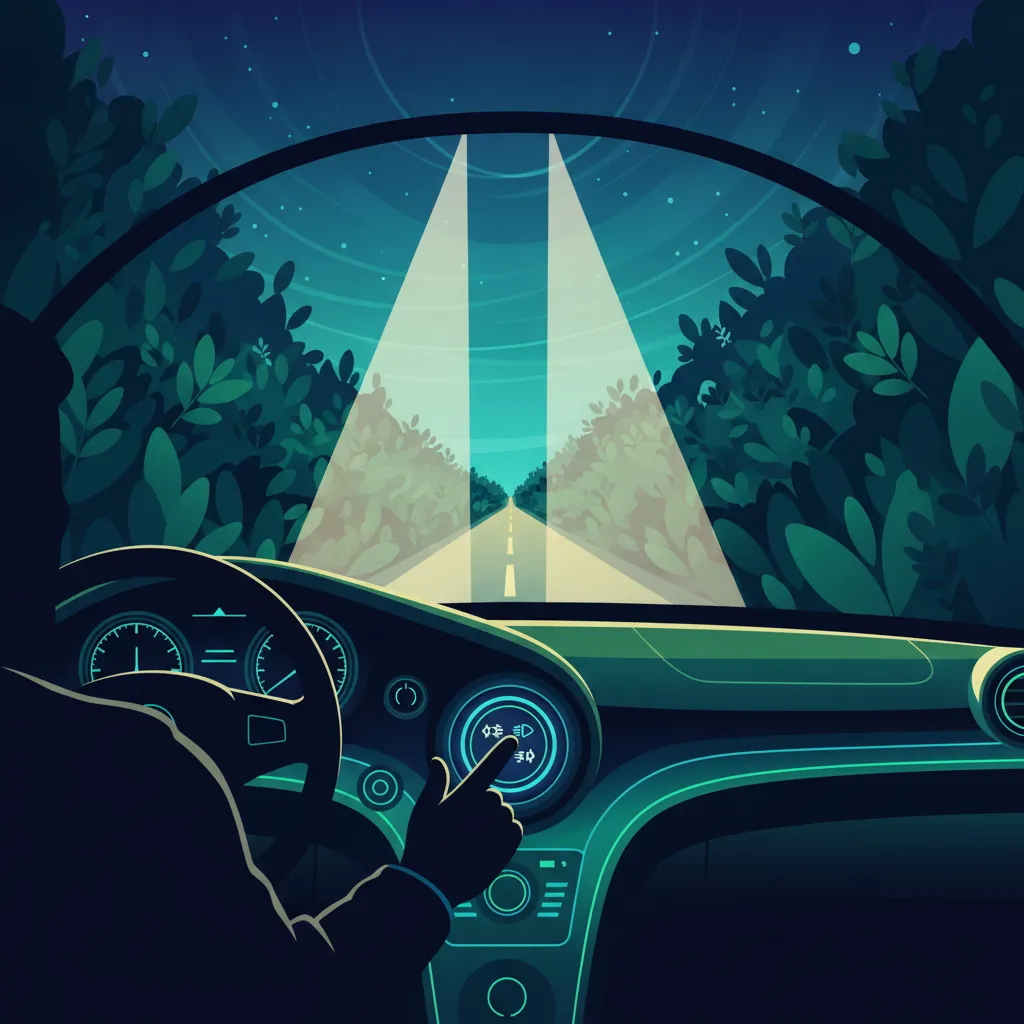
This lesson details the legal requirements for using your vehicle's lighting system, a crucial skill for safe driving and the French ETG exam. You will learn to identify the correct lights for various visibility conditions, from urban tunnels to dark rural roads, ensuring you can communicate effectively with other road users.
Lesson content overview
Correctly using your vehicle's lighting system is a fundamental aspect of road safety and a key topic on the French Category B driving theory exam (Examen de l'Éthique Générale or ETG). Under the French Code de la route, vehicle lights serve two vital purposes: allowing you to see the road ahead clearly and ensuring that you are visible to other road users without causing dangerous glare.
This lesson provides a comprehensive breakdown of every lighting system on a standard Category B vehicle. You will learn when to activate low beams (feux de croisement), high beams (feux de route), position lights (feux de position), and specialized fog lights. Understanding these rules is not only essential for passing your theory exam but also for driving safely through urban tunnels, rural highways, and adverse weather conditions.
Every vehicle is equipped with a standardized set of lights. To navigate French roads legally, you must understand the technical design, physical range, and legal purpose of each light.
Position lights, commonly referred to as "sidelights," are low-intensity lights located at the front and rear of the vehicle. They do not illuminate the road ahead; instead, they indicate your vehicle's presence, width, and orientation to other road users.
Low-intensity front (white) and rear (red) lights designed solely to show the presence and width of a vehicle when it is stationary or parked in low-visibility environments.
A common misunderstanding among new drivers is attempting to drive at night using only position lights. Under the Code de la route, driving with only position lights is illegal and highly dangerous, as they do not provide sufficient illumination for you to spot road hazards or pedestrians.
Low beams, also known as dipped headlights, are your primary driving lights for nighttime and poor weather. They project a asymmetric, downward-angled beam of light that illuminates the road ahead for at least 30 metres.
The downward angle of the low beams is carefully calibrated to prevent direct light from entering the eyes of oncoming drivers. This asymmetric design typically projects slightly further on the right-hand side (in right-hand drive traffic systems) to help you spot road signs, pedestrians, and cyclists on the shoulder without blinding oncoming traffic on your left.
High beams, or full-beam headlights, project a powerful, long-range, and straight-pointing beam of light. They are designed to illuminate the road ahead for a minimum of 100 metres, allowing you to drive at higher speeds on dark roads by significantly extending your visual field.
Because high beams point straight ahead rather than downward, they produce intense glare. If used improperly, they can temporarily blind oncoming drivers, cyclists, and pedestrians, creating an immediate risk of a head-on collision.
The Code de la route dictates clear situational rules for when you must switch between high beams and low beams. This is referred to as "dipping" your headlights.
Check for Street Lighting: If you are driving on a well-lit urban street, you must use your low beams. High beams are strictly prohibited in well-lit areas.
Assess Oncoming Traffic: On unlit rural roads, you should default to high beams. However, you must immediately switch to low beams if an oncoming vehicle appears within 200 metres.
Evaluate Following Distance: If you are trailing another vehicle within 150 metres, switch to low beams to avoid blinding the driver through their rear-view and side mirrors.
Navigate Curves and Crests: Switch to low beams temporarily when approaching sharp, blind curves or hill crests on unlit roads to prevent suddenly dazzling an oncoming driver.
To comply with French traffic laws, you must memorize the precise distance thresholds for headlight adjustment:
Failing to dim your high beams for oncoming traffic is a serious safety violation under French traffic law. It can result in a fine and may hold you legally liable if your glare causes or contributes to an accident.
Adverse weather completely alters how light behaves on the road. Standard headlights can reflect off water droplets, fog, or falling snow, creating a white wall of glare that worsens your visibility. Specialized fog lights are designed to mitigate this issue.
Front fog lights are mounted very low on the vehicle's bumper. They project a wide, flat, and low-angled beam of light directly onto the road surface immediately in front of the car. Because they are positioned low, their light cuts underneath the fog layer where the air is naturally clearer, reducing backscatter reflection.
Rear fog lights emit an extremely bright, intense red light. They are designed for one specific purpose: to make your vehicle visible from behind in severely degraded visibility, preventing rear-end collisions on high-speed roads.
ETG Exam Trap: A classic question on the French theory test asks if you can use rear fog lights during heavy rain. The answer is always NO. Rear fog lights are allowed in fog and snow, but never in rain. Front fog lights, however, are allowed in rain, fog, and snow.
Communicating your vehicle's status when it is stationary or presenting a hazard is crucial for preventing multi-vehicle collisions.
Hazard warning lights flash all four turn signals simultaneously. They warn other road users that your vehicle is currently posing a temporary hazard or that traffic conditions ahead have changed abruptly.
You must activate your hazard lights in the following situations:
Avoid using hazard warning lights while moving at normal speeds under standard traffic conditions, as this disables your ability to signal turns or lane changes clearly.
If you must stop or park your vehicle on a roadway at night or in conditions of severely reduced visibility (such as a dark rural roadside or a dimly lit urban street), you are legally required to keep your position lights turned on. This ensures that approaching drivers can see the outline of your parked vehicle from at least 150 metres away.
Your lighting decisions have direct consequences on the safety of the roadway. The table below illustrates the physical and psychological outcomes of correct versus incorrect lighting choices.
| Initial Action | Environmental Context | Direct Consequence | Safety Outcome |
|---|---|---|---|
| Correct low beam activation | Well-lit urban street at night | Adequate road illumination without dazzling oncoming pedestrians or motorists. | High Safety: Optimal hazard detection and zero glare. |
| Failure to dim high beams | Meeting oncoming traffic on an unlit rural road | Direct light projects into the eyes of the oncoming driver, causing temporary blindness. | Extreme Risk: Oncoming driver may drift out of their lane or miss road hazards. |
| Activating rear fog lights in rain | Highway driving during a heavy rainstorm | The bright red light reflects off wet roads and windshields, blinding drivers behind. | Increased Risk: Following drivers may lose depth perception or fail to see your brake lights. |
| Using hazard lights while moving normally | Driving slightly below the speed limit | Other drivers cannot distinguish if you are stationary or moving, and turn signals are disabled. | Moderate Risk: Confusion during intersections or lane merges. |
To solidify your understanding of these rules, let's look at how they apply in real-world driving scenarios.
Imagine you are driving at night on an unlit country road (route départementale). Because there is no ambient lighting and no oncoming traffic, you have your high beams activated, allowing you to see 100 metres ahead.
As you approach a town, you pass the town entry sign and notice streetlights illuminating the road. You must immediately switch to your low beams. Keeping high beams active in a built-up, well-lit urban area is illegal and will dazzle local traffic, pedestrians, and cyclists.
You are driving on a bright sunny afternoon and approach a well-lit urban tunnel. Although your eyes can adjust to the interior lighting of the tunnel, you must switch on your low beams before entering.
Tunnels are enclosed spaces where lighting conditions can change rapidly due to power failures or sudden dust accumulation. Using low beams ensures you remain highly visible to drivers both in front of and behind you.
Use this quick-reference guide to master which lights are mandatory, optional, or prohibited based on the driving environment.
To master the vehicle safety and environmental sections of your French driving theory course, explore these related topics:
Explore all units and lessons included in this driving theory course.
Lesson content overview
Explore all units and lessons included in this driving theory course.
Explore search topics learners often look for when studying Vehicle Lights: Types and Appropriate Use. These topics reflect common questions about road rules, driving situations, safety guidance, and lesson level theory preparation for learners in France.
Browse additional driving theory lessons that cover connected traffic rules, road signs, and common driving situations related to this topic. Improve your understanding of how different rules interact across everyday traffic scenarios.
Learn the specific strategies for maintaining visibility and safety during night driving. This guide covers hazard anticipation techniques, managing glare from other vehicles, and adapting your driving style to reduced visibility conditions according to the French Code de la route.
Driving at night introduces serious safety challenges, such as reduced visual range, headlight glare, and fatigue. This lesson explains how to correctly transition from high beams to low beams to avoid blinding oncoming traffic. You will learn to look toward the right-side edge line to minimize headlight glare and recognize signs of visual tiredness that necessitate immediate rest breaks.
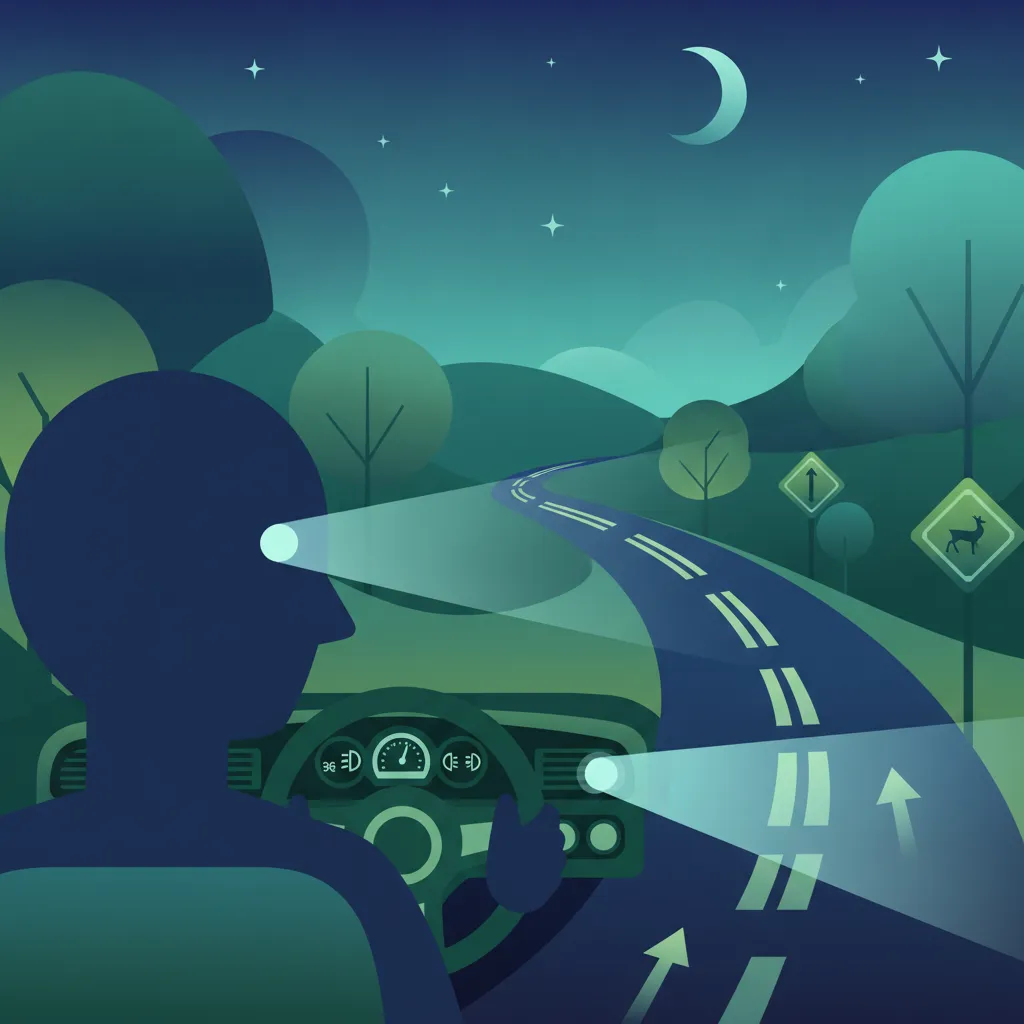
This lesson provides guidance on safe riding practices during nighttime, emphasizing proper headlamp usage, reflective clothing, and strategies to manage glare from oncoming traffic. Learners will learn to compensate for reduced peripheral vision and increased fatigue, as well as to identify common night road hazards in France. By applying these techniques, riders can enhance their visibility and safety after dark.

This lesson addresses the distinct safety considerations for riding during daylight hours versus nighttime, covering topics such as managing glare from the sun and ensuring adequate lighting after dark. Learners will learn strategies to maintain visibility, stay alert, and adapt riding techniques to varying light conditions, including the use of reflective gear. Emphasis is placed on proactive planning to mitigate risks associated with reduced visibility, thereby fostering safe riding practices.
This lesson covers the technical and behavioral adaptations needed to ride safely at night under reduced ambient lighting. You will learn the legal parameters for switching between high and low beams, and how to avoid looking directly into oncoming headlights to preserve your night vision. The lesson also emphasizes the heightened threat of rider fatigue after dark and how to utilize retro-reflective clothing to make yourself visible.

Adverse weather reduces tyre traction and limits visibility, dramatically raising the risk of multi-car accidents on highways. This lesson details speed reductions required during rainfall, techniques for avoiding aquaplaning, and demisting windshields for visibility. You will learn how to maintain extra stopping distance on snow-covered roads and the correct headlight adjustments to make during fog.
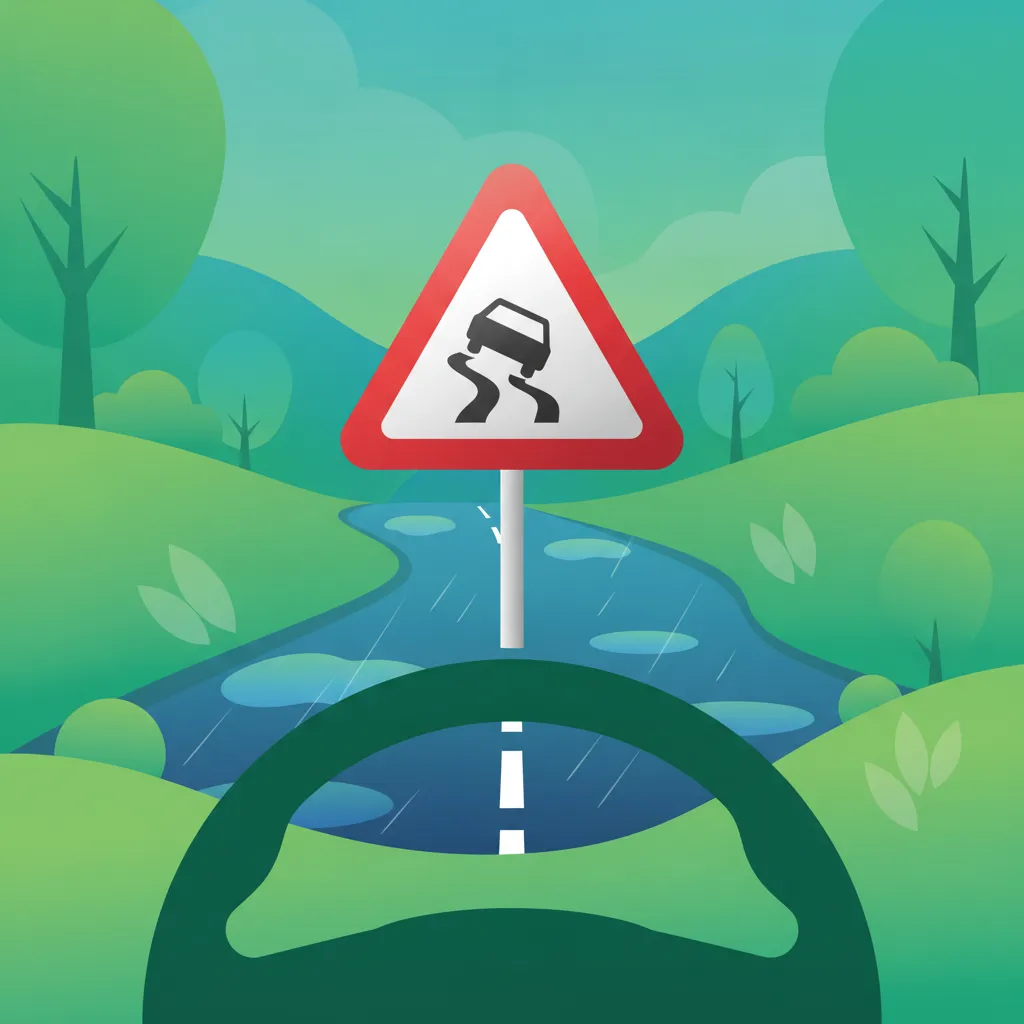
Warning signs on French roads are triangular with a red border, designed to alert drivers to upcoming dangers. This lesson teaches you how to interpret warnings for sharp curves, slippery surfaces, narrowing lanes, and wildlife or animal crossing hazards. You will understand the safety adjustments needed when approaching school zones, active roadworks, or crossings where vulnerable pedestrians are present.
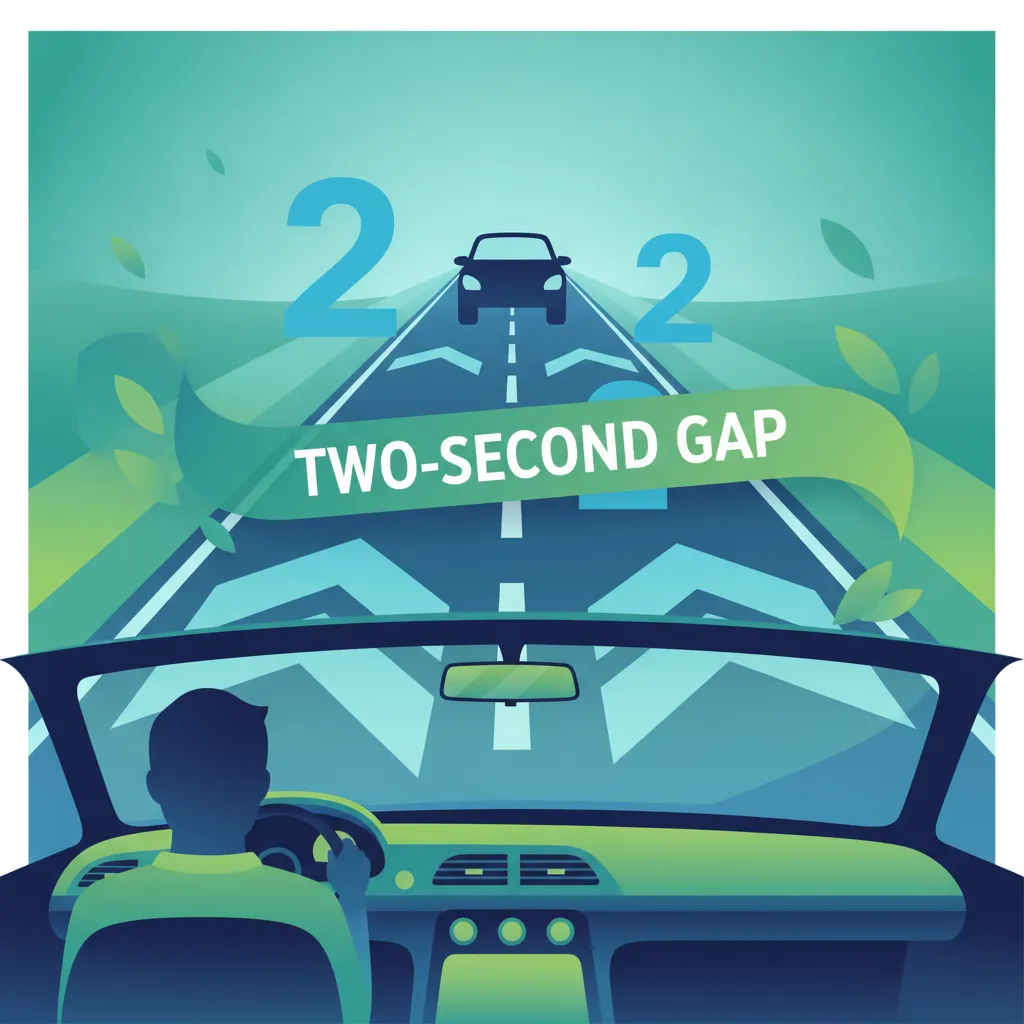
Maintaining a safe distance behind the lead vehicle is essential to prevent rear-end collisions during sudden braking maneuvers. This lesson teaches you the two-second safety rule and how to calculate this gap at different highway speeds. You will also study unique safety margin requirements, such as maintaining minimum distance intervals in road tunnels or doubling your following distance on wet roads.
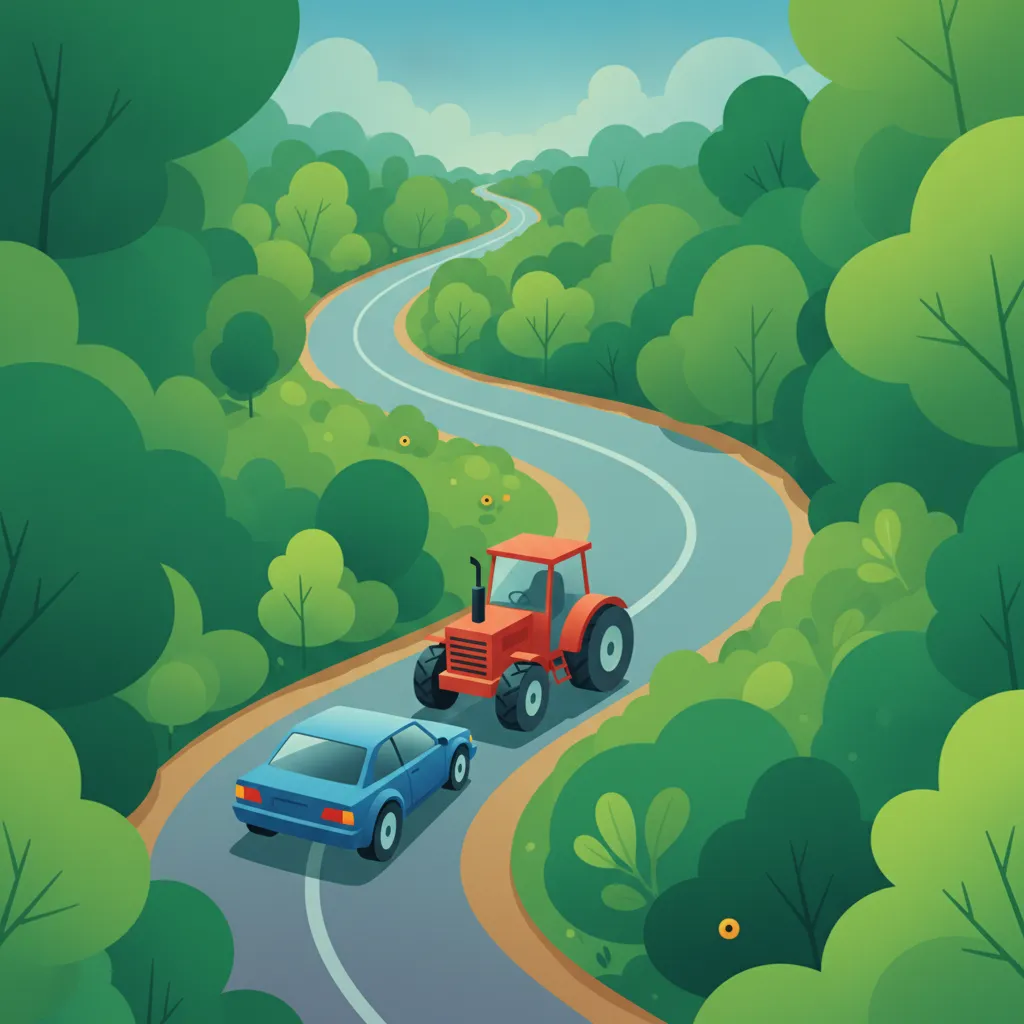
Rural roads account for a high percentage of severe accidents due to narrow widths, winding geometries, and sudden hazards. This lesson teaches strategies for negotiating sharp bends, handling agricultural machinery, and reacting to wildlife warning signs. You will learn to manage your vehicle's lane placement on roads with soft shoulders and understand speed limits on rural networks.
In this lesson, drivers will explore the specific challenges presented by rural road environments, including narrower lanes, shared space with agricultural vehicles, and frequent wildlife crossings. The content emphasizes adapting speed to road curvature, surface conditions, and visibility while navigating hills and bends. Learners will also learn to interpret rural road signage and understand the importance of maintaining vigilance.
Proactive drivers scan the road constantly, detecting potential dangers before they turn into real-world emergency situations. This lesson teaches scanning techniques, the use of rear-view mirrors, and the interpretation of visual cues from other road users. You will learn to anticipate hazards like child play near roads, merging vehicles, and sudden lane changes, helping you drive defensively.
Explore the official regulations and safety procedures for navigating French roads during heavy rain, snow, and dense fog. Understand how weather-induced visibility limits affect your legal obligations and how to correctly adjust your speed, following distances, and specialized lighting systems for these conditions.
Adverse weather reduces tyre traction and limits visibility, dramatically raising the risk of multi-car accidents on highways. This lesson details speed reductions required during rainfall, techniques for avoiding aquaplaning, and demisting windshields for visibility. You will learn how to maintain extra stopping distance on snow-covered roads and the correct headlight adjustments to make during fog.
Learners will explore techniques for maintaining control and safety while riding in rain, focusing on reduced braking efficiency, hydroplaning prevention, and visibility challenges. The lesson emphasizes appropriate speed reduction, tire condition checks, and the use of rain gear to enhance rider comfort and protection. By mastering these adaptations, riders can navigate wet French conditions with confidence.
This lesson covers the mechanical and physical adaptations required to drive a passenger coach in rain, heavy fog, snow, and crosswinds. Drivers will learn to recognize signs of aquaplaning and understand the dramatic traction loss associated with wet or icy roads. It also details French winter equipment regulations (Loi Montagne) requiring snow tires or chains in designated mountainous regions.
This lesson focuses on adapting your riding behavior to sudden environmental shifts, such as heavy fog or strong crosswinds on exposed bridges. You will learn specific technical adjustments, including leaning slightly into crosswinds and widening your safety margins during low-visibility fog. The lesson also highlights how seasonal temperature drops affect your tires' ability to warm up and achieve reliable, safe levels of road adhesion.
In this lesson, drivers will learn how to adjust their driving techniques in response to adverse weather conditions such as rain, fog, snow, ice, and strong winds. The content covers strategies for maintaining visibility, managing reduced traction on wet or icy surfaces, and adjusting speed and braking distances accordingly. Learners will also be introduced to the use of anti-skid and stability control systems under challenging weather.
This lesson addresses the unique hazards of riding a motorcycle in wet conditions, emphasizing the danger of aquaplaning. You will learn how water pooling on the asphalt can cause tires to lose direct contact with the road, leading to a complete loss of steering control. The lesson offers practical advice on reducing your speed, using smooth throttle and brake inputs, and ensuring your tires have adequate tread depth to clear water.
This lesson focuses on the skill of adjusting speed according to real-time road conditions, visibility, and traffic density. Learners will learn to assess factors such as weather, road surface quality, and pedestrian activity to determine a safe riding speed under French regulatory expectations. By mastering adaptive speed control, riders can enhance safety and reduce the likelihood of accidents caused by inappropriate speed.
Driving at night introduces serious safety challenges, such as reduced visual range, headlight glare, and fatigue. This lesson explains how to correctly transition from high beams to low beams to avoid blinding oncoming traffic. You will learn to look toward the right-side edge line to minimize headlight glare and recognize signs of visual tiredness that necessitate immediate rest breaks.
This lesson provides guidance on safe riding practices during nighttime, emphasizing proper headlamp usage, reflective clothing, and strategies to manage glare from oncoming traffic. Learners will learn to compensate for reduced peripheral vision and increased fatigue, as well as to identify common night road hazards in France. By applying these techniques, riders can enhance their visibility and safety after dark.
Maintaining a safe distance behind the lead vehicle is essential to prevent rear-end collisions during sudden braking maneuvers. This lesson teaches you the two-second safety rule and how to calculate this gap at different highway speeds. You will also study unique safety margin requirements, such as maintaining minimum distance intervals in road tunnels or doubling your following distance on wet roads.
Find clear answers to common questions learners have about Vehicle Lights: Types and Appropriate Use. Learn how the lesson is structured, which driving theory objectives it supports, and how it fits into the overall learning path of units and curriculum progression in France. These explanations help you understand key concepts, lesson flow, and exam focused study goals.
You must use low beams (feux de croisement) at night, during the day when visibility is reduced by weather like rain or snow, and when driving through tunnels, regardless of the time of day.
No. Front fog lights may be used in addition to low or high beams during fog, heavy snow, or heavy rain. Rear fog lights should only be used in dense fog or heavy snow, and must never be used in rain, as they can dazzle drivers behind you.
High beams (feux de route) are permitted on unlit roads at night. However, you must switch back to low beams immediately when you encounter another driver to avoid dazzling them, or when following another vehicle closely.
Yes. When entering a tunnel, you must immediately switch on your low beam headlights, even if the tunnel is lit. This is mandatory to ensure your vehicle is visible to others and to help you see better as your eyes adjust to the darkness.
Ready to focus your study? Use the practice search to find exactly the French driving theory questions you need for the Code de la route and permis de conduire ETG. Refine your knowledge on specific topics or challenging rules to boost your confidence and exam readiness.