This lesson focuses on the critical interactions between large passenger vehicles and cyclists on French roads. It is a vital component of the D1, D, D1E, and DE theory course, ensuring you understand how to protect vulnerable road users while operating heavy buses and coaches.
Lesson content overview
As professional passenger transport drivers operating vehicles in categories D1, D, D1E, or DE, sharing the road safely with cyclists (les cyclistes) is a core legal and ethical responsibility. Cyclists are classified as vulnerable road users (VRUs). Unlike the occupants of buses, coaches, or cars, cyclists have no protective metal shell, crumple zones, or airbags. In mixed traffic settings—ranging from high-density Parisian boulevards to narrow, winding rural routes in the French countryside—drivers must possess a flawless understanding of cyclist behavior, legal clearances, and specialized infrastructure.
Upholding a high standard of professional driving requires proactive defensive driving. This lesson breaks down the French Highway Code (Code de la Route) regarding interactions with cyclists, detailing legal overtaking distances, cyclist priority rights, infrastructure layouts, and specialized heavy-vehicle blind-spot management.
Overtaking a cyclist is a maneuver that demands extreme precision, particularly for large passenger vehicles. The movement of a bus or coach creates a high-pressure air pocket (known as aerodynamic pull or a "bow wave") that can destabilize a cyclist, pulling them toward the vehicle or pushing them off balance. To mitigate this risk, Article R412-12 bis of the Code de la Route strictly regulates the lateral safety clearance that all motor vehicles must maintain when overtaking a bicycle.
When driving within built-up areas (en agglomération), you must maintain a lateral distance of at least 1.0 metre between the outermost edge of your vehicle (including side mirrors) and the cyclist.
Because urban lanes are often narrow and packed with parked cars, pedestrian crossings, and traffic islands, you must never squeeze past a cyclist. If you cannot guarantee a clear 1.0-metre gap, you must remain behind the cyclist until the road widens or oncoming traffic clears.
On rural roads and highways outside built-up areas (hors agglomération), vehicle speeds are significantly higher, which dramatically amplifies the aerodynamic hazard. Consequently, the law mandates a lateral passing distance of at least 1.5 metres.
At higher speeds, a cyclist may also need to swerve suddenly to avoid road defects, potholes, gravel, or crosswinds. The 1.5-metre buffer provides the necessary margin of safety to prevent catastrophic high-speed side-swipe collisions.
Overtaking is strictly prohibited if the lane width does not allow you to safely maintain the required lateral distance. If a road is too narrow to accommodate your vehicle, the cyclist, and the legal buffer (1.0 m or 1.5 m), you must slow down and wait.
Solid Line Exception: Under French traffic law, drivers are permitted to cross (or straddle) a solid white line (ligne continue) to overtake a cyclist, provided the maneuver can be completed with total safety, there is sufficient visibility ahead, and it does not force oncoming traffic to slow down or swerve. This exception applies on two-way roads where the maximum speed limit is 50 km/h or less.
Urban planners in France have implemented several types of cycling infrastructure to encourage green mobility and segregate vulnerable users from heavy traffic. As a professional passenger vehicle driver, recognizing and respecting these spaces is critical to passing your French Passenger Vehicle License theory exam and avoiding severe penalties.
It is vital to distinguish between a bike lane and a cycle path, as their physical integration with the roadway differs:
Drivers of motor vehicles are strictly prohibited from driving, idling, or parking in bike lanes or cycle paths. Encroaching on these lanes is a serious violation that directly endangers cyclists, forcing them to swerve into the path of larger motor vehicles.
A bike box (sas vélo) is a designated, highly visible marked area located at controlled intersections between the first stop line (for motor vehicles) and the second stop line (for cyclists, directly in front of the traffic light).
The primary purpose of a sas vélo is to allow cyclists to position themselves ahead of motorized traffic during a red light. This placement makes them highly visible to all drivers, particularly those in heavy passenger vehicles, and allows them to execute left or right turns safely before motor vehicles begin to move on the green signal.
Stop Before the First Line: When approaching a red light, you must stop your passenger vehicle before the first solid white line, leaving the bike box completely clear.
Do Not Encroach: It is illegal to stop your vehicle's nose or bumper within the bike box. If you slide into the box, you block the cyclists' safe haven and push them into dangerous blind spots.
Yield to Cyclists: When the light turns green, you must allow any cyclists inside the bike box to clear the intersection and complete their maneuvers before you accelerate.
In many French towns, particularly within designated Zone 30 areas (speed limit 30 km/h) and meeting zones (zones de rencontre), cyclists are legally authorized to ride in both directions on one-way streets. This layout is known as a double-sens cyclable.
When navigating narrow urban streets in a large passenger vehicle, you must always anticipate encountering a cyclist riding toward you, even if the street is a designated one-way road for motor vehicles. Maintain low speeds, keep to the right side of the lane, and prepare to yield or stop to allow safe passage.
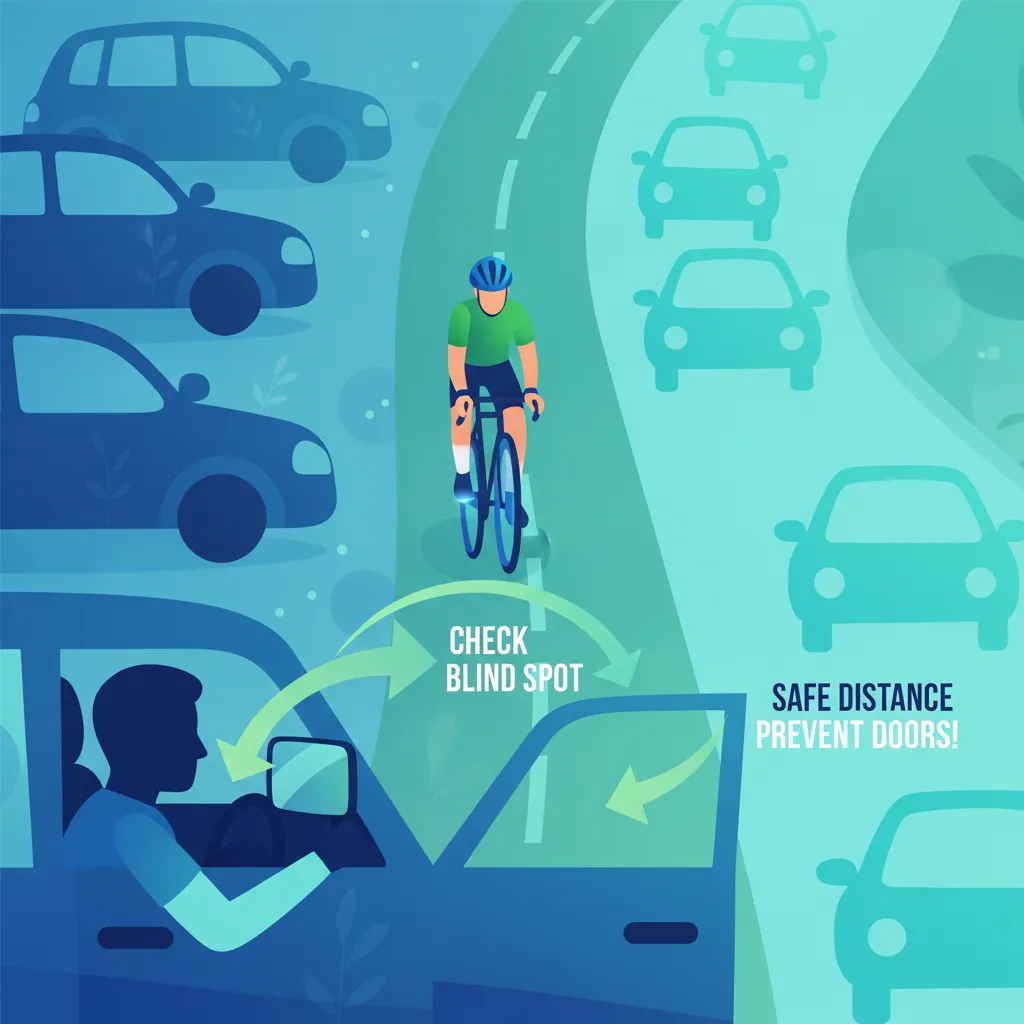
Blind spots (les angles morts) represent one of the most significant hazards in mixed traffic settings, especially for large, long vehicles such as urban buses and coaches (categories D and DE). Due to the vehicle's height, length, and structural pillars, large sections around the vehicle are completely invisible to the driver through standard mirrors.
The most common and lethal cyclist-vehicle collision occurs during a right-hand turn at an intersection. This classic scenario unfolds as follows:
To combat this, French law requires heavy vehicles over 3.5 tonnes (including buses and coaches) to display standardized warning stickers indicating the positions of their blind spots (attention angles morts) on the sides and rear of the vehicle. However, the ultimate responsibility for avoiding a collision lies with the professional driver.
Before making any right-hand turn or moving your vehicle laterally to the right, you must follow a strict safety sequence:
Signal Early: Activate your right-turn signal indicator at least 5 seconds before initiating any deceleration or change of direction. Early signaling alerts approaching cyclists of your intent.
Check All Mirrors: Continuously monitor your main flat mirrors, wide-angle mirrors, and close-proximity (downward-facing) mirrors on the right side.
Perform a Direct Visual Check: Do not rely solely on mirrors. Perform a quick physical head-turn (shoulder check) toward the right passenger windows to verify that no cyclist is riding parallel to your vehicle.
Yield the Right-of-Way: If a cyclist is traveling alongside you in a bike lane or on the edge of the roadway, they have absolute priority. You must pause, let the cyclist pass the intersection, and only turn when the lane is completely clear.
Turn Slowly: Execute the turn at a crawling speed, remaining ready to brake instantly if a fast-moving cyclist appears from behind.
To ensure seamless traffic flow and safety, the French Highway Code establishes clear right-of-way rules that motorists must respect when interacting with cyclists.
If a cyclist is traveling in a designated bike lane that runs parallel to your road, they have priority over you when you are turning. This rule holds true even if you have a green traffic light; a green light allows you to proceed, but it does not vacate your legal obligation to yield to straight-traveling traffic on your right, including cyclists in a bike lane.
Roundabouts (les ronds-points) are high-risk zones for cyclists. Because of their slower speed, cyclists often remain on the outer edge of the roundabout, even when they plan to exit left or make a full U-turn.
In France, cyclists are sometimes permitted to treat red lights as yield signs. This is indicated by an auxiliary triangular sign called the M12 sign, which is attached directly to the traffic light pillar.
As a driver, if you see an M12 sign at a red light, you must anticipate that cyclists may legally cross the intersection or turn right while your light is red. If your light turns green, do not immediately accelerate; look out for any cyclists who are finishing their crossing under the authorization of the M12 sign.
Operating a heavy vehicle around cyclists requires adapting your driving behavior to shifting environmental conditions. Rainy weather, poor visibility, and night driving require additional precautionary margins.
| Condition | Hazard to Cyclists & Drivers | Required Driver Adaptation |
|---|---|---|
| Rain & Wet Roads | Cyclists have much longer braking distances and are prone to slipping on wet road markings, metal utility covers, and leaves. | Increase your lateral passing distance beyond the legal minimum (e.g., maintain 1.5 m in town if possible) and slow down to avoid splashing water. |
| Night & Twilight | Cyclists are extremely difficult to see, especially if they are wearing dark clothing or lack proper lights/reflectors. | Reduce your speed in urban areas. Frequently scan road edges and crossings. Ensure your headlights are clean and functioning perfectly. |
| Windy Conditions | Strong side winds can physically blow a cyclist sideways, causing sudden, erratic swerves. | Give cyclists a much wider birth when overtaking. Avoid overtaking on narrow roads during high-wind warnings. |
| School Zones | Young, inexperienced cyclists may have poor spatial awareness, making sudden movements or ignoring priority rules. | Reduce speed to 30 km/h or lower. Keep your foot hovering over the brake pedal (le pied devant le frein) to minimize reaction time. |
Violations of cyclist protection laws are heavily penalized in France. For professional drivers, these infractions can result not only in substantial financial penalties and license point deductions but also in professional disciplinary actions or the suspension of your passenger transport certification.
To maintain the highest level of safety and pass your theory exam, keep these primary rules embedded in your daily driving practices:
Explore all units and lessons included in this driving theory course.
Lesson content overview
Explore all units and lessons included in this driving theory course.
Explore search topics learners often look for when studying Cyclist Interactions in Mixed Traffic Settings. These topics reflect common questions about road rules, driving situations, safety guidance, and lesson level theory preparation for learners in France.
Browse additional driving theory lessons that cover connected traffic rules, road signs, and common driving situations related to this topic. Improve your understanding of how different rules interact across everyday traffic scenarios.
Understand the critical blind spots inherent to buses and coaches in the French Code de la route. This guide explains how to properly adjust and utilize mirrors alongside direct physical checks to improve hazard perception and safety when operating heavy passenger vehicles in urban and rural traffic environments.

This lesson details the dangerous blind spots (angles morts) that surround heavy passenger vehicles and explains how to mitigate them. Drivers will master the systematic mirror check sequence (retro-information) before executing any turns or lane changes. It also covers the mandatory French "Angles Morts" warning stickers displayed on the vehicle exterior to alert vulnerable road users of danger zones.
This lesson focuses on the importance of recognizing and mitigating blind spots in goods vehicles, especially when towing trailers. Learners will explore techniques such as proper mirror adjustment, the use of blind spot mirrors, and visual checks to ensure that obstacles and vulnerable road users are detected before executing maneuvers. The content also discusses the limitations of blind spot monitoring systems and the need for supplementary visual checks.

In this lesson, drivers will learn strategies to avoid conflicts with smaller vehicles, such as cars and vans, which may not be as visible in large vehicle blind spots. The content emphasizes maintaining adequate spacing, using proper lane discipline, and being aware of small vehicles' behavior during lane changes and turns. Learners will also be introduced to communication techniques, such as signalling and eye contact.
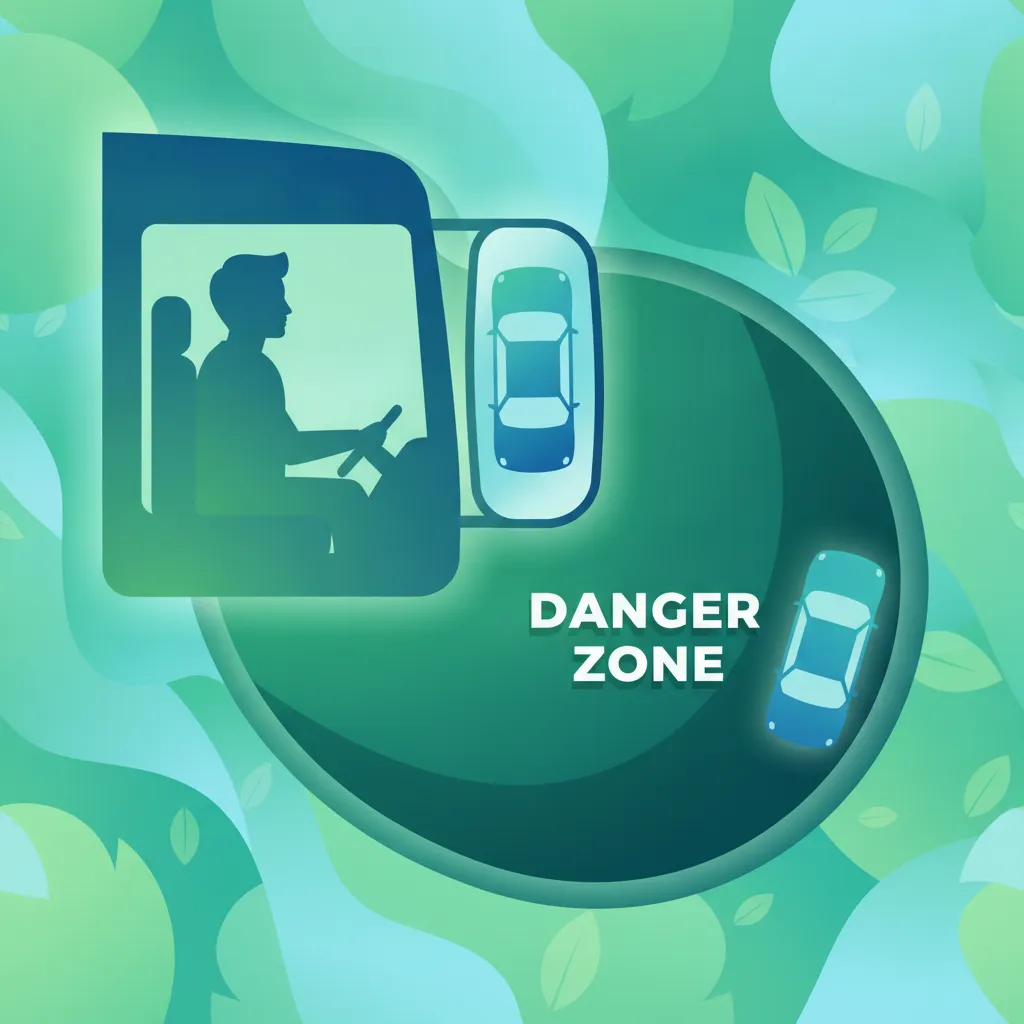
This lesson details the location and scale of blind spots around passenger cars and heavy goods vehicles, often referred to as the 'no-zone' or 'angles morts'. You will learn why truck drivers cannot see you directly behind or immediately adjacent to their cab doors. The lesson provides actionable strategies to minimize the time you spend in these dangerous zones, ensuring you always pass quickly and safely.

This lesson addresses the challenges of positioning near larger vehicles such as cars, vans, buses, and lorries on French roads. Learners will learn to identify blind spots (angles morts), maintain a safe distance, and position themselves to maximize visibility and predictability. Understanding these dynamics is crucial for AM riders to avoid dangerous situations and ensure safe overtaking and lane sharing.
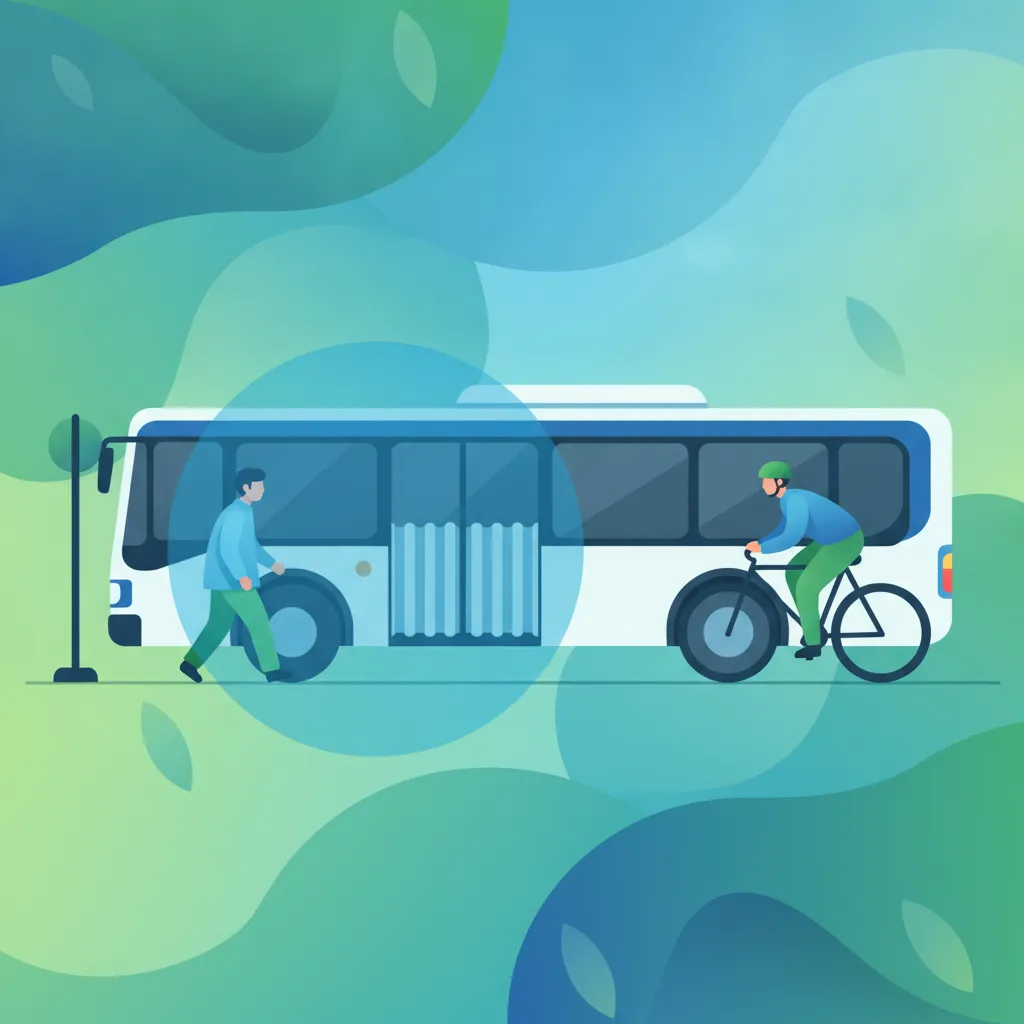
This lesson teaches specific visual scanning methods to detect vulnerable road users, such as children, elderly individuals, and cyclists near stops. Drivers will learn to anticipate sudden movements, like a passenger running to catch a bus or stepping off a sidewalk unexpectedly. Managing the massive blind spots around the front and right-hand sides of passenger vehicles is highlighted as a critical safety duty.
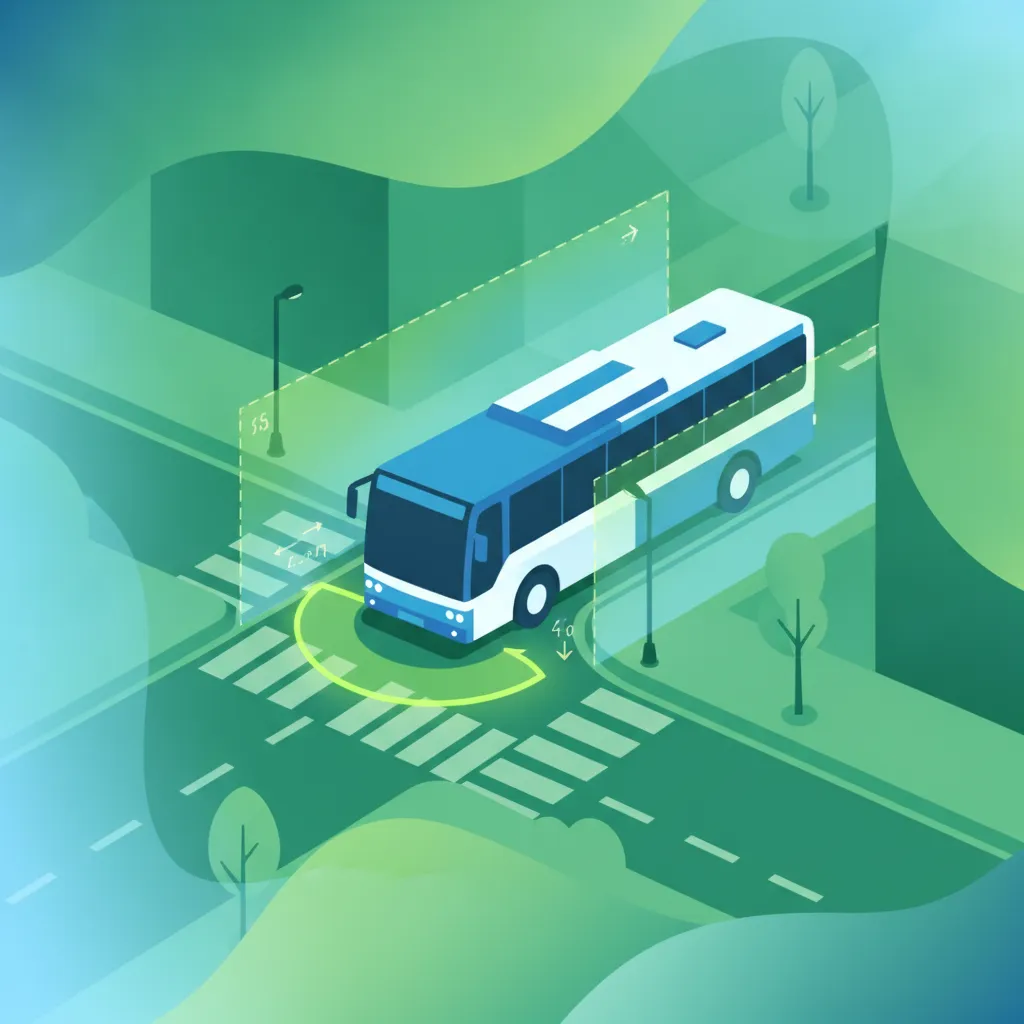
This lesson covers the physical dimensions of passenger vehicles and how their high profile, length, and width alter spatial awareness on the road. Learners will study tail-swing mechanics and track the path of the rear wheels during sharp turns to avoid hitting roadside obstacles. Accurate measurement of overhead structures, bridges, and underpass clearances is taught to prevent catastrophic structural collisions.

This lesson outlines the step-by-step safety checks and physical controls required to reverse a bus or coach in confined areas. Learners will study the use of rear-view cameras, mirror angles, and acoustic backing alarms to detect obstacles. It highlights the mandatory use of a trained ground guide (guide de manoeuvre) to assist in blind zones, ensuring zero contact with structures or people.
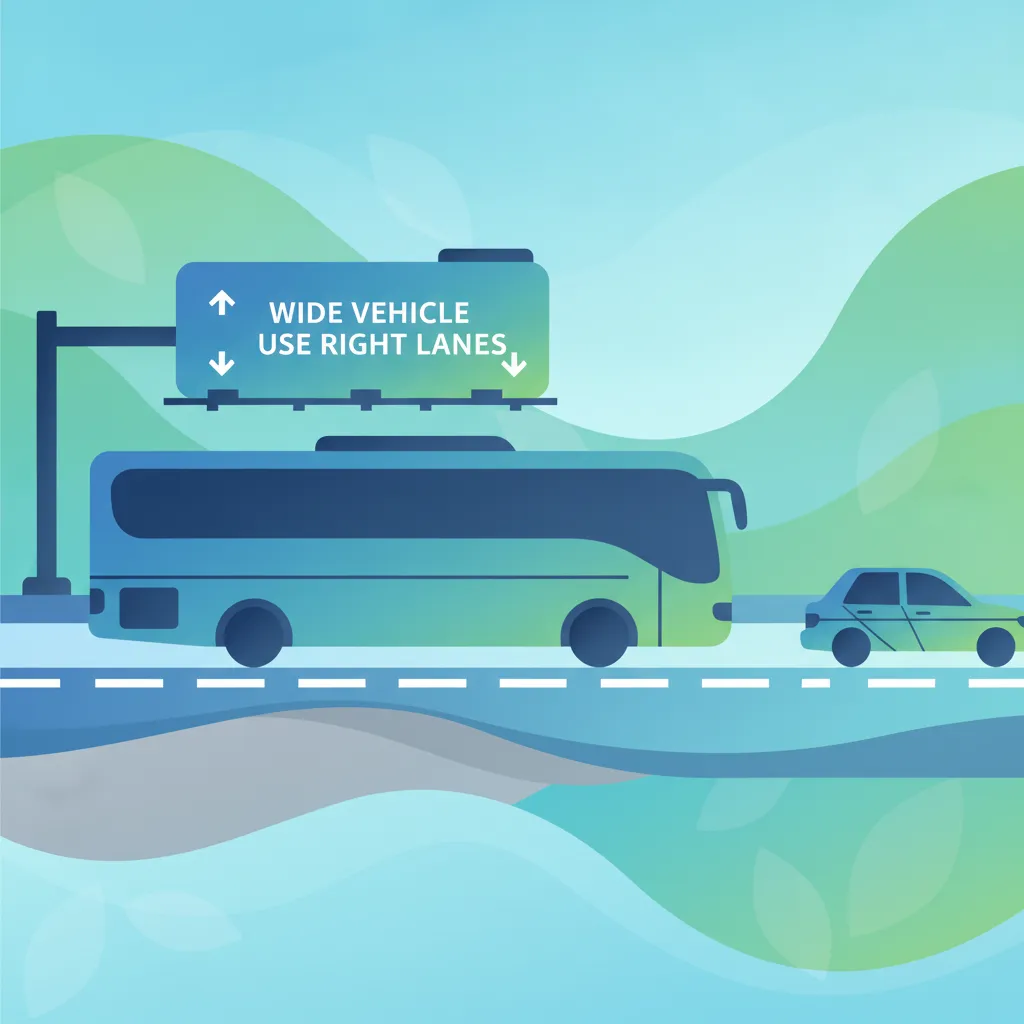
This lesson details the rules of lane discipline for operating wider and longer passenger transport vehicles on highway and city networks. Learners will explore proper lane positioning to prevent encroachment on adjacent lanes or sidewalks. It also covers the step-by-step visual and signaling sequence required to perform safe lane changes, avoiding sudden movements that could startle other drivers.
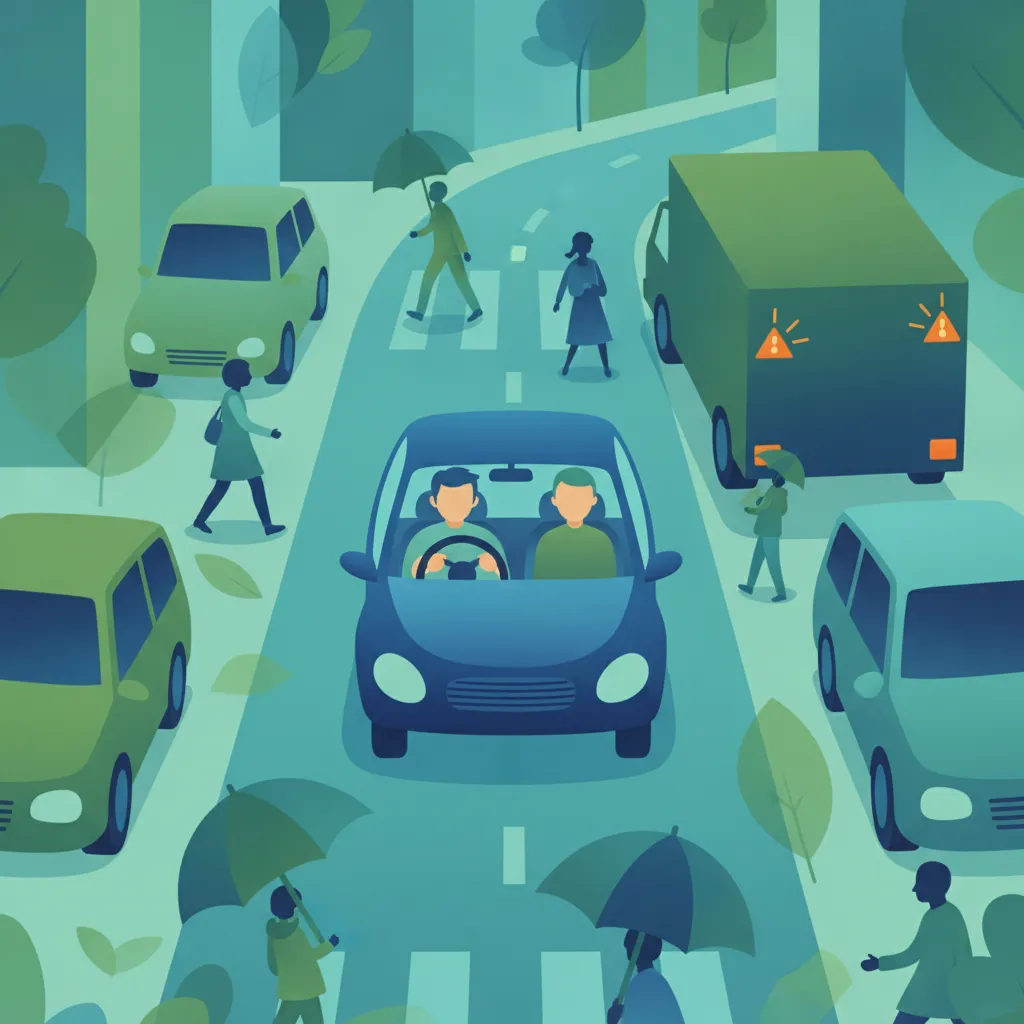
This lesson focuses on maneuvering in extremely crowded areas, passenger terminals, or narrow streets blocked by parked vehicles and obstacles. Drivers will learn to assess clearance distances precisely before committing to narrow pathways. The content teaches steering techniques that maintain stability, optimize space usage, and prioritize public safety during slow-speed, high-difficulty maneuvers.
Explore the legal responsibilities of professional drivers when navigating busy urban areas shared with pedestrians, cyclists, and school children. This theory lesson provides a clear overview of right-of-way rules, hazard mitigation strategies, and the specialized traffic regulations that apply to bus operations in high-density zones.

Certain groups of road users require heightened defensive attention from drivers due to physical limitations or unpredictable behaviors. This lesson covers how to recognize signs of visual impairment (white canes), mobility challenges, and the unpredictability of young children. You will learn to reduce your speed, extend yielding patience, and proactively secure extra space to protect these vulnerable users.
This lesson focuses on the legal requirement to yield to pedestrians on or about to step onto zebra crossings, a major focus of French road safety. You will learn how to approach school zones and pedestrian islands with heightened vigilance and reduced speed. Additionally, the lesson explores shared urban spaces, explaining how to maintain safe lateral distances when overtaking cyclists or personal electric scooters.

This lesson provides global defensive driving strategies to minimize collision risks for all non-motorized and vulnerable road users. Drivers will learn to systematically lower vehicle speed in dense pedestrian zones, even when no active hazards are visible. By cultivating an anticipatory mindset and maintaining generous safety margins, professional drivers establish a protective safety envelope around their vehicle.
Find clear answers to common questions learners have about Cyclist Interactions in Mixed Traffic Settings. Learn how the lesson is structured, which driving theory objectives it supports, and how it fits into the overall learning path of units and curriculum progression in France. These explanations help you understand key concepts, lesson flow, and exam focused study goals.
In urban areas, you must leave a distance of at least one meter when overtaking a cyclist. Outside of urban areas, on roads with higher speed limits, this distance increases to at least one and a half meters.
A bike box (sas vélo) is a designated area at the front of an intersection marked for bicycles. You must stop your bus or coach behind this area, allowing cyclists to wait safely in front of motorized traffic. Never stop within the box itself.
Before beginning a right turn, you must perform multiple checks of your near-side mirrors and sensors. Because large vehicles have severe blind spots, you should check for cyclists approaching along your side before and during the maneuver to ensure no one is positioned in your path.
Yes, all professional passenger vehicle drivers (D1, D, D1E, and DE) are held to the same high standards of vigilance regarding vulnerable road users under the French Code de la route.
Ready to focus your study? Use the practice search to find exactly the French driving theory questions you need for the Code de la route and permis de conduire ETG. Refine your knowledge on specific topics or challenging rules to boost your confidence and exam readiness.