This lesson focuses on the critical task of managing large blind spots (angles morts) inherent in heavy passenger vehicles. You will learn the systematic mirror check (retro-information) procedure and understand the legal requirements for displaying mandatory warning stickers to protect vulnerable road users.

Lesson content overview
Operating a heavy passenger vehicle on the French road network requires an exceptional level of spatial awareness. Because passenger transport vehicles—such as urban buses, long-distance coaches, and articulated shuttle buses—possess substantial length, height, and structural design limitations, their blind spots (angles morts) are vastly larger than those of standard passenger cars.
For professional drivers seeking Category D, D1, DE, or D1E licences, mastering the management of these invisible zones is a legal and moral imperative. Failure to identify a vehicle, cyclist, or pedestrian in these blind spots before initiating a manoeuvre is one of the leading causes of severe urban accidents on French roads.
A blind spot (angle mort) is any area surrounding the vehicle that is not directly visible to the driver through the windows or indirectly visible via the mirror array. In a passenger-carrying vehicle, the size of these blind spots is determined by the vehicle's structural geometry, passenger cabin layout, and overall dimensions.
To safely navigate urban intersections, roundabouts, and motorways, you must understand exactly where your vision is obstructed:
Blind spots are not stationary; they evolve based on how the vehicle is moving:
To counteract these visual limitations, French driving standards mandate a highly disciplined, non-negotiable process known as the Mirror Check Sequence or rétro-information. This sequence must be executed systematically before every lane change, turn, merge, or pull-away manoeuvre.
The standardized, sequential visual sweep of all interior and exterior mirrors performed by a driver to gather complete spatial information before initiating any lateral or longitudinal vehicle movement.
Executing this sequence prevents "tunnel vision" and ensures that no area is left unmonitored during the critical seconds leading up to a manoeuvre.
Interior Rear-View Mirror: Check the interior mirror first to assess passenger status, ensure no passenger is standing near the doors in an unsafe manner, and check visibility through the rear window if the vehicle design allows it.
Left Side Mirror: Sweep your eyes to the left exterior side mirror. This mirror helps you evaluate the position and speed of any overtaking vehicles, motorcycles, or emergency services on your left flank.
Right Side and External Corner Mirrors: Transition your gaze to the right side mirrors, paying particular attention to the wide-angle and proximity mirrors positioned to look down the right flank and cover the rear corner blind spot. This is vital before any rightward movement to detect cyclists or pedestrians.
Mirrors alone, no matter how perfectly adjusted, cannot eliminate 100% of the blind spots. Therefore, French safety regulations and driving examiners place massive emphasis on the shoulder check, colloquially referred to in professional training as the grain de cou.
The shoulder check is a rapid, deliberate turn of the head to look directly through the side windows of the driving cabin or the passenger entry doors. This action covers the dynamic rear-corner blind spot that sits just behind the driver’s lateral line of sight. It is especially critical during:
Do not rely solely on your mirrors. A fast-moving motorcycle or an electric scooter rider can enter your side flank blind spot in a fraction of a second. The combination of the mirror check sequence (retro-information) and a physical shoulder check (grain de cou) is your only reliable defence against side-collision accidents.
In response to a high number of urban accidents involving vulnerable road users (VRUs) and heavy vehicles, the French government introduced strict regulations regarding external blind spot warnings. Under Article R415-1 of the Code de la route, all vehicles with a maximum authorized mass exceeding 3.5 tonnes—which includes almost all standard passenger transport buses and coaches (Category D)—must display official "Angles Morts" warning stickers on the exterior of the vehicle.
These stickers serve as a highly visible, standardized warning to cyclists, pedestrian traffic, and personal mobility device users (such as electric scooters). It visually signals to them: "Do not stand or ride in these zones, as the driver cannot see you."
Under French law, these stickers must be positioned precisely to ensure maximum visibility from all angles. Incorrectly placed or missing stickers can result in class 4 fines and increased legal liability in the event of an accident.
Successfully managing your blind spots requires translating your visual checks into controlled, predictable driving behaviours.
Article R412-6 of the French Highway Code (Code de la route) requires drivers to signal their intentions clearly and early. For a heavy passenger vehicle, this timing is highly sensitive.
Reversing a bus or coach is one of the most high-risk maneuvers a professional driver can perform. The rear blind spot is vast and completely dark to direct line-of-sight.
The size, shape, and danger levels of blind spots are heavily influenced by your driving environment, passenger load, and the weather.
| Weather Type | Blind Spot Impact | Required Driver Action |
|---|---|---|
| Heavy Rain / Spray | Water droplets accumulate on side windows and exterior mirrors, distorting reflections. Rear spray from tyres obscures camera lenses. | Turn on mirror heaters immediately. Increase scanning frequency and extend your signaling time to 7–8 seconds. |
| Fog / Mist | Drastically reduces contrast and depth perception in mirrors. Vulnerable road users become nearly invisible in dark zones. | Rely heavily on slow, deliberate maneuvers. Open your driver's side window slightly to listen for approaching traffic or warnings. |
| Snow / Frost | Accumulates on mirrors and blocking side window views. Rear overhang cameras can freeze or get covered in grime. | Clear all mirrors, cameras, and side windows completely before departure. Never drive with "partially cleared" glass. |
At night, direct glare from the headlights of vehicles behind you can temporarily blind you when looking at your side mirrors. Conversely, unlit cyclists, pedestrians wearing dark clothing, and obstacles in poorly lit urban alleys can easily disappear into your blind spots.
To mitigate this, ensure your vehicle’s interior instrument panel lights are dimmed to reduce inner cabin reflections, and never execute a turn in a dark intersection without an extra-thorough, slow scan of both flanks.
On curved roads, mountain passes, or sharp roundabouts, your blind spots shift dynamically. As your vehicle bends, the mirror angles change, temporarily creating "dead zones" where you cannot see the rear half of your own vehicle.
Furthermore, you must account for rear overhang swing (balayage arrière). When turning sharply, the rear body of the coach can swing outward in the opposite direction of the turn, sweeping across adjacent lanes or onto the pavement. You must monitor this outward swing through your mirrors to prevent hitting pedestrians on the pavement or vehicles in adjacent lanes.
To maintain professional standards, you must avoid the common errors that often lead to traffic infractions or catastrophic collisions.
To further build your competence in controlling large passenger vehicles, explore how these blind spot management rules integrate with surrounding maneuvers.
Explore all units and lessons included in this driving theory course.
Lesson content overview
Explore all units and lessons included in this driving theory course.
Explore search topics learners often look for when studying Managing Blind Spots and Mirror Checks. These topics reflect common questions about road rules, driving situations, safety guidance, and lesson level theory preparation for learners in France.
Browse additional driving theory lessons that cover connected traffic rules, road signs, and common driving situations related to this topic. Improve your understanding of how different rules interact across everyday traffic scenarios.
Learn the theory behind navigating heavy passenger vehicles through narrow urban streets, roundabouts, and crowded intersections. This guide covers how to manage rear overhang swing and handle restricted visibility in dense traffic zones, ensuring compliance with French driving regulations for professional Category D drivers.
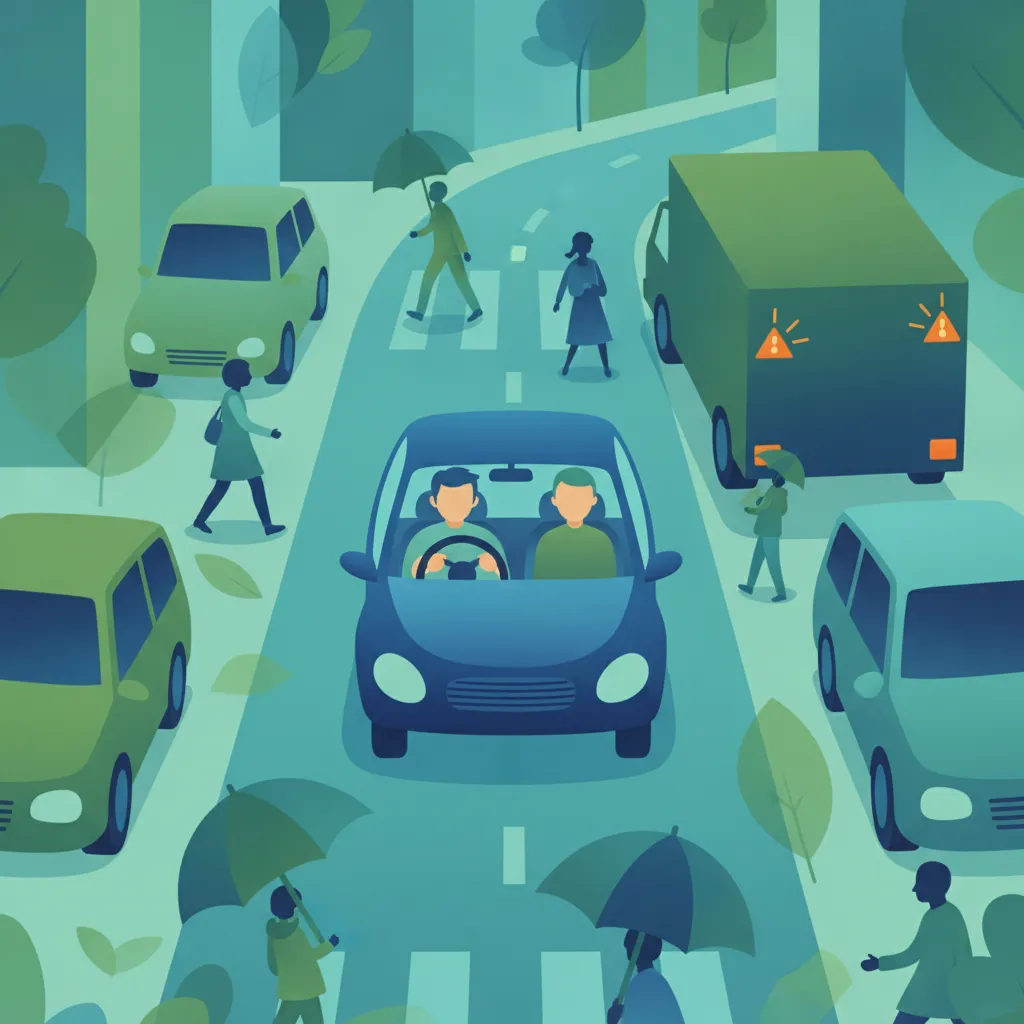
This lesson focuses on maneuvering in extremely crowded areas, passenger terminals, or narrow streets blocked by parked vehicles and obstacles. Drivers will learn to assess clearance distances precisely before committing to narrow pathways. The content teaches steering techniques that maintain stability, optimize space usage, and prioritize public safety during slow-speed, high-difficulty maneuvers.

This lesson analyzes the various traffic challenges unique to operating large passenger vehicles in historic and modern French urban areas. Drivers will learn to manage narrow street layouts, double-parked delivery trucks, and high-density multi-lane roundabouts safely. The lesson emphasizes defensive driving strategies, route adjustments, and maintaining mental focus under severe schedule and time pressures.

This lesson covers the physical dimensions of passenger vehicles and how their high profile, length, and width alter spatial awareness on the road. Learners will study tail-swing mechanics and track the path of the rear wheels during sharp turns to avoid hitting roadside obstacles. Accurate measurement of overhead structures, bridges, and underpass clearances is taught to prevent catastrophic structural collisions.

In this lesson, drivers will learn strategies to avoid conflicts with smaller vehicles, such as cars and vans, which may not be as visible in large vehicle blind spots. The content emphasizes maintaining adequate spacing, using proper lane discipline, and being aware of small vehicles' behavior during lane changes and turns. Learners will also be introduced to communication techniques, such as signalling and eye contact.
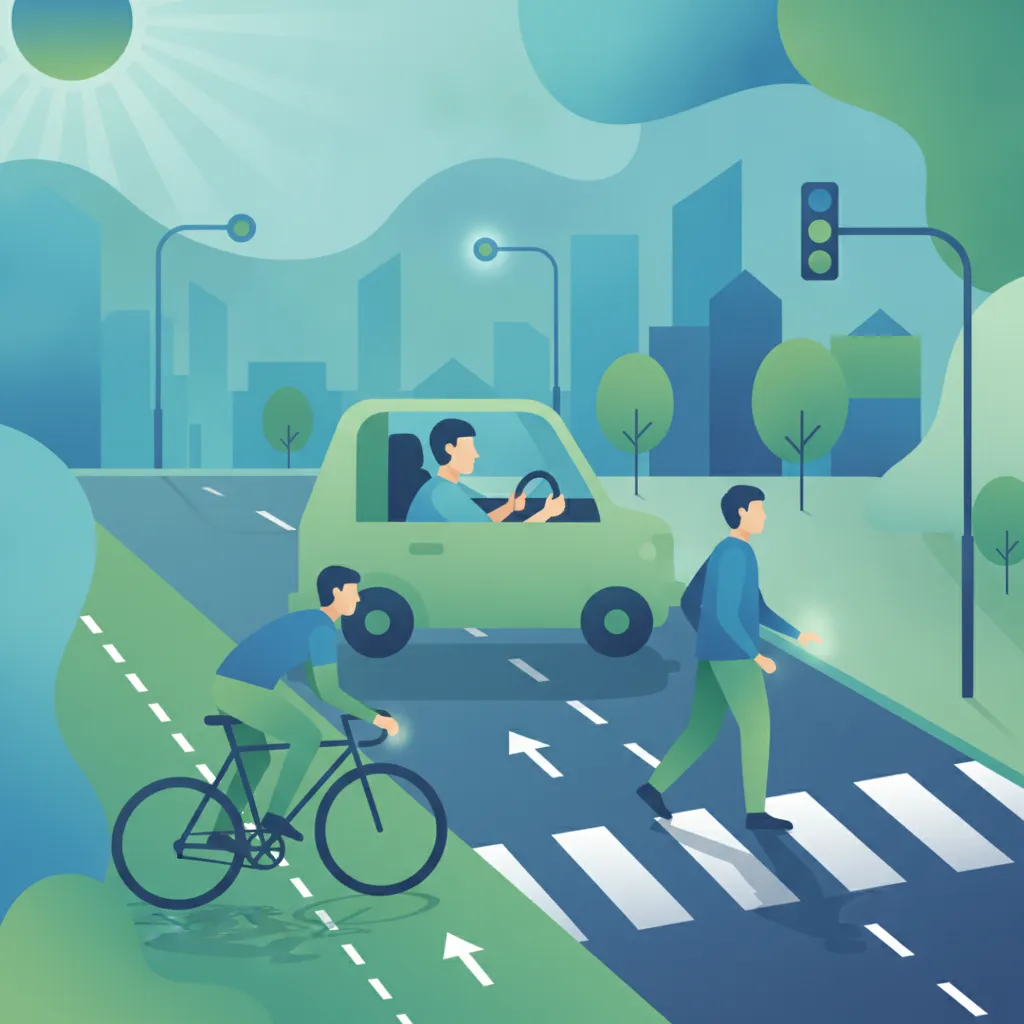
This lesson examines the specific challenges and responsibilities goods vehicle drivers face when interacting with pedestrians and cyclists in urban environments. Learners will understand right-of-way rules, the importance of yielding at pedestrian crossings, and safe turning practices that protect cyclists. The content emphasizes heightened driver vigilance, especially when navigating bike lanes and crowded sidewalks.
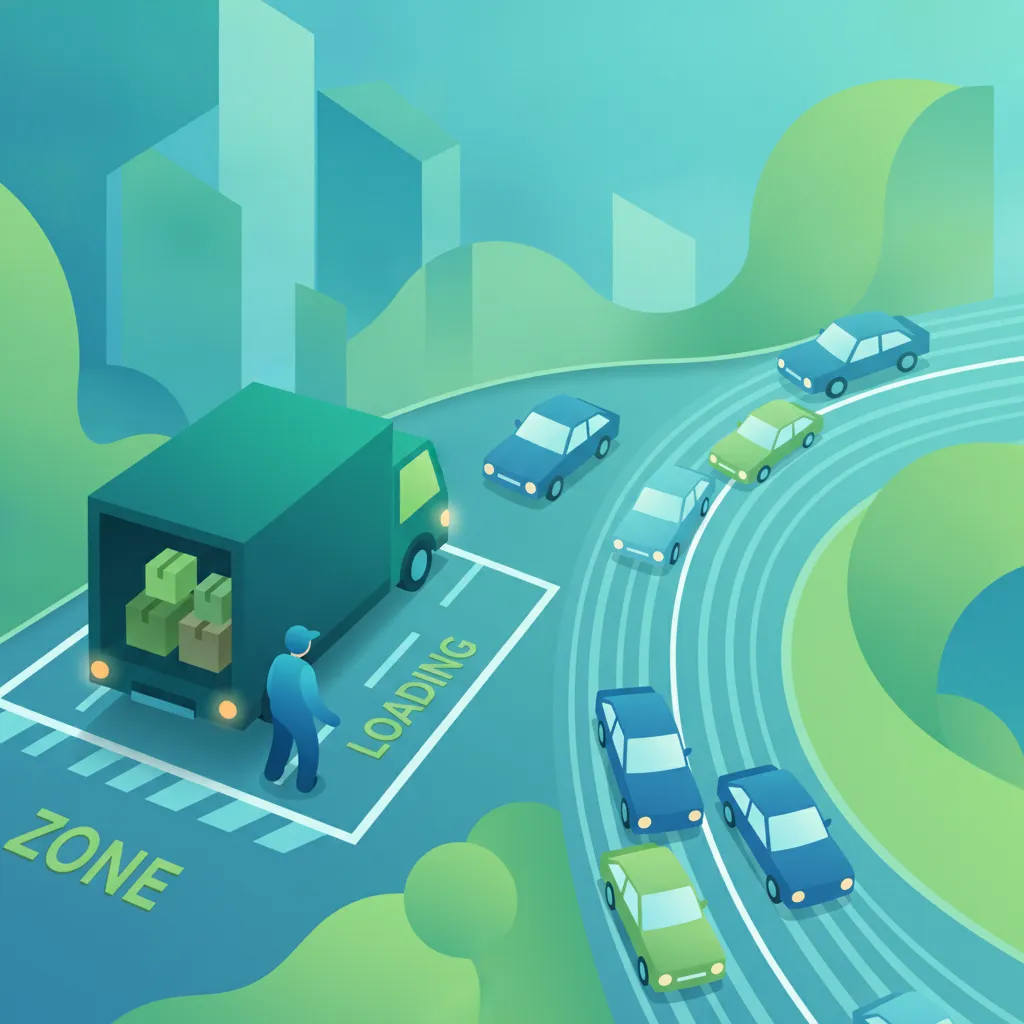
In this lesson, drivers will learn how to navigate urban delivery zones, understanding the rules surrounding loading bays, time windows, and restricted access areas. The content includes the process for obtaining delivery permits, strategies for safe maneuvering in congested city streets, and best practices for minimizing impact on pedestrian traffic. Learners will also be introduced to French city-specific regulations that govern goods vehicle deliveries.

This lesson emphasizes the critical importance of maintaining a safe following distance when carrying dozens of passengers. Learners will study how vehicle weight and passenger load dynamically extend braking and total stopping distances compared to standard passenger cars. The lesson provides concrete spacing rules, such as adjusted safety gaps for highway driving and increased distances on slippery roads.
This lesson details the rules of lane discipline for operating wider and longer passenger transport vehicles on highway and city networks. Learners will explore proper lane positioning to prevent encroachment on adjacent lanes or sidewalks. It also covers the step-by-step visual and signaling sequence required to perform safe lane changes, avoiding sudden movements that could startle other drivers.
This lesson examines the regulatory limits and environmental controls applied to large passenger vehicles operating in dense French urban centers. Drivers will study the Crit'Air clean air sticker system and low-emission zones (ZFE) that restrict access for older, high-polluting vehicles. It also addresses navigating physical constraints, such as narrow streets, tight turning radii, and strict municipal weight limits.
This lesson teaches specific visual scanning methods to detect vulnerable road users, such as children, elderly individuals, and cyclists near stops. Drivers will learn to anticipate sudden movements, like a passenger running to catch a bus or stepping off a sidewalk unexpectedly. Managing the massive blind spots around the front and right-hand sides of passenger vehicles is highlighted as a critical safety duty.
Understand the critical safety requirements for interacting with cyclists, pedestrians, and electric scooter users on French roads. This explanation details the legal and practical obligations for professional drivers to prevent accidents in school zones and near bus stops, focusing on hazard perception and road user awareness.

Certain groups of road users require heightened defensive attention from drivers due to physical limitations or unpredictable behaviors. This lesson covers how to recognize signs of visual impairment (white canes), mobility challenges, and the unpredictability of young children. You will learn to reduce your speed, extend yielding patience, and proactively secure extra space to protect these vulnerable users.
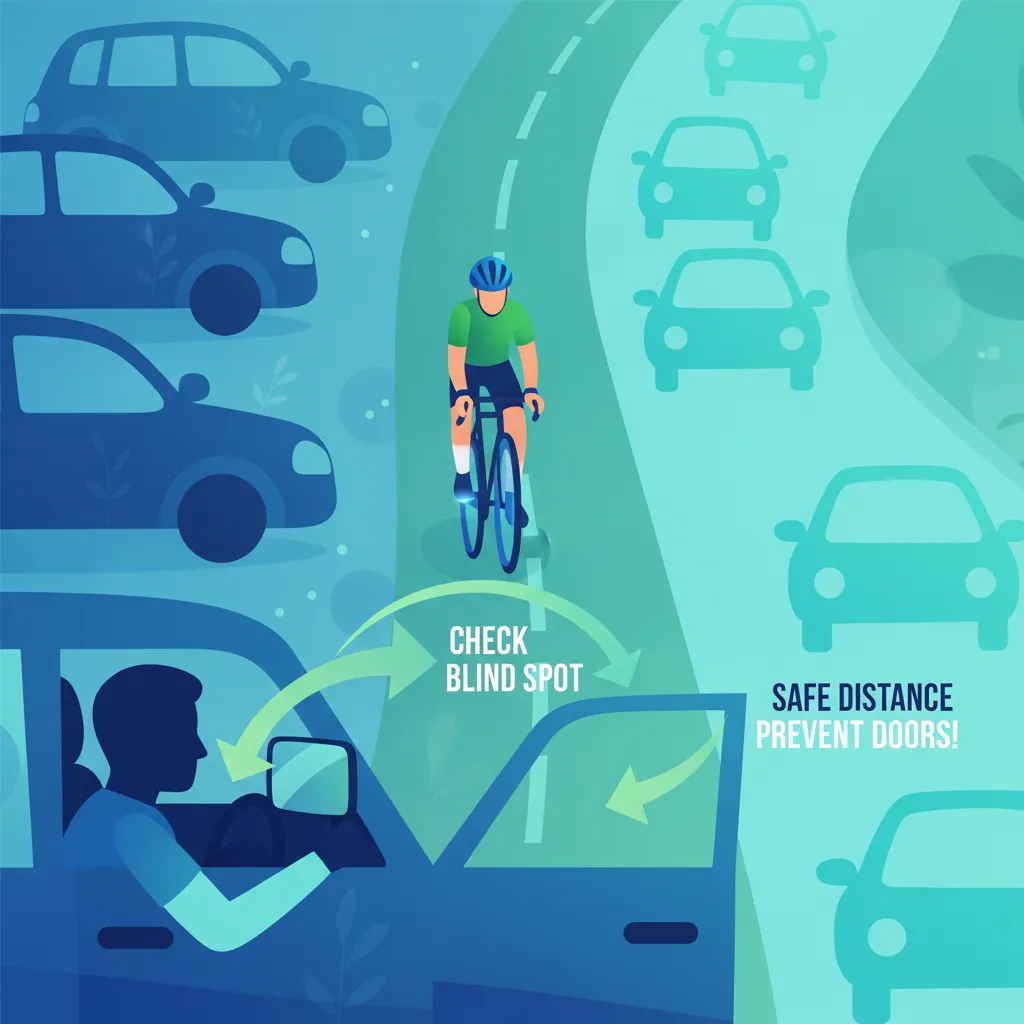
This lesson explains how to share the road safely with cyclists in both urban and rural environments. Drivers will study the legal minimum passing distances when overtaking cyclists, which is one meter in cities and one and a half meters outside urban areas. It also covers recognizing specialized cycling infrastructure, bike boxes at intersections, and preventing blind-spot collisions during right turns.
This lesson teaches specific visual scanning methods to detect vulnerable road users, such as children, elderly individuals, and cyclists near stops. Drivers will learn to anticipate sudden movements, like a passenger running to catch a bus or stepping off a sidewalk unexpectedly. Managing the massive blind spots around the front and right-hand sides of passenger vehicles is highlighted as a critical safety duty.
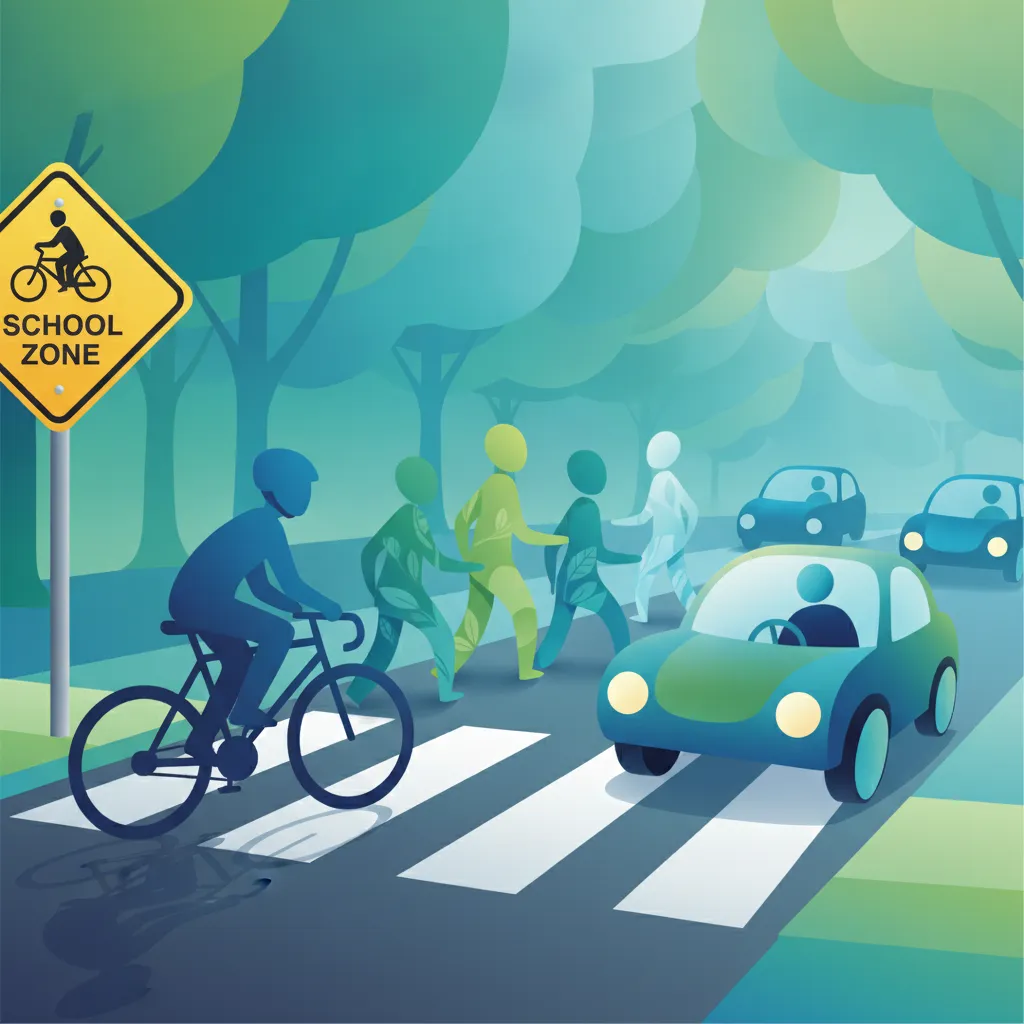
This lesson focuses on the legal requirement to yield to pedestrians on or about to step onto zebra crossings, a major focus of French road safety. You will learn how to approach school zones and pedestrian islands with heightened vigilance and reduced speed. Additionally, the lesson explores shared urban spaces, explaining how to maintain safe lateral distances when overtaking cyclists or personal electric scooters.
Learners will focus on the best practices for interacting safely with cyclists and pedestrians in mixed traffic environments. The lesson covers proper lane usage, overtaking protocols, maintaining adequate safety gaps, and non-verbal communication techniques in the French urban landscape. By applying these principles, AM riders can coexist harmoniously with vulnerable road users, reducing the likelihood of accidents.
This lesson examines the specific challenges and responsibilities goods vehicle drivers face when interacting with pedestrians and cyclists in urban environments. Learners will understand right-of-way rules, the importance of yielding at pedestrian crossings, and safe turning practices that protect cyclists. The content emphasizes heightened driver vigilance, especially when navigating bike lanes and crowded sidewalks.

This lesson provides global defensive driving strategies to minimize collision risks for all non-motorized and vulnerable road users. Drivers will learn to systematically lower vehicle speed in dense pedestrian zones, even when no active hazards are visible. By cultivating an anticipatory mindset and maintaining generous safety margins, professional drivers establish a protective safety envelope around their vehicle.

This lesson focuses on the inherent vulnerability of AM vehicles due to their limited mass, exposure, and visibility within mixed traffic flows on French roads. Learners will examine how blind spots, sudden lane changes by larger vehicles, and higher impact severity affect small vehicle safety. The content underscores the necessity for riders to adopt proactive safety measures, maintain safe distances, and be constantly aware of surrounding traffic dynamics.

This lesson details how to manage high-risk interactions with pedestrians who may step off curbs or cross the road near bus stops. Learners will study French Code de la route laws regarding pedestrian priority at crosswalks and near stopping transit vehicles. Developing heightened spatial awareness around blind zones near the front of the bus is emphasized to prevent tragic pedestrian collisions.
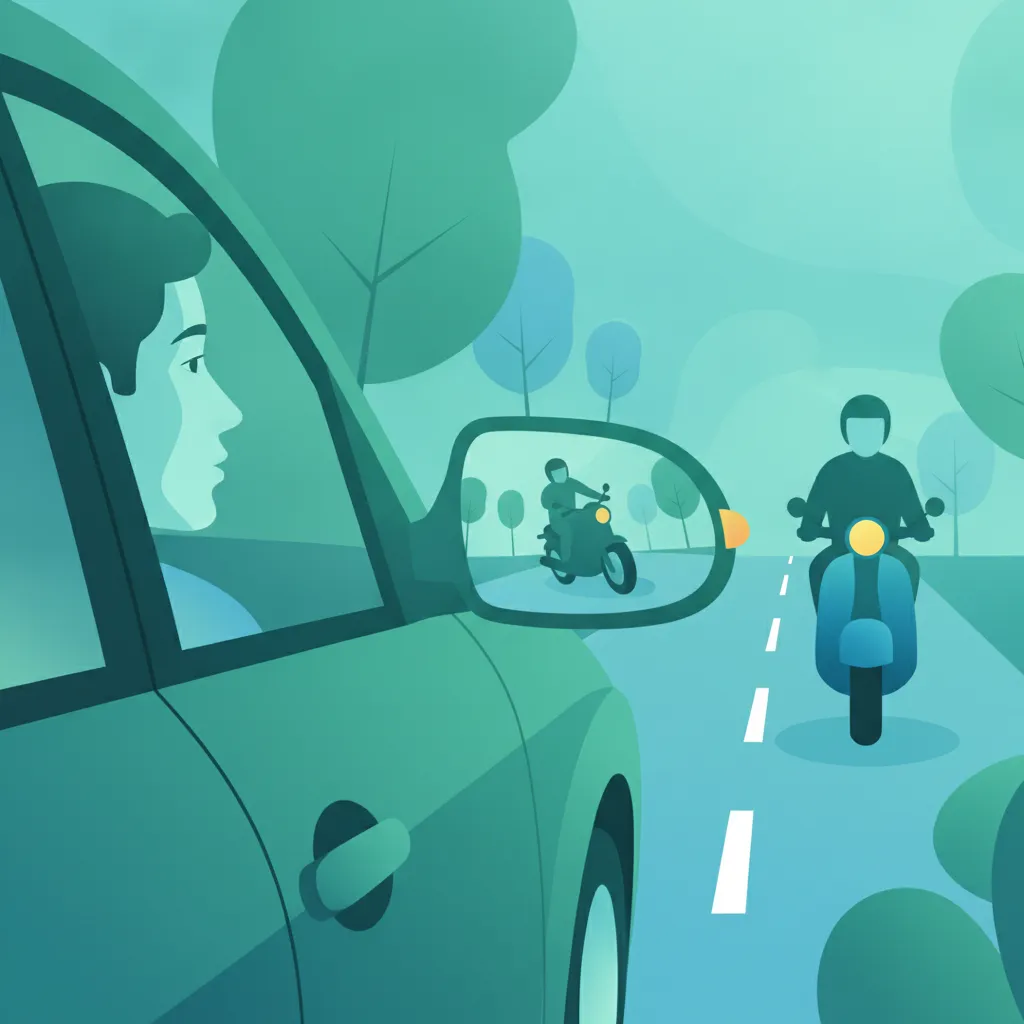
In this lesson, drivers will learn how to safely share the road with motorcycles and scooters, focusing on the specific blind spots and speed differentials that create risk. The content highlights proper lane positioning, caution when overtaking, and strategies for predicting motorcycle trajectories. Learners will also be introduced to the importance of being aware of scooter movements, especially in narrow streets.
Find clear answers to common questions learners have about Managing Blind Spots and Mirror Checks. Learn how the lesson is structured, which driving theory objectives it supports, and how it fits into the overall learning path of units and curriculum progression in France. These explanations help you understand key concepts, lesson flow, and exam focused study goals.
These stickers are mandatory to alert vulnerable road users, such as cyclists and pedestrians, to the dangerous areas where they may be invisible to the driver. This is a critical legal requirement for all heavy vehicles operating in France to improve road safety.
You should maintain a constant, systematic scanning routine. Every time you consider changing speed, lane, or direction, you must perform a mirror check sequence to ensure the path is clear, as large vehicles have significantly restricted direct visibility.
While the fundamental safety principles remain the same, vehicles in category DE (articulated vehicles) present significantly larger blind spots and complex 'off-tracking' maneuvers. You must adjust your mirror scanning frequency to account for the increased vehicle length and movement of the trailer.
Yes, bus stops are high-risk areas. As you pull into or out of a stop, your vehicle's side blind spots can easily hide pedestrians or cyclists. You must use your mirrors and direct head checks combined with low-speed maneuvers to ensure the area is clear.
Ready to focus your study? Use the practice search to find exactly the French driving theory questions you need for the Code de la route and permis de conduire ETG. Refine your knowledge on specific topics or challenging rules to boost your confidence and exam readiness.