
This lesson establishes your legal foundation as a moped and scooter rider under German traffic law. You will learn the specific duties required by the StVO to keep yourself and others safe while avoiding common legal pitfalls.
Lesson content overview
Operating a moped, scooter, or light quadricycle in Germany, as an AM licence holder, comes with significant legal responsibilities designed to ensure safety for both the rider and other road users. This lesson, part of the German Driving Theory Course for AM Licence, delves into the essential legal framework, compliance requirements, and potential consequences of non-adherence. Understanding these obligations is not merely about avoiding penalties; it's fundamental to fostering a safe, respectful, and lawful traffic environment.
All riders are legally accountable for their actions on the road and for the condition of their vehicle. German traffic law, primarily the Straßenverkehrs-Ordnung (StVO), alongside other specific regulations, provides a comprehensive set of rules that AM riders must diligently follow. This includes everything from mandatory safety equipment to vehicle maintenance and the correct procedures following an accident.
The Straßenverkehrs-Ordnung (StVO), or German Road Traffic Regulations, is the cornerstone of road safety in Germany. It establishes the rules of conduct for all road users, including AM licence holders. Compliance with the StVO is not optional; it is a fundamental legal obligation that dictates how vehicles are operated, how interactions with other road users occur, and how general road safety is upheld.
The StVO is designed to minimize risks, ensure accountability, and promote orderly traffic flow. It covers a vast array of topics, from basic right-of-way rules and speed limits to specific regulations regarding vehicle equipment and behavior in various traffic situations. For AM riders, specific paragraphs of the StVO are particularly relevant, outlining their duties and responsibilities on public roads.
The German Road Traffic Regulations, the primary legal text governing traffic rules and conduct on public roads in Germany.
Several core principles within the StVO are paramount for AM licence holders. These principles form the legal foundation for safe riding practices and ensure that all road users contribute to a secure environment.
Understanding these paragraphs provides a solid foundation for comprehending the specific obligations discussed in this lesson. They establish a framework of general conduct that applies to every journey.
One of the most critical legal obligations for AM licence holders is the mandatory use of a certified helmet. This regulation is enshrined in German traffic law, specifically under § 21a Absatz 2 StVO, to significantly reduce the risk and severity of head injuries in the event of an accident.
According to German law, riders of two-wheeled motor vehicles that reach a speed of more than 20 km/h must wear a suitable protective helmet while riding. This explicitly includes mopeds, scooters, and light quadricycles that fall under the AM licence category.
The helmet must be certified according to current European ECE standards (e.g., ECE 22.05 or ECE 22.06). This certification ensures the helmet meets stringent safety requirements for impact absorption and structural integrity.
Proper helmet use is as important as wearing one. The helmet must fit correctly, covering the entire head, and be securely fastened with the chin strap. A loose or improperly worn helmet offers little protection in a crash. Riders should regularly check their helmet for damage, as even minor impacts can compromise its protective capabilities.
Failure to wear a certified, properly fastened helmet is a punishable offense. The police can issue a fine (Bußgeld) for this violation. Beyond the legal penalty, the most severe consequence is the increased risk of severe head injury or fatality in an accident. Helmets are proven to be highly effective in mitigating these risks.
Assuming helmets are optional for low-speed vehicles is a common and dangerous misunderstanding. All AM vehicles that exceed 20 km/h legally require the rider to wear a certified helmet.
Maintaining the roadworthiness (Verkehrssicherheit) of your AM vehicle is a continuous legal obligation. A vehicle is considered roadworthy when it is in a condition that does not endanger road users or the environment. This means all essential components must function correctly and meet legal standards.
While mopeds and scooters under the AM licence are generally exempt from the full periodic general inspection (Hauptuntersuchung or TÜV/HU) required for cars and larger motorcycles, their components must still meet technical standards. The responsibility for ensuring roadworthiness falls directly on the rider.
The legal requirement that a vehicle must be maintained in a condition that is safe to operate and complies with all relevant technical and environmental regulations.
Key areas of roadworthiness for AM vehicles include:
Operating a vehicle that does not meet roadworthiness standards is illegal and can lead to fines, points in the Flensburger Verkehrszentralregister (FAER), and even temporary prohibition from road use until defects are rectified. In the event of an accident, if the vehicle's unroadworthy condition contributed to the incident, the rider could face increased liability and more severe legal consequences.
One of the most critical administrative obligations for AM licence holders in Germany is to have valid third-party liability insurance (Haftpflichtversicherung) for their vehicle. This insurance is legally mandatory and covers damages caused by the vehicle to other road users, their property, or themselves.
Third-party liability insurance is designed to protect victims of accidents. If an AM rider causes an accident that results in injury to another person, damage to another vehicle, or other property damage, the Haftpflichtversicherung will cover the costs up to the agreed policy limits. Without this insurance, the rider would be personally liable for all damages, which can be financially devastating.
Mandatory insurance in Germany that covers damages (personal injury, property damage) caused by the insured vehicle to third parties.
Proof of insurance is typically provided by an electronic confirmation number (eVB-Nummer), which is used for registration, and an insurance certificate. Riders must ensure their vehicle is covered before riding and carry proof of insurance or its valid registration plate at all times, as requested by authorities. The insurance validity period is typically indicated by a specific insurance plate (Versicherungskennzeichen) that changes annually.
Riding an AM vehicle without valid third-party liability insurance is not just a minor infraction; it is a serious criminal offense under the Compulsory Insurance Act (§ 1, § 2 StVG – Pflichtversicherungsgesetz). The penalties are severe and can include:
Never assume that private liability insurance (Privathaftpflichtversicherung) covers vehicle-related damages. These are distinct policies. Vehicle liability insurance is specifically for operating a motor vehicle.
Accidents, even minor ones, can be stressful. However, AM licence holders have clear legal duties that must be followed immediately after a collision, especially if it involves personal injury, death, or significant property damage. These duties are outlined in the StVO, particularly § 34.
Stop Immediately: If you are involved in or witness an accident, you must stop your vehicle at once. Leaving the scene of an accident (Unerlaubtes Entfernen vom Unfallort) is a serious criminal offense, often referred to as a "hit-and-run."
Secure the Accident Scene: Turn on your hazard warning lights to alert approaching traffic. If safe to do so, set up a warning triangle (though not mandatory for AM vehicles, it's good practice for safety). This prevents further accidents.
Provide Assistance: If there are injured persons, immediately provide first aid within your capabilities and call emergency services (112 in Germany). Your duty to assist is paramount.
Exchange Information: With other parties involved, exchange personal details (name, address), vehicle details (licence plate, vehicle type), and insurance information (name of insurer, policy number). Take photos of the scene and damages if possible.
Notify Police (110): If there are personal injuries, significant property damage, or disputes about fault, you must notify the police. Even for seemingly minor damage, if you cannot exchange information with the other party (e.g., parked car), you must report it to the police to avoid being accused of a hit-and-run.
Do Not Move Evidence: Unless absolutely necessary for safety or to clear the road after police instruction, do not move vehicles or debris until the police have assessed the scene.
Failing to adhere to these accident reporting and assistance obligations can lead to severe legal consequences:
Always document everything carefully after an accident, even if it seems minor. Take photos, note down names and contact details of witnesses, and record the exact time and location.
Violating rider obligations and traffic laws in Germany can result in a range of legal consequences. These sanctions are designed to deter non-compliance and ensure accountability. The severity of the penalty depends on the nature and gravity of the offense.
For minor traffic offenses, such as certain parking violations or slight speeding infractions, administrative fines (Bußgelder) are imposed. These are monetary penalties with fixed amounts, which can vary based on the specific violation and whether it was committed within or outside built-up areas.
More serious violations, or repeated minor offenses, can lead to the accumulation of points in the Flensburger Verkehrszentralregister (FAER), also known as the German Central Traffic Register. This system tracks traffic violations and their severity.
The German Central Traffic Register, where points for traffic violations are recorded. Accumulation of points can lead to driving bans or licence revocation.
Accumulating too many points in FAER has progressive consequences:
Underestimating the impact of seemingly minor infractions is common. Even small fines can accumulate points, eventually leading to severe restrictions on your driving privileges.
For very serious offenses, such as driving under the influence of alcohol or drugs, dangerous interference with traffic, or negligent bodily harm, criminal proceedings may be initiated. These can result in:
Riding a moped, scooter, or light quadricycle in Germany requires a thorough understanding and consistent adherence to legal obligations. These responsibilities, largely governed by the Straßenverkehrs-Ordnung (StVO), are designed to protect everyone on the road. Key duties include:
Non-compliance with these rules carries significant legal consequences, ranging from fines and points in the Flensburger Verkehrszentralregister (FAER) to driving bans and even criminal charges. Adhering to these obligations is not only a legal necessity but a fundamental aspect of responsible and safe riding, contributing to a secure environment for all road users. These responsibilities are intertwined with broader safety concepts and vehicle maintenance practices, reinforcing a comprehensive approach to responsible riding for all AM licence holders.
AM licence holders in Germany must comply with the Straßenverkehrs-Ordnung (StVO), which establishes mandatory safety obligations including certified helmet use for vehicles exceeding 20 km/h, maintaining vehicle roadworthiness through regular checks of brakes, lighting, tires, and mirrors, and carrying valid third-party liability insurance (Haftpflichtversicherung). After any accident, riders must follow a specific procedure: stop immediately, secure the scene with hazard lights, provide assistance to any injured parties, exchange details with others involved, and notify police when injuries, significant damage, or disputes exist. The FAER point system tracks violations with escalating consequences, ranging from fines and warnings at lower points to mandatory seminars and ultimately licence revocation at 8 points, making consistent legal compliance essential for maintaining riding privileges.
A short set of high-value points that capture the most important learning from this lesson.
The StVO establishes the legal framework for all AM riders, with § 1 StVO requiring conduct that harms no one else
Certified helmets (ECE 22.05/22.06) are mandatory for all AM vehicles exceeding 20 km/h under § 21a Absatz 2 StVO
Riders bear full legal responsibility for maintaining vehicle roadworthiness through regular checks of brakes, lights, tires, and mirrors
Third-party liability insurance (Haftpflichtversicherung) is mandatory, and riders must carry proof at all times
After any accident, riders must stop, secure the scene, provide assistance, exchange information, and notify police when required
Explore all units and lessons included in this driving theory course.
The general duty of care in § 1 StVO is the foundational principle - always behave so no one else is harmed or endangered
ECE certification is required for helmets; simply wearing any helmet is not sufficient legal compliance
Roadworthiness means all components (brakes, lights, tires at minimum 1.6mm tread) must be safe and operational
Haftpflichtversicherung covers damages to others; personal liability insurance does not replace it for vehicle accidents
FAER points accumulate progressively: 4-5 points triggers a warning, 6-7 requires a seminar, and 8 points means licence revocation
Confusing personal liability insurance (Privathaftpflichtversicherung) with mandatory vehicle third-party liability insurance (Haftpflichtversicherung)
Assuming helmets are optional on very slow vehicles - they are required for any AM vehicle exceeding 20 km/h
Believing accident reporting to police is only necessary when injuries are visible; it is also required when information cannot be exchanged
Underestimating small fines - repeated minor violations accumulate FAER points leading to driving bans
Neglecting to check lights and brakes regularly, assuming the vehicle is roadworthy without inspection
Lesson content overview
A short set of high-value points that capture the most important learning from this lesson.
The StVO establishes the legal framework for all AM riders, with § 1 StVO requiring conduct that harms no one else
Certified helmets (ECE 22.05/22.06) are mandatory for all AM vehicles exceeding 20 km/h under § 21a Absatz 2 StVO
Riders bear full legal responsibility for maintaining vehicle roadworthiness through regular checks of brakes, lights, tires, and mirrors
Third-party liability insurance (Haftpflichtversicherung) is mandatory, and riders must carry proof at all times
After any accident, riders must stop, secure the scene, provide assistance, exchange information, and notify police when required
Explore all units and lessons included in this driving theory course.
The general duty of care in § 1 StVO is the foundational principle - always behave so no one else is harmed or endangered
ECE certification is required for helmets; simply wearing any helmet is not sufficient legal compliance
Roadworthiness means all components (brakes, lights, tires at minimum 1.6mm tread) must be safe and operational
Haftpflichtversicherung covers damages to others; personal liability insurance does not replace it for vehicle accidents
FAER points accumulate progressively: 4-5 points triggers a warning, 6-7 requires a seminar, and 8 points means licence revocation
Confusing personal liability insurance (Privathaftpflichtversicherung) with mandatory vehicle third-party liability insurance (Haftpflichtversicherung)
Assuming helmets are optional on very slow vehicles - they are required for any AM vehicle exceeding 20 km/h
Believing accident reporting to police is only necessary when injuries are visible; it is also required when information cannot be exchanged
Underestimating small fines - repeated minor violations accumulate FAER points leading to driving bans
Neglecting to check lights and brakes regularly, assuming the vehicle is roadworthy without inspection
Explore search topics learners often look for when studying Rider Obligations and Legal Responsibilities. These topics reflect common questions about road rules, driving situations, safety guidance, and lesson level theory preparation for learners in Germany.
Browse additional driving theory lessons that cover connected traffic rules, road signs, and common driving situations related to this topic. Improve your understanding of how different rules interact across everyday traffic scenarios.
Understand the specific legal repercussions and penalties for AM licence holders violating traffic laws in Germany. This lesson details StVO non-compliance consequences, including fines, points, and potential licence suspension, relevant to driving theory.
This lesson explains the German catalogue of fines (Bußgeldkatalog) and the points system for traffic violations. It details which offenses lead to fines, points in Flensburg, or even licence revocation. Understanding these consequences reinforces the importance of adhering to all traffic laws.
This lesson provides an overview of the German system for penalizing traffic offenses. It explains the catalogue of fines ('Bußgeldkatalog'), the system of demerit points ('Punkte in Flensburg') for more serious violations, and the conditions under which a temporary driving ban ('Fahrverbot') or a full revocation of the license can be imposed. Understanding these consequences reinforces the importance of lawful driving.

This lesson informs riders about the legal ramifications of dangerous riding and traffic violations under German law. It outlines potential penalties, including fines, points, and license suspension, as well as the impact on insurance. The content also provides a step-by-step guide on the correct procedures for reporting an accident to the police and documenting the scene for legal and insurance purposes.

This lesson provides a detailed overview of the legal framework governing the AM licence in Germany. It explains the classification of vehicles like mopeds and scooters based on engine displacement, power output, and weight. Learners will understand the official age requirements, licensing procedures, and fundamental StVO regulations.
This lesson details the critical right-of-way regulations according to the German StVO. It covers the default 'right before left' rule, the meaning of priority road signs, and specific rules for roundabouts and yielding to pedestrians. A thorough understanding of these priority rules is fundamental for preventing accidents at junctions.

This lesson details the various speed limits applicable in Germany, from urban zones to rural roads. It emphasizes the critical skill of adapting speed to prevailing conditions such as rain, fog, or poor road surfaces. The content explains how external factors significantly impact vehicle handling and stopping distances.

This lesson explains the function and meaning of traffic light signals, including standard cycles, flashing lights, and arrows. It also details how to interpret and obey hand signals given by police officers, which override all other signs and signals. Understanding these instructions is crucial for navigating controlled junctions and emergency situations.

This lesson focuses on the legal responsibilities and duties of a vehicle operator according to German traffic law, primarily the StVO. It covers the obligation to drive safely, the rules of conduct at an accident scene, and the legal consequences of traffic violations. Understanding these principles is crucial for maintaining road safety and avoiding penalties such as fines, points, or driving bans.
Explore the essential legal duties regarding vehicle maintenance and mandatory safety equipment for AM licence holders in Germany. Learn about StVO requirements for roadworthiness, insurance, and necessary protective gear like helmets.
This lesson teaches riders how to conduct a simple but crucial pre-ride inspection of their vehicle. It provides step-by-step guidance on checking tyre pressure and tread depth, verifying brake function, and ensuring all lights are operational. Regular maintenance is presented as a fundamental responsibility for every rider.

This lesson outlines the legal requirements for vehicle roadworthiness, including mandatory periodic inspections (TÜV) and the issuance of safety certificates. It explains the standards for emissions, safety devices, and the proper documentation of defects. The content underscores the importance of complying with inspection intervals and addressing repair obligations promptly.
This lesson outlines the driver's legal responsibility to ensure their vehicle is in a safe and roadworthy condition before every journey. It covers essential pre-drive checks, such as verifying lights, tyres, and fluid levels (oil, coolant, washer fluid). The lesson also explains the mandatory equipment that must be carried in the vehicle, including a warning triangle, high-visibility vest, and first-aid kit.
This lesson provides a detailed overview of the legal framework governing the AM licence in Germany. It explains the classification of vehicles like mopeds and scooters based on engine displacement, power output, and weight. Learners will understand the official age requirements, licensing procedures, and fundamental StVO regulations.
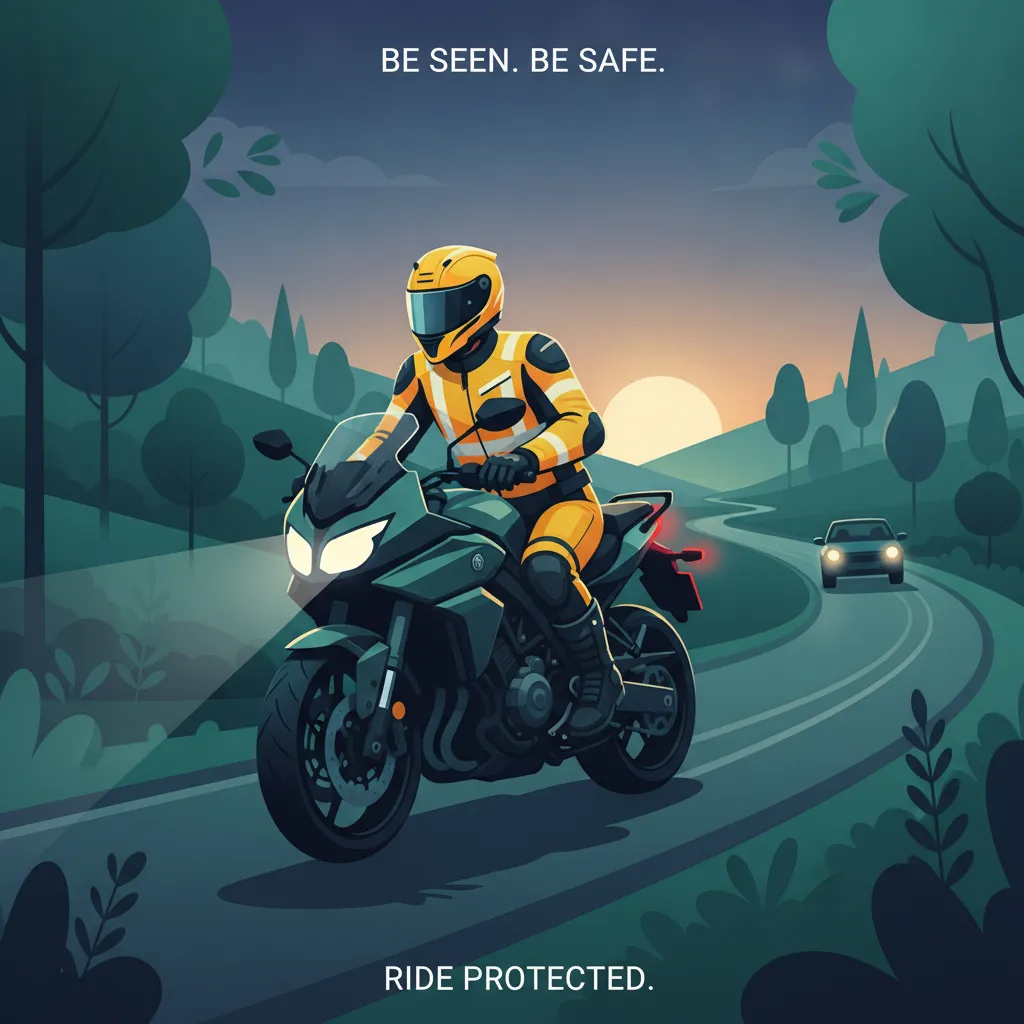
This lesson details the importance of personal protective equipment for rider safety. It covers the legal standards for helmets in Germany, the benefits of wearing abrasion-resistant jackets and gloves, and the value of high-visibility clothing. It also explains the proper use of vehicle lighting systems to ensure visibility to others.

This lesson explains the legal framework for ensuring a passenger vehicle's roadworthiness, focusing on periodic technical inspections (TÜV) and scheduled maintenance. It identifies critical wear components, such as brakes and tires, that require regular monitoring and replacement. The importance of adhering to service intervals and maintaining accurate maintenance logs for regulatory compliance is also thoroughly covered.
This lesson details the various speed limits applicable in Germany, from urban zones to rural roads. It emphasizes the critical skill of adapting speed to prevailing conditions such as rain, fog, or poor road surfaces. The content explains how external factors significantly impact vehicle handling and stopping distances.

This lesson teaches the systematic pre-trip inspection routine that every professional driver must perform. It covers a comprehensive checklist of visual and functional checks, including lights, tires, mirrors, and wipers. The lesson also emphasizes verifying the presence and condition of mandatory safety equipment, such as emergency exits, the fire extinguisher, and the first-aid kit, to ensure the vehicle is safe to operate.

This lesson examines the specific technical characteristics that define AM-class vehicles. It covers the design differences between mopeds, scooters, and light quadricycles, including their brake systems, lighting, and power-to-weight ratios. Understanding these technical aspects is crucial for safe handling and maintenance.
Find clear answers to common questions learners have about Rider Obligations and Legal Responsibilities. Learn how the lesson is structured, which driving theory objectives it supports, and how it fits into the overall learning path of units and curriculum progression in Germany. These explanations help you understand key concepts, lesson flow, and exam focused study goals.
By law, you must wear a suitable protective helmet that meets current safety standards. While not strictly mandated by law for every single ride, wearing additional protective clothing like gloves, sturdy shoes, and high-visibility gear is strongly recommended to minimize injury.
Yes, all vehicles in the AM category must display the valid insurance license plate (Versicherungskennzeichen). This plate must be renewed annually, and failure to display a valid, current plate is a punishable offence and invalidates your insurance cover.
You must stop immediately, secure the scene to prevent further danger, and provide first aid if necessary. You are legally required to identify yourself to other parties involved and report the accident to the police if significant damage or injury has occurred.
Even minor infractions in Germany can lead to fines, and persistent disregard for the StVO can result in points or the suspension of your licence. As an AM rider, you are held to the same standard of responsibility as any other road user.
Begin your targeted revision now. Use our practice search to quickly find specific German driving theory questions. Filter by StVO rules, road signs, or hazard perception to create your focused study plan. Master challenging areas and prepare confidently for your theoretical driving test.