
This lesson details your legal obligations as a driver to ensure your vehicle is safe, roadworthy, and fully equipped before every journey. It bridges the gap between technical vehicle knowledge and practical safety, helping you prepare for specific questions regarding vehicle maintenance and mandatory safety gear in your Category B theory exam.
Lesson content overview
Driving a vehicle comes with significant responsibilities, not least among them the obligation to ensure your vehicle is always in a safe and roadworthy condition. For anyone preparing for their German Category B driving license, understanding vehicle maintenance and conducting regular checks is a fundamental aspect of both legal compliance and road safety. This lesson outlines the essential inspections every driver must perform, the mandatory equipment required in your vehicle, and the importance of adhering to a regular maintenance schedule to prevent accidents and avoid legal penalties.
In Germany, as in many other countries, the driver holds primary legal responsibility for the technical condition of their vehicle. This means that before every journey, whether it's a short trip to the supermarket or a long-distance drive, you must verify that your vehicle is safe to operate. This isn't merely a recommendation; it is a legal requirement derived from various traffic regulations, including the Straßenverkehrs-Ordnung (StVO), which governs road traffic in Germany.
Neglecting these responsibilities can lead to severe consequences, ranging from fines and penalty points to involvement in accidents caused by preventable vehicle failures. A well-maintained vehicle not only protects you and your passengers but also ensures the safety of other road users, including pedestrians, cyclists, and other drivers. It integrates various concepts from vehicle technology, road safety, and legal compliance, forming a crucial bridge to practical driving skills.
The principle of pre-drive inspection is a cornerstone of traffic safety, ensuring that potential issues are identified and addressed before they pose a risk on the road.
A pre-drive inspection is a systematic series of visual and functional checks performed before starting a journey. Its purpose is to identify any potential issues that could compromise safety or lead to traffic violations. These checks are mandatory and help detect problems that might otherwise cause accidents or breakdowns. While a comprehensive mechanical check is not expected before every drive, certain fundamental aspects must always be verified.
Tyres are the sole contact point between your vehicle and the road, making their condition paramount for safe driving. Proper tyre maintenance directly influences handling, braking distance, fuel efficiency, and overall vehicle stability.
Ensuring your tyres are inflated to the manufacturer’s recommended levels is critical. Incorrect tyre pressure – whether over or under-inflated – can lead to:
You should check tyre pressure regularly, ideally at least once a month and always before long journeys. The recommended pressure can usually be found in your vehicle's owner's manual, on a sticker inside the driver's door frame, or on the fuel filler cap. Always check pressure when tyres are cold, as driving warms them up and increases the internal pressure. Don't forget to check the spare tyre if your vehicle carries one.
The tread on your tyres is designed to provide grip and displace water, particularly important in wet conditions. Worn treads significantly reduce traction, increasing the risk of aquaplaning and longer braking distances. In Germany, the legal minimum tread depth for car tyres is 1.6 millimeters across the entire circumference of the tyre. However, for optimal safety, especially in adverse weather, many experts recommend replacing tyres when the tread depth falls below 3 mm for summer tyres and 4 mm for winter tyres.
You can check tread depth using a simple tread-depth gauge or by observing the tread wear indicators (small raised bars within the main grooves of the tyre). If the tread is flush with these indicators, the tyre is at or below the legal minimum and must be replaced immediately.
Beyond pressure and tread, inspect the entire tyre for any signs of damage, such as:
Tyres also have an expiry date. Regardless of tread depth, rubber degrades over time. It is generally recommended to replace tyres that are older than six years, even if they appear to have sufficient tread. The manufacturing date (DOT code) is stamped on the sidewall of the tyre.
Properly functioning lights are crucial for both your visibility to other road users and your ability to see the road ahead, especially in low light conditions or adverse weather. Before each drive, or at least regularly, ensure all your vehicle's lights are operational.
Headlights: Check both low beam (dipped beam) and high beam (main beam). Ensure they are clean and correctly aimed.
Taillights and Brake Lights: Verify that your taillights illuminate when your headlights are on, and that all brake lights (including the high-mounted third brake light) come on brightly when you press the brake pedal. Have someone observe from behind, or use a reflective surface like a garage door.
Turn Signals (Indicators): Confirm that both front and rear turn signals flash at a regular rate on both sides. A rapidly flashing indicator often signifies a burnt-out bulb.
Hazard Warning Lights: Check that all four turn signals flash simultaneously when activated.
Rear Fog Lights: If equipped, ensure they work. Remember these are for extreme visibility reduction only.
Daytime Running Lights (DRL): If your vehicle has DRLs, ensure they are working. Note that DRLs are not a substitute for low beams at night or in conditions of poor visibility.
Driving with malfunctioning lights, especially headlights or brake lights, is illegal and highly dangerous. It severely impairs your ability to communicate your intentions to other drivers and reduces your own visibility.
Essential fluids keep your engine running smoothly and ensure clear visibility. Checking their levels regularly can prevent serious mechanical issues and maintain safe driving conditions.
Engine oil lubricates moving parts, reduces friction, and helps cool the engine. Low oil levels can lead to severe engine damage due to overheating and increased wear.
Coolant regulates engine temperature, preventing both overheating and freezing.
Adequate windshield washer fluid is vital for maintaining clear visibility, especially in dirty weather or when driving behind other vehicles.
In Germany, drivers are legally required to carry specific emergency equipment in their vehicles. These items are designed to enhance safety in the event of a breakdown or accident and failing to carry them can result in fines.
The warning triangle, or Warndreieck, is an essential safety device used to warn other road users of a stationary vehicle following a breakdown or accident.
The high-visibility vest, or Warnweste, ensures that you are clearly seen by other road users when you exit your vehicle on the roadside, particularly during a breakdown or accident.
A well-stocked and unexpired first-aid kit, or Verbandkasten, is crucial for providing immediate medical assistance in the event of minor injuries or to stabilize a casualty until professional help arrives.
Always keep your warning triangle, high-visibility vest, and first-aid kit easily accessible, preferably in the passenger compartment or a designated compartment in the boot, not under heavy luggage.
Beyond the daily pre-drive checks, regular vehicle maintenance and periodic technical inspections are vital for ensuring long-term roadworthiness, safety, and compliance with German law.
Every vehicle manufacturer provides a recommended service schedule, outlining intervals for oil changes, filter replacements, brake inspections, and other critical checks. Adhering to this schedule helps prevent major mechanical failures, maintain vehicle performance, and preserve its value. These services are typically performed by authorized garages.
In Germany, all registered vehicles must undergo a mandatory Hauptuntersuchung (HU), commonly referred to as the TÜV (after one of the main inspection organizations). This inspection assesses the vehicle's roadworthiness, safety features, and environmental compliance.
The impact of vehicle maintenance extends beyond mere compliance; it directly affects safety and performance under different driving conditions.
Ignoring your responsibilities regarding vehicle maintenance and pre-drive checks can lead to a range of serious consequences:
This lesson covers the driver's legal duty under German traffic regulations to maintain a roadworthy vehicle through systematic pre-drive inspections. Learners must understand how to check tyre pressure and tread (legal minimum 1.6mm), verify all lighting systems function correctly, and monitor essential fluid levels. The three mandatory emergency items—warning triangle, high-visibility vest, and first-aid kit—must meet specific German standards and be accessible during breakdowns. Regular maintenance following manufacturer schedules and periodic TÜV inspections (first after 3 years, then every 2 years) complete the roadworthiness requirements for German roads.
A short set of high-value points that capture the most important learning from this lesson.
Under German traffic law (StVO), the driver bears full legal responsibility for ensuring the vehicle is roadworthy before every journey.
Tyres must maintain at least 1.6mm tread depth (legal minimum), though experts recommend replacing summer tyres below 3mm and winter tyres below 4mm for optimal safety.
All mandatory emergency equipment must meet specific German standards: first-aid kits (DIN 13164), high-visibility vests (EN ISO 20471).
Regular pre-drive inspections must verify tyre condition and pressure, all lights for proper function, and essential fluid levels (oil, coolant, washer fluid).
The periodic technical inspection (Hauptuntersuchung) is required every two years after the initial three-year inspection for new vehicles.
Explore all units and lessons included in this driving theory course.
Warning triangle must be placed 50m behind the vehicle in urban areas and at least 100m (ideally 150-200m) on motorways.
Tyres degrade over time regardless of tread depth; replace tyres older than six years even if they appear roadworthy.
Daytime Running Lights (DRL) do not replace low beam headlights at night or during poor visibility conditions.
Never open a hot cooling system when checking coolant; always wait for the engine to cool to prevent severe burns.
Keep emergency equipment (warning triangle, vest, first-aid kit) easily accessible, not buried under luggage in the boot.
Assuming tyres only need replacing when tread reaches the legal minimum of 1.6mm, rather than earlier for safer driving.
Forgetting to check tyre pressure when tyres are cold, leading to inaccurate readings after driving.
Not verifying that brake lights and turn signals work, which other drivers depend on to anticipate your actions.
Failing to check the spare tyre for pressure and condition, only to discover it is flat during an emergency.
Relying solely on Daytime Running Lights without switching to low beam when visibility is reduced.
Lesson content overview
A short set of high-value points that capture the most important learning from this lesson.
Under German traffic law (StVO), the driver bears full legal responsibility for ensuring the vehicle is roadworthy before every journey.
Tyres must maintain at least 1.6mm tread depth (legal minimum), though experts recommend replacing summer tyres below 3mm and winter tyres below 4mm for optimal safety.
All mandatory emergency equipment must meet specific German standards: first-aid kits (DIN 13164), high-visibility vests (EN ISO 20471).
Regular pre-drive inspections must verify tyre condition and pressure, all lights for proper function, and essential fluid levels (oil, coolant, washer fluid).
The periodic technical inspection (Hauptuntersuchung) is required every two years after the initial three-year inspection for new vehicles.
Explore all units and lessons included in this driving theory course.
Warning triangle must be placed 50m behind the vehicle in urban areas and at least 100m (ideally 150-200m) on motorways.
Tyres degrade over time regardless of tread depth; replace tyres older than six years even if they appear roadworthy.
Daytime Running Lights (DRL) do not replace low beam headlights at night or during poor visibility conditions.
Never open a hot cooling system when checking coolant; always wait for the engine to cool to prevent severe burns.
Keep emergency equipment (warning triangle, vest, first-aid kit) easily accessible, not buried under luggage in the boot.
Assuming tyres only need replacing when tread reaches the legal minimum of 1.6mm, rather than earlier for safer driving.
Forgetting to check tyre pressure when tyres are cold, leading to inaccurate readings after driving.
Not verifying that brake lights and turn signals work, which other drivers depend on to anticipate your actions.
Failing to check the spare tyre for pressure and condition, only to discover it is flat during an emergency.
Relying solely on Daytime Running Lights without switching to low beam when visibility is reduced.
Explore search topics learners often look for when studying Vehicle Maintenance and Checks. These topics reflect common questions about road rules, driving situations, safety guidance, and lesson level theory preparation for learners in Germany.
Browse additional driving theory lessons that cover connected traffic rules, road signs, and common driving situations related to this topic. Improve your understanding of how different rules interact across everyday traffic scenarios.
Understand the legal obligations for drivers to ensure vehicle safety before driving. This lesson covers essential pre-drive checks, mandatory equipment like warning triangles and high-visibility vests, and adherence to StVO regulations for a roadworthy vehicle.

This lesson outlines the legal requirements for vehicle roadworthiness, including mandatory periodic inspections (TÜV) and the issuance of safety certificates. It explains the standards for emissions, safety devices, and the proper documentation of defects. The content underscores the importance of complying with inspection intervals and addressing repair obligations promptly.

This lesson explains the legal framework for ensuring a passenger vehicle's roadworthiness, focusing on periodic technical inspections (TÜV) and scheduled maintenance. It identifies critical wear components, such as brakes and tires, that require regular monitoring and replacement. The importance of adhering to service intervals and maintaining accurate maintenance logs for regulatory compliance is also thoroughly covered.

This lesson focuses on the legal responsibilities and duties of a vehicle operator according to German traffic law, primarily the StVO. It covers the obligation to drive safely, the rules of conduct at an accident scene, and the legal consequences of traffic violations. Understanding these principles is crucial for maintaining road safety and avoiding penalties such as fines, points, or driving bans.
This lesson teaches riders how to conduct a simple but crucial pre-ride inspection of their vehicle. It provides step-by-step guidance on checking tyre pressure and tread depth, verifying brake function, and ensuring all lights are operational. Regular maintenance is presented as a fundamental responsibility for every rider.

This lesson covers the dimensional limits for heavy vehicles, focusing on height, width, and length restrictions. It explains how to interpret clearance signage for bridges, tunnels, and overhead obstacles, and discusses the implications for route planning. The content also addresses the importance of understanding turning radii and swept paths to avoid collisions.
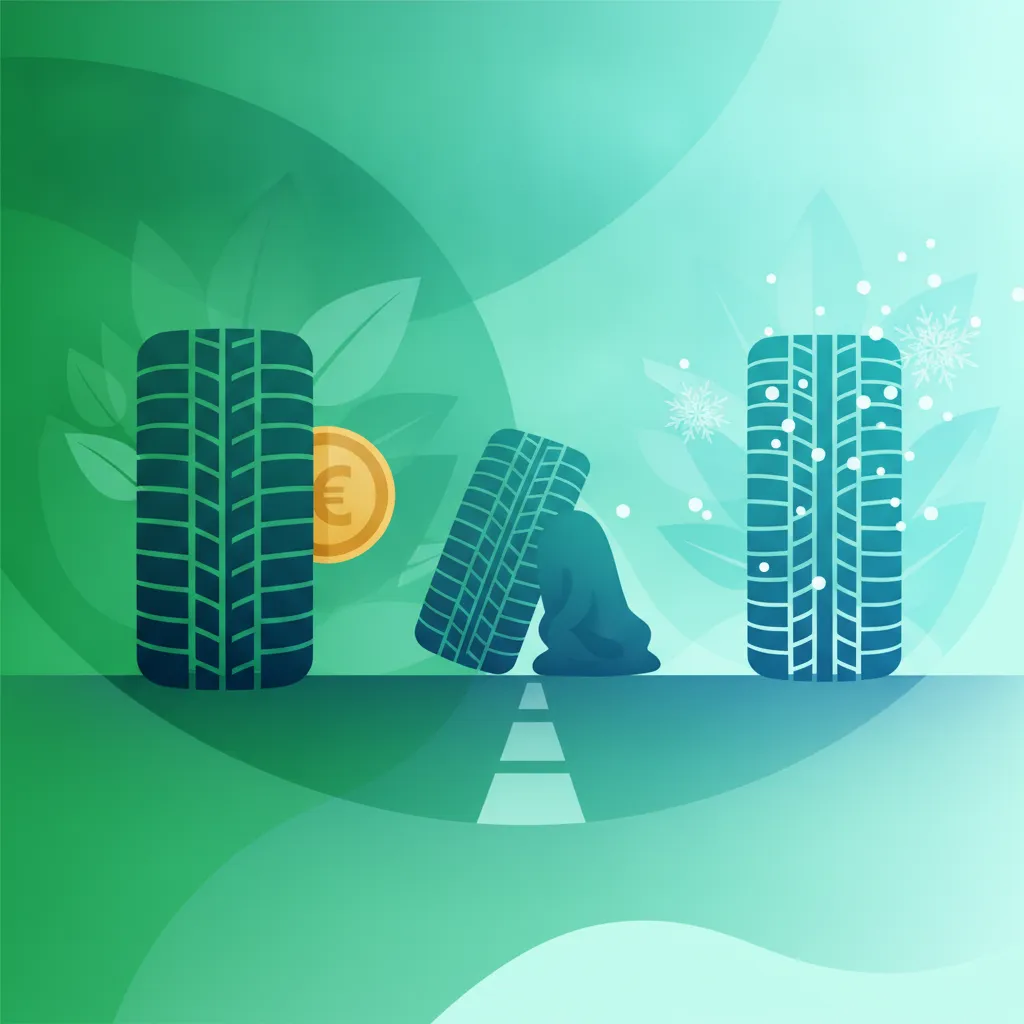
This lesson emphasizes the crucial role tyres play in vehicle safety, as they are the only point of contact with the road. It covers how to check and maintain correct tyre pressure and explains the legal minimum requirement for tread depth. The lesson also details Germany's situational winter tyre requirement ('Winterreifenpflicht') and how to identify appropriate tyres.

This lesson explores the legal framework governing heavy vehicle operation in Germany, focusing on the Straßenverkehrs-Ordnung (StVO) and specific commercial transport regulations. It details the professional duty of care required from drivers, including responsibilities for vehicle inspection and documentation. You will understand the enforcement mechanisms and potential penalties for non-compliance.

This lesson explains the legal and safety requirements for transporting goods and cargo. It covers the importance of proper load distribution to maintain vehicle stability and the methods for securely fastening items to prevent them from shifting or falling. The regulations concerning maximum vehicle weight, roof loads, and the correct marking of loads that overhang the vehicle are also detailed.

This lesson focuses on the importance of maintaining a safe following distance ('Sicherheitsabstand') to the vehicle ahead. It teaches practical methods for judging this distance, including the universally applicable two-second rule and the German 'halber Tacho' (half the speedometer reading in meters) rule. The lesson stresses the need to increase this distance in poor weather or when visibility is reduced.

This lesson provides a systematic approach to pre-drive inspection, outlining a comprehensive checklist to verify fluid levels, brake functionality, and tyre condition. It emphasizes the importance of checking lighting, mirror adjustments, and load securement before every journey. The content highlights safety protocols to ensure the vehicle is roadworthy.
Learn about the crucial pre-drive checks for a vehicle's roadworthiness, including lights, tyres, and fluids. Discover the legally required safety equipment every driver must carry in Germany for the theory exam.

This lesson teaches the systematic pre-trip inspection routine that every professional driver must perform. It covers a comprehensive checklist of visual and functional checks, including lights, tires, mirrors, and wipers. The lesson also emphasizes verifying the presence and condition of mandatory safety equipment, such as emergency exits, the fire extinguisher, and the first-aid kit, to ensure the vehicle is safe to operate.
This lesson teaches riders how to conduct a simple but crucial pre-ride inspection of their vehicle. It provides step-by-step guidance on checking tyre pressure and tread depth, verifying brake function, and ensuring all lights are operational. Regular maintenance is presented as a fundamental responsibility for every rider.
This lesson explains the legal framework for ensuring a passenger vehicle's roadworthiness, focusing on periodic technical inspections (TÜV) and scheduled maintenance. It identifies critical wear components, such as brakes and tires, that require regular monitoring and replacement. The importance of adhering to service intervals and maintaining accurate maintenance logs for regulatory compliance is also thoroughly covered.
This lesson provides a systematic approach to pre-drive inspection, outlining a comprehensive checklist to verify fluid levels, brake functionality, and tyre condition. It emphasizes the importance of checking lighting, mirror adjustments, and load securement before every journey. The content highlights safety protocols to ensure the vehicle is roadworthy.
This lesson outlines the legal requirements for vehicle roadworthiness, including mandatory periodic inspections (TÜV) and the issuance of safety certificates. It explains the standards for emissions, safety devices, and the proper documentation of defects. The content underscores the importance of complying with inspection intervals and addressing repair obligations promptly.
This lesson emphasizes the crucial role tyres play in vehicle safety, as they are the only point of contact with the road. It covers how to check and maintain correct tyre pressure and explains the legal minimum requirement for tread depth. The lesson also details Germany's situational winter tyre requirement ('Winterreifenpflicht') and how to identify appropriate tyres.

This lesson serves as an introduction to the driver's interface with the car. It explains the function of the primary controls—steering wheel, accelerator, brake, and clutch—and the gear selector. You will also learn to identify and understand the various symbols and gauges on the dashboard, including the speedometer, fuel gauge, and critical warning lights.
Find clear answers to common questions learners have about Vehicle Maintenance and Checks. Learn how the lesson is structured, which driving theory objectives it supports, and how it fits into the overall learning path of units and curriculum progression in Germany. These explanations help you understand key concepts, lesson flow, and exam focused study goals.
You are legally required to carry a warning triangle, a high-visibility vest (compliant with EN ISO 20471), and a certified first-aid kit that meets DIN 13164 standards.
It is best practice to check these fluid levels before long trips or at least once a month. Maintaining correct levels is vital for preventing engine failure and ensuring vehicle safety.
The legal minimum tread depth for summer tyres in Germany is 1.6 millimetres, though experts recommend changing tyres at 3 millimetres for better safety and performance.
The exam focuses on the driver's responsibility for roadworthiness and safety checks rather than complex engine mechanics. You must know how to maintain and verify vehicle safety, but you do not need to be a car mechanic.
Begin your targeted revision now. Use our practice search to quickly find specific German driving theory questions. Filter by StVO rules, road signs, or hazard perception to create your focused study plan. Master challenging areas and prepare confidently for your theoretical driving test.