
This lesson explores the essential priority rules and right-of-way regulations mandated by the German StVO for AM licence holders. By mastering these foundational concepts, you will gain the confidence needed to safely navigate junctions, intersections, and roundabouts in various traffic scenarios.
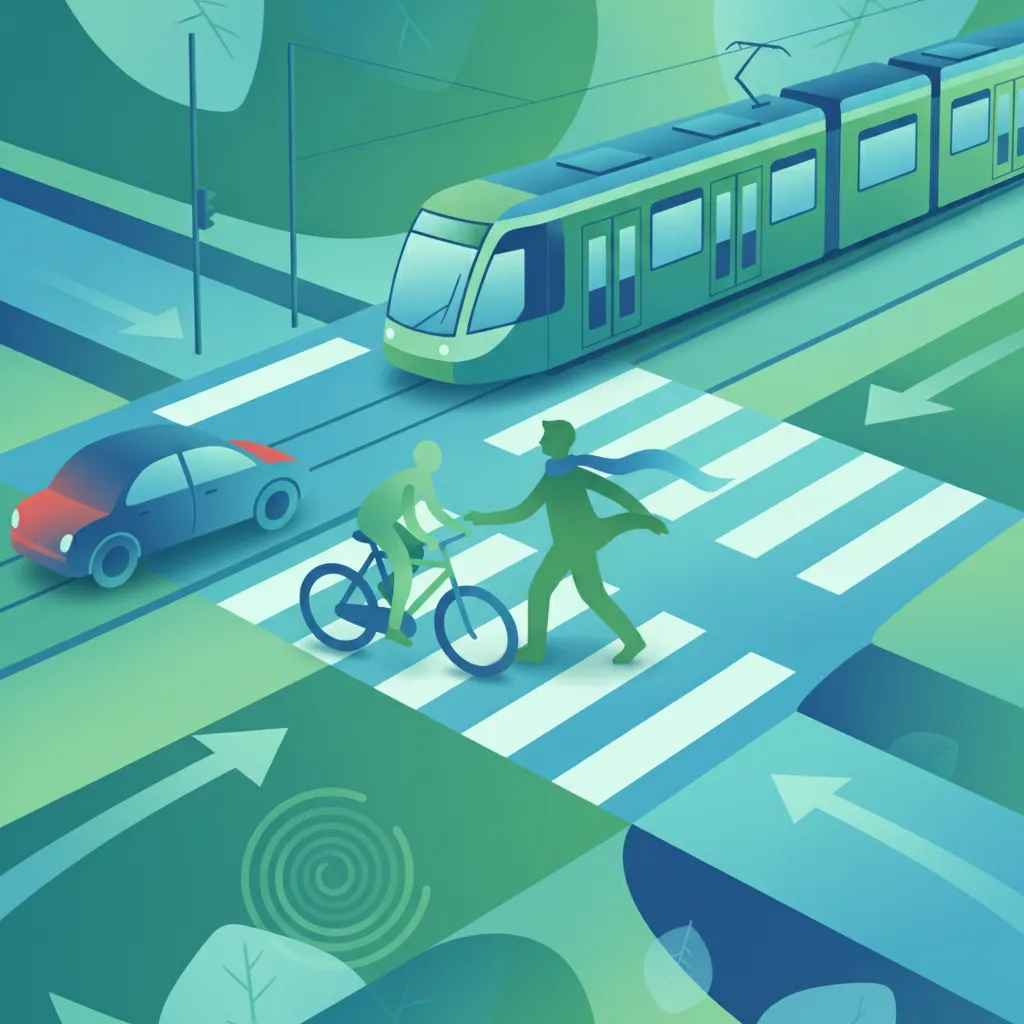
Lesson content overview
Navigating German roads safely and efficiently as an AM licence holder, operating a moped or scooter, requires a profound understanding of priority rules and right-of-way regulations. These rules, primarily outlined in the German Road Traffic Act (Straßenverkehrs-Ordnung, StVO), are fundamental for preventing accidents, particularly at junctions and intersections where paths of different road users converge. This lesson details the critical regulations governing who has precedence in various traffic situations, from the foundational 'right before left' rule to specific directives for priority roads, yield signs, roundabouts, and pedestrian crossings. Mastering these concepts is not just about passing your German driving theory course for AM licence; it's about ensuring your safety and the safety of others on the road.
Priority rules establish a clear order for road users when their paths intersect, ensuring predictable traffic flow and minimizing conflict points. The overarching logic is to create a structured system where drivers know exactly when they must yield and when they can proceed. These regulations are interconnected with other crucial driving aspects, such as effective junction navigation, safe roundabout handling, and the imperative to yield to vulnerable road users like pedestrians and cyclists.
Several key principles form the bedrock of priority rules in Germany, each designed to address specific traffic scenarios:
The 'right-before-left' rule, or Rechts-vor-Links in German, is arguably the most fundamental priority rule for uncontrolled intersections. An uncontrolled intersection is any junction where there are no traffic lights, road signs, or police officers directing traffic.
At any intersection without specific priority signs or signals, drivers must yield to any vehicle approaching from their right-hand side. This rule applies regardless of whether the intersecting roads appear to be of equal importance. For example, if two minor residential streets cross without any signage, a moped rider approaching the junction must always check for traffic coming from their right and yield if another vehicle is present.
For riders of mopeds and scooters, this rule is particularly vital. Your smaller size and potentially lower visibility mean you must be extra vigilant. Always approach uncontrolled junctions cautiously, reduce your speed, and actively scan to your right first. If you see a vehicle approaching from the right, you must be prepared to stop and let them pass before proceeding. Ignoring this rule is a common cause of collisions at minor intersections.
When approaching any intersection, always assume 'right-before-left' applies unless explicitly overridden by road signs, traffic lights, or police instructions. This defensive approach enhances safety.
While widely applicable, there are several situations where the right-before-left rule does not apply:
Rechts-vor-Links, instructing drivers to yield or stop.Rechts-vor-Links generally does not apply at junctions where a paved road meets an unpaved road (e.g., a dirt track joining a tarmac road), or when exiting a property, parking lot, or service road onto a public street. In these cases, traffic on the main road always has priority.A Vorfahrtstraße, or priority road, is a designated road where traffic has precedence over all intersecting roads, unless specifically indicated otherwise by additional signs.
Priority roads are clearly marked with a distinctive sign:
This yellow diamond sign, often seen at the beginning of a priority road or after a major intersection, informs drivers that they are on a route where they generally do not need to yield to traffic from the left or right at unmarked junctions.
As an AM licence holder, when you are on a priority road, you can proceed through intersections without stopping or yielding to traffic entering from side roads, provided there are no other signs (like a yield sign specifically for you) or traffic lights. This significantly speeds up traffic flow on main routes. However, vigilance remains crucial; always be prepared for other drivers who might mistakenly assume they have priority or fail to see your smaller vehicle.
The priority status of a road does not last indefinitely. It will be explicitly cancelled by another sign:
When you see this sign, it means that at the next intersection, or potentially all subsequent intersections, the special priority no longer applies, and you must revert to observing the 'right-before-left' rule or any other signs present.
Never assume that a road continues to be a priority road. Always look for the 'End of Priority Road' sign. A common mistake is to continue assuming priority, leading to dangerous situations.
The yield sign is a crucial regulatory sign that explicitly instructs drivers to give way to other traffic. It's often placed at junctions where a minor road meets a major road, or where a priority road temporarily loses its precedence.
The yield sign is an inverted red-bordered triangle with a white interior:
When you encounter this sign, it means you must adjust your speed and, if necessary, stop to allow all traffic on the intersecting road to pass before you proceed. This includes traffic from both your left and your right on the priority road. You should only continue when you can do so without endangering or impeding other road users.
Often, a yield sign is accompanied by a series of white triangles painted on the road surface, known as a yield line (Haifischzähne – "shark's teeth"). This marking reinforces the requirement to yield and indicates the point behind which you should stop if you need to.
A series of white triangles painted on the road surface, indicating the point where a driver must yield or stop before entering an intersection.
Roundabouts are circular intersections designed to improve traffic flow and reduce the severity of accidents compared to traditional cross-intersections. In Germany, specific priority rules apply to roundabouts.
The primary rule for roundabouts in Germany is that vehicles already inside the roundabout have priority. This means that when you approach a roundabout, you must yield to any traffic already circulating within it.
This sign, usually accompanied by a yield sign (B20), clarifies the roundabout's nature and the requirement to yield.
Some very old or specific intersections might be designed as "priority roundabouts" where traffic entering has priority over circulating traffic. These are rare and will be explicitly marked with B1 (Priority Road) signs for entering traffic. Always observe the signage.
Protecting vulnerable road users like pedestrians is a paramount concern in German traffic law. Specific rules grant pedestrians priority in designated zones, requiring vehicles to yield or stop.
A marked pedestrian crossing identified by alternating white and dark stripes, where pedestrians have priority over vehicles.
At a zebra crossing, visually indicated by bold white stripes across the road, pedestrians who are either on the crossing or clearly intending to cross have absolute priority. As an AM rider, you must stop to allow pedestrians to cross safely.
Even at traffic light-controlled intersections, pedestrians have dedicated crossing times. However, if a pedestrian is crossing when their light is green, and your vehicle's light is also green for a turn, you must still yield to the pedestrian. Always prioritize the safety of pedestrians.
The priority rules discussed in this lesson are legally enshrined in the German Road Traffic Act (Straßenverkehrs-Ordnung – StVO). Familiarity with these specific paragraphs reinforces the importance and legal backing of these regulations.
Understanding these legal foundations underscores that priority rules are not merely guidelines but binding regulations with consequences for violations.
Misinterpreting or ignoring priority rules is a leading cause of accidents. AM riders must be particularly aware of these common mistakes and potentially complex scenarios:
Rechts-vor-Links applies even when a main road is clearly marked as a priority road. Always identify priority roads.Rechts-vor-Links rule or specific signs always take precedence over assumptions.Priority rules, while seemingly absolute, must always be applied with an awareness of prevailing conditions and context.
Rechts-vor-Links might be the predominant rule, demanding constant awareness.The design and enforcement of priority rules are deeply rooted in principles of road safety and efficiency:
Understanding priority rules intellectually is one thing; applying them correctly in real-world scenarios is another. Here are a few practical examples for AM licence holders:
Imagine you are riding your scooter down a quiet residential street. As you approach an intersection, you notice there are no traffic lights, no 'Yield' signs, and no 'Priority Road' signs. To your right, another scooter approaches the intersection at the same time.
Rechts-vor-Links (right-before-left) rule, you must yield to the scooter approaching from your right. You should slow down, be prepared to stop, and let the other scooter pass before you proceed.You are riding your moped on a busy main road clearly marked with a Vorfahrtstraße (Priority Road) sign. A small side street intersects the main road, and a car is waiting at the junction, facing a Vorfahrt gewähren (Yield) sign.
You are approaching a typical German roundabout, where you see the blue Kreisverkehr (Roundabout) sign accompanied by a Vorfahrt gewähren (Yield) sign. Inside the roundabout, there is already a car driving around.
You are riding your scooter and approaching a Zebrastreifen (zebra crossing). You see a pedestrian standing at the edge, clearly intending to cross the road.
Mastering German priority rules is non-negotiable for obtaining your AM licence and for safe driving. It involves understanding:
Rechts-vor-Links rule at uncontrolled intersections.Vorfahrtstraße signs and how they grant priority.Vorfahrt gewähren (Yield) signs.Kreisverkehr (roundabouts), where circulating traffic typically has precedence.Zebrastreifen.A thorough grasp of these legal requirements (StVO §§ 8, 26), combined with an awareness of common violations, conditional variations, and the underlying safety rationale, will equip you to navigate German roads confidently and responsibly. Prioritizing visibility, predictability, and the protection of vulnerable road users forms the cornerstone of safe and harmonious traffic participation.
German priority rules establish a clear hierarchy for navigating intersections, with the right-before-left rule (Rechts-vor-Links) applying at uncontrolled junctions and priority road signs, yield signs, and roundabout rules overriding it in specific contexts. Understanding StVO §§ 8 and 26 is essential, as these legally mandate yielding to traffic from the right, respecting priority road designations, yielding at roundabouts to circulating vehicles, and stopping for pedestrians at zebra crossings. AM licence holders must be especially vigilant at junctions due to their smaller vehicle profile and lower visibility, always approaching with reduced speed and being prepared to stop even when they technically have priority. Common violations include ignoring yield signs, misapplying right-before-left at priority roads, and failing to yield to vulnerable road users, all of which contribute to accidents at intersections.
A short set of high-value points that capture the most important learning from this lesson.
The right-before-left rule (Rechts-vor-Links) is the default at uncontrolled intersections, meaning you must yield to traffic approaching from your right
Priority roads (Vorfahrtstraße) marked by yellow diamond signs override all default rules and grant precedence to traffic on that road
At roundabouts, vehicles already circulating inside always have priority over vehicles attempting to enter
Pedestrians at zebra crossings (Zebrastreifen) have absolute priority and vehicles must stop completely to allow them to cross
Yield signs require giving way to ALL traffic on the intersecting road, not just from one direction
Explore all units and lessons included in this driving theory course.
Rechts-vor-Links does not apply at paved-to-unpaved road junctions, property exits, or parking lots joining public roads
The 'End of Priority Road' sign (B2) cancels priority status, reverting to default right-before-left rules
At roundabouts, indicate right before exiting but generally do not indicate when entering a single-lane roundabout
Never overtake vehicles that have stopped at a zebra crossing, as pedestrians may be crossing
Traffic lights and police instructions override all other priority rules including priority roads and yield signs
Assuming right-before-left applies even when a Vorfahrtstraße sign indicates the main road has priority
Entering a roundabout without yielding to circulating traffic, believing the blue roundabout sign grants right-of-way
Treating a yield sign as merely a suggestion to slow down rather than a command to give way
Failing to stop for pedestrians at zebra crossings when the pedestrian is merely standing nearby rather than already on the crossing
Continuing to assume priority based on road width or perceived importance without checking for explicit signs
Lesson content overview
A short set of high-value points that capture the most important learning from this lesson.
The right-before-left rule (Rechts-vor-Links) is the default at uncontrolled intersections, meaning you must yield to traffic approaching from your right
Priority roads (Vorfahrtstraße) marked by yellow diamond signs override all default rules and grant precedence to traffic on that road
At roundabouts, vehicles already circulating inside always have priority over vehicles attempting to enter
Pedestrians at zebra crossings (Zebrastreifen) have absolute priority and vehicles must stop completely to allow them to cross
Yield signs require giving way to ALL traffic on the intersecting road, not just from one direction
Explore all units and lessons included in this driving theory course.
Rechts-vor-Links does not apply at paved-to-unpaved road junctions, property exits, or parking lots joining public roads
The 'End of Priority Road' sign (B2) cancels priority status, reverting to default right-before-left rules
At roundabouts, indicate right before exiting but generally do not indicate when entering a single-lane roundabout
Never overtake vehicles that have stopped at a zebra crossing, as pedestrians may be crossing
Traffic lights and police instructions override all other priority rules including priority roads and yield signs
Assuming right-before-left applies even when a Vorfahrtstraße sign indicates the main road has priority
Entering a roundabout without yielding to circulating traffic, believing the blue roundabout sign grants right-of-way
Treating a yield sign as merely a suggestion to slow down rather than a command to give way
Failing to stop for pedestrians at zebra crossings when the pedestrian is merely standing nearby rather than already on the crossing
Continuing to assume priority based on road width or perceived importance without checking for explicit signs
Explore search topics learners often look for when studying Priority Rules and Right-of-Way Regulations. These topics reflect common questions about road rules, driving situations, safety guidance, and lesson level theory preparation for learners in Germany.
Browse additional driving theory lessons that cover connected traffic rules, road signs, and common driving situations related to this topic. Improve your understanding of how different rules interact across everyday traffic scenarios.
Deepen your understanding of German right-of-way regulations beyond the basic 'right before left' rule. This lesson focuses on complex intersections, roundabouts, and specific junction scenarios encountered in German traffic law.

This lesson explains the specific rules for driving in roundabouts ('Kreisverkehr'), a common feature on German roads. It covers the correct procedure for approaching and entering, the rule that traffic already in the circle has priority, and the requirement to signal before exiting. The lesson also addresses the unique characteristics of mini-roundabouts and how to interact with cyclists and pedestrians around them.
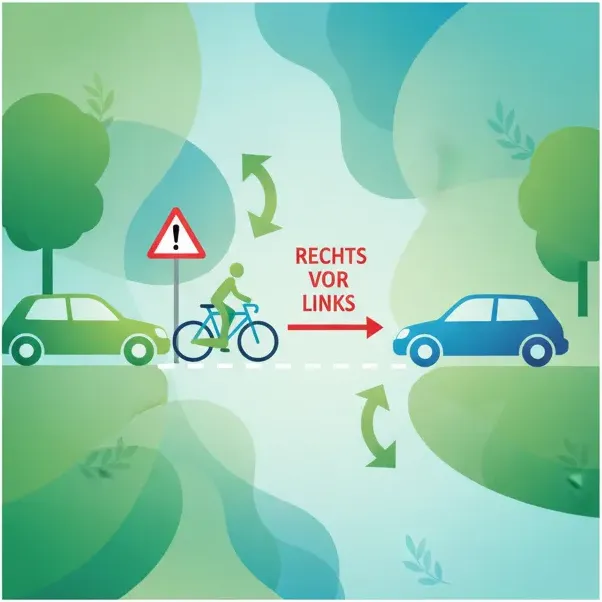
This lesson provides a detailed guide to navigating various types of intersections safely and correctly. It explains how priority is determined by traffic signs (such as the priority road, yield, and stop signs) and traffic lights. The lesson also covers complex scenarios, including the rules for turning left across oncoming traffic, to ensure you can handle any junction with confidence.
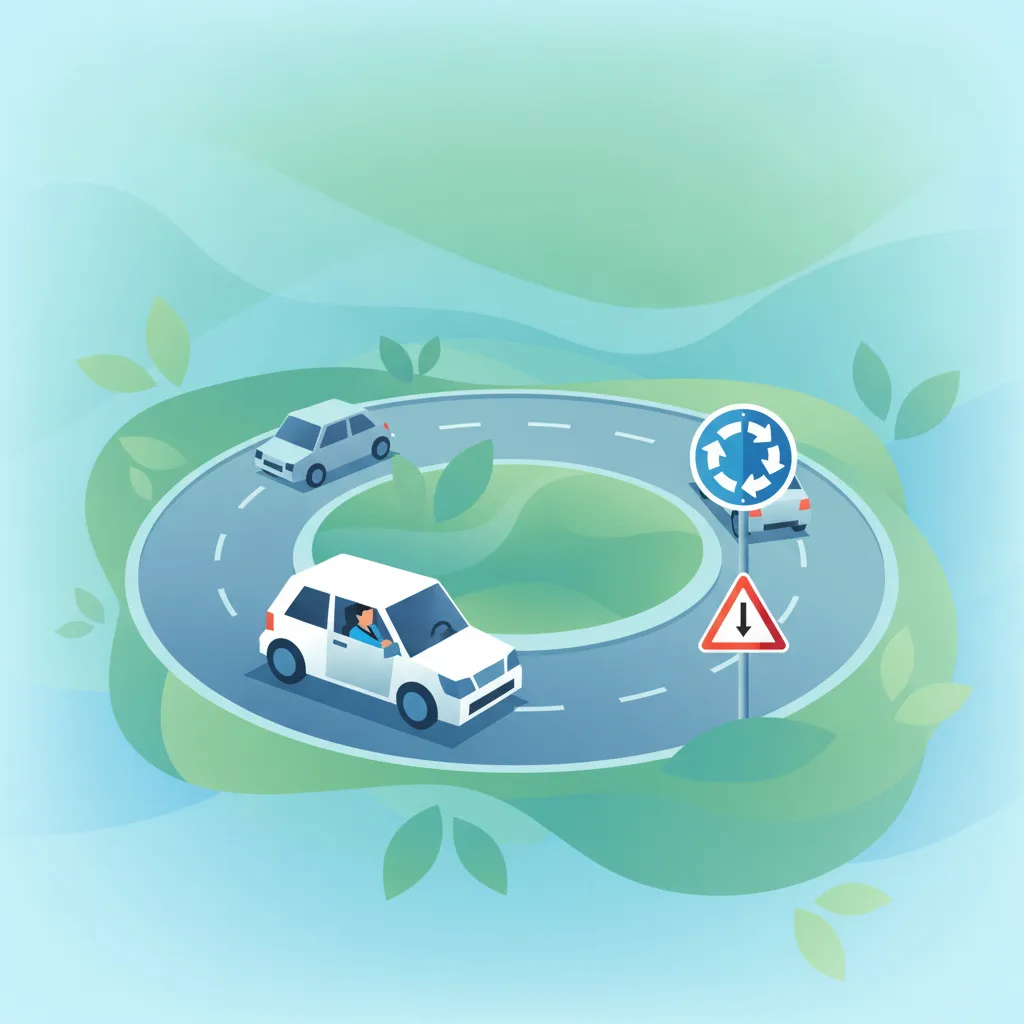
This lesson provides clear instructions on how to navigate roundabouts in Germany. It explains the crucial rule of yielding to traffic already inside the circle, proper lane choice for your intended exit, and the correct use of signals. Safe interaction with cyclists and pedestrians at roundabout exits is also covered.
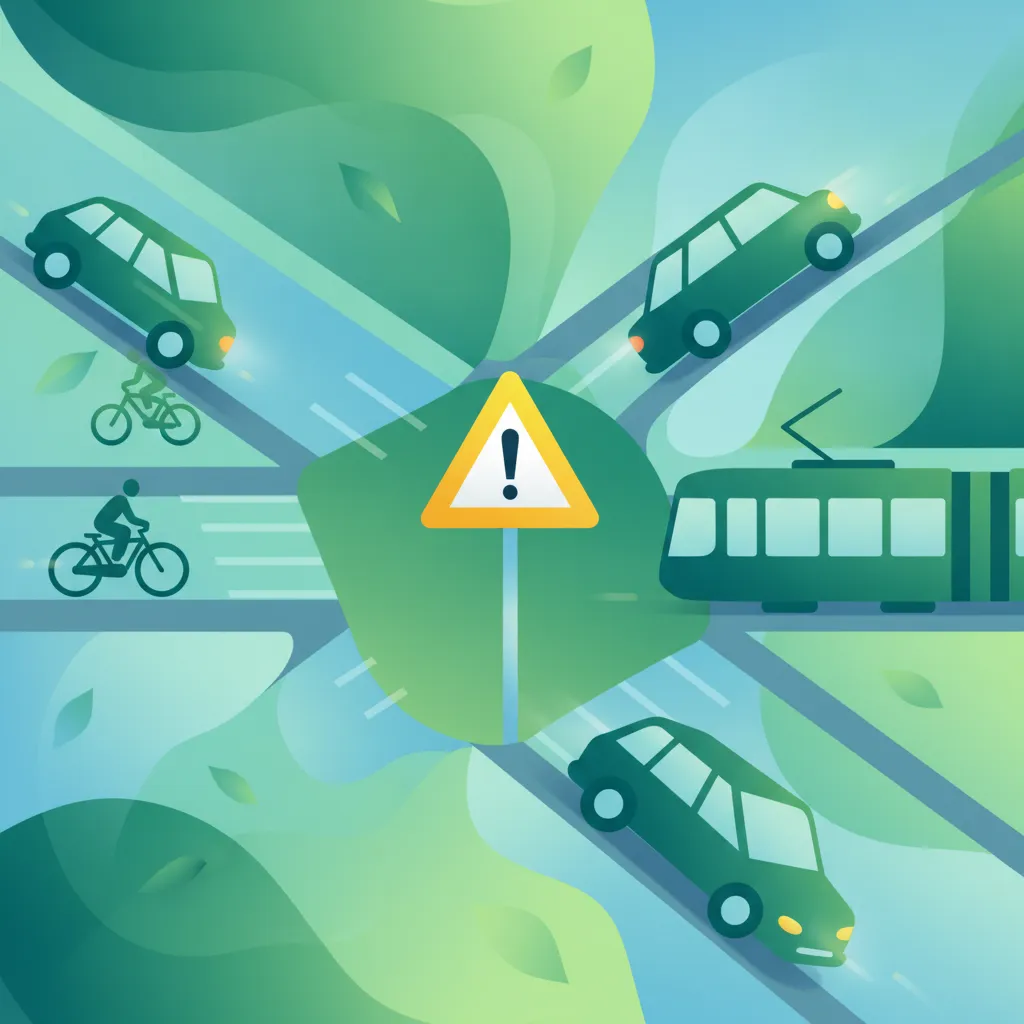
This lesson explains the concept of a priority road ('Vorfahrtstraße'), where you have right-of-way over traffic from intersecting roads. You will learn to recognize the signs that mark the beginning and end of a priority road. The lesson also covers how priority is managed through signals, including standard traffic lights, the special 'Grünpfeil' (green arrow) sign, and the overriding authority of a police officer directing traffic.
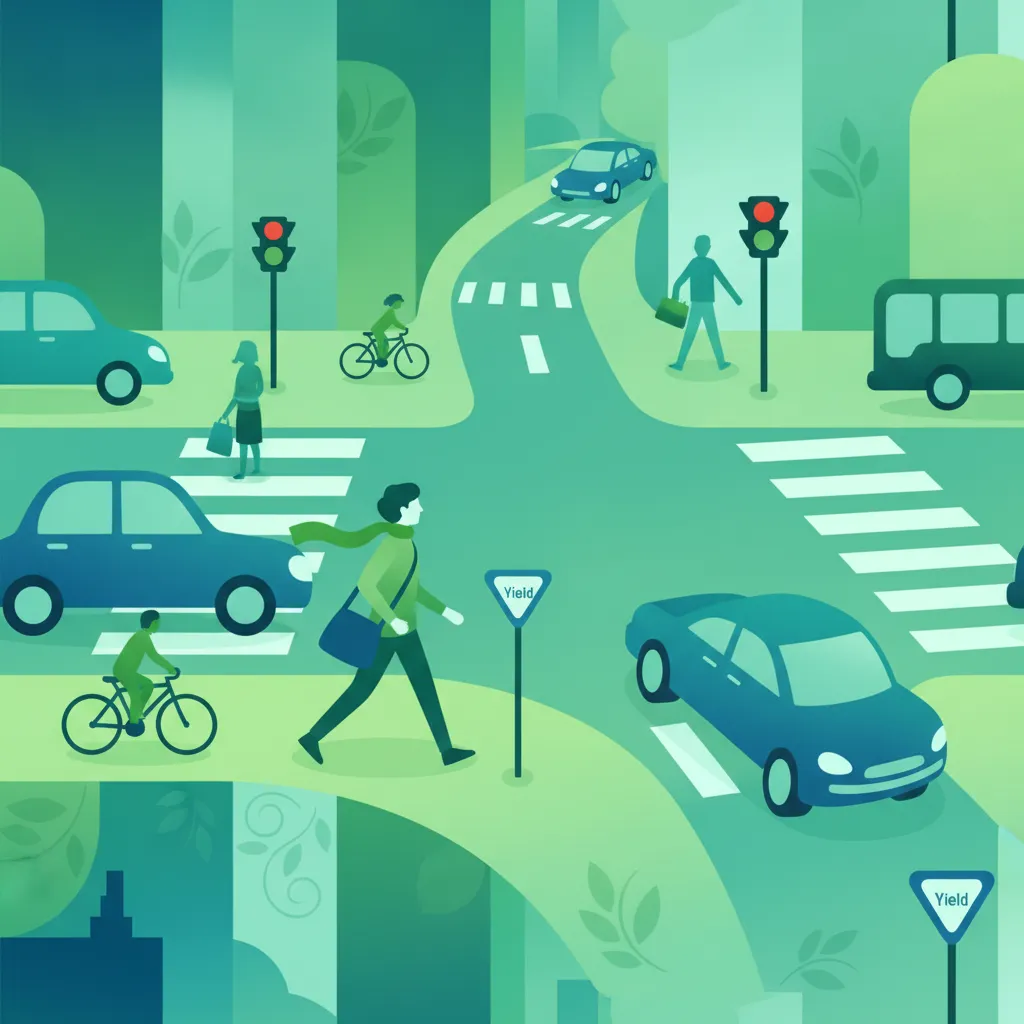
This lesson introduces the foundational concept of right-of-way ('Vorfahrt') in German traffic law. It explains the default priority rule, 'Rechts vor Links' (right before left), which applies at intersections without any regulating signs or signals. You will learn to identify situations where this rule applies and understand the basic principles of yielding to ensure safe passage at junctions.
This lesson covers the principles of effective route planning and the practical skills for navigating different types of junctions. It provides guidance on using navigation aids and understanding the specific challenges large vehicles face at roundabouts and complex intersections. Emphasis is placed on correct lane selection and positioning well in advance of a turn to execute the maneuver safely and without impeding other traffic.

This lesson provides a step-by-step guide to executing turns safely at intersections and other locations. It details the full observation sequence (mirrors, signal, blind spot check) required before initiating a turn. The lesson covers correct lane positioning for both left and right turns and explains the rules for performing U-turns or three-point turns where permitted.
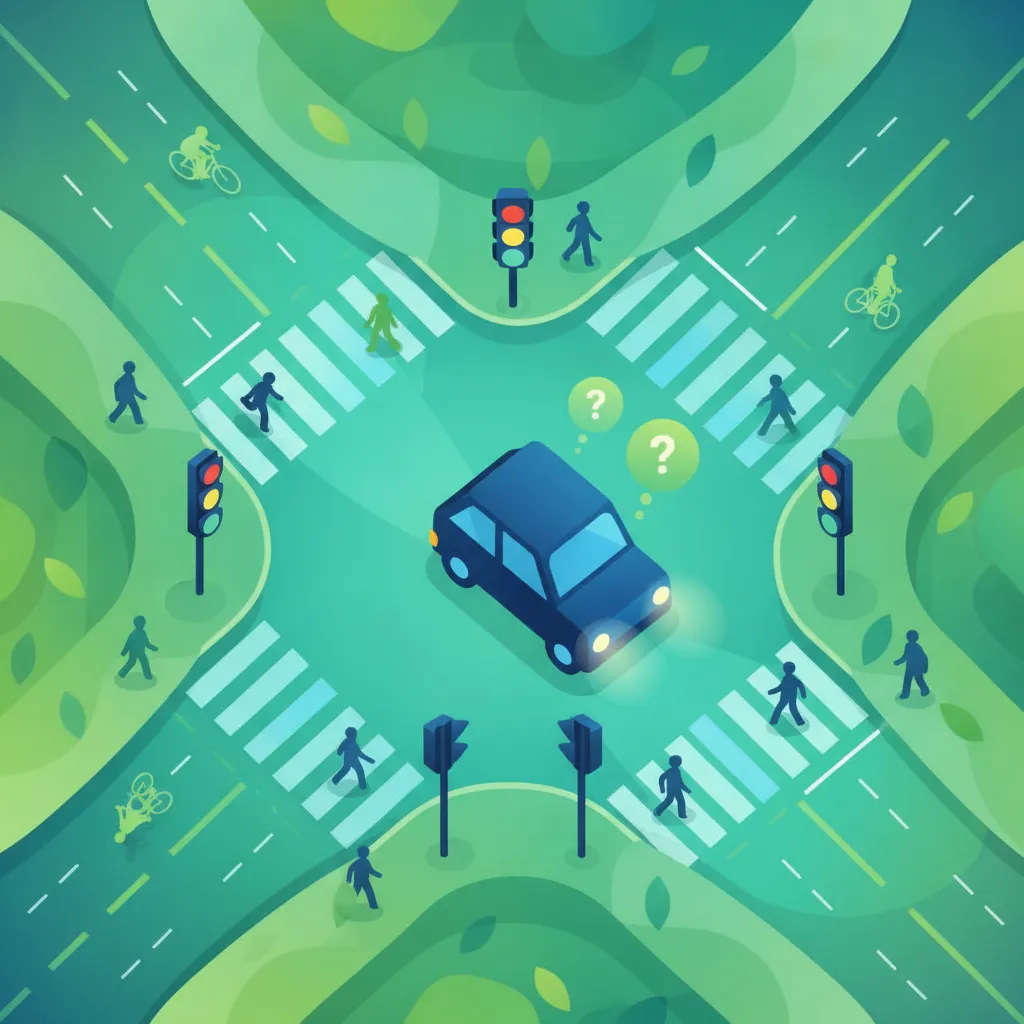
This lesson teaches a structured method for approaching any intersection. It covers identifying the type of junction, determining who has the right-of-way based on signs or rules, and performing thorough visual checks. The focus is on developing a safe and decisive approach to reduce risk in these high-conflict areas.
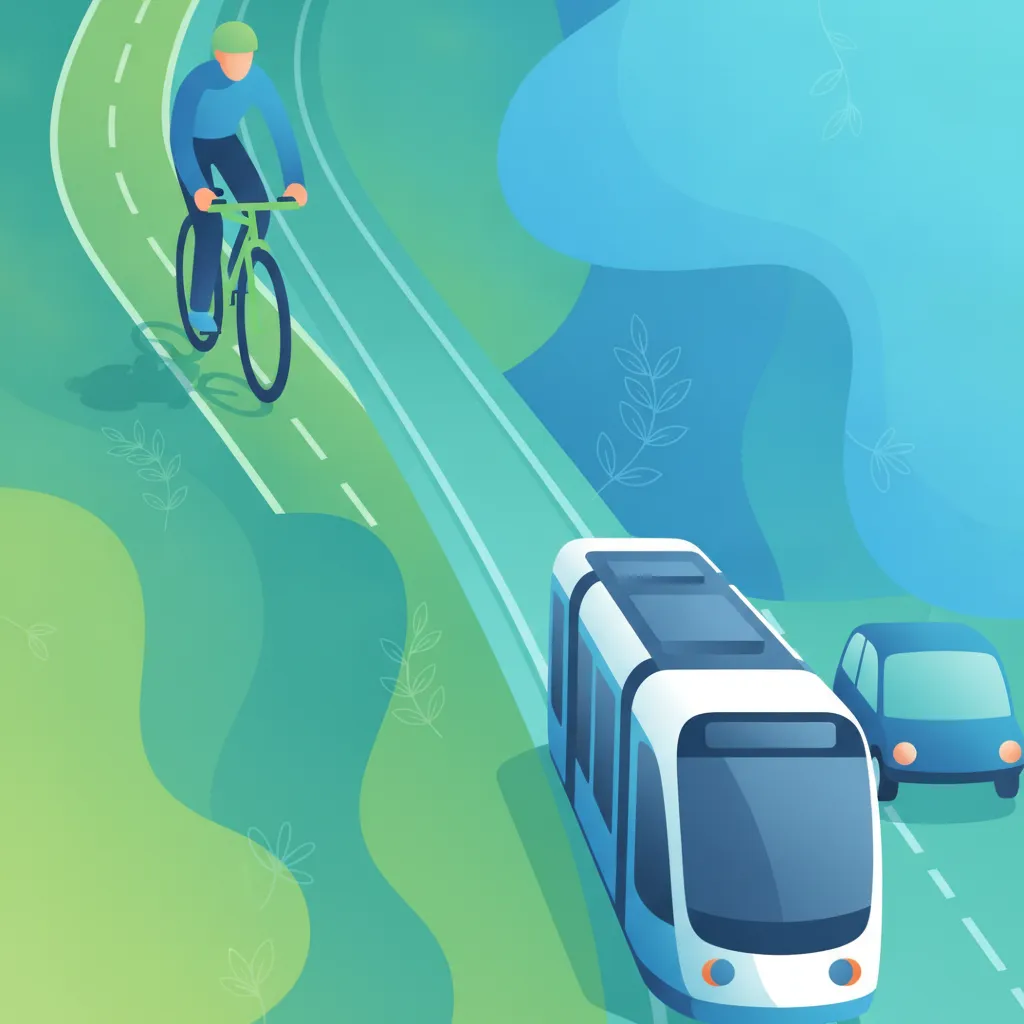
This lesson focuses on complex traffic environments where different types of road users share the same space. It provides guidance on situations like driving on streets with integrated tram tracks or where bus and bicycle lanes are part of the roadway. The content emphasizes understanding the specific priority rules and being extra vigilant to anticipate potential conflicts in these busy, shared zones.
This lesson details the safe approach and navigation of various intersection types, including those controlled by traffic lights, stop signs, and give-way signs. Emphasis is placed on comprehensive observation of traffic flow, establishing eye contact with other road users, and ensuring clear visibility before proceeding. The lesson also covers correct lane positioning for turning and the importance of anticipating pedestrian movements.
Explore practical applications of German priority rules and right-of-way regulations. This lesson uses scenarios to illustrate how to navigate junctions safely, interacting correctly with pedestrians, cyclists, and other vehicles according to the StVO.
This lesson provides specific guidance on how to safely share the road with pedestrians and cyclists, who are among the most vulnerable road users. It covers the rules of conduct at zebra crossings, traffic lights for pedestrians, and designated cycle lanes. The content emphasizes the importance of vigilance, yielding right-of-way, and maintaining a safe distance to prevent accidents in urban and rural environments.
This lesson introduces the foundational concept of right-of-way ('Vorfahrt') in German traffic law. It explains the default priority rule, 'Rechts vor Links' (right before left), which applies at intersections without any regulating signs or signals. You will learn to identify situations where this rule applies and understand the basic principles of yielding to ensure safe passage at junctions.
This lesson focuses on the right-of-way rules that heavy vehicles must follow when interacting with cyclists and pedestrians, particularly at intersections and crossings. It emphasizes the need for trucks to yield appropriately and maintain safe distances. The content also covers the interpretation of traffic signs governing priority in urban areas.
This lesson focuses on complex traffic environments where different types of road users share the same space. It provides guidance on situations like driving on streets with integrated tram tracks or where bus and bicycle lanes are part of the roadway. The content emphasizes understanding the specific priority rules and being extra vigilant to anticipate potential conflicts in these busy, shared zones.

This lesson focuses on the particular care required when driving near pedestrians, with a special emphasis on children and the elderly, whose behavior can be unpredictable. It covers the rules for yielding at zebra crossings and the importance of reducing speed near schools, playgrounds, and residential areas. The goal is to instill a habit of constant vigilance and readiness to stop.
This lesson focuses on the interaction between heavy vehicles and vulnerable road users at crossings, particularly when turning right. It covers the need for heightened vigilance, the importance of properly using mirrors, and correct signaling to alert others. The content highlights legal responsibilities and safe distance requirements to prevent accidents.
This lesson covers the correct and safe way to interact with cyclists. It explains the different types of bicycle infrastructure, such as dedicated cycle paths and advisory bike lanes on the road. Key topics include maintaining the legally required minimum passing distance, checking for cyclists before turning right, and being aware of the risk of 'dooring' when parked.
This lesson teaches riders how to interact safely and predictably with pedestrians, cyclists, and public transport vehicles. It highlights the importance of yielding at designated crossings, maintaining a safe passing distance, and anticipating the movements of buses and trams. The content emphasizes using eye contact and clear signaling to foster safe and respectful interactions with all road users.
This lesson provides a detailed guide to navigating various types of intersections safely and correctly. It explains how priority is determined by traffic signs (such as the priority road, yield, and stop signs) and traffic lights. The lesson also covers complex scenarios, including the rules for turning left across oncoming traffic, to ensure you can handle any junction with confidence.
This lesson addresses the critical skill of safely interacting with other road users, particularly vulnerable ones like pedestrians and cyclists. It covers rules for yielding at crosswalks, maintaining a safe passing distance, and being aware of the limited visibility of a moped to car drivers. The focus is on fostering a defensive and cooperative mindset in mixed traffic.
Find clear answers to common questions learners have about Priority Rules and Right-of-Way Regulations. Learn how the lesson is structured, which driving theory objectives it supports, and how it fits into the overall learning path of units and curriculum progression in Germany. These explanations help you understand key concepts, lesson flow, and exam focused study goals.
At intersections where there are no traffic signs or signals, the default rule is right-before-left (Rechts vor Links). This means vehicles coming from the right have priority unless otherwise indicated.
Yes, a stop sign requires you to come to a complete standstill, even if the road appears empty. You must ensure the intersection is clear before proceeding, regardless of your vehicle size.
Traffic already inside the roundabout has priority. You must yield to vehicles coming from your left before entering, unless signs indicate otherwise.
No, the right-before-left rule does not apply when exiting a driveway, a pedestrian zone, or a parking area. You must always yield to traffic on the main road when merging.
Begin your targeted revision now. Use our practice search to quickly find specific German driving theory questions. Filter by StVO rules, road signs, or hazard perception to create your focused study plan. Master challenging areas and prepare confidently for your theoretical driving test.