
This lesson covers the critical legal standards for maintaining heavy vehicles, including the mandatory TÜV periodic inspections. You will learn about the documentation of defects and your ongoing professional responsibility to ensure your vehicle remains roadworthy and safe for every journey.

Lesson content overview
Operating heavy vehicles on public roads demands unwavering adherence to stringent safety and environmental standards. In Germany, a comprehensive legal framework, primarily governed by the Straßenverkehrs-Zulassungs-Ordnung (StVZO), ensures that all vehicles, especially commercial ones, maintain a state of roadworthiness. This lesson delves into the critical criteria and mandatory procedures that guarantee heavy vehicles meet these legal and technical requirements, protecting all road users and the environment.
The core objective is to minimize risks associated with vehicle operation, uphold environmental standards, and ensure legal compliance. This understanding builds upon prior knowledge of vehicle construction and pre-drive inspection procedures, providing the foundation for safe load securing and overall professional heavy vehicle operation.
Roadworthiness refers to a vehicle's fitness for operation on public roads, meaning it meets all statutory requirements concerning safety, environmental protection, and technical condition. For heavy vehicles, this concept is paramount due to their size, weight, and potential impact on road safety.
The condition of a vehicle meeting all legal and technical requirements for safe and environmentally sound operation on public roads.
The rationale behind these strict regulations is multifaceted. Firstly, it significantly reduces the likelihood of mechanical failures that could lead to accidents, thereby enhancing collective safety. Secondly, it enforces adherence to environmental standards, crucial for minimizing emissions and promoting sustainable transport. Lastly, it ensures legal compliance, establishing accountability for vehicle owners and operators and providing a clear framework for enforcement. Without these measures, the risks posed by heavy vehicles would be substantially elevated.
A cornerstone of German vehicle roadworthiness is the Periodic Inspection, commonly known as the TÜV inspection (derived from the technical inspection associations like TÜV SÜD, TÜV Rheinland, etc., that conduct these checks). This is a mandatory, recurring examination designed to assess a vehicle’s technical condition, safety features, and compliance with emission standards throughout its service life.
A mandatory technical and emissions inspection for vehicles in Germany, conducted at legally defined intervals to ensure ongoing roadworthiness.
The primary purpose of the TÜV inspection is to verify that a heavy vehicle continues to meet the statutory standards for roadworthiness. This includes a thorough check of all safety-critical components, such as braking systems, steering, suspension, tires, lighting equipment, and chassis integrity. Emission limits are also strictly monitored to ensure environmental compliance. Any deficits identified must be corrected before a vehicle can be re-certified.
All newly registered heavy vehicles are subject to an initial inspection. This ensures that the vehicle, as manufactured or modified, complies with all German regulations before its first use on public roads. Subsequently, vehicles undergo regular inspections at prescribed intervals. For most heavy goods vehicles, these subsequent inspections are required every 12 months, though specific categories or vehicle types might have different schedules. Adhering to these intervals is non-negotiable, as operating a vehicle with an overdue inspection can lead to significant penalties and invalidation of the vehicle's operating permit.
During a TÜV inspection, technicians meticulously examine numerous aspects of the vehicle. These typically include:
Failure to pass any of these critical checks necessitates repairs, which must then be verified through a re-inspection to obtain certification.
Beyond the technical inspection, the Legal Registration and Inspection (STV) process is fundamental for operating a heavy vehicle in Germany. This is the formal procedure that registers a vehicle with the authorities, assigns it a legal identity, and verifies its roadworthiness through valid documentation.
The formal process of registering a vehicle in Germany, which includes proving its roadworthiness through valid inspection certificates and obtaining necessary documentation for legal operation.
The STV process establishes legal ownership, ensures compliance with all national regulations, and assigns accountability to the vehicle's owner and operator. Without proper registration and a current, valid TÜV certificate, a heavy vehicle cannot be lawfully operated on public roads in Germany. The vehicle registration certificate (Fahrzeugschein or Zulassungsbescheinigung Teil I) serves as the vehicle’s legal identification document and must always be carried when operating the vehicle.
Operating a heavy vehicle without proper registration and a valid inspection certificate in Germany is a serious offense, leading to substantial fines, points on the driver's license, and potential seizure of the vehicle.
Following a successful TÜV inspection, a safety certificate is issued. This official document confirms that the vehicle meets all legal safety standards and emission requirements at the time of inspection. For heavy vehicles, this is often accompanied by an inspection report detailing all checked items.
The official documentation confirming a vehicle has successfully passed the mandatory periodic inspection, certifying its compliance with legal roadworthiness standards.
This certificate is crucial for legal and insurance purposes. It provides incontrovertible proof of compliance, which is essential during traffic stops or in the event of an accident. The validity period of the certificate is clearly indicated, and renewal intervals are legally mandated. Typically, a sticker on the vehicle's license plate or windshield also visually indicates the next due date for inspection.
During any inspection, whether a periodic TÜV check or an ad-hoc roadside inspection, identified faults or maintenance needs are formally recorded. This documentation of defects is a critical step in maintaining continuous roadworthiness.
The systematic and formal recording of any faults, deficiencies, or maintenance requirements identified during a vehicle inspection.
The inspection report serves as a detailed record, establishing a clear timeline and responsibility for necessary repairs. Defects are often categorized by severity:
German regulations define specific periods within which identified defects must be corrected. Failure to rectify major or dangerous defects within the stipulated defect rectification deadline can lead to the invalidation of the safety certificate, rendering the vehicle illegal to operate. This strict approach ensures that safety is not compromised by delayed maintenance. Drivers and operators are legally obligated to ensure all identified faults are addressed promptly and professionally.
The legal foundation for heavy vehicle roadworthiness in Germany is primarily established by the Straßenverkehrs-Zulassungs-Ordnung (StVZO), which translates to Road Traffic Licensing Regulations. This comprehensive set of rules dictates the technical requirements for vehicles and their operation. While specific paragraph numbers within the StVZO can change or be updated, the principles remain consistent.
The blueprint mentions specific "Regulations" (Reg. 2, 3, 5, 10, 20). These are illustrative of the types of provisions found within the StVZO and related ordinances, covering various aspects of vehicle licensing and operation.
Adherence to these regulations is not merely a formality but a critical component of professional heavy vehicle operation, designed to prevent accidents and protect public safety and the environment.
Despite clear regulations, several common violations and misunderstandings arise regarding heavy vehicle roadworthiness. Awareness of these can help professional drivers and operators avoid legal penalties and ensure safety.
The assessment and maintenance of roadworthiness can be influenced by various operational contexts and environmental conditions.
Understanding the direct consequences of actions related to roadworthiness is crucial for heavy vehicle operators.
Let's consider practical examples to illustrate the application of roadworthiness criteria in everyday heavy vehicle operations.
A heavy truck, used for long-haul transport, is approaching its biennial TÜV inspection deadline. The fleet manager schedules the inspection well in advance. During the inspection, the technician identifies that the brake pads on the second axle are significantly worn, and one of the side markers is not illuminating. These are documented as major and minor defects, respectively. The safety certificate is issued, but with a clear note specifying the need for brake pad replacement within four weeks, followed by a re-inspection of the brakes. The driver ensures the repairs are completed promptly, and the vehicle passes its re-inspection, maintaining its valid safety certificate.
A commercial vehicle driver, busy with deliveries, overlooks the expiration date of their vehicle's TÜV certificate. Two weeks past the deadline, the vehicle is stopped during a routine heavy vehicle check by law enforcement. The absence of a valid, current certificate results in a substantial fine for the driver and the company. Furthermore, the vehicle is immediately deemed unroadworthy and prohibited from continuing its journey until a valid inspection and certification are obtained. The load must be transferred to another compliant vehicle, causing significant delays and costs.
During a routine pre-drive inspection, a driver notes a small chip in the windshield, outside the main field of vision. Assuming it's a minor, cosmetic issue, it is not formally documented or repaired. Over time, due to vibrations and temperature changes, the chip develops into a significant crack that now obstructs the driver's view and compromises the structural integrity of the windshield. During a subsequent TÜV inspection, this is identified as a dangerous defect. The vehicle immediately fails the inspection and is declared unroadworthy until the windshield is replaced, costing the company valuable operational time and unexpected expenses.
The rigorous framework of roadworthiness criteria and mandatory inspections for heavy vehicles in Germany is designed with a singular objective: to ensure the highest possible standards of safety for all road users and to minimize environmental impact. Compliance with legal registration, periodic TÜV inspections, adherence to emission limits, and prompt rectification of defects are not merely administrative tasks; they are essential responsibilities for every heavy vehicle operator. Understanding and actively adhering to these criteria is fundamental for operating legally, safely, and professionally on German roads.
This lesson covers the mandatory legal framework for heavy vehicle roadworthiness in Germany, governed primarily by the Straßenverkehrs-Zulassungs-Ordnung (StVZO). Heavy vehicles must undergo regular TÜV inspections at legally defined intervals to verify safety-critical systems, emissions compliance, and overall technical condition. The inspection process categorizes defects into minor, major, and dangerous tiers, each with specific consequences and rectification deadlines that operators must strictly observe. A valid safety certificate serves as legal proof of compliance and must always be carried during vehicle operation. Understanding these requirements is essential for passing the German theory exam and operating legally and professionally as a heavy vehicle driver.
A short set of high-value points that capture the most important learning from this lesson.
Roadworthiness under German law means a vehicle meets all statutory safety, environmental, and technical requirements for public road operation as defined by the StVZO.
The TÜV periodic inspection is mandatory for heavy vehicles, typically required annually, and verifies braking systems, steering, suspension, tires, lighting, emissions, and safety devices.
Defects identified during inspection are categorized by severity: minor defects allow continued operation with noted repairs, major defects require correction within a specified deadline, and dangerous defects immediately prohibit vehicle use.
A valid safety certificate and current TÜV sticker are legal proof of roadworthiness and must be carried during vehicle operation; operating without them is a serious offense.
Operators bear legal accountability for ensuring their vehicle remains roadworthy throughout its service life, not just at inspection time.
Explore all units and lessons included in this driving theory course.
TÜV inspection intervals for heavy goods vehicles are typically every 12 months and must be strictly observed, even short delays result in fines and invalidation.
Major defects must be rectified within the specified deadline (often four weeks) and verified through re-inspection before the safety certificate remains valid.
Dangerous defects such as critical brake failure or cracked windshield obstructing vision result in immediate prohibition from road use.
The Zulassungsbescheinigung Teil I is the mandatory vehicle registration document that must be carried whenever the vehicle is operated on public roads.
Environmental compliance including exhaust gas emissions testing is part of the mandatory periodic inspection for all heavy vehicles.
Believing a few days' delay on inspection renewal is acceptable, when even short overruns result in fines and legal prohibition from operation.
Underestimating minor defects like worn wiper blades or small windshield chips, which can develop into dangerous defects or major compliance issues if not documented and repaired.
Assuming temporary or export registration plates substitute for a valid TÜV safety certificate for regular commercial operation.
Driving with a known major defect pending repair, particularly after the defect rectification deadline has passed, which invalidates the safety certificate.
Not carrying the inspection documentation or registration certificate during vehicle operation, leading to penalties even if the vehicle is otherwise compliant.
Lesson content overview
A short set of high-value points that capture the most important learning from this lesson.
Roadworthiness under German law means a vehicle meets all statutory safety, environmental, and technical requirements for public road operation as defined by the StVZO.
The TÜV periodic inspection is mandatory for heavy vehicles, typically required annually, and verifies braking systems, steering, suspension, tires, lighting, emissions, and safety devices.
Defects identified during inspection are categorized by severity: minor defects allow continued operation with noted repairs, major defects require correction within a specified deadline, and dangerous defects immediately prohibit vehicle use.
A valid safety certificate and current TÜV sticker are legal proof of roadworthiness and must be carried during vehicle operation; operating without them is a serious offense.
Operators bear legal accountability for ensuring their vehicle remains roadworthy throughout its service life, not just at inspection time.
Explore all units and lessons included in this driving theory course.
TÜV inspection intervals for heavy goods vehicles are typically every 12 months and must be strictly observed, even short delays result in fines and invalidation.
Major defects must be rectified within the specified deadline (often four weeks) and verified through re-inspection before the safety certificate remains valid.
Dangerous defects such as critical brake failure or cracked windshield obstructing vision result in immediate prohibition from road use.
The Zulassungsbescheinigung Teil I is the mandatory vehicle registration document that must be carried whenever the vehicle is operated on public roads.
Environmental compliance including exhaust gas emissions testing is part of the mandatory periodic inspection for all heavy vehicles.
Believing a few days' delay on inspection renewal is acceptable, when even short overruns result in fines and legal prohibition from operation.
Underestimating minor defects like worn wiper blades or small windshield chips, which can develop into dangerous defects or major compliance issues if not documented and repaired.
Assuming temporary or export registration plates substitute for a valid TÜV safety certificate for regular commercial operation.
Driving with a known major defect pending repair, particularly after the defect rectification deadline has passed, which invalidates the safety certificate.
Not carrying the inspection documentation or registration certificate during vehicle operation, leading to penalties even if the vehicle is otherwise compliant.
Explore search topics learners often look for when studying Serviceability and Roadworthiness Criteria. These topics reflect common questions about road rules, driving situations, safety guidance, and lesson level theory preparation for learners in Germany.
Browse additional driving theory lessons that cover connected traffic rules, road signs, and common driving situations related to this topic. Improve your understanding of how different rules interact across everyday traffic scenarios.
Explore the legal framework governing vehicle roadworthiness in Germany. Understand mandatory inspection intervals, safety certificate standards, and the legal obligations for reporting and repairing defects for C class vehicles.

This lesson explains the legal framework for ensuring a passenger vehicle's roadworthiness, focusing on periodic technical inspections (TÜV) and scheduled maintenance. It identifies critical wear components, such as brakes and tires, that require regular monitoring and replacement. The importance of adhering to service intervals and maintaining accurate maintenance logs for regulatory compliance is also thoroughly covered.

This lesson explores the legal framework governing heavy vehicle operation in Germany, focusing on the Straßenverkehrs-Ordnung (StVO) and specific commercial transport regulations. It details the professional duty of care required from drivers, including responsibilities for vehicle inspection and documentation. You will understand the enforcement mechanisms and potential penalties for non-compliance.

This lesson provides a systematic approach to pre-drive inspection, outlining a comprehensive checklist to verify fluid levels, brake functionality, and tyre condition. It emphasizes the importance of checking lighting, mirror adjustments, and load securement before every journey. The content highlights safety protocols to ensure the vehicle is roadworthy.

This lesson covers the dimensional limits for heavy vehicles, focusing on height, width, and length restrictions. It explains how to interpret clearance signage for bridges, tunnels, and overhead obstacles, and discusses the implications for route planning. The content also addresses the importance of understanding turning radii and swept paths to avoid collisions.

This lesson introduces the fundamental structural components of heavy vehicles, focusing on the frame and chassis design. It explains the role of different suspension types, such as leaf springs and air suspension, in load distribution and ride comfort. The content also discusses how chassis rigidity and material fatigue affect vehicle safety and longevity.

This lesson examines the specific height, width, and length constraints that affect heavy vehicle operation, including bridge and tunnel clearances. It discusses how to interpret and comply with traffic signs indicating dimensional limits and the consequences of violating these restrictions. The content also covers practical strategies for route planning to avoid restricted areas.
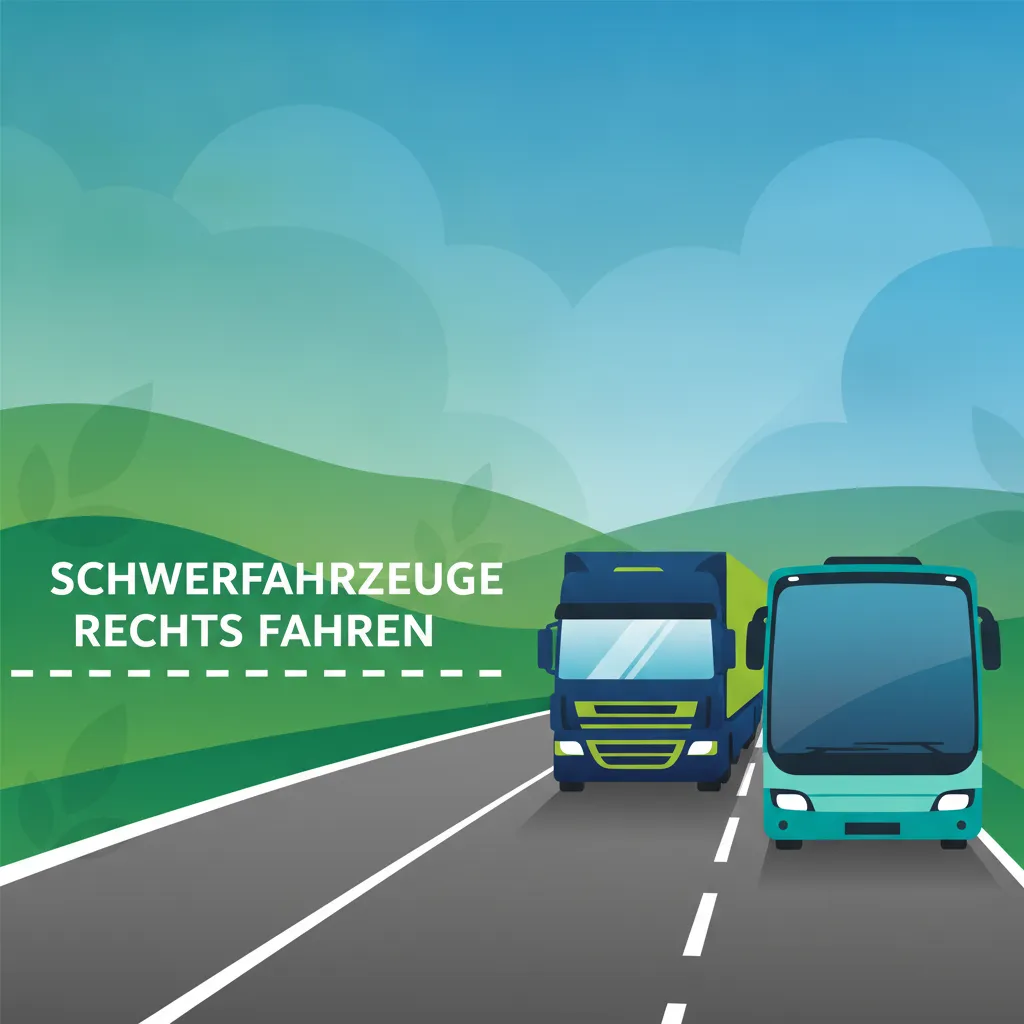
This lesson explains the specific regulations for operating heavy vehicles on Autobahnen, including speed limits, lane discipline, and overtaking rules. It discusses the use of dedicated truck lanes and the importance of maintaining appropriate following distances. The content also covers procedures for merging and exiting high-speed roads safely.

This lesson covers the lighting and reflector requirements for heavy vehicles, including headlamps, side markers, and brake lights. It explains the function of these systems and the necessity of underrun protection to safeguard other road users. The content also discusses regulations governing lighting systems and their importance for safety in all conditions.
This lesson outlines the driver's legal responsibility to ensure their vehicle is in a safe and roadworthy condition before every journey. It covers essential pre-drive checks, such as verifying lights, tyres, and fluid levels (oil, coolant, washer fluid). The lesson also explains the mandatory equipment that must be carried in the vehicle, including a warning triangle, high-visibility vest, and first-aid kit.
Delve into the detailed standards for vehicle maintenance and safety inspections relevant to heavy goods vehicles. This covers emission controls, safety device requirements, and the technical criteria for maintaining roadworthiness.
This lesson provides a systematic approach to pre-drive inspection, outlining a comprehensive checklist to verify fluid levels, brake functionality, and tyre condition. It emphasizes the importance of checking lighting, mirror adjustments, and load securement before every journey. The content highlights safety protocols to ensure the vehicle is roadworthy.
This lesson outlines the driver's legal responsibility to ensure their vehicle is in a safe and roadworthy condition before every journey. It covers essential pre-drive checks, such as verifying lights, tyres, and fluid levels (oil, coolant, washer fluid). The lesson also explains the mandatory equipment that must be carried in the vehicle, including a warning triangle, high-visibility vest, and first-aid kit.
This lesson explains the specific regulations for operating heavy vehicles on Autobahnen, including speed limits, lane discipline, and overtaking rules. It discusses the use of dedicated truck lanes and the importance of maintaining appropriate following distances. The content also covers procedures for merging and exiting high-speed roads safely.
This lesson explains the legal framework for ensuring a passenger vehicle's roadworthiness, focusing on periodic technical inspections (TÜV) and scheduled maintenance. It identifies critical wear components, such as brakes and tires, that require regular monitoring and replacement. The importance of adhering to service intervals and maintaining accurate maintenance logs for regulatory compliance is also thoroughly covered.
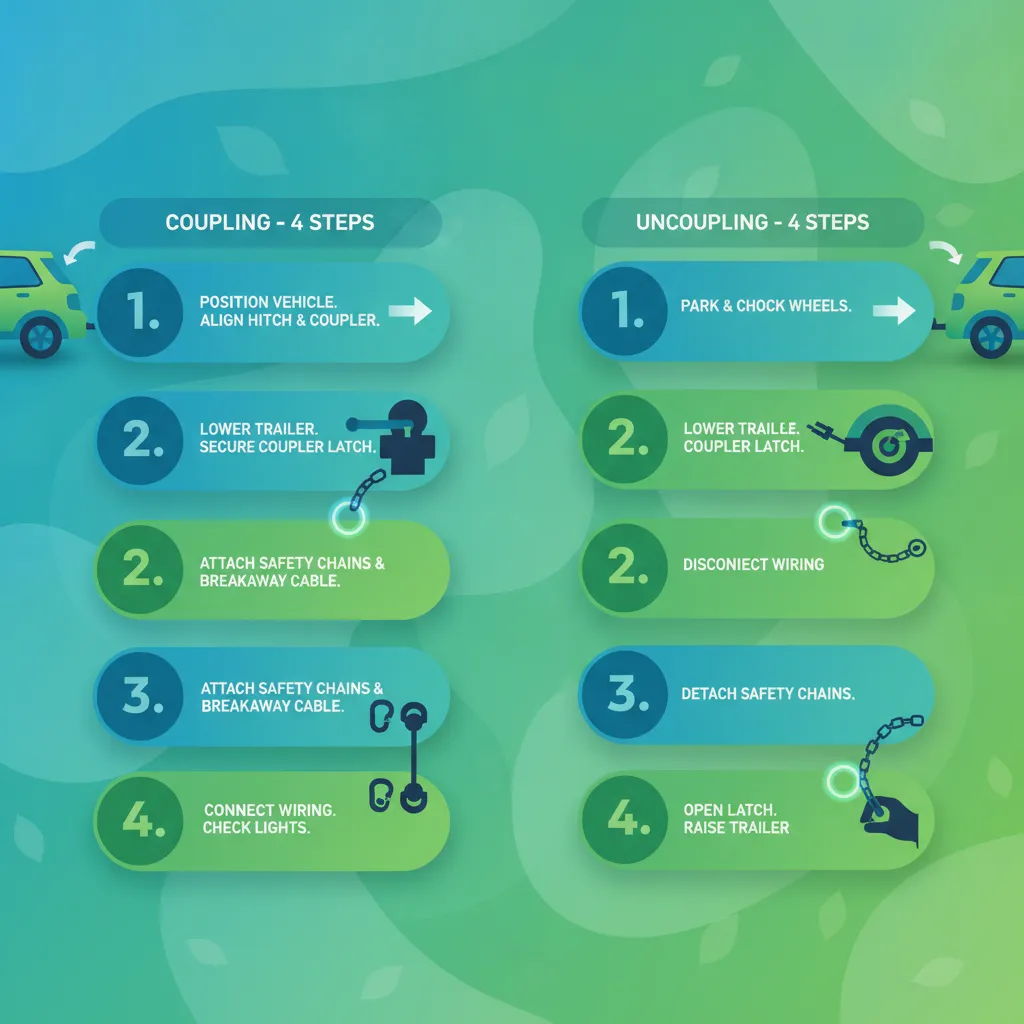
This lesson outlines the standard procedure for coupling and uncoupling trailers, emphasizing safety checks such as verifying the lock, hand brake, and brake connections. It discusses the importance of wheel chocks and correct alignment of the tow vehicle. The content includes a visual inspection checklist to ensure a secure connection.
This lesson covers the dimensional limits for heavy vehicles, focusing on height, width, and length restrictions. It explains how to interpret clearance signage for bridges, tunnels, and overhead obstacles, and discusses the implications for route planning. The content also addresses the importance of understanding turning radii and swept paths to avoid collisions.
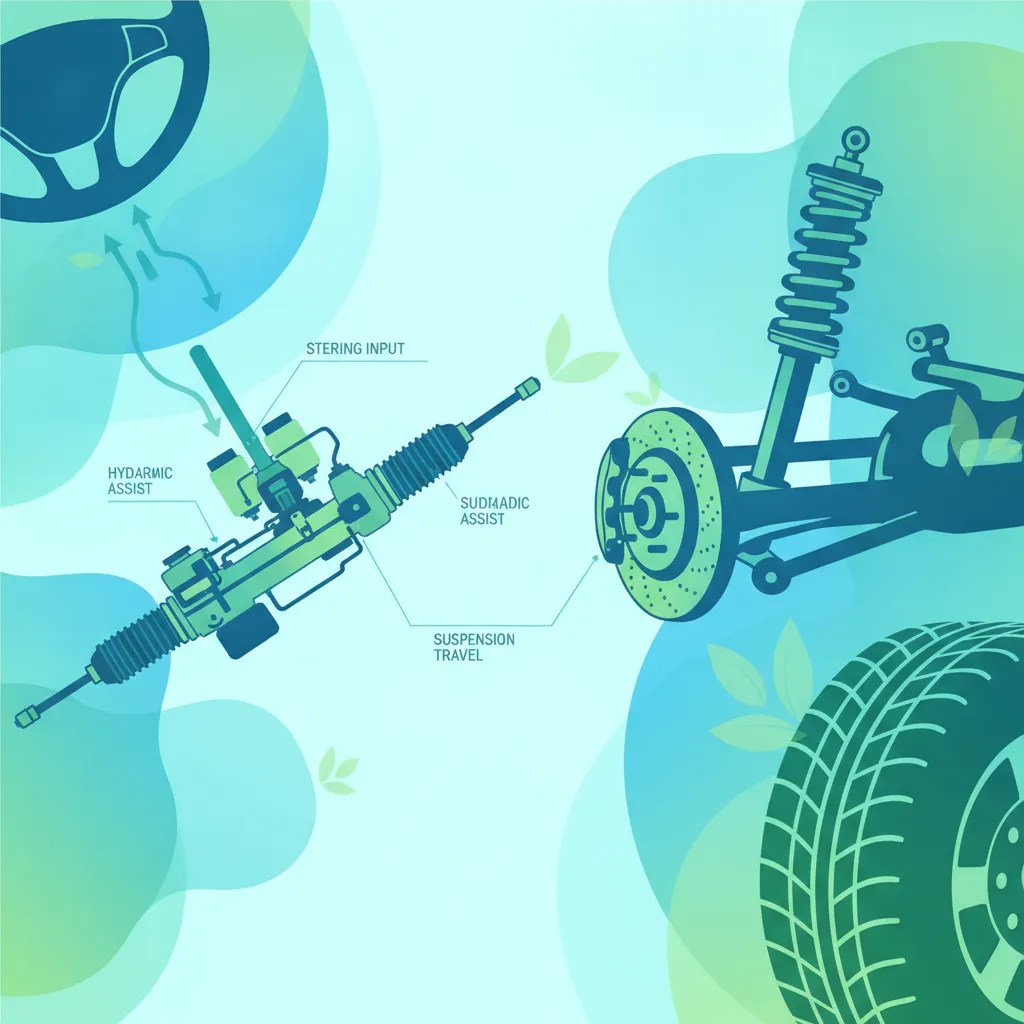
This lesson examines the steering mechanisms in heavy vehicles, including power-assisted systems, and their impact on handling. It also covers tyre technology, focusing on selection, pressure, load rating, and the importance of proper tyre maintenance. The content highlights how suspension components contribute to vehicle stability and control.
This lesson covers the lighting and reflector requirements for heavy vehicles, including headlamps, side markers, and brake lights. It explains the function of these systems and the necessity of underrun protection to safeguard other road users. The content also discusses regulations governing lighting systems and their importance for safety in all conditions.
This lesson explores the legal framework governing heavy vehicle operation in Germany, focusing on the Straßenverkehrs-Ordnung (StVO) and specific commercial transport regulations. It details the professional duty of care required from drivers, including responsibilities for vehicle inspection and documentation. You will understand the enforcement mechanisms and potential penalties for non-compliance.

This lesson teaches the systematic pre-trip inspection routine that every professional driver must perform. It covers a comprehensive checklist of visual and functional checks, including lights, tires, mirrors, and wipers. The lesson also emphasizes verifying the presence and condition of mandatory safety equipment, such as emergency exits, the fire extinguisher, and the first-aid kit, to ensure the vehicle is safe to operate.
Find clear answers to common questions learners have about Serviceability and Roadworthiness Criteria. Learn how the lesson is structured, which driving theory objectives it supports, and how it fits into the overall learning path of units and curriculum progression in Germany. These explanations help you understand key concepts, lesson flow, and exam focused study goals.
If a vehicle fails its inspection, the defects must be repaired, and a follow-up inspection is usually required. As a professional driver, operating a vehicle with a failed or expired inspection is a serious traffic violation with legal consequences.
Heavy vehicles are subject to strict mandatory inspection intervals determined by their category and age. You must ensure the vehicle is inspected as per the current German road traffic licensing regulations.
Yes, as a professional driver, you are responsible for performing pre-departure checks and ensuring the vehicle is roadworthy before starting your journey, regardless of the owner's maintenance schedule.
If you detect a defect that affects safety, you must report it immediately according to your company procedures and not operate the vehicle until the issue is addressed and cleared by a qualified person.
Begin your targeted revision now. Use our practice search to quickly find specific German driving theory questions. Filter by StVO rules, road signs, or hazard perception to create your focused study plan. Master challenging areas and prepare confidently for your theoretical driving test.