
This lesson clarifies the precise legal and technical boundaries between AM-class vehicles and higher-category motorcycles. Understanding these distinctions is crucial for identifying which vehicles you are permitted to ride and helps prevent errors in your German theory exam.

Lesson content overview
In Germany, the legal operation of motorized two-wheeled (and some three/four-wheeled) vehicles is strictly governed by a system of driving licence categories. This system classifies vehicles primarily based on their technical specifications, such as engine capacity, power output, and maximum design speed. Understanding these classifications is crucial for every rider, as it dictates what vehicles you are legally allowed to operate, the training you must undertake, and the specific road rules you must follow.
This lesson specifically focuses on differentiating vehicles in the AM licence category from motorcycles requiring higher licence categories, namely A1, A2, and A. While all these categories involve motor-powered vehicles, their capabilities, intended uses, and the responsibilities of their riders vary significantly. Grasping these distinctions ensures not only legal compliance but also enhances safety by preventing the misuse of vehicles beyond a rider's qualified experience.
The AM licence category, often referred to as the moped or scooter licence, is designed for light motorized vehicles that offer accessible mobility, particularly for younger or less experienced riders. These vehicles are characterized by their limited power and speed, making them suitable for urban environments and shorter commutes. Despite their smaller size and lower performance, AM vehicles are still subject to specific regulations to ensure road safety.
Vehicles in the AM category are defined by strict technical limits. Their maximum design speed must not exceed 45 kilometers per hour (km/h). For petrol-powered vehicles, the engine capacity is limited to 50 cubic centimeters (cm³). Electric motor vehicles falling under the AM category are restricted to a maximum continuous rated power of 4 kilowatts (kW). Additionally, these vehicles, when three- or four-wheeled (light quadricycles), have an unladen mass limit of 350 kilograms, excluding the mass of batteries for electric models.
These precise specifications are enshrined in German law, notably the Straßenverkehrs-Zulassungs-Ordnung (StVZO), or Road Traffic Licensing Regulations. Adhering to these limits is fundamental, as any modification that increases speed or power beyond these thresholds would reclassify the vehicle, rendering your AM licence invalid for its operation. Such modifications can lead to severe legal consequences, including fines, licence points, and even loss of insurance coverage.
AM vehicles are primarily intended for short-distance travel within built-up areas and on rural roads where higher speeds are not required or permitted. Their limited speed and compact size make them agile in city traffic and relatively easy to park. They are often chosen by individuals seeking an economical and efficient mode of transport for daily commuting, running errands, or leisure rides around town.
Due to their design limitations, AM vehicles are well-suited for beginners and offer a gentle introduction to motorized two-wheeled transport. They provide a stepping stone for potential future riders who may later pursue higher motorcycle licence categories. The lower speeds naturally reduce the severity of potential accidents, contributing to a safer environment for novice riders and other road users.
A frequent misunderstanding among AM riders, particularly those new to road traffic, is confusing the capabilities of their vehicles with those of more powerful motorcycles. For example, some may incorrectly assume that an AM-class moped can travel on motorways (Autobahnen) or high-speed expressways (Schnellstraßen). This is a critical error, as AM vehicles are explicitly prohibited from such roads due to their inability to reach the minimum required speed of 60 km/h and the significant safety risk this would pose.
Another common misconception is that certain modifications, such as 'tuning' the engine to exceed the 45 km/h design speed, are harmless. Not only is this illegal and dangerous, but it also fundamentally changes the vehicle's classification. Operating a modified AM vehicle without the appropriate higher licence category (e.g., A1, A2, or A) is considered driving without a licence, which carries severe penalties, including potential criminal charges and significant insurance problems in the event of an accident.
Beyond the AM category lie the A1, A2, and A licence categories, which permit the operation of progressively more powerful and faster motorcycles. These categories cater to riders who desire greater performance, range, and versatility from their vehicles. Each category has its own specific set of technical limits and age requirements, reflecting the increased skill and experience needed to safely operate these machines.
These increasing technical specifications mean that A1, A2, and A motorcycles are capable of much higher speeds and greater acceleration than AM vehicles. They are designed for a broader range of road conditions and longer journeys, including highway travel.
Higher-category motorcycles offer significantly more performance and are thus suitable for a wider array of travel needs. A1 motorcycles, while still relatively light, can comfortably handle higher speeds and longer distances than AM vehicles, making them popular for commutes that involve faster roads. A2 motorcycles offer a substantial increase in power, enabling riders to confidently navigate country roads, urban traffic, and even motorways.
The unrestricted A category motorcycles are built for ultimate performance and versatility. They are used for long-distance touring, sport riding, and general transportation across all types of roads, including high-speed highways. Riders of these categories benefit from enhanced acceleration and braking capabilities, which, when properly managed, contribute to dynamic and safe riding in varied traffic situations.
It is crucial to understand that an AM driving licence only qualifies you to operate vehicles within the strict limits of the AM category. It does not grant permission to ride any motorcycle classified under A1, A2, or A. The technical specifications of these higher-category motorcycles far exceed those of AM vehicles, demanding different handling skills, greater awareness of speed and acceleration, and more advanced traffic knowledge.
Attempting to ride an A1, A2, or A motorcycle with only an AM licence is considered driving without a valid licence, a serious offence in Germany. This can lead to heavy fines, points on your driving record, a ban from obtaining any driving licence for a certain period, and even criminal prosecution. Moreover, in the event of an accident, your insurance coverage would be void, leaving you personally liable for all damages, which can be financially ruinous.
The German driving licence system is structured to ensure that riders possess the necessary skills and knowledge for the specific class of vehicle they intend to operate. Consequently, the training and examination requirements for the AM category are less extensive than those for the higher motorcycle categories, reflecting the lower risk profile of AM vehicles.
To obtain an AM licence, applicants must undergo both theoretical and practical training. The minimum requirement typically includes:
The training emphasizes foundational road safety, understanding traffic signs relevant to slower vehicles, and basic control of the AM vehicle. The relatively straightforward nature of these vehicles allows for a more streamlined training process compared to powerful motorcycles.
For higher motorcycle categories, the training is significantly more comprehensive and demanding.
For those upgrading from AM to A1, or A1 to A2, or A2 to A, there might be reduced theoretical training requirements or direct progression paths depending on the duration of holding the previous licence. However, practical training and examination for the new category are always necessary.
The minimum age for obtaining an AM licence in Germany is 15 years. This allows young people to gain early experience with motorized transport in a controlled, low-speed environment. For higher categories, the age requirements are progressively higher:
This age progression ensures that riders gain experience and maturity commensurate with the increasing power and responsibility associated with each motorcycle category.
Understanding where each vehicle category is permitted to travel is critical for legal compliance and safety. German road regulations, primarily the Straßenverkehrs-Ordnung (StVO), or Road Traffic Regulations, impose distinct restrictions based on vehicle type and design speed.
AM-class vehicles, due to their maximum design speed of 45 km/h, are subject to significant road usage restrictions. They are strictly prohibited from:
AM vehicles are generally permitted on urban and suburban roads, provided the posted speed limit does not exceed 50 km/h. They must utilize the main carriageway and not cycle paths, unless specifically indicated by appropriate signage. They must also yield to faster traffic and operate safely within the flow of traffic.
Motorcycles in the A1, A2, and A categories, being capable of higher speeds, face far fewer road usage restrictions. They are permitted on virtually all public roads in Germany, including:
This broader access reflects their design for higher speeds and longer distances, allowing riders to travel efficiently and cover greater distances across the country. However, riders must always be mindful of specific local speed limits and conditions.
While AM vehicles have a maximum design speed of 45 km/h, they must always adhere to the posted speed limits on any given road. If a road has a speed limit of 30 km/h, an AM vehicle must not exceed 30 km/h, even though its design speed is higher. The same principle applies to higher-category motorcycles: while they can go much faster, they must strictly obey all traffic signs and general speed limits (e.g., 50 km/h in built-up areas, 100 km/h outside built-up areas unless otherwise signposted, unlimited on certain sections of Autobahn).
Failing to comply with speed limits, regardless of vehicle type, can lead to fines, licence points, and even licence suspension. Speed enforcement is rigorous in Germany, and all riders are expected to be fully aware of the applicable regulations.
The foundation of safe and legal road use for all motorized vehicles in Germany is laid out in various laws and regulations, primarily the Straßenverkehrs-Ordnung (StVO) for traffic rules and the Straßenverkehrs-Zulassungs-Ordnung (StVZO) for vehicle technical requirements.
For AM vehicles, the core regulations revolve around their limited capabilities:
These limits are crucial for distinguishing AM vehicles from other classes and for ensuring they are operated by appropriately trained individuals, typically younger or less experienced riders.
Light quadricycles, which fall under the AM category, also have specific weight regulations. Their unladen mass must not exceed 350 kg. For electric versions, the mass of the batteries is not included in this calculation. These weight limits, along with general construction requirements (e.g., lights, brakes, mirrors, horn), are designed to ensure the basic safety and roadworthiness of the vehicle. All AM vehicles must pass a type approval process and conform to European Union and German national standards.
The fundamental rule is that every driver or rider of a motorized vehicle must possess a valid driving licence for that specific vehicle category.
Law enforcement agencies regularly check for valid licences. Driving without the correct licence is a severe offense that can lead to substantial fines, revocation of driving privileges, and criminal charges under § 21 of the Straßenverkehrsgesetz (StVG), the Road Traffic Act. Furthermore, insurance coverage is typically void if the rider is operating the vehicle without a valid licence.
Ignorance of the law is not an excuse. Riders of AM vehicles and higher-category motorcycles alike must be acutely aware of potential violations and their associated consequences. Many common infringements stem from misunderstanding the distinctions between vehicle categories.
One of the most frequent violations involving AM vehicles is exceeding the 45 km/h maximum design speed. This can happen through:
Using an AM vehicle on a motorway (Autobahn) or an expressway (Kraftfahrstraße) is strictly forbidden. These roads are designed for vehicles capable of higher speeds, and slow-moving AM vehicles create extreme hazards.
A common mistake is assuming an AM licence permits riding a 125 cc (A1) motorcycle. This is incorrect.
All vehicles have specific weight limits for passengers and cargo. Overloading an AM vehicle can severely affect its handling, braking performance, and stability, increasing the risk of accidents.
The inherent differences in technical capabilities between AM vehicles and higher-category motorcycles translate directly into varying safety considerations and operational practices. Riders must adapt their behavior to the specific vehicle they are operating and the conditions they encounter.
The lower speed and power of AM vehicles inherently reduce certain risks:
Conversely, higher-category motorcycles, with their greater speed and power, demand advanced riding skills:
For all vehicle types, adapting to prevailing road conditions is paramount.
Understanding the theory is vital, but applying it to real-world driving situations solidifies learning. Here are a few scenarios that highlight the distinctions discussed.
An individual with an AM licence is riding an electric scooter (rated 3 kW, max speed 45 km/h) through a bustling German city center. They approach a street with a posted speed limit of 30 km/h.
A rider with an AM licence on a 49 cm³ moped (max speed 45 km/h) accidentally takes a turn that leads directly to a motorway entrance ramp.
A young rider who holds an AM licence wants to ride a friend's new 125 cc scooter, which is classified as an A1 vehicle.
Understanding the distinctions between AM-class vehicles and higher-category motorcycles (A1, A2, A) is paramount for safe, legal, and responsible participation in German road traffic. AM vehicles are light, slow-speed options, ideal for urban use, restricted to a maximum design speed of 45 km/h, and an engine capacity of 50 cm³ (petrol) or 4 kW (electric), with specific weight limits for quadricycles. They are strictly prohibited from motorways (Autobahnen) and expressways (Kraftfahrstraßen) and require a dedicated AM driving licence obtained through specific theoretical and practical training.
Higher-category motorcycles offer progressively greater speed and power, suitable for diverse road conditions and longer journeys, including highway travel. They demand more extensive training, higher age requirements, and specific A1, A2, or A licences. Any unauthorized modifications to an AM vehicle that increase its speed or power, or operating a higher-category motorcycle with only an AM licence, constitutes a serious legal offense with significant penalties, including fines, licence points, and potential criminal charges. Always adhere to your licence category, respect vehicle specifications, and prioritize safety on the road.
The German motorcycle licence system classifies vehicles into four main categories (AM, A1, A2, A) based on engine capacity, power output, and design speed, with AM covering mopeds and light quadricycles limited to 45 km/h and 50 cm³. Each category requires a separate licence with progressively more demanding training and higher minimum ages (15, 16, 18, and 20/24 respectively). AM vehicles are restricted from motorways and expressways due to their inability to meet the 60 km/h minimum speed requirement. Violations include riding without the correct licence category, illegal modifications, and unauthorized road access, all carrying substantial fines, points, potential criminal charges, and insurance invalidation. Understanding these precise boundaries is essential for both legal compliance and road safety.
A short set of high-value points that capture the most important learning from this lesson.
AM vehicles are strictly limited to 45 km/h design speed, 50 cm³ petrol engine (or 4 kW electric), and are prohibited from Autobahnen and expressways.
A1, A2, and A categories represent progressively more powerful motorcycles with increasing speed capabilities and broader road access.
Riding a vehicle that exceeds your licence category is driving without a valid licence under German law, carrying severe criminal penalties.
Any modification to an AM vehicle that pushes it beyond its 45 km/h design speed reclassifies it, invalidating your AM licence for that vehicle.
Age requirements increase with each category: AM at 15, A1 at 16, A2 at 18, and A at 20 or 24 years.
Explore all units and lessons included in this driving theory course.
AM licence never covers A1 (125 cm³), A2 (35 kW), or A (unrestricted) motorcycles regardless of vehicle appearance.
AM vehicles must obey all posted speed limits even if below their 45 km/h design maximum.
Light quadricycles under AM have a 350 kg unladen mass limit, excluding battery weight for electric models.
The A2 power-to-weight ratio limit is 0.2 kW/kg, and motorcycles cannot be restricted down from more than double their rated power.
Driving an AM vehicle on a motorway or after illegal tuning voids insurance coverage and constitutes a criminal offence.
Assuming an AM licence permits riding any scooter or small motorcycle, not realizing A1 requires a separate licence for 125 cm³ vehicles.
Believing that tuning an AM vehicle to exceed 45 km/h is a minor infraction rather than a reclassification that makes it illegal to ride without a higher licence.
Disregarding posted speed limits below 45 km/h because the vehicle is capable of faster speeds.
Attempting to use cycle paths with an AM vehicle without checking for specific signage permitting motorized vehicles.
Confusing design speed (vehicle capability) with legal speed limits, which are always the enforceable maximum.
Lesson content overview
A short set of high-value points that capture the most important learning from this lesson.
AM vehicles are strictly limited to 45 km/h design speed, 50 cm³ petrol engine (or 4 kW electric), and are prohibited from Autobahnen and expressways.
A1, A2, and A categories represent progressively more powerful motorcycles with increasing speed capabilities and broader road access.
Riding a vehicle that exceeds your licence category is driving without a valid licence under German law, carrying severe criminal penalties.
Any modification to an AM vehicle that pushes it beyond its 45 km/h design speed reclassifies it, invalidating your AM licence for that vehicle.
Age requirements increase with each category: AM at 15, A1 at 16, A2 at 18, and A at 20 or 24 years.
Explore all units and lessons included in this driving theory course.
AM licence never covers A1 (125 cm³), A2 (35 kW), or A (unrestricted) motorcycles regardless of vehicle appearance.
AM vehicles must obey all posted speed limits even if below their 45 km/h design maximum.
Light quadricycles under AM have a 350 kg unladen mass limit, excluding battery weight for electric models.
The A2 power-to-weight ratio limit is 0.2 kW/kg, and motorcycles cannot be restricted down from more than double their rated power.
Driving an AM vehicle on a motorway or after illegal tuning voids insurance coverage and constitutes a criminal offence.
Assuming an AM licence permits riding any scooter or small motorcycle, not realizing A1 requires a separate licence for 125 cm³ vehicles.
Believing that tuning an AM vehicle to exceed 45 km/h is a minor infraction rather than a reclassification that makes it illegal to ride without a higher licence.
Disregarding posted speed limits below 45 km/h because the vehicle is capable of faster speeds.
Attempting to use cycle paths with an AM vehicle without checking for specific signage permitting motorized vehicles.
Confusing design speed (vehicle capability) with legal speed limits, which are always the enforceable maximum.
Explore search topics learners often look for when studying Distinctions Between AM Vehicles and Other Motorcycles. These topics reflect common questions about road rules, driving situations, safety guidance, and lesson level theory preparation for learners in Germany.
Browse additional driving theory lessons that cover connected traffic rules, road signs, and common driving situations related to this topic. Improve your understanding of how different rules interact across everyday traffic scenarios.
Understand the precise technical differences, including engine size, speed limits, and road access, between vehicles in the AM licence category and higher motorcycle classes (A1, A2, A) according to German traffic regulations.
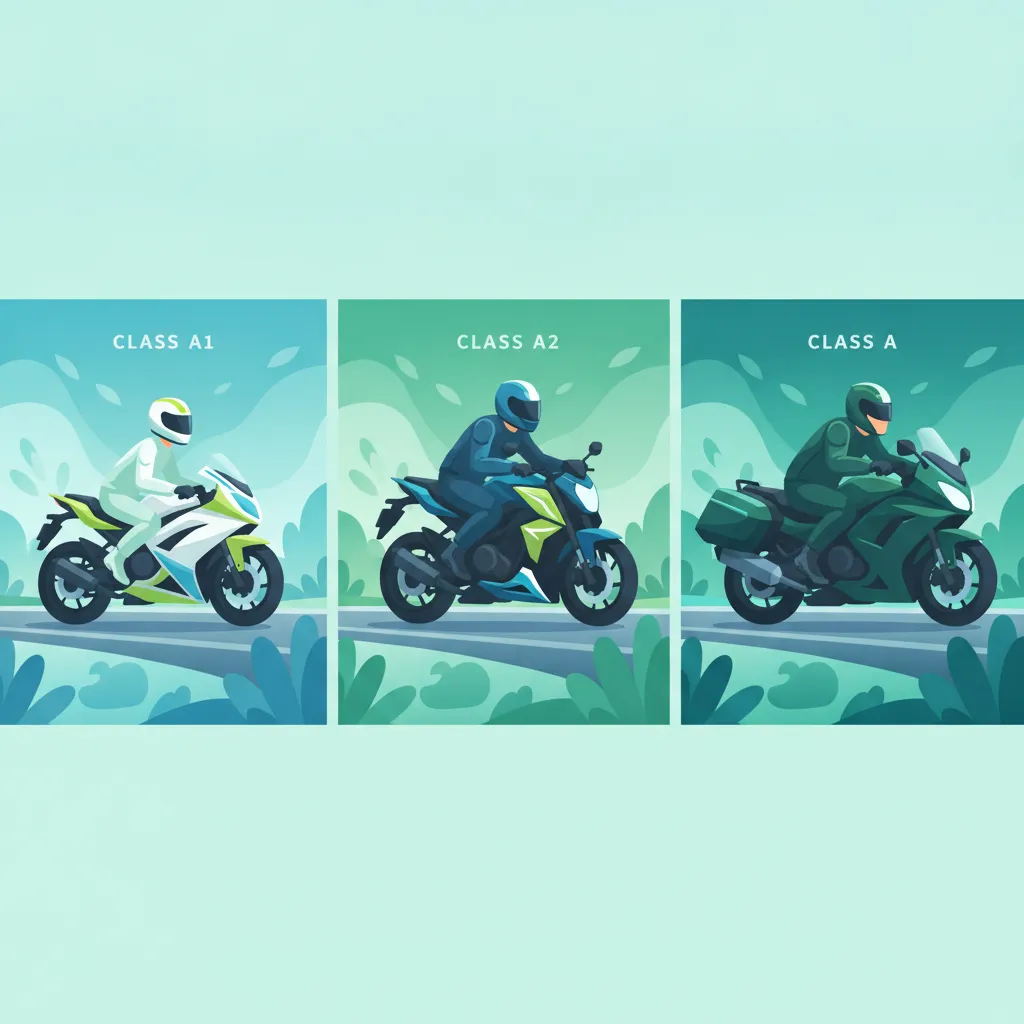
This lesson provides a comprehensive overview of Germany's tiered motorcycle licence system, including classes A1, A2, and A. It explains the specific restrictions on engine displacement, power output, and power-to-weight ratios for each category. The content also outlines the mandatory theoretical and practical examinations that applicants must pass to obtain certification for each licence level.

This lesson examines the specific technical characteristics that define AM-class vehicles. It covers the design differences between mopeds, scooters, and light quadricycles, including their brake systems, lighting, and power-to-weight ratios. Understanding these technical aspects is crucial for safe handling and maintenance.

This lesson provides a detailed overview of the legal framework governing the AM licence in Germany. It explains the classification of vehicles like mopeds and scooters based on engine displacement, power output, and weight. Learners will understand the official age requirements, licensing procedures, and fundamental StVO regulations.
This lesson addresses the challenges of operating a small AM vehicle in dense, mixed traffic. It provides strategies for increasing visibility to other drivers, positioning oneself defensively, and safely sharing lanes with cyclists. The content emphasizes awareness of larger vehicles' blind spots and maintaining a safe space cushion.
This lesson teaches riders how to conduct a simple but crucial pre-ride inspection of their vehicle. It provides step-by-step guidance on checking tyre pressure and tread depth, verifying brake function, and ensuring all lights are operational. Regular maintenance is presented as a fundamental responsibility for every rider.
This lesson details the legal obligations every AM licence holder must follow. It emphasizes compliance with the Straßenverkehrs-Ordnung (StVO), including mandatory helmet use and maintaining vehicle roadworthiness. The content covers insurance requirements, accident reporting procedures, and the legal consequences of non-compliance.
Explore the specific rules governing where and how AM licence vehicles can be operated on German roads, including distinctions in training requirements and usage compared to larger motorcycles.
This lesson provides a detailed overview of the legal framework governing the AM licence in Germany. It explains the classification of vehicles like mopeds and scooters based on engine displacement, power output, and weight. Learners will understand the official age requirements, licensing procedures, and fundamental StVO regulations.
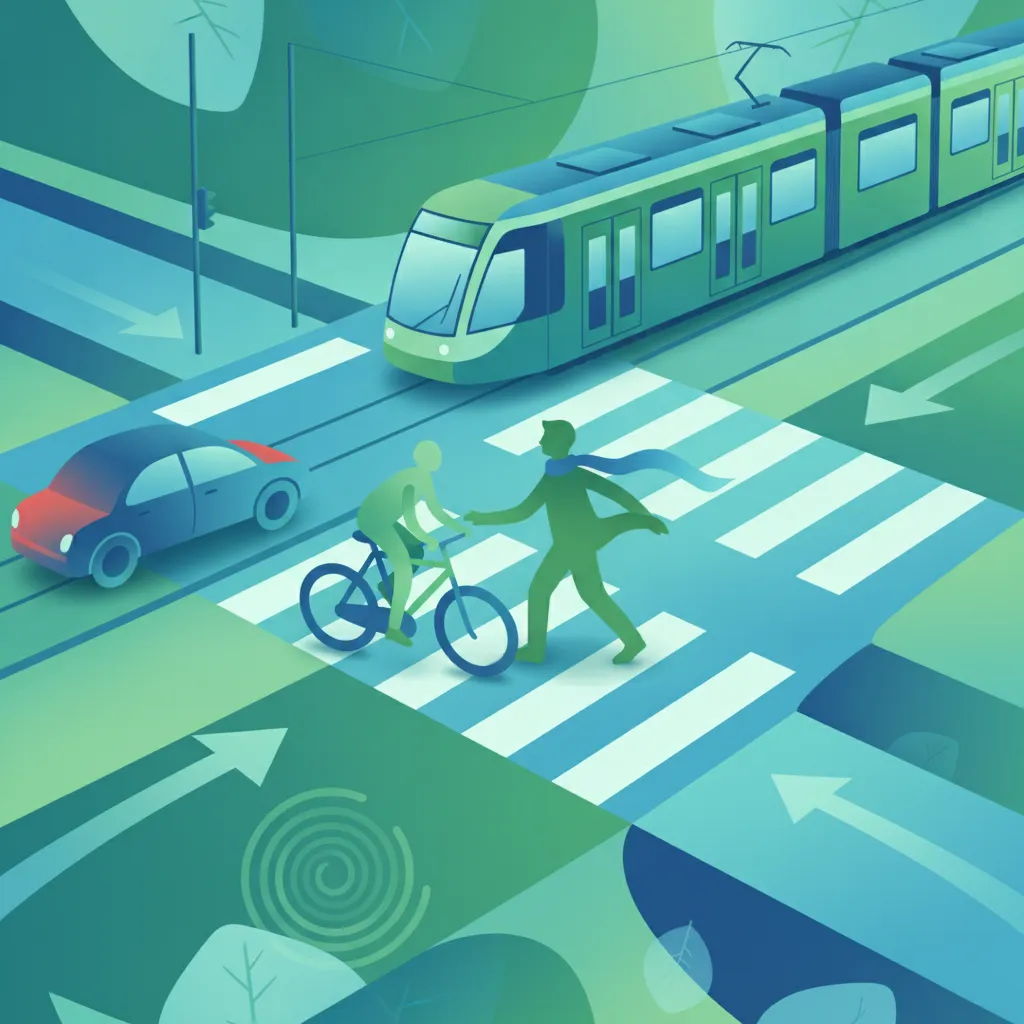
This lesson details the critical right-of-way regulations according to the German StVO. It covers the default 'right before left' rule, the meaning of priority road signs, and specific rules for roundabouts and yielding to pedestrians. A thorough understanding of these priority rules is fundamental for preventing accidents at junctions.

This lesson details the various speed limits applicable in Germany, from urban zones to rural roads. It emphasizes the critical skill of adapting speed to prevailing conditions such as rain, fog, or poor road surfaces. The content explains how external factors significantly impact vehicle handling and stopping distances.
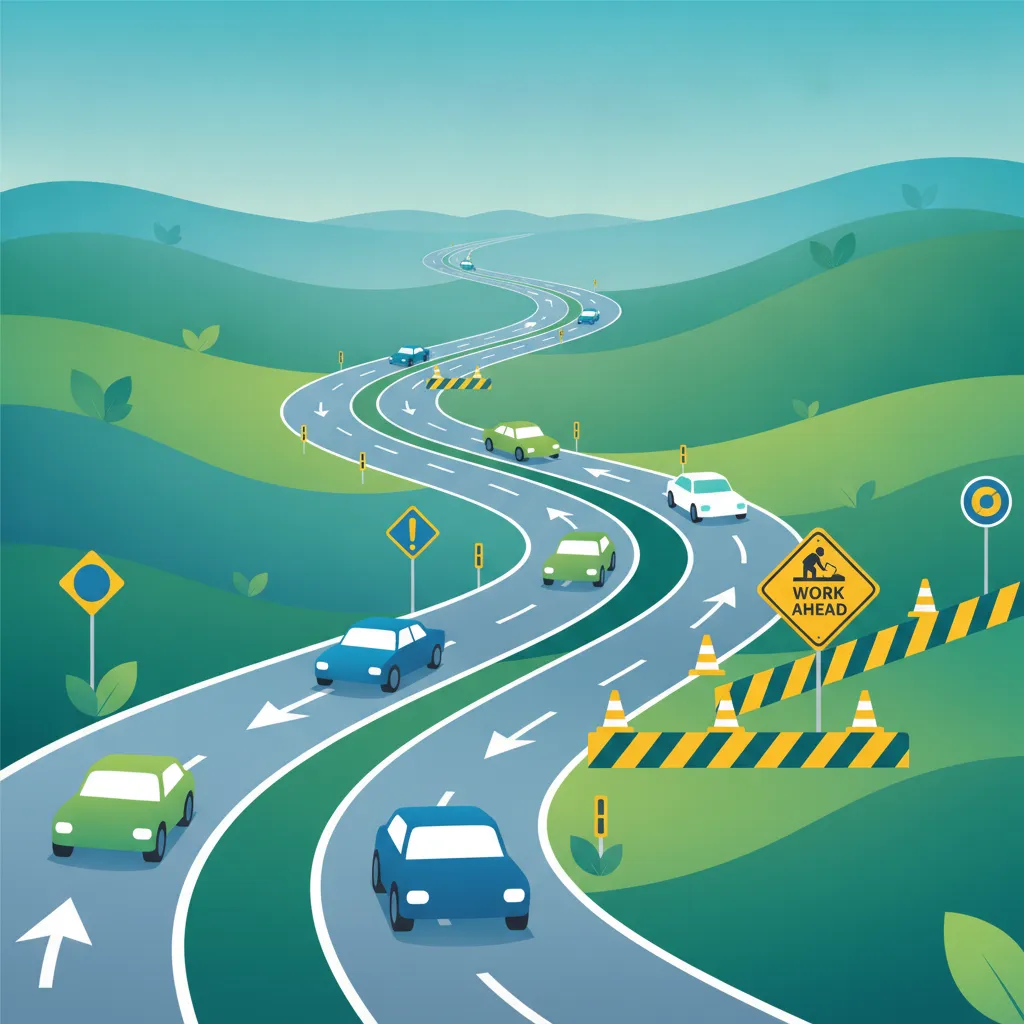
This lesson focuses on interpreting various road markings, from lane lines and directional arrows to stop lines and pedestrian crossings. It explains the rules associated with solid versus broken lines and how to navigate temporary markings found in construction zones. Correctly reading these markings is vital for proper lane discipline and safety.
This lesson details the legal obligations every AM licence holder must follow. It emphasizes compliance with the Straßenverkehrs-Ordnung (StVO), including mandatory helmet use and maintaining vehicle roadworthiness. The content covers insurance requirements, accident reporting procedures, and the legal consequences of non-compliance.
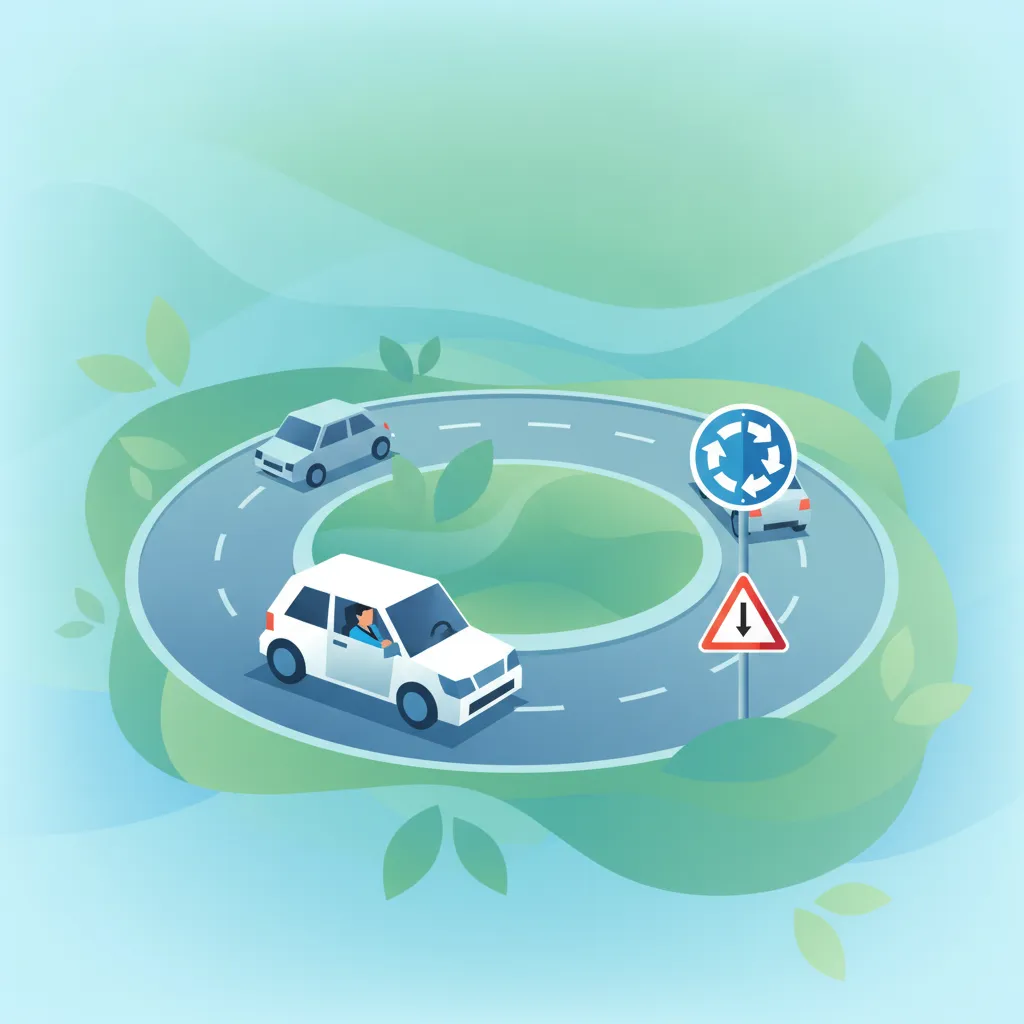
This lesson provides clear instructions on how to navigate roundabouts in Germany. It explains the crucial rule of yielding to traffic already inside the circle, proper lane choice for your intended exit, and the correct use of signals. Safe interaction with cyclists and pedestrians at roundabout exits is also covered.
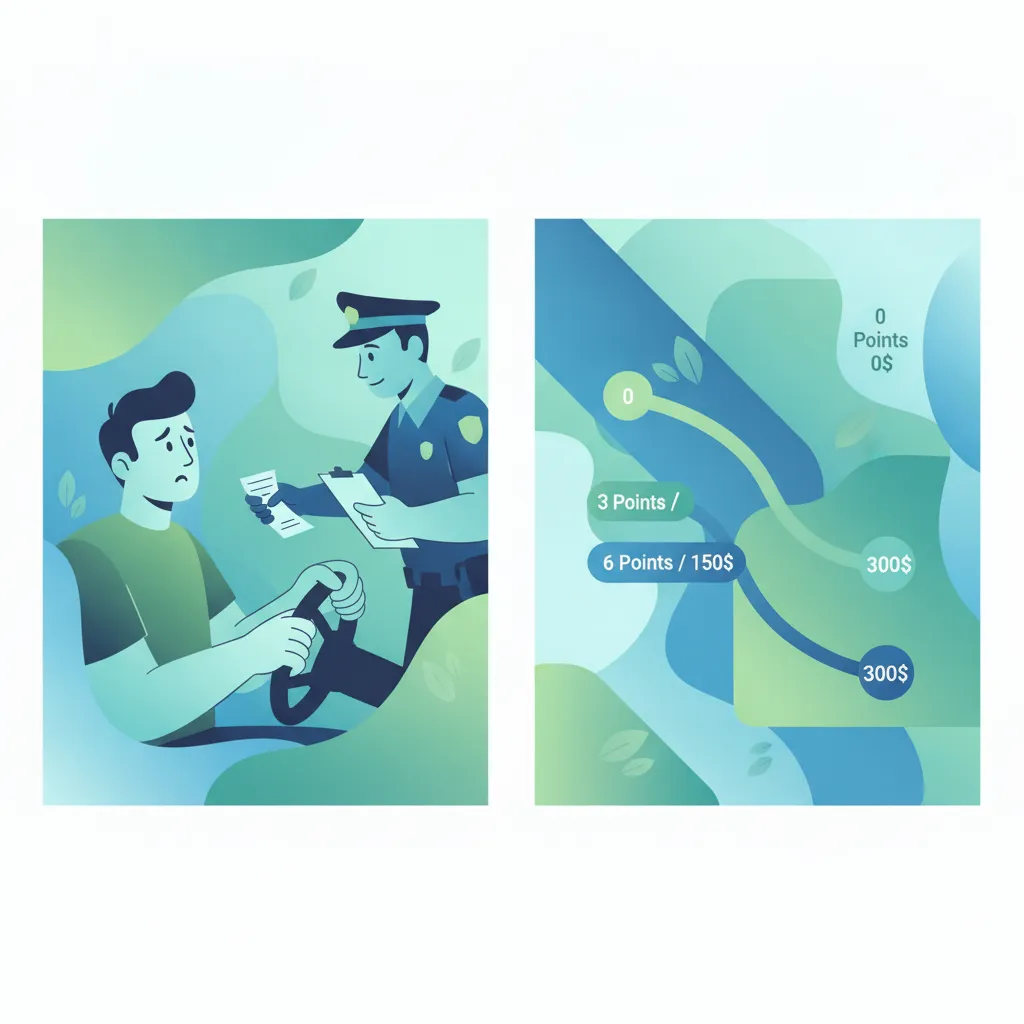
This lesson explains the German catalogue of fines (Bußgeldkatalog) and the points system for traffic violations. It details which offenses lead to fines, points in Flensburg, or even licence revocation. Understanding these consequences reinforces the importance of adhering to all traffic laws.
This lesson addresses the challenges of operating a small AM vehicle in dense, mixed traffic. It provides strategies for increasing visibility to other drivers, positioning oneself defensively, and safely sharing lanes with cyclists. The content emphasizes awareness of larger vehicles' blind spots and maintaining a safe space cushion.
This lesson introduces the various categories of German road signs, focusing on their meaning and application for AM riders. It covers regulatory signs like speed limits, warning signs for hazards, and informational signs for guidance. Learners will be ableto identify signs by their shape, color, and symbols, ensuring correct interpretation while riding.

This lesson addresses the critical skill of safely interacting with other road users, particularly vulnerable ones like pedestrians and cyclists. It covers rules for yielding at crosswalks, maintaining a safe passing distance, and being aware of the limited visibility of a moped to car drivers. The focus is on fostering a defensive and cooperative mindset in mixed traffic.
Find clear answers to common questions learners have about Distinctions Between AM Vehicles and Other Motorcycles. Learn how the lesson is structured, which driving theory objectives it supports, and how it fits into the overall learning path of units and curriculum progression in Germany. These explanations help you understand key concepts, lesson flow, and exam focused study goals.
No, you are restricted to mopeds and scooters with a maximum design speed of 45 km/h and an engine capacity not exceeding 50cc, or specific electric power limits. Larger motorcycles require an A1, A2, or A licence.
Yes, while both can travel on most public roads, AM riders are often more restricted by the performance capability of their vehicles. AM vehicles are prohibited from using motorways (Autobahn) if their design speed is below the minimum required for motorway access.
The exam often uses scenario-based images or technical specifications in text questions. You will need to identify if a specific vehicle shown or described exceeds the legal limits for the AM category.
Yes, light quadricycles and micro-cars that meet specific weight and speed criteria (up to 45 km/h) fall under the AM licence category in Germany.
Begin your targeted revision now. Use our practice search to quickly find specific German driving theory questions. Filter by StVO rules, road signs, or hazard perception to create your focused study plan. Master challenging areas and prepare confidently for your theoretical driving test.