
This lesson explores the essential defensive riding skills required for your AM licence when sharing the road. You will learn how to anticipate the movements of pedestrians, cyclists, and car drivers, helping you stay safe and pass the mixed traffic sections of your theory exam.
Lesson content overview
Operating a moped or scooter within Germany's diverse traffic environment requires a keen understanding of how to safely interact with all other road users. This lesson, part of your German Driving Theory Course for AM Licence, focuses on developing the critical skills and mindset needed to navigate situations involving pedestrians, cyclists, and passenger vehicles. Moped riders, being part of the two-wheeled vehicle category, are inherently more vulnerable than occupants of cars and larger vehicles. Therefore, a proactive, defensive, and cooperative approach is not just a recommendation, but a fundamental requirement for road safety.
We will explore the legal obligations and practical strategies for yielding at crosswalks, maintaining safe passing distances when overtaking cyclists, understanding priority at intersections, and recognizing the importance of blind spot awareness. By mastering these principles, you will significantly reduce collision risks and contribute to a safer road network for everyone.
Vulnerable road users are those who are least protected in the event of a collision, such as pedestrians, cyclists, and moped riders themselves. Their lack of physical protection means that any incident can result in severe injuries. As a moped rider, you share a common vulnerability with pedestrians and cyclists compared to drivers of larger passenger vehicles. This shared vulnerability should foster a sense of empathy and extreme caution.
Your responsibility extends beyond merely following traffic laws; it encompasses anticipating potential hazards and acting defensively to prevent accidents. This involves constant observation, understanding the behavior of others, and making allowances for their actions, particularly in complex mixed-traffic scenarios common in German towns and cities.
A proactive driving style that anticipates potential hazards from other road users or changing conditions and adjusts driving behavior to minimize risks and prevent accidents.
One of the most critical aspects of safe interaction is yielding to pedestrians, especially at designated crosswalks. In Germany, pedestrians have significant rights at these crossings.
A pedestrian crossing, commonly known as a Zebrastreifen (zebra crossing) due to its distinctive white stripes, provides pedestrians with a legal right of way. Drivers approaching these marked areas must be prepared to stop.
Legal Obligation (StVO § 38):
The German Road Traffic Regulations (Straßenverkehrs-Ordnung – StVO) clearly state that drivers must stop to allow pedestrians to cross if they are waiting to cross or are already on a Zebrastreifen. This rule is designed to protect the most vulnerable road users.
Approach with reduced speed: As you near a Zebrastreifen, slow down considerably. This gives you more time to react and stop safely if pedestrians are present.
Observe for pedestrians: Actively scan both sides of the road and the crossing itself for pedestrians intending to cross or already crossing. Pay attention to body language; a pedestrian looking towards the crossing might be preparing to step onto it.
Stop before the white line: If pedestrians are waiting or crossing, you must stop your moped before the solid white line that precedes the Zebrastreifen. This line ensures enough space for pedestrians to cross safely and for other vehicles (like bicycles or other mopeds) to pass without entering the pedestrian zone.
Wait until all pedestrians have cleared: Only proceed once all pedestrians have completely left the Zebrastreifen and are safely on the pavement.
Never overtake a vehicle stopped at a zebra crossing. If a vehicle in an adjacent lane has stopped at a Zebrastreifen, it's almost certainly because pedestrians are crossing. Overtaking that vehicle is extremely dangerous and strictly forbidden, as it could result in a severe collision with an unseen pedestrian.
While the Zebrastreifen offers explicit priority, pedestrians may also cross the road at other points, especially in residential areas or near shops. Although they don't have automatic priority at unmarked locations, drivers still have a duty of care. Always be prepared for pedestrians to enter the roadway, especially children, the elderly, or those who may be distracted. Adjust your speed and be ready to stop.
Cyclists are highly vulnerable road users. Overtaking them safely requires judgment, patience, and adherence to specific distance rules to prevent accidents.
When overtaking a cyclist, you must maintain a sufficient lateral distance. This distance is crucial for the cyclist's safety, as they can wobble, swerve to avoid obstacles, or be affected by wind from passing vehicles.
German Regulations for Passing Distance (StVO § 5): According to the StVO, when overtaking, drivers must maintain a "sufficient lateral distance" (ausreichender Seitenabstand). While "sufficient" can be subjective, legal interpretations and recent amendments often specify minimums.
As a general rule, many driving instructors and courts recommend a minimum of 1.5 metres (approximately 5 feet) in urban areas (innerorts) and 2 metres (approximately 6.5 feet) outside urban areas (außerorts) when overtaking cyclists. This provides a safety buffer for both the cyclist and your moped.
The principle of maintaining a safe lateral distance also applies to other vulnerable road users like e-scooter riders, agricultural vehicle operators, or even pedestrians walking on the road where no pavement is available. Always err on the side of caution and give them ample space.
Intersections are common points of conflict in traffic. Understanding priority rules and how to interact with larger passenger vehicles is paramount for moped riders.
The most fundamental priority rule in Germany is "right before left" (rechts vor links), meaning traffic coming from the right generally has priority at unmarked intersections. However, this is frequently overridden by signs, signals, or specific road markings.
Vorfahrtstraße): If you are on a priority road (indicated by VZ 306 / B1 sign), you generally have the right of way. Vehicles entering from side roads must yield (often indicated by VZ 205 / B2 sign).Vorfahrt gewähren): If you encounter a B2 sign, you must yield to traffic on the intersecting road. This means slowing down and stopping if necessary to allow other vehicles to pass before you proceed.Halt. Vorfahrt gewähren!): A stop sign (B3) requires you to come to a complete stop before the stop line, look for traffic, and then proceed only when safe.Blind spots are areas around your vehicle that are not visible in your mirrors. For moped riders, this applies to your blind spots, and critically, the blind spots of other, larger vehicles.
Even on a moped, you have blind spots, primarily to your sides and slightly behind you. Relying solely on mirrors is insufficient, especially when changing lanes or preparing to turn.
Performing a Head Check (Shoulder Check): Before changing lanes, turning, or merging, always perform a quick head check (also known as a shoulder check). This involves turning your head briefly to look directly into the area not covered by your mirrors. This is a mandatory safety step (StVO § 9).
Check mirrors: Glance at your mirrors to get a general idea of traffic around you.
Signal your intention: Use your indicators to signal your intended maneuver.
Perform head check: Briefly turn your head to glance over your shoulder in the direction you intend to move. This takes less than a second and allows you to confirm that the blind spot is clear.
Execute maneuver: If the path is clear, proceed with your lane change or turn.
Mopeds are small and can easily become invisible in the blind spots of larger vehicles. This is one of the most common causes of collisions involving two-wheelers.
Assume you are invisible. When riding near cars, buses, or trucks, always assume the driver has not seen you, especially if you are alongside them or slightly behind their rear wheels.
Key blind spot areas for other vehicles:
When driving near passenger vehicles, avoid lingering in their blind spots. Adjust your speed to either move ahead or drop back, ensuring you are visible in their mirrors. Be especially cautious when cars are signaling a lane change or turning.
Sharing the road effectively with passenger vehicles means understanding their limitations and making allowances, especially as a more agile moped rider.
When a passenger vehicle needs to merge or change lanes, they often require more space and time than a moped.
Even though your moped can stop faster than many cars, maintaining a safe following distance is crucial for preventing rear-end collisions.
The "Half-Speed" Rule: A common guideline for safe following distance is to maintain a gap equivalent to at least half your speed in metres. For example, if you are driving at 50 km/h, you should keep a distance of at least 25 metres from the vehicle in front. This distance increases significantly in adverse weather or on slippery roads.
Benefits of a Safe Following Distance:
Driving conditions are rarely constant. Your interaction with other road users must adapt to various environmental and contextual factors.
Many accidents involving mopeds and other road users stem from common errors and violations.
Zebrastreifen: Proceeding when pedestrians are waiting or crossing, risking serious injury.The safe interaction with pedestrians, cyclists, and passenger vehicles is a cornerstone of responsible moped riding in Germany. It demands a constant state of awareness and a commitment to defensive and cooperative driving.
Zebrastreifen), stopping completely before the white line.By integrating these principles into your daily riding, you will not only enhance your own safety but also contribute to a safer, more harmonious road environment for everyone in Germany.
This lesson covers essential defensive riding skills for AM licence holders sharing German roads with vulnerable users. Moped riders must yield to pedestrians at zebrastreifen crossings, maintain safe passing distances from cyclists, and understand priority rules at intersections where signs and signals override default 'right before left' conventions. Critical blind spot awareness includes performing mandatory head checks before manoeuvring and recognizing that mopeds easily disappear from car and truck driver sight lines. The content emphasizes adapting riding behaviour to weather conditions, road types, and specific vulnerable groups such as children and elderly pedestrians to reduce collision risks.
A short set of high-value points that capture the most important learning from this lesson.
Pedestrians have priority at marked zebrastreifen crossings; you must stop before the white line and wait until all pedestrians have cleared.
Maintain at least 1.5 metres lateral distance when overtaking cyclists in urban areas and 2 metres outside built-up areas.
Perform a head check (shoulder check) before any lane change or turn to verify your blind spots are clear.
Avoid lingering in the blind spots of larger vehicles; assume you are invisible to car and truck drivers when riding alongside them.
Adjust your speed and positioning based on weather, road type, and the presence of vulnerable users like children or elderly pedestrians.
Explore all units and lessons included in this driving theory course.
StVO § 38 requires drivers to stop for pedestrians waiting at or already on a zebrastreifen.
Overtaking a vehicle that has stopped at a zebra crossing is strictly forbidden as pedestrians are likely crossing.
The 'right before left' rule at unmarked intersections is overridden by priority road signs, yield signs, and traffic signals.
Buses have priority when leaving bus stops in Germany; you must yield to them re-entering traffic (StVO § 20).
A safe following distance can be estimated as half your speed in metres (e.g., 25m at 50 km/h).
Proceeding through a zebrastreifen without stopping when pedestrians are waiting or crossing.
Overtaking cyclists too closely without maintaining the required minimum lateral distance.
Neglecting to perform a head check before changing lanes, assuming mirrors alone provide sufficient awareness.
Misjudging the turning space needed by buses and trucks, risking collision with their swinging rear wheels.
Attempting to filter through traffic at intersections or while vehicles are turning, increasing collision risk.
Lesson content overview
A short set of high-value points that capture the most important learning from this lesson.
Pedestrians have priority at marked zebrastreifen crossings; you must stop before the white line and wait until all pedestrians have cleared.
Maintain at least 1.5 metres lateral distance when overtaking cyclists in urban areas and 2 metres outside built-up areas.
Perform a head check (shoulder check) before any lane change or turn to verify your blind spots are clear.
Avoid lingering in the blind spots of larger vehicles; assume you are invisible to car and truck drivers when riding alongside them.
Adjust your speed and positioning based on weather, road type, and the presence of vulnerable users like children or elderly pedestrians.
Explore all units and lessons included in this driving theory course.
StVO § 38 requires drivers to stop for pedestrians waiting at or already on a zebrastreifen.
Overtaking a vehicle that has stopped at a zebra crossing is strictly forbidden as pedestrians are likely crossing.
The 'right before left' rule at unmarked intersections is overridden by priority road signs, yield signs, and traffic signals.
Buses have priority when leaving bus stops in Germany; you must yield to them re-entering traffic (StVO § 20).
A safe following distance can be estimated as half your speed in metres (e.g., 25m at 50 km/h).
Proceeding through a zebrastreifen without stopping when pedestrians are waiting or crossing.
Overtaking cyclists too closely without maintaining the required minimum lateral distance.
Neglecting to perform a head check before changing lanes, assuming mirrors alone provide sufficient awareness.
Misjudging the turning space needed by buses and trucks, risking collision with their swinging rear wheels.
Attempting to filter through traffic at intersections or while vehicles are turning, increasing collision risk.
Explore search topics learners often look for when studying Interaction with Pedestrians, Cyclists, and Passenger Vehicles. These topics reflect common questions about road rules, driving situations, safety guidance, and lesson level theory preparation for learners in Germany.
Browse additional driving theory lessons that cover connected traffic rules, road signs, and common driving situations related to this topic. Improve your understanding of how different rules interact across everyday traffic scenarios.
Learn the specific German traffic regulations (StVO) for AM licence holders when encountering pedestrians and cyclists. Understand yielding, passing distances, and visibility to ensure safe co-existence on German roads.
This lesson provides specific guidance on how to safely share the road with pedestrians and cyclists, who are among the most vulnerable road users. It covers the rules of conduct at zebra crossings, traffic lights for pedestrians, and designated cycle lanes. The content emphasizes the importance of vigilance, yielding right-of-way, and maintaining a safe distance to prevent accidents in urban and rural environments.
This lesson teaches riders how to interact safely and predictably with pedestrians, cyclists, and public transport vehicles. It highlights the importance of yielding at designated crossings, maintaining a safe passing distance, and anticipating the movements of buses and trams. The content emphasizes using eye contact and clear signaling to foster safe and respectful interactions with all road users.
This lesson addresses the challenges of operating a small AM vehicle in dense, mixed traffic. It provides strategies for increasing visibility to other drivers, positioning oneself defensively, and safely sharing lanes with cyclists. The content emphasizes awareness of larger vehicles' blind spots and maintaining a safe space cushion.
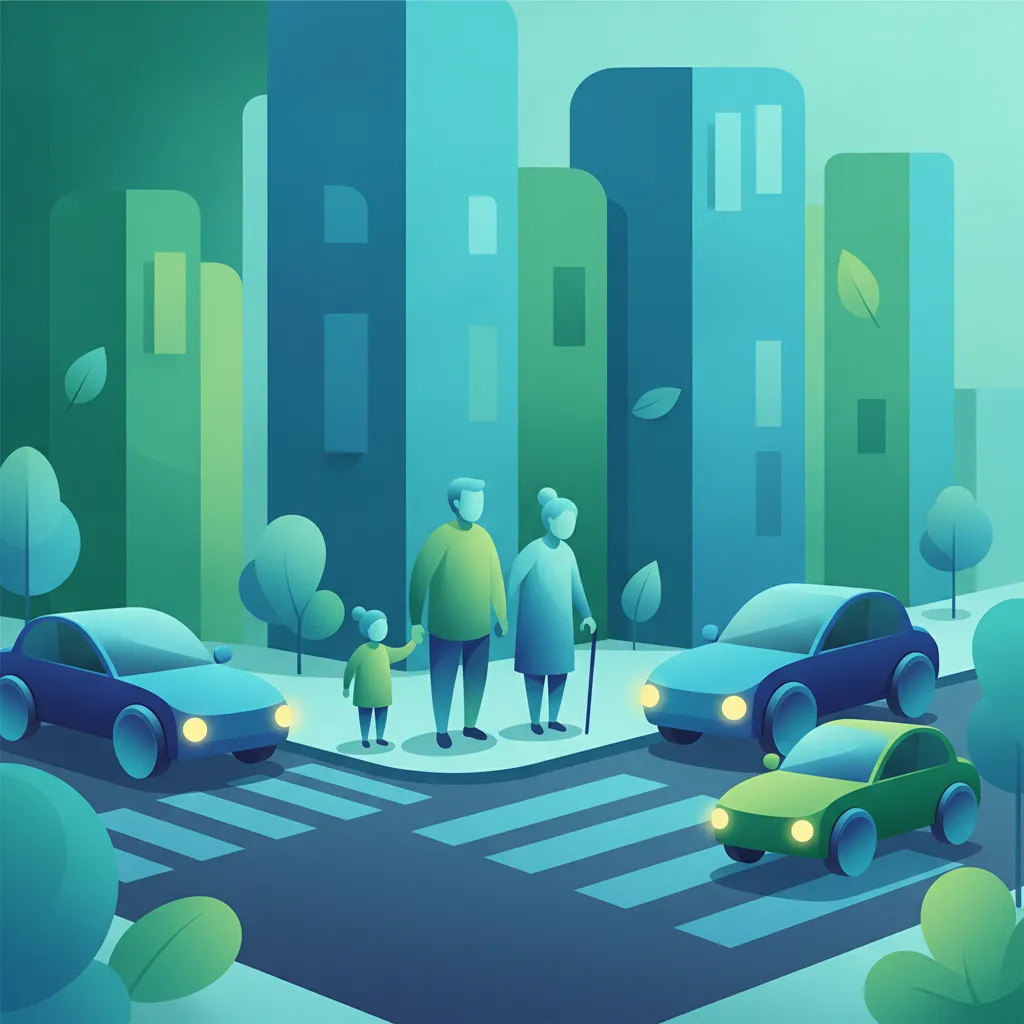
This lesson focuses on the particular care required when driving near pedestrians, with a special emphasis on children and the elderly, whose behavior can be unpredictable. It covers the rules for yielding at zebra crossings and the importance of reducing speed near schools, playgrounds, and residential areas. The goal is to instill a habit of constant vigilance and readiness to stop.
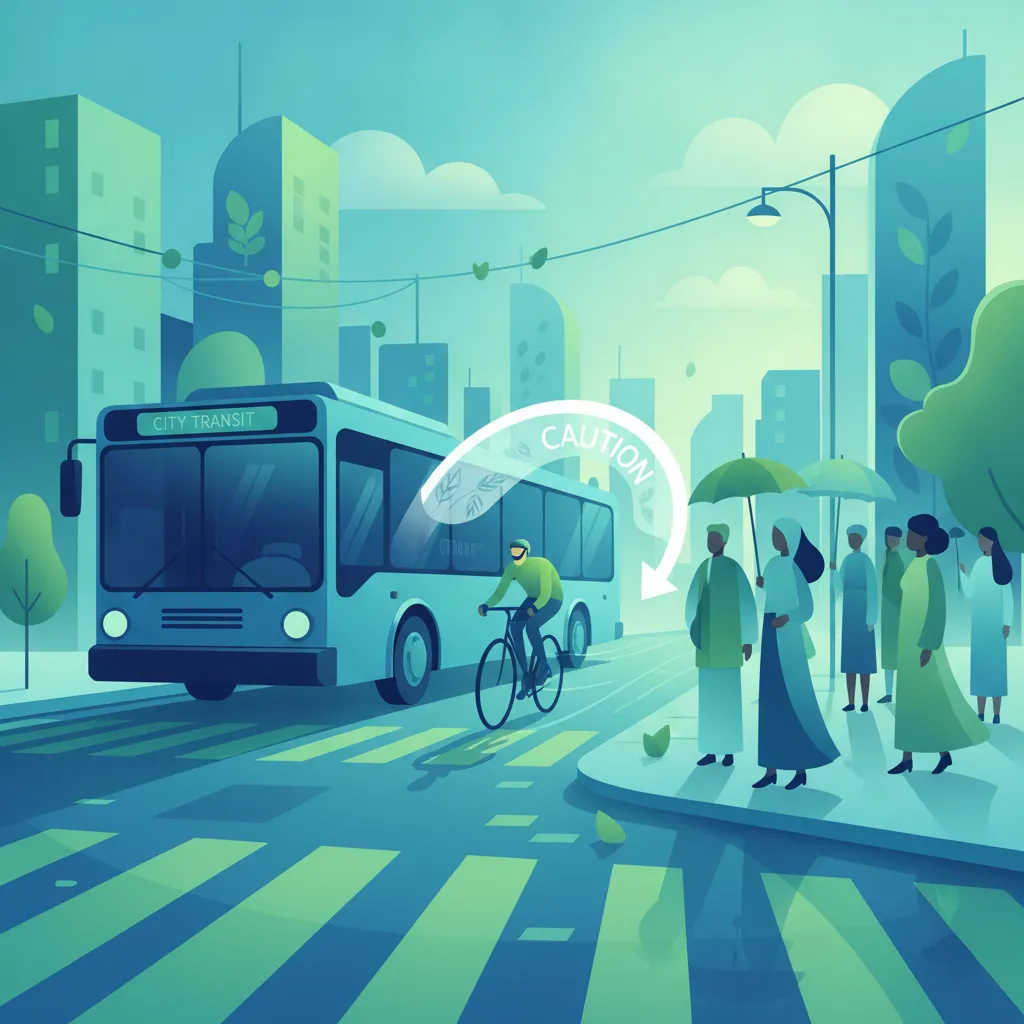
This lesson focuses on the critical moments of interaction with pedestrians and cyclists near bus stops, a common location for accidents. It reinforces the importance of reducing speed, yielding right-of-way, and constantly monitoring blind spots during the stopping process. Learners will practice techniques like making eye contact and using signals to communicate intentions, creating a safer environment for everyone around the vehicle.
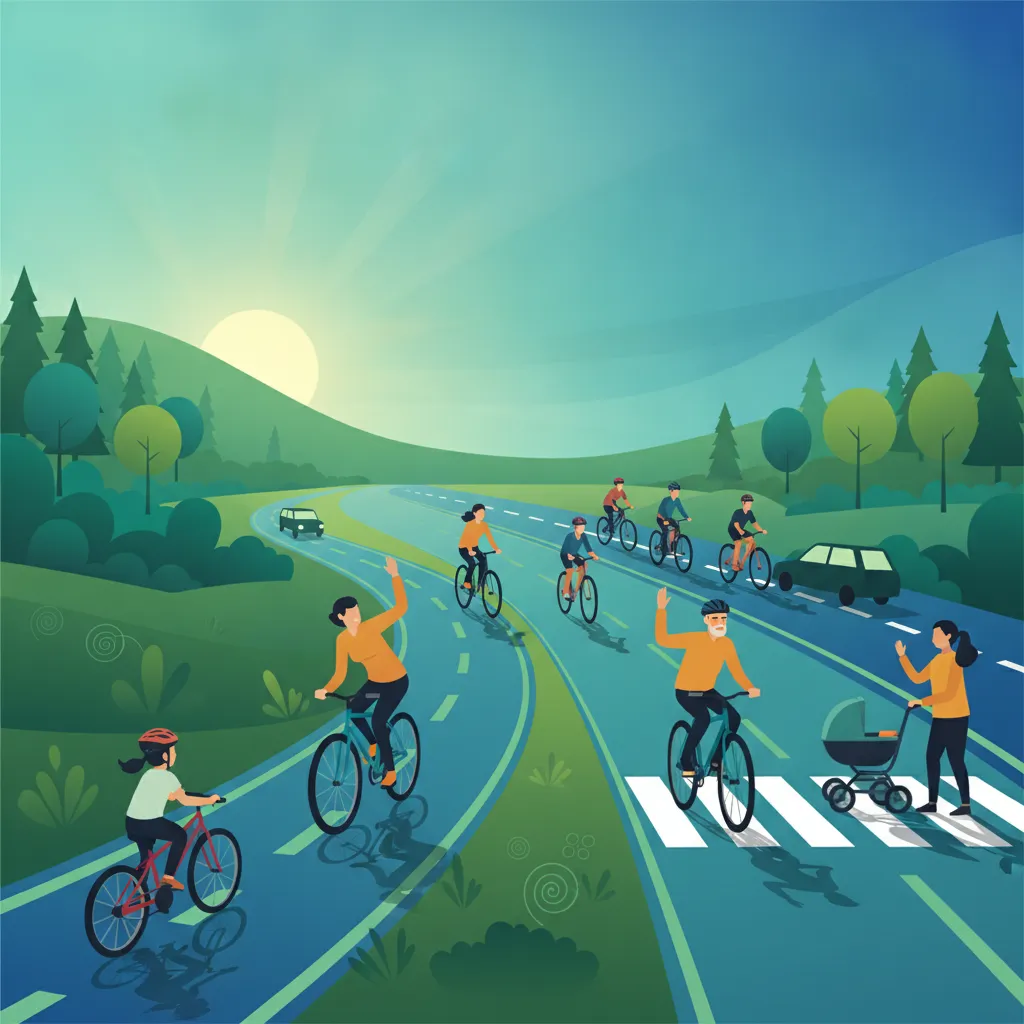
This lesson covers the correct and safe way to interact with cyclists. It explains the different types of bicycle infrastructure, such as dedicated cycle paths and advisory bike lanes on the road. Key topics include maintaining the legally required minimum passing distance, checking for cyclists before turning right, and being aware of the risk of 'dooring' when parked.
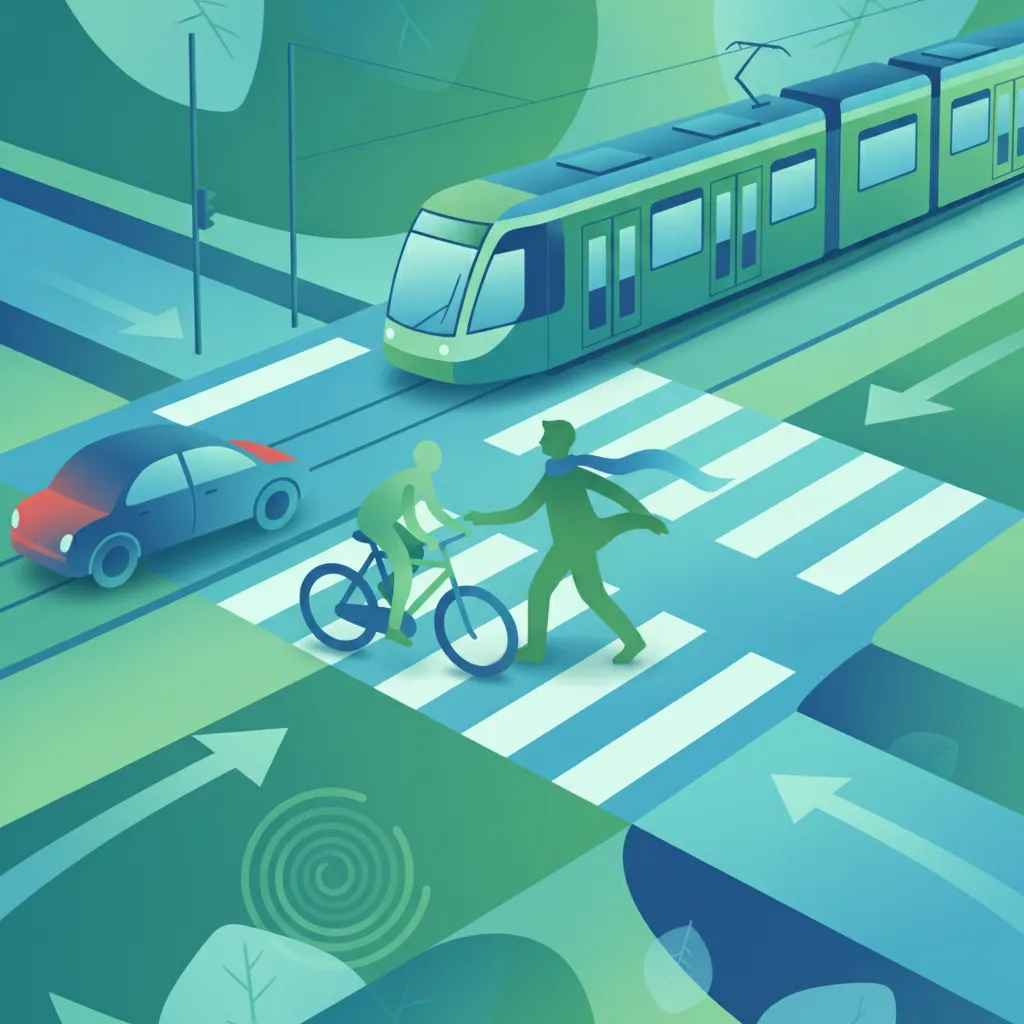
This lesson details the critical right-of-way regulations according to the German StVO. It covers the default 'right before left' rule, the meaning of priority road signs, and specific rules for roundabouts and yielding to pedestrians. A thorough understanding of these priority rules is fundamental for preventing accidents at junctions.
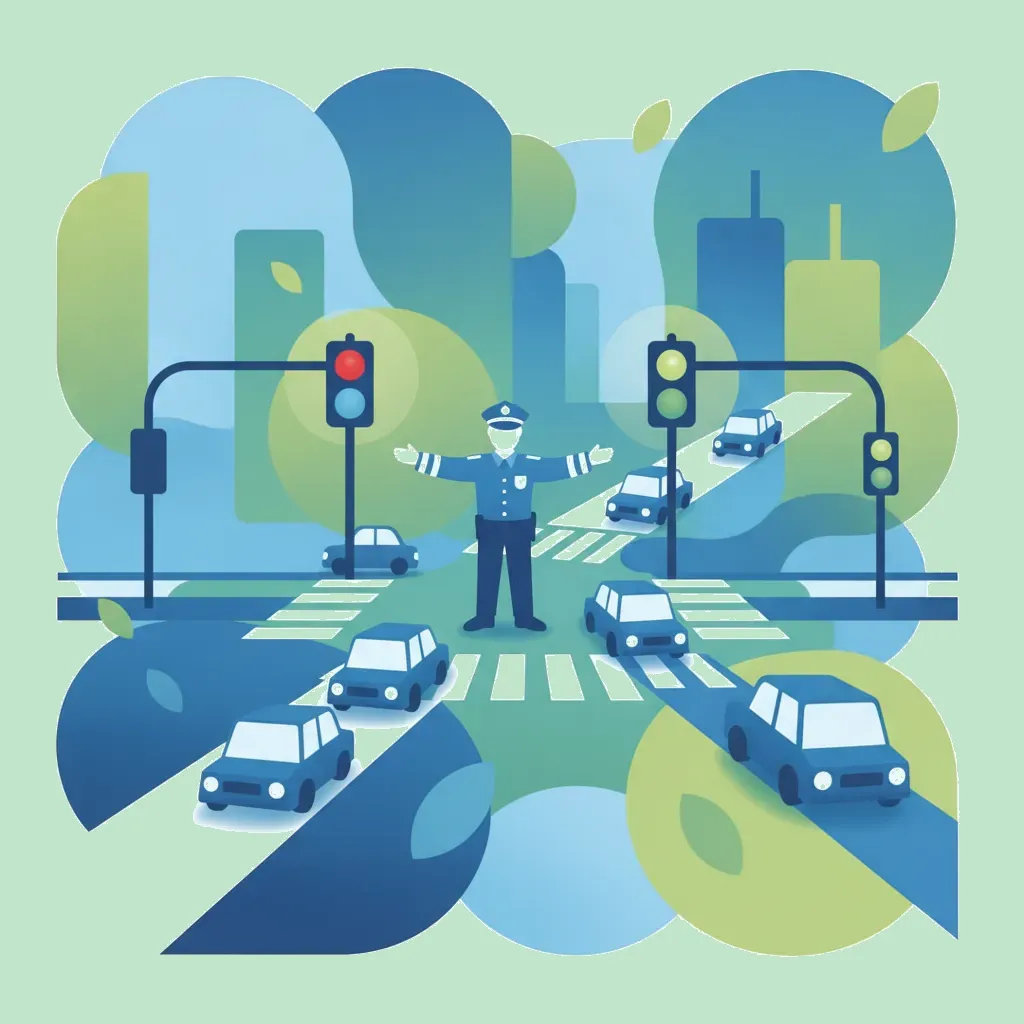
This lesson explains the function and meaning of traffic light signals, including standard cycles, flashing lights, and arrows. It also details how to interpret and obey hand signals given by police officers, which override all other signs and signals. Understanding these instructions is crucial for navigating controlled junctions and emergency situations.
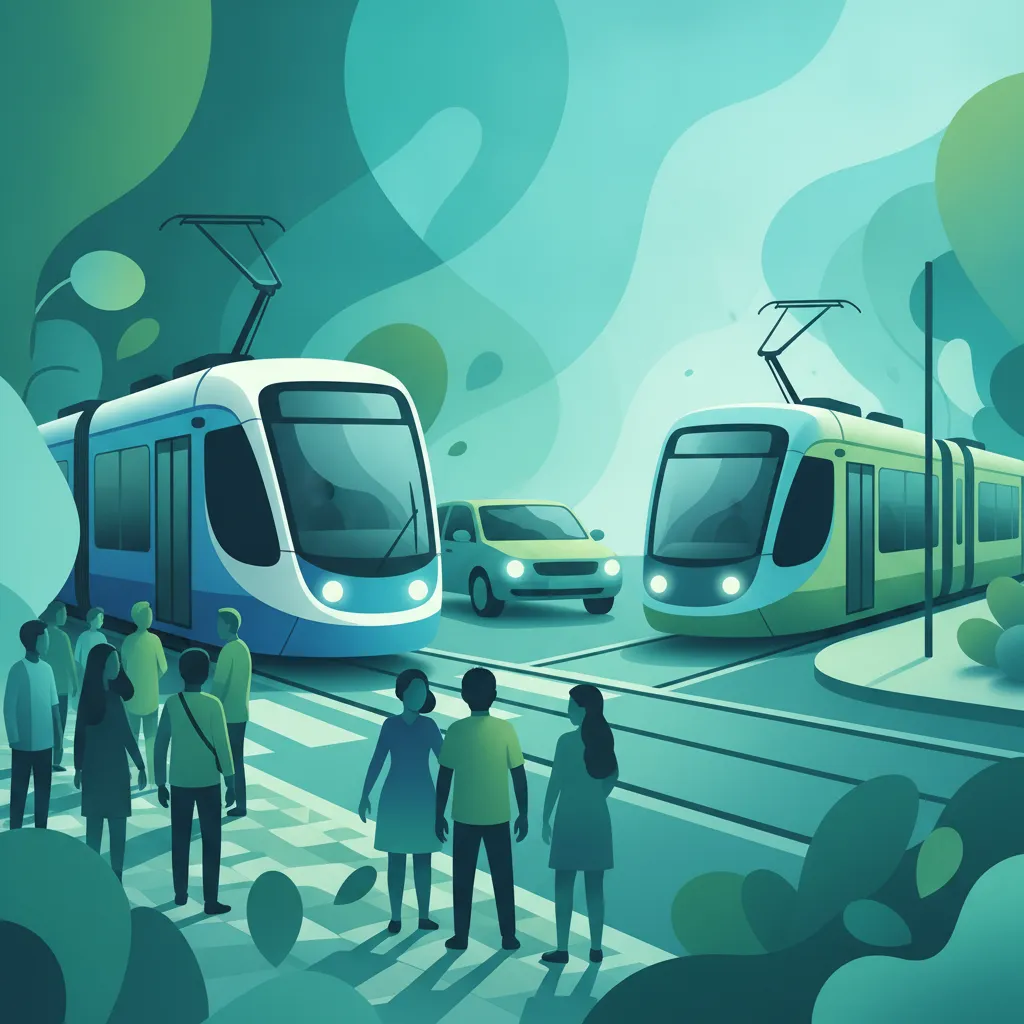
This lesson focuses on the unique challenges and safety protocols required when operating alongside trams and light rail systems. It clarifies the strict right-of-way rules that typically favor trams and explains how to safely navigate shared roadways and cross tracks. Learners will be taught to recognize specific signals and markings related to tramways to prevent conflicts and ensure the safety of all road users.

This lesson provides a detailed overview of the legal framework governing the AM licence in Germany. It explains the classification of vehicles like mopeds and scooters based on engine displacement, power output, and weight. Learners will understand the official age requirements, licensing procedures, and fundamental StVO regulations.
Understand how to make yourself visible to other vehicles and anticipate the actions of pedestrians and cyclists. This lesson focuses on defensive riding techniques for AM licence holders to avoid accidents in mixed traffic.
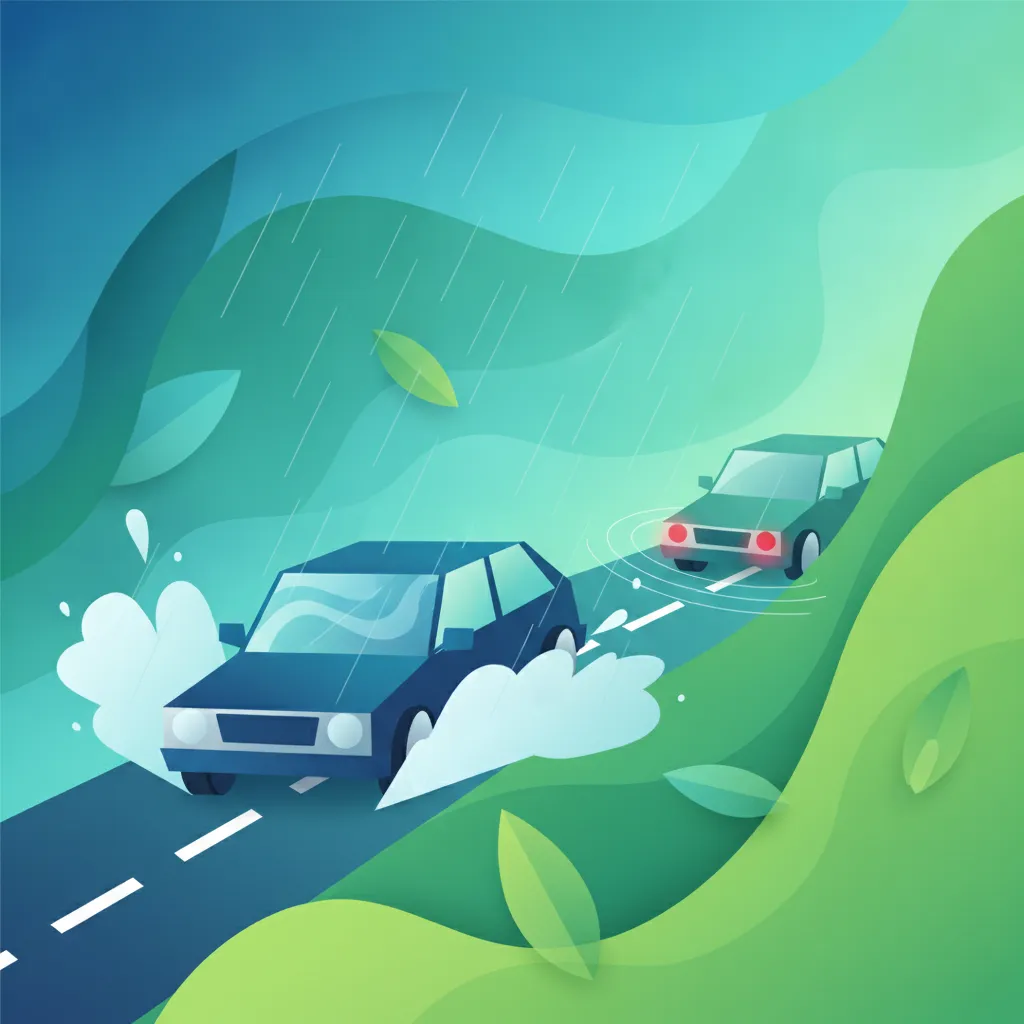
This lesson examines the specific hazards posed by different weather conditions. It explains how rain can lead to hydroplaning and reduced grip, how fog impairs visibility, and how strong winds can affect stability. Riders will learn practical strategies, such as reducing speed and increasing following distance, to mitigate these risks.
This lesson focuses on identifying and safely managing various road surface imperfections and hazards. It provides techniques for riding over loose surfaces like gravel, dealing with the low traction of wet leaves or manhole covers, and safely crossing tram tracks. The key is to recognize these hazards early and adjust technique accordingly.
This lesson details the importance of personal protective equipment for rider safety. It covers the legal standards for helmets in Germany, the benefits of wearing abrasion-resistant jackets and gloves, and the value of high-visibility clothing. It also explains the proper use of vehicle lighting systems to ensure visibility to others.
This lesson focuses on maintaining a safe buffer around the vehicle in traffic. It explains the 'two-second rule' as a simple method for ensuring adequate following distance and discusses how to adjust this for adverse conditions. A key focus is on developing hazard anticipation skills through continuous scanning and risk assessment.
This lesson teaches riders how to develop strong visual perception skills for the road. It covers systematic scanning patterns, the correct use of mirrors, and the critical importance of performing a head check to cover blind spots. Understanding the larger blind spots of trucks and buses is also a key safety component.
This lesson addresses the challenges of operating a small AM vehicle in dense, mixed traffic. It provides strategies for increasing visibility to other drivers, positioning oneself defensively, and safely sharing lanes with cyclists. The content emphasizes awareness of larger vehicles' blind spots and maintaining a safe space cushion.
This lesson focuses on strategies to enhance a rider's visibility to others, a key aspect of motorcycle safety. It explains how high-visibility gear with neon colors and retroreflective materials functions to make the rider more conspicuous during both day and night. The content covers different types of reflective accessories and their proper placement to maximize effectiveness in traffic.
This lesson teaches riders how to conduct a simple but crucial pre-ride inspection of their vehicle. It provides step-by-step guidance on checking tyre pressure and tread depth, verifying brake function, and ensuring all lights are operational. Regular maintenance is presented as a fundamental responsibility for every rider.

This lesson focuses on identifying and managing internal and external risk factors. It discusses the dangers of distractions like mobile phones, the influence of peer pressure in group riding scenarios, and the impairing effects of fatigue, alcohol, and drugs. The goal is to foster a mature and responsible attitude towards riding.
This lesson introduces the various categories of German road signs, focusing on their meaning and application for AM riders. It covers regulatory signs like speed limits, warning signs for hazards, and informational signs for guidance. Learners will be ableto identify signs by their shape, color, and symbols, ensuring correct interpretation while riding.
Find clear answers to common questions learners have about Interaction with Pedestrians, Cyclists, and Passenger Vehicles. Learn how the lesson is structured, which driving theory objectives it supports, and how it fits into the overall learning path of units and curriculum progression in Germany. These explanations help you understand key concepts, lesson flow, and exam focused study goals.
While specific distance depends on the road situation, you must maintain a safe lateral clearance, ideally at least 1.5 meters in built-up areas. Always slow down if you cannot maintain a safe gap to ensure the cyclist is not startled.
You must yield to pedestrians who are clearly intending to use a marked zebra crossing. Slow down well in advance and be prepared to stop completely if a pedestrian approaches the curb.
Mopeds have a smaller profile than cars, making them easy to lose in blind spots or behind larger vehicles. Always use your lights, maintain a visible position in the lane, and assume car drivers may not see you.
The exam contains many situational images where you must identify hazards involving pedestrians and cyclists. Understanding these rules ensures you choose the correct response, such as braking or adjusting your line, to avoid traffic penalties.
Begin your targeted revision now. Use our practice search to quickly find specific German driving theory questions. Filter by StVO rules, road signs, or hazard perception to create your focused study plan. Master challenging areas and prepare confidently for your theoretical driving test.