
This lesson provides a foundational guide to the visual language of German roads, specifically tailored for AM licence riders. You will learn to categorize and interpret the various road signs you encounter to ensure compliance with the StVO and prepare for your theory exam.
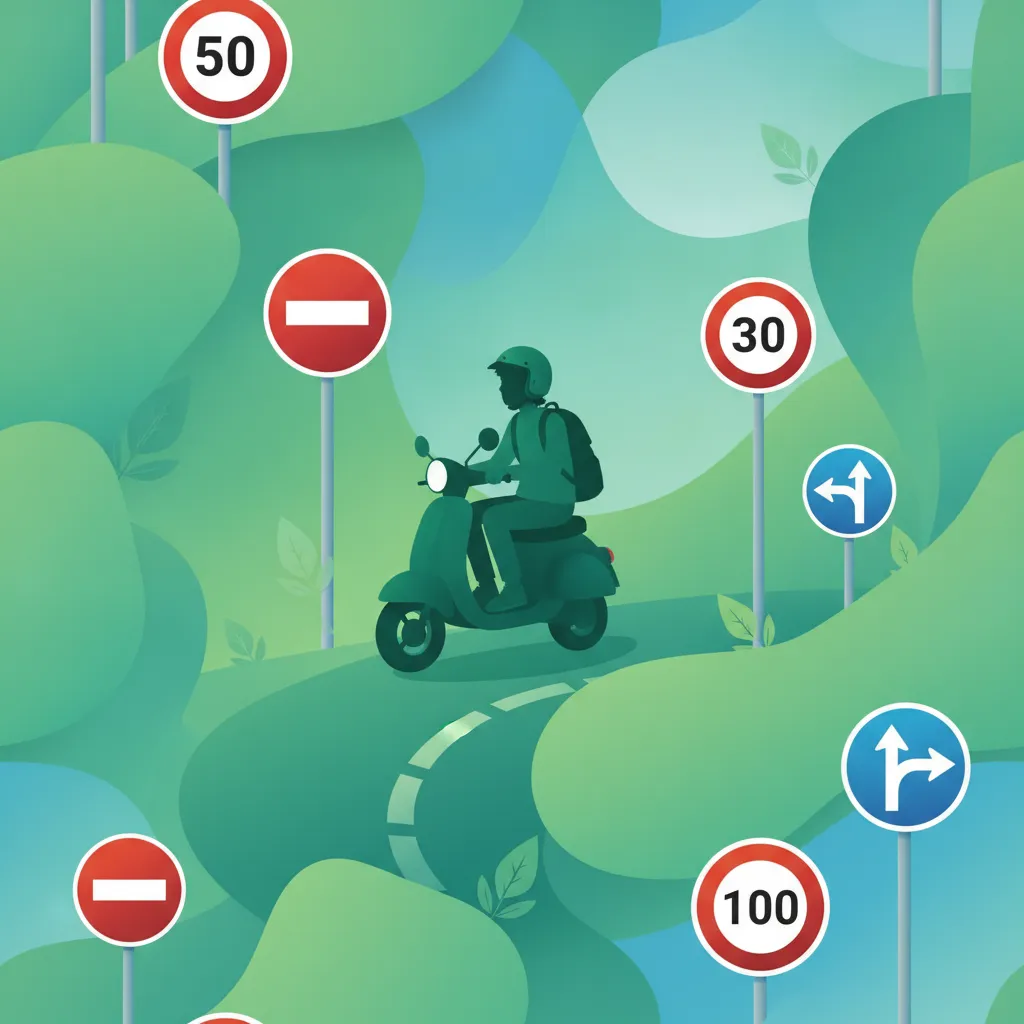
Lesson content overview
Road signs are the universal language of traffic, guiding drivers, ensuring safety, and enforcing regulations across the entire road network. For anyone operating a moped, scooter, or light quadricycle under the German AM licence, a thorough understanding of these signs is not just beneficial, but absolutely essential for legal compliance and personal safety. This lesson provides a detailed overview of the various categories of German road signs, their meanings, and their specific relevance to AM riders.
Traffic signs serve as the primary communication method for road authorities to convey vital information to all road users. They are standardized in shape, color, and symbols to ensure consistent interpretation, regardless of language barriers. Mastering the interpretation of these signs is a fundamental component of the German Driving Theory Course for AM Licence, enabling riders to anticipate hazards, obey rules, and navigate efficiently.
Understanding road signs is crucial for several reasons:
German road signs, as defined by the Straßenverkehrs-Ordnung (StVO), are systematically categorized to make their interpretation intuitive and rapid. The main categories are Regulatory Signs (Vorschriftzeichen), Warning Signs (Gefahrzeichen), and Information Signs (Richtzeichen & Ortstafeln). Each category has distinct visual characteristics (shape and color) that immediately signal its purpose.
Regulatory signs are the most authoritative type of road sign. They impose legal obligations, prohibitions, or permissions that all road users, including AM riders, must obey. Ignoring these signs constitutes a traffic violation and can lead to serious consequences. These signs are typically round, triangular, or rectangular, with specific color schemes to denote their function.
Prohibitory signs indicate actions that are forbidden. They are usually round with a red border and a white or blue background, often featuring a black symbol. They directly restrict certain maneuvers, speeds, or access.
This sign means you must not exceed the indicated speed. For AM riders, this is especially important in urban areas or zones with specific lower speed limits.
This sign means no vehicle, including mopeds and scooters, may pass this point. It is often seen at the exit of one-way streets or restricted zones.
While similar to 'No Entry', this specifically targets motor vehicles. AM riders must pay close attention, as their vehicles are motor vehicles.
Ignoring prohibitory signs, such as exceeding a speed limit or entering a prohibited zone, is a direct violation of traffic law and can result in significant fines and safety risks.
Mandatory signs dictate specific actions that road users are legally obliged to perform. These signs are typically round with a blue background and a white symbol, indicating a positive instruction.
If you encounter this sign, you are legally required to continue straight. Similar signs exist for mandatory turns (left or right).
For AM riders, it's crucial to know whether mopeds are allowed on such paths. Often, paths indicated with a "Moped frei" (mopeds permitted) supplementary sign allow AM vehicles.
While less common as a standalone category, some regulatory signs grant specific permissions, often overriding general prohibitions or indicating specific allowances. These can be various shapes and colors depending on their context, often using green or blue.
This sign simply indicates that parking is allowed. Specific sub-signs or markings might restrict who can park or for how long.
Warning signs alert road users to potential hazards or changes in road conditions ahead, allowing them to prepare and adjust their driving behavior accordingly. They do not impose a direct legal obligation like regulatory signs, but ignoring their caution can lead to dangerous situations and negligence. Warning signs are almost exclusively triangular with a red border, a white background, and a black symbol.
These signs indicate common hazards that require general caution and reduced speed.
Upon seeing this, an AM rider should slow down, maintain a stable posture, and prepare for the curve.
Riders must be prepared to stop and yield to pedestrians.
Some warning signs are particularly relevant to AM riders, who are more exposed and vulnerable.
Children can be unpredictable, making this sign critical for AM riders to significantly reduce speed and be prepared to stop.
AM riders should be aware of reduced space and potential for other vehicles to encroach on their lane.
Responding to warning signs isn't just about avoiding penalties; it's about defensive riding. Anticipating hazards and adjusting your speed and position can prevent accidents.
Information signs provide guidance, navigation assistance, and general information without imposing direct legal obligations or warning of immediate hazards. They are crucial for route planning and maintaining situational awareness. These signs come in various shapes and colors, most commonly blue or white rectangular signs.
These signs help riders find their way to specific destinations, highways, or points of interest.
AM riders use these signs to navigate local and regional routes.
This sign is particularly important for AM riders because vehicles with a maximum speed below 60 km/h are not allowed on German Autobahns. This typically means most mopeds and scooters (AM licence holders) are excluded.
These signs provide information about nearby services and facilities.
Useful in emergencies or for planning stops.
Essential for planning refuelling stops, especially on longer journeys.
Some information signs provide important regulatory context about specific zones.
This sign often appears as a white circle with grey diagonal lines, cancelling previous prohibitions or mandatory instructions.
This is a critical sign for AM riders, as it implies a much slower speed and increased vigilance for vulnerable road users.
While all road signs apply to AM riders, certain signs hold particular significance due to the nature of two-wheeled vehicles and their specific regulations in Germany.
AM riders must be acutely aware of signs dictating where they are permitted or required to ride.
If there's no "Moped frei" supplementary sign, AM riders must typically use the main road.
Similar to the above, this sign requires cyclists to use the path. Mopeds can often use this path if an additional sign permits it.
When using a shared path, AM riders must exercise extreme caution, reduce speed, and give way to pedestrians and cyclists.
Specific signs may designate parking areas for two-wheelers.
This sign, or similar variations, indicates parking specifically reserved for motorcycles or mopeds. Parking a car in such a space would be a violation.
Many urban areas or specific roads have blanket restrictions or unique speed limits for mopeds and scooters.
Always remember that many mopeds and scooters (AM licence vehicles) are restricted to a maximum design speed of 45 km/h. Even if a speed limit sign shows 50 km/h or higher, you must not exceed your vehicle's maximum design speed.
In some city centers, signs might explicitly restrict access for specific vehicle types.
While this specific sign doesn't apply to mopeds, similar prohibitory signs might exist for certain classes of two-wheelers in environmentally sensitive or pedestrian zones. Always read supplementary signs carefully.
While not a sign specifically for AM riders, the "L" symbol is important in Germany.
If you are riding a moped or scooter as a learner, or if you encounter another learner vehicle, recognize this symbol. It indicates that the driver may react slower or make unexpected maneuvers.
Understanding the categories and meanings of signs is just the first step. The next is to apply this knowledge responsibly and adhere to the Straßenverkehrs-Ordnung (StVO).
Regulatory signs are legally binding. Failure to comply is a direct violation of traffic law.
Rule Statement: You must obey all speed limits, mandatory directions, no-entry prohibitions, and parking restrictions indicated by regulatory signs. Applicability: These rules are in effect for the duration of the sign’s validity, or until cancelled by another sign. Legal Status: Mandatory. Violations incur fines, and in some cases, points on your driving record or even a driving ban. Rationale: Regulatory signs are designed to maintain order, ensure safety, manage traffic flow, and protect vulnerable road users. Ignoring a "No Entry" sign could lead to a head-on collision, while exceeding a speed limit increases accident risk exponentially, especially for AM riders.
Warning signs require you to adjust your behavior, even if there's no direct legal penalty for not reacting.
Rule Statement: You should adjust your driving behavior (e.g., reduce speed, increase vigilance, prepare to stop) in response to the hazard indicated by a warning sign. Applicability: Until the hazard or specific road condition has passed. Legal Status: Recommended. While there may not be an immediate fine for not reducing speed at a "Dangerous Curve" sign, if an accident occurs due to your failure to respond, you could be held liable for negligence. Rationale: Warning signs promote defensive driving and anticipation, which are crucial for collision prevention. As an AM rider, your direct exposure to the elements and other traffic makes this even more critical.
Information signs are not mandatory, but they are vital tools for safe and efficient travel.
Rule Statement: You should use the provided information for route planning, decision-making, and general situational awareness. Applicability: Throughout the road network, as relevant to your journey. Legal Status: Non-mandatory. There's no penalty for not using a directional sign, but neglecting them can lead to navigation errors, wasted time, and potentially driving into restricted areas inadvertently. Rationale: These signs support driver planning, reduce stress, and help ensure you reach your destination safely and legally.
Even experienced riders can sometimes misinterpret signs, leading to violations or unsafe situations.
The interpretation and appropriate response to road signs can change based on the prevailing conditions.
Proficiency in identifying and interpreting German road signs is a cornerstone of safe and lawful riding for AM licence holders. By consistently applying the knowledge of regulatory, warning, and informational signs, along with understanding their specific implications for mopeds and scooters, you ensure not only your own safety but also contribute to the overall predictability and efficiency of German road traffic. Always remain observant, anticipate changes, and adapt your riding to the instructions and warnings conveyed by the signs around you. This comprehensive approach will help you confidently navigate the roads and enjoy your riding experience.
This lesson covers the three categories of German road signs for AM riders: Regulatory signs (Vorschriftzeichen) that impose legal obligations including prohibitory signs with red borders and mandatory signs with blue backgrounds; Warning signs (Gefahrzeichen) in triangular red-bordered format that alert to hazards requiring adjusted behavior; and Information signs (Richtzeichen) that provide navigation and service guidance. AM riders must pay special attention to moped-specific restrictions including their 45 km/h maximum design speed, bicycle path permissions requiring supplementary 'Moped frei' signs, and the general prohibition from Autobahns. Understanding the visual language of shapes and colors allows rapid identification, while reading supplementary signs prevents common misinterpretations that could lead to violations or unsafe situations.
A short set of high-value points that capture the most important learning from this lesson.
German road signs fall into three main categories: Regulatory (legal obligations), Warning (hazard alerts), and Information (guidance)
Sign shapes and colors immediately communicate their type - red border circles mean prohibition, blue circles mean mandatory, red triangle means warning
AM riders must respect their vehicle's maximum design speed of 45 km/h regardless of posted speed limits
Many signs include supplementary panels (Zusatzzeichen) that modify their meaning - always read these small additional signs
Mopeds and scooters are generally prohibited from Autobahns and cycle paths unless explicitly permitted by a 'Moped frei' sign
Explore all units and lessons included in this driving theory course.
Red circle = prohibition (you cannot do something); Blue circle = mandatory (you must do something)
Triangular signs with red borders are warning signs requiring caution and adjusted behavior
A 'Mandatory Cycle Path' sign does not permit mopeds unless accompanied by a 'Moped frei' supplementary sign
The 'End of All Restrictions' sign cancels all previous prohibitions until another sign is encountered
Residential area signs imply a maximum 30 km/h speed limit and heightened caution for pedestrians
Confusing mandatory blue circle signs with prohibitory red circle signs - red always means NO, blue always means MUST
Overlooking supplementary signs below the main sign that provide crucial exceptions or limitations
Assuming that because a speed limit sign shows 50 km/h, an AM vehicle can travel at 50 km/h when its design speed is only 45 km/h
Misinterpreting shared pedestrian/cycle paths as having equal priority for all users - mopeds must yield and reduce speed significantly
Ignoring warning signs as optional when they actually require behavioral adjustment to avoid liability in accidents
Lesson content overview
A short set of high-value points that capture the most important learning from this lesson.
German road signs fall into three main categories: Regulatory (legal obligations), Warning (hazard alerts), and Information (guidance)
Sign shapes and colors immediately communicate their type - red border circles mean prohibition, blue circles mean mandatory, red triangle means warning
AM riders must respect their vehicle's maximum design speed of 45 km/h regardless of posted speed limits
Many signs include supplementary panels (Zusatzzeichen) that modify their meaning - always read these small additional signs
Mopeds and scooters are generally prohibited from Autobahns and cycle paths unless explicitly permitted by a 'Moped frei' sign
Explore all units and lessons included in this driving theory course.
Red circle = prohibition (you cannot do something); Blue circle = mandatory (you must do something)
Triangular signs with red borders are warning signs requiring caution and adjusted behavior
A 'Mandatory Cycle Path' sign does not permit mopeds unless accompanied by a 'Moped frei' supplementary sign
The 'End of All Restrictions' sign cancels all previous prohibitions until another sign is encountered
Residential area signs imply a maximum 30 km/h speed limit and heightened caution for pedestrians
Confusing mandatory blue circle signs with prohibitory red circle signs - red always means NO, blue always means MUST
Overlooking supplementary signs below the main sign that provide crucial exceptions or limitations
Assuming that because a speed limit sign shows 50 km/h, an AM vehicle can travel at 50 km/h when its design speed is only 45 km/h
Misinterpreting shared pedestrian/cycle paths as having equal priority for all users - mopeds must yield and reduce speed significantly
Ignoring warning signs as optional when they actually require behavioral adjustment to avoid liability in accidents
Explore search topics learners often look for when studying Overview of Road Signs Relevant to AM Riders. These topics reflect common questions about road rules, driving situations, safety guidance, and lesson level theory preparation for learners in Germany.
Browse additional driving theory lessons that cover connected traffic rules, road signs, and common driving situations related to this topic. Improve your understanding of how different rules interact across everyday traffic scenarios.
Learn the distinct categories of German road signs: regulatory, warning, and informational. Understand their shapes, colors, and symbols to correctly interpret their meaning for safe AM licence riding and theory.
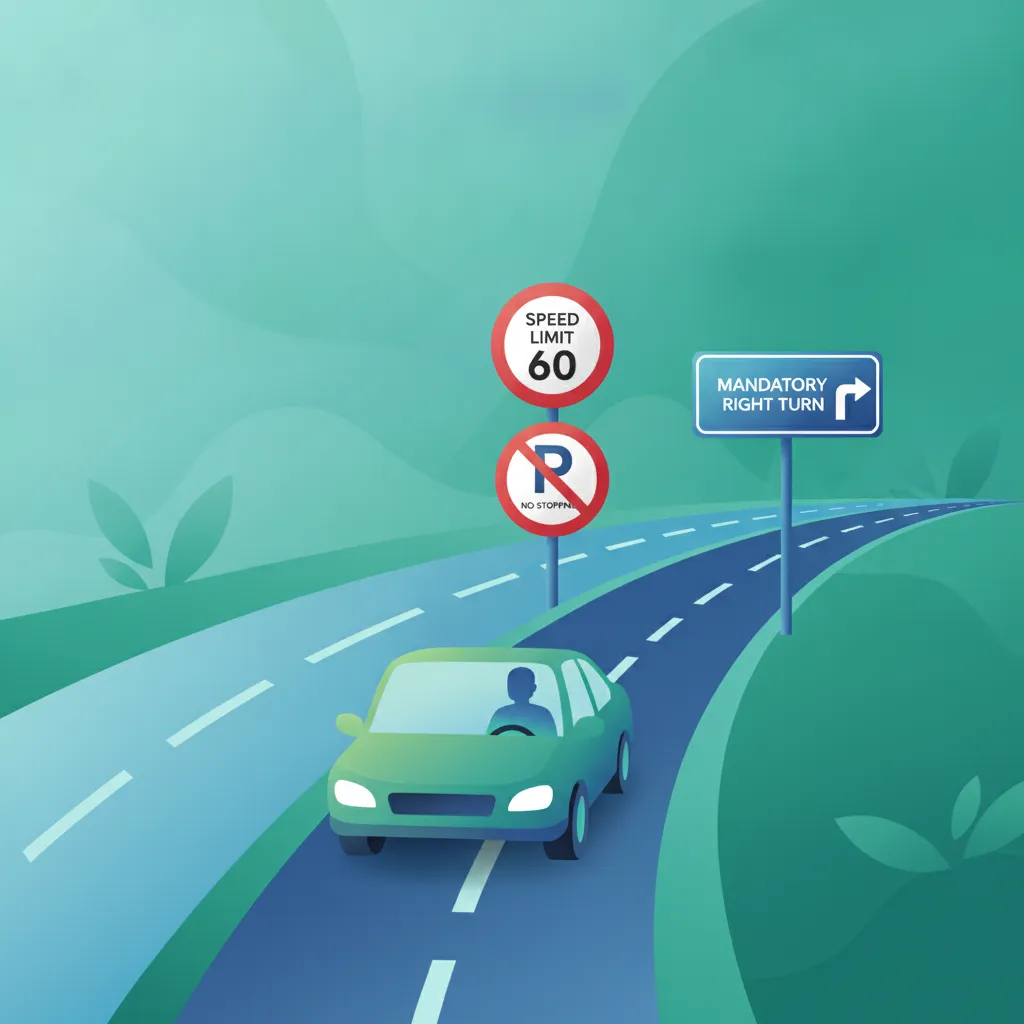
This lesson covers regulatory signs, which are legally enforceable and command specific actions from drivers. You will learn the meaning of critical signs such as the stop sign, yield sign, no-entry signs, and various parking and stopping prohibitions. The content also explains signs that establish speed limits, one-way streets, and restricted areas like environmental or pedestrian zones.
This lesson explains the function of informational signs, which provide helpful guidance for navigation and services. You will learn how to read directional signs on all types of roads, including the Autobahn, and understand distance markers to upcoming cities and exits. The lesson also covers the symbols for services such as fuel stations, restaurants, and tourist attractions.
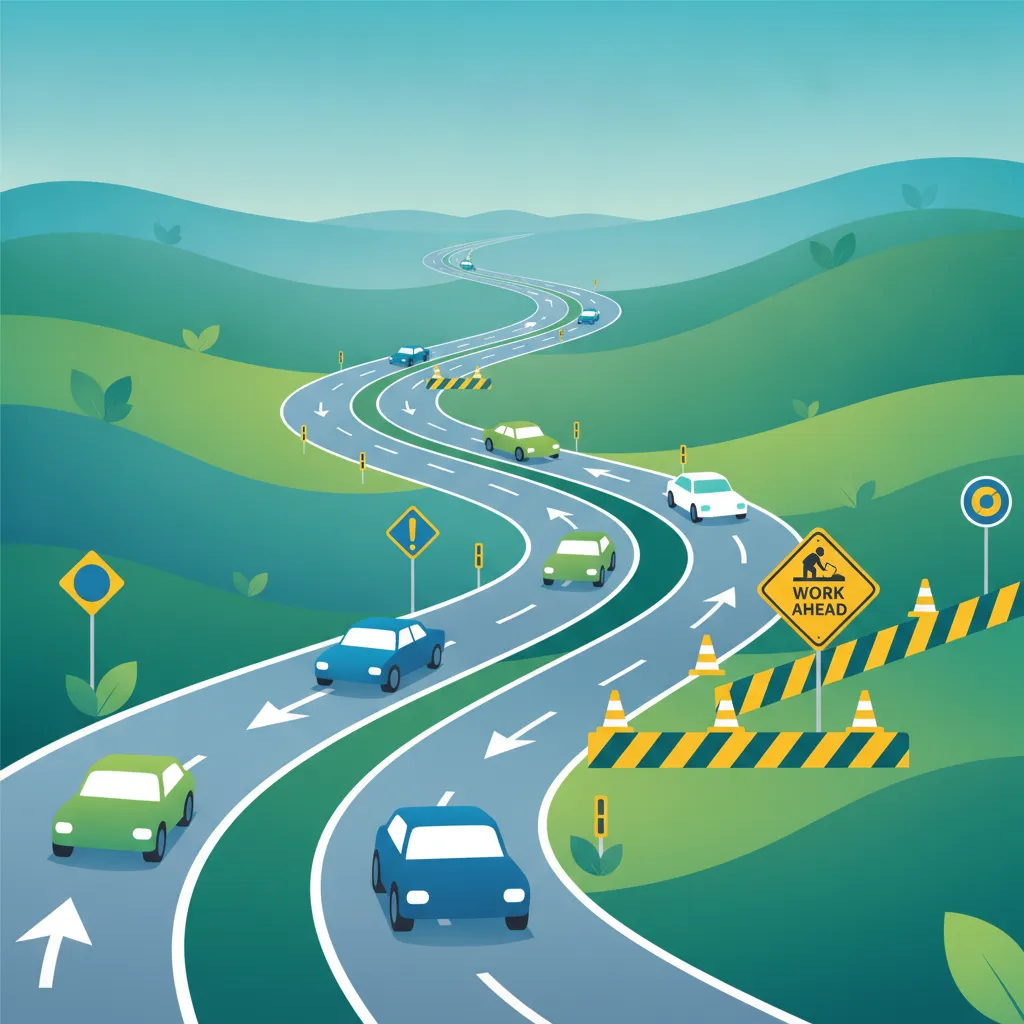
This lesson focuses on interpreting various road markings, from lane lines and directional arrows to stop lines and pedestrian crossings. It explains the rules associated with solid versus broken lines and how to navigate temporary markings found in construction zones. Correctly reading these markings is vital for proper lane discipline and safety.

This lesson provides comprehensive guidance on using vehicle signals to communicate with other road users. It covers the correct timing and use of turn indicators, the application of hand signals when necessary, and the proper use of hazard lights. Effective signaling is presented as a cornerstone of predictable and safe driving.
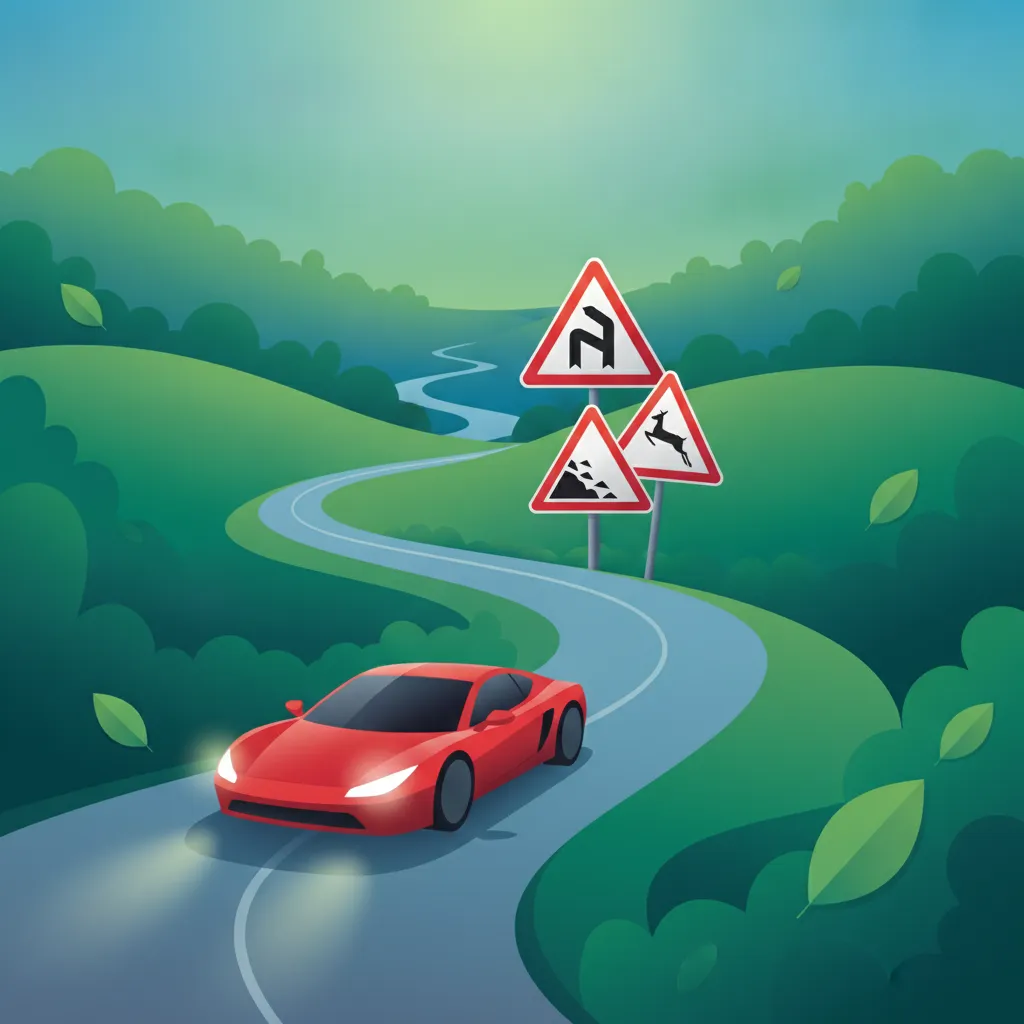
This lesson focuses on warning signs, which are designed to alert drivers to potential dangers or unusual conditions on the road ahead. You will learn to identify signs indicating sharp bends, upcoming intersections, railway crossings, road works, and risks like slippery surfaces or wildlife. Recognizing these signs allows you to anticipate hazards and adjust your driving proactively.
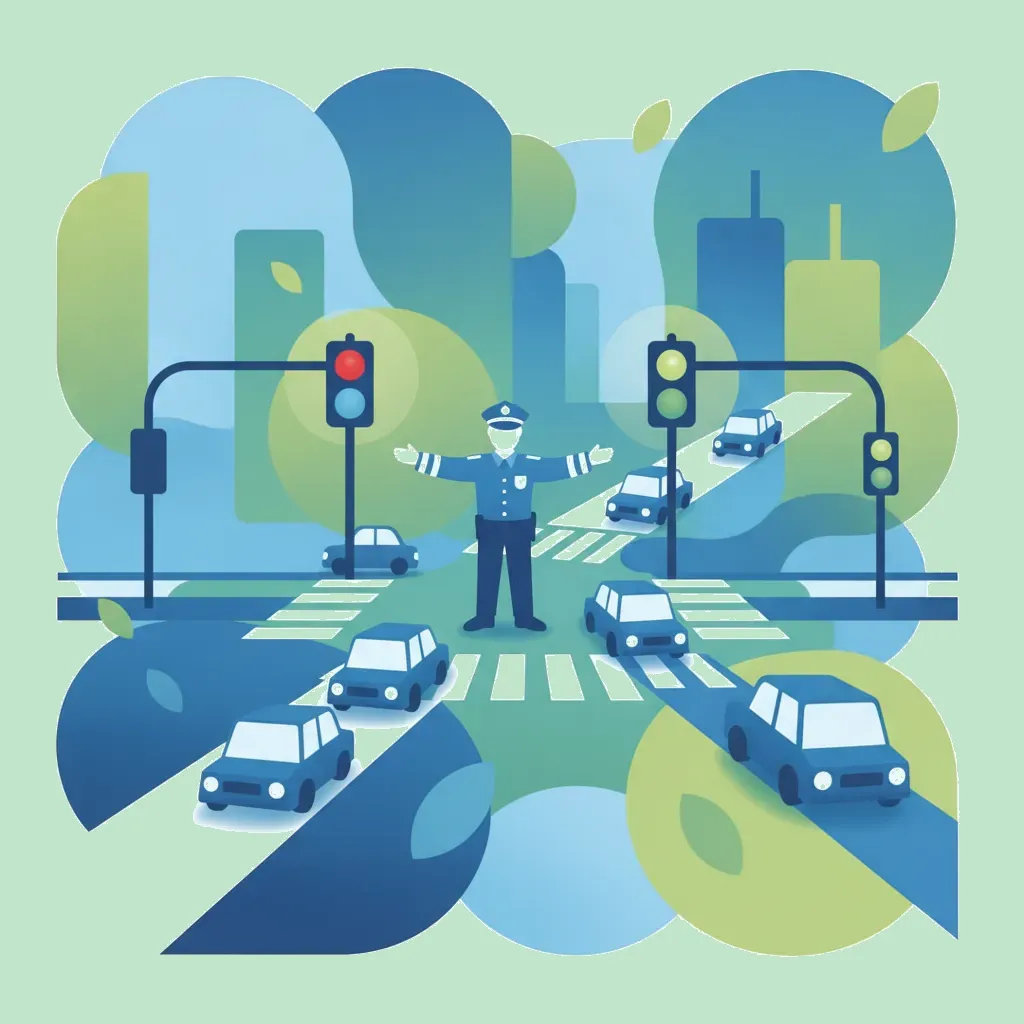
This lesson explains the function and meaning of traffic light signals, including standard cycles, flashing lights, and arrows. It also details how to interpret and obey hand signals given by police officers, which override all other signs and signals. Understanding these instructions is crucial for navigating controlled junctions and emergency situations.

This lesson explains the various types of road markings and their significance for guiding traffic and ensuring safety. It covers the difference between solid and broken lines for lane separation and overtaking rules, the function of stop lines at intersections, and the markings for pedestrian crosswalks. You will also learn to interpret directional arrows, bicycle lane markings, and other symbols painted on the road.

Effective communication is critical for road safety, and this lesson details the correct use of a vehicle's signaling devices. It explains when and how to use turn signals (indicators), hazard warning lights, the horn, and headlight flashes to clearly communicate your intentions to other road users. Proper signaling helps prevent misunderstandings and is a key component of defensive and cooperative driving.

This lesson provides a detailed overview of the legal framework governing the AM licence in Germany. It explains the classification of vehicles like mopeds and scooters based on engine displacement, power output, and weight. Learners will understand the official age requirements, licensing procedures, and fundamental StVO regulations.

This lesson clarifies the distinctions between AM-class vehicles and motorcycles in higher licence categories (A1, A2, A). It focuses on the specific limits related to engine capacity, maximum speed, and vehicle dimensions that define the AM category. Learners will also understand differences in training requirements and road usage restrictions.
Understand how to interpret German road signs and apply their meaning in real-world traffic scenarios relevant to AM riders. This lesson covers correct recognition and response to various signs encountered while riding.
This lesson focuses on interpreting various road markings, from lane lines and directional arrows to stop lines and pedestrian crossings. It explains the rules associated with solid versus broken lines and how to navigate temporary markings found in construction zones. Correctly reading these markings is vital for proper lane discipline and safety.
This lesson explains the function and meaning of traffic light signals, including standard cycles, flashing lights, and arrows. It also details how to interpret and obey hand signals given by police officers, which override all other signs and signals. Understanding these instructions is crucial for navigating controlled junctions and emergency situations.
This lesson provides comprehensive guidance on using vehicle signals to communicate with other road users. It covers the correct timing and use of turn indicators, the application of hand signals when necessary, and the proper use of hazard lights. Effective signaling is presented as a cornerstone of predictable and safe driving.
This lesson explains the function of informational signs, which provide helpful guidance for navigation and services. You will learn how to read directional signs on all types of roads, including the Autobahn, and understand distance markers to upcoming cities and exits. The lesson also covers the symbols for services such as fuel stations, restaurants, and tourist attractions.
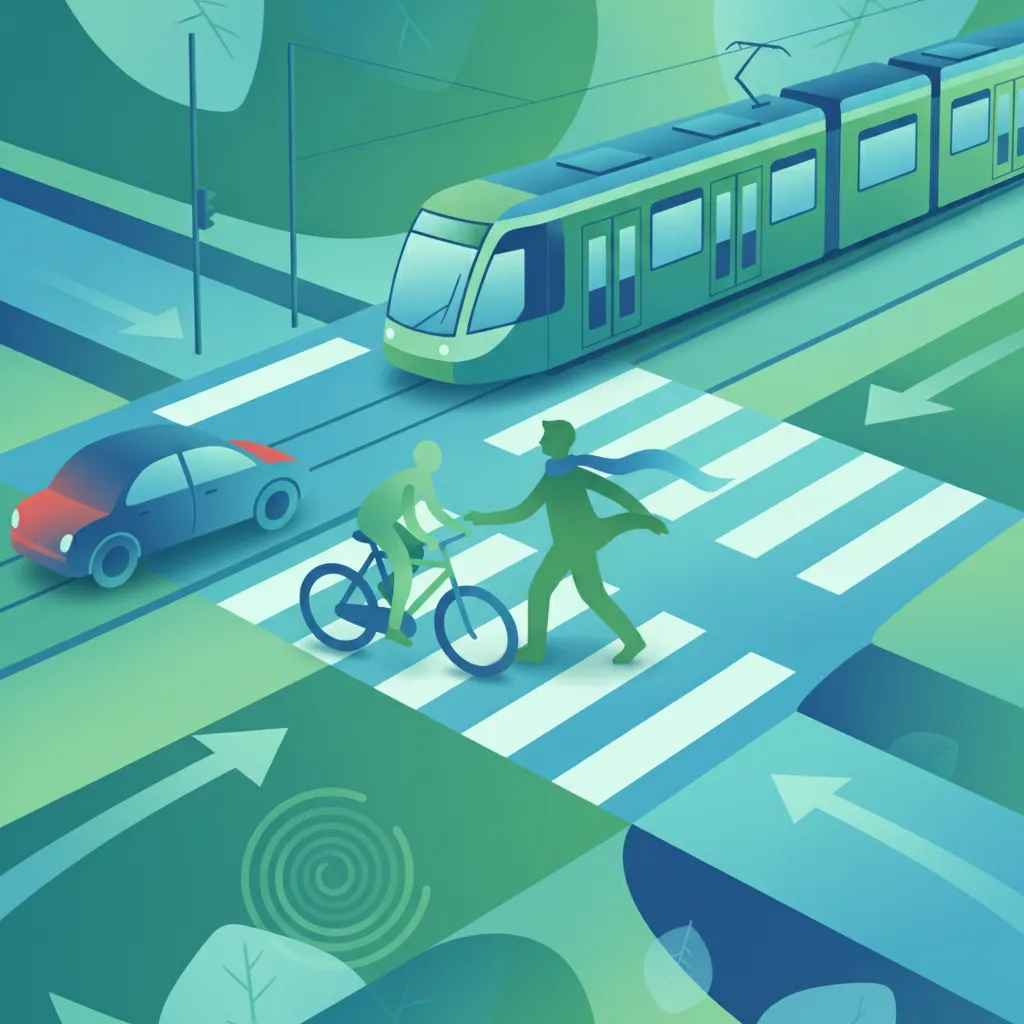
This lesson details the critical right-of-way regulations according to the German StVO. It covers the default 'right before left' rule, the meaning of priority road signs, and specific rules for roundabouts and yielding to pedestrians. A thorough understanding of these priority rules is fundamental for preventing accidents at junctions.
This lesson explains the various types of road markings and their significance for guiding traffic and ensuring safety. It covers the difference between solid and broken lines for lane separation and overtaking rules, the function of stop lines at intersections, and the markings for pedestrian crosswalks. You will also learn to interpret directional arrows, bicycle lane markings, and other symbols painted on the road.
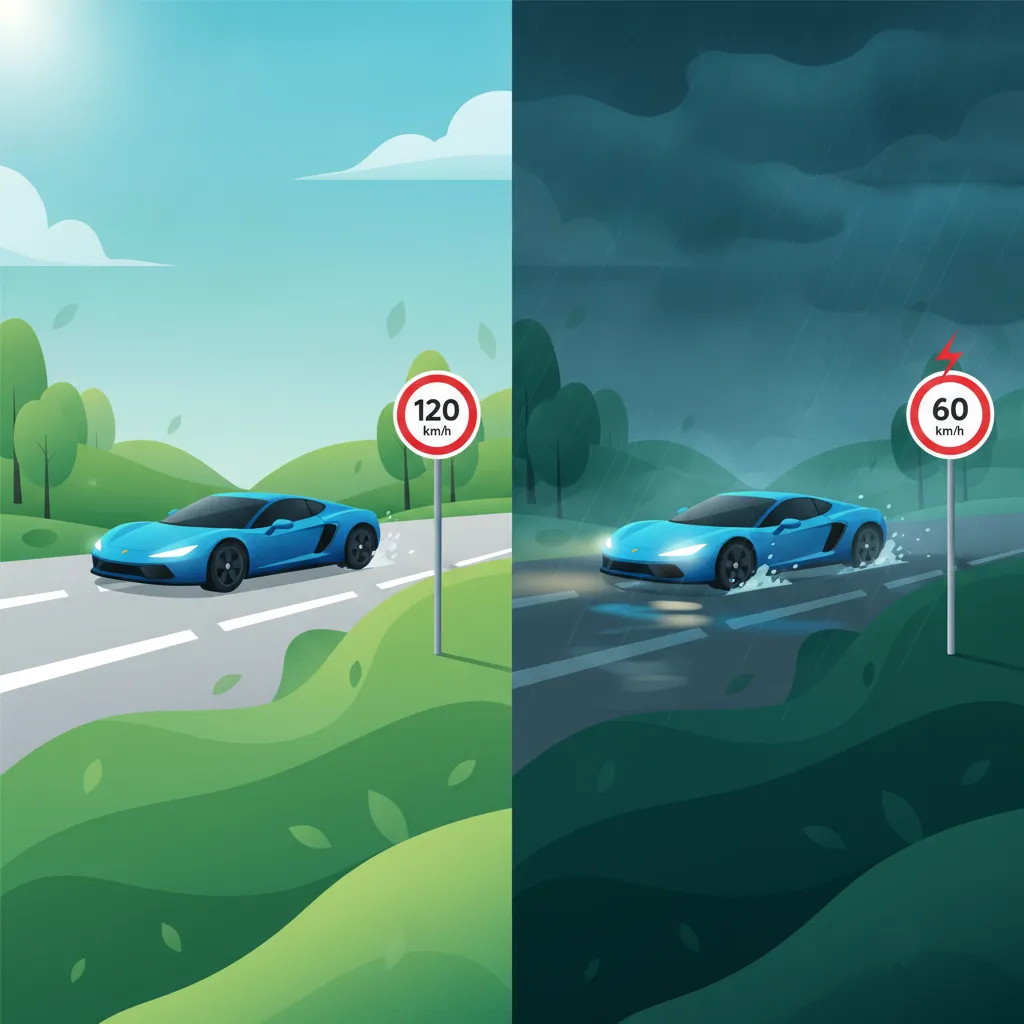
This lesson details the various speed limits applicable in Germany, from urban zones to rural roads. It emphasizes the critical skill of adapting speed to prevailing conditions such as rain, fog, or poor road surfaces. The content explains how external factors significantly impact vehicle handling and stopping distances.
This lesson details the legal obligations every AM licence holder must follow. It emphasizes compliance with the Straßenverkehrs-Ordnung (StVO), including mandatory helmet use and maintaining vehicle roadworthiness. The content covers insurance requirements, accident reporting procedures, and the legal consequences of non-compliance.
This lesson addresses the challenges of operating a small AM vehicle in dense, mixed traffic. It provides strategies for increasing visibility to other drivers, positioning oneself defensively, and safely sharing lanes with cyclists. The content emphasizes awareness of larger vehicles' blind spots and maintaining a safe space cushion.
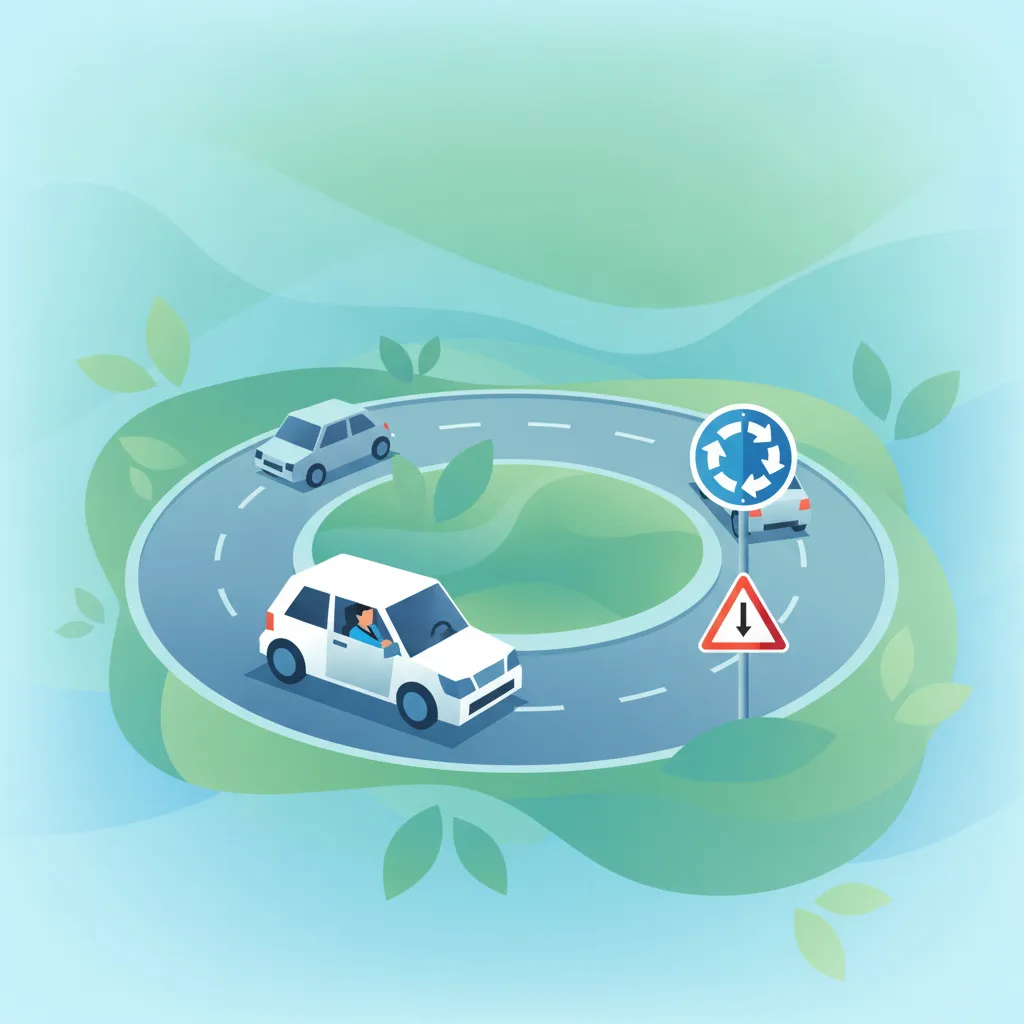
This lesson provides clear instructions on how to navigate roundabouts in Germany. It explains the crucial rule of yielding to traffic already inside the circle, proper lane choice for your intended exit, and the correct use of signals. Safe interaction with cyclists and pedestrians at roundabout exits is also covered.
Find clear answers to common questions learners have about Overview of Road Signs Relevant to AM Riders. Learn how the lesson is structured, which driving theory objectives it supports, and how it fits into the overall learning path of units and curriculum progression in Germany. These explanations help you understand key concepts, lesson flow, and exam focused study goals.
In Germany, shape often indicates function. Circular signs with red borders are typically regulatory and restrictive, while triangular signs with red borders are warnings. Rectangular signs are generally for information or directions, helping you categorize the command or warning quickly while riding.
Yes, the StVO applies to all road users. However, some signs specifically exclude certain vehicle types. As an AM rider, you must pay special attention to signs that prohibit mopeds or limit access based on vehicle class.
Look at the color. Generally, signs with a red border represent a prohibition or a restriction. Conversely, circular signs with a blue background and white symbols are mandatory, meaning you must perform the action shown, such as using a specific lane.
No, you must obey all road signs that apply to your vehicle category. Never assume a sign is 'only for cars' unless it specifically shows a pictogram of a car or explicitly lists vehicle exemptions that include your moped.
Begin your targeted revision now. Use our practice search to quickly find specific German driving theory questions. Filter by StVO rules, road signs, or hazard perception to create your focused study plan. Master challenging areas and prepare confidently for your theoretical driving test.