
This lesson provides an essential guide to interpreting road markings, lane guidance, and temporary construction signals as part of your AM licence training. By mastering these visual cues, you will understand how to maintain proper lane discipline and respond safely to changing road conditions. This knowledge is crucial for both passing your German theory exam and navigating real-world traffic as a moped or scooter rider.
Lesson content overview
Navigating Germany's roads safely and efficiently requires a thorough understanding of not just traffic signs and signals, but also the critical information conveyed by road markings. These lines, arrows, and symbols painted on the road surface are silent guides, dictating lane usage, indicating permissible maneuvers, and warning of potential hazards. For anyone operating a moped, scooter, or other AM licence vehicle, correctly interpreting these markings is fundamental to maintaining lane discipline, preventing accidents, and ensuring smooth traffic flow.
This comprehensive guide will delve into the various types of road markings you will encounter, from the basic distinctions between continuous and interrupted lines to specialized lane guidance and temporary markings used in construction zones. Mastering this knowledge is essential for every rider, as it directly impacts your safety and adherence to the Straßenverkehrs-Ordnung (StVO).
Road markings serve as an indispensable layer of communication between road authorities and drivers. They are designed to optimize safety, clearly communicate driver responsibilities, and facilitate the orderly flow of traffic. By providing continuous visual cues, markings reduce ambiguity and help prevent dangerous maneuvers such as sudden lane changes or improper overtaking.
The underlying logic is straightforward: clear lines on the road surface create predictable environments. This predictability is vital for all road users, especially for those on two wheels, who are more vulnerable. Understanding these visual instructions allows you to anticipate the actions of other road users, position your vehicle correctly, and adjust your speed proactively, all of which are crucial skills that build upon your understanding of basic traffic rules and road signage.
The vast majority of road markings in Germany adhere to a few core principles, primarily differentiated by the nature of the line itself. The distinction between continuous (solid) and interrupted (broken) lines is perhaps the most important concept to grasp, as it dictates whether you are permitted to cross a line or not.
A continuous line on the road surface is a definitive safety boundary. It is an unbroken line, usually white, that indicates a strict prohibition against crossing, driving on, or straddling it. This rule applies universally, meaning you must not cross a solid line under any circumstances, whether to overtake, change lanes, or merge. It represents a critical safety measure, often placed in areas where crossing would be inherently dangerous due to limited visibility, upcoming hazards, or specific traffic flow requirements.
Common examples include:
A common misunderstanding among new drivers is believing that a continuous line can be crossed if there is no oncoming traffic or if it seems "safe." This is incorrect; the prohibition is absolute, regardless of perceived safety. Disregarding a continuous line is a serious traffic violation and can lead to dangerous situations and legal penalties.
Remember: A continuous line in Germany is a barrier that must not be crossed. No exceptions for overtaking, changing lanes, or turning.
An interrupted line, characterized by a series of dashes with spaces between them, offers more flexibility than a continuous line. It signifies that crossing or overtaking is generally permitted, provided it is safe to do so. This means you must have clear visibility, ensure there is no oncoming traffic, and that the maneuver can be completed without endangering yourself or other road users.
Interrupted lines are commonly found as:
While an interrupted line grants permission to cross, it is not an invitation to act carelessly. Always perform a thorough check of your surroundings, use your mirrors, signal your intentions, and assess the speed and position of other vehicles before initiating any maneuver that involves crossing a broken line. Assuming that crossing is always safe simply because the line is broken is a dangerous misconception.
A road marking consisting of dashes and spaces, allowing drivers to cross it for overtaking or lane changes when safe and permitted by other traffic rules.
Center line markings are positioned on the road to separate traffic moving in opposite directions. These are some of the most critical markings for preventing head-on collisions and managing overtaking maneuvers. They can appear in several configurations:
Understanding these variations is key to safe lane discipline and deciding when and where overtaking is permissible. Always pay close attention to which line is closer to your vehicle in a mixed-line scenario.
Edge line markings delineate the outer boundaries of the carriageway, separating the active driving lanes from the shoulder, pavement, or verges. These lines are typically continuous white lines, but can sometimes be interrupted, especially to indicate a permitted exit from a main road or entrance to a rest area.
Crossing the edge line without a legitimate reason can be hazardous. The area beyond the edge line (the shoulder or hard shoulder) may not be suitable for driving, potentially containing debris, uneven surfaces, or being reserved for emergency vehicles. Remaining within the marked lanes is crucial for your safety and the integrity of your vehicle.
Beyond simple lines, road surfaces are often adorned with arrows, symbols, and specific patterns that provide detailed instructions for lane usage and impending actions.
Turn arrows and lane guidance arrows are crucial for navigating intersections and multi-lane roads. These large white arrows painted directly onto the lane indicate the mandatory direction of travel for vehicles in that particular lane.
When you enter a lane marked with a directional arrow, you are legally obligated to follow that direction. Ignoring these arrows and attempting to turn from a straight-only lane, or going straight from a turn-only lane, is highly dangerous and a common cause of collisions at intersections. Always choose your lane well in advance, based on your intended direction of travel.
A stop line is a thick, continuous white line painted across the entire width of a lane or lanes, usually at an intersection, pedestrian crossing, or railway crossing. Its purpose is to define the precise point where vehicles must stop when required by a traffic signal, a stop sign, or when yielding to pedestrians or other traffic.
Rolling past the stop line, even slightly, is a common violation that can place pedestrians at risk or impede the flow of cross-traffic. Always ensure your entire vehicle is behind the stop line when required to stop.
Pedestrian crossings, commonly known as "zebra crossings" (Zebrastreifen in German), are clearly marked with thick, parallel white stripes on the road surface. These markings indicate a designated area where pedestrians have priority over vehicles.
Associated Rules:
Misunderstandings often arise when drivers assume a pedestrian will wait or are not fully on the crossing. The rule is clear: if a pedestrian is on or about to enter the crossing, you must stop. Failing to yield at a zebra crossing endangers vulnerable road users and carries significant penalties in Germany.
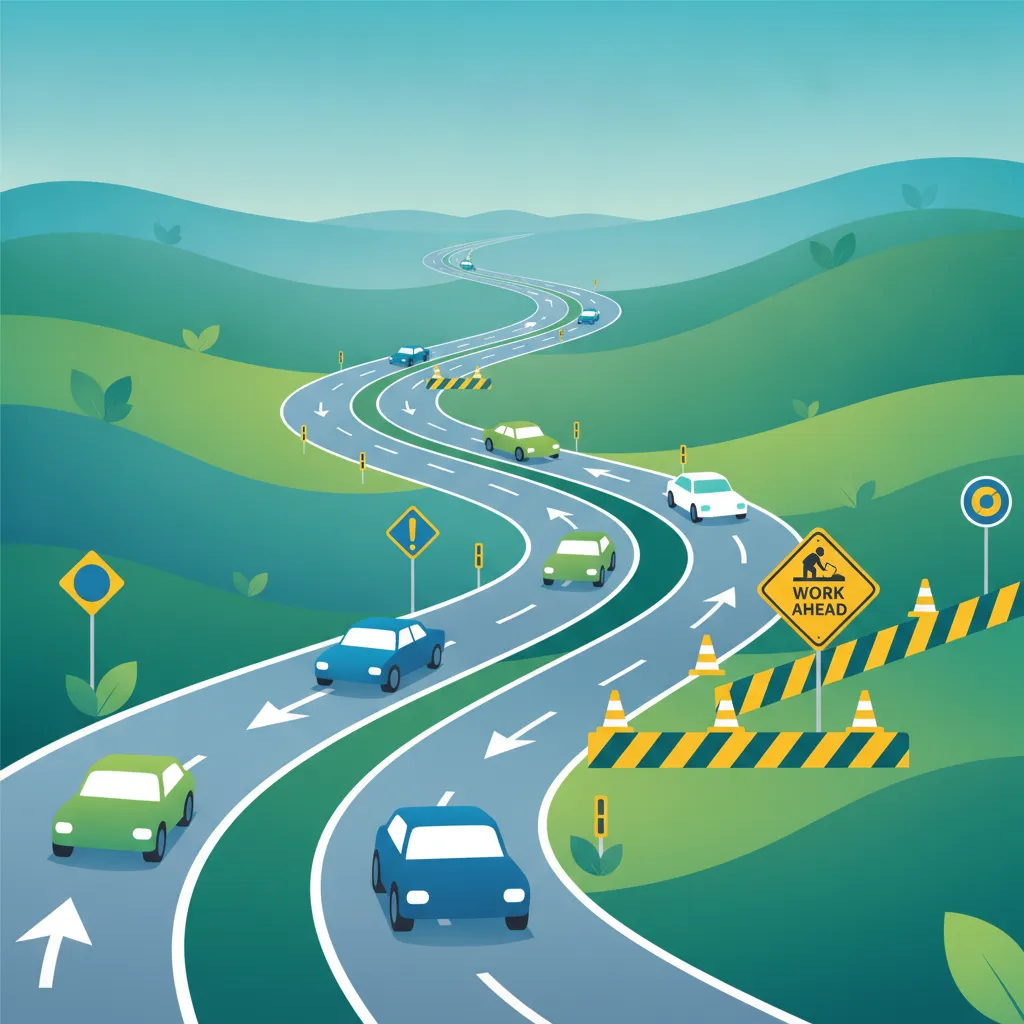
Construction zones, roadworks, and special events often necessitate temporary changes to road layouts and traffic flow. In such instances, temporary markings are applied to guide drivers through altered routes or modified lane configurations. These markings are usually different in color – often yellow – to clearly distinguish them from the permanent white markings.
When yellow temporary markings are present, they override any permanent white markings. Always follow the temporary markings.
Practical Meaning:
Associated Rules:
Ignoring temporary markings can lead to serious accidents, as other drivers will also be following these new instructions. They are critical for maintaining order and safety in dynamic construction environments. For AM licence holders, navigating these zones requires heightened awareness and precise vehicle control due to the often-narrower lanes and potential for uneven surfaces.
Adhering to road marking regulations is not merely a suggestion; it's a legal requirement enshrined in the German traffic code (StVO). Here's a summary of the most critical rules:
Disregarding road markings is a significant factor in many traffic incidents. Understanding common violations can help you avoid them:
The effectiveness and interpretation of road markings can be influenced by various external factors. Drivers must adjust their behavior accordingly.
The design and implementation of road markings are rooted in fundamental principles of human perception, reaction times, and traffic psychology.
Road markings are a fundamental component of the German traffic system, providing vital instructions that complement traffic signs and signals. For AM licence holders, correctly interpreting these markings is not just about passing a theory test; it's about actively enhancing safety and ensuring smooth, predictable travel on every journey.
Remember these core principles:
By internalizing these rules and consistently applying them, you contribute significantly to your own safety and the safety of all road users. Always be vigilant, anticipate changes in road conditions, and adapt your riding behavior to the instructions given by the road surface.
This lesson covers the essential road markings that AM licence riders must interpret on German roads, including the critical distinction between solid (forbidden to cross) and broken (cross when safe) white lines, various center line configurations, turn arrows that mandate lane direction, stop lines that define halting points at intersections, and zebra crossings where pedestrians have priority. Temporary yellow markings in construction zones are explicitly highlighted as overriding all permanent white markings. The content also addresses how weather, lighting, and road type affect marking visibility, and summarizes nine key StVO rules governing road marking compliance. Understanding these visual cues is vital for both passing the German theory test and navigating real-world traffic safely as a moped or scooter rider.
A short set of high-value points that capture the most important learning from this lesson.
Solid (continuous) white lines are absolute prohibitions — crossing them for any reason is strictly forbidden under StVO rules.
Broken (interrupted) white lines permit crossing for overtaking or lane changes only when it is genuinely safe to do so.
Mixed lines (solid next to broken) are interpreted based on which line is on YOUR side: solid means stop, broken means go if safe.
Temporary yellow markings in construction zones always override permanent white markings and must be followed.
Directional arrows painted on the road dictate mandatory lane usage — turning against an arrow is prohibited and dangerous.
Explore all units and lessons included in this driving theory course.
Center lines separate opposing traffic and appear as single broken, single solid, double solid, or mixed configurations.
Stop lines (Haltlinien) define the exact point where you must halt when required by signals or signs.
At zebra crossings (Zebrastreifen), pedestrians have priority — stop if they are on or about to enter the crossing.
Yellow temporary markings in roadworks override white permanent markings without exception.
Edge lines define the road boundary; the shoulder is not for regular driving unless specifically permitted by signage.
Believing a solid line can be crossed when no traffic is visible — the prohibition is absolute regardless of conditions.
Misinterpreting mixed lines by focusing on the wrong side or assuming crossing is always permitted from the broken-line side.
Rolling slightly past a stop line at a red light, blocking the pedestrian crossing or encroaching into the intersection.
Failing to yield at zebra crossings because the pedestrian has not fully stepped onto the stripes yet — the rule activates when they are clearly intending to cross.
Attempting to turn from a straight-only lane or going straight from a turn-only lane because the arrow was noticed too late.
Lesson content overview
A short set of high-value points that capture the most important learning from this lesson.
Solid (continuous) white lines are absolute prohibitions — crossing them for any reason is strictly forbidden under StVO rules.
Broken (interrupted) white lines permit crossing for overtaking or lane changes only when it is genuinely safe to do so.
Mixed lines (solid next to broken) are interpreted based on which line is on YOUR side: solid means stop, broken means go if safe.
Temporary yellow markings in construction zones always override permanent white markings and must be followed.
Directional arrows painted on the road dictate mandatory lane usage — turning against an arrow is prohibited and dangerous.
Explore all units and lessons included in this driving theory course.
Center lines separate opposing traffic and appear as single broken, single solid, double solid, or mixed configurations.
Stop lines (Haltlinien) define the exact point where you must halt when required by signals or signs.
At zebra crossings (Zebrastreifen), pedestrians have priority — stop if they are on or about to enter the crossing.
Yellow temporary markings in roadworks override white permanent markings without exception.
Edge lines define the road boundary; the shoulder is not for regular driving unless specifically permitted by signage.
Believing a solid line can be crossed when no traffic is visible — the prohibition is absolute regardless of conditions.
Misinterpreting mixed lines by focusing on the wrong side or assuming crossing is always permitted from the broken-line side.
Rolling slightly past a stop line at a red light, blocking the pedestrian crossing or encroaching into the intersection.
Failing to yield at zebra crossings because the pedestrian has not fully stepped onto the stripes yet — the rule activates when they are clearly intending to cross.
Attempting to turn from a straight-only lane or going straight from a turn-only lane because the arrow was noticed too late.
Explore search topics learners often look for when studying Road Markings, Lane Guidance, and Temporary Markings. These topics reflect common questions about road rules, driving situations, safety guidance, and lesson level theory preparation for learners in Germany.
Browse additional driving theory lessons that cover connected traffic rules, road signs, and common driving situations related to this topic. Improve your understanding of how different rules interact across everyday traffic scenarios.
Explore complex road markings beyond basic lines and arrows. This lesson covers specialized markings for bike lanes, bus lanes, and temporary construction zones, helping you navigate diverse traffic situations safely according to German StVO.

This lesson explains the various types of road markings and their significance for guiding traffic and ensuring safety. It covers the difference between solid and broken lines for lane separation and overtaking rules, the function of stop lines at intersections, and the markings for pedestrian crosswalks. You will also learn to interpret directional arrows, bicycle lane markings, and other symbols painted on the road.
This lesson details the critical right-of-way regulations according to the German StVO. It covers the default 'right before left' rule, the meaning of priority road signs, and specific rules for roundabouts and yielding to pedestrians. A thorough understanding of these priority rules is fundamental for preventing accidents at junctions.
This lesson introduces the various categories of German road signs, focusing on their meaning and application for AM riders. It covers regulatory signs like speed limits, warning signs for hazards, and informational signs for guidance. Learners will be ableto identify signs by their shape, color, and symbols, ensuring correct interpretation while riding.
This lesson explains the function and meaning of traffic light signals, including standard cycles, flashing lights, and arrows. It also details how to interpret and obey hand signals given by police officers, which override all other signs and signals. Understanding these instructions is crucial for navigating controlled junctions and emergency situations.

This lesson provides a thorough explanation of traffic light systems ('Lichtzeichenanlagen') used in Germany. It details the meaning of red, amber, and green lights and the correct response to each phase of the signal sequence. The lesson also covers special signals, such as the green arrow for turning right on red, pedestrian and cyclist signals, and the authority of signals given by a police officer, which override all other signs.
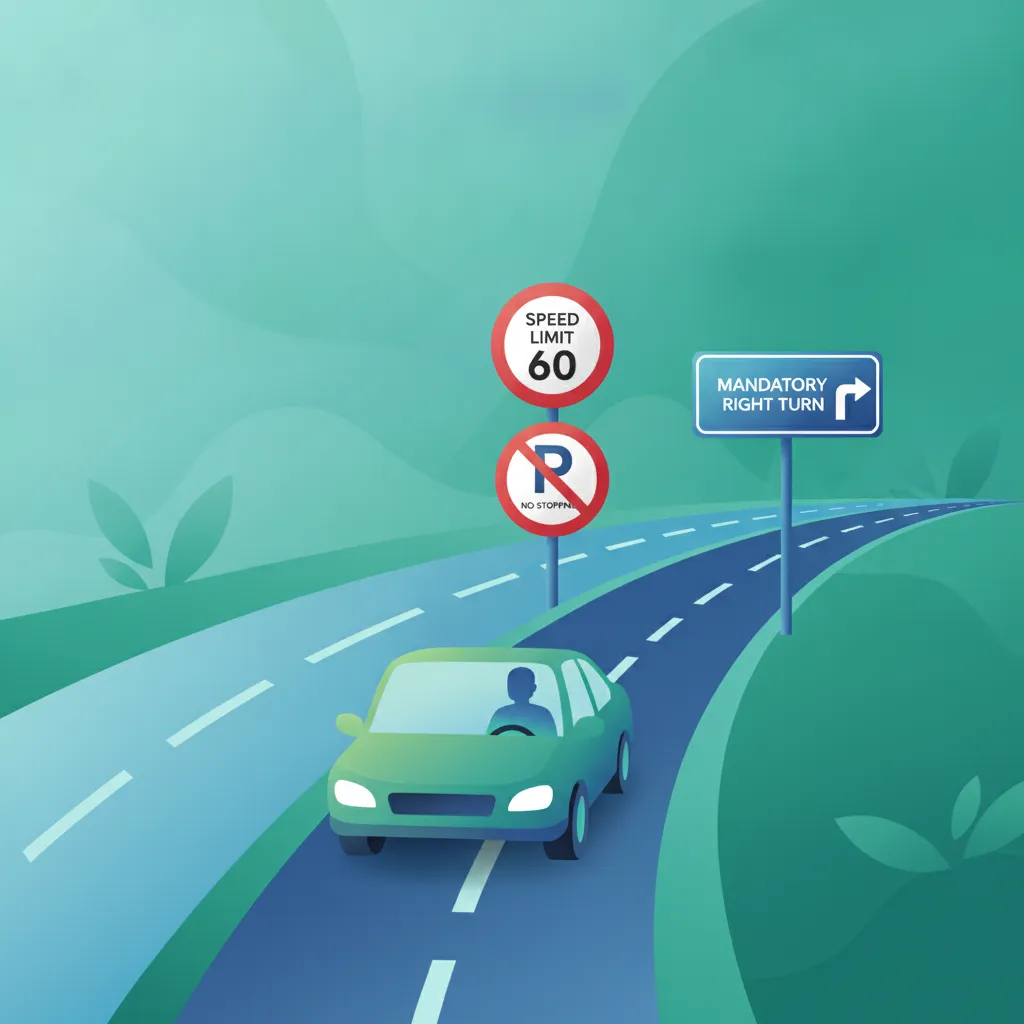
This lesson covers regulatory signs, which are legally enforceable and command specific actions from drivers. You will learn the meaning of critical signs such as the stop sign, yield sign, no-entry signs, and various parking and stopping prohibitions. The content also explains signs that establish speed limits, one-way streets, and restricted areas like environmental or pedestrian zones.
This lesson provides comprehensive guidance on using vehicle signals to communicate with other road users. It covers the correct timing and use of turn indicators, the application of hand signals when necessary, and the proper use of hazard lights. Effective signaling is presented as a cornerstone of predictable and safe driving.
This lesson explains the function of informational signs, which provide helpful guidance for navigation and services. You will learn how to read directional signs on all types of roads, including the Autobahn, and understand distance markers to upcoming cities and exits. The lesson also covers the symbols for services such as fuel stations, restaurants, and tourist attractions.
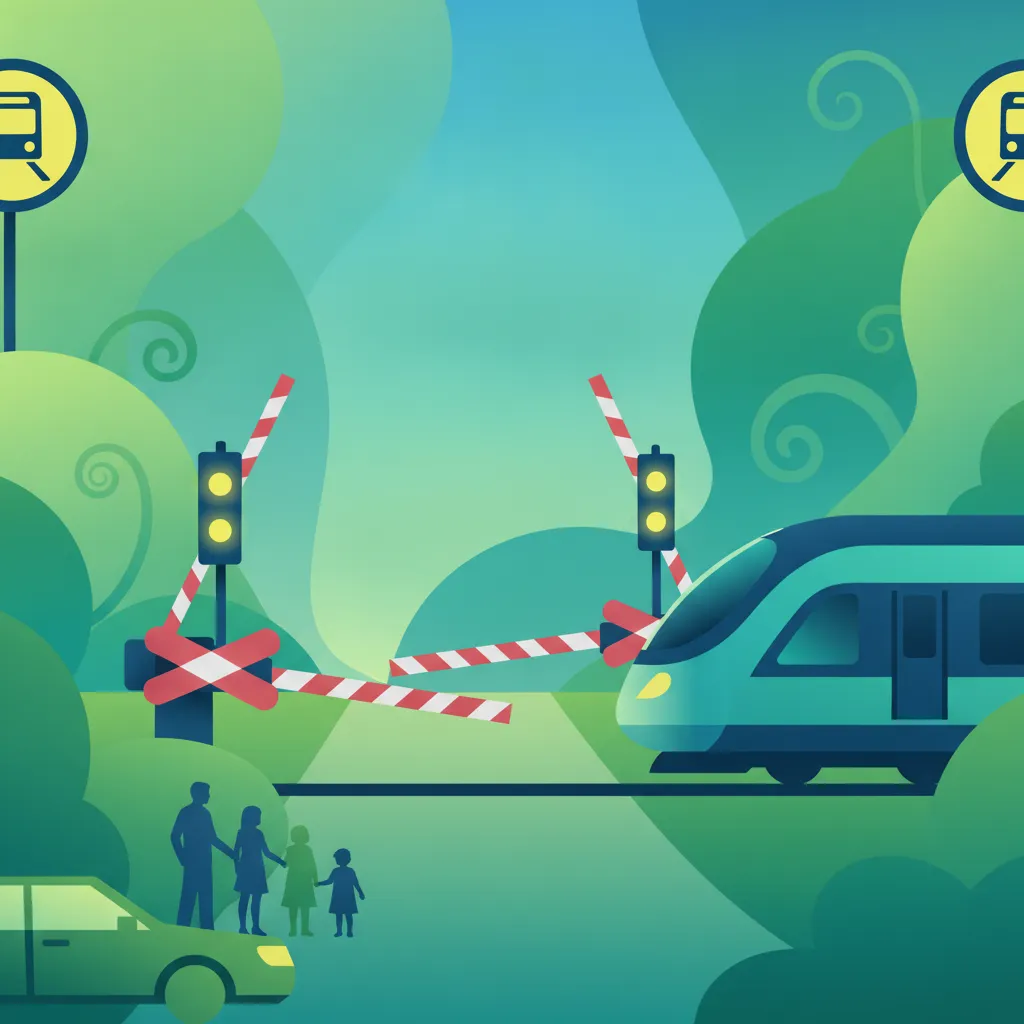
This lesson focuses on the critical safety rules for approaching and traversing railway crossings ('Bahnübergang'). It explains the meaning of the St. Andrew's Cross sign ('Andreaskreuz'), flashing lights, and acoustic signals that indicate an approaching train. You will learn the correct behavior for crossings with and without barriers and understand the absolute priority of rail traffic.
This lesson covers the essential behavioral rules mandated by the German Road Traffic Act (StVO) that form the foundation of safe driving. Key principles discussed include the mandatory rule to drive on the right side of the road, maintaining a safe following distance, and adapting speed to conditions. It also explains the regulations for overtaking, merging, and parking to ensure smooth and safe traffic flow.
Learn how road markings dictate lane usage, stopping positions, and turning procedures at various types of intersections. Understand the interplay between markings and priority rules to safely navigate complex junctions in Germany.
This lesson details the critical right-of-way regulations according to the German StVO. It covers the default 'right before left' rule, the meaning of priority road signs, and specific rules for roundabouts and yielding to pedestrians. A thorough understanding of these priority rules is fundamental for preventing accidents at junctions.
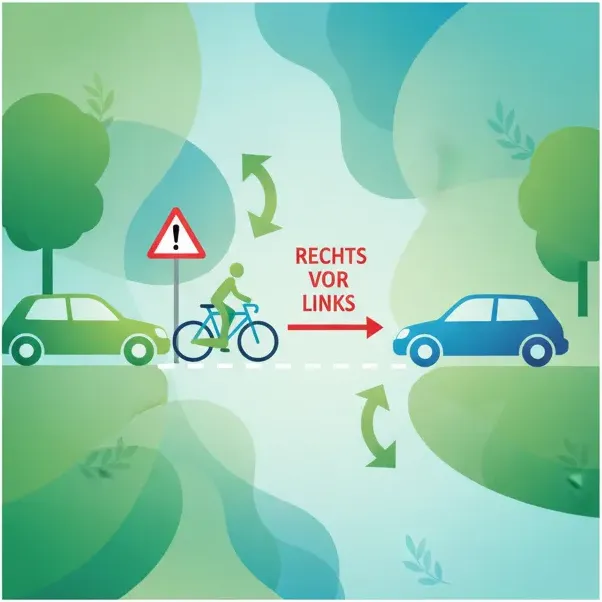
This lesson provides a detailed guide to navigating various types of intersections safely and correctly. It explains how priority is determined by traffic signs (such as the priority road, yield, and stop signs) and traffic lights. The lesson also covers complex scenarios, including the rules for turning left across oncoming traffic, to ensure you can handle any junction with confidence.
This lesson explains the various types of road markings and their significance for guiding traffic and ensuring safety. It covers the difference between solid and broken lines for lane separation and overtaking rules, the function of stop lines at intersections, and the markings for pedestrian crosswalks. You will also learn to interpret directional arrows, bicycle lane markings, and other symbols painted on the road.
This lesson explains the concept of a priority road ('Vorfahrtstraße'), where you have right-of-way over traffic from intersecting roads. You will learn to recognize the signs that mark the beginning and end of a priority road. The lesson also covers how priority is managed through signals, including standard traffic lights, the special 'Grünpfeil' (green arrow) sign, and the overriding authority of a police officer directing traffic.

This lesson explains the specific rules for driving in roundabouts ('Kreisverkehr'), a common feature on German roads. It covers the correct procedure for approaching and entering, the rule that traffic already in the circle has priority, and the requirement to signal before exiting. The lesson also addresses the unique characteristics of mini-roundabouts and how to interact with cyclists and pedestrians around them.

This lesson teaches a structured method for approaching any intersection. It covers identifying the type of junction, determining who has the right-of-way based on signs or rules, and performing thorough visual checks. The focus is on developing a safe and decisive approach to reduce risk in these high-conflict areas.
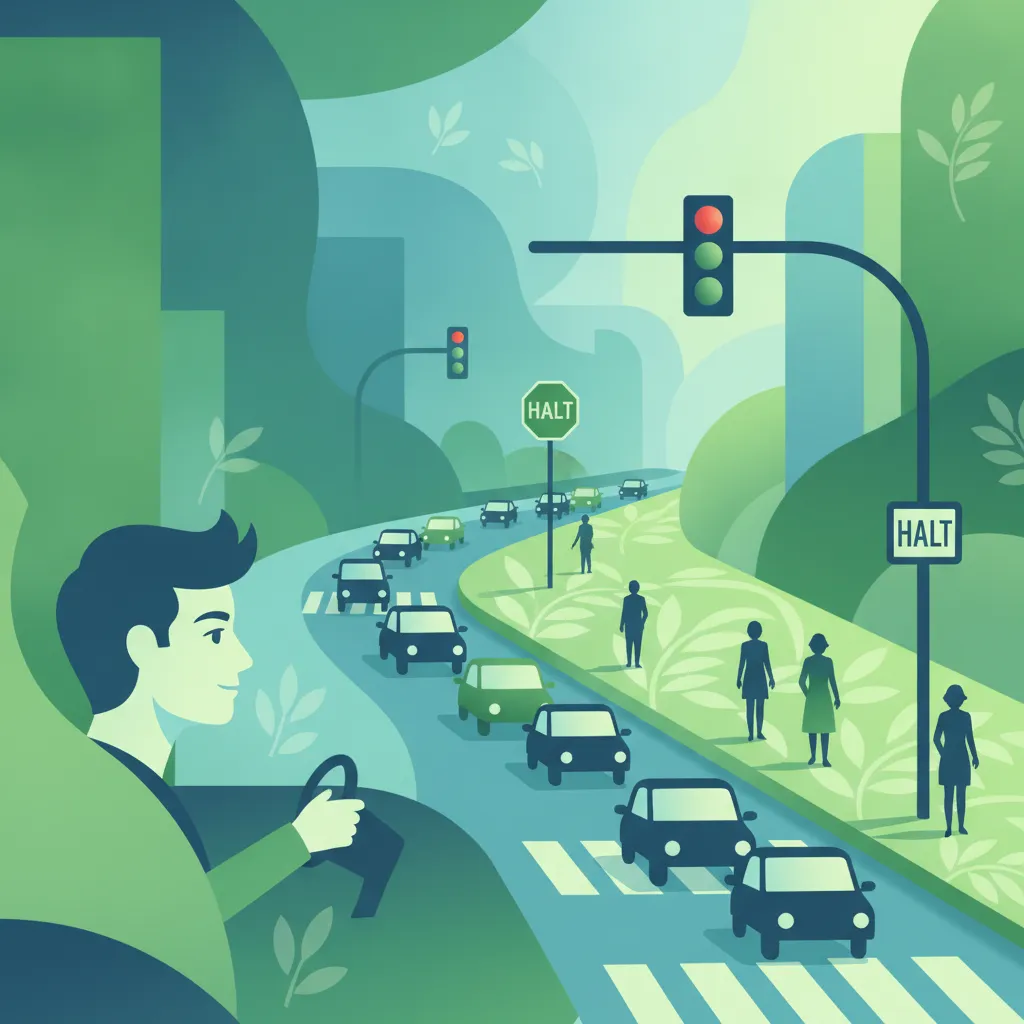
This lesson details the safe approach and navigation of various intersection types, including those controlled by traffic lights, stop signs, and give-way signs. Emphasis is placed on comprehensive observation of traffic flow, establishing eye contact with other road users, and ensuring clear visibility before proceeding. The lesson also covers correct lane positioning for turning and the importance of anticipating pedestrian movements.
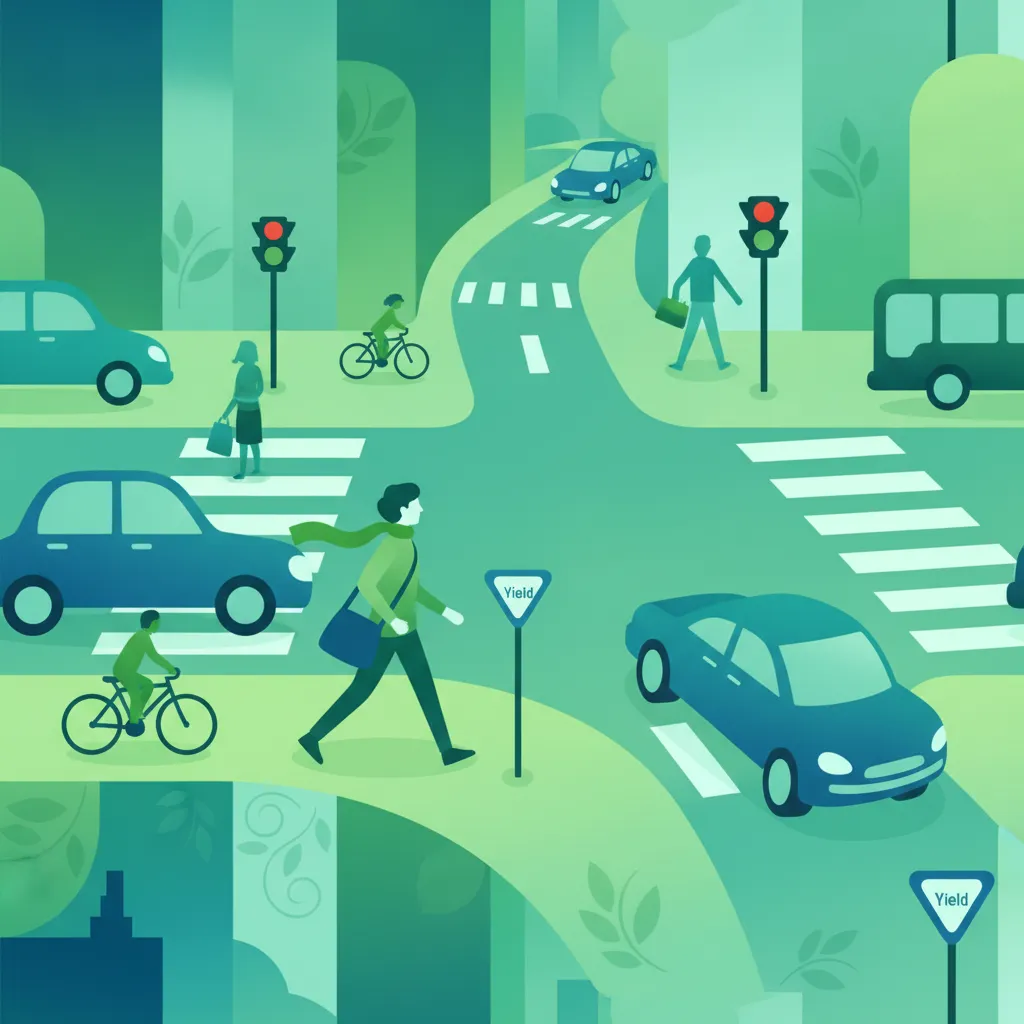
This lesson introduces the foundational concept of right-of-way ('Vorfahrt') in German traffic law. It explains the default priority rule, 'Rechts vor Links' (right before left), which applies at intersections without any regulating signs or signals. You will learn to identify situations where this rule applies and understand the basic principles of yielding to ensure safe passage at junctions.

This lesson provides a step-by-step guide to executing turns safely at intersections and other locations. It details the full observation sequence (mirrors, signal, blind spot check) required before initiating a turn. The lesson covers correct lane positioning for both left and right turns and explains the rules for performing U-turns or three-point turns where permitted.
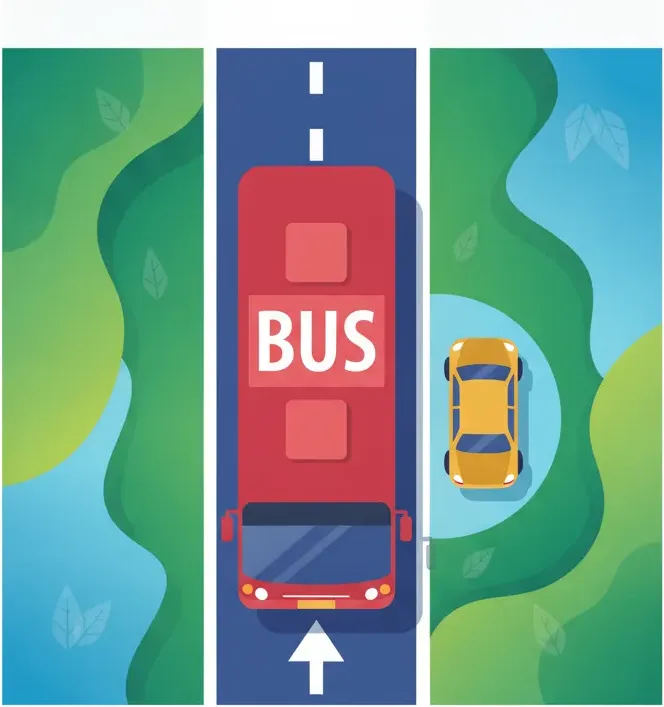
This lesson provides a detailed explanation of the rules governing dedicated bus lanes, including how to interpret markings and adhere to time-based restrictions. It clarifies the priority rules that grant buses precedence in certain traffic situations, such as when pulling out from a stop. Understanding these regulations allows drivers to use bus infrastructure efficiently and legally to maintain schedules and improve traffic flow.
Find clear answers to common questions learners have about Road Markings, Lane Guidance, and Temporary Markings. Learn how the lesson is structured, which driving theory objectives it supports, and how it fits into the overall learning path of units and curriculum progression in Germany. These explanations help you understand key concepts, lesson flow, and exam focused study goals.
No, you must not cross or drive on a solid white line. It is there to separate traffic lanes or mark the edge of the carriageway, and crossing it would be a traffic violation.
In construction zones, yellow markings take precedence over permanent white markings. You must follow the direction of the yellow lines, as they represent the current, temporary traffic flow.
Yes, if arrows are painted on your lane at an intersection, you must follow the direction they indicate. Choosing to go straight when the arrow points only for turning would be a violation.
Always stop before the designated stop line at an intersection. Ensure your moped is positioned to be clearly visible to other road users, avoiding the blind spots of larger vehicles.
Begin your targeted revision now. Use our practice search to quickly find specific German driving theory questions. Filter by StVO rules, road signs, or hazard perception to create your focused study plan. Master challenging areas and prepare confidently for your theoretical driving test.