
This lesson establishes the essential legal and professional principles of passenger duty of care within the German transport framework. You will learn how to balance passenger safety, comfort, and accessibility to meet the high standards expected for categories D1, D, D1E, and DE.

Lesson content overview
As a professional driver operating passenger vehicles in Germany, particularly for licence categories D1, D1E, D, and DE, you assume a profound responsibility that extends far beyond typical driving duties. This lesson introduces the critical principle of a heightened duty of care – an enhanced legal and ethical obligation to ensure the safety, comfort, and accessibility of every individual you transport, from the moment they board until they safely alight.
This comprehensive curriculum for Professional German Passenger-Vehicle Theory will equip you with the knowledge to meet these stringent requirements. Understanding and consistently applying the principles of passenger duty of care is fundamental to responsible professional driving and is a cornerstone for ensuring public safety and regulatory compliance.
The heightened duty of care for professional passenger vehicle drivers is a legally mandated, elevated responsibility to protect the safety, comfort, and accessibility of all individuals onboard. Unlike drivers of private vehicles, who owe a general duty of care to other road users and their own passengers, professional drivers in categories D1, D1E, D, and DE are entrusted with the well-being of numerous individuals who are often unfamiliar with the vehicle or route. This increased vulnerability necessitates a more comprehensive and proactive approach to safety.
The primary rationale behind this heightened duty is the inherent risk associated with transporting multiple individuals. Factors such as potential for sudden stops, passenger movement within the vehicle, boarding and alighting procedures, and varying passenger needs (e.g., children, elderly, persons with disabilities) introduce complexities that demand specialized attention. Consequently, your role as a professional driver involves not only operating the vehicle safely but also actively managing the passenger environment to mitigate these specific risks.
Fulfilling the heightened duty of care requires adherence to three interconnected core principles: proactive safety measures, continuous risk assessment, and effective passenger management. These principles form the bedrock of responsible passenger transport and must be integrated into every aspect of a professional driver's routine.
The concept of a heightened duty of care demands that professional drivers take additional precautions to ensure passenger safety throughout the entire journey. This goes beyond the standard safety checks and attentiveness expected of all drivers. It encompasses anticipating potential hazards specific to passenger transport and implementing preventative strategies.
This enhanced responsibility aims to mitigate common risks such as injuries resulting from abrupt braking, falls during boarding or alighting, or accidents caused by unsecured items. Practically, this implies a requirement for rigorous pre-journey vehicle inspections, careful planning of routes to avoid excessively rough conditions, and an emphasis on smooth, controlled driving. Without these proactive measures, standard driving duties alone are insufficient to address the unique challenges of passenger conveyance.
Continuous risk assessment is the ongoing process of evaluating potential hazards to passengers before, during, and after the journey. This systematic approach ensures that safety concerns are identified and addressed in real-time, allowing for immediate adjustments to driving behavior and operational procedures. Risks can broadly be categorized into static and dynamic types.
Static risks include fixed hazards like known poor road conditions, specific vehicle defects that need monitoring, or issues with infrastructure at bus stops. Dynamic risks, on the other hand, are constantly changing, such as fluctuations in traffic density, adverse weather conditions, or unpredictable passenger behavior. A professional driver must maintain acute situational awareness, adapting speed, following distance, and passenger communication based on these evolving factors to prevent incidents and protect those onboard.
Passenger management refers to the driver's responsibility to ensure that passenger behavior does not compromise overall safety. This includes guiding passengers to adhere to safety protocols, monitoring their actions, and, if necessary, enforcing rules. The primary purpose is to prevent distractions, accidents, or emergencies that could arise from passenger actions, such as moving around while the vehicle is in motion, blocking aisles, or distracting the driver.
Effective passenger management involves clear communication of safety rules, such as reminders about seat belt usage or keeping aisles clear. Drivers must also monitor the interior of the vehicle, using mirrors or internal cameras, to observe passenger behavior. In situations where safety rules are violated, the driver is obliged to take corrective action, which might range from a verbal reminder to, in extreme cases, contacting authorities if behavior becomes dangerous or disruptive. This active engagement is crucial because passengers cannot always be expected to self-regulate without driver intervention.
The heightened duty of care for professional passenger vehicle drivers in Germany is firmly rooted in legal provisions. The core legal basis for these obligations is found in § 23 of the German Road Traffic Regulations (StVO – Straßenverkehrs-Ordnung), which outlines general duties for drivers. More specific and detailed guidelines, particularly concerning the commercial transport of passengers, are contained within the Passenger Transport Ordinance (Beförderungsordnung für Fahrgäste – BefG), with relevant sections often including §§ 27–30 BefG.
These regulations collectively mandate a set of crucial obligations for drivers operating vehicles in categories D1, D1E, D, and DE:
These regulations apply universally to all professional passenger-vehicle drivers throughout Germany. Their rationale is to safeguard passengers from preventable injuries and accidents, thereby upholding public safety standards in professional transport. Correct application involves systematic adherence to these duties, while negligence can lead to severe legal penalties.
Translating the heightened duty of care into daily practice requires diligent attention to detail and consistent application of safety protocols. Professional drivers must develop systematic routines that cover all phases of passenger transport.
Before embarking on any journey with passengers, a professional driver must conduct a thorough Vorfahrtkontrolle (pre-journey safety check). This goes beyond a quick glance and involves a detailed inspection to ensure the vehicle is absolutely fit for service.
External Walk-Around Inspection: Check tires for proper inflation and damage, verify all lights (headlights, tail lights, indicators, brake lights) are functioning, inspect mirrors, and ensure all windows are clean and undamaged.
Fluid Levels: Check engine oil, coolant, brake fluid, and windscreen washer fluid levels.
Braking System: Test the service brake and parking brake for proper function and responsiveness.
Emergency Equipment: Ensure the first-aid kit, warning triangle, and fire extinguisher are present, accessible, and in good condition.
Passenger Compartment: Verify all seat belts are functional, seats are secured, emergency exits are clear and operational, and the interior is clean and free of hazards.
Luggage Storage: Ensure all luggage compartments are clear, functioning, and ready to safely secure passenger belongings.
Any identified defects must be addressed before passengers are allowed to board. Skipping these vital checks can lead to unnoticed vehicle faults that might cause serious accidents, making them a critical component of the heightened duty of care.
During the journey, the driver's role evolves into one of continuous monitoring and adaptation. This involves observing not only the road and traffic conditions but also the vehicle's dynamics and the behavior of passengers.
This constant vigilance ensures that the driver can react promptly to evolving situations and maintain a safe environment for everyone onboard.
The moments of boarding and alighting are particularly vulnerable for passengers. The driver holds a significant responsibility to ensure these processes are conducted safely and efficiently.
Despite comprehensive training and clear regulations, professional drivers can inadvertently or negligently violate their duty of care. Awareness of these common pitfalls is crucial for prevention.
The application of the heightened duty of care is not static; it must adapt to various contextual factors that influence safety and risk.
Violating the heightened duty of care for professional passenger vehicle drivers carries severe repercussions, affecting both the driver and the operating company.
Adhering to the duty of care is therefore not just a matter of compliance but a fundamental aspect of professional integrity and public trust.
The heightened duty of care is a non-negotiable legal and ethical requirement for all professional drivers of passenger vehicles in Germany, covering licence categories D1, D1E, D, and DE. It serves as the fundamental principle guiding all aspects of passenger transport, ensuring safety, comfort, and accessibility from start to finish.
Key takeaways include:
By consistently applying these principles, professional drivers not only comply with legal obligations but also significantly reduce the risk of injury to passengers, enhance their trust, and contribute to the overall safety and professionalism of public transport in Germany.
Professional drivers operating D1, D1E, D, and DE vehicles in Germany carry a heightened duty of care rooted in § 23 StVO and the BefG, requiring them to ensure passenger safety, comfort, and accessibility throughout every journey. This duty demands three integrated practices: taking proactive safety measures beyond standard driving, continuously assessing both static and dynamic risks, and actively managing passenger behavior through clear communication and rule enforcement. Key practical obligations include conducting thorough pre-journey checks (Vorfahrtkontrolle), securing all luggage, enforcing seat belt use, ensuring safe boarding and alighting procedures, and adapting driving style to conditions such as weather, road type, and vehicle load. Neglecting these obligations can result in accidents, serious injuries, legal penalties including licence revocation, civil liability, and significant reputational damage.
A short set of high-value points that capture the most important learning from this lesson.
Professional passenger drivers owe a legally mandated heightened duty of care that exceeds standard driving responsibilities, covering passengers from boarding to alighting
The legal foundation lies in § 23 StVO and the BefG (Passenger Transport Ordinance), which require pre-journey safety checks, seat belt enforcement, and secure luggage handling
Three core principles guide the duty: proactive safety measures, continuous dynamic risk assessment, and effective passenger management
The Vorfahrtkontrolle (pre-journey safety check) is mandatory and must include vehicle roadworthiness, emergency equipment, and passenger compartment inspection
Drivers must actively monitor and manage passenger behavior to prevent unsafe actions, including standing while in motion or blocking aisles
Explore all units and lessons included in this driving theory course.
Static risks are fixed hazards like known road conditions or vehicle defects; dynamic risks constantly change, such as traffic density, weather, and passenger behavior
Pre-journey checks must cover tires, brakes, lights, emergency exits, seat belts, first-aid kit, and fire extinguisher before passengers board
Seat belt enforcement is a legal obligation; drivers must actively ensure all passengers wear belts where required
During boarding and alighting, drivers must stop fully, position close to the curb, and supervise vulnerable passengers until they are safely clear
Vehicle handling changes significantly when fully loaded—braking distances increase and the center of gravity shifts, requiring adjusted driving style
Skipping or rushing the Vorfahrtkontrolle, leading to undetected defects like faulty brakes or worn tires that could cause accidents mid-journey
Allowing passengers to place luggage or items loosely in aisles or overhead compartments, creating projectile hazards during sudden stops
Failing to actively enforce seat belt usage, which dramatically increases injury severity if an accident occurs
Rushing boarding and alighting by stopping too far from the curb or not fully supervising passengers, risking trips, falls, or being caught in doors
Allowing passengers to stand or move around while the vehicle is in motion, especially during braking or cornering, leading to falls and injuries
Lesson content overview
A short set of high-value points that capture the most important learning from this lesson.
Professional passenger drivers owe a legally mandated heightened duty of care that exceeds standard driving responsibilities, covering passengers from boarding to alighting
The legal foundation lies in § 23 StVO and the BefG (Passenger Transport Ordinance), which require pre-journey safety checks, seat belt enforcement, and secure luggage handling
Three core principles guide the duty: proactive safety measures, continuous dynamic risk assessment, and effective passenger management
The Vorfahrtkontrolle (pre-journey safety check) is mandatory and must include vehicle roadworthiness, emergency equipment, and passenger compartment inspection
Drivers must actively monitor and manage passenger behavior to prevent unsafe actions, including standing while in motion or blocking aisles
Explore all units and lessons included in this driving theory course.
Static risks are fixed hazards like known road conditions or vehicle defects; dynamic risks constantly change, such as traffic density, weather, and passenger behavior
Pre-journey checks must cover tires, brakes, lights, emergency exits, seat belts, first-aid kit, and fire extinguisher before passengers board
Seat belt enforcement is a legal obligation; drivers must actively ensure all passengers wear belts where required
During boarding and alighting, drivers must stop fully, position close to the curb, and supervise vulnerable passengers until they are safely clear
Vehicle handling changes significantly when fully loaded—braking distances increase and the center of gravity shifts, requiring adjusted driving style
Skipping or rushing the Vorfahrtkontrolle, leading to undetected defects like faulty brakes or worn tires that could cause accidents mid-journey
Allowing passengers to place luggage or items loosely in aisles or overhead compartments, creating projectile hazards during sudden stops
Failing to actively enforce seat belt usage, which dramatically increases injury severity if an accident occurs
Rushing boarding and alighting by stopping too far from the curb or not fully supervising passengers, risking trips, falls, or being caught in doors
Allowing passengers to stand or move around while the vehicle is in motion, especially during braking or cornering, leading to falls and injuries
Explore search topics learners often look for when studying Passenger Duty of Care. These topics reflect common questions about road rules, driving situations, safety guidance, and lesson level theory preparation for learners in Germany.
Browse additional driving theory lessons that cover connected traffic rules, road signs, and common driving situations related to this topic. Improve your understanding of how different rules interact across everyday traffic scenarios.
Explore the legal foundations of a driver's heightened duty of care for passengers in Germany. Understand the legal and ethical obligations for ensuring passenger safety, comfort, and accessibility under German transport law.

This lesson examines the professional standards expected of passenger-vehicle drivers. It covers the importance of maintaining public trust through reliability, punctuality, and a professional demeanor. Key skills such as effective passenger communication, conflict resolution, and stress management are discussed as vital components of a driver's accountability and adherence to regulations.

This lesson covers the proper management of items brought on board by passengers, including luggage, prams, and mobility aids. It teaches how to use designated storage areas and racks correctly to prevent items from becoming hazards. The procedures for securing wheelchairs and other mobility devices are detailed to ensure they are stable and do not move during transit, complying with safety and accessibility standards.

This lesson details the specific legal obligations and safety protocols required for transporting schoolchildren. It covers the correct procedures for pick-up and drop-off, the use of warning lights, and the importance of supervised boarding and alighting. The lesson also explains how to interact with school crossing guards and navigate school zones safely to ensure the highest level of protection for children.

This lesson provides strategies for proactively managing passenger behavior to maintain a safe environment for everyone. It covers techniques for supervising passengers, enforcing rules on seat belt use, smoking, and alcohol, and managing luggage placement. The lesson also addresses how to handle disruptive behavior and the driver's role in assisting passengers during an emergency evacuation to ensure an orderly process.

This lesson addresses the specific safety protocols required when transporting standing passengers. It explains the importance of ensuring passengers have access to handholds and are distributed evenly to maintain vehicle stability. Learners will understand their responsibility to drive smoothly, make announcements about sudden stops, and adhere to legal capacity limits for standing passengers.

This lesson focuses on the factors contributing to passenger comfort during a journey. It explains how to effectively operate climate control and ventilation systems to maintain a pleasant temperature and air quality. Additionally, it discusses strategies for minimizing noise and vibration and the importance of smooth driving techniques to enhance the overall ride experience for passengers.
This lesson focuses on the logistical and safety aspects of planning long-distance passenger services. It covers the legal requirements for driving hours and rest periods, which are monitored by a tachograph. Learners will understand the importance of proactive fatigue management, scheduling regular breaks, and planning routes that include appropriate rest stops to ensure both driver alertness and passenger comfort throughout the journey.

This lesson explains the legal framework for ensuring a passenger vehicle's roadworthiness, focusing on periodic technical inspections (TÜV) and scheduled maintenance. It identifies critical wear components, such as brakes and tires, that require regular monitoring and replacement. The importance of adhering to service intervals and maintaining accurate maintenance logs for regulatory compliance is also thoroughly covered.
Learn how to conduct thorough risk assessments and implement effective procedures to ensure passenger safety, comfort, and accessibility. This lesson covers managing passenger behavior and preparing for potential emergencies in German passenger transport.

This lesson focuses on fire safety protocols for passenger vehicles, covering both prevention and response. It teaches the location and proper use of fire extinguishers and the importance of recognizing potential fire hazards during pre-trip inspections. A primary focus is on the procedure for a calm and orderly evacuation, including how to operate emergency exits and guide all passengers, including those with mobility issues, to a safe location.
This lesson provides strategies for proactively managing passenger behavior to maintain a safe environment for everyone. It covers techniques for supervising passengers, enforcing rules on seat belt use, smoking, and alcohol, and managing luggage placement. The lesson also addresses how to handle disruptive behavior and the driver's role in assisting passengers during an emergency evacuation to ensure an orderly process.
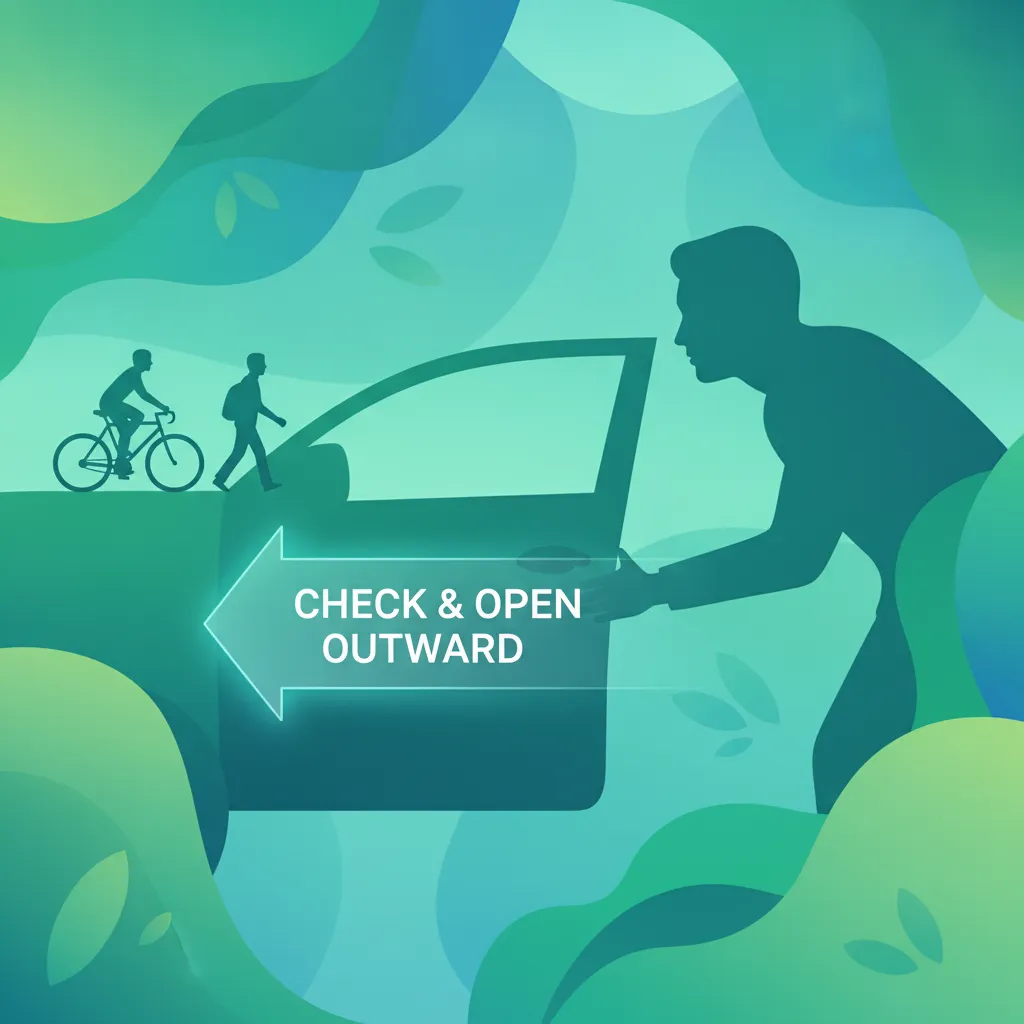
This lesson focuses on the safe operation of passenger doors, a critical aspect of daily duties. It explains the function of safety interlocks that prevent the vehicle from moving while doors are open and the importance of visually monitoring passengers. Learners will master the sequence of checking for obstructions, confirming all passengers are clear, and securely closing doors before departure.
This lesson focuses on the factors contributing to passenger comfort during a journey. It explains how to effectively operate climate control and ventilation systems to maintain a pleasant temperature and air quality. Additionally, it discusses strategies for minimizing noise and vibration and the importance of smooth driving techniques to enhance the overall ride experience for passengers.
This lesson covers the proper management of items brought on board by passengers, including luggage, prams, and mobility aids. It teaches how to use designated storage areas and racks correctly to prevent items from becoming hazards. The procedures for securing wheelchairs and other mobility devices are detailed to ensure they are stable and do not move during transit, complying with safety and accessibility standards.

This lesson details the structured process for managing passenger boarding and alighting. It covers coordinating passenger flow to prevent crowding and providing clear instructions or assistance when needed. The procedures for deploying ramps or kneeling systems for passengers with reduced mobility are also covered to ensure a safe, dignified, and efficient exchange process at every stop.

This lesson provides practical instruction on using accessibility features to assist passengers with reduced mobility. It covers the correct operation of wheelchair ramps and kneeling systems to facilitate safe boarding and alighting. Learners will also master the procedures for properly securing wheelchairs and other mobility aids inside the vehicle, ensuring compliance with accessibility standards and passenger safety.

This lesson provides drivers with the tools to professionally handle incidents involving passengers, from medical issues to disruptive behavior. It focuses on communication and de-escalation techniques to resolve conflicts calmly and prevent situations from worsening. The goal is to maintain a safe and orderly environment for all passengers while handling challenging interpersonal dynamics with confidence and professionalism.
This lesson addresses the specific safety protocols required when transporting standing passengers. It explains the importance of ensuring passengers have access to handholds and are distributed evenly to maintain vehicle stability. Learners will understand their responsibility to drive smoothly, make announcements about sudden stops, and adhere to legal capacity limits for standing passengers.

This lesson outlines a clear, systematic procedure for managing a vehicle breakdown safely and efficiently. It covers immediate actions such as activating hazard lights, placing a warning triangle, and moving the vehicle to a safe location if possible. Learners will understand how to communicate the situation to passengers, decide if an evacuation is necessary, and contact the appropriate breakdown services for assistance.
Find clear answers to common questions learners have about Passenger Duty of Care. Learn how the lesson is structured, which driving theory objectives it supports, and how it fits into the overall learning path of units and curriculum progression in Germany. These explanations help you understand key concepts, lesson flow, and exam focused study goals.
It means the driver is legally and professionally responsible for the physical safety, well-being, and accessibility of all passengers from the moment they approach the vehicle until they safely depart.
Yes, professional drivers must maintain order and safety on board. You are expected to intervene professionally when passenger behavior compromises the safety of others or the vehicle's operation.
Professional drivers must ensure vehicles are accessible to all, including individuals with mobility aids or prams, and provide necessary assistance during boarding and alighting to fulfill their safety obligation.
The exam tests your practical application of these rules. You will face scenarios where you must choose the correct professional action that prioritizes passenger safety according to German transport regulations.
Begin your targeted revision now. Use our practice search to quickly find specific German driving theory questions. Filter by StVO rules, road signs, or hazard perception to create your focused study plan. Master challenging areas and prepare confidently for your theoretical driving test.