
This lesson details the critical emergency protocols required for professional passenger vehicle operation in Germany. You will learn the exact steps to manage breakdowns safely, ensuring the protection of your passengers and compliance with the Straßenverkehrs-Ordnung.
Lesson content overview
Managing a vehicle breakdown is a critical skill for any professional driver, particularly those operating passenger vehicles in categories D1, D1E, D, and DE in Germany. An unexpected vehicle failure demands immediate, systematic, and safe action to protect passengers, prevent secondary accidents, and ensure compliance with German traffic regulations. This lesson outlines a clear, step-by-step procedure for handling breakdowns efficiently, from immediate hazard recognition and vehicle securing to passenger communication and coordinating professional assistance.
As a professional driver transporting passengers, your paramount responsibility is the safety and well-being of everyone on board and other road users. Mastery of these procedures is not merely a legal requirement but a fundamental aspect of your professional duty of care. By understanding and applying these guidelines, you can transform a potentially chaotic and dangerous situation into a controlled and manageable event, minimizing risks and ensuring the quickest possible resolution.
Effective vehicle breakdown management is founded on several core principles designed to mitigate risks and streamline the response. Adhering to these principles ensures a methodical approach to an unexpected and often stressful event.
Promptly assess and mitigate any immediate danger once a breakdown occurs, prioritizing the prevention of collisions and ensuring safety for passengers and other road users.
This principle dictates that your first reaction to any sign of a breakdown must be to recognize the potential danger it poses. This involves quickly identifying the nature of the failure and understanding its immediate impact on vehicle control and road safety. Prioritizing hazard recognition allows for swift activation of warnings and preventative measures.
Inform passengers, co-drivers, and emergency services about the situation and actions taken to maintain passenger confidence and order, and to provide necessary information to responders.
Communication is vital to prevent panic and ensure cooperation. Keeping passengers informed with clear, calm language about what has happened and what steps are being taken fosters trust and helps manage the situation within the vehicle. Effective communication with breakdown services is equally important for a timely and appropriate response.
Move the vehicle to a safe location off the carriageway if possible, reducing obstruction and exposure to passing traffic.
If the vehicle remains drivable, even for a short distance, relocating it to a safer area is paramount. This removes the immediate hazard from the main flow of traffic, significantly reducing the risk of a secondary collision. This action must only be undertaken if it is safe to do so without creating further danger.
Deploy a warning triangle at a standardized distance from the vehicle to provide advance warning to other road users, especially on high-speed roads.
Once the vehicle is stopped, it becomes an unexpected obstruction. Visual warnings, particularly the warning triangle, are essential to alert approaching drivers well in advance. Correct placement, according to specific distances for different road types, is crucial for allowing sufficient reaction time.
Contact authorized breakdown services promptly, providing accurate information, to ensure qualified help is dispatched in a timely manner.
Attempting complex repairs yourself on a busy road can be dangerous and inefficient. Professional passenger vehicle breakdowns require specialized knowledge and equipment. Promptly contacting a reliable breakdown service, providing precise details about your location and the nature of the failure, ensures that appropriate help arrives swiftly.
When a vehicle breakdown occurs, the initial moments are critical. A systematic approach to immediate actions can significantly reduce risks and prevent the situation from escalating.
A vehicle breakdown can manifest in various ways, from a sudden loss of engine power to a gradual decline in vehicle performance or unusual noises. As a professional driver, you must be attuned to these indicators.
The process of identifying the presence of a breakdown and rapidly assessing any immediate risks it poses to vehicle occupants and other road users.
Common types of breakdowns include mechanical failure (e.g., engine stalls, brake issues), electrical failure (e.g., lights out, power loss), tire blowouts, or steering problems. Noticing a loss of engine power, strange grinding sounds, or a sudden change in steering responsiveness are all cues that the vehicle can no longer safely continue its journey. Recognizing these signs immediately allows you to initiate safety procedures without delay.
The very first action upon identifying a breakdown, even before the vehicle has come to a complete stop, is to activate the hazard warning lights.
Flashing amber lights on all corners of a vehicle that signal a malfunction, emergency stop, or stationary hazard to other road users.
These lights are designed to immediately warn other road users that your vehicle is stationary, moving unusually slowly, or presenting an unexpected obstruction. According to German traffic law, specifically Regulation 212/03, hazard warning lights must be switched on immediately when your vehicle is stopped on the roadway and poses a danger to traffic. Delaying activation or failing to use them, especially in low visibility conditions or on high-speed roads, dramatically increases the risk of a rear-end collision.
Never assume other drivers will see your disabled vehicle. Hazard lights are your primary and immediate warning signal.
Once hazard lights are active, your next priority, if feasible and safe, is to move the vehicle off the main flow of traffic.
The act of carefully moving a disabled vehicle from the main traffic lanes to a safer designated area, such as a layby, hard shoulder, or emergency bay.
German traffic law (e.g., Regulation 206/01) prohibits stopping on the roadway without justification, and a breakdown, while justifiable, necessitates moving the vehicle to the safest possible location. If your vehicle retains any drivable capacity (e.g., you can still steer or coast), gently guide it towards the nearest emergency bay, hard shoulder, or a wide layby. This removes the obstruction and minimizes danger to both your passengers and passing traffic. Only attempt relocation if it can be done safely without causing further hazards or losing control. If the vehicle is completely immobile or moving it would be too dangerous, you must remain stationary and secure the area from that position.
After safely stopping the vehicle and activating hazard lights, deploying the warning triangle is the next crucial step in alerting approaching traffic.
A portable, reflective triangular sign placed at a prescribed distance behind a stopped vehicle to provide advance warning of a hazard.
The warning triangle acts as an additional visual cue, especially effective at greater distances than hazard lights alone, and is mandatory in Germany. The placement distance is critical and varies based on the road type and speed limits, as defined in Regulation 24/04:
When placing the warning triangle, wear a high-visibility safety vest, which is mandatory in Germany for drivers of professional vehicles. Walk against the flow of traffic, facing oncoming vehicles, to place the triangle. Ensure it is visible from both directions if possible (e.g., on a curved road, place it before the curve).
As a professional passenger vehicle driver, your responsibilities extend beyond the vehicle's mechanics to the well-being and management of your passengers.
Clear and calm communication is paramount during a breakdown. Passengers, especially in a professional transport setting, rely on you for information and reassurance.
The process of informing passengers about the vehicle breakdown, the reasons for stopping, and the immediate steps being taken, using clear and reassuring language.
According to Regulation 102/02, there is an explicit duty to keep passengers informed of the situation and actions being taken. As soon as the vehicle is safely stopped and the initial hazard warnings are in place, address your passengers. Use the vehicle's public address system if available. Explain, in simple terms, that the vehicle has a technical issue, that you have taken immediate safety measures, and what the next steps will be (e.g., "Ladies and gentlemen, we have experienced a technical issue. I have activated hazard lights and secured the vehicle. We are now contacting breakdown assistance, and I will keep you updated."). This reduces anxiety and prevents panic or passengers from attempting unsafe actions.
Deciding whether to evacuate passengers is a serious decision that should not be taken lightly. Evacuation itself can pose risks if not managed correctly.
The systematic and safe removal of passengers from a vehicle to a secure location when the vehicle cannot be moved and poses an ongoing danger.
Regulation 107/01 stipulates that evacuation is required if the vehicle remains a danger after stopping. This includes situations where:
If evacuation is necessary:
Premature or uncoordinated evacuation can be more dangerous than remaining inside the vehicle, particularly on busy roads or in adverse weather. Always prioritize getting passengers to a demonstrably safer location.
Once immediate safety measures are in place and passengers are informed (and potentially evacuated), the next step is to summon professional help.
As a professional driver, you will typically have specific contact numbers for your fleet's breakdown service or a designated emergency roadside assistance provider.
A professional organization equipped to provide roadside assistance, diagnostic services, towing, and sometimes immediate repairs for disabled vehicles.
When contacting them, be prepared to provide precise information:
For situations involving immediate danger to life or property (e.g., serious accident, fire, significant injury), dial 112 (the pan-European emergency number) first.
While waiting for breakdown services to arrive, your role as the driver continues.
Breakdown situations are rarely identical. External factors such as weather, lighting, road type, and even the vehicle's state necessitate adaptations to the standard procedures.
When dealing with a breakdown, always consider the presence of vulnerable road users:
Failing to follow correct breakdown procedures can lead to serious consequences, ranging from fines to severe accidents. Understanding common violations helps reinforce correct behavior.
| Violation | Why It's Wrong | Correct Behavior | Possible Consequence |
|---|---|---|---|
| Failing to activate hazard lights immediately after stopping due to a breakdown. | Other road users are not immediately aware of your stationary vehicle, especially at speed or in poor visibility. | Turn on hazard lights as soon as the vehicle is stopped or you recognize a breakdown. | Rear-end collision, injuries, significant fines, legal liability. |
| Placing the warning triangle too close to the vehicle on a motorway. | Provides insufficient warning distance for high-speed traffic, limiting reaction time for approaching drivers. | Place triangle at the prescribed 150 meters on motorways. | High risk of severe collisions, late warning, substantial fines. |
| Attempting to move a disabled vehicle on a steep incline without proper assessment. | Can lead to loss of control, vehicle roll-back, or further damage, endangering passengers and other road users. | Assess gradient, traffic, and vehicle capability. Only move if absolutely safe; otherwise, wait for professional help. | Vehicle damage, injury to passengers, further accidents. |
| Not informing passengers about the breakdown or actions taken. | Causes anxiety, fear, and potential panic, leading passengers to make unsafe decisions (e.g., sudden exit attempts). | Clearly and calmly explain the situation and upcoming steps to passengers. | Panic, passenger injuries, loss of trust, reputational damage. |
| Leaving passengers inside a non-movable vehicle on a highway shoulder when evacuation is safer. | Exposes passengers to continuous traffic hazards, potential impact, or other dangers if the vehicle cannot be moved. | Evacuate passengers to a safe area behind barriers if the vehicle cannot be moved and remaining inside is dangerous. | Severe injury or death to passengers, legal liability. |
| Using a mobile phone to call breakdown services while driving or moving the vehicle. | Distracted driving dramatically increases the risk of accidents, especially during an already stressful situation. | Pull over safely, engage hazard lights, then use your mobile phone. | Traffic violation, fines, increased accident risk. |
| Not ensuring the engine is turned off after a breakdown. | Risks include potential fire, unnecessary battery drain, or unexpected vehicle movement. | Turn off the engine once the vehicle is safely stopped and secured, unless specific diagnostics require it. | Fire hazard, depleted battery, obstruction. |
| Exiting the vehicle without checking for oncoming traffic. | Risk of being struck by passing vehicles, particularly on high-speed roads. | Perform a thorough traffic check (look over shoulder, use mirrors) before opening the door and stepping out. | Driver injury or fatality from oncoming traffic. |
| Attempting to self-repair a critical failure on a busy road without proper safety measures. | Creates additional hazards for yourself and other road users, often leading to incomplete or unsafe repairs. | Secure the area fully, place warning triangle, wear reflective vest, and wait for professional assistance. | Accident, injury, increased hazard, further vehicle damage. |
Understanding the specific German regulations related to vehicle breakdowns is essential for compliance and ensuring safety.
| Rule | Applicability | Legal Status | Rationale | Correct Application |
|---|---|---|---|---|
| Regulation 212/03 – Hazard warning lights must be switched on when the vehicle is stopped on the roadway and poses a danger. | Immediate activation during any breakdown creating a hazard. | Mandatory. | Ensures other drivers are immediately aware of the stopped vehicle. | Driver turns on hazard lights instantly upon engine failure on a busy road. |
| Regulation 24/04 – Placement distances for the warning triangle. | Applies to all vehicle breakdowns where the vehicle is stopped. | Mandatory. | Provides sufficient warning distance for approaching traffic based on speed limits. | Driver places triangle 150m behind a stalled bus on the Autobahn. |
| Regulation 206/01 – Stopping on the roadway without justification is prohibited. | Driver must avoid stopping on the roadway unless absolutely necessary (e.g., breakdown). | Mandatory. | Prevents obstruction and hazards. Encourages safe relocation. | Driver carefully steers the bus into a designated layby after a tire blowout. |
| Regulation 107/01 – Evacuation of passengers is required if the vehicle remains a danger after stopping. | When the vehicle cannot be moved or presents an ongoing risk (e.g., fire, unsafe location). | Mandatory when conditions met. | Protects passengers and other road users from harm. | Driver evacuates passengers to a safe, protected shoulder area on a motorway after a breakdown in a dangerous spot. |
| Regulation 102/02 – Duty to inform passengers of the situation and actions taken. | During any breakdown or emergency incident. | Mandatory. | Maintains passenger safety, confidence, and prevents panic. | Driver uses the PA system to calmly explain the breakdown and next steps. |
| Regulation 101/02 – Visibility of the driver’s cab when the vehicle is stationary. | Drivers must remain visible to approaching traffic, particularly when waiting in the cab. | Mandatory in most cases. | Ensures other road users see the driver and anticipate actions. | Driver remains in the well-lit cab, visible to passing traffic, while waiting for assistance. |
Practical application of these procedures is best understood through real-world scenarios.
Setting: A three-lane German Autobahn, speed limit 130 km/h, clear daytime conditions. Situation: Your passenger bus suddenly loses engine power while traveling at 110 km/h in the middle lane.
Immediate Action: The driver immediately activates the hazard warning lights.
Safe Relocation: Gently steers the coasting bus towards the hard shoulder or nearest emergency bay, aiming to clear the main carriageway completely.
Securing Vehicle: Once safely stopped on the hard shoulder, the driver engages the parking brake and switches off the engine.
Visual Warning: Wearing a high-visibility vest, the driver exits the vehicle carefully (checking for traffic) and walks 150 meters against the flow of traffic to place the warning triangle prominently.
Passenger Communication: Returns to the bus, uses the PA system to calmly inform passengers about the engine issue, reassures them, and advises them to remain seated.
Contacting Assistance: Contacts the fleet's breakdown service or ADAC, providing precise location details (Autobahn number, direction, mileage marker), vehicle information, and the nature of the breakdown.
Waiting Safely: Remains in the cab, visible, monitoring passengers and awaiting assistance. Evacuation is considered only if the hard shoulder becomes unsafe or an emergency develops (e.g., fire).
Setting: A winding rural road (Landstraße), speed limit 80 km/h, nighttime with low visibility and no streetlights. Situation: A rear tire on your passenger bus blows out, causing the vehicle to swerve slightly.
Immediate Action: The driver firmly grips the steering wheel to maintain control, gently reduces speed without harsh braking, and immediately activates the hazard warning lights.
Safe Relocation: Carefully guides the bus to the extreme edge of the road, preferably onto a wider shoulder or verge if available, ensuring the vehicle is as far off the carriageway as possible.
Securing Vehicle: Engages the parking brake, switches off the engine, and ensures the vehicle is stable.
Visual Warning: Wearing a high-visibility vest, and using a torch for illumination, the driver carefully exits, checks for traffic, and places the warning triangle 30 meters behind the bus, ensuring it's visible to oncoming traffic.
Passenger Communication: Returns to the bus, informs passengers about the tire issue, and advises them to stay inside for safety due to the rural, dark environment.
Contacting Assistance: Calls the breakdown service, giving specific location details (road number, nearest village, any distinct landmarks), vehicle type, and the tire blowout.
Waiting Safely: Stays with the passengers, keeping the interior lights on (if possible) and ensuring ongoing visibility until help arrives.
Setting: A busy urban street in a German city, speed limit 50 km/h, heavy rain during the day. Situation: The bus's entire electrical system fails, leading to loss of lights, power steering, and engine.
Immediate Action: The driver immediately activates the hazard warning lights (if the system still allows, otherwise the primary concern is to stop safely). Applies brakes gently, maintaining control despite loss of power steering.
Safe Relocation: Guides the bus towards the curb or a designated bus stop bay, attempting to get out of the main traffic flow.
Securing Vehicle: Engages the parking brake, switches off the engine.
Visual Warning: Wearing a high-visibility vest, the driver exits carefully (checking for pedestrians and traffic) and places the warning triangle 30 meters behind the bus, particularly important in heavy rain for visibility.
Passenger Communication: Returns to the bus, informs passengers about the electrical fault and the expected delay. Advises them to remain seated and patient.
Contacting Assistance: Calls the breakdown service, providing the street name, nearest intersection, and describing the complete electrical failure.
Waiting Safely: Remains in the bus, visible. Due to the urban setting, evacuation might be considered to a nearby building or protected area if the vehicle cannot be moved and is causing significant obstruction, or if the rain continues to pose a hazard.
Mastering vehicle breakdown procedures is a cornerstone of professional passenger transport. By systematically applying the correct steps, drivers can effectively mitigate danger, ensure passenger safety, and comply with German traffic regulations.
Immediate Hazard Recognition: Detect the breakdown symptoms (e.g., engine stall, tire blowout, electrical failure) and instantly assess risks to occupants and other road users.
Activate Hazard Warning Lights: Switch on hazard lights without delay to signal your vehicle's disabled state to all approaching traffic.
Safe Vehicle Relocation: If drivable, carefully move the vehicle off the main carriageway to the safest possible location, such as a layby, hard shoulder, or emergency bay. If completely immobile, secure it in its current position.
Deploy Warning Triangle: Place the warning triangle at the legally defined distances: 150 meters on motorways, 100 meters on dual carriageways, and 30 meters on other roads. Always wear a high-visibility vest when exiting the vehicle.
Communicate with Passengers: Clearly and calmly inform passengers about the situation, the actions being taken, and any expected delays to maintain their confidence and prevent panic.
Decision on Evacuation: Evacuate passengers only if the vehicle cannot be moved and poses an imminent danger (e.g., fire, unsafe location). Guide them to a designated safe area away from traffic.
Contact Breakdown Services: Promptly notify professional assistance, providing precise location details, vehicle information, and the nature of the breakdown. Use 112 for immediate life-threatening emergencies.
Maintain Safety: Ensure the engine is turned off (unless required for diagnostics), the parking brake is engaged, and you remain visible (wearing your high-vis vest if outside the vehicle) while awaiting assistance.
Adhere to Legal Obligations: Consistently follow German traffic regulations regarding hazard warnings, stopping, passenger information, and evacuation to fulfill your professional duty of care.
This lesson provides a systematic procedure for handling vehicle breakdowns as a professional passenger vehicle driver in Germany, covering immediate hazard recognition, hazard light activation, safe vehicle relocation, and warning triangle deployment at specific distances. It details mandatory passenger communication protocols under Regulation 102/02 and evacuation criteria under Regulation 107/01, emphasizing that evacuation is only necessary when the vehicle cannot be moved and poses ongoing danger. The content includes conditional adaptations for different road types, weather conditions, and vehicle states, supported by three practical scenarios demonstrating correct protocols for Autobahn, rural road, and urban electrical failure situations. Mastery of these procedures is essential for both road safety compliance and success in the German D/DE category theory examination.
A short set of high-value points that capture the most important learning from this lesson.
Hazard warning lights must be activated immediately upon recognizing a breakdown to alert other road users without delay.
The warning triangle placement distance varies by road type: 150m on motorways, 100m on dual carriageways, and 30m on other roads.
Passengers must be informed calmly and clearly about the breakdown situation and the steps being taken to resolve it.
Evacuation is only required when the vehicle cannot be moved and poses an ongoing danger such as fire, unstable position, or hazardous location.
When contacting breakdown services, provide precise location details, vehicle information, nature of the failure, and number of passengers.
Explore all units and lessons included in this driving theory course.
Always activate hazard lights immediately when stopped on the roadway, even before the vehicle has completely stopped.
Wear a high-visibility safety vest and walk against traffic flow when placing the warning triangle.
Regulation 107/01 requires passenger evacuation only when the disabled vehicle remains a danger after stopping and cannot be moved.
Turn off the engine once safely stopped and engage the parking brake before exiting the vehicle.
Use the pan-European emergency number 112 only for situations involving immediate danger to life, injury, or fire.
Delaying hazard light activation until the vehicle has fully stopped instead of immediately upon recognizing a breakdown.
Placing the warning triangle at incorrect distances, particularly underestimating the 150m requirement on motorways.
Failing to inform passengers about the breakdown, which can cause anxiety, panic, or unsafe reactions.
Attempting to relocate a vehicle on a steep incline or when it is completely immobile, creating additional hazards.
Not wearing high-visibility clothing when outside the vehicle, especially in reduced visibility conditions.
Lesson content overview
A short set of high-value points that capture the most important learning from this lesson.
Hazard warning lights must be activated immediately upon recognizing a breakdown to alert other road users without delay.
The warning triangle placement distance varies by road type: 150m on motorways, 100m on dual carriageways, and 30m on other roads.
Passengers must be informed calmly and clearly about the breakdown situation and the steps being taken to resolve it.
Evacuation is only required when the vehicle cannot be moved and poses an ongoing danger such as fire, unstable position, or hazardous location.
When contacting breakdown services, provide precise location details, vehicle information, nature of the failure, and number of passengers.
Explore all units and lessons included in this driving theory course.
Always activate hazard lights immediately when stopped on the roadway, even before the vehicle has completely stopped.
Wear a high-visibility safety vest and walk against traffic flow when placing the warning triangle.
Regulation 107/01 requires passenger evacuation only when the disabled vehicle remains a danger after stopping and cannot be moved.
Turn off the engine once safely stopped and engage the parking brake before exiting the vehicle.
Use the pan-European emergency number 112 only for situations involving immediate danger to life, injury, or fire.
Delaying hazard light activation until the vehicle has fully stopped instead of immediately upon recognizing a breakdown.
Placing the warning triangle at incorrect distances, particularly underestimating the 150m requirement on motorways.
Failing to inform passengers about the breakdown, which can cause anxiety, panic, or unsafe reactions.
Attempting to relocate a vehicle on a steep incline or when it is completely immobile, creating additional hazards.
Not wearing high-visibility clothing when outside the vehicle, especially in reduced visibility conditions.
Explore search topics learners often look for when studying Vehicle Breakdowns and Emergency Procedures. These topics reflect common questions about road rules, driving situations, safety guidance, and lesson level theory preparation for learners in Germany.
Browse additional driving theory lessons that cover connected traffic rules, road signs, and common driving situations related to this topic. Improve your understanding of how different rules interact across everyday traffic scenarios.
Learn the correct step-by-step procedure for managing a vehicle breakdown. This lesson covers securing the scene, ensuring passenger safety, placing warning triangles, and contacting assistance according to German traffic law (StVO).
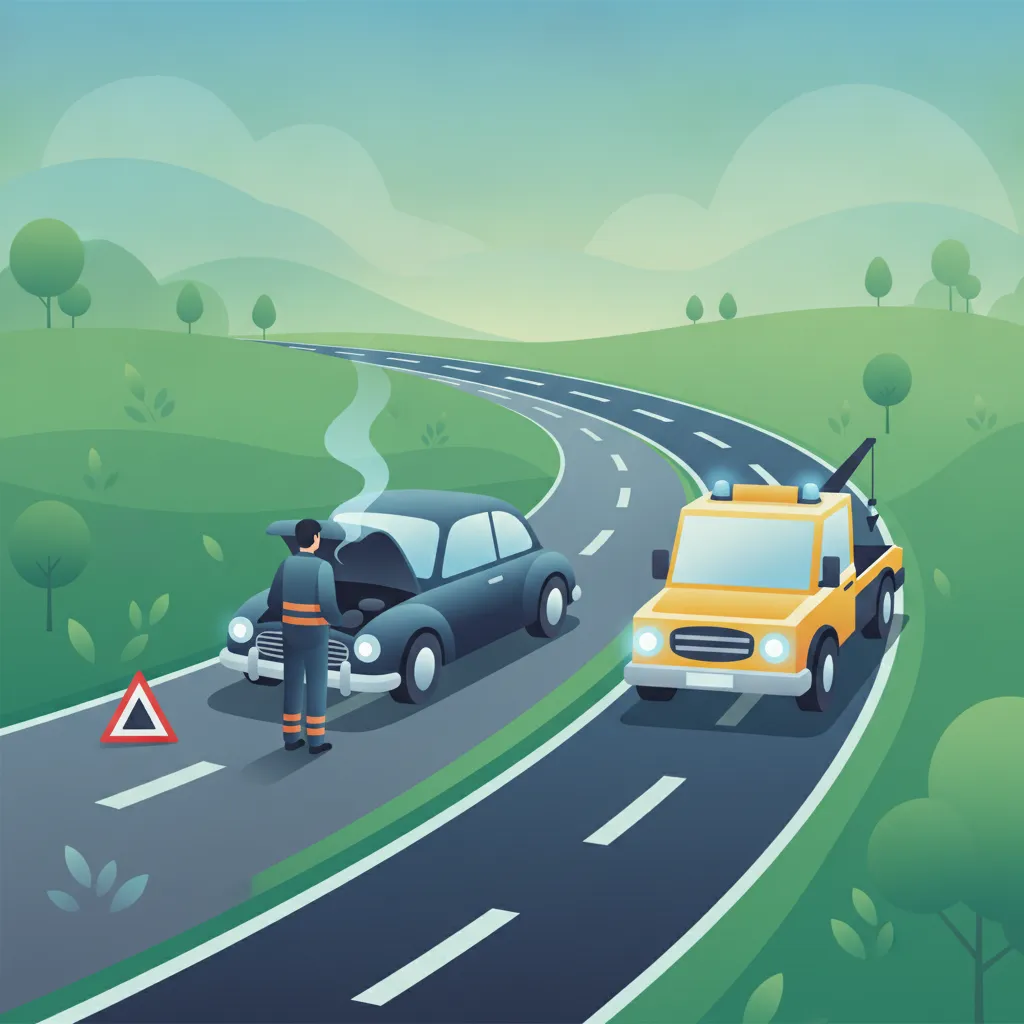
This lesson provides clear, actionable steps for managing a breakdown or being involved in an accident. It covers how to safely move the vehicle off the road, use warning signals, and secure the area. The procedure for contacting roadside assistance and the authorities is also explained in detail.
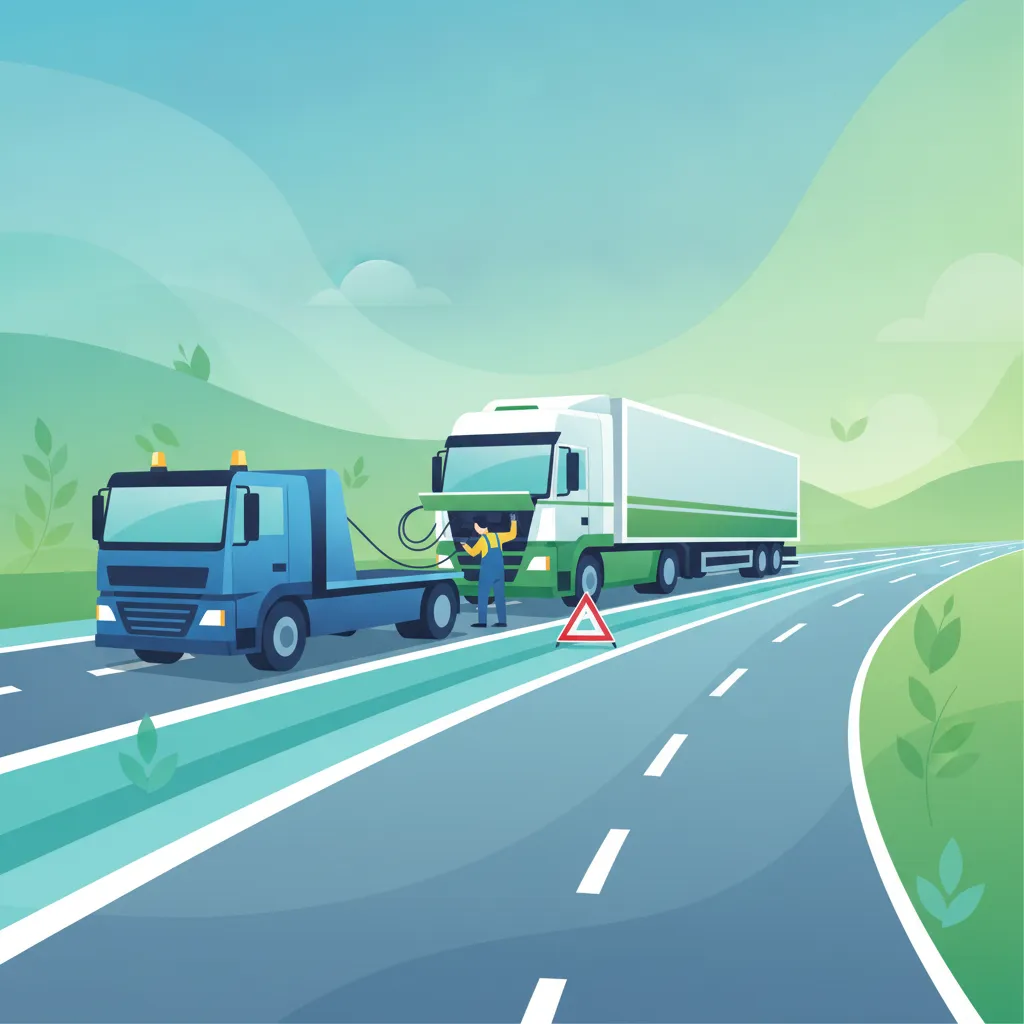
This lesson provides a step-by-step guide for safely managing a vehicle breakdown on the road. It includes instructions on performing an emergency stop, deploying hazard lights and warning triangles, and contacting assistance. The content emphasizes maintaining safety for both the driver and other road users during the breakdown.
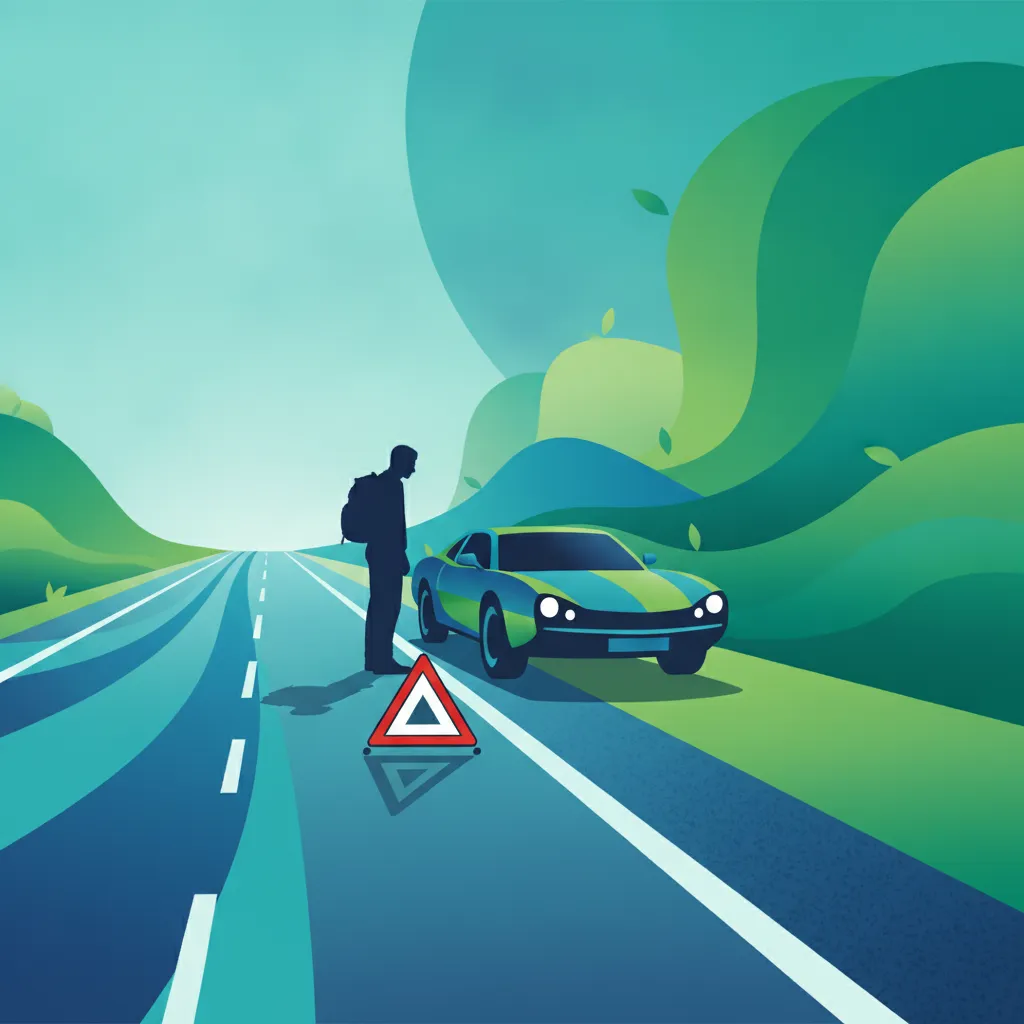
This lesson covers the appropriate steps to take in the event of a vehicle breakdown or an accident. It details procedures for safely moving the motorcycle out of traffic, making the area visible with hazard warnings, and contacting emergency services. The content emphasizes personal safety and the correct protocol for managing the scene until professional help arrives.

This lesson focuses on fire safety protocols for passenger vehicles, covering both prevention and response. It teaches the location and proper use of fire extinguishers and the importance of recognizing potential fire hazards during pre-trip inspections. A primary focus is on the procedure for a calm and orderly evacuation, including how to operate emergency exits and guide all passengers, including those with mobility issues, to a safe location.
This lesson provides clear, step-by-step instructions on what to do at the scene of a traffic accident. It covers the immediate priorities: stopping, securing the area with a warning triangle, and putting on a high-visibility vest. The lesson details how to make an effective emergency call to '112' and what information to provide, as well as the procedure for exchanging insurance details with other parties involved.
This lesson outlines the driver's legal responsibility to ensure their vehicle is in a safe and roadworthy condition before every journey. It covers essential pre-drive checks, such as verifying lights, tyres, and fluid levels (oil, coolant, washer fluid). The lesson also explains the mandatory equipment that must be carried in the vehicle, including a warning triangle, high-visibility vest, and first-aid kit.
This lesson details the driver's legal responsibility for the safety of all passengers. It reinforces the mandatory use of seat belts for everyone in the vehicle. A significant focus is placed on the strict regulations for child safety, explaining the types of child restraint systems required based on a child's age, height, and weight, and how to install them correctly.
This lesson focuses on the safe operation of passenger doors, a critical aspect of daily duties. It explains the function of safety interlocks that prevent the vehicle from moving while doors are open and the importance of visually monitoring passengers. Learners will master the sequence of checking for obstructions, confirming all passengers are clear, and securely closing doors before departure.

This lesson focuses on identifying road users who require special attention and caution, such as children, the elderly, and individuals with disabilities. It details the appropriate behavior when encountering school buses and public transport, which often involve unpredictable pedestrian movement. A critical topic covered is the legal requirement to form an emergency corridor ('Rettungsgasse') for responding emergency vehicles.

This lesson teaches the systematic pre-trip inspection routine that every professional driver must perform. It covers a comprehensive checklist of visual and functional checks, including lights, tires, mirrors, and wipers. The lesson also emphasizes verifying the presence and condition of mandatory safety equipment, such as emergency exits, the fire extinguisher, and the first-aid kit, to ensure the vehicle is safe to operate.
Understand critical decisions regarding passenger evacuation during vehicle emergencies. This lesson details when to evacuate, how to manage risks at the scene, and essential communication with passengers and emergency services in Germany.
This lesson focuses on fire safety protocols for passenger vehicles, covering both prevention and response. It teaches the location and proper use of fire extinguishers and the importance of recognizing potential fire hazards during pre-trip inspections. A primary focus is on the procedure for a calm and orderly evacuation, including how to operate emergency exits and guide all passengers, including those with mobility issues, to a safe location.

This lesson details the structured process for managing passenger boarding and alighting. It covers coordinating passenger flow to prevent crowding and providing clear instructions or assistance when needed. The procedures for deploying ramps or kneeling systems for passengers with reduced mobility are also covered to ensure a safe, dignified, and efficient exchange process at every stop.
This lesson provides strategies for proactively managing passenger behavior to maintain a safe environment for everyone. It covers techniques for supervising passengers, enforcing rules on seat belt use, smoking, and alcohol, and managing luggage placement. The lesson also addresses how to handle disruptive behavior and the driver's role in assisting passengers during an emergency evacuation to ensure an orderly process.
This lesson teaches drivers how to identify and assess stop locations that present elevated risks, such as those in dense residential areas, near schools, or with limited visibility. It provides strategies for mitigating these risks through careful vehicle positioning and heightened situational awareness. The goal is to ensure that passenger exchanges can be conducted safely even when the surrounding environment is challenging and unpredictable.

This lesson covers the proper management of items brought on board by passengers, including luggage, prams, and mobility aids. It teaches how to use designated storage areas and racks correctly to prevent items from becoming hazards. The procedures for securing wheelchairs and other mobility devices are detailed to ensure they are stable and do not move during transit, complying with safety and accessibility standards.

This lesson provides drivers with the tools to professionally handle incidents involving passengers, from medical issues to disruptive behavior. It focuses on communication and de-escalation techniques to resolve conflicts calmly and prevent situations from worsening. The goal is to maintain a safe and orderly environment for all passengers while handling challenging interpersonal dynamics with confidence and professionalism.
This lesson addresses the specific safety protocols required when transporting standing passengers. It explains the importance of ensuring passengers have access to handholds and are distributed evenly to maintain vehicle stability. Learners will understand their responsibility to drive smoothly, make announcements about sudden stops, and adhere to legal capacity limits for standing passengers.
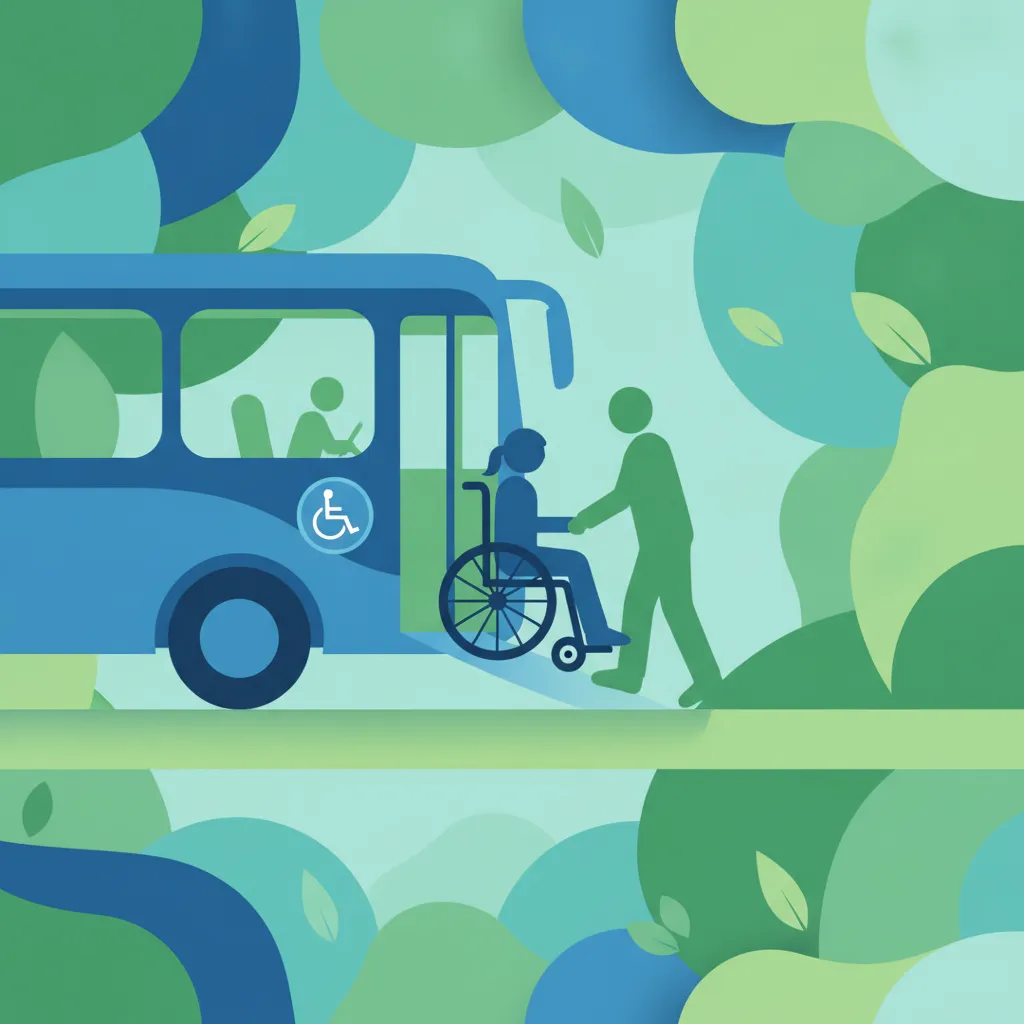
This lesson provides practical instruction on using accessibility features to assist passengers with reduced mobility. It covers the correct operation of wheelchair ramps and kneeling systems to facilitate safe boarding and alighting. Learners will also master the procedures for properly securing wheelchairs and other mobility aids inside the vehicle, ensuring compliance with accessibility standards and passenger safety.
This lesson details the specific legal obligations and safety protocols required for transporting schoolchildren. It covers the correct procedures for pick-up and drop-off, the use of warning lights, and the importance of supervised boarding and alighting. The lesson also explains how to interact with school crossing guards and navigate school zones safely to ensure the highest level of protection for children.
Find clear answers to common questions learners have about Vehicle Breakdowns and Emergency Procedures. Learn how the lesson is structured, which driving theory objectives it supports, and how it fits into the overall learning path of units and curriculum progression in Germany. These explanations help you understand key concepts, lesson flow, and exam focused study goals.
It is generally safer for passengers to remain on board if the vehicle is in a safe location, such as a designated lay-by, away from high-speed traffic, and if the vehicle itself is not at immediate risk of fire or collision.
You must activate hazard lights immediately, move to the hard shoulder if possible, and ensure all passengers exit through the doors away from traffic. Use the emergency phone to contact professional assistance rather than attempting repairs yourself.
The exam often uses hazard perception scenarios or situational questions that require you to prioritize safety measures, such as the correct order of warning others, securing the vehicle, and managing passenger flow.
Yes, when evacuating a bus, you must oversee the process to ensure a calm, orderly exit, especially if standing passengers are present. You must ensure the vehicle is stable and that passengers are directed to a safe location away from the road.
Begin your targeted revision now. Use our practice search to quickly find specific German driving theory questions. Filter by StVO rules, road signs, or hazard perception to create your focused study plan. Master challenging areas and prepare confidently for your theoretical driving test.