
This lesson provides the essential legal foundation for the D1, D1E, D, and DE licence categories. You will learn the regulatory framework that governs professional passenger transport in Germany, ensuring you understand your specific operational limits and duty of care.
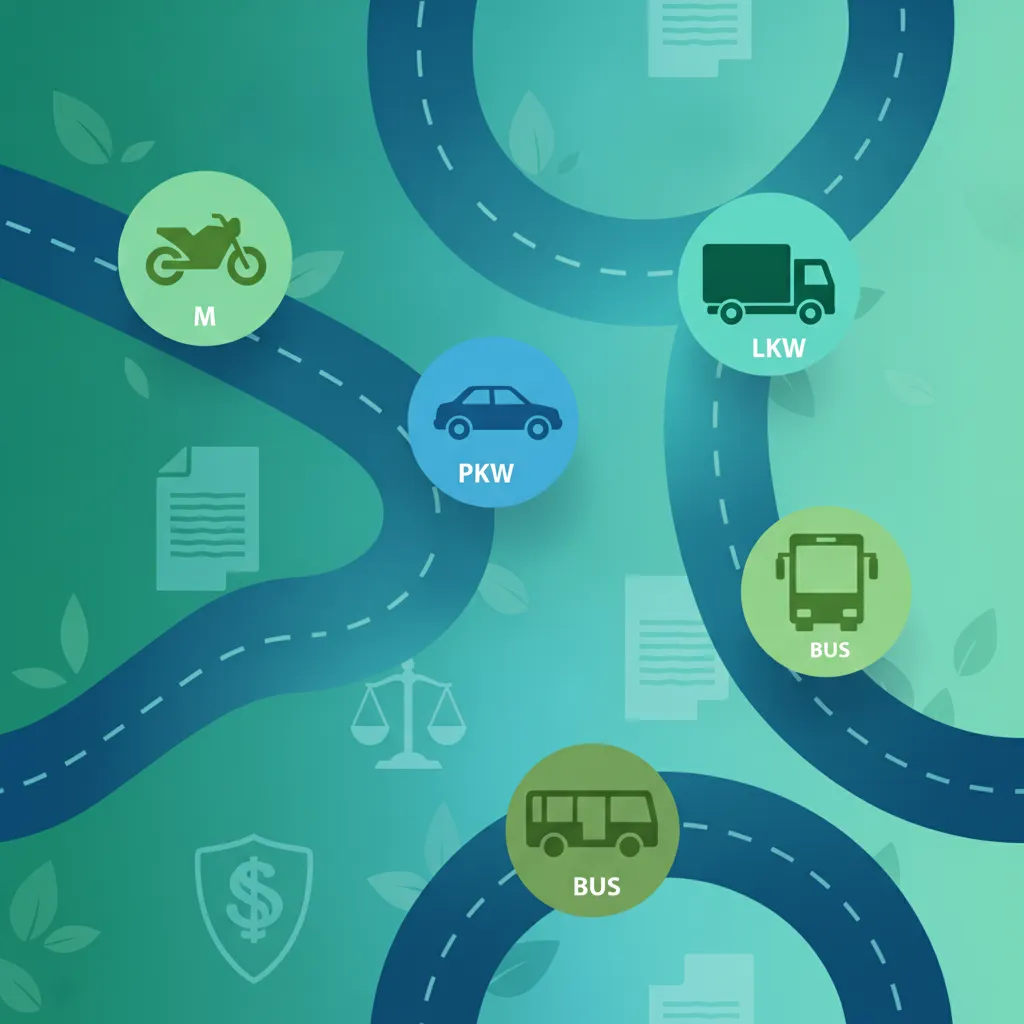
Lesson content overview
Operating passenger vehicles in Germany, particularly buses and coaches, demands a precise understanding of the various driving licence categories. This lesson provides a thorough breakdown of the German licence categories D1, D1E, D, and DE, outlining their legal definitions, permissible vehicle dimensions, passenger capacity, and the specific regulations governing vehicle combinations. A solid grasp of these distinctions and the underlying legal framework, primarily from the Straßenverkehrs-Ordnung (StVO), is fundamental for any professional driver transporting passengers. It establishes the essential legal and technical parameters that ensure safety, compliance, and professional responsibility on German roads.
This comprehensive overview forms the bedrock for all subsequent operational and safety knowledge required in your professional German passenger-vehicle theory course. It's crucial to understand these foundational rules before delving into more complex topics like vehicle dynamics, passenger care, or specific driving scenarios.
The D1 licence category is tailored for the operation of smaller passenger transport vehicles. It permits drivers to operate buses designed for the carriage of people with a maximum of 16 passenger seats in addition to the driver's seat. Crucially, vehicles under the D1 category must not exceed a maximum length of 8 metres and their permissible unloaded vehicle weight (often referred to as Gesamtverkehrsgewicht or GVW) must not exceed 5,000 kg.
This category is particularly relevant for various local transport needs. It is commonly utilized for shuttle services, community buses, or school buses operating within urban and suburban areas where larger vehicles might be impractical. Drivers holding a D1 licence must adhere to general vehicle specifications outlined in StVO §29 and specific driver qualifications detailed in StVO §30. A common misconception is confusing the "total number of seats" with "passenger seats"; the D1 category allows up to 16 passenger seats, meaning a vehicle with a driver's seat plus 16 passenger seats (17 total seats) would be permissible, assuming other criteria are met.
For instance, a compact city bus with 12 passenger seats, a length of 7.5 metres, and a GVW of 4,800 kg would perfectly fall under the D1 licence. Understanding these limits is critical to avoid legal infringements and ensure the correct vehicle is operated with the appropriate licence.
The total permissible weight of a vehicle when fully loaded, including the vehicle's own weight, passengers, and cargo. It is a critical factor for determining licence category compliance and safe operation.
The D1E licence category is an extension of the D1 licence, specifically allowing for the operation of D1 category buses with an attached trailer. This provides greater flexibility for transport services that require additional luggage space or specialized equipment. However, strict rules apply to the vehicle combination. The combined total length of the bus and its trailer must not exceed 12 metres. Furthermore, the permissible GVW of the trailer must not be greater than the permissible unloaded vehicle weight of the towing D1 bus.
This licence is invaluable for services such as airport shuttles requiring extra baggage capacity, small tour groups with extensive equipment, or local transport where additional cargo space is periodically needed. It's important for drivers to remember that while a trailer adds utility, it also changes the vehicle's dynamics, requiring greater skill and caution, especially during turns and braking. Compliance with StVO §30 for driver qualifications and StVO §33 for vehicle combinations is mandatory.
A frequent misunderstanding associated with the D1E category is the belief that any size trailer can be towed. This is incorrect; the 12-metre combined length limit is a strict legal requirement that must always be observed. For example, a D1 bus with a length of 7 metres can tow a trailer of up to 5 metres in length, provided the trailer's GVW does not exceed the bus's unloaded weight and the total combined length remains at or under 12 metres.
The D licence category represents a significant step up in terms of vehicle size and passenger capacity. It authorizes the operation of buses designed for the carriage of more than 8 passenger seats (in addition to the driver's seat), without any specified upper limit on the number of seats. Unlike the D1 category, there are no restrictions on the vehicle's length or its permissible unloaded vehicle weight (GVW) under the D licence, allowing for the operation of the largest passenger vehicles.
This category covers the vast majority of professional passenger transport, including full-size city buses, long-distance intercity coaches, and large tour buses. Obtaining a D licence requires extensive training and demonstrates a high level of proficiency in managing large vehicles and ensuring passenger safety. Drivers must comply with StVO §30 regarding driver qualifications and, importantly, StVO §31, which mandates specific professional driver training for D-category vehicles. This additional training focuses on the unique challenges of operating large passenger vehicles, including advanced vehicle handling, passenger management, and emergency procedures.
It is a common error to assume that a D licence somehow encompasses D1 automatically. While D allows for larger vehicles, it is a distinct, broader category with its own specific training requirements and operational considerations. An example of a D-category vehicle would be a city bus with 30 passenger seats, a length of 12 metres, and a GVW of 12,000 kg, or a double-decker tourist coach.
The DE licence category is the most extensive professional passenger transport licence, building upon the D category by allowing the towing of a trailer or semi-trailer. This licence is essential for operations where large buses or coaches need to transport substantial additional cargo, such as for touring bands, sports teams, or long-distance travel with significant luggage requirements. Crucially, there are no length restrictions for the combined vehicle under the DE category, but a vital weight regulation applies: the permissible Gesamtverkehrsgewicht (GVW) of the trailer must not exceed the permissible Gesamtverkehrsgewicht (GVW) of the towing D category bus.
This allows for immense flexibility in cargo transport while ensuring the towing vehicle maintains adequate control and braking capabilities. Similar to D1E, drivers operating a DE combination must possess advanced driving skills to manage the increased length, weight, and altered dynamics of the vehicle. Compliance with StVO §30 (driver qualifications) and StVO §33 (vehicle combinations) is paramount for safe and legal operation.
A common misunderstanding is assuming that any trailer can be towed behind a D-category bus with a DE licence. The weight restriction is crucial: if the trailer’s GVW exceeds that of the towing bus, the combination is illegal and unsafe. For instance, a coach with a GVW of 18,000 kg could tow a luggage trailer with a GVW of up to 18,000 kg, assuming the coach's technical towing capacity is also sufficient and all other regulations are met.
The operation of passenger vehicles in Germany is governed by a robust legal framework, primarily contained within the Straßenverkehrs-Ordnung (StVO), or German Road Traffic Regulations. Understanding these specific paragraphs is not merely about avoiding fines; it's about ensuring the highest standards of safety and professionalism when transporting the public.
Adhering to these legal foundations is non-negotiable for professional drivers. They form the basis for ensuring that both the vehicle and the driver are legally compliant and competent to handle the significant responsibilities associated with passenger transport.
Operating a passenger vehicle without the correct licence category or in violation of its specific limits can lead to severe consequences, including legal penalties, invalidation of insurance, and significantly increased accident risk. Awareness of common violations and edge cases is therefore crucial.
Always verify the vehicle's registration documents and the specifications on your driving licence before commencing any journey, especially when operating a vehicle combination. Misinterpretation or neglect of these details can lead to severe legal and safety repercussions.
The theoretical knowledge of licence categories translates directly into practical, safe driving decisions. Understanding the limits of your licence means understanding the limits of your vehicle and your responsibilities.
Cause-and-Effect in Driving Decisions: If a driver holds the proper licence category and adheres to all associated regulations, they are legally authorized and, presumptively, adequately trained to operate the specific vehicle, thereby minimizing risk and ensuring compliance. Conversely, if category requirements are violated, the driver faces not only severe legal penalties (fines, points, licence suspension) but also risks voiding insurance coverage and significantly increasing the likelihood of an accident due to operating a vehicle they are not qualified or trained to handle safely.
Regularly review the technical specifications of any passenger vehicle you operate, especially its GVW, passenger capacity, and, if applicable, towing capacity. This proactive approach ensures continuous compliance and enhances safety.
This lesson establishes the legal framework for German bus licence categories D1, D1E, D, and DE, defining precise limits on passenger capacity, vehicle dimensions, and GVW for each category. D1 covers smaller vehicles up to 16 passenger seats and 8 metres, while D covers larger buses with no upper limits. The trailer extensions D1E and DE add specific rules around combined length and weight matching between vehicle and trailer. The underlying StVO regulations (§29–§33) mandate compliance with technical specifications, driver qualifications, professional training, and vehicle combination rules, forming the non-negotiable foundation for safe and legal professional passenger transport in Germany.
A short set of high-value points that capture the most important learning from this lesson.
D1 licence covers buses with up to 16 passenger seats, maximum 8m length, and GVW up to 5,000 kg, suitable for smaller local transport roles.
D1E extends D1 by permitting a trailer, but the combined vehicle length must not exceed 12 metres and the trailer GVW cannot exceed the bus's unloaded weight.
D licence authorises buses with more than 8 passenger seats with no upper limit on length or GVW, covering full-size city and intercity coaches.
DE licence allows a D-category bus to tow a trailer, with the critical rule that the trailer's GVW must not exceed the towing bus's GVW.
All D-category operations require compliance with specific StVO paragraphs governing vehicle specifications, driver qualifications, professional training, and vehicle combinations.
Explore all units and lessons included in this driving theory course.
D1 = up to 16 passenger seats, max 8m, max 5,000 kg GVW; D = more than 8 passenger seats, unrestricted dimensions.
For D1E and DE trailer combinations, always compare GVW values: trailer GVW must not exceed the towing vehicle's GVW.
StVO §31 mandates professional driver training for D-category drivers beyond basic driving test requirements.
Remember the 12-metre combined length limit specifically applies to D1E combinations, not to DE which has no length restriction.
GVW (Gesamtverkehrsgewicht) is the total permissible weight when fully loaded, including vehicle weight, passengers, and cargo.
Confusing total seats with passenger seats; a D1 vehicle can have 17 total seats (1 driver + 16 passengers).
Assuming any trailer size is permitted with D1E or DE licences; size and weight limits are strictly enforced.
Believing D licence automatically covers D1 vehicles or vice versa; each category has distinct training and operational requirements.
Overlooking the weight restriction when towing with DE, which can compromise braking performance and vehicle stability if violated.
Operating a D or D1 bus professionally without completing mandatory professional driver training (StVO §31).
Lesson content overview
A short set of high-value points that capture the most important learning from this lesson.
D1 licence covers buses with up to 16 passenger seats, maximum 8m length, and GVW up to 5,000 kg, suitable for smaller local transport roles.
D1E extends D1 by permitting a trailer, but the combined vehicle length must not exceed 12 metres and the trailer GVW cannot exceed the bus's unloaded weight.
D licence authorises buses with more than 8 passenger seats with no upper limit on length or GVW, covering full-size city and intercity coaches.
DE licence allows a D-category bus to tow a trailer, with the critical rule that the trailer's GVW must not exceed the towing bus's GVW.
All D-category operations require compliance with specific StVO paragraphs governing vehicle specifications, driver qualifications, professional training, and vehicle combinations.
Explore all units and lessons included in this driving theory course.
D1 = up to 16 passenger seats, max 8m, max 5,000 kg GVW; D = more than 8 passenger seats, unrestricted dimensions.
For D1E and DE trailer combinations, always compare GVW values: trailer GVW must not exceed the towing vehicle's GVW.
StVO §31 mandates professional driver training for D-category drivers beyond basic driving test requirements.
Remember the 12-metre combined length limit specifically applies to D1E combinations, not to DE which has no length restriction.
GVW (Gesamtverkehrsgewicht) is the total permissible weight when fully loaded, including vehicle weight, passengers, and cargo.
Confusing total seats with passenger seats; a D1 vehicle can have 17 total seats (1 driver + 16 passengers).
Assuming any trailer size is permitted with D1E or DE licences; size and weight limits are strictly enforced.
Believing D licence automatically covers D1 vehicles or vice versa; each category has distinct training and operational requirements.
Overlooking the weight restriction when towing with DE, which can compromise braking performance and vehicle stability if violated.
Operating a D or D1 bus professionally without completing mandatory professional driver training (StVO §31).
Explore search topics learners often look for when studying Licence Category Overview and Legal Framework. These topics reflect common questions about road rules, driving situations, safety guidance, and lesson level theory preparation for learners in Germany.
Browse additional driving theory lessons that cover connected traffic rules, road signs, and common driving situations related to this topic. Improve your understanding of how different rules interact across everyday traffic scenarios.
Explore the specific legal definitions and StVO regulations governing German driving licence categories D1, D1E, D, and DE. Understand vehicle dimensions, passenger capacity, and operating rules for professional passenger transport in Germany.
This lesson covers the general permissions and limitations that come with holding a German Category B driving license. It clarifies the conditions for license eligibility, including medical fitness and mandatory vehicle insurance coverage. The content also addresses potential restrictions, the process for obtaining special permits, and the circumstances that can lead to a temporary or permanent driving ban.

This lesson focuses on the legal responsibilities and duties of a vehicle operator according to German traffic law, primarily the StVO. It covers the obligation to drive safely, the rules of conduct at an accident scene, and the legal consequences of traffic violations. Understanding these principles is crucial for maintaining road safety and avoiding penalties such as fines, points, or driving bans.

This lesson explains the legal framework for ensuring a passenger vehicle's roadworthiness, focusing on periodic technical inspections (TÜV) and scheduled maintenance. It identifies critical wear components, such as brakes and tires, that require regular monitoring and replacement. The importance of adhering to service intervals and maintaining accurate maintenance logs for regulatory compliance is also thoroughly covered.
This lesson details the legal obligations every AM licence holder must follow. It emphasizes compliance with the Straßenverkehrs-Ordnung (StVO), including mandatory helmet use and maintaining vehicle roadworthiness. The content covers insurance requirements, accident reporting procedures, and the legal consequences of non-compliance.

This lesson provides a detailed overview of the legal framework governing the AM licence in Germany. It explains the classification of vehicles like mopeds and scooters based on engine displacement, power output, and weight. Learners will understand the official age requirements, licensing procedures, and fundamental StVO regulations.

This lesson explores the legal framework governing heavy vehicle operation in Germany, focusing on the Straßenverkehrs-Ordnung (StVO) and specific commercial transport regulations. It details the professional duty of care required from drivers, including responsibilities for vehicle inspection and documentation. You will understand the enforcement mechanisms and potential penalties for non-compliance.
This lesson outlines the driver's legal responsibility to ensure their vehicle is in a safe and roadworthy condition before every journey. It covers essential pre-drive checks, such as verifying lights, tyres, and fluid levels (oil, coolant, washer fluid). The lesson also explains the mandatory equipment that must be carried in the vehicle, including a warning triangle, high-visibility vest, and first-aid kit.

This lesson covers the essential behavioral rules mandated by the German Road Traffic Act (StVO) that form the foundation of safe driving. Key principles discussed include the mandatory rule to drive on the right side of the road, maintaining a safe following distance, and adapting speed to conditions. It also explains the regulations for overtaking, merging, and parking to ensure smooth and safe traffic flow.
Understand the specific scope and operational rules for German licence categories D1, D1E, D, and DE. This includes details on vehicle dimensions, passenger limits, and relevant traffic regulations for professional drivers.

This lesson offers a foundational overview of passenger vehicle construction, focusing on the chassis, engine, and transmission systems. It explains the function of essential components like brakes and steering, which are critical for safe operation. Learners will also understand how vehicle dimensions, weight distribution, and passenger capacity fundamentally influence handling, stability, and overall performance on the road.

This lesson examines the direct impact of a passenger vehicle's dimensions on its operation. It explains key concepts such as turning radius, swept path, and rear overhang, which are crucial for safe maneuvering in confined areas. Learners will understand how to account for these characteristics when positioning the vehicle in a lane, making turns, and navigating challenging urban environments to avoid collisions.
This lesson explains the legal framework for ensuring a passenger vehicle's roadworthiness, focusing on periodic technical inspections (TÜV) and scheduled maintenance. It identifies critical wear components, such as brakes and tires, that require regular monitoring and replacement. The importance of adhering to service intervals and maintaining accurate maintenance logs for regulatory compliance is also thoroughly covered.

This lesson covers the proper management of items brought on board by passengers, including luggage, prams, and mobility aids. It teaches how to use designated storage areas and racks correctly to prevent items from becoming hazards. The procedures for securing wheelchairs and other mobility devices are detailed to ensure they are stable and do not move during transit, complying with safety and accessibility standards.
This lesson focuses on the logistical and safety aspects of planning long-distance passenger services. It covers the legal requirements for driving hours and rest periods, which are monitored by a tachograph. Learners will understand the importance of proactive fatigue management, scheduling regular breaks, and planning routes that include appropriate rest stops to ensure both driver alertness and passenger comfort throughout the journey.
This lesson defines the specific vehicle types covered by the German Category B license, focusing on passenger cars and light commercial vehicles. It details the regulations concerning maximum permissible gross vehicle weight and the legal limits for towing trailers. You will learn to identify which vehicles fall under this category according to German and EU standards to ensure full compliance.
This lesson covers the general permissions and limitations that come with holding a German Category B driving license. It clarifies the conditions for license eligibility, including medical fitness and mandatory vehicle insurance coverage. The content also addresses potential restrictions, the process for obtaining special permits, and the circumstances that can lead to a temporary or permanent driving ban.
This lesson covers the essential behavioral rules mandated by the German Road Traffic Act (StVO) that form the foundation of safe driving. Key principles discussed include the mandatory rule to drive on the right side of the road, maintaining a safe following distance, and adapting speed to conditions. It also explains the regulations for overtaking, merging, and parking to ensure smooth and safe traffic flow.

This lesson focuses on the factors contributing to passenger comfort during a journey. It explains how to effectively operate climate control and ventilation systems to maintain a pleasant temperature and air quality. Additionally, it discusses strategies for minimizing noise and vibration and the importance of smooth driving techniques to enhance the overall ride experience for passengers.

This lesson provides instruction on the rules and best practices for operating a large passenger vehicle on the Autobahn. It covers the principles of strict lane discipline, regulations for minimum speed, and correct procedures for overtaking and merging. The importance of maintaining significantly increased following distances at high speeds and planning for exits well in advance is a key focus.
Find clear answers to common questions learners have about Licence Category Overview and Legal Framework. Learn how the lesson is structured, which driving theory objectives it supports, and how it fits into the overall learning path of units and curriculum progression in Germany. These explanations help you understand key concepts, lesson flow, and exam focused study goals.
The D1 licence is for vehicles designed to carry up to 16 passengers (excluding the driver) with a maximum length of 8 meters. The D licence allows for larger vehicles with more than 8 passenger seats, regardless of length.
Yes, the E designation indicates that you are permitted to pull a trailer exceeding 750kg behind your passenger vehicle. You must demonstrate specific knowledge and handling skills for these combinations in the theory and practical tests.
The StVO and associated regulations imply a heightened duty of care for professional drivers because they are responsible for the safety of multiple passengers, requiring strict adherence to speed limits, loading rules, and passenger conduct.
Yes, depending on the specific licence category and whether you are undergoing vocational training, minimum age requirements can vary significantly. Always check the current driving licence regulations for the most up-to-date age thresholds.
Begin your targeted revision now. Use our practice search to quickly find specific German driving theory questions. Filter by StVO rules, road signs, or hazard perception to create your focused study plan. Master challenging areas and prepare confidently for your theoretical driving test.