
This crucial lesson equips future Polish Category D bus drivers with vital knowledge of emergency procedures. You will learn how to conduct rapid evacuations, understand fire safety protocols, and manage accident responses effectively. This lesson is essential for passing the theory exam and ensuring the highest level of passenger safety during unforeseen incidents.
Lesson content overview
Operating a Category D vehicle, such as a bus, entails a significant responsibility for the safety of numerous passengers. While prevention is paramount, unforeseen emergencies can arise, demanding a bus driver's swift, informed, and legally compliant response. This lesson, part of the Polish Category D Driving Licence Theory Course for Bus Drivers, provides a comprehensive guide to managing critical incidents, including rapid passenger evacuation, effective fire suppression, immediate first aid, and diligent accident reporting.
Mastery of these emergency procedures is not merely a legal requirement; it is a fundamental aspect of professional driving that directly impacts lives, minimizes vehicle damage, and upholds public trust. By understanding and practicing these protocols, drivers are equipped to protect their passengers and themselves effectively.
Responding to an emergency effectively hinges on adherence to several core principles. These guidelines ensure a structured, safe, and legally sound approach to any incident on the road. Prioritizing these principles helps professional drivers manage chaos and maintain control during high-stress situations.
Immediate Hazard Assessment: Quickly identify the nature and severity of the emergency through visual and auditory cues. This rapid appraisal dictates the immediate course of action, whether it's an evacuation, fire suppression, or medical intervention.
Passenger Protection Priority: The paramount concern is always the safety and well-being of passengers. They must be secured, informed, and guided to safety before the driver undertakes any non-essential actions. This approach minimizes panic and maximizes life safety.
Equipment Readiness: All onboard safety equipment, including fire extinguishers, first-aid kits, and emergency tools, must be regularly serviced, easily accessible, and correctly labeled. Consistent checks ensure these tools are operational precisely when needed.
Legal Reporting Obligation: Professional drivers are legally bound by the Polish Road Traffic Act (Ustawa o ruchu drogowym) to notify relevant authorities (police, medical services, transport operator) within defined timeframes after an incident. This ensures official documentation and facilitates timely emergency response.
Scene Securing: After an incident that immobilizes the vehicle, the driver must take immediate steps to secure the scene. This involves activating hazard lights, placing warning triangles, and, if safe, implementing traffic control measures to prevent secondary collisions and protect all involved parties, including rescue workers.
Cooperation with Emergency Services: Upon arrival of police, fire brigade, or emergency medical services (EMS), the driver must provide clear information, facilitate their access to the scene, and follow all instructions. This collaboration optimizes response efficiency and prevents unnecessary delays.
Continuous Communication: Throughout an emergency, the driver must maintain clear and calm communication with passengers. Using the public address (PA) system, hand signals, and concise verbal instructions helps reduce panic, guide orderly movement, and maintain discipline.
Emergency evacuation is a structured series of actions designed to safely move all passengers from a compromised bus to a secure area. The driver’s ability to execute an evacuation calmly and efficiently is critical to passenger safety.
Evacuations are generally required when the bus is no longer safe to occupy due to fire, gas leak, significant structural damage, or other immediate threats. There are two primary categories of evacuation:
When an evacuation is deemed necessary, the driver must follow a precise sequence of actions:
Stop Safely and Secure the Vehicle: If possible, pull the bus to the side of the road, away from immediate hazards. Apply the parking brake, turn off the engine, and activate the hazard warning lights immediately.
Assess the Hazard and Announce Evacuation: Quickly re-evaluate the situation. Using the PA system, issue a clear, calm, and concise "Evacuation Order" (rozkaz ewakuacji), instructing passengers to remain calm and prepare to exit. Specify which exits to use.
Unlock All Emergency Exits and Doors: Manually override and unlock all regular and emergency exits. This is crucial as locked doors can trap passengers, especially in a panic. The Polish Road Traffic Act (Art. 120-124) mandates that drivers ensure passengers can exit safely.
Guide Passengers to Safety: Direct passengers to the nearest safe emergency exits. Maintain control and prevent crowding at a single exit. Offer verbal encouragement and clear instructions.
Assist Vulnerable Passengers: Prioritize assistance for passengers with reduced mobility, the elderly, or children. Ensure that wheelchair users are assisted using dedicated ramps or lifts, if available, or carefully carried out if necessary. Always ensure a responsible adult is with children during an evacuation.
Verify the Bus is Empty: Once passengers have exited, the driver must perform a thorough check of the entire bus to ensure no one is left behind, especially in hidden compartments or under seats.
Direct Passengers to a Safe Assembly Point: Guide passengers to a designated safe zone, away from the bus and any ongoing hazards (e.g., traffic, fire). Maintain order and prevent them from re-approaching the vehicle.
Notify Emergency Services and Operator: Immediately contact 112 (the unified emergency number in Poland) and your transport operator. Provide precise location, the nature of the emergency, and the number of people involved.
Never leave the bus before all passengers have been safely evacuated. The driver's presence is essential for maintaining order and providing direction.
Onboard fire safety equipment is vital for controlling or extinguishing fires that may occur in a bus. Drivers must be familiar with the types of equipment, their locations, and correct usage.
Buses typically carry specific types of fire extinguishers designed for common vehicle fires.
Polish regulations, aligned with EU directives (e.g., Machinery Directive 2006/42/EC), require regular inspection of fire extinguishers. A minimum of a 2 kg powder extinguisher is typically mandated for passenger buses.
Fire extinguishers must be mounted in easily accessible locations, typically near the driver's seat, at each main exit, and often in the engine compartment. Drivers should perform a quick check before each shift to ensure:
Should a fire break out, the driver's first priority is always passenger safety and evacuation. If a fire is small and contained, and it is safe to do so, the driver can attempt to extinguish it using the appropriate equipment.
P - Pull the Pin: Remove the safety pin that prevents accidental discharge.
A - Aim at the Base: Direct the nozzle or hose at the base of the fire, not the flames themselves.
S - Squeeze the Handle: Depress the operating lever to release the extinguishing agent.
S - Sweep Side-to-Side: Move the nozzle slowly from side to side, sweeping across the base of the fire until it is extinguished.
Never use a water-based extinguisher on an electrical or fuel fire, as this can worsen the situation or create an electrocution hazard. If the fire is large, spreading rapidly, or if there's any doubt about safety, prioritize evacuation and await emergency services.
A certified first-aid kit is a mandatory piece of equipment on all public service vehicles in Poland, as stipulated by Polish law (§ 103 of the Road Traffic Act). It enables the driver or accompanying staff to provide immediate medical assistance to injured or ill passengers before professional medical help arrives.
First-aid kits are designed to address a range of common injuries. While specific contents may vary, they typically include:
The kit must be stored in an easily accessible, yet secure compartment, and drivers are responsible for ensuring its integrity. This includes:
While professional drivers are not expected to be paramedics, basic first-aid knowledge is crucial. In an emergency, the driver or a trained passenger can stabilize injuries and prevent them from worsening. This might include:
It is critical to remember that first aid is immediate, temporary care. The ultimate goal is to bridge the gap until professional medical assistance from emergency medical services (EMS) arrives.
In the unfortunate event of a traffic collision, the driver’s actions immediately following the incident are paramount for safety, evidence preservation, and legal compliance.
Once a collision occurs, the driver must act swiftly and methodically:
Securing the scene is vital to prevent secondary collisions, which can often be more severe than the initial incident.
Collecting accurate information is crucial for accident reports and insurance claims. The driver should note:
Professional bus drivers have strict legal duties regarding incident reporting in Poland. Failure to comply can lead to significant legal penalties, insurance complications, and administrative consequences.
Beyond immediate notification, thorough documentation is essential. The driver is usually required to complete an official accident report, often referred to as a "KM-form" or "formularz zdarzenia." This form details:
Accuracy and timeliness in completing this documentation are critical for proper investigation, compensation processing, and informing future safety improvements.
Effective coordination with emergency services (police, fire brigade, EMS) is crucial for a successful and efficient rescue operation. The driver acts as the primary point of contact and facilitator until command is officially transferred.
When emergency services arrive, the driver should:
The driver should take proactive steps to ensure emergency vehicles can access the scene without obstruction:
Emergency response procedures can be significantly influenced by external factors such as weather, road type, and the specific condition of the vehicle. Adapting the core protocols to these variations is a mark of a skilled professional driver.
Adverse weather conditions can complicate emergency procedures, making them slower and potentially more dangerous.
The environment in which an emergency occurs influences response tactics.
The state of the bus itself can present unique challenges.
Certain passengers require additional consideration during emergencies.
Understanding common errors in emergency response can help drivers avoid them, safeguarding lives and preventing further complications.
For professional bus drivers undertaking the Polish Category D Driving Licence Theory Course for Bus Drivers, proficiency in emergency procedures is a non-negotiable skill. This comprehensive lesson has highlighted the critical aspects of responding to incidents, from immediate hazard assessment to detailed accident reporting and seamless coordination with emergency services.
By internalizing the core principles, mastering the practical steps for evacuation and fire suppression, and understanding legal obligations, drivers can act with confidence and competence in high-stress situations. The ability to adapt to varying conditions and learn from common pitfalls further enhances a driver's readiness. Ultimately, a calm, decisive, and well-prepared driver is the most vital asset in ensuring passenger safety during any unforeseen event on the road.
This lesson covers the critical emergency procedures that Polish Category D bus drivers must master, emphasizing passenger safety as the highest priority. Drivers learn systematic approaches to rapid evacuation, including when to initiate full versus partial evacuation, how to guide vulnerable passengers, and how to verify the bus is completely empty. Fire safety protocols teach correct use of onboard extinguishers using the PASS method and the importance of regular equipment checks. Accident response requires proper scene securing with warning triangles at correct distances, immediate notification to 112 and the transport operator, and thorough documentation. The content also addresses adapting procedures to adverse weather, different road types, and specific vehicle conditions, while highlighting eight common mistakes that drivers must avoid to ensure legal compliance and, most importantly, save lives.
A short set of high-value points that capture the most important learning from this lesson.
Passenger safety is always the driver's paramount priority during any emergency, overriding all other concerns until passengers are secured.
Emergency response follows a structured sequence: assess hazard, secure the scene, communicate with passengers, evacuate if necessary, then coordinate with services.
Fire extinguishers on Polish buses must be powder-based (ABC) or CO2 type, and drivers must use the PASS method (Pull, Aim, Squeeze, Sweep) correctly.
Drivers are legally required to notify police via 112 immediately after accidents involving injuries, fatalities, or damage exceeding 2,000 PLN.
Warning triangles must be placed at least 50 meters on motorways/expressways and 30 meters on other roads outside built-up areas.
Explore all units and lessons included in this driving theory course.
The PASS method for fire extinguishers: Pull the pin, Aim at the base, Squeeze the handle, Sweep side-to-side.
Polish emergency number is 112; the driver must also notify their transport operator within 24 hours after any incident.
Two evacuation types exist: full-vehicle evacuation when the entire bus is threatened, and partial evacuation for isolated hazards.
Polish Road Traffic Act (Ustawa o ruchu drogowym) articles 120-124 govern passenger exit requirements, article 130b covers accident notification.
Never use water-based extinguishers on electrical or fuel fires; this can cause electrocution or spread the fire.
Failing to unlock all emergency exits before initiating evacuation, which can trap passengers and increase panic.
Using incorrect fire extinguisher types on specific fire classes, such as water on electrical fires, which worsens the situation.
Placing warning triangles too close to the vehicle on motorways, significantly increasing the risk of secondary collisions.
Delaying or omitting police notification after accidents involving injuries, leading to legal penalties and insurance complications.
Leaving the bus before confirming all passengers have been evacuated, creating disorder and leaving passengers vulnerable.
Lesson content overview
A short set of high-value points that capture the most important learning from this lesson.
Passenger safety is always the driver's paramount priority during any emergency, overriding all other concerns until passengers are secured.
Emergency response follows a structured sequence: assess hazard, secure the scene, communicate with passengers, evacuate if necessary, then coordinate with services.
Fire extinguishers on Polish buses must be powder-based (ABC) or CO2 type, and drivers must use the PASS method (Pull, Aim, Squeeze, Sweep) correctly.
Drivers are legally required to notify police via 112 immediately after accidents involving injuries, fatalities, or damage exceeding 2,000 PLN.
Warning triangles must be placed at least 50 meters on motorways/expressways and 30 meters on other roads outside built-up areas.
Explore all units and lessons included in this driving theory course.
The PASS method for fire extinguishers: Pull the pin, Aim at the base, Squeeze the handle, Sweep side-to-side.
Polish emergency number is 112; the driver must also notify their transport operator within 24 hours after any incident.
Two evacuation types exist: full-vehicle evacuation when the entire bus is threatened, and partial evacuation for isolated hazards.
Polish Road Traffic Act (Ustawa o ruchu drogowym) articles 120-124 govern passenger exit requirements, article 130b covers accident notification.
Never use water-based extinguishers on electrical or fuel fires; this can cause electrocution or spread the fire.
Failing to unlock all emergency exits before initiating evacuation, which can trap passengers and increase panic.
Using incorrect fire extinguisher types on specific fire classes, such as water on electrical fires, which worsens the situation.
Placing warning triangles too close to the vehicle on motorways, significantly increasing the risk of secondary collisions.
Delaying or omitting police notification after accidents involving injuries, leading to legal penalties and insurance complications.
Leaving the bus before confirming all passengers have been evacuated, creating disorder and leaving passengers vulnerable.
Explore search topics learners often look for when studying Emergency Evacuation, Fire Safety, and Accident Response. These topics reflect common questions about road rules, driving situations, safety guidance, and lesson level theory preparation for learners in Poland.
Browse additional driving theory lessons that cover connected traffic rules, road signs, and common driving situations related to this topic. Improve your understanding of how different rules interact across everyday traffic scenarios.
Learn critical bus emergency evacuation steps, fire extinguisher use, and safety protocols compliant with Polish driving regulations. Essential knowledge for Category D drivers to ensure passenger safety during incidents.
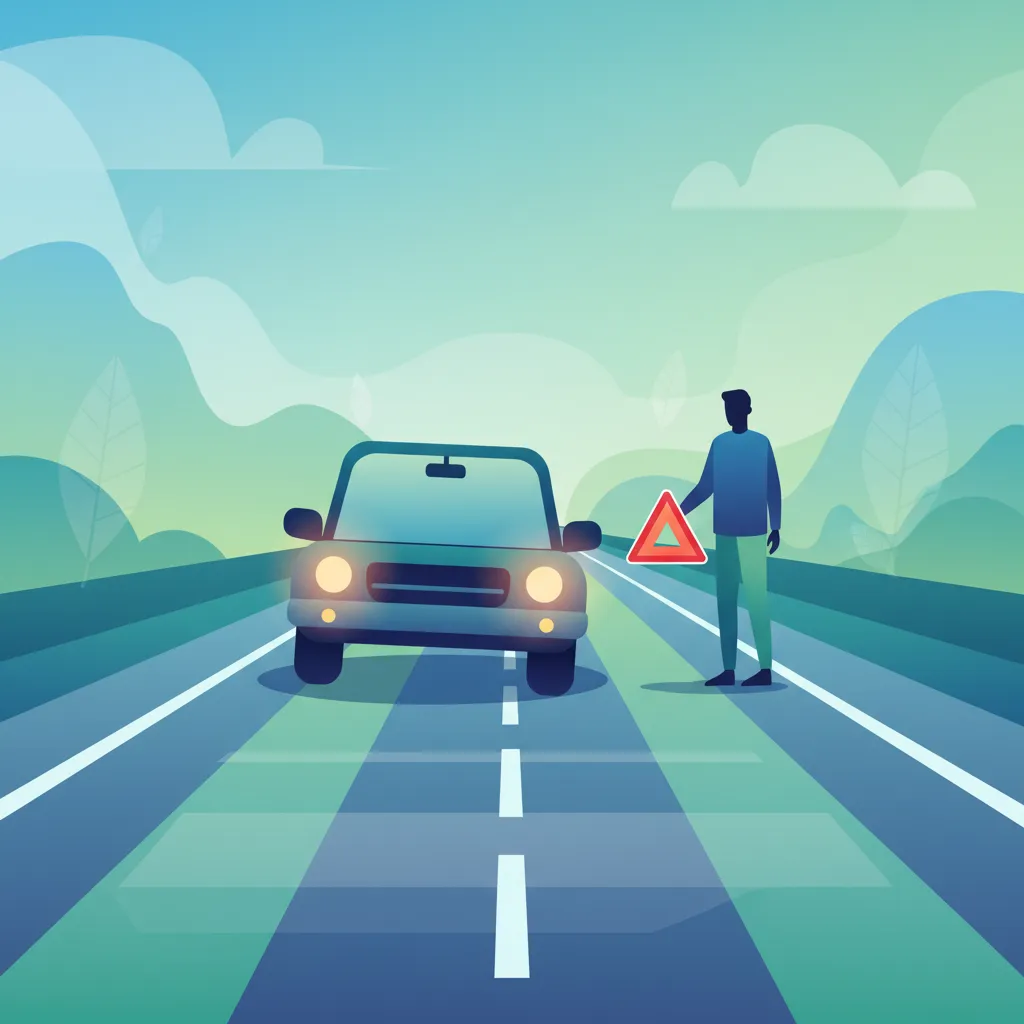
This lesson prepares drivers for the event of a vehicle breakdown on a motorway or expressway. It details the correct procedure: pulling over to the emergency lane, activating hazard lights, and placing the warning triangle at the legally required distance. The importance of wearing a reflective vest when outside the vehicle is also a key safety point.
This lesson outlines the emergency procedures a tractor driver must follow in case of a breakdown, trailer detachment, or accident. It covers immediate actions such as pulling over safely, deploying warning triangles, and using hazard lights to alert other road users. The lesson details the steps for reporting the incident, providing first aid, and securing the scene to prevent further hazards.
This lesson provides essential knowledge for responding to sudden and dangerous vehicle malfunctions. It outlines step-by-step procedures for handling a catastrophic tire blowout, managing a loss of braking power, and reacting to a shift in cargo that destabilizes the vehicle. The focus is on maintaining as much control as possible, bringing the vehicle to a safe stop away from traffic, and activating hazard warnings to protect the scene and other road users.
This lesson details the professional driver's responsibilities in the event of a collision. It covers the immediate actions required to secure the scene, such as activating hazard lights and placing warning triangles, to prevent further incidents. Learners will understand the correct procedure for contacting emergency services, providing assistance to injured parties if trained, and the legal requirements for documenting and reporting the accident to the authorities and their employer.

This lesson focuses on the critical procedures for executing an emergency stop with an air-braked vehicle. It explains how to apply firm, steady pressure to the brake pedal to achieve maximum braking force without locking the wheels, which could lead to a loss of control. The content also discusses the response time of air brake systems and how to manage the significant forces of deceleration when the vehicle is fully loaded, ensuring the quickest possible stop in a crisis situation.
Understand essential procedures for managing a bus accident scene, securing the site, and fulfilling legal reporting obligations to authorities and operators as required by Polish law for Category D drivers.

This lesson deals with the administrative aftermath of an accident. It explains the legal requirements for reporting a collision to the police and the process for notifying insurance companies. The content details what information must be exchanged between involved parties, including insurance details and contact information, to facilitate a smooth claims process.
This lesson details the professional driver's responsibilities in the event of a collision. It covers the immediate actions required to secure the scene, such as activating hazard lights and placing warning triangles, to prevent further incidents. Learners will understand the correct procedure for contacting emergency services, providing assistance to injured parties if trained, and the legal requirements for documenting and reporting the accident to the authorities and their employer.
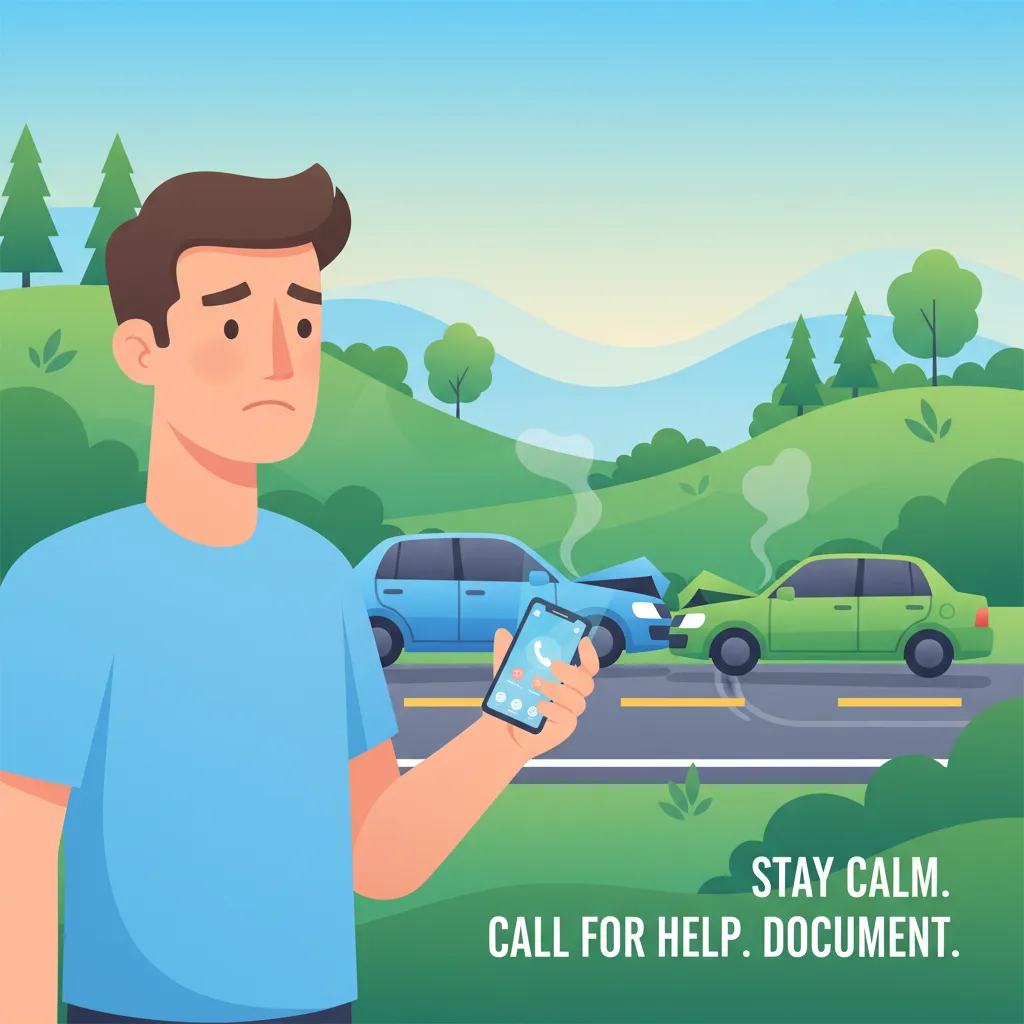
This lesson provides a clear, procedural guide for the moments following a road accident. It prioritizes safety, instructing on how to secure the scene with a warning triangle and hazard lights to prevent further incidents. The lesson also covers assessing for injuries and when it is necessary to call emergency services.

This lesson equips drivers with essential first-aid knowledge applicable to a road accident scenario. It covers how to assess a casualty, control severe bleeding, and place an unconscious person in the recovery position. The lesson also emphasizes Poland's legal requirement for individuals to provide assistance to the injured within their capabilities.
This lesson outlines the emergency procedures a tractor driver must follow in case of a breakdown, trailer detachment, or accident. It covers immediate actions such as pulling over safely, deploying warning triangles, and using hazard lights to alert other road users. The lesson details the steps for reporting the incident, providing first aid, and securing the scene to prevent further hazards.
This lesson outlines the legal responsibilities of tractor drivers as stipulated by Polish traffic law, emphasizing the duty to comply with all rules of the road. It discusses the liability framework for accidents involving agricultural vehicles, including the need for appropriate insurance and potential penalties. The lesson also explains the importance of maintaining accurate documentation, such as registration papers and a driver’s licence.
This lesson prepares drivers for the event of a vehicle breakdown on a motorway or expressway. It details the correct procedure: pulling over to the emergency lane, activating hazard lights, and placing the warning triangle at the legally required distance. The importance of wearing a reflective vest when outside the vehicle is also a key safety point.
Find clear answers to common questions learners have about Emergency Evacuation, Fire Safety, and Accident Response. Learn how the lesson is structured, which driving theory objectives it supports, and how it fits into the overall learning path of units and curriculum progression in Poland. These explanations help you understand key concepts, lesson flow, and exam focused study goals.
The absolute priority is the safety of passengers. The driver must first ensure the bus is stopped safely, if possible, then quickly assess the situation and initiate evacuation through the safest exits, providing clear instructions and assisting vulnerable passengers first. Contacting emergency services comes after ensuring immediate passenger safety.
Yes, Polish regulations specify the type and number of fire extinguishers required for public transport vehicles like Category D buses, typically dry powder extinguishers. Drivers must know their location, how to use them, and ensure they are regularly checked and maintained according to Polish safety standards.
When reporting a bus accident in Poland, drivers should provide clear details including the exact location, the nature of the incident, the number of people involved (especially injured), and any immediate dangers (e.g., fire, spilled fuel). Stay calm and follow their instructions precisely, providing updates as the situation evolves.
Assisting passengers with reduced mobility requires extra care and preparation. Always prioritize them, use any available ramps or lifts if safe, and provide verbal instructions clearly. Drivers should be aware of emergency exit features designed for such passengers and know how to safely help them off the bus, even if it requires additional time or support from other able-bodied passengers.
Build custom practice sessions tailored precisely to your needs. Focus on areas requiring improvement, review specific Polish road signs, or master complex traffic rules to ensure full preparation for your official driving license exam.