
This lesson is crucial for any driver, equipping you with essential first-aid knowledge specifically applicable to road accident scenarios in Poland. It details how to assess a casualty, manage severe bleeding, and correctly use the recovery position. Understanding these procedures is vital for the Polish Category B theory exam and fulfills your legal and ethical responsibilities on the road.

Lesson content overview
Encountering a road accident is a stressful and potentially dangerous situation, but as a driver preparing for your Polish Category B license, it is crucial to understand your legal and moral obligations as a first responder. This lesson equips you with essential knowledge and practical steps to take, ensuring you can act effectively and lawfully when faced with an accident scene. From securing the area to providing basic first aid and contacting emergency services, your actions can significantly influence the outcome for those involved.
In Poland, the duty to assist individuals injured in a traffic accident is not merely a moral imperative; it is a strict legal requirement. Under Polish law, specifically Article 140 §1 of the Administrative Offences Code (Kodeks wykroczeń) and Article 5b of the Road Traffic Act (Ustawa o ruchu drogowym), any person who becomes aware of a traffic incident that has caused injury or death is obligated to stop and render assistance within their capabilities. Failure to do so can result in severe legal consequences.
This legal duty means you cannot simply drive away or assume someone else will help. As a driver, you are often among the first people to arrive at an accident scene. Your responsibilities include:
Your driver's license training for Category B in Poland includes mandatory first-aid instruction. This ensures you acquire the fundamental skills necessary to fulfill your legal duty.
While the law requires you to assist, it also implicitly recognizes your limitations. You are expected to provide help "within your capabilities," meaning you are not required to put your own life at extreme risk or perform complex medical procedures beyond your training. However, basic actions like making an emergency call, ensuring an open airway, controlling severe bleeding, and placing someone in the recovery position are generally considered within the capabilities of a trained driver.
Common misunderstandings include believing that calling emergency services absolves you of further responsibility, or that you can leave if others are already helping. The duty generally requires you to remain at the scene until emergency services or law enforcement arrive and take over.
Before you approach any casualties or attempt to provide first aid, your absolute first priority must be scene safety. A poorly secured accident site can lead to secondary collisions, injuring both the rescuers and additional road users.
Stop Safely: Pull your vehicle over to a safe location, ideally off the road or on the hard shoulder, a reasonable distance before the accident.
Activate Hazard Lights: Immediately turn on your vehicle's hazard warning lights (often indicated by a red triangle button) to alert approaching traffic to a potential danger ahead.
Wear a Reflective Vest (if available): If you need to exit your vehicle, especially in low light or poor visibility, put on a reflective safety vest from your first-aid kit.
Place a Warning Triangle: Position your warning triangle at an appropriate distance behind the accident scene to provide early warning to oncoming drivers. The distance varies by road type:
Generally, it's 30 meters on urban roads and 50-100 meters on highways or outside built-up areas.
Assess for Immediate Dangers: Look for potential hazards such as spilled fuel, smoke, fire, live electrical wires, or unstable vehicles. If there's an immediate threat like fire, prioritize moving casualties to safety only if it can be done without aggravating their injuries and without endangering yourself.
Control Traffic (if safe): If there are no immediate threats, and it's safe to do so, you can use hand signals to guide approaching traffic around the scene until professional help arrives.
Never put yourself in harm's way. Your safety is paramount. If the scene is too dangerous (e.g., heavy traffic, risk of explosion), maintain a safe distance and focus on calling for help.
Once the scene is secured and you've made a quick initial assessment, calling emergency services is your next critical step. In Poland, the universal emergency number is 112, which connects you to police, fire, and ambulance services.
State Your Location Clearly: Provide the most precise location possible. This includes the road name or number, nearest town/city, kilometre marker if available, and any prominent landmarks (e.g., "near the petrol station," "before the bridge").
Describe the Incident: Briefly explain what has happened (e.g., "car collision," "motorcycle accident," "vehicle hit a pedestrian").
Report Number and Condition of Casualties: State how many people appear to be injured and give a brief overview of their condition (e.g., "one person unconscious," "two people trapped, one bleeding heavily").
Mention Any Hazards: Inform the operator about any immediate dangers you've identified, such as smoke, fire, fuel leaks, or traffic obstruction.
Provide Your Contact Details: Give your name and the phone number you are calling from.
Stay on the Line: Do not hang up until the operator instructs you to do so. They may have further questions or provide crucial advice while you wait for help to arrive.
Rapid and accurate information allows emergency services to dispatch the appropriate resources quickly, which is vital for saving lives.
After securing the scene and making the emergency call, you can proceed to assess the casualties. The Primary Survey, often remembered by the acronym ABC, is a systematic and rapid evaluation to identify and address immediate life-threatening conditions.
A systematic assessment of a casualty's Airway, Breathing, and Circulation to identify and manage life-threatening problems in order of priority.
A - Airway:
B - Breathing:
C - Circulation:
Always wear disposable gloves from your first-aid kit when touching a casualty, if available, to protect both yourself and the injured person from infection.
Severe bleeding is one of the most immediate life threats after a road accident. Rapid blood loss can lead to shock and death in a very short time. Knowing how to control it is a critical skill.
Rapid and significant loss of blood from a wound, often arterial or large venous, which can quickly lead to life-threatening complications like hypovolemic shock.
Apply Direct Pressure: Use a clean cloth, sterile dressing, or even your bare hand (preferably gloved) to apply firm, direct pressure onto the wound.
Elevate the Limb (if applicable): If the bleeding is on a limb and there's no suspicion of a fracture, raise the injured limb above the level of the casualty's heart to help reduce blood flow.
Apply a Pressure Bandage: Once direct pressure has reduced the bleeding, apply a pressure bandage over the dressing to maintain continuous pressure. Wrap the bandage firmly, but not so tightly that it cuts off circulation to the limb entirely (unless using a tourniquet as a last resort).
Consider a Tourniquet (Last Resort): A tourniquet is a life-saving device used to completely stop blood flow to a limb when severe, life-threatening bleeding cannot be controlled by direct pressure and pressure bandages. It should only be used for severe limb bleeding, typically from an artery, and applied high and tight above the wound. Once applied, do not remove it, and note the time of application for emergency medical personnel.
Do not attempt to remove any embedded objects (e.g., glass, metal shards) from a wound, as this can worsen bleeding. Instead, apply pressure around the object.
If you find a casualty who is unconscious but breathing normally, placing them in the recovery position is crucial. This position helps to keep their airway open and prevents them from choking on vomit or fluids.
A safe lateral (side-lying) body position for an unconscious but breathing person, designed to maintain an open airway and prevent aspiration of fluids.
Kneel Beside the Casualty: Position yourself next to the casualty, ensuring their body is flat on their back.
Straighten Near Arm: Extend the arm nearest to you at a right angle to their body, with the palm facing upwards.
Bring Opposite Arm Across: Take the arm farthest from you and bring it across their chest, placing the back of their hand against the cheek nearest to you. Hold it there.
Bend Farthest Knee: With your other hand, grasp the knee farthest from you and bend it so the foot is flat on the ground.
Roll the Casualty: Carefully roll the casualty onto their side by pulling on the bent knee. Use their bent knee and the arm under their cheek to provide stability.
Adjust Head and Airway: Once they are on their side, tilt their head back slightly to ensure the airway remains open. Check that their breathing is still regular.
Monitor: Continuously monitor their breathing until emergency services arrive.
Avoid moving a casualty if you suspect a spinal injury, unless there is immediate danger (e.g., fire, risk of falling vehicle). In such cases, prioritize moving to safety over maintaining spinal alignment, but do so with extreme care.
The immediate actions you take at an accident scene can vary significantly based on the surrounding environment and specific circumstances. Adapting your first-response behaviour to these conditions is essential for both your safety and the effectiveness of your aid.
Even with the best intentions, certain actions can worsen a situation or lead to legal repercussions. Understanding these common pitfalls is vital for effective first-response behaviour.
| Situation | Why It’s Wrong | Correct Behaviour |
|---|---|---|
| Leaving the Scene Prematurely | Violates the legal duty to assist and report; can lead to criminal charges. | Remain at the scene until emergency services or law enforcement explicitly instruct you to leave. |
| Moving a Severely Injured Casualty | Risks aggravating spinal, head, or internal injuries, potentially leading to paralysis or death. | Keep the casualty immobile and still. Only move them if there is an immediate, life-threatening danger (e.g., fire, falling vehicle). |
| Delaying the Emergency Call (112) | Critical time is lost for medical response; every minute counts in severe injuries. | Call 112 immediately after securing the scene. Do not delay while searching for a perfect phone spot or waiting for others. |
| Not Securing the Scene Properly | Increases the risk of secondary collisions, endangering rescuers and other road users. | Always activate hazard lights and place a warning triangle at the appropriate distance for the road type. |
| Applying a Tourniquet Incorrectly or Unnecessarily | Tourniquets are for last-resort, life-threatening limb bleeding. Misuse can cause severe tissue damage or loss of the limb. | Use direct pressure and pressure bandages first. Only apply a tourniquet for uncontrollable, arterial limb bleeding as a last resort, and note the time. |
| Providing Aid Without Gloves | Risks infection for both the casualty (from your hands) and yourself (from their blood). | Always use disposable gloves from your first-aid kit before any direct contact with blood or body fluids. |
| Assuming Someone Else Will Call for Help | Leads to delays in emergency response, as everyone might be waiting for someone else. | Take personal responsibility to call 112, even if others are present. Confirm if a call has already been made and offer to assist. |
| Attempting CPR on a Breathing Casualty | CPR is for non-breathing individuals. Attempting it on a breathing person can cause injury. | Always verify breathing first (look, listen, feel). Only initiate CPR if there is no normal breathing. |
| Removing a Motorcyclist's Helmet | Can worsen potential spinal injuries if not done correctly and by trained personnel. | Only remove a helmet if absolutely necessary to maintain an open airway and you are specifically trained. Otherwise, leave it on. |
As you progress through your Polish Driving Theory – Comprehensive Category B License Preparation, remember that safe driving extends beyond obeying traffic rules. It encompasses a profound social responsibility to assist those in need, especially in the aftermath of a road accident. By internalizing the principles of scene safety, legal obligations, casualty assessment, and basic first aid, you empower yourself to act decisively and effectively. Your ability to provide immediate, lawful, and competent assistance can be the difference between life and death, significantly impacting the outcomes for accident victims before professional help arrives.
This lesson covers essential first-response behavior and basic first aid required for Polish Category B drivers, beginning with your legal duty to assist under Article 140 §1 of the Administrative Offences Code and Article 5b of the Road Traffic Act. The primary steps are securing the accident scene with hazard lights and a warning triangle, calling emergency services (112) with accurate location and casualty information, and then performing the ABC Primary Survey to identify life-threatening conditions. Key skills include controlling severe bleeding through direct pressure and pressure bandages, and placing an unconscious but breathing casualty in the recovery position to protect their airway. Common mistakes to avoid include leaving the scene, moving casualties unnecessarily, delaying the emergency call, and misusing tourniquets.
A short set of high-value points that capture the most important learning from this lesson.
In Poland, drivers have a legal duty to assist injured persons at accidents under Article 140 §1 of the Administrative Offences Code and Article 5b of the Road Traffic Act, failure to do so carries legal consequences.
Scene safety is the absolute first priority before approaching casualties — always secure the area with hazard lights and a warning triangle placed at the correct distance for the road type.
The Primary Survey (ABC) — Airway, Breathing, Circulation — is the systematic method to assess and prioritize life-threatening conditions in order.
Severe bleeding must be controlled immediately using direct pressure, elevation, and pressure bandages; a tourniquet is only a last resort for uncontrollable arterial limb bleeding.
An unconscious but breathing casualty must be placed in the recovery position to keep their airway open and prevent choking until professional help arrives.
Explore all units and lessons included in this driving theory course.
Warning triangle distances: 30 meters in urban areas, 50–100 meters on motorways and expressways, up to 70 meters in heavy fog or rain.
Never remove a motorcyclist's helmet unless absolutely necessary to open an airway and you are specifically trained to do so safely.
Do not move a casualty unless there is immediate danger (fire, falling vehicle) — moving an injured person risks aggravating spinal or internal injuries.
Tourniquets are for life-threatening limb bleeding that cannot be controlled by direct pressure and pressure bandages; note the time of application.
CPR is only for casualties who are not breathing normally — always check breathing first using look, listen, feel for up to 10 seconds before starting chest compressions.
Leaving the scene prematurely before emergency services or police arrive — this violates your legal duty to assist and can result in criminal charges.
Moving a severely injured casualty without cause — this can worsen spinal, head, or internal injuries and potentially cause paralysis or death.
Delaying or failing to call 112 immediately after securing the scene — every minute counts in severe injuries, and assuming someone else will call leads to dangerous gaps.
Applying a tourniquet incorrectly or for non-life-threatening bleeding — misuse can cause severe tissue damage or loss of the limb and should only be used as a last resort.
Attempting CPR on a casualty who is still breathing normally — CPR is for non-breathing individuals only, and performing chest compressions on a breathing person can cause injury.
Lesson content overview
A short set of high-value points that capture the most important learning from this lesson.
In Poland, drivers have a legal duty to assist injured persons at accidents under Article 140 §1 of the Administrative Offences Code and Article 5b of the Road Traffic Act, failure to do so carries legal consequences.
Scene safety is the absolute first priority before approaching casualties — always secure the area with hazard lights and a warning triangle placed at the correct distance for the road type.
The Primary Survey (ABC) — Airway, Breathing, Circulation — is the systematic method to assess and prioritize life-threatening conditions in order.
Severe bleeding must be controlled immediately using direct pressure, elevation, and pressure bandages; a tourniquet is only a last resort for uncontrollable arterial limb bleeding.
An unconscious but breathing casualty must be placed in the recovery position to keep their airway open and prevent choking until professional help arrives.
Explore all units and lessons included in this driving theory course.
Warning triangle distances: 30 meters in urban areas, 50–100 meters on motorways and expressways, up to 70 meters in heavy fog or rain.
Never remove a motorcyclist's helmet unless absolutely necessary to open an airway and you are specifically trained to do so safely.
Do not move a casualty unless there is immediate danger (fire, falling vehicle) — moving an injured person risks aggravating spinal or internal injuries.
Tourniquets are for life-threatening limb bleeding that cannot be controlled by direct pressure and pressure bandages; note the time of application.
CPR is only for casualties who are not breathing normally — always check breathing first using look, listen, feel for up to 10 seconds before starting chest compressions.
Leaving the scene prematurely before emergency services or police arrive — this violates your legal duty to assist and can result in criminal charges.
Moving a severely injured casualty without cause — this can worsen spinal, head, or internal injuries and potentially cause paralysis or death.
Delaying or failing to call 112 immediately after securing the scene — every minute counts in severe injuries, and assuming someone else will call leads to dangerous gaps.
Applying a tourniquet incorrectly or for non-life-threatening bleeding — misuse can cause severe tissue damage or loss of the limb and should only be used as a last resort.
Attempting CPR on a casualty who is still breathing normally — CPR is for non-breathing individuals only, and performing chest compressions on a breathing person can cause injury.
Explore search topics learners often look for when studying First-Response Behaviour and Basic First Aid. These topics reflect common questions about road rules, driving situations, safety guidance, and lesson level theory preparation for learners in Poland.
Browse additional driving theory lessons that cover connected traffic rules, road signs, and common driving situations related to this topic. Improve your understanding of how different rules interact across everyday traffic scenarios.
Understand your legal obligations as a driver in Poland to provide assistance at accident scenes. This lesson covers the requirements for first response, accident reporting, and basic casualty care within your capabilities for the driving theory exam.
This lesson deals with the administrative aftermath of an accident. It explains the legal requirements for reporting a collision to the police and the process for notifying insurance companies. The content details what information must be exchanged between involved parties, including insurance details and contact information, to facilitate a smooth claims process.
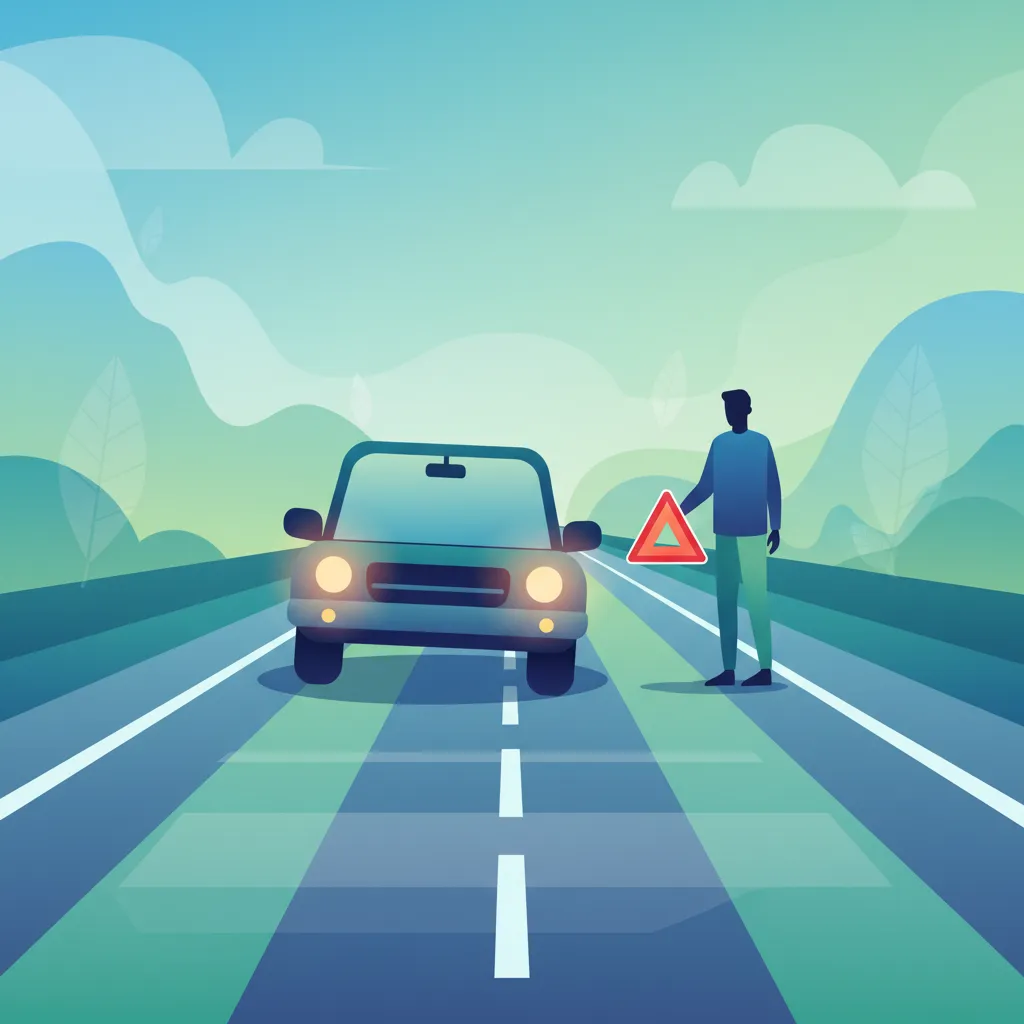
This lesson prepares drivers for the event of a vehicle breakdown on a motorway or expressway. It details the correct procedure: pulling over to the emergency lane, activating hazard lights, and placing the warning triangle at the legally required distance. The importance of wearing a reflective vest when outside the vehicle is also a key safety point.

This lesson details the professional driver's responsibilities in the event of a collision. It covers the immediate actions required to secure the scene, such as activating hazard lights and placing warning triangles, to prevent further incidents. Learners will understand the correct procedure for contacting emergency services, providing assistance to injured parties if trained, and the legal requirements for documenting and reporting the accident to the authorities and their employer.
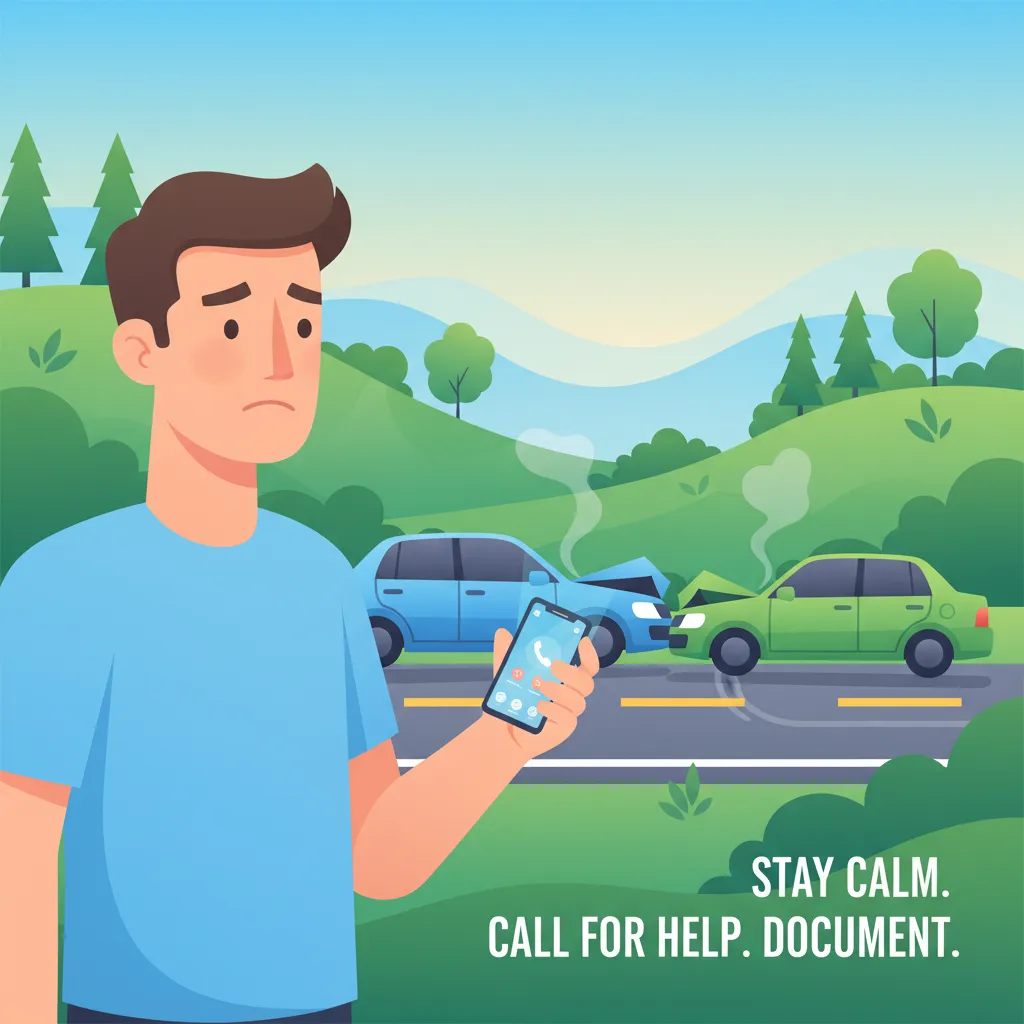
This lesson provides a clear, procedural guide for the moments following a road accident. It prioritizes safety, instructing on how to secure the scene with a warning triangle and hazard lights to prevent further incidents. The lesson also covers assessing for injuries and when it is necessary to call emergency services.
This lesson outlines the legal responsibilities of tractor drivers as stipulated by Polish traffic law, emphasizing the duty to comply with all rules of the road. It discusses the liability framework for accidents involving agricultural vehicles, including the need for appropriate insurance and potential penalties. The lesson also explains the importance of maintaining accurate documentation, such as registration papers and a driver’s licence.
This lesson provides practical methods for maintaining a safe buffer zone behind the vehicle in front. It explains the 'two-second rule' as a minimum following distance in good conditions and how to increase it to three or more seconds in adverse weather. This skill is critical for allowing enough time to react and brake safely to avoid rear-end collisions.
In this lesson, learners examine the core legal obligations that apply to motorcyclists operating on Polish roads, including the mandatory use of helmets, periodic vehicle inspections, and the necessity of valid insurance and registration. The content details the classification of traffic offences and explains the associated penalty system, including fines, demerit points, and potential licence suspension. Additionally, the lesson outlines procedural requirements for accident reporting and interaction with law enforcement, providing a comprehensive view of a rider’s legal responsibilities.

In this lesson, learners explore riding on rural and countryside roads, where road markings may be sparse and surface conditions varied. The content covers safe overtaking in single-lane sections, interaction with agricultural vehicles and animals, and the handling of gravel or uneven surfaces. Learners will also study the importance of anticipating curves and adjusting speed to light conditions, equipping them with the skills needed for safe countryside travel.
This lesson enumerates the mandatory safety equipment every vehicle must carry in Poland, such as a warning triangle and a fire extinguisher. It explains their proper use and storage, alongside routine pre-journey inspections that a driver should perform. These checks include verifying lights, tire pressure, and fluid levels to ensure the vehicle is roadworthy and compliant with safety regulations.
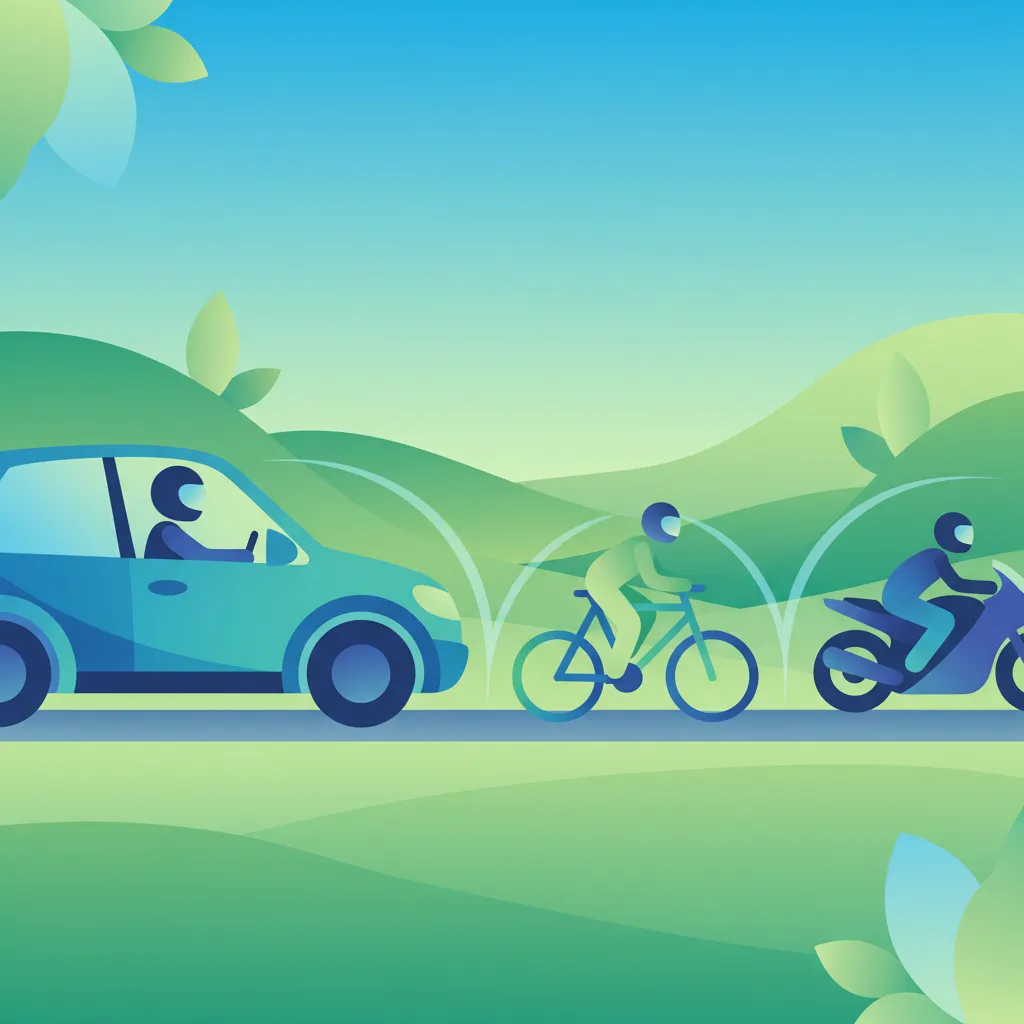
This lesson is dedicated to the safe overtaking of two-wheeled vehicles. It explains the legal requirement to leave a sufficient lateral distance (at least 1 meter) when passing cyclists. The content highlights the vulnerability of these road users and the need for patience, reduced speed, and careful judgment.
Learn how to safely secure a road accident scene and perform essential first aid, including controlling bleeding and placing a casualty in the recovery position. This Polish driving theory lesson focuses on immediate life-saving steps before professional help arrives.
This lesson provides a clear, procedural guide for the moments following a road accident. It prioritizes safety, instructing on how to secure the scene with a warning triangle and hazard lights to prevent further incidents. The lesson also covers assessing for injuries and when it is necessary to call emergency services.
This lesson provides practical methods for maintaining a safe buffer zone behind the vehicle in front. It explains the 'two-second rule' as a minimum following distance in good conditions and how to increase it to three or more seconds in adverse weather. This skill is critical for allowing enough time to react and brake safely to avoid rear-end collisions.
This lesson prepares drivers for the event of a vehicle breakdown on a motorway or expressway. It details the correct procedure: pulling over to the emergency lane, activating hazard lights, and placing the warning triangle at the legally required distance. The importance of wearing a reflective vest when outside the vehicle is also a key safety point.
This lesson details the professional driver's responsibilities in the event of a collision. It covers the immediate actions required to secure the scene, such as activating hazard lights and placing warning triangles, to prevent further incidents. Learners will understand the correct procedure for contacting emergency services, providing assistance to injured parties if trained, and the legal requirements for documenting and reporting the accident to the authorities and their employer.
In this lesson, learners explore riding on rural and countryside roads, where road markings may be sparse and surface conditions varied. The content covers safe overtaking in single-lane sections, interaction with agricultural vehicles and animals, and the handling of gravel or uneven surfaces. Learners will also study the importance of anticipating curves and adjusting speed to light conditions, equipping them with the skills needed for safe countryside travel.
This lesson introduces routine vehicle safety checks that every driver should perform. It covers how to check tire pressure and tread depth, verify essential fluid levels like oil and coolant, and ensure all lights are operational. Performing these simple inspections regularly helps prevent breakdowns and enhances overall road safety for everyone.
This lesson emphasizes the importance of systematic observation for safe driving. It teaches how to correctly adjust and use rearview and side mirrors to monitor traffic, and explains why shoulder checks are essential for detecting hazards in blind spots. These techniques are fundamental for safe lane changes, turns, and overall situational awareness.
This lesson enumerates the mandatory safety equipment every vehicle must carry in Poland, such as a warning triangle and a fire extinguisher. It explains their proper use and storage, alongside routine pre-journey inspections that a driver should perform. These checks include verifying lights, tire pressure, and fluid levels to ensure the vehicle is roadworthy and compliant with safety regulations.
This lesson equips drivers with knowledge of emergency procedures, including how to conduct a rapid evacuation. Learners will identify the location and use of fire extinguishers and first-aid kits and learn to guide passengers to emergency exits. The content also covers legal reporting obligations and coordination with emergency services following an incident.
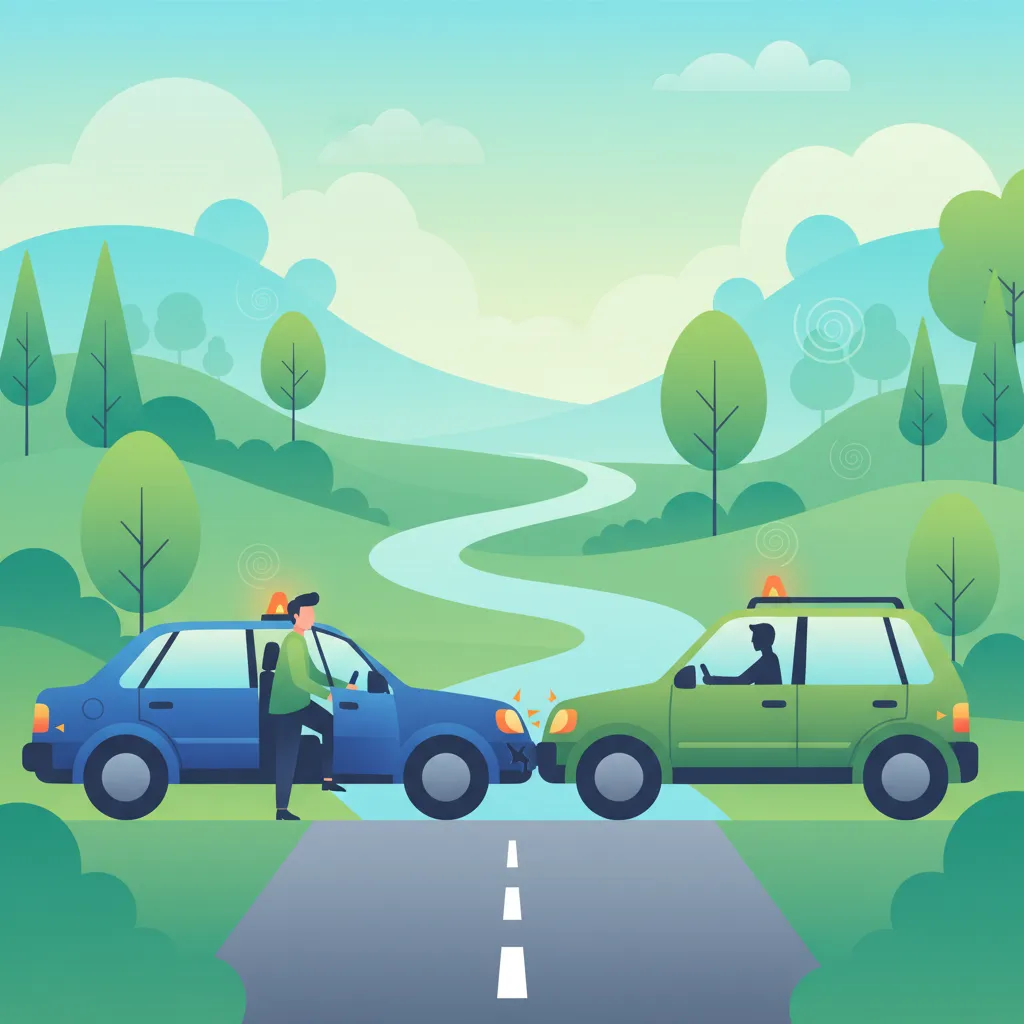
This lesson outlines the emergency procedures a tractor driver must follow in case of a breakdown, trailer detachment, or accident. It covers immediate actions such as pulling over safely, deploying warning triangles, and using hazard lights to alert other road users. The lesson details the steps for reporting the incident, providing first aid, and securing the scene to prevent further hazards.
Find clear answers to common questions learners have about First-Response Behaviour and Basic First Aid. Learn how the lesson is structured, which driving theory objectives it supports, and how it fits into the overall learning path of units and curriculum progression in Poland. These explanations help you understand key concepts, lesson flow, and exam focused study goals.
In Poland, you have a legal duty to provide assistance to injured persons if you are at the scene of an accident, provided doing so does not put your own life or health at significant risk. This can include calling emergency services and administering basic first aid within your capabilities.
Generally, you should avoid moving an injured person unless there is immediate danger to their life, such as fire, explosion, or risk of further collision. Moving a casualty improperly can worsen injuries, particularly spinal ones. Prioritize securing the scene and calling for professional help.
To check for breathing, gently tilt the head back and lift the chin to open the airway. Then, 'Look, Listen, and Feel' for breathing for no more than 10 seconds. Look for chest movement, listen for breathing sounds, and feel for breath on your cheek. If they are breathing, consider the recovery position.
While a first-aid kit is recommended, it is not legally mandatory for private passenger cars in Poland, unlike the warning triangle and fire extinguisher. However, if you choose to carry one, it should typically include items like bandages, sterile dressings, adhesive plasters, disinfectant wipes, a rescue blanket, and gloves.
The recovery position is safe and crucial for an unconscious person who IS breathing, as it helps keep their airway clear and prevents choking on vomit or fluids. However, if there's a suspected spinal injury and the person is breathing adequately, it's generally best to keep them still and await paramedics, unless their airway is compromised.
Build custom practice sessions tailored precisely to your needs. Focus on areas requiring improvement, review specific Polish road signs, or master complex traffic rules to ensure full preparation for your official driving license exam.