Logo
Swiss Road Signs and Traffic Sign Meanings

End of Partial Prohibition Sign (e.g., for Lorries or Buses on Lanes)

2.56.1 - End of part prohibition e.g. for lorries or buses (on lanes) Swiss road sign meaning

The 'End of part prohibition' sign (catalogue code 2.56.1) indicates that a previous restriction, such as one applying only to lorries or buses on specific lanes, no longer applies. You should now follow the next posted traffic rule, general Swiss road regulations, or the visible road layout. Always check for any following signs or markings that might introduce new rules or lane assignments.

Interpreting the "End of Part Prohibition" Sign (2.56.1)

This sign signifies the conclusion of a specific prohibition, often for vehicles like lorries or buses on certain lanes. Master its meaning for accurate traffic sign explanation and successful theory test revision in Switzerland.

Definition of 2.56.1

This catalogue entry is used for a mandatory instruction, speed rule, stopping or parking control, lane or path assignment, or zone boundary. It tells drivers what action is required, restricted, started, or ended at that point in the road layout. A professional interpretation should connect the sign to the correct lane, path, bay, zone, or end sign, then check panels, arrows, vehicle symbols, and markings before deciding what is allowed. Official catalogue code: 2.56.1.

Meaning of 2.56.1

The "End of part prohibition e.g. for lorries or buses (on lanes)" sign marks the point where the previous part prohibition e.g. for lorries or buses rule no longer applies. Continue under the next posted rule, the general road rule, and the visible road layout. Catalogue code 2.56.1.

Allowed actions for 2.56.1

Recognise where the previous rule ends and continue under the next posted or general rule.Check for a following speed limit, path rule, parking condition, zone boundary, or road marking.

Prohibited actions for 2.56.1

Do not keep applying the ended rule when a later sign or general rule has taken over.Do not accelerate, park, turn, or change lane until the visible road layout makes the next rule clear.

2.56.1 - End of part prohibition e.g. for lorries or buses (on lanes) road sign FAQ

Get clear, practical answers to the most common questions about the 2.56.1 - End of part prohibition e.g. for lorries or buses (on lanes) road sign. Learn how the sign works, what rules it represents, and how it affects real driving situations. This FAQ strengthens your understanding and supports accurate decision making for the Swiss driving theory exam in Switzerland.

What does the 2.56.1 'End of part prohibition' sign mean in Switzerland?

This sign signifies the termination of a previous, partial prohibition that was specific to certain vehicle types or lanes. For instance, if a lane was previously restricted to lorries, this sign means that restriction has now ended for that lane or area. You must then comply with whatever new instruction is posted or the general traffic rules.

What should I do when I see the 2.56.1 sign on a lane?

When you encounter the 2.56.1 sign, it means the specific restriction that was previously in effect has ended. You should cease adhering to that ended rule and instead prepare to follow the next applicable traffic regulation. This might be a general speed limit, a different lane instruction, or simply the normal flow of traffic.

Are there any specific actions I must avoid after seeing this sign?

Yes, you should avoid continuing to apply the rule that has now ended. Do not assume the previous restriction still applies if a new sign or the general road rules have taken over. It's also important to wait for the road layout to clarify the next step before accelerating, parking, turning, or changing lanes.

How does the placement of the 2.56.1 sign affect its meaning?

The placement is crucial. This sign usually relates to specific lanes or sections of the road. You must interpret it in conjunction with lane markings, traffic lights, and any supplementary panels indicating the exact lane or vehicle type the prohibition applied to. The sign signifies the end of that specific lane-based restriction.

What kind of prohibitions typically end with this sign?

This sign commonly marks the end of prohibitions related to lane usage, such as 'lorries prohibited' on a certain lane, 'buses only' on another, or specific speed limits for particular vehicle categories on a lane. Once you pass the sign, those specific lane restrictions are lifted for that lane or area.

2.56.1 - End of part prohibition e.g. for lorries or buses (on lanes) road sign image

A clear reference image of the 2.56.1 - End of part prohibition e.g. for lorries or buses (on lanes) road sign used in Switzerland.

2.56.1 - End of part prohibition e.g. for lorries or buses (on lanes) road sign

Other names for the 2.56.1 - End of part prohibition e.g. for lorries or buses (on lanes)

The 2.56.1 - End of part prohibition e.g. for lorries or buses (on lanes) road sign may also be known by these alternative names or terms.

End of part prohibition e.g. for lorries or buses (on lanes)End of part prohibition e.g. for lorries or buses2.56.1 mandatory or parking sign2.56.1 Swiss mandatory or parking signmandatory and parking signs

Swiss Mandatory and Parking Signs road sign category

The 2.56.1 - End of part prohibition e.g. for lorries or buses (on lanes) road sign is part of the Swiss Mandatory and Parking Signs category, which groups together signs with similar rules and functions.

Reinforce Your Knowledge with Similar Signs

Comparing similar road signs aids in accurate identification and reduces exam errors. Deepen your understanding through direct traffic sign comparison to improve your theory test revision.
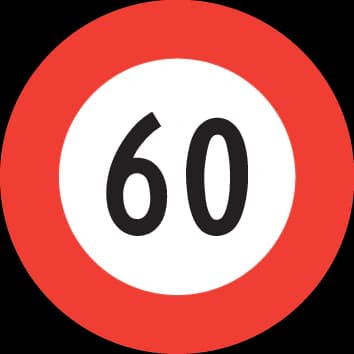
2.30 - Maximum speed limit road sign

Maximum speed limit

Understand the Maximum Speed Limit Sign (2.30)

Swiss Mandatory and Parking Signs2.30
2.30.1-D - Generally valid speed limit within densely built-up areas (German variant) road sign

Generally valid speed limit within densely built-up areas (German variant)

Understand the Generally Valid Speed Limit Sign in Built-up Areas (2.30.1-D)

Swiss Mandatory and Parking Signs2.30.1-D
2.30.1-F - Generally valid speed limit within densely built-up areas (French variant) road sign

Generally valid speed limit within densely built-up areas (French variant)

Obey the Generally Valid Speed Limit within Built-up Areas (French Variant)

Swiss Mandatory and Parking Signs2.30.1-F
2.30.1-I - Generally valid speed limit within densely built-up areas (Italian variant) road sign

Generally valid speed limit within densely built-up areas (Italian variant)

Understand the Generally Valid Speed Limit Sign within Built-Up Areas (Italian Variant)

Swiss Mandatory and Parking Signs2.30.1-I
2.30.1-R - Generally valid speed limit within densely built-up areas (Romansh variant) road sign

Generally valid speed limit within densely built-up areas (Romansh variant)

Understand the "Generally Valid Speed Limit Within Densely Built-Up Areas" Sign (2.30.1-R)
Swiss Mandatory and Parking Signs2.30.1-R
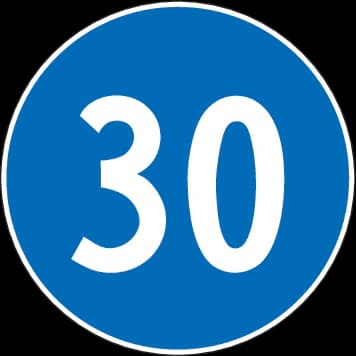
2.31 - Minimum speed limit road sign

Minimum speed limit

Obey the Minimum Speed Limit Sign (2.31) on Swiss Roads
Swiss Mandatory and Parking Signs2.31
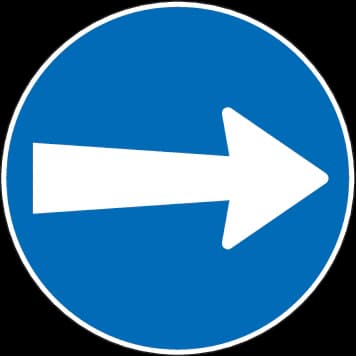
2.32 - Must turn right road sign

Must turn right

The 'Must Turn Right' sign (2.32) mandates your direction of travel.
Swiss Mandatory and Parking Signs2.32
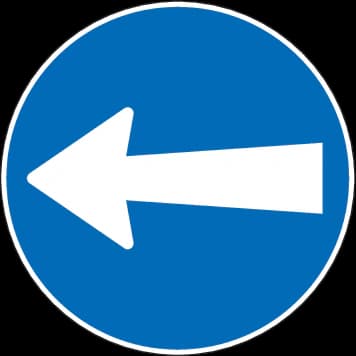
2.33 - Must turn left road sign

Must turn left

Mandatory Left Turn: This Sign Dictates Your Direction!

Swiss Mandatory and Parking Signs2.33

Ready to Master Swiss Road Signs? Start Your In-Depth Study Now!

After reviewing the full list of Swiss road signs, delve deeper into specific categories, practice recognition with quizzes, or explore detailed explanations for each sign. Continue your comprehensive preparation for the official theory driving test.

View All Swiss Road Signs

CTA Decorative Squares

Dive into Swiss road sign knowledge

Swiss Driving Theory B courseSwiss Driving Theory M courseSwiss Driving Theory D course2.46 No U-turns Swiss road sign2.49 No stopping Swiss road sign2.41.1 Roundabout Swiss road sign2.43 No left turn Swiss road signSwiss Motorcycle Theory (A) course2.42 No right turn Swiss road sign2.44 No overtaking Swiss road sign2.33 Must turn left Swiss road sign2.32 Must turn right Swiss road signSwiss Truck Driving Theory (C/C1) course2.30 Maximum speed limit Swiss road sign2.31 Minimum speed limit Swiss road sign2.48 Snow chains required Swiss road signSwiss Sign Symbols Swiss road sign categorySwiss Guide Devices Swiss road sign categorySwiss Road Markings Swiss road sign categorySwiss Warning Signs Swiss road sign category2.39 Must turn right or left Swiss road signSwiss Priority Signs Swiss road sign category2.45 No overtaking by lorries Swiss road signSwiss Direction Signs Swiss road sign categorySwiss Indication Signs Swiss road sign categorySwiss Prohibitory Signs Swiss road sign category2.36 Must continue straight ahead Swiss road signSwiss Supplementary Panels Swiss road sign categorySwiss Mandatory and Parking Signs Swiss road sign category2.35 Circumvent the obstacle on the left side Swiss road sign2.34 Circumvent the obstacle on the right side Swiss road sign2.41 Must continue straight ahead or turn left Swiss road sign2.40 Must continue straight ahead or turn right Swiss road sign2.47 Minimum distance between large goods vehicles required Swiss road sign2.38 Must turn left ahead (on motorways: must change to the left road) Swiss road sign2.37 Must turn right ahead (on motorways: must change to the right road) Swiss road sign2.30.1-D Generally valid speed limit within densely built-up areas (German variant) Swiss road sign2.30.1-F Generally valid speed limit within densely built-up areas (French variant) Swiss road sign2.30.1-I Generally valid speed limit within densely built-up areas (Italian variant) Swiss road sign2.30.1-R Generally valid speed limit within densely built-up areas (Romansh variant) Swiss road sign