Sign 2.59.1-4 is a crucial directive sign indicating a mandatory instruction, speed limit, stopping or parking rule, lane assignment, or zone boundary. It's vital to interpret this sign in conjunction with any arrows, markings, vehicle symbols, or supplementary panels that accompany it. Always remember that its exact effect depends on its placement and the specific road layout, so pay close attention to the context to drive safely and correctly.
This crucial zone regulation sign, catalogue code 2.59.1-4, mandates specific driving actions and requires careful interpretation with associated panels and road markings. Mastering its meaning is vital for your Swiss theory test revision and safe navigation of controlled areas.
This catalogue entry is used for a mandatory instruction, speed rule, stopping or parking control, lane or path assignment, or zone boundary. It tells drivers what action is required, restricted, started, or ended at that point in the road layout. A professional interpretation should connect the sign to the correct lane, path, bay, zone, or end sign, then check panels, arrows, vehicle symbols, and markings before deciding what is allowed. Official catalogue code: 2.59.1-4.
The "Zone regulation sign 2.59.1 (variant 4)" sign gives a mandatory driving, lane, path, parking, stopping, or zone instruction. Read it with arrows, bay markings, panels, and end signs. Catalogue code 2.59.1-4.
Get clear, practical answers to the most common questions about the 2.59.1-4 - Zone regulation sign 2.59.1 (variant 4) road sign. Learn how the sign works, what rules it represents, and how it affects real driving situations. This FAQ strengthens your understanding and supports accurate decision making for the Swiss driving theory exam in Switzerland.
This sign, officially catalogue code 2.59.1-4, indicates a mandatory driving instruction, lane assignment, parking or stopping rule, or a zone entry/boundary. You must follow the specific directive it conveys, such as a speed limit or lane restriction, from the point where the sign is effective.
When you see this sign, your primary action is to adhere to its specific instruction. This might involve changing lanes, adhering to a set speed, or preparing to park or stop. Always check for supplementary panels, arrows, or road markings that provide further details on how the instruction applies to your current situation.
A common exam trap is ignoring the sign's instruction because the road seems familiar or simple. Another mistake is assuming the regulation has ended before seeing an explicit end sign or subsequent instruction. Always treat these signs as direct commands that require your full attention and compliance.
No, you must not ignore the instruction given by sign 2.59.1-4, regardless of whether you are in a hurry or familiar with the area. These signs represent mandatory regulations, and disregarding them can lead to fines, accidents, and is a common point of failure in the theory test. Always comply with the directive.
Arrows and vehicle symbols accompanying sign 2.59.1-4 provide crucial context. Arrows indicate direction (e.g., turn left, go straight), while vehicle symbols specify if the rule applies only to certain types of vehicles. You must interpret these in combination with the main sign to understand exactly how the instruction affects you.
A clear reference image of the 2.59.1-4 - Zone regulation sign 2.59.1 (variant 4) road sign used in Switzerland.
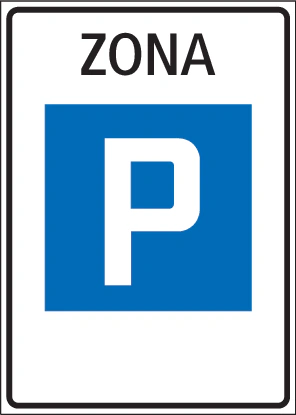
The 2.59.1-4 - Zone regulation sign 2.59.1 (variant 4) road sign may also be known by these alternative names or terms.
The 2.59.1-4 - Zone regulation sign 2.59.1 (variant 4) road sign is part of the Swiss Mandatory and Parking Signs category, which groups together signs with similar rules and functions.
By reviewing related road signs, you can sharpen your recognition and reduce confusion, leading to fewer errors during your theory test revision. This direct traffic sign comparison helps solidify your knowledge of Swiss road rules and mandatory instructions.
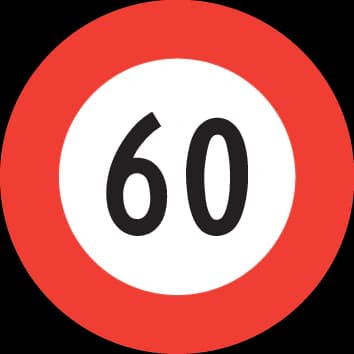
Understand the Maximum Speed Limit Sign (2.30)

Understand the Generally Valid Speed Limit Sign in Built-up Areas (2.30.1-D)

Obey the Generally Valid Speed Limit within Built-up Areas (French Variant)

Understand the Generally Valid Speed Limit Sign within Built-Up Areas (Italian Variant)

Understand the "Generally Valid Speed Limit Within Densely Built-Up Areas" Sign (2.30.1-R)
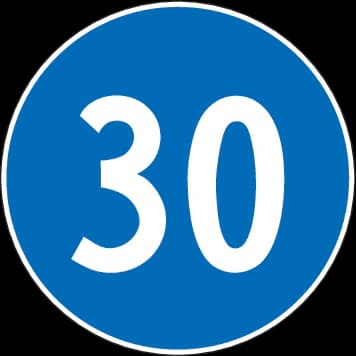
Obey the Minimum Speed Limit Sign (2.31) on Swiss Roads
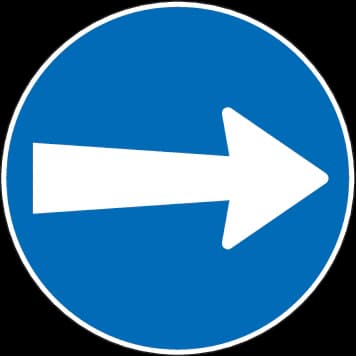
The 'Must Turn Right' sign (2.32) mandates your direction of travel.
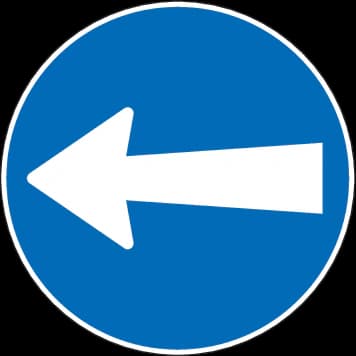
Mandatory Left Turn: This Sign Dictates Your Direction!
After reviewing the full list of Swiss road signs, delve deeper into specific categories, practice recognition with quizzes, or explore detailed explanations for each sign. Continue your comprehensive preparation for the official theory driving test.
View All Swiss Road Signs