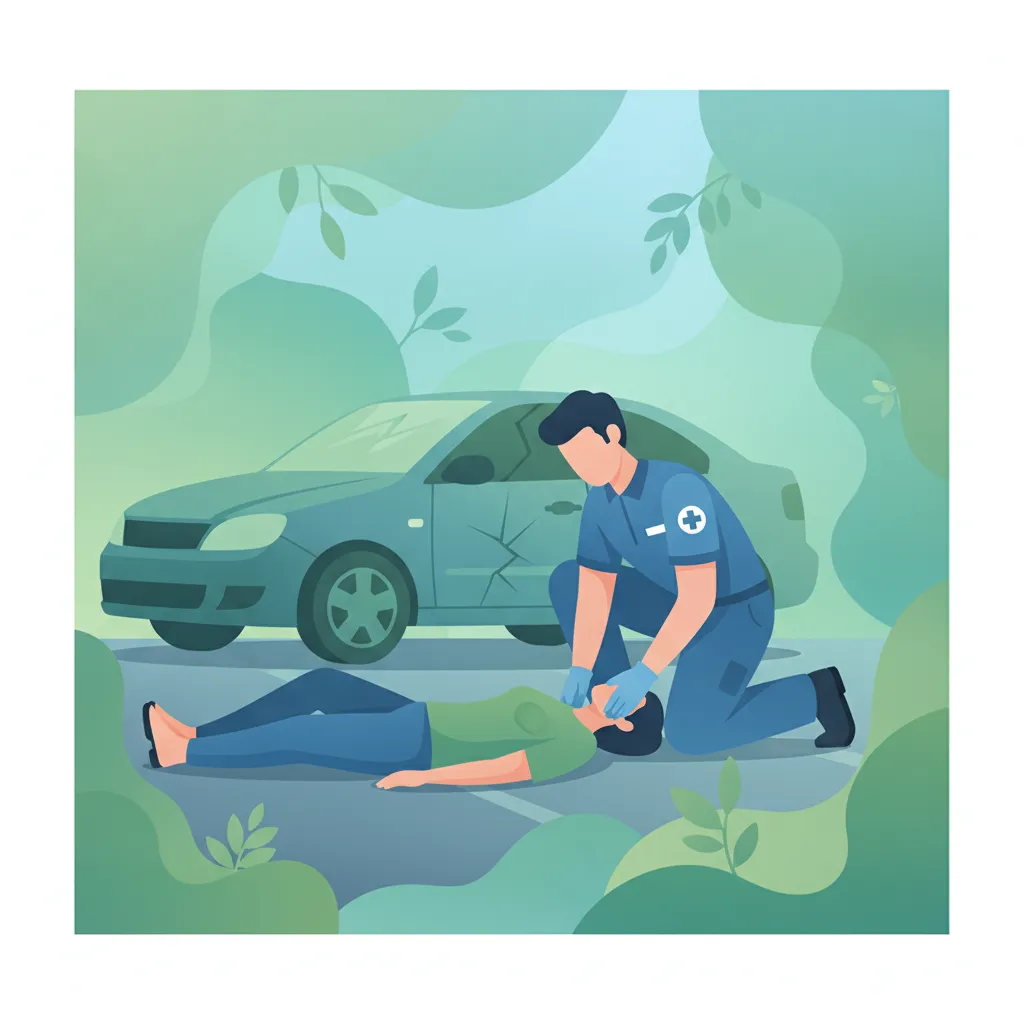
This lesson explains why motorcyclists are considered vulnerable road users and how physical exposure increases injury risks. It provides the essential theory needed to understand how protective gear and defensive riding choices directly impact safety in the Turkish driving environment.
Lesson content overview
When operating a motorcycle on public roads, you experience a sense of freedom and agility unmatched by other vehicles. However, this freedom comes with a significant compromise: physical vulnerability. Unlike passenger cars (otomobil), which shield occupants within a reinforced steel safety cage, a motorcycle offers no external structural protection.
For aspiring riders seeking their Turkish A1, A2, or A category licences, understanding the physics of crash dynamics, common injury patterns, and the protective capabilities of safety gear is not just a theoretical exercise. It is a foundational pillar of defensive riding (defansif sürüş). This lesson analyzes the mechanics of vulnerability and details how proper equipment and risk awareness can mean the difference between minor bruises and life-altering injuries.
The high injury rate among motorcyclists is primarily governed by basic laws of physics, specifically the concepts of exposure and kinetic energy transfer.
In traffic safety, motorcyclists are classified as Vulnerable Road Users (VRUs), alongside pedestrians and cyclists. This classification stems from the Exposure Principle. In a multi-vehicle collision, passenger car occupants are protected by crumple zones, side-impact bars, seat belts, and airbags. These safety systems absorb and redirect impact forces away from the human body.
A motorcyclist has no such barrier. During a crash, the rider’s body is directly exposed to:
The severity of an injury is directly related to how rapidly kinetic energy is transferred to the human body. The formula for kinetic energy is:
Where represents mass and represents velocity. Because velocity is squared, doubling your speed quadruples the kinetic energy involved in an impact.
When a vehicle decelerates slowly over a crumple zone, the forces exerted on the human body are minimized. For a motorcyclist, however, the deceleration is often instantaneous when hitting an obstacle, resulting in massive, concentrated kinetic energy transferring directly into bones, organs, and soft tissues.
The physical state of a road user being directly subjected to external impact forces, deceleration, and environmental friction without the mitigating buffer of an enclosed vehicle chassis.
Medical data from traffic accidents highlights consistent injury patterns among motorcyclists. Understanding these patterns helps riders realize why specific types of protective gear are designed and mandated.
Head trauma is the leading cause of death and permanent disability in motorcycle accidents. During a crash, the head can strike an object or the road surface at high speed.
The neck (cervical spine) is highly susceptible to extreme bending forces (hyperflexion and hyperextension) during a fall. Spinal cord injuries can lead to temporary or permanent paralysis (paraplegia or quadriplegia).
While rarely fatal on their own, injuries to the limbs are the most common non-fatal outcomes of motorcycle accidents.
When a rider slides across the road surface, friction generates extreme heat, scraping away layers of skin and muscle.
A severe skin abrasion caused by friction when sliding across an asphalt or concrete road surface. It can range from superficial scrapes to deep tissue damage requiring skin grafts and carries a high risk of infection.
At highway speeds, sliding on asphalt without protective leather or heavy-duty textile clothing can wear away skin down to the bone in a matter of seconds.
Given the extreme risks of head trauma, Turkish traffic legislation strictly regulates the use of protective helmets (kask). Under the Turkish Highway Traffic Law (Karayolları Trafik Kanunu, KTK), wearing a helmet is not optional—it is a strict legal requirement.
Legal Mandate (Article 78/1-b of the KTK):
All drivers and passengers of motorcycles, scooters, and mopeds must wear an approved protective helmet (koruyucu başlık) and protective goggles (gözlük) while operating on public roads. Failure to comply results in administrative fines, penalty points on your driver's licence, and the potential impounding of your vehicle under certain conditions.
A helmet must do more than simply cover your head; it must be manufactured to withstand high-energy impacts. In Turkey, legally compliant helmets must meet internationally recognized safety standards, primarily the European standard ECE 22.05 or ECE 22.06 (commonly noted on a label sewn into the helmet’s retention strap).
Using novelty helmets, industrial hard hats, or bicycle helmets on a motorcycle is illegal and offers virtually no protection in a high-speed crash.
Check the Safety Certification: Look for the ECE 22.05 or ECE 22.06 approval label (usually an 'E' mark inside a circle) on the chin strap or liner.
Inspect the Shell and EPS Liner: Ensure there are no visible cracks on the outer shell and that the inner expanded polystyrene (EPS) liner has not been compressed or damaged.
Test the Fitment: Put the helmet on and fasten the strap securely. The helmet should feel snug all around your head without causing painful pressure points. It should not rotate or slide when you shake your head.
Perform the Roll-Off Test: With the chin strap buckled, try to pull the helmet off from the back by pulling forward. If it slips off, the helmet is too large or the strap is adjusted incorrectly.
Different types of riding gear offer vastly different levels of protection. Understanding these differences allows you to make informed decisions before hitting the road.
While any certified helmet is better than none, the level of protection varies significantly by design:
Beyond the helmet, a complete set of protective gear acts as your secondary shield:
| Equipment | Critical Safety Function | Key Features to Look For |
|---|---|---|
| Armored Jacket & Pants | Protects the torso, spine, shoulders, elbows, and knees from impact and abrasion. | CE-certified protectors (EN 1621-1 / EN 1621-2), high-denier Cordura, or premium leather. |
| Protective Gloves | Safeguards the hands, fingers, and wrists from road rash and fractures during instinctual falls. | Reinforced palm sliders, knuckle protection, and secure wrist closures. |
| Riding Boots | Prevents ankle crushing, twisting, and severe abrasions from contact with the road or engine parts. | Over-the-ankle support, stiff non-crushable soles, and reinforced toe boxes. |
Because you lack structural protection, your safety relies heavily on your mental approach to riding. Acknowledging your vulnerability must directly influence your Risk Perception (risk algısı) and defensive riding habits.
Since you cannot survive an impact as well as a car can, your primary goal is to prevent the impact from occurring. This requires maintaining an active space cushion around your motorcycle at all times.
Safe riders operate under the assumption that they are invisible to other motorists. This mindset dictates that you:
The risk profile of a motorcyclist escalates sharply when environmental conditions deteriorate.
Rain reduces the friction coefficient of the road surface, making sliding out much easier. Wet weather also impairs your vision and makes you even harder for car drivers to spot.
At night, your headlight is your only means of illuminating hazards, and your small silhouette makes it extremely difficult for other drivers to judge your speed and distance.
Explore all units and lessons included in this driving theory course.
Lesson content overview
Explore all units and lessons included in this driving theory course.
Explore search topics learners often look for when studying Understanding Injuries and Vulnerability. These topics reflect common questions about road rules, driving situations, safety guidance, and lesson level theory preparation for learners in Turkey.
Browse additional driving theory lessons that cover connected traffic rules, road signs, and common driving situations related to this topic. Improve your understanding of how different rules interact across everyday traffic scenarios.
Learn proactive riding techniques designed to minimize risk on Turkish roads. This guide explains how to manage your space, navigate blind spots, and anticipate the behavior of other drivers to enhance your safety while operating a motorcycle.

In this lesson, learners will discover the principles of defensive riding, focusing on hazard anticipation, maintaining safe distances, and practicing proactive avoidance techniques. It emphasizes developing a vigilant riding posture, constantly scanning the environment, and preparing to react to potential dangers from other road users, road conditions, or unexpected traffic events.

Defensive riding is the practice of anticipating potential road conflicts and acting early to prevent accidents before they occur. This lesson teaches you how to systematically scan the road ahead for changing conditions, keep an adequate safety cushion around your moped, and pre-plan exit routes in tight spots. You will learn to assume you are invisible to other drivers and adapt your speed and road position proactively to protect yourself against sudden maneuvers.
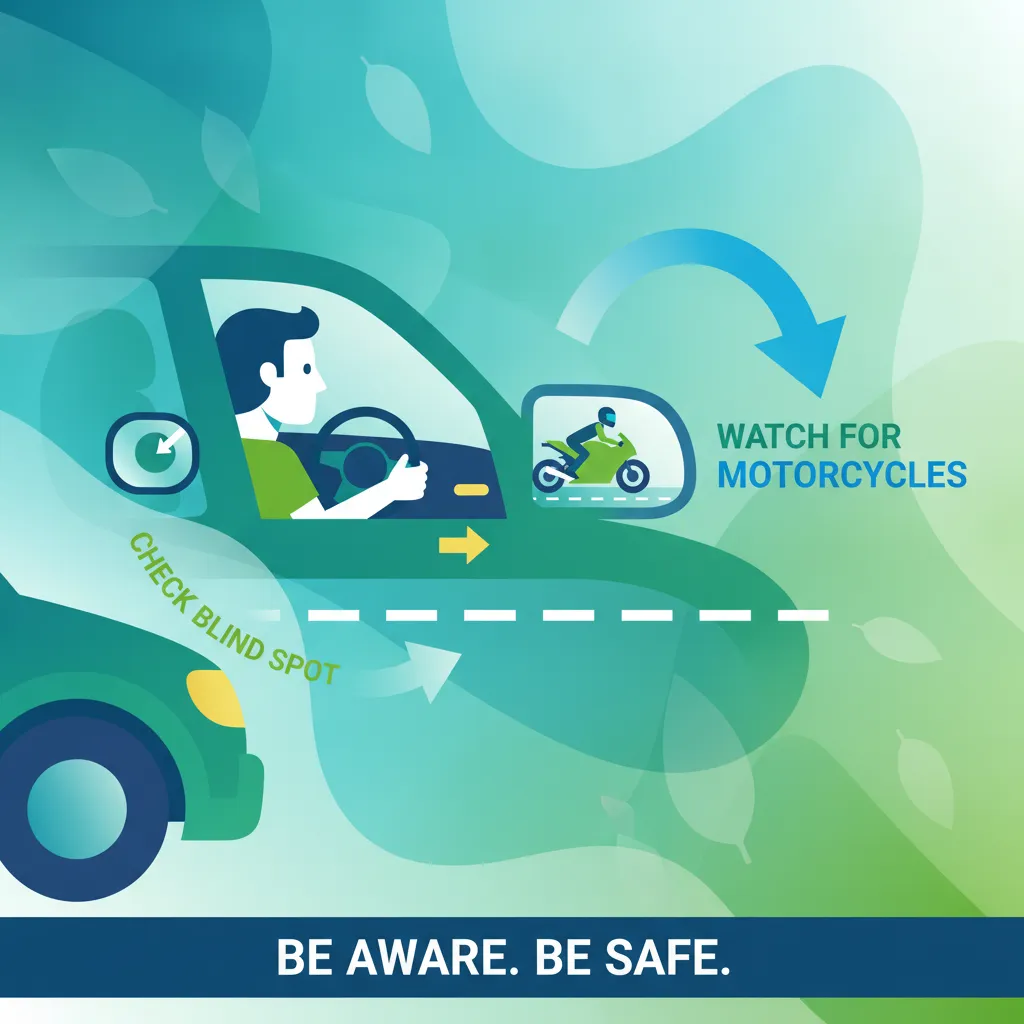
Learners will gain insight into the unique challenges posed by motorcycles and scooters sharing the road with passenger vehicles. The lesson highlights the importance of checking blind spots, maintaining safe following distances, and being aware of the faster acceleration and maneuverability of two-wheeled vehicles. Strategies for anticipating their movements and preventing collisions are discussed.
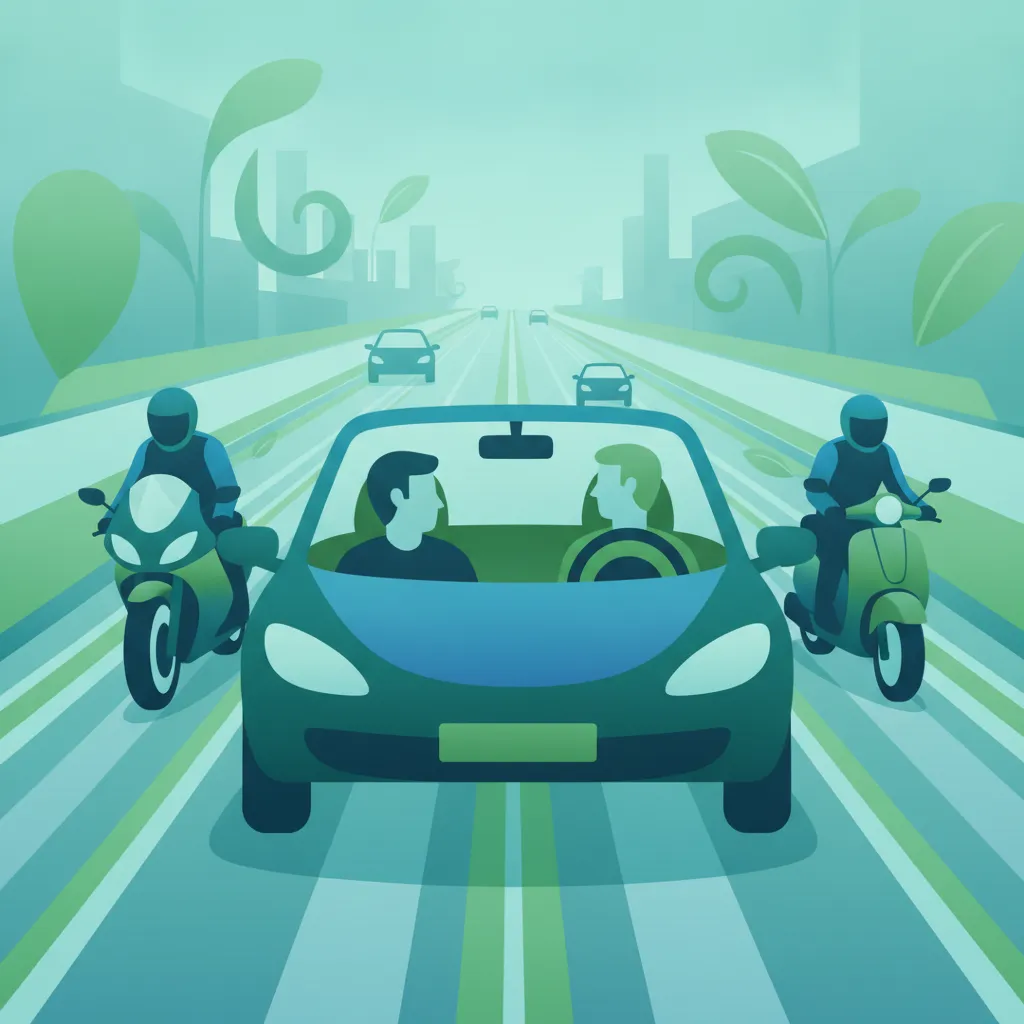
In this lesson, learners explore the unique challenges and safety considerations related to motorcyclists and scooter riders. Topics include the importance of visibility, the use of protective gear, and the need for drivers to be aware of blind spots. The lesson also covers lane discipline for two-wheeled vehicles and safe overtaking practices.

In this lesson, learners will explore the core obligations of a motorcyclist, emphasizing the necessity of adhering to traffic laws and maintaining respectful conduct toward all road participants. The discussion will focus on the principles of defensive riding, where anticipation of hazards and courteous behavior are paramount. Ethical decision-making will be highlighted as a key factor in preventing accidents and fostering a positive traffic environment.

Proper road positioning is your primary shield against being squeezed, sideswiped, or overlooked by larger motor vehicles in daily traffic. This lesson explains how to ride in the center or slightly off-center of your lane to prevent unsafe overtaking within the same lane. You will study how to identify the massive blind spots of buses and trucks, maintain appropriate following distances, and execute overtaking maneuvers with maximum safety margin and clear signal warning.
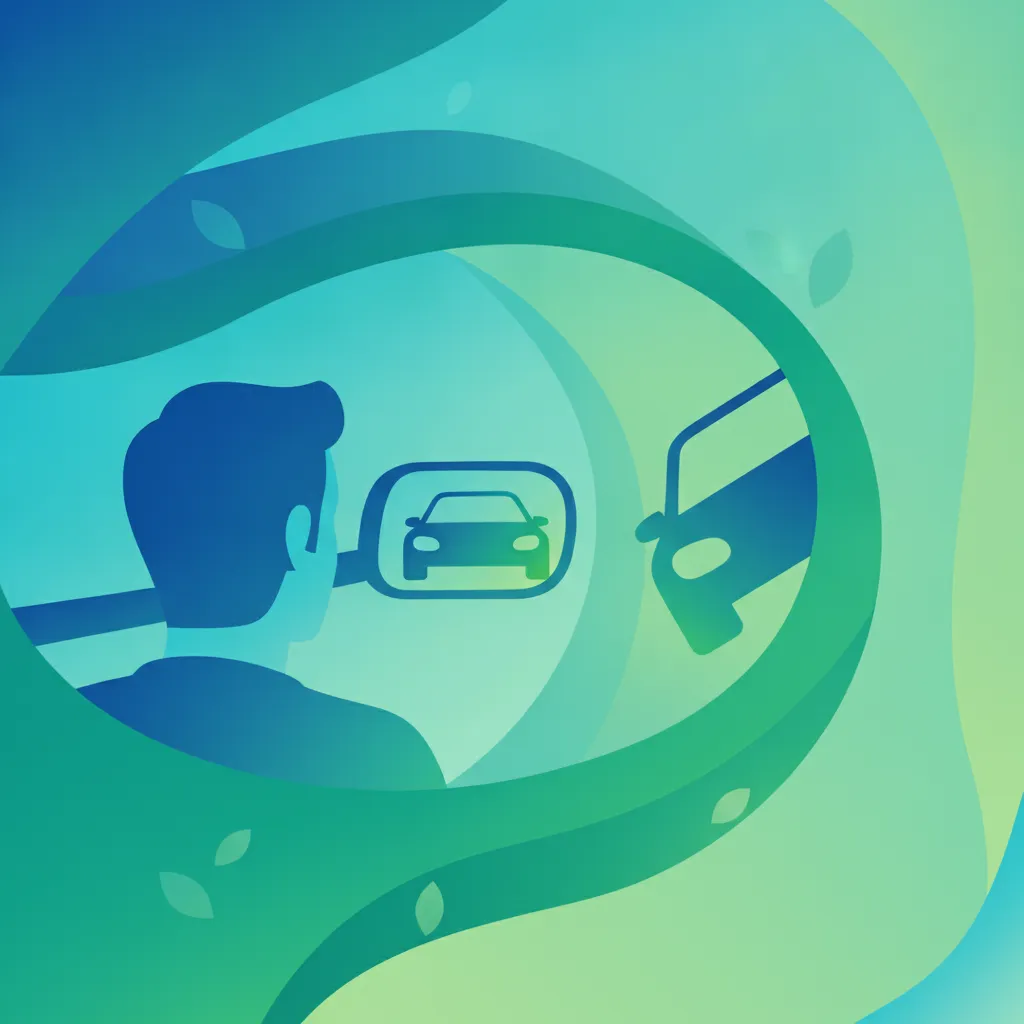
This lesson highlights the critical nature of blind spots for motorcyclists, teaching strategies to recognize and mitigate these hidden areas. Learners will practice techniques for checking blind spots before lane changes and overtaking, ensuring they are fully aware of surrounding traffic. The lesson emphasizes how proper mirroring and head checks can significantly reduce the risk of collisions.

In this lesson, learners will gain comprehensive knowledge of safe overtaking maneuvers during riding, emphasizing the importance of assessing traffic flow, checking blind spots, and signaling intentions. The content covers overtaking strategies on both straight roads and curves, considering visibility and speed differentials. By mastering these techniques, motorcyclists can execute overtaking safely.
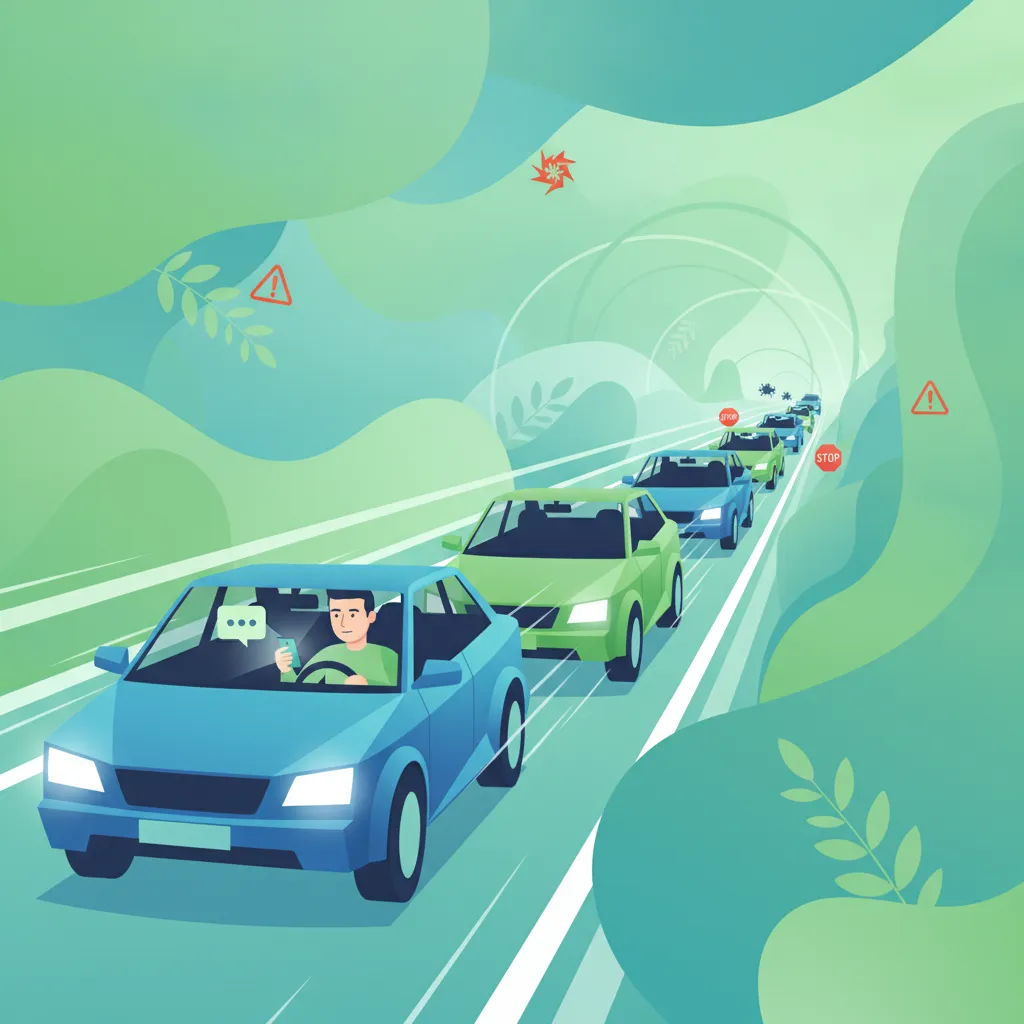
In this lesson, learners will explore the various forms of risk behaviour that can lead to accidents, such as aggressive riding, speeding, riding under the influence of alcohol or drugs, driving while fatigued, and being distracted. The lesson emphasizes the importance of self-awareness, recognizing personal limits, and adopting a safety-first mindset to mitigate these risks and make safe decisions.

Riding an exposed lightweight vehicle in busy Turkish cities requires exceptional personal conduct, patience, and absolute control over your emotional reactions. This lesson discusses the psychological aspects of riding, teaching you how to avoid aggressive behaviors and stay calm under stressful traffic situations. It covers proper non-verbal communication, polite road sharing practices, and maintaining safe buffers from other motorists to establish a safe, predictable presence on any public street.
Understand the critical safety requirements for riding at night or in low visibility conditions. This lesson covers the importance of retroreflective materials, proper lighting, and visual strategies for ensuring other road users perceive your position accurately on the road.

This lesson addresses the specific challenges of riding a motorcycle after dark, focusing on the importance of proper headlamp usage, reflective clothing, and heightened situational awareness. It provides guidance on how to remain visible to other road users, how to read road markings and signs under low-light conditions, and techniques for managing glare and fatigue during extended night rides.
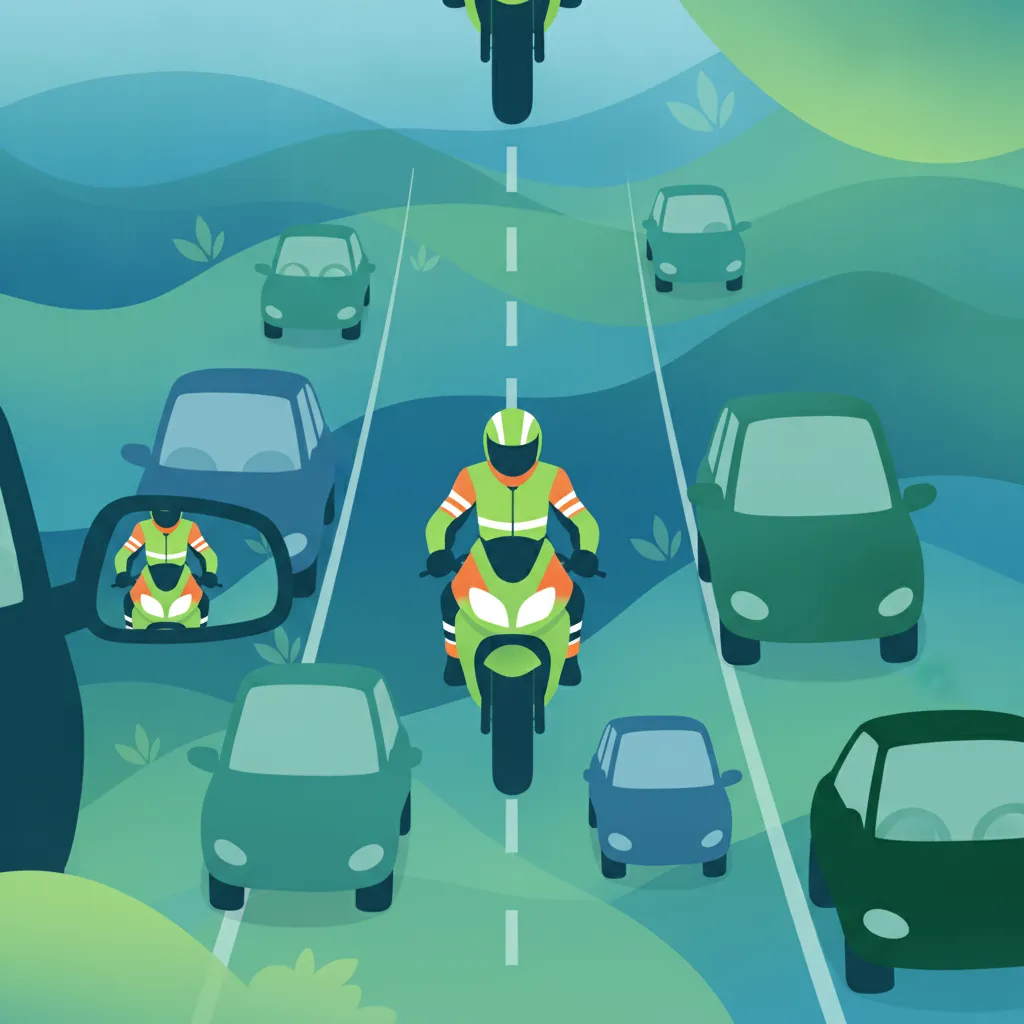
This lesson emphasizes the importance of rider visibility, illustrating how high-visibility clothing and reflective accessories can significantly reduce the risk of collisions. Learners will discover effective strategies for being noticed by other road users, such as using bright colors, reflective strips, and appropriate lighting, especially during adverse weather or nighttime riding. The content also outlines best practices for maintenance.
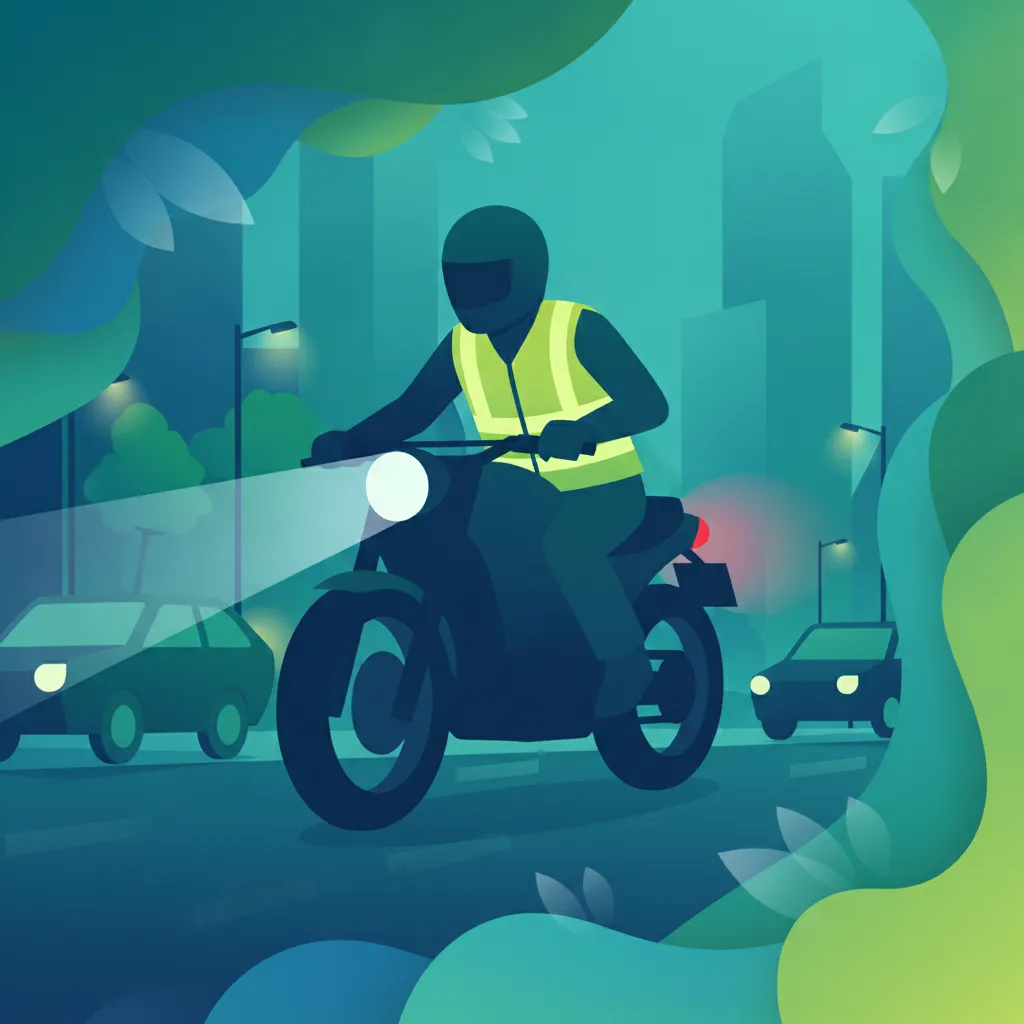
Many moped collisions occur simply because drivers of larger vehicles fail to notice lightweight riders in their path or blind spots. This lesson outlines passive and active techniques to boost your road presence, including the use of retroreflective vests and neon-colored apparel. It also explains the legal requirements for daytime running lights, proper alignment of headlights, and effective lane positioning to ensure you remain clearly visible in heavy traffic and during night rides.
Find clear answers to common questions learners have about Understanding Injuries and Vulnerability. Learn how the lesson is structured, which driving theory objectives it supports, and how it fits into the overall learning path of units and curriculum progression in Turkey. These explanations help you understand key concepts, lesson flow, and exam focused study goals.
Because a motorcycle lacks the structural protection of a car, such as a chassis, airbags, and seatbelts. In any impact, the rider's body is directly exposed to forces, making them significantly more susceptible to severe injury.
Yes, you should understand the types of injuries caused by sliding or impact, such as abrasions and bone fractures. The exam tests whether you understand how specific protective gear helps prevent or reduce these injuries.
Understanding vulnerability encourages a cautious riding style. Examiners look for riders who demonstrate awareness of their own fragility by maintaining safe following distances, avoiding blind spots, and consistently wearing appropriate gear.
It is primarily about life-saving protection. While some gear is mandated by law, the theory exam emphasizes that equipment is the final line of defense between the rider and the road surface in the event of an accident.
Use our comprehensive practice search to find exactly the Turkish driving theory questions you need to master. Whether reviewing specific road signs, traffic rules, or first aid scenarios, select your perfect practice set and boost your confidence for the official ehliyet sınavı.