This lesson details the critical safety standards for helmets required under Turkish road law for Category AM riders. By understanding proper selection, fit, and maintenance, you will meet essential passive safety requirements and prepare for related questions in your MTSK e-sınav.

Lesson content overview
Operating a Category AM moped (moped or motorlu bisiklet) on public roads exposes you directly to the physical environment. Unlike car drivers, who are protected by a steel passenger cabin, crumple zones, and airbags, moped riders rely entirely on personal protective equipment (PPE) to minimize injury during a collision.
Among all safety gear, a certified helmet (koruyucu başlık) is the single most critical piece of equipment. It is both a physical necessity for survival and a strict legal requirement under Turkish road traffic laws.
To understand why wearing a helmet is non-negotiable, it is helpful to look at the physics of a road collision. When a moped traveling at 45 km/h stops abruptly due to an obstacle, the rider's body and head continue moving forward at 45 km/h until they strike another object, such as the pavement, a curb, or another vehicle.
An unprotected head striking a solid object at this speed experiences extreme deceleration forces. This energy is transmitted directly through the skull, leading to skull fractures, traumatic brain injuries (TBI), internal bleeding, or instant death.
A certified helmet protects your head through three primary mechanisms:
Data consistently shows that wearing a properly fitted helmet reduces the risk of head injury by up to 70% and the risk of death by over 40% in two-wheeler crashes.
In Turkey, operating a Category AM moped without an approved helmet is a serious traffic violation. According to the Turkish Highway Traffic Regulation (Karayolları Trafik Yönetmeliği), both the rider and any authorized passenger must wear a protective helmet and protective goggles (koruyucu gözlük) while the vehicle is in motion.
Legal Consequences of Riding Without a Helmet: Riding a moped without a helmet in Turkey will result in immediate financial fines and penalty points on your driver's license. If you are stopped by traffic police (Trafik Polisi) and are not wearing a helmet, your vehicle may be temporarily impounded until a compliant helmet is secured.
This legal requirement applies to all public streets, highways, and rural roads, regardless of the length of your trip or the speed at much you are traveling. Even a quick 500-meter ride to a local shop requires a fully fastened, certified helmet.
Not all helmets sold in stores are legal or safe for road use. Novelty hats, bicycle helmets, and uncertified industrial hard hats do not provide the necessary impact absorption for motorized travel. To be legally compliant in Turkey and to guarantee actual physical protection, your helmet must meet established international safety standards.
The ECE 22.05 (and the newer ECE 22.06) standard is the mandatory European safety certification for motorcycle and moped helmets. It subjects helmets to rigorous testing for impact absorption, penetration resistance, chin strap strength, and field of vision.
The DOT standard is the federal motorcycle helmet safety standard in the United States. It tests a helmet's ability to absorb shock, resist penetration, and retain its position on the head during sudden acceleration or deceleration forces.
Before purchasing or using a helmet, you must inspect it for an official certification mark.
If a helmet does not carry one of these permanent marks, it is considered non-certified. Using such a helmet on Turkish roads is legally equivalent to riding with no helmet at all.
A helmet can only protect you if it stays in place during a collision. An oversized or poorly shaped helmet will slide around your head, potentially shifting during an impact and leaving your forehead, temples, or occipital region completely exposed.
Follow this systematic approach when choosing and fitting a helmet:
Measure Your Head Circumference: Wrap a soft fabric measuring tape horizontally around your head, about 2.5 centimeters above your eyebrows and directly over the widest part of the back of your skull. Use this measurement in centimeters to consult the manufacturer's sizing chart.
Position the Helmet: Pull the helmet on. It should sit squarely on your head, with the front edge resting approximately two finger-widths above your eyebrows. Your forehead must not be exposed.
Assess Comfort and Snugness: The interior padding must contact the entire surface of your head. There should be a snug, firm pressure all around, similar to a firm hug. Ensure there are no sharp "pressure points" that pinch your temples, forehead, or crown.
Check Jaw and Cheek Fit: The cheek pads should press firmly against your cheeks, pushing them slightly upward. If you open your mouth wide, you should lightly bite the inside of your cheeks.
Perform the Shake and Roll Tests: With the helmet on, shake your head vigorously from side to side and up and down. The helmet should not slip or rotate independently of your skin. Next, try to roll the helmet forward off your head by pulling up on the rear rim; it must remain securely in place.
An unfastened or loose chinstrap (çene bağı) is one of the most common and dangerous errors made by moped riders. In a crash, the initial friction of sliding across the ground or hitting an obstacle will immediately pull an unsecured helmet off your head, leaving you completely unprotected for any secondary impacts.
Your chinstrap must be securely buckled every time you ride.
The Two-Finger Rule for Chinstrap Tension: Once the chinstrap is buckled, tighten it until it fits snugly against your throat. You should only be able to fit a maximum of two fingers between the strap and your chin. If you can fit three or more fingers, the strap is too loose and must be adjusted.
Helmets typically feature one of two retention mechanisms:
Helmets do not last forever. Even if you never experience an accident, the materials that make up your helmet naturally degrade over time due to exposure to sweat, hair oils, cosmetics, ultraviolet (UV) radiation from sunlight, and temperature extremes.
Safety standards dictate that a helmet should be replaced every five years of regular use, or seven years from its date of manufacture (which is typically stamped on a label underneath the comfort liner). Over this period, the internal EPS liner becomes dry, brittle, and loses its elastic, impact-absorbing qualities, rendering the helmet unsafe.
A helmet is a single-impact safety device.
If you fall from your moped or drop your helmet from a significant height (such as off the seat of your parked moped onto concrete), you must replace it immediately.
Invisible Impact Damage: An impact compresses the microscopic air pockets inside the EPS foam liner. While the outer plastic or fiberglass shell might look completely unblemished, the inner liner will remain permanently compressed in that area. If you hit your head in that same spot during a subsequent fall, the helmet will fail to absorb the shock.
To maximize your helmet's operational life, adhere to the following maintenance practices:
While a helmet protects your brain and face, it must work in harmony with other safety components to ensure overall physical protection on your Category AM moped.
To see how helmet safety principles operate in real life, consider the following three scenarios:
To fully prepare for your Category AM license exam and ensure your safety on the road, explore how helmet usage integrates with your visibility and other vital gear:
Explore all units and lessons included in this driving theory course.
Lesson content overview
Explore all units and lessons included in this driving theory course.
Explore search topics learners often look for when studying Helmet Requirements and Proper Usage. These topics reflect common questions about road rules, driving situations, safety guidance, and lesson level theory preparation for learners in Turkey.
Browse additional driving theory lessons that cover connected traffic rules, road signs, and common driving situations related to this topic. Improve your understanding of how different rules interact across everyday traffic scenarios.
Learn how high-visibility clothing and proper protective apparel complement helmet safety for Category AM moped riders. This guide explains how to select gear that adheres to Turkish road safety requirements and effectively reduces accident risks by improving rider presence in mixed urban traffic.
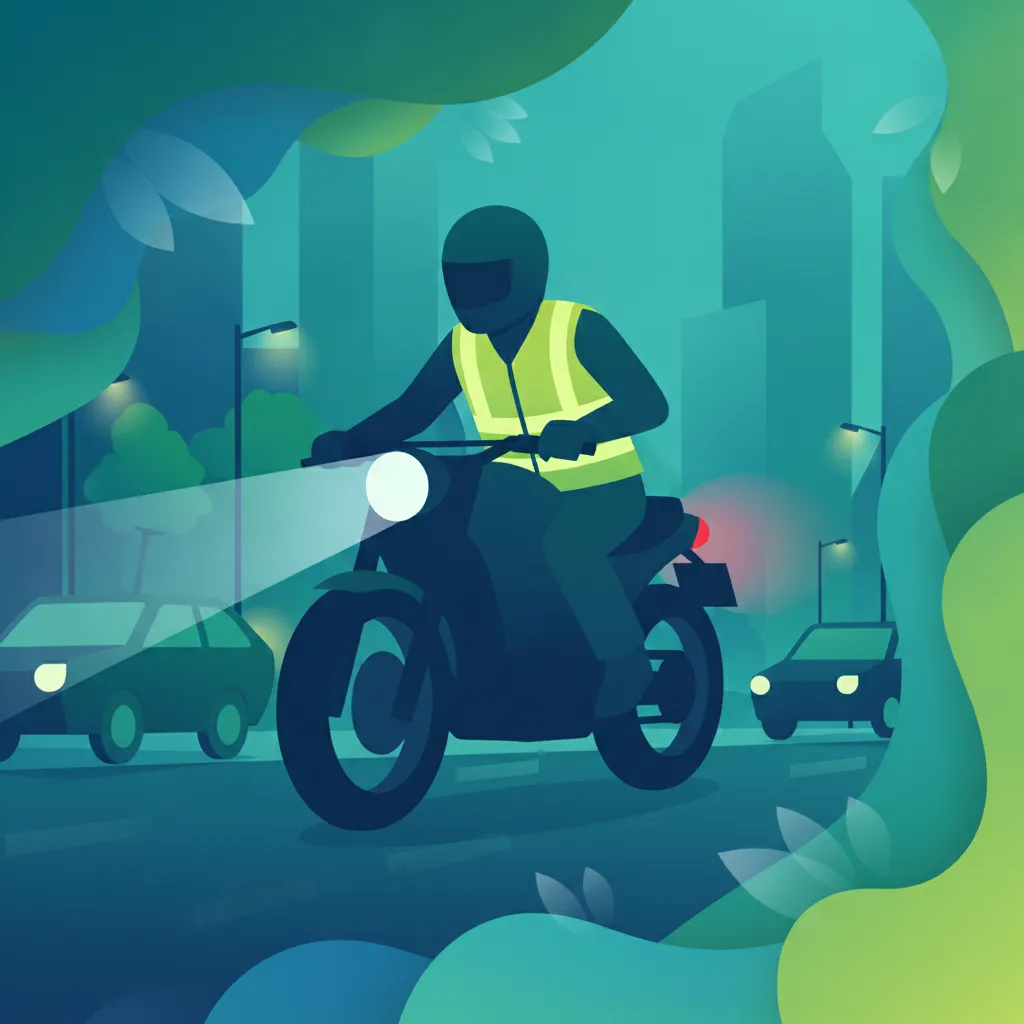
Many moped collisions occur simply because drivers of larger vehicles fail to notice lightweight riders in their path or blind spots. This lesson outlines passive and active techniques to boost your road presence, including the use of retroreflective vests and neon-colored apparel. It also explains the legal requirements for daytime running lights, proper alignment of headlights, and effective lane positioning to ensure you remain clearly visible in heavy traffic and during night rides.
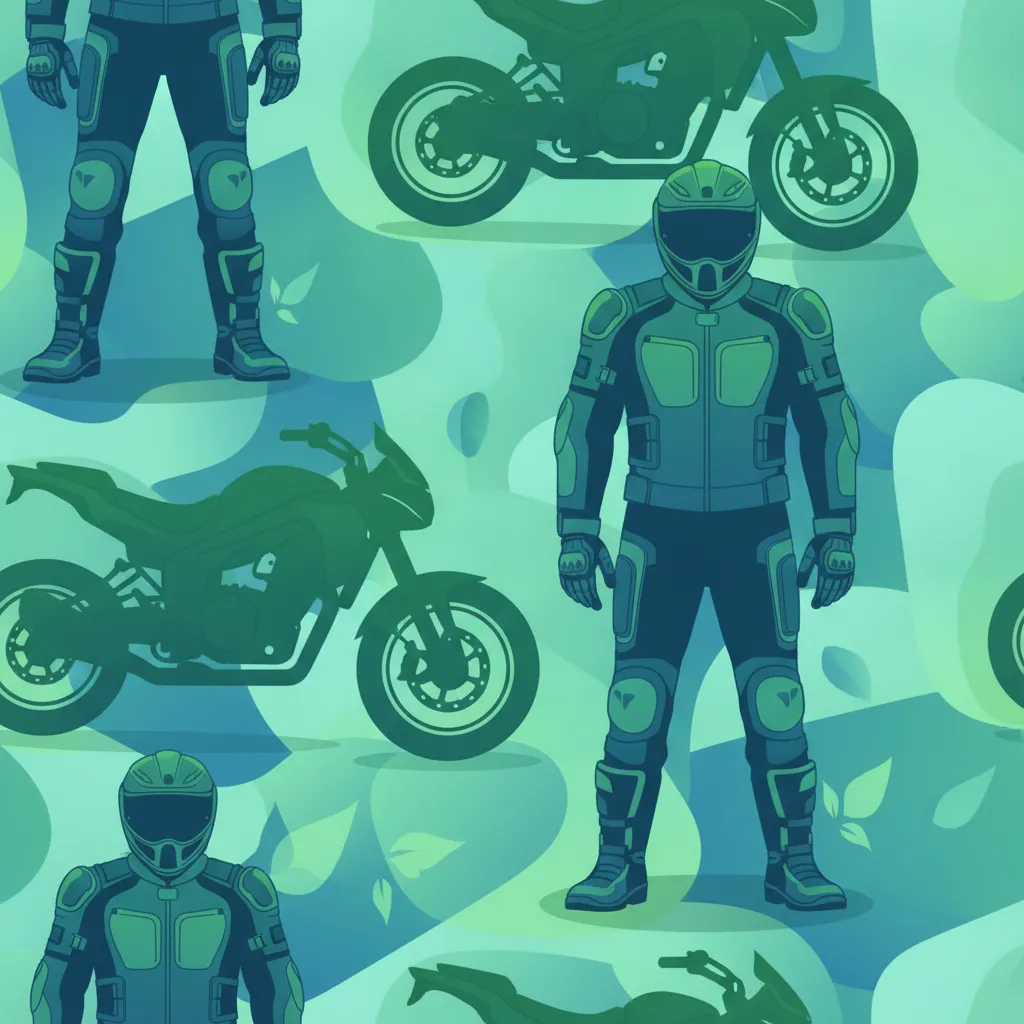
Because moped riders lack an enclosed vehicle cabin, wearing proper protective apparel is essential for preventing severe abrasions and joint injuries. This lesson evaluates the protective features of specialized jackets, durable gloves, and reinforced boots that provide grip and ankle support. You will also learn how to select weather-appropriate, thermal, or ventilated clothing to maintain mental alertness and physical comfort under Turkey's varying seasonal conditions.
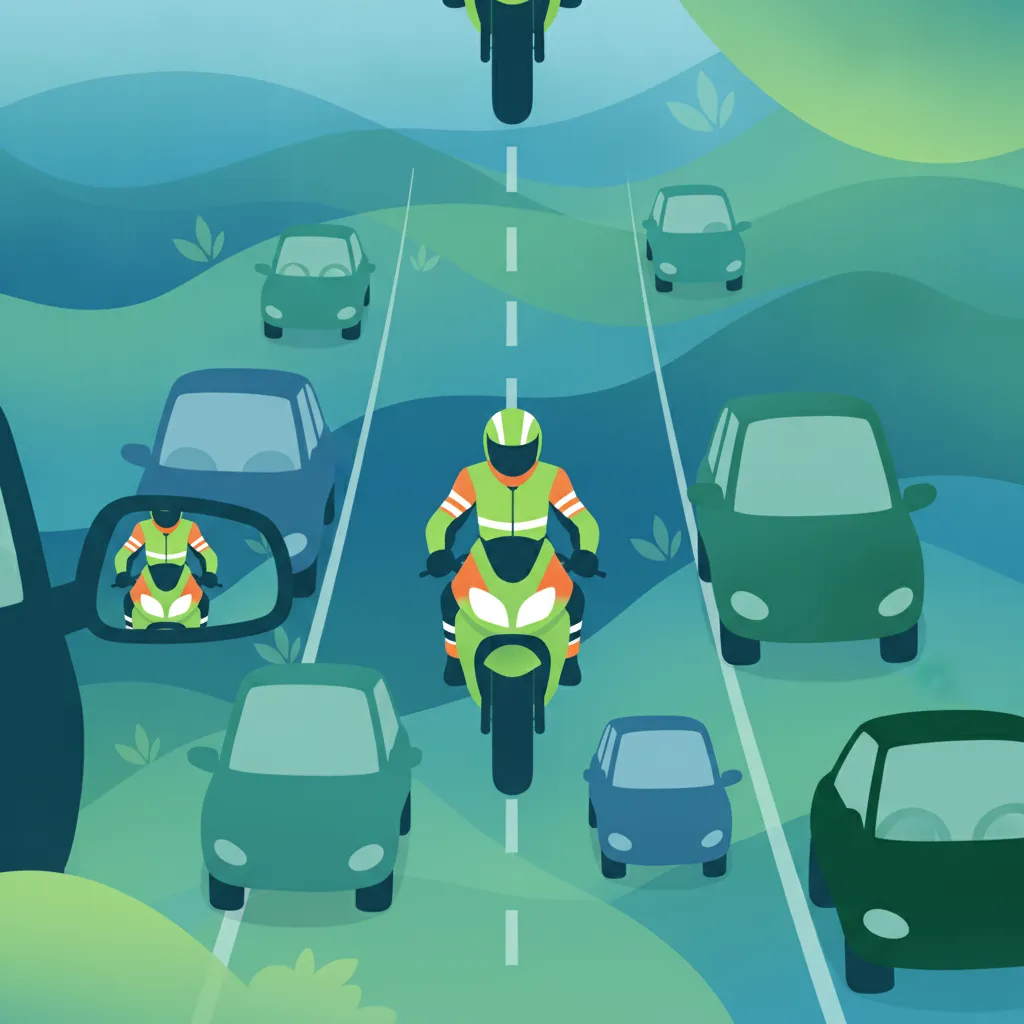
This lesson emphasizes the importance of rider visibility, illustrating how high-visibility clothing and reflective accessories can significantly reduce the risk of collisions. Learners will discover effective strategies for being noticed by other road users, such as using bright colors, reflective strips, and appropriate lighting, especially during adverse weather or nighttime riding. The content also outlines best practices for maintenance.
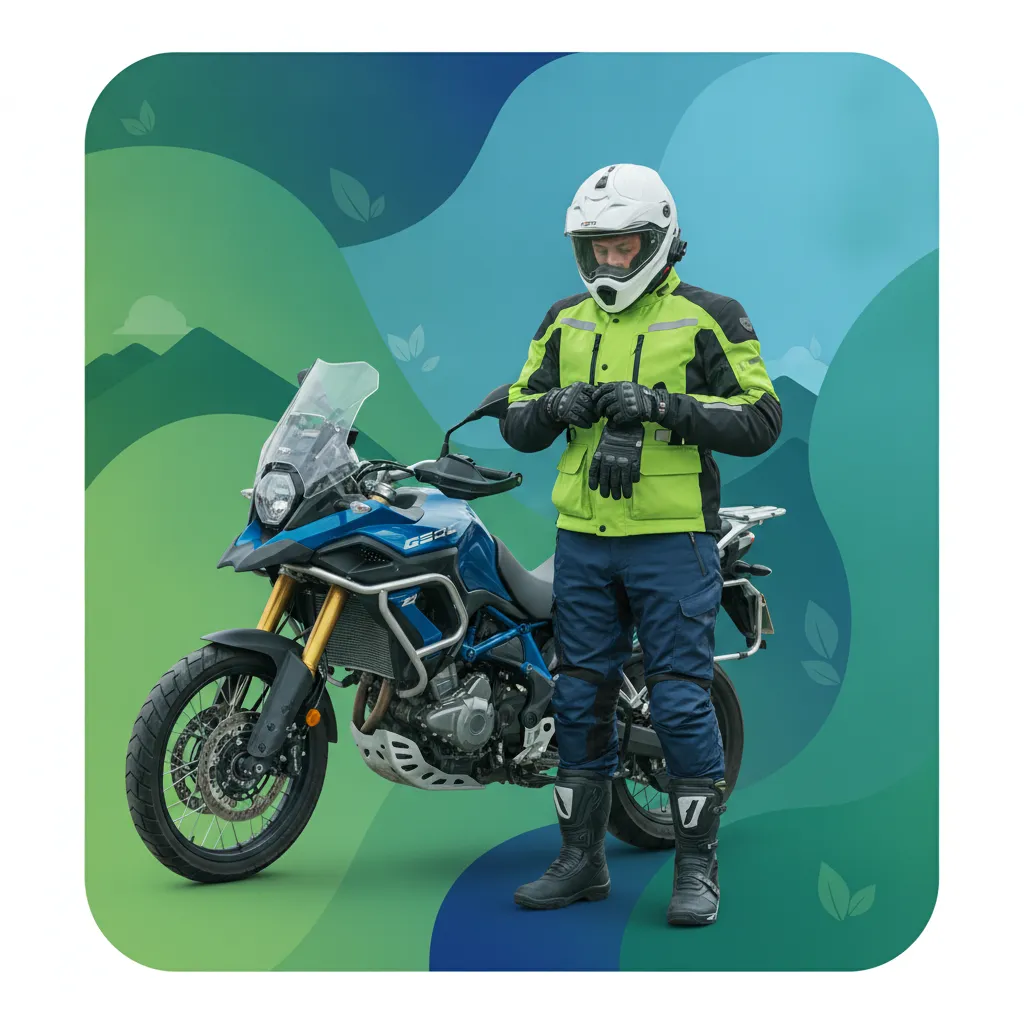
In this lesson, learners explore the range of protective clothing essential for motorcyclists, focusing on jackets, pants, gloves, and boots that meet CE standards. The discussion covers material properties that offer abrasion resistance, the strategic placement of armour, and how to choose gear appropriate for varying weather conditions. Emphasis is placed on the importance of proper maintenance and the role of reflective elements in safety.

Defensive riding is the practice of anticipating potential road conflicts and acting early to prevent accidents before they occur. This lesson teaches you how to systematically scan the road ahead for changing conditions, keep an adequate safety cushion around your moped, and pre-plan exit routes in tight spots. You will learn to assume you are invisible to other drivers and adapt your speed and road position proactively to protect yourself against sudden maneuvers.

Riding in adverse weather presents significant challenges for open-vehicle operators, including reduced tire grip, obscured vision, and physical fatigue from wind or cold. This lesson covers safety techniques for navigating rainy conditions, avoiding the danger of hydroplaning, and managing strong crosswinds that can destabilize a lightweight moped. You will learn to adjust your speed, increase your following distance, and use high-visibility gear to ensure a safe journey under bad weather.

Proper road positioning is your primary shield against being squeezed, sideswiped, or overlooked by larger motor vehicles in daily traffic. This lesson explains how to ride in the center or slightly off-center of your lane to prevent unsafe overtaking within the same lane. You will study how to identify the massive blind spots of buses and trucks, maintain appropriate following distances, and execute overtaking maneuvers with maximum safety margin and clear signal warning.

This lesson addresses the specific challenges of riding a motorcycle after dark, focusing on the importance of proper headlamp usage, reflective clothing, and heightened situational awareness. It provides guidance on how to remain visible to other road users, how to read road markings and signs under low-light conditions, and techniques for managing glare and fatigue during extended night rides.
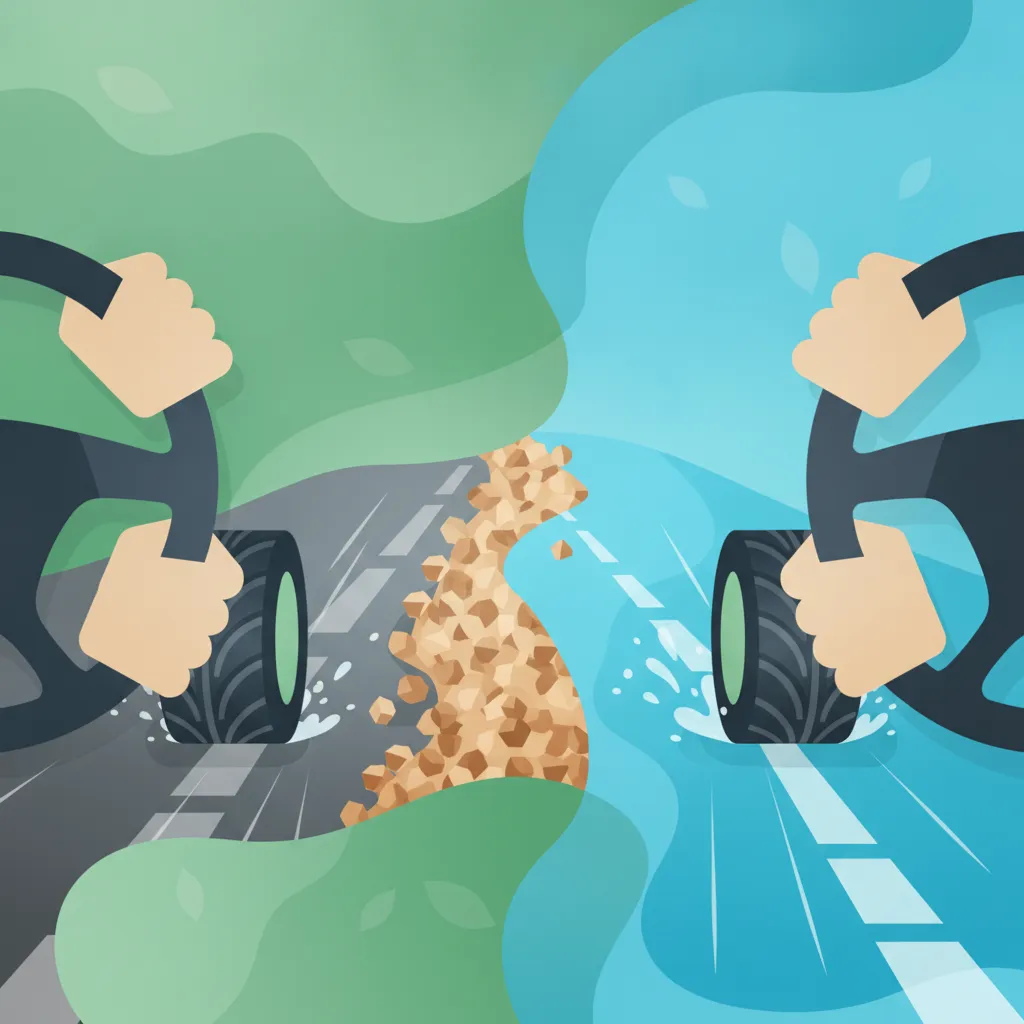
A moped's connection to the road is limited to two small tire contact patches, making tyre traction highly sensitive to surface changes. This lesson prepares you to recognize and negotiate hazardous road surfaces such as loose gravel, wet leaves, metal expansion joints, and painted lines. You will learn how to adjust your speed, maintain a vertical riding posture, and avoid sudden steering or braking inputs to prevent low-side falls when traction is severely reduced.
Understand core defensive riding strategies for Category AM moped riders navigating Turkish streets. This lesson focuses on hazard anticipation, maintaining safe positioning relative to cars, and managing low-speed maneuvers to ensure rider safety when sharing the road with larger, faster-moving vehicles.
Defensive riding is the practice of anticipating potential road conflicts and acting early to prevent accidents before they occur. This lesson teaches you how to systematically scan the road ahead for changing conditions, keep an adequate safety cushion around your moped, and pre-plan exit routes in tight spots. You will learn to assume you are invisible to other drivers and adapt your speed and road position proactively to protect yourself against sudden maneuvers.
Proper road positioning is your primary shield against being squeezed, sideswiped, or overlooked by larger motor vehicles in daily traffic. This lesson explains how to ride in the center or slightly off-center of your lane to prevent unsafe overtaking within the same lane. You will study how to identify the massive blind spots of buses and trucks, maintain appropriate following distances, and execute overtaking maneuvers with maximum safety margin and clear signal warning.

Low-speed riding maneuvers require precise coordination of throttle control, body balance, and subtle steering inputs to maintain vehicle stability. This lesson guides you through techniques for performing tight U-turns, navigating dense traffic queues, and parking your moped safely in designated urban areas. Additionally, you will learn to scan for immediate hazards, allowing you to execute steering corrections smoothly without risking tip-overs or collisions with low obstacles.

This lesson delves into specific manoeuvring strategies required when navigating both tight urban environments and open rural roads with large passenger vehicles. Learners will explore techniques for handling narrow streets, tight turns, and intersections, while maintaining safety and efficiency. The content emphasizes planning and execution of manoeuvres based on road conditions and vehicle dimensions.
Find clear answers to common questions learners have about Helmet Requirements and Proper Usage. Learn how the lesson is structured, which driving theory objectives it supports, and how it fits into the overall learning path of units and curriculum progression in Turkey. These explanations help you understand key concepts, lesson flow, and exam focused study goals.
No, you must use a helmet that meets recognized international safety standards such as ECE or DOT. The exam specifically focuses on your knowledge of these certified protective standards.
A loose chin strap allows the helmet to shift or come off entirely during an accident, rendering it ineffective. Ensuring a snug fit is a primary safety requirement for all two-wheeled vehicle operators.
Yes, if a helmet experiences a significant impact, the structural integrity of the inner energy-absorbing liner may be compromised even if no external damage is visible. It is essential to replace it to maintain safety.
The MTSK e-sınav includes questions about vehicle safety and driver responsibility. Knowing the correct use and certification of personal protective equipment is a mandatory part of the traffic and environment rules section.
Use our comprehensive practice search to find exactly the Turkish driving theory questions you need to master. Whether reviewing specific road signs, traffic rules, or first aid scenarios, select your perfect practice set and boost your confidence for the official ehliyet sınavı.