This lesson teaches you how to position your moped correctly to avoid common hazards like sideswipes and blind spots. By mastering these techniques, you will improve your safety in urban traffic and gain the critical knowledge required for the Turkish MTSK e-sınav.
Lesson content overview
Navigating modern traffic on a Category AM moped (motorlu bisiklet) requires a highly proactive, defensive approach to road positioning. Due to your vehicle's small physical profile and lower top speeds—limited legally to 45 km/h under Turkish Road Traffic Law (Karayolları Trafik Kanunu)—you are inherently more vulnerable than passenger cars, trucks, or buses.
Proper road positioning serves as your primary shield against being squeezed, sideswiped, or overlooked by larger motor vehicles. This lesson provides the theoretical foundation and practical guidelines necessary to master lane discipline, manage blind spots, maintain safe following distances, and execute overtaking maneuvers with maximum safety margins.
Many novice riders mistakenly believe that because a moped is narrow, they should ride as close to the right edge of the road or curb as possible. This is one of the most dangerous misconceptions in defensive riding. Riding too close to the curb invites larger vehicles to squeeze past you within the very same lane, leaving you with zero escape space if they misjudge the gap.
Riding directly in the center of your lane (often referred to as the "dominant lane position" or "riding in the center third") is the default defensive posture for Category AM vehicles.
The practice of riding in the middle of a travel lane to prevent other motorists from attempting to share or squeeze past you within the same lane, while maximizing your visibility in traffic mirrors.
While the centered position is your default, there are specific tactical situations where adjusting your position slightly to the left or right within your lane (while strictly remaining inside your lane markings) is safer. This is known as a lane offset.
Never drift into adjacent lanes! When utilizing a slight lane offset, you must maintain absolute control and stay within your designated lane markings. Drifting over the line without a planned and signaled lane change is a major traffic violation under Turkish traffic law and can lead to catastrophic side-swipe collisions.
Buses, trucks, and commercial vans have massive blind spots—often referred to as "no-zones" (kör noktalar)—that are significantly larger than those of passenger cars. If you ride within these areas, the driver literally cannot see you, regardless of how many mirrors they have.
Look for the driver’s face: If you cannot see the driver's face or eyes in their side mirrors, they absolutely cannot see you. Shifting your lane offset until you make visual contact through their mirror is your safest tactic.
Avoid riding alongside: Never cruise parallel to a truck or bus. Either accelerate safely past them (if permitted and within your speed capability) or drop back to establish a visible buffer zone.
Anticipate wide turns: Large vehicles must often swing wide to the left before making a sharp right turn. Never try to squeeze up the inside right of a turning truck or bus; you risk being crushed as the trailer cuts the corner.
Maintaining a safe following distance (takip mesafesi) is your life insurance policy on a moped. It gives you the necessary time to perceive a hazard, react, and bring your light vehicle to a controlled stop without locking your wheels.
Turkish traffic law mandates that drivers maintain a safe following distance. The most reliable and universally accepted method to calculate this under normal dry conditions is the Two-Second Rule.
At the maximum legal moped speed of 45 km/h, your vehicle travels approximately 12.5 meters per second. A two-second gap translates to roughly 25 meters of empty space between your front tire and the rear bumper of the vehicle ahead.
Select a fixed shadow, road marking, signpost, or utility pole ahead of the vehicle you are following.
As soon as the rear bumper of the leading vehicle passes that fixed object, begin counting: "One thousand and one, one thousand and two" (or in Turkish, "seksen sekiz, seksen dokuz").
If your front tire passes the same fixed object before you finish counting to two, you are tailgating. Immediately ease off the throttle to increase your gap.
The two-second rule is a minimum standard for dry, clean asphalt. You must increase this distance to three, four, or more seconds under the following circumstances:
Overtaking on a Category AM moped requires careful planning, precise execution, and clear communication. Because of your limited acceleration, overtaking a vehicle traveling near your top speed is highly discouraged. However, when passing slower vehicles, horse-drawn carriages, or agricultural tractors (common on Turkish rural roads), you must follow a strict safety protocol.
Before you even think about overtaking, you must ensure that:
Check and Prepare: Assess the speed of the vehicle ahead. Ensure you have enough power and space to complete the pass quickly. Check your mirrors and perform a rapid shoulder check (omuz bakışı) to confirm your blind spot is clear.
Signal Early: Activate your left turn signal at least 3 seconds before making any lateral movement. This warns drivers behind and ahead of your intentions.
Move Out and Maintain Clearance: Steer smoothly into the overtaking lane. When passing the vehicle, maintain a generous lateral clearance (at least 1 to 1.5 meters). Never pass so closely that a sudden gust of wind or a minor steering correction by either vehicle could cause a collision.
Check and Return: Do not cut back into your original lane too quickly. Look in your rearview mirrors. Once you can see the entire front of the overtaken vehicle in your mirror, perform a quick shoulder check to the right, signal right, and return smoothly to your dominant lane position.
Overtaking near intersections is strictly prohibited! Under Turkish traffic regulations, you must never attempt to overtake another vehicle when approaching intersections, pedestrian crossings, railway crossings, narrow bridges, or blind curves.
On a small vehicle like a moped, predictability is your best defense. Since car and truck drivers are often looking out only for other large vehicles, unexpected lane changes or turns on your part can lead to disastrous side-swipe or rear-end collisions.
You must use your turn signals (sinyal lambaları) to communicate every lateral movement, including lane changes, overtaking, pulling over to the curb, or merging into traffic.
Understanding common mistakes and complex road situations helps you build the necessary defensive instincts to pass your MTSK e-sınav and ride safely on public roads.
When approaching a municipal transit bus stopped at a designated roadside bus bay, you must exercise extreme caution.
To succeed in your category AM theory exam and ride defensively, keep these core principles at the forefront of your mind:
Did you understand how to safely manage your position on Turkish roads around larger vehicles? Expand your knowledge with our related articles and targeted practice sets.
Explore all units and lessons included in this driving theory course.
Lesson content overview
Explore all units and lessons included in this driving theory course.
Explore search topics learners often look for when studying Maintaining Safe Road Position Around Other Vehicles. These topics reflect common questions about road rules, driving situations, safety guidance, and lesson level theory preparation for learners in Turkey.
Browse additional driving theory lessons that cover connected traffic rules, road signs, and common driving situations related to this topic. Improve your understanding of how different rules interact across everyday traffic scenarios.
Understand the legal requirements and safety protocols for entering intersections, using pedestrian crossings, and navigating roundabouts as a moped rider. This lesson covers proper lane positioning and priority rules essential for maintaining safety while interacting with other vehicles at road junctions in urban traffic settings.
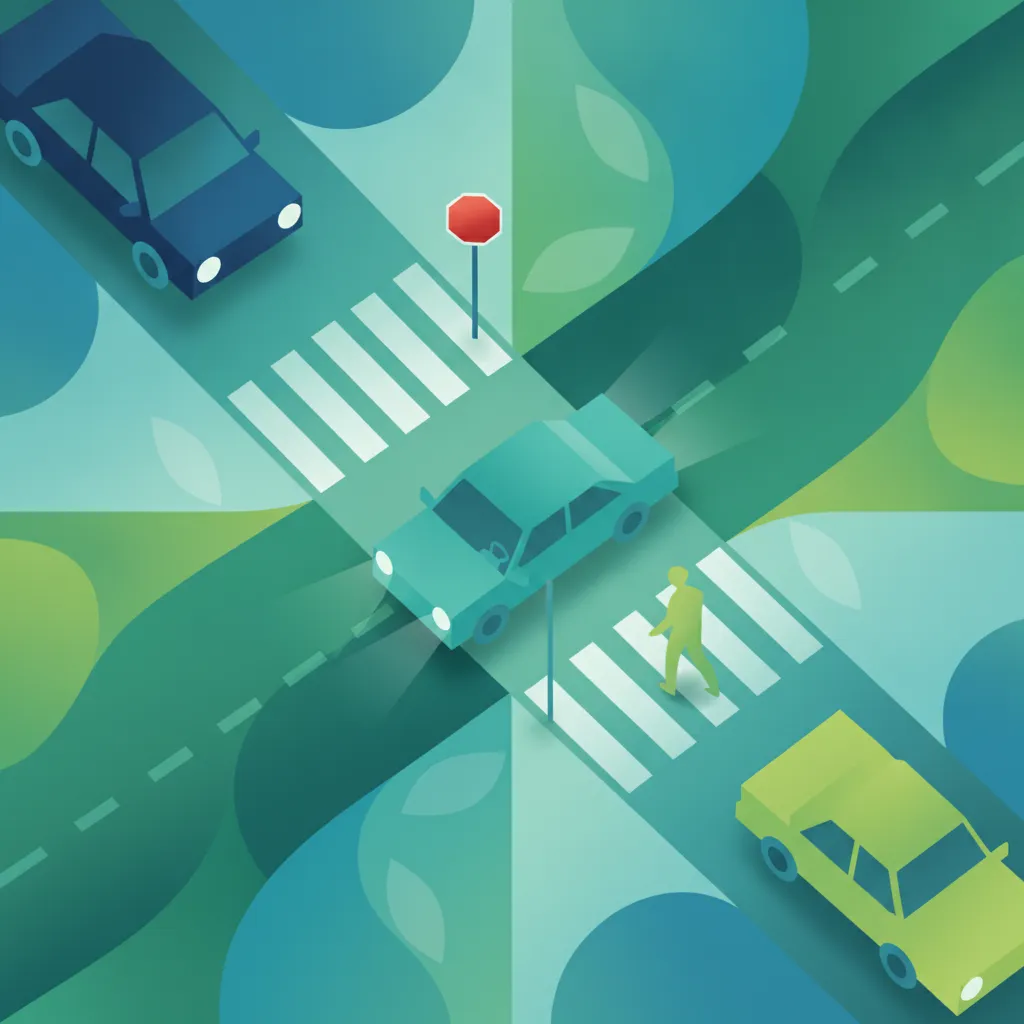
Intersections represent the highest-risk zones for moped riders due to crossing traffic paths and poor visibility. This lesson teaches you the structured approach method: slowing down, selecting the correct lane early, scanning in all directions, and yielding according to priority laws. You will learn safe techniques for executing left and right turns, maintaining stability, and continuously looking out for oncoming vehicles that might fail to yield or turn unexpectedly across your path.

This lesson focuses on the safe interaction with other traffic participants at bus stops and traffic intersections. Learners will explore right-of-way rules, signal compliance, and techniques for maintaining safe distances while stopping and departing. Understanding these interactions is vital for preventing accidents in complex traffic environments.
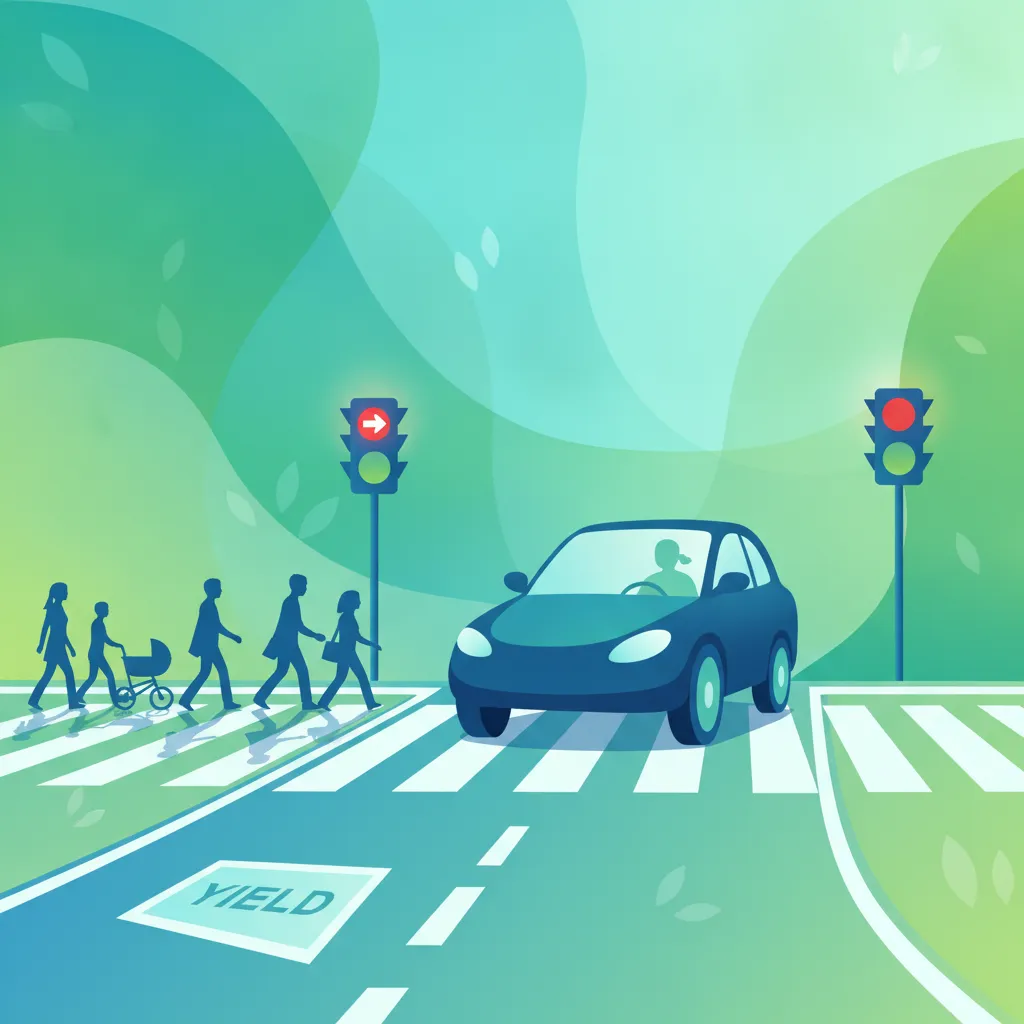
In this lesson, learners will master the skills required to safely navigate various types of intersections encountered in Turkish urban settings. The content covers interpreting traffic signals, understanding right-of-way rules, and executing proper lane positioning. Practical strategies for managing blind spots and ensuring visibility to other road users are emphasized. By the end of this session, participants will be equipped with safe crossing techniques.
Roundabouts require a clear understanding of yield regulations and precise signaling to avoid conflicts with larger vehicles. This lesson details the legal requirements under Turkish road rules, which demand that entering vehicles yield to traffic already circulating inside the roundabout. You will learn how to select the appropriate lane upon entry, maintain a steady speed, signal your exit intentions clearly with your indicators, and remain alert to drivers who cut across lanes.
Protecting vulnerable road users is a core legal and ethical responsibility for all motorized vehicle operators in Turkey. This lesson covers the absolute requirement to yield to pedestrians at marked crosswalks, zebra crossings, and designated school zones. You will learn how to identify these zones early, reduce your speed proactively, and maintain heightened situational awareness for children or distracted pedestrians who may step onto the road unexpectedly.
This lesson focuses on priority rules at controlled intersections equipped with traffic signals, stop signs, or yield signs. Learners will understand how to interpret traffic light phases, comply with stop and yield indications, and assess right-of-way at these intersections. The lesson also covers pedestrian and cyclist considerations, as well as emergency vehicle priority.
Focusing on pedestrian safety, this lesson addresses the unique considerations motorcyclists must take when approaching zebra crossings, traffic signal-controlled pedestrian crossings, and designated school zones. Learners will understand the legal obligations to yield to pedestrians, especially children, and the importance of reducing speed in these high-risk areas. The lesson also provides practical tips for ensuring visibility.
This lesson outlines the precise legal and safety procedures for overtaking slower vehicles on two-lane and multi-lane roads. It details when overtaking is strictly prohibited by signs or solid road lines, and how to calculate passing distances. Drivers will learn how to communicate their intentions using indicators and pass other vehicles safely.
This lesson delves into the specific challenges and procedures associated with navigating roundabouts on a motorcycle. It outlines the importance of approaching at a safe speed, selecting the correct lane, and yielding to vehicles already within the roundabout. The content also covers the proper use of signals when exiting and emphasizes the need for heightened awareness of blind spots, especially when larger vehicles are present.

This lesson focuses on pedestrian rights and safety measures to ensure their protection on Turkish roads. Topics include proper use of crosswalks, pedestrian signals, and yielding to pedestrians at intersections. The lesson also addresses specific considerations for vulnerable pedestrians such as children, the elderly, and the visually impaired. Real-world scenarios illustrate safe crossing practices.
Learn how to manage speed and identify potential traffic hazards in mixed urban environments under Turkish road traffic law. This guide explores the relationship between vehicle control, braking distances on various road surfaces, and the importance of anticipating the behavior of larger vehicles to avoid common road risks.
Managing your speed effectively is not just about obeying posted legal limits; it is about adjusting your pace to the immediate traffic context. This lesson teaches you how to evaluate traffic density, pedestrian presence, and blind corners to select an appropriate speed that guarantees safe stopping distances. You will learn to anticipate flow fluctuations, allowing you to avoid sudden, unstable speed changes that can compromise your balance and traction in mixed traffic.
Low-speed riding maneuvers require precise coordination of throttle control, body balance, and subtle steering inputs to maintain vehicle stability. This lesson guides you through techniques for performing tight U-turns, navigating dense traffic queues, and parking your moped safely in designated urban areas. Additionally, you will learn to scan for immediate hazards, allowing you to execute steering corrections smoothly without risking tip-overs or collisions with low obstacles.
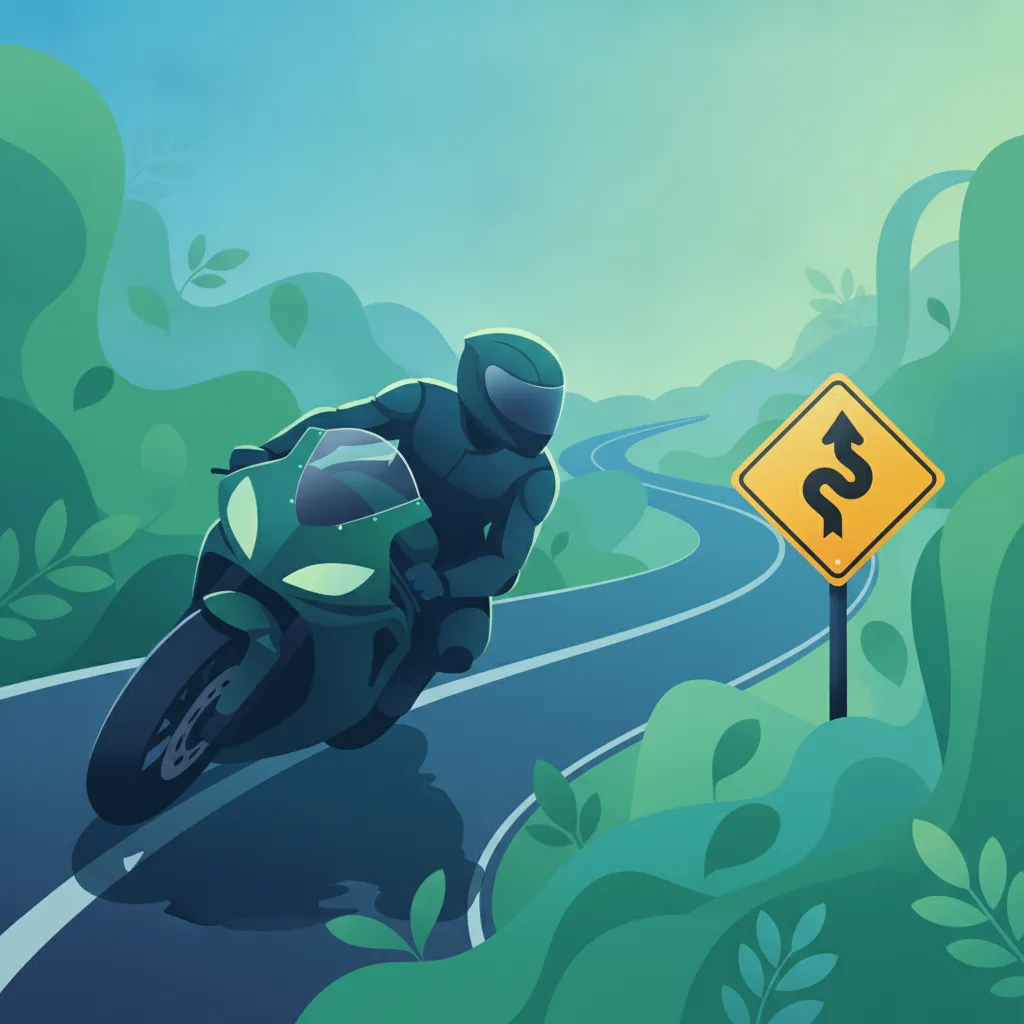
Warning signs alert road users to impending physical conditions, dangers, or layout alterations that require immediate driver attention and speed adjustment. This lesson focuses on indicators of sharp bends, narrowing paths, slippery road surfaces, upcoming pedestrian crosswalks, and school warning zones. You will study how to interpret these yellow-and-red triangular signs to safely modify your approach speed and gear your attention toward potential hazards unique to lightweight mopeds.
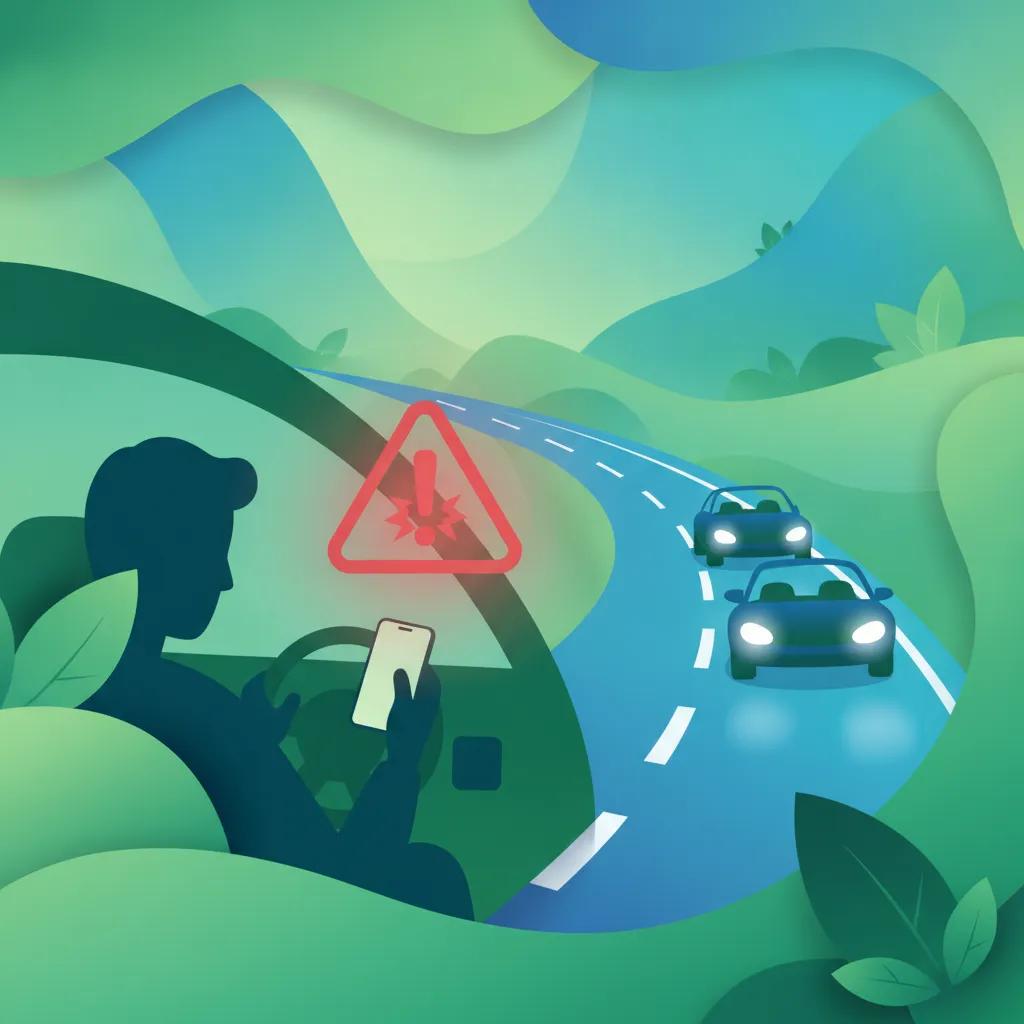
Human error and deliberate risk-taking represent the leading causes of traffic collisions among novice moped riders. This lesson analyzes the high dangers of using mobile phones while riding, weaving unsafely between lanes, and tailgating other motorists. It also covers the severe legal limits on alcohol and drug consumption under Turkish law, explaining how even minor impairments can drastically slower your hazard response times and lead to catastrophic accidents.
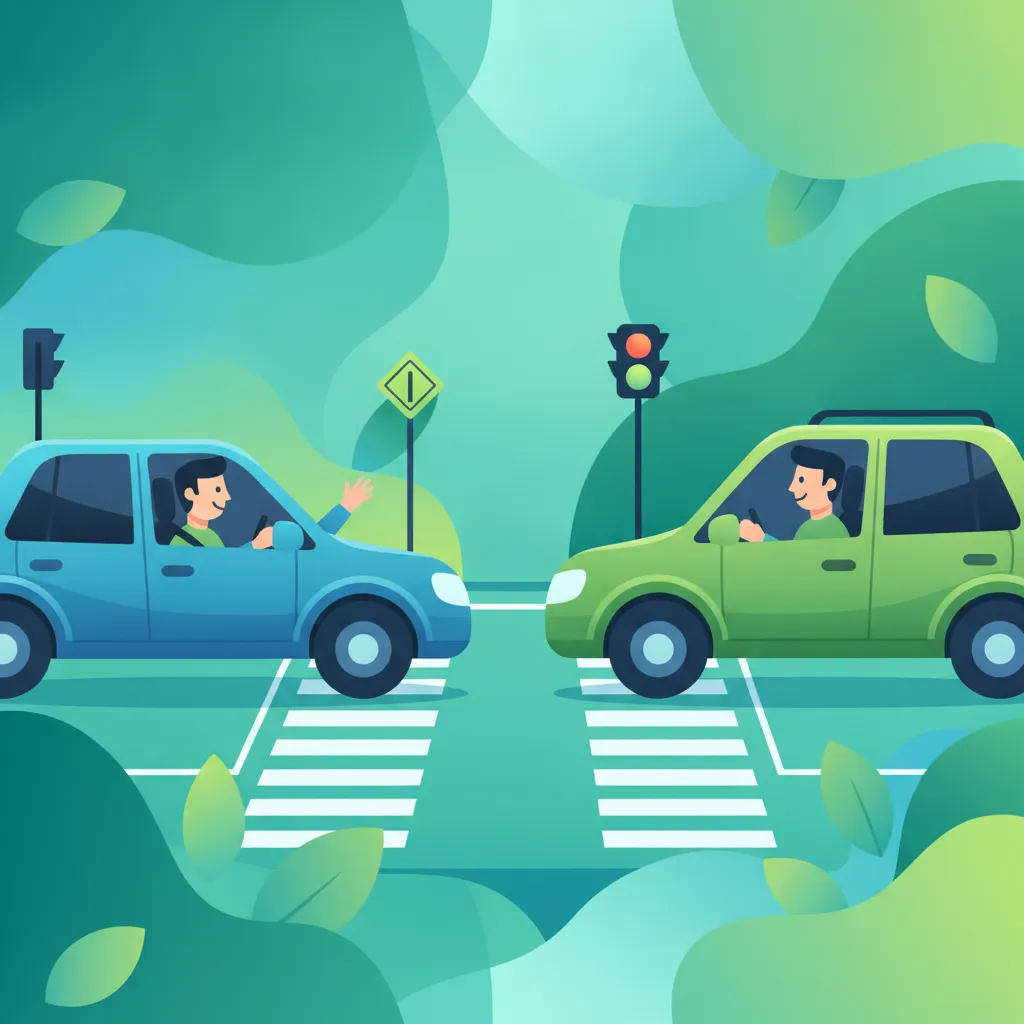
Riding an exposed lightweight vehicle in busy Turkish cities requires exceptional personal conduct, patience, and absolute control over your emotional reactions. This lesson discusses the psychological aspects of riding, teaching you how to avoid aggressive behaviors and stay calm under stressful traffic situations. It covers proper non-verbal communication, polite road sharing practices, and maintaining safe buffers from other motorists to establish a safe, predictable presence on any public street.
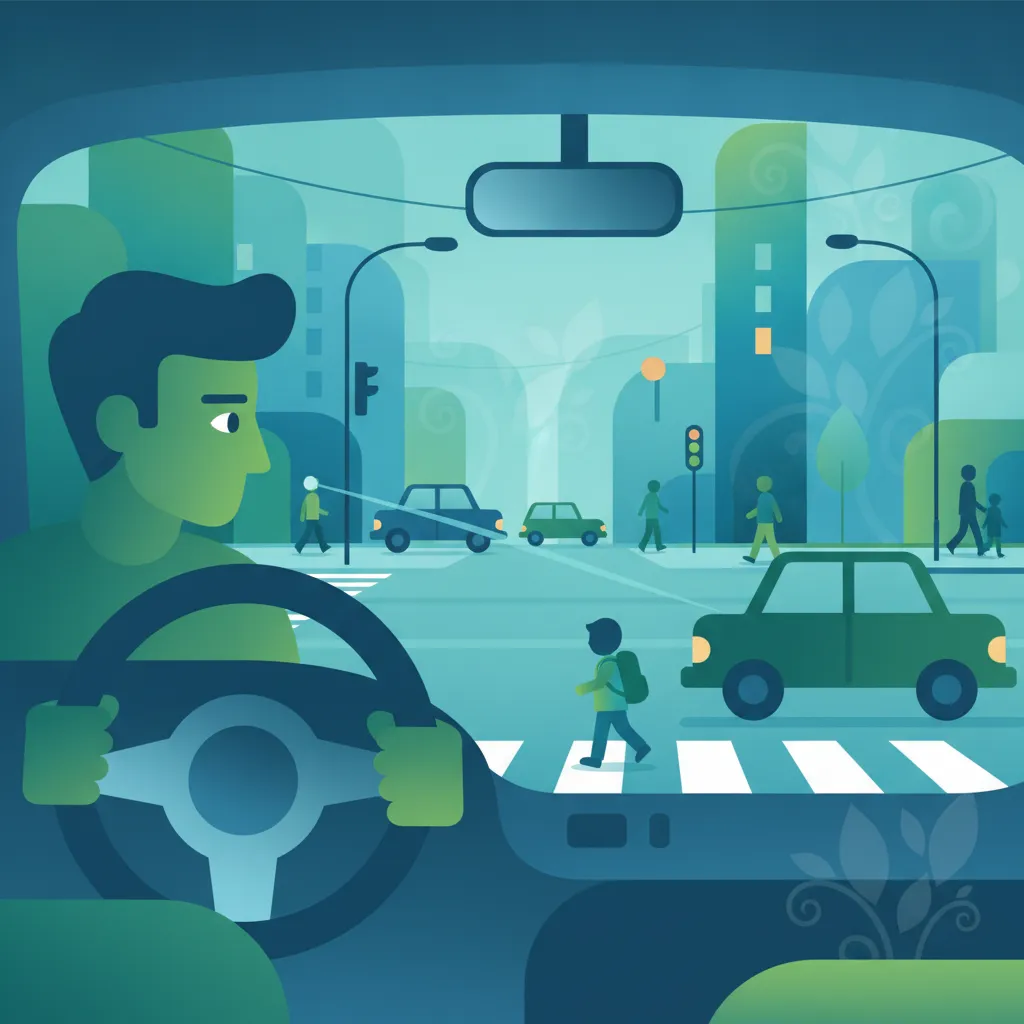
This lesson explores the critical skill of hazard identification and anticipation while driving. Topics include recognizing potential risks in traffic, road conditions, and environmental factors. Learners will develop skills in anticipatory driving to proactively address hazards before they become dangerous. Real-world examples illustrate how to maintain vigilance.
Defensive riding is the practice of anticipating potential road conflicts and acting early to prevent accidents before they occur. This lesson teaches you how to systematically scan the road ahead for changing conditions, keep an adequate safety cushion around your moped, and pre-plan exit routes in tight spots. You will learn to assume you are invisible to other drivers and adapt your speed and road position proactively to protect yourself against sudden maneuvers.
Intersections represent the highest-risk zones for moped riders due to crossing traffic paths and poor visibility. This lesson teaches you the structured approach method: slowing down, selecting the correct lane early, scanning in all directions, and yielding according to priority laws. You will learn safe techniques for executing left and right turns, maintaining stability, and continuously looking out for oncoming vehicles that might fail to yield or turn unexpectedly across your path.
Learners will examine the complexities of operating in environments where various road users, including pedestrians, cyclists, and motorcyclists, coexist. The lesson emphasizes the need for heightened situational awareness, defensive driving techniques, and proactive hazard anticipation. Strategies for navigating mixed traffic safely, especially in congested urban areas, are highlighted.

In this lesson, learners will discover the principles of defensive riding, focusing on hazard anticipation, maintaining safe distances, and practicing proactive avoidance techniques. It emphasizes developing a vigilant riding posture, constantly scanning the environment, and preparing to react to potential dangers from other road users, road conditions, or unexpected traffic events.
Find clear answers to common questions learners have about Maintaining Safe Road Position Around Other Vehicles. Learn how the lesson is structured, which driving theory objectives it supports, and how it fits into the overall learning path of units and curriculum progression in Turkey. These explanations help you understand key concepts, lesson flow, and exam focused study goals.
Because mopeds are smaller and less visible, incorrect positioning can lead to drivers trying to pass you within your own lane. Staying in the center or slightly off-center makes you more visible and prevents dangerous side-by-side situations.
You should aim to ride where you can be seen in the side mirrors of the vehicle ahead of you. If you cannot see the driver's face in their mirror, they likely cannot see you.
The exam often uses visual scenarios showing a moped at a junction or behind a truck. You will be asked to identify the safest lane position to avoid risks like the truck's blind spot or a turning vehicle.
Yes, it is often recommended for safety to avoid being 'squeezed' against the curb. However, you must remain mindful of faster traffic and follow general lane discipline rules as dictated by the Turkish Traffic Law.
Use our comprehensive practice search to find exactly the Turkish driving theory questions you need to master. Whether reviewing specific road signs, traffic rules, or first aid scenarios, select your perfect practice set and boost your confidence for the official ehliyet sınavı.