Driving Theory
Turkish Driving Theory Courses

Lesson 4 of the Priority Rules, Intersections and Roundabouts unit

Turkish B Licence Theory: Navigating Roundabouts

This lesson guides you through the complex world of navigating roundabouts, a critical component of safe driving in Turkey. You will learn the priority principles, correct lane selection, and safe exiting procedures necessary to pass your Category B theory exam.
roundaboutspriority rulesCategory BMTSK examdriving theory
Turkish B Licence Theory: Navigating Roundabouts

Lesson content overview

Turkish B Licence Theory

Navigating Roundabouts in Turkey: Rules, Lane Discipline, and Right of Way

Roundabouts, known in Turkish traffic terminology as Dönel Kavşak, are highly effective traffic control structures designed to facilitate safe and continuous traffic flow. Unlike traditional four-way intersections controlled by traffic lights, a roundabout eliminates direct crossing paths, significantly reducing the severity of potential collisions.

For candidates preparing for the Turkish Category B Driving License (Sınıf B Sürücü Belgesi) and the official MTSK e-sınav, mastering the rules of the roundabout is essential. This lesson covers everything from priority rules and lane selection to exit signaling and interacting with vulnerable road users.


The Strategic Purpose and Safety Logic of Roundabouts

Modern roundabouts are engineered to replace traditional intersections for several clear structural and psychological reasons.

  • Reduced Conflict Points: In a standard four-way intersection, there are 32 major conflict points where vehicle paths cross, merge, or diverge. A single-lane roundabout reduces these conflict points to just 8, completely eliminating hazardous left-turn conflicts across oncoming traffic.
  • Speed Calming: The curved geometry of a roundabout forces drivers to slow down naturally upon entry. Lower speeds mean that if an accident does occur, the impact forces are dramatically reduced, resulting in minor property damage rather than severe injuries.
  • Continuous Traffic Flow: By replacing rigid red lights with dynamic yielding rules, roundabouts reduce vehicle idling, lower emissions, and prevent long traffic queues from forming during off-peak hours.

Core Rules of the Roundabout (Dönel Kavşak Kuralları)

To ensure safety and efficiency, traffic laws in Turkey enforce five fundamental rules for any driver approaching or circulating within a roundabout.

Rule 1: Yield to Traffic Already in the Roundabout

The most critical rule of any roundabout is that vehicles already circulating inside the roundabout have the absolute right of way.

Definition

Right-of-Way (Geçiş Hakkı)

The legal right of a vehicle or pedestrian to proceed with precedence over others in a specific traffic situation.

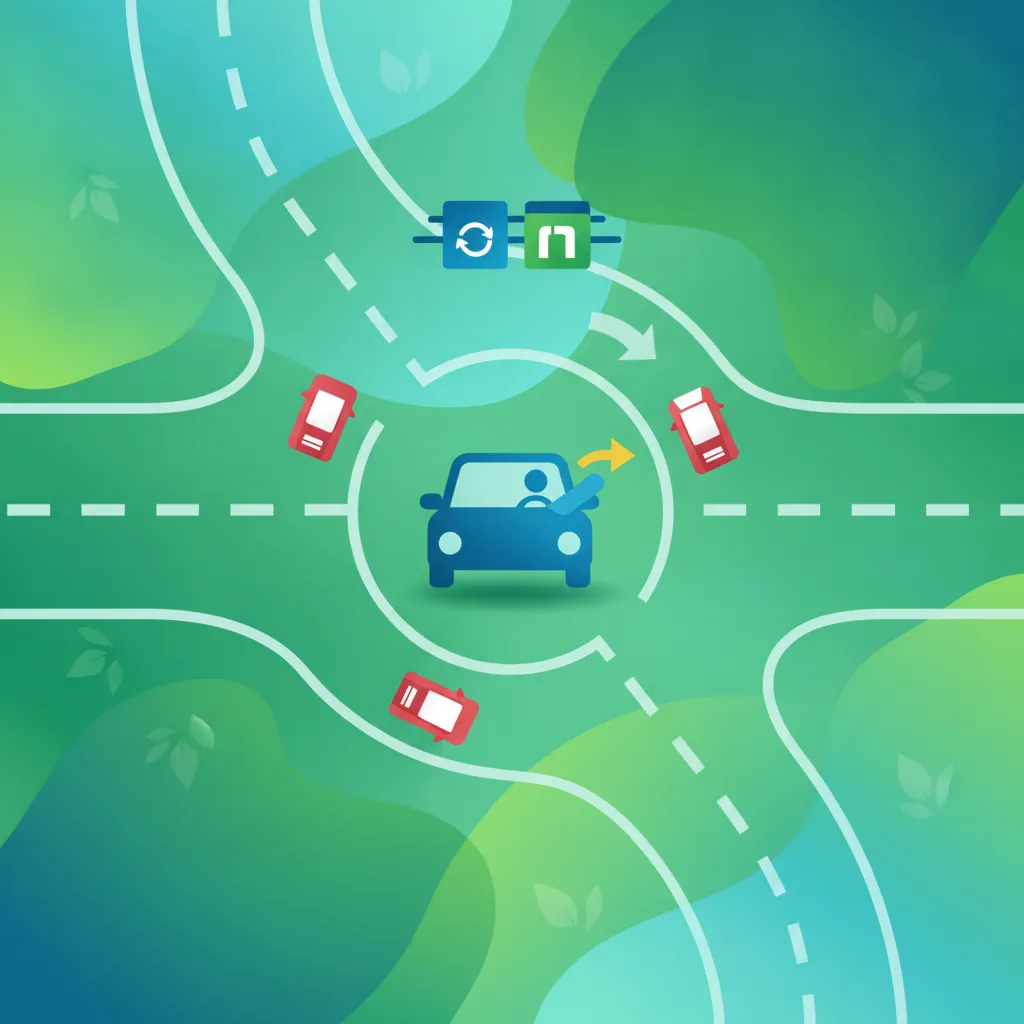
As you approach the entry point, you will typically see the triangular Yol Ver (Yield) sign accompanied by a dashed yield line painted on the road. You must slow down, look to your left, and stop if there are vehicles circulating. Only enter when there is a safe gap in the traffic.

Warning

Common Misunderstanding: A driver on a major double-lane highway might assume they have priority over a small car inside the roundabout simply because their approaching road is larger. This is incorrect. Once a vehicle is circulating inside the roundabout (ada içi), they hold priority regardless of the size or class of the approaching road.

Rule 2: Strict Lane Discipline upon Entry and Exit

For multi-lane roundabouts, your lane selection on approach determines which exit you can legally and safely take.

  • Right Lane Approach: Use this lane if you intend to take the first exit (turning right) or proceed straight (second exit, depending on road markings).
  • Left Lane Approach: Use this lane if you plan to go straight, turn left (third exit), or perform a full U-turn (returning the way you came).

Once you enter the roundabout, you must maintain your lane. Changing lanes while actively circulating inside the roundabout (ada etrafında şerit değiştirmek) is highly dangerous and generally prohibited because it creates blind spots and sudden conflict points.

Rule 3: Maintain a Safe, Moderated Speed

Roundabouts are not designed for high-speed maneuvers. You must reduce your speed before entering and maintain a steady, controlled pace while circulating.

Lower speeds allow you to observe lane markings, read directional signs, watch for suddenly braking vehicles ahead, and react to pedestrians who may be crossing at the exits.

Rule 4: Yield to Pedestrians and Cyclists

Pedestrians and cyclists are highly vulnerable at roundabouts. Most roundabouts feature pedestrian crosswalks (yaya geçidi) immediately before the entry point and right after the exit point.

You must yield to pedestrians crossing the street before you enter the roundabout and as you are exiting. Always scan your surroundings to ensure no cyclists are riding parallel to your vehicle along the outer edge of the loop.

Rule 5: Correct Use of Turn Signals (Blinkers)

Proper signaling is key to maintaining a predictable flow of traffic. Your turn signals communicate your intentions to other drivers who are waiting to enter.

  • On Entry: You do not need to signal right if you are going straight or left. However, if you are taking the immediate first exit, signal right on your approach.
  • While Circulating: If you are taking a left exit or making a U-turn, some local driving guides recommend keeping your left signal on while circulating to show waiting drivers that you are continuing around.
  • On Exit (Mandatory): You must always signal right (sağ sinyal) immediately after passing the exit prior to the one you intend to take. This lets drivers waiting at your exit know they can safely enter the roundabout without waiting for you to pass.

How to Exit a Roundabout Safely

  1. Identify your exit: Keep track of the exits as you pass them.

  2. Signal your intent: Activate your right turn signal just after passing the exit prior to your intended route.

  3. Check your mirrors: Look at your right side-view mirror and check your blind spot for any cyclists or vehicles circulating on your outer right.

  4. Execute the exit: Smoothly steer out of the roundabout into the corresponding exit lane, ensuring you do not cut across other lanes.

  5. Yield to pedestrians: Be prepared to stop immediately at the exit's pedestrian crossing if anyone is waiting to cross.


Complex Scenarios and Applied Driving Situations

Understanding the abstract rules is helpful, but applying them in real-world driving environments is what keeps you safe and prepares you for the MTSK practical exam.

Scenario 1: Navigating a Multi-Lane Roundabout in Heavy Traffic

Imagine you are approaching a busy three-lane roundabout in an urban center during peak hours. You plan to take the third exit (turning left).

  1. Approach: Position your vehicle in the leftmost lane well before reaching the roundabout.
  2. Yielding: Stop at the yield line. Observe the dense traffic circulating. Wait patiently for a safe gap in the inner lane of the roundabout rather than trying to force your way in.
  3. Entry: Merge smoothly into the inner (left) lane of the roundabout.
  4. Circulation: Maintain your position in the inner lane. Do not drift into the middle or outer lanes.
  5. Preparation to Exit: As you pass the second exit, check your right-hand mirrors and blind spot. Turn on your right indicator. Carefully transition toward the outer lane or exit lane, ensuring you do not block or cut off vehicles in the outer lane.
  6. Exit: Complete your exit smoothly into the left or middle lane of the exiting road.

Scenario 2: Handling Large Vehicles (Trucks and Buses)

Large commercial vehicles like semi-trucks, buses, and construction vehicles require a much wider turning radius than passenger cars.

When navigating a roundabout next to a large vehicle, never attempt to drive side-by-side with them. A long truck may need to occupy both lanes of a multi-lane roundabout to avoid scraping its rear wheels against the inner curb (ada kaldırımı).

Tip

Safety Principle: Give large vehicles plenty of space. Hang back and allow them to clear the roundabout before you proceed. Trying to squeeze past them in their blind spots often results in side-swipe collisions.

Scenario 3: Adverse Weather and Nighttime Driving

Wet, icy, or foggy conditions significantly alter how you should approach a roundabout.

  • Slippery Surfaces: The circular design of a roundabout creates lateral forces on your vehicle. On wet or icy asphalt, entering a roundabout too quickly can cause your tires to lose traction, leading to understeer (plowing straight ahead) or oversteer (spinning out). Reduce your entry speed by at least 50% in poor weather.
  • Reduced Visibility at Night: Pedestrians wearing dark clothing at exit crosswalks can be incredibly difficult to spot. Use your low-beam headlights (yakın ışıklar), reduce your speed, and scan the corners of both the entry and exit points meticulously before proceeding.

Common Violations and Cause-and-Effect Relationships

Failing to follow roundabout rules not only results in traffic tickets and points on your Turkish driver's license but also leads to preventable collisions.

Action / ViolationDirect Physical EffectLegal & Safety Consequence
Failing to yield to circulating trafficCauses T-bone or side-impact collisions at the entry point.Strict liability for the accident; traffic fine under Turkish Highway Traffic Law.
Changing lanes inside the loopSide-swipes vehicles traveling parallel in their established lane.High risk of multi-vehicle pileups; driver who changed lanes is found at fault.
Entering at excessive speedLoss of vehicle control due to centrifugal force; failure to stop for waiting hazards.Vehicle runs over the central island or strikes pedestrians crossing at the entrance.
Exiting without signalingWaiting vehicles at the next entrance remain stopped, creating artificial traffic jams; rear-end collisions from behind.Disrupts traffic flow and causes frustration, potentially leading to road rage.
Blocking the roundaboutStopping inside the roundabout to wait for passengers or read signs.Gridlocks the entire intersection; extremely dangerous obstruction of public roads.

Summary of Key Concepts for the MTSK Exam

Before taking your theory exam, ensure you have committed these core principles to memory:

  • Inside holds priority: The vehicle inside the roundabout (ada içi) always has the right of way over entering vehicles.
  • Signal only to exit: Your most critical signal is the right turn signal turned on right after you pass the exit prior to your target.
  • Match lanes to destinations: Right lane for right turns/straight; left lane for left turns, U-turns, and sometimes straight.
  • Vulnerable users first: Always yield to pedestrians and cyclists at the entry and exit crosswalks.


Continue Learning and Practice

To solidify your understanding of road priorities and intersection rules, explore these related materials:

Learn more with these articles

To test your knowledge on practical driving scenarios, signage, and roundabout priority questions under official exam conditions, try our custom practice sets:

Check out these practice sets


Search topics related to Navigating Roundabouts

Explore search topics learners often look for when studying Navigating Roundabouts. These topics reflect common questions about road rules, driving situations, safety guidance, and lesson level theory preparation for learners in Turkey.

roundabout priority rules Turkey driving testhow to drive on roundabouts for B license examTurkey traffic laws roundabout lane selectionMTSK e-sınav questions about roundaboutswhen to signal on a roundabout Turkeypriority at roundabouts in Turkey

Related driving theory lessons for Navigating Roundabouts

Browse additional driving theory lessons that cover connected traffic rules, road signs, and common driving situations related to this topic. Improve your understanding of how different rules interact across everyday traffic scenarios.

Priority Rules at Complex Intersections Explained

Learn the legal priority principles for navigating both controlled and uncontrolled intersections in Turkish traffic. This lesson provides a comprehensive overview of how to determine right-of-way, handle stop signs, and manage traffic flow at busy junctions according to official Turkish highway traffic regulations.
priority rulesintersectionstraffic lawdriving theory
Priority at Controlled Intersections lesson image

Priority at Controlled Intersections

This lesson focuses on priority rules at controlled intersections equipped with traffic signals, stop signs, or yield signs. Learners will understand how to interpret traffic light phases, comply with stop and yield indications, and assess right-of-way at these intersections. The lesson also covers pedestrian and cyclist considerations, as well as emergency vehicle priority.
Turkish B Licence TheoryPriority Rules, Intersections and Roundabouts
View lesson
Priority at Uncontrolled Intersections lesson image

Priority at Uncontrolled Intersections

In this lesson, learners explore priority rules specific to uncontrolled intersections, where traffic signals or signs are absent. Topics include determining right-of-way based on vehicle classification, approach angle, and arrival sequence. The lesson emphasizes the importance of stopping, yielding, and assessing potential hazards before proceeding.
Turkish B Licence TheoryPriority Rules, Intersections and Roundabouts
View lesson
General Priority Principles lesson image

General Priority Principles

This lesson provides an overview of the general priority principles that dictate right-of-way on Turkish roads. Topics include the hierarchy of road users, such as pedestrians, cyclists, and emergency vehicles, and how these hierarchies apply at various intersections. Learners will understand the fundamental concepts of yielding, stopping, and proceeding, as well as the importance of clear decision-making.
Turkish B Licence TheoryPriority Rules, Intersections and Roundabouts
View lesson
Interaction with Other Traffic at Stops and Intersections lesson image

Interaction with Other Traffic at Stops and Intersections

This lesson focuses on the safe interaction with other traffic participants at bus stops and traffic intersections. Learners will explore right-of-way rules, signal compliance, and techniques for maintaining safe distances while stopping and departing. Understanding these interactions is vital for preventing accidents in complex traffic environments.
Turkish D Licence TheorySigns, Bus Rules, Restrictions, Stops and Route Awareness
View lesson
Navigating Intersections Safely lesson image

Navigating Intersections Safely

In this lesson, learners will master the skills required to safely navigate various types of intersections encountered in Turkish urban settings. The content covers interpreting traffic signals, understanding right-of-way rules, and executing proper lane positioning. Practical strategies for managing blind spots and ensuring visibility to other road users are emphasized. By the end of this session, participants will be equipped with safe crossing techniques.
Motorcycle TheoryIntersections, Roundabouts, Crossings and Urban Riding
View lesson
Understanding Traffic Signals and Priorities lesson image

Understanding Traffic Signals and Priorities

Correctly interpreting traffic signal sequences and priority rules is crucial for preventing devastating right-angle collisions at intersections. This lesson breaks down the phase progression of standard lights, the meanings of flashing amber or red indicators, and the hierarchy of traffic control when a police officer is directing vehicles. You will also master the basic legal default rules of right-of-way, such as yielding to vehicles coming from the right at uncontrolled junctions.
AM Moped TheoryTraffic Signs, Markings, Lights and Priority Basics
View lesson
Pedestrian Crossings and School Zones lesson image

Pedestrian Crossings and School Zones

Protecting vulnerable road users is a core legal and ethical responsibility for all motorized vehicle operators in Turkey. This lesson covers the absolute requirement to yield to pedestrians at marked crosswalks, zebra crossings, and designated school zones. You will learn how to identify these zones early, reduce your speed proactively, and maintain heightened situational awareness for children or distracted pedestrians who may step onto the road unexpectedly.
AM Moped TheoryIntersections, Roundabouts, Crossings and Road Positioning
View lesson
Highway Etiquette and Safety lesson image

Highway Etiquette and Safety

This lesson explains the specific rules, driving etiquette, and safety protocols for operating a vehicle on high-speed Turkish motorways. It covers correct lane usage, overtaking procedures, emergency lane restrictions, and how to maintain consistent high speeds safely. Drivers will learn to avoid dangerous tailgating and sudden lane changes.
Turkish B Licence TheoryWeather, Night Driving, Highways, Rural Roads and Roadworks
View lesson
Highway and Expressway Conduct for Passenger Vehicles lesson image

Highway and Expressway Conduct for Passenger Vehicles

This lesson focuses on the unique requirements and best practices for operating passenger vehicles on highways and expressways. Topics include maintaining appropriate speed, adhering to lane discipline, executing safe overtaking maneuvers, and managing merges and exits. Emphasis is placed on ensuring a smooth ride for passengers while integrating safely with faster-moving traffic.

Turkish D Licence TheoryWeather, Highways, Rural Routes, Terminals and Long-Distance Service
View lesson
Pedestrian Rights and Safety lesson image

Pedestrian Rights and Safety

This lesson focuses on pedestrian rights and safety measures to ensure their protection on Turkish roads. Topics include proper use of crosswalks, pedestrian signals, and yielding to pedestrians at intersections. The lesson also addresses specific considerations for vulnerable pedestrians such as children, the elderly, and the visually impaired. Real-world scenarios illustrate safe crossing practices.

Turkish B Licence TheoryPedestrians, Motorcycles, Scooters and Vulnerable Road Users
View lesson

Hazard Identification and Defensive Driving Principles

Improve your ability to anticipate and react to hazards by understanding defensive driving techniques applied in Turkish urban and rural settings. This lesson covers scanning patterns, maintaining safe following distances, and adjusting driving behavior for visibility and weather conditions to ensure safety on the road.
hazard awarenessdefensive drivingroad safetydriving theory
Hazard Identification and Anticipation lesson image

Hazard Identification and Anticipation

This lesson explores the critical skill of hazard identification and anticipation while driving. Topics include recognizing potential risks in traffic, road conditions, and environmental factors. Learners will develop skills in anticipatory driving to proactively address hazards before they become dangerous. Real-world examples illustrate how to maintain vigilance.

Turkish B Licence TheorySpeed, Following Distance, Stopping Distance and Hazard Awareness
View lesson
Recognizing and Protecting Vulnerable Road Users lesson image

Recognizing and Protecting Vulnerable Road Users

Learners will identify the different categories of vulnerable road users and understand the heightened risks they face. The lesson emphasizes the importance of recognizing these users, anticipating their actions, and taking proactive measures to ensure their safety while operating passenger vehicles. Strategies for mitigating danger and fostering a protective driving environment are explored.
Turkish D Licence TheoryVulnerable Road Users, Pedestrians, Motorcycles and School Areas
View lesson
Mitigating Risks in Mixed Traffic Environments lesson image

Mitigating Risks in Mixed Traffic Environments

Learners will examine the complexities of operating in environments where various road users, including pedestrians, cyclists, and motorcyclists, coexist. The lesson emphasizes the need for heightened situational awareness, defensive driving techniques, and proactive hazard anticipation. Strategies for navigating mixed traffic safely, especially in congested urban areas, are highlighted.

Turkish D Licence TheoryVulnerable Road Users, Pedestrians, Motorcycles and School Areas
View lesson
Defensive Riding Strategies lesson image

Defensive Riding Strategies

In this lesson, learners will discover the principles of defensive riding, focusing on hazard anticipation, maintaining safe distances, and practicing proactive avoidance techniques. It emphasizes developing a vigilant riding posture, constantly scanning the environment, and preparing to react to potential dangers from other road users, road conditions, or unexpected traffic events.
Motorcycle TheoryRisk Behaviour, Emergencies, Penalties and Defensive Riding
View lesson
Protecting Vulnerable Road Users in Mixed Traffic lesson image

Protecting Vulnerable Road Users in Mixed Traffic

This lesson focuses on protecting vulnerable road users, such as pedestrians, cyclists, and motorcyclists, in mixed traffic environments. Learners will examine specific strategies for increased vigilance, anticipatory driving, and properly yielding to these users. The lesson also covers high-risk zones, such as school areas and public transport stops, emphasizing the need for heightened safety.

Goods Vehicle TheoryBlind Spots, Vulnerable Road Users and Urban Delivery Risks
View lesson
Driving in Adverse Weather Conditions lesson image

Driving in Adverse Weather Conditions

This lesson details defensive driving techniques for adverse weather conditions such as rain, snow, black ice, dense fog, and strong winds. It explains the physics of aquaplaning and how to regain vehicle control when losing traction on slippery surfaces. Drivers will learn how to adjust speed and increase safety gaps to prevent weather crashes.

Turkish B Licence TheoryWeather, Night Driving, Highways, Rural Roads and Roadworks
View lesson
Rural Road Challenges lesson image

Rural Road Challenges

This lesson explores the hazards characteristic of rural roads, including narrow paths, lack of lighting, slow agricultural vehicles, and sharp curves. It teaches drivers how to anticipate blind corners, adjust speed, and pass slow-moving tractors safely. Motorists will learn to remain highly alert for unexpected roadway obstructions.

Turkish B Licence TheoryWeather, Night Driving, Highways, Rural Roads and Roadworks
View lesson
Defensive Riding Techniques for Small Vehicles lesson image

Defensive Riding Techniques for Small Vehicles

Defensive riding is the practice of anticipating potential road conflicts and acting early to prevent accidents before they occur. This lesson teaches you how to systematically scan the road ahead for changing conditions, keep an adequate safety cushion around your moped, and pre-plan exit routes in tight spots. You will learn to assume you are invisible to other drivers and adapt your speed and road position proactively to protect yourself against sudden maneuvers.
AM Moped TheoryHelmet, Visibility and Protective Behaviour
View lesson
Identifying and Avoiding Risky Behaviours lesson image

Identifying and Avoiding Risky Behaviours

Human error and deliberate risk-taking represent the leading causes of traffic collisions among novice moped riders. This lesson analyzes the high dangers of using mobile phones while riding, weaving unsafely between lanes, and tailgating other motorists. It also covers the severe legal limits on alcohol and drug consumption under Turkish law, explaining how even minor impairments can drastically slower your hazard response times and lead to catastrophic accidents.
AM Moped TheoryWeather, Risk Behaviour, Emergencies and Penalties
View lesson
Roadside Warning Devices lesson image

Roadside Warning Devices

This lesson examines portable and electronic warning devices used to inform drivers of temporary road conditions. Learners will explore the use of movable signs, electronic variable message signs, speed display devices, and reflective hazard cones. The lesson emphasizes the significance of these devices in construction zones, roadworks, and dynamic traffic situations.

Turkish B Licence TheoryTurkish Traffic Signs and Traffic Signals
View lesson

Frequently asked questions about Navigating Roundabouts

Find clear answers to common questions learners have about Navigating Roundabouts. Learn how the lesson is structured, which driving theory objectives it supports, and how it fits into the overall learning path of units and curriculum progression in Turkey. These explanations help you understand key concepts, lesson flow, and exam focused study goals.

Who has the right of way at a roundabout in Turkey?

Traffic already inside the roundabout generally has the priority. You must yield to vehicles approaching from your left already circulating in the roundabout before you enter.

Should I signal when entering a roundabout?

Usually, you only signal when you intend to take an exit or change lanes within the roundabout. Signal right before exiting to inform other drivers of your path.

How do I choose the correct lane for a roundabout?

Use the right lane if you are turning right or going straight, and the left lane if you are turning left or making a U-turn. Always follow the directional arrows marked on the road before the entry point.

Are pedestrians given priority at roundabouts?

Yes, you must always yield to pedestrians and cyclists who are crossing at the entrance or exit of the roundabout, especially if they are already on the crossing path.

Start Your Targeted Turkish Theory Practice Now

Use our comprehensive practice search to find exactly the Turkish driving theory questions you need to master. Whether reviewing specific road signs, traffic rules, or first aid scenarios, select your perfect practice set and boost your confidence for the official ehliyet sınavı.

Search Practice Questions by Topic

Continue your Turkish driving theory learning journey

Turkish road signsAM Moped Theory courseTurkish article topicsMotorcycle Theory courseSearch Turkish road signsGoods Vehicle Theory courseTurkish driving theory homeTurkish road sign categoriesTurkish driving theory topicsSearch Turkish theory articlesTurkish driving theory coursesTurkish B Licence Theory courseTurkish D Licence Theory courseTurkish driving theory articlesTurkish driving theory practiceTurkish practice set categoriesTurkish driving licence proceduresSearch Turkish driving theory practiceTurkish driving theory terminology A–ZTurkish driving theory terms and glossaryHelmet, Visibility and Protective Behaviour unit in AM Moped TheoryLicence Basics and Small Vehicle Responsibility unit in AM Moped TheoryProfessional Licence Scope and Responsibility unit in Goods Vehicle TheoryTurkish Traffic Signs and Traffic Signals unit in Turkish B Licence TheoryMotorcycle Licence Basics and Rider Responsibility unit in Motorcycle TheoryVehicle Size, Weight, Dimensions and Road Space unit in Goods Vehicle TheoryProtective Equipment, Visibility and Rider Condition unit in Motorcycle TheoryNavigating Roundabouts lesson in Priority Rules, Intersections and RoundaboutsGeneral Priority Principles lesson in Priority Rules, Intersections and RoundaboutsCategory B Licence Basics and Driver Responsibility unit in Turkish B Licence TheoryPassenger Safety, Comfort, Accessibility and Driver Conduct unit in Turkish D Licence TheoryPriority at Controlled Intersections lesson in Priority Rules, Intersections and RoundaboutsYielding to Pedestrians and Cyclists lesson in Priority Rules, Intersections and RoundaboutsPriority at Uncontrolled Intersections lesson in Priority Rules, Intersections and RoundaboutsPassenger Vehicle Licence Scope and Professional Responsibility unit in Turkish D Licence Theory