
This lesson introduces the fundamentals of operating a vehicle, covering smooth steering, acceleration, braking, and gear shifting. As a key part of your Category B training, it helps you develop the mechanical intuition needed to navigate the road safely. Mastering these controls is essential for both your practical skills and passing the technical sections of the MTSK e-sınav.

Lesson content overview
Driving a motor vehicle requires a harmonious relationship between the driver, the vehicle's mechanical components, and the physical forces acting upon them. For candidates preparing for the Turkish Driving License Category B Theory Course, mastering vehicle control is not only essential for passing the official electronic exam (MTSK e-sınav) but is also the absolute foundation of safe driving on Turkey's diverse road network.
Every input a driver makes—whether turning the steering wheel, depressing a pedal, or shifting gears—directly alters the vehicle’s balance, traction, and trajectory. This lesson provides a comprehensive, textbook-grade guide to fundamental vehicle control, exploring the mechanics, physical principles, and safety regulations required for safe and efficient driving.
To understand vehicle control, one must first understand the fundamental laws of physics that govern a moving car. A vehicle interacts with the road surface solely through four rubber contact patches, each no larger than the palm of an adult hand.
Every manoeuvre begins with the driver’s perception. The human brain requires time to process visual stimuli, decide on an action, and execute a physical response (motor response). Smooth and deliberate physical inputs compensate for natural human limitations, ensuring the vehicle remains stable even during unexpected traffic scenarios.
The steering wheel (direksiyon) translates the driver's manual input into the directional angle of the front wheels. Proper steering control is vital for maintaining lane discipline, navigating curves, and executing emergency evasive actions.
The continuous, gradual adjustment of the steering wheel to maintain the vehicle’s path within its lane or to navigate predictable curves at normal road speeds.
According to the Turkish Highway Traffic Regulation (Karayolları Trafik Yönetmeliği), drivers must maintain firm control of the steering wheel using both hands at all times, except when temporarily operating other controls like the gear lever or handbrake.
The globally recognized standard for hand placement is the 9 and 3 o'clock position.
       [12]
    [11]   [1]
  [10]       [2]
 [9] ---(x)--- [3]  <-- Optimal hand placement
  [8]       [4]
    [7]   [5]
        [6]
The accelerator pedal (gaz pedalı) controls the engine's throttle, regulating the flow of fuel and air to control engine power and vehicle speed.
Acceleration must always be progressive. Rather than stomping on the pedal, drivers should apply gradual pressure, allowing the engine's RPM (revolutions per minute) to rise steadily.
The brake pedal (fren pedalı) activates the vehicle's hydraulic braking system, forcing brake pads against brake discs or drums to convert kinetic energy into heat.
To stop safely and maintain passenger comfort, drivers must employ the three-stage progressive braking technique:
Stage 1: Light Pressure (Feathering) - Lightly touch the brake pedal to engage the brake lights, alerting drivers behind you of your intention to decelerate, while gently initiating weight transfer to the front wheels.
Stage 2: Firm Pressure - Increase pressure smoothly to carry out the bulk of the deceleration while the vehicle is traveling in a straight line.
Stage 3: Easing Off (Release) - Gradually release pressure as the vehicle comes to a complete stop. This prevents the "rebound effect" (the violent backward lurch of the vehicle cab at the moment of stopping).
Modern vehicles in Turkey are equipped with an Anti-lock Braking System (ABS). ABS prevents the wheels from locking up (skidding) during emergency or hard braking, allowing the driver to maintain steering control.
How to use ABS in an Emergency: If your vehicle is equipped with ABS and you must make an emergency stop, press the brake pedal down with maximum force and hold it down firmly. Do not "pump" the brakes. You will feel a strong pulsation in the brake pedal and hear a grinding noise; this is normal and indicates the system is actively modulating braking pressure to prevent skidding.
Brake fade refers to the temporary reduction or complete loss of braking power. This occurs when the brake pads and discs overheat due to continuous, heavy usage, such as during long descents on mountainous roads (e.g., passing through the Taurus Mountains or Black Sea highway routes). To prevent this dangerous phenomenon, drivers must shift to a lower gear and utilize engine braking.
For many Category B learners in Turkey, mastering the manual transmission (manuel vites) is one of the most challenging practical hurdles. The clutch pedal (debriyaj) is the link between the engine and the gearbox.
The clutch assembly consists of two high-friction plates. When the clutch pedal is fully depressed, these plates are separated, disconnecting the engine's power from the wheels. When the pedal is fully released, the plates are locked together, transferring 100% of the engine's power to the transmission.
The biting point (kavrama noktası) is the precise zone where these plates first make physical contact and begin transferring power.
Ensure the handbrake is fully engaged and press the clutch pedal completely to the floor with your left foot.
Select first gear using the gear lever.
Gently apply a small amount of throttle with your right foot (raising engine RPM slightly).
Slowly raise the clutch pedal until you feel the engine note change slightly and the vehicle attempts to nudge forward. This is the biting point.
Hold your left foot perfectly still at this biting point for 2 to 3 seconds while releasing the handbrake and gradually increasing throttle.
Smoothly and completely release the clutch pedal once the vehicle has gained sufficient forward momentum.
Driving in the wrong gear strains the engine, wastes fuel, and limits your ability to accelerate out of dangerous situations. In general, passenger cars with petrol engines should be shifted up at approximately 2,500 to 3,000 RPM, while diesel vehicles are shifted at 2,000 to 2,500 RPM.
| Gear | Recommended Speed Range (General) | Primary Purpose |
|---|---|---|
| 1st Gear | 0 to 15 km/h | Starting from a complete stop; climbing very steep inclines. |
| 2nd Gear | 15 to 35 km/h | Low-speed driving, turning at tight city intersections, speed bumps. |
| 3rd Gear | 35 to 55 km/h | Driving on standard urban roads, steady city cruising. |
| 4th Gear | 55 to 75 km/h | High-speed urban arterials, secondary roads. |
| 5th / 6th Gear | Above 75 km/h | Expressways, highway cruising, maximum fuel efficiency. |
Engine braking is the technique of using the vacuum resistance within an idling engine to slow the vehicle down. By shifting to a lower gear (downshifting) and releasing both the clutch and accelerator pedals, the engine's internal compression acts as a brake on the drive wheels.
The handbrake (el freni or parking brake) is a secondary mechanical cable-operated system that locks the rear wheels. It functions completely independently of the primary hydraulic foot brake.
Preventing vehicle rollback on an incline is a mandatory skill tested during the Turkish MTSK practical driving exam. If a vehicle rolls backward when starting on a slope, it can result in an immediate exam failure.
       ▲  [Forward movement]
      / \
     /   \
    /     \      [Car on steep incline]
   /   O=O \
  /_________\    <-- Handbrake prevents gravitational rollback!
To execute a perfect hill start using the handbrake:
Uncontrolled vehicle movements are almost always the direct result of abrupt driver inputs on steering, braking, or throttle controls.
To maintain total vehicle stability, always separate your inputs. Brake in a straight line before entering a turn, maintain a steady, neutral throttle during the turn, and accelerate gently only after you begin straightening the steering wheel.
Your control inputs must adapt to the physical realities of the surrounding environment, road surface, and vehicle payload.
The following table summarizes how basic control inputs directly dictate vehicle stability and traffic safety:
| Driver Action | Correct Execution | Direct Effect | Failure Consequences / Common Mistakes |
|---|---|---|---|
| Steering Input | Both hands at 9 & 3; smooth, progressive turning. | Keeps vehicle balanced; maintains tire traction. | Abrupt jerks; one-handed "palming"; loss of control or vehicle spin. |
| Pedal Co-ordination | Progressive brake pressure; gradual throttle. | Seamless speed transitions; prevents weight shock. | Sudden stomping; wheelspin; passengers lurching forward; rear-end collisions. |
| Clutch Operation | Pausing briefly at the biting point (kavrama noktası). | Smooth power transfer from engine to transmission. | Dumping the clutch; riding the clutch; stalling the engine; premature drivetrain wear. |
| Gear Selection | Upshifting at 2,000–3,000 RPM; downshifting before a descent. | Keeps engine in its optimal power and efficiency band. | Lugging the engine (too high gear); over-revving (too low gear); brake fade. |
| Parking on Slopes | Engaging the handbrake (el freni) fully. | Mechanically locks rear wheels to prevent movement. | Failing to engage handbrake; vehicle rolling backward into traffic or pedestrians. |
To consolidate your vehicle control theory before steping into a real car for practical training, study the mechanics of your vehicle’s pedals and practice visual steering tracking. When you sit in a stationary car, visualize the biting point of the clutch and practice shifting gears smoothly through the gate without looking down at the gear lever. Accurate spatial awareness of control locations is the first step toward automatic motor control.
Explore all units and lessons included in this driving theory course.
Lesson content overview
Explore all units and lessons included in this driving theory course.
Explore search topics learners often look for when studying Basic Manoeuvres and Vehicle Control. These topics reflect common questions about road rules, driving situations, safety guidance, and lesson level theory preparation for learners in Turkey.
Browse additional driving theory lessons that cover connected traffic rules, road signs, and common driving situations related to this topic. Improve your understanding of how different rules interact across everyday traffic scenarios.
Learn the mechanics of parallel and perpendicular parking, alongside safety techniques for reversing. This guide details how to control your vehicle position and steering inputs to execute complex manoeuvres safely according to Turkish driving theory regulations.
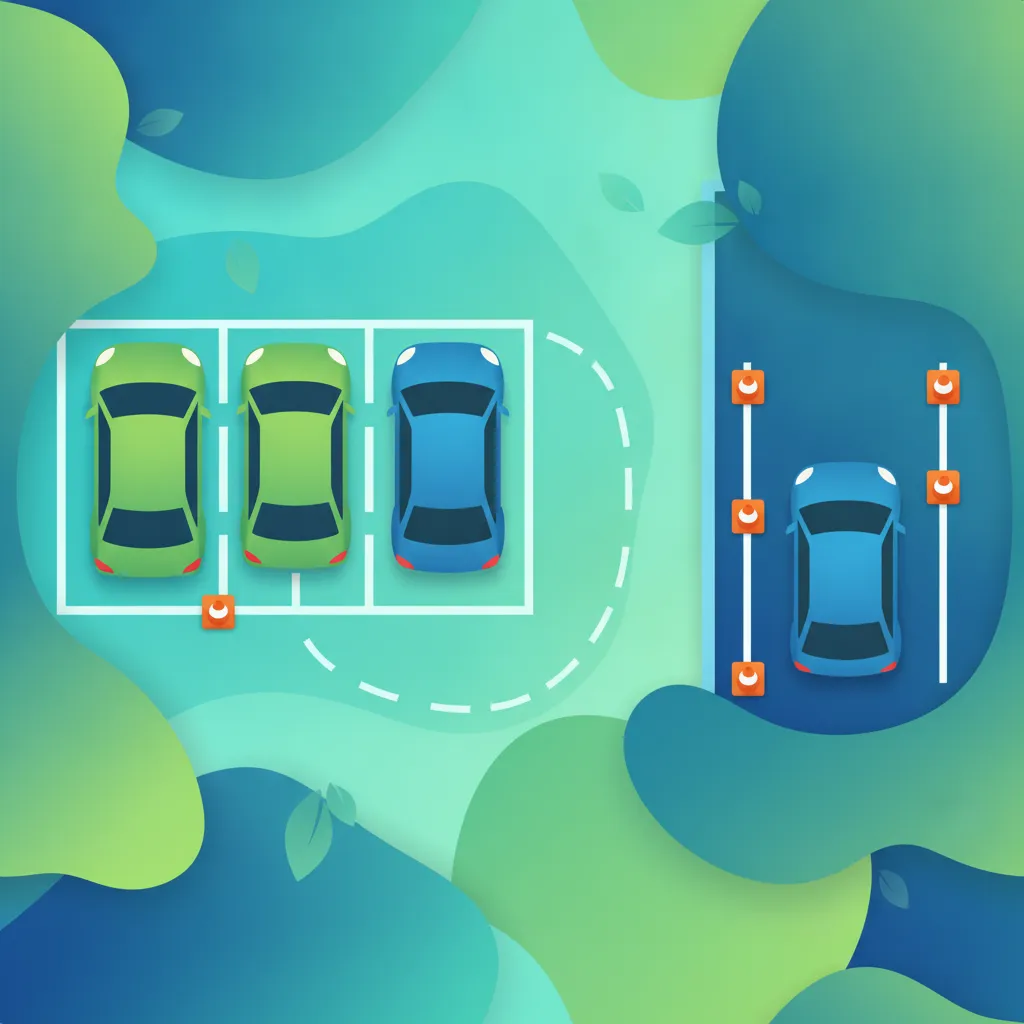
This lesson focuses on the techniques and procedures for parallel and perpendicular parking. Topics include approaching the parking space, positioning the vehicle, and executing the manoeuvre safely. Learners will explore the differences between parallel and perpendicular parking, as well as the importance of proper vehicle alignment and distance management.
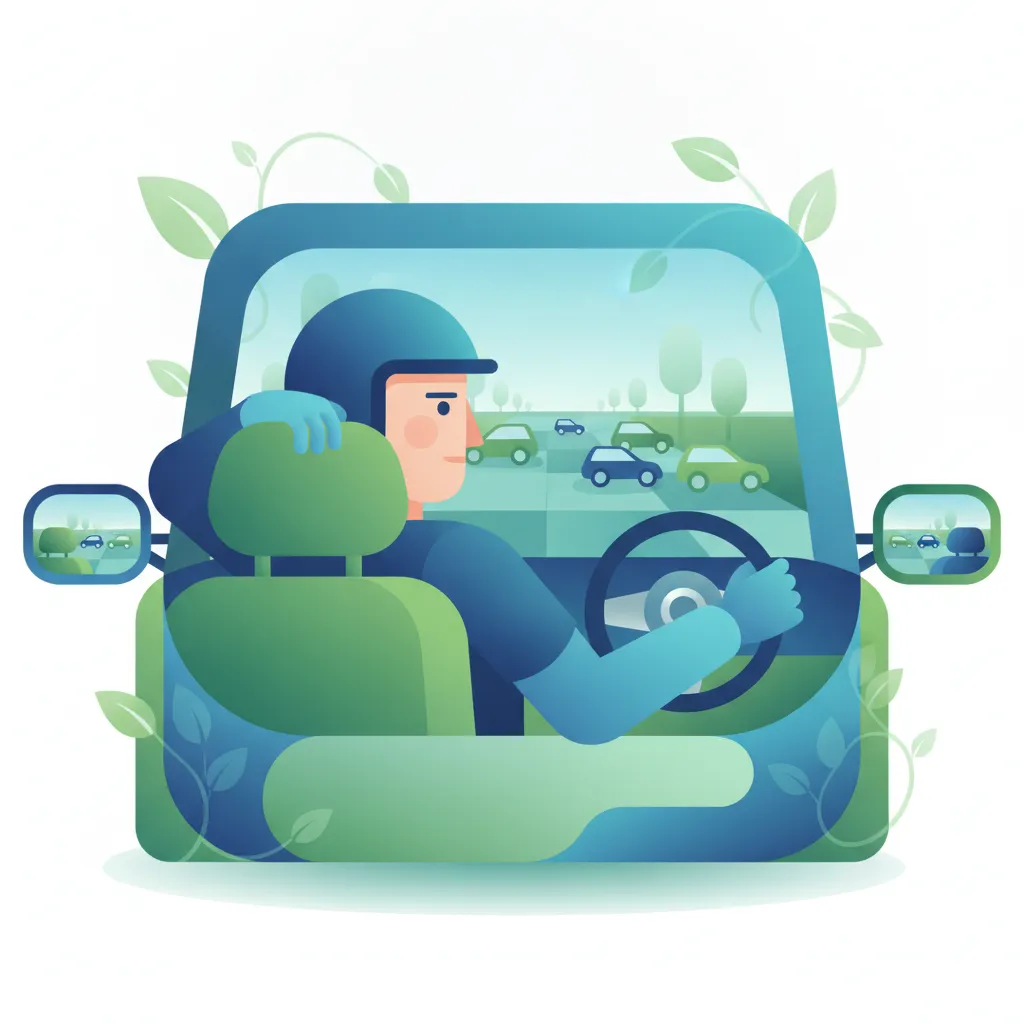
In this lesson, learners explore the essential techniques for safe reversing. Topics include using mirrors, rearview cameras, and checking blind spots. The lesson emphasizes the importance of maintaining low speeds, checking the rear area, and being aware of obstacles. Real-world examples illustrate common reversing mistakes and how to avoid them.
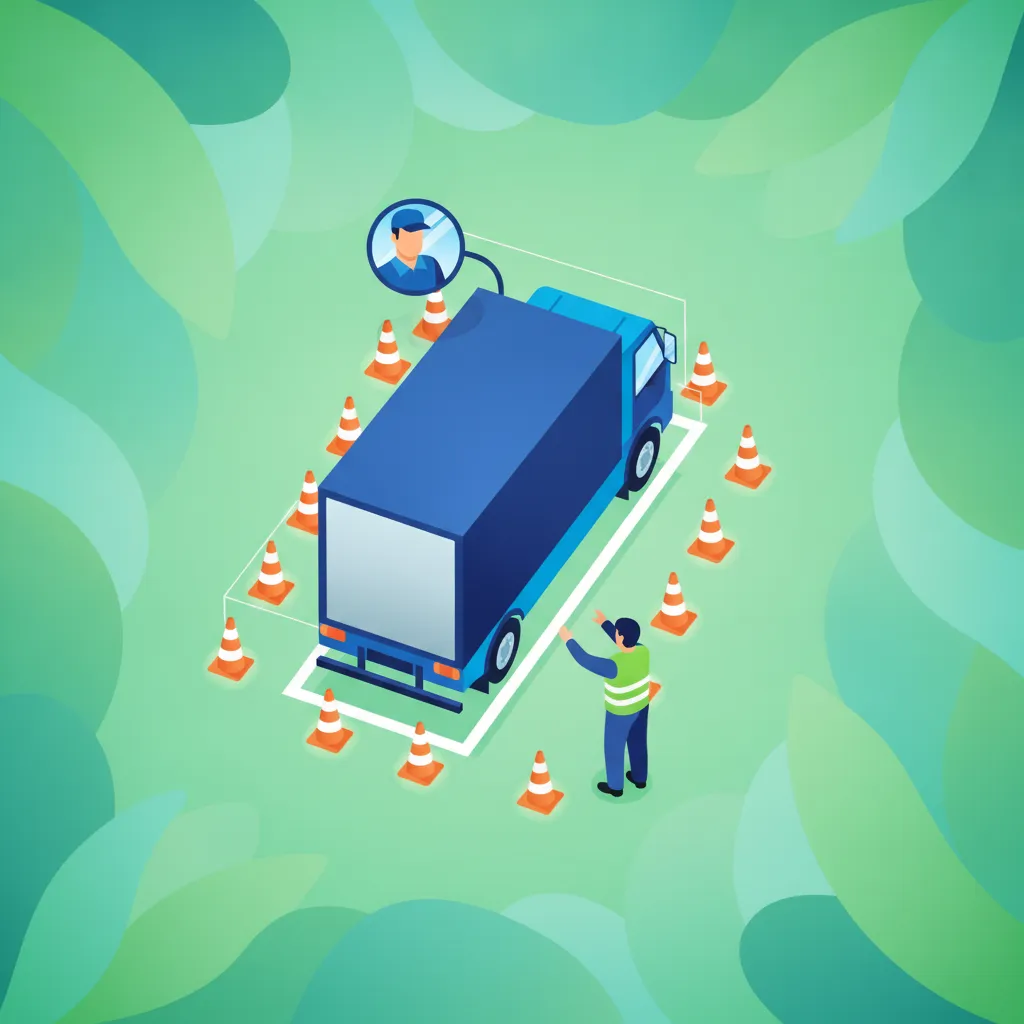
Learners will acquire skills for safely reversing large passenger vehicles in limited spaces, such as bus bays and loading docks. The lesson covers the effective use of mirrors, rear-view cameras, and precise steering inputs to navigate obstacles. Emphasis is placed on slow, controlled movements and constant observation to avoid collisions.

This lesson addresses the challenges of safely reversing a goods vehicle, including the identification of blind spots and rear visibility limitations. It covers proper mirror and rearview camera usage, as well as strategies for maintaining awareness of obstacles and the trailer's path. The lesson also emphasizes the importance of reversing alarms and slow, controlled vehicle movements.

This lesson covers the techniques and safety considerations for docking a goods vehicle in loading areas and performing precision parking maneuvers. Learners will learn how to align the vehicle correctly, use reverse gears effectively, and communicate with spotters when necessary. Emphasis is placed on maintaining situational awareness, checking for obstacles, and ensuring secure dock operations.
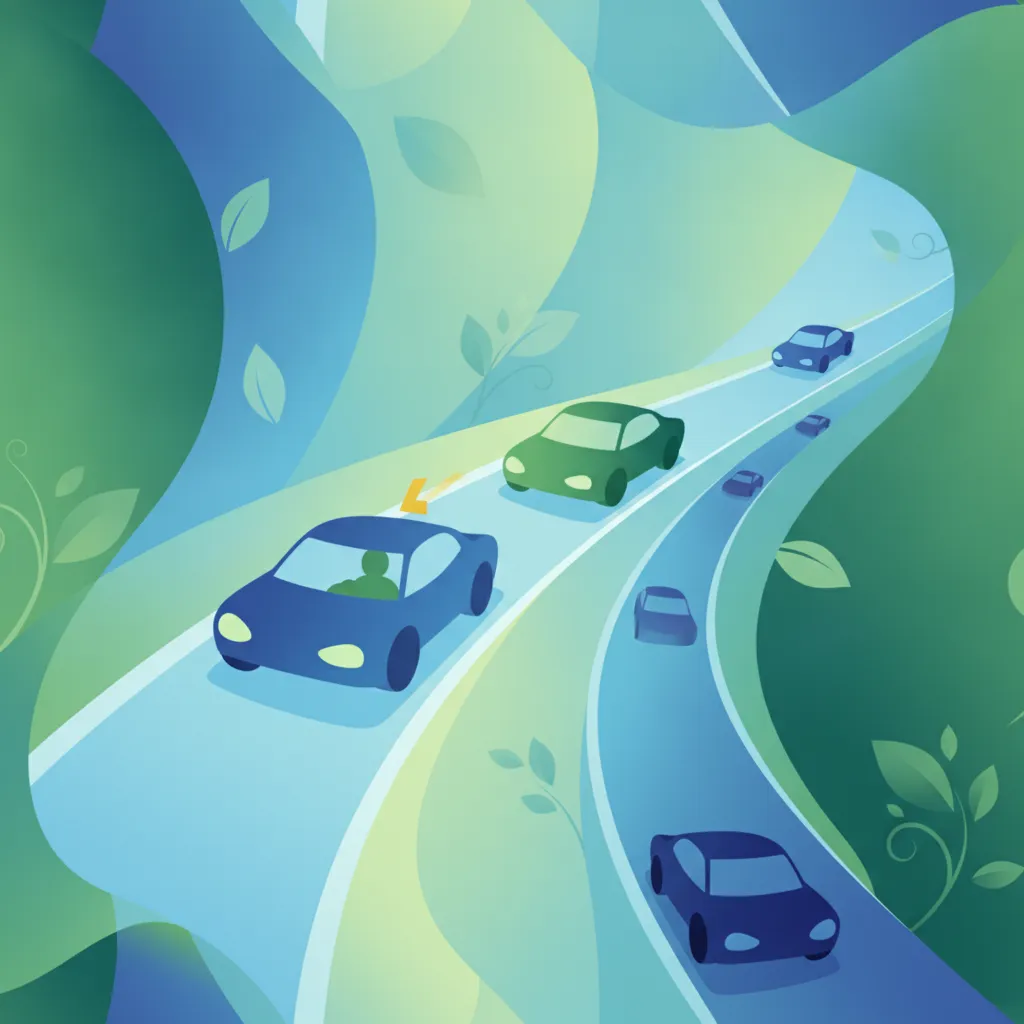
This lesson outlines the precise legal and safety procedures for overtaking slower vehicles on two-lane and multi-lane roads. It details when overtaking is strictly prohibited by signs or solid road lines, and how to calculate passing distances. Drivers will learn how to communicate their intentions using indicators and pass other vehicles safely.

This lesson focuses on the specific manoeuvring techniques required when operating articulated vehicles or those towing trailers. Learners will understand the dynamics of pivot points, the causes and mitigation of trailer sway, and how to execute turns safely with a trailer attached. Proper coupling checks and trailer length considerations are emphasized for safe operations on public roads.

This lesson delves into specific manoeuvring strategies required when navigating both tight urban environments and open rural roads with large passenger vehicles. Learners will explore techniques for handling narrow streets, tight turns, and intersections, while maintaining safety and efficiency. The content emphasizes planning and execution of manoeuvres based on road conditions and vehicle dimensions.
This lesson focuses on the challenges and techniques required when maneuvering goods vehicles in confined spaces such as loading docks, narrow streets, and urban environments. It addresses the importance of spatial awareness, precision driving, and understanding vehicle dimensions to avoid collisions. Learners will explore strategies for effective parking, reversing, and handling blind spots safely.

This lesson focuses on the unique requirements and best practices for operating passenger vehicles on highways and expressways. Topics include maintaining appropriate speed, adhering to lane discipline, executing safe overtaking maneuvers, and managing merges and exits. Emphasis is placed on ensuring a smooth ride for passengers while integrating safely with faster-moving traffic.
Explore the physical principles of traction, weight transfer, and inertia that affect vehicle stability during driving. Understand how to identify potential hazards and adjust your control inputs for different road surfaces and environmental conditions in accordance with Turkish traffic rules.
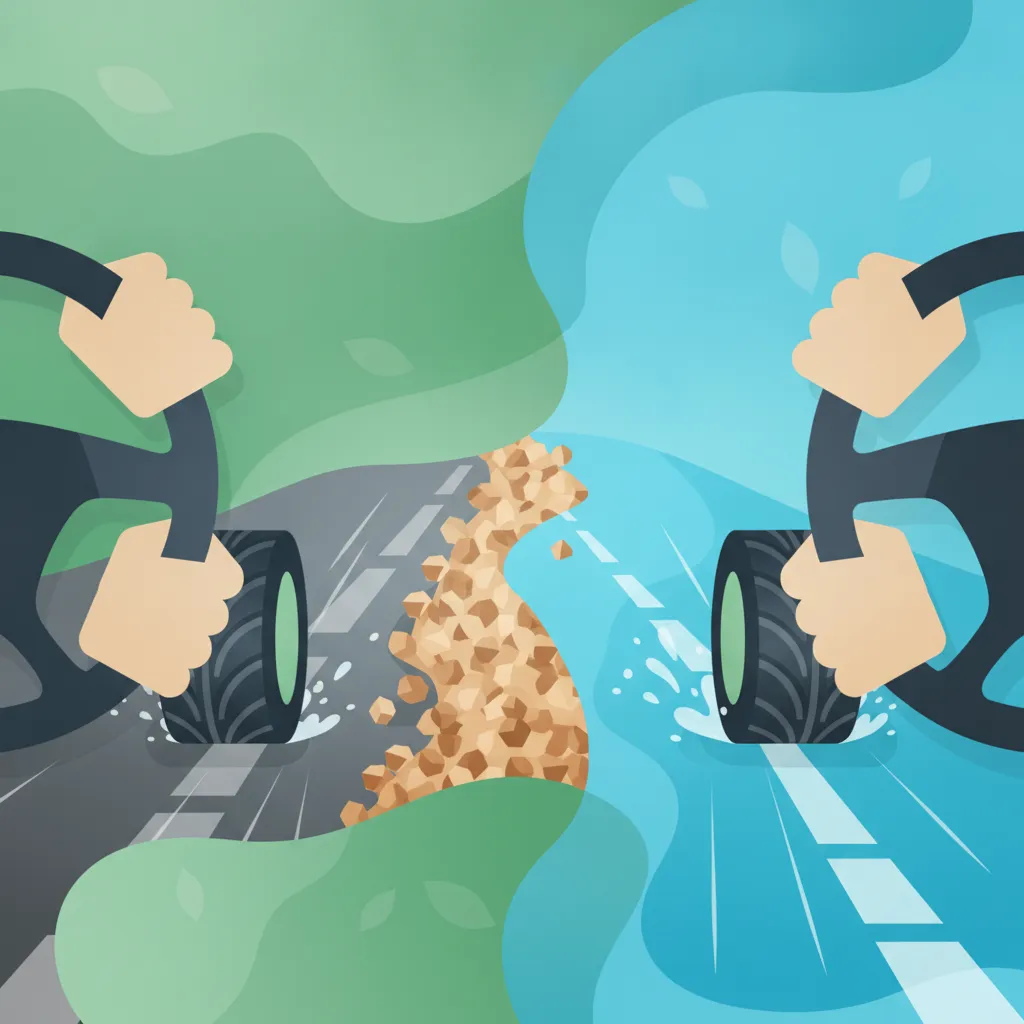
A moped's connection to the road is limited to two small tire contact patches, making tyre traction highly sensitive to surface changes. This lesson prepares you to recognize and negotiate hazardous road surfaces such as loose gravel, wet leaves, metal expansion joints, and painted lines. You will learn how to adjust your speed, maintain a vertical riding posture, and avoid sudden steering or braking inputs to prevent low-side falls when traction is severely reduced.
Find clear answers to common questions learners have about Basic Manoeuvres and Vehicle Control. Learn how the lesson is structured, which driving theory objectives it supports, and how it fits into the overall learning path of units and curriculum progression in Turkey. These explanations help you understand key concepts, lesson flow, and exam focused study goals.
Clutch control is vital for preventing the engine from stalling or causing the vehicle to jerk. In the theory exam, you may encounter questions about the correct sequence of gear shifting and how improper clutch use affects vehicle stability.
Drivers should maintain a consistent grip on the steering wheel, typically at the 9 and 3 o'clock positions. This allows for maximum control and quick reaction times during emergencies on the road.
Using the appropriate gear for your speed keeps the engine within its optimal power range. Driving in a gear that is too low for your speed increases fuel consumption and mechanical wear, a common concept in Turkish theory test questions.
Yes, most training and testing for Category B licences in Turkey use manual transmission vehicles, so understanding clutch and gear dynamics is essential for your theoretical and practical success.
Use our comprehensive practice search to find exactly the Turkish driving theory questions you need to master. Whether reviewing specific road signs, traffic rules, or first aid scenarios, select your perfect practice set and boost your confidence for the official ehliyet sınavı.