
This lesson details the critical safety requirements for transporting cargo and passengers in your vehicle. You will learn about weight distribution, securing techniques, and the legal payload limits mandated for Category B drivers in Turkey.

Lesson content overview
Safely operating a vehicle requires more than just understanding steering, acceleration, and braking. A driver must also manage the physical forces acting on the vehicle, which are directly influenced by the weight carried and how that weight is distributed. Under Turkish traffic regulations and safety physics, carrying passengers or cargo comes with strict legal and physical boundaries.
For candidates preparing for the Turkish Category B (B Sınıfı) driving license, mastering weight limits and cargo securing is crucial. Not only is this knowledge essential for passing the Ministry of National Education (Milli Eğitim Bakanlığı - MEB) MTSK e-sınav, but it also forms the foundation of defensive driving, vehicle longevity, and public road safety.
Every vehicle manufactured has strict weight limits designed to protect its structural integrity, suspension, braking systems, and tires. Exceeding these limits is not only illegal under the Turkish Highway Traffic Law (Karayolları Trafik Kanunu) but also highly dangerous. To understand how weight limits work, you must first master the key technical terms used in vehicle registration documents (araç ruhsatı).
Curb weight refers to the total weight of the vehicle with all standard equipment, essential operating fluids (such as coolant, oils, and a full tank of fuel), and a nominal driver weight (usually standardized at 75 kg), but without any passengers or additional cargo.
The Gross Vehicle Weight (GVW) is the absolute maximum weight a vehicle is legally allowed to carry when fully loaded. It is determined by the vehicle manufacturer and certified by transport authorities. For a standard Category B license in Turkey, you are permitted to drive vehicles with an Azami Yüklü Ağırlık of up to 3,500 kilograms (3.5 tonnes). This category includes passenger cars (otomobil) and light trucks or vans (kamyonet).
The payload, often referred to as İstiap Haddi in Turkish traffic terminology, is the maximum weight of passengers and cargo that the vehicle can safely carry. You can calculate the payload using a simple formula:
Never Exceed the İstiap Haddi: Overloading a vehicle beyond its registered carrying capacity is a major traffic violation in Turkey. Traffic police and highway inspection stations (Yol Kenarı Denetim İstasyonları) frequently monitor light commercial vehicles to ensure compliance.
Overloading a vehicle fundamentally alters its handling, predictability, and safety margins. To drive defensively, you must understand the direct correlation between excess mass and physical driving forces.
According to the laws of classical physics, momentum is the product of mass and velocity (). When you increase the weight of your vehicle, you increase its momentum. Under braking, the vehicle's kinetic energy must be converted into heat energy by the brakes.
An overloaded vehicle will require significantly more distance to come to a complete stop. This is particularly dangerous during emergency braking situations or when driving down steep mountain passes, where overloaded brakes can quickly overheat and fail completely—a phenomenon known as brake fade.
Excessive weight changes how a vehicle responds to steering inputs. When a vehicle is loaded beyond its limits:
Tires are the only contact points between your vehicle and the road. Overloading puts extreme pressure on the tire sidewalls, causing excessive heat buildup. This heat can lead to sudden tire blowouts at high speeds. Additionally, driving an overloaded vehicle accelerates wear on shock absorbers, springs, and wheel bearings.
It is not enough to simply stay under the total payload limit; you must also distribute the weight correctly inside or on top of the vehicle.
Axle load is the fraction of the total vehicle weight that rests on a given axle (front or rear). Turkish road infrastructure is designed to handle specific axle weight limits to prevent premature road damage.
For Category B drivers operating light commercial vans, incorrect distribution can easily overload the rear axle, even if the overall Gross Vehicle Weight is under 3,500 kg.
The Center of Gravity (CG) is the theoretical point where the entire weight of the vehicle is concentrated. For optimal stability, the CG should be kept as low and as central as possible.
Under Article 65 of the Turkish Highway Traffic Law, drivers are legally responsible for ensuring that any cargo carried inside, on, or behind the vehicle is properly secured. Unsecured cargo is a silent hazard that can transform into deadly projectiles in a collision or cause a rollover during a sudden turn.
When you brake or turn, unsecured items inside the cabin or cargo hold continue moving at the vehicle's original speed due to inertia. A small, unsecured suitcase weighing 15 kg can exert hundreds of kilograms of force during a head-on collision at 50 km/h, easily causing fatal injuries to passengers.
Place Heavier Items Low and Forward: Always place the heaviest objects on the floor of the trunk or cargo area, pushed directly against the rear seatbacks. This prevents them from gaining momentum during sudden stops.
Use Tie-Down Straps (Germe Kayışları): Secure heavy or bulky cargo to the vehicle's integrated anchor points using rated tie-down straps or ratchet straps. Never rely on elastic bungee cords for heavy items.
Utilize Cargo Nets and Barriers: Install cargo nets (yük ağları) or solid safety partitions between the cargo area and the passenger cabin to prevent loose items from flying forward.
Fill Empty Spaces: Block and brace items to prevent them from sliding side-to-side or front-to-back. You can use foam blocks, wooden crates, or other cargo to fill gaps.
When using roof racks or roof boxes:
In Turkey, the General Directorate of Highways (Karayolları Genel Müdürlüğü - KGM) uses specific regulatory signs to restrict overloaded or oversized vehicles from entering certain roads, bridges, or tunnels. As a Category B driver, you must recognize these signs instantly.
While standard passenger cars rarely exceed these limits, Category B drivers operating loaded light commercial vans (such as a Ford Transit or Fiat Ducato) must pay close attention when navigating older urban areas, residential streets, or rural bridges.
To solidify your understanding of weight limits and cargo securing, let us look at real-world scenarios that Category B drivers encounter.
A driver plans a long summer trip with five adults in a mid-sized hatchback. The trunk is packed to the brim, and extra heavy luggage is mounted on an open roof rack.
A driver loads several loose bags of cement and loose wooden planks into the back of a light commercial van without securing them.
Overloading or poorly managing cargo does not just compromise safety—it also has a direct financial and environmental cost.
To ensure success in your Turkish Category B license exam and maintain perfect safety on the road, memorize these fundamental principles:
Explore all units and lessons included in this driving theory course.
Lesson content overview
Explore all units and lessons included in this driving theory course.
Explore search topics learners often look for when studying Load Securing and Weight Limits. These topics reflect common questions about road rules, driving situations, safety guidance, and lesson level theory preparation for learners in Turkey.
Browse additional driving theory lessons that cover connected traffic rules, road signs, and common driving situations related to this topic. Improve your understanding of how different rules interact across everyday traffic scenarios.
Learn the essential legal requirements for maintaining vehicle safety systems in Turkey. This lesson covers tire health, lighting systems, and mechanical checks required for safe driving as outlined in the Turkish Category B theory curriculum for all new drivers.

This lesson focuses on routine vehicle inspections, fluid level checks, and basic preventive maintenance tasks every driver should perform. It details the indicators on the dashboard instrument panel and how to react to critical engine warning lights. Motorists will learn to recognize mechanical faults before they lead to dangerous road breakdowns.
This lesson focuses on the critical safety checks for tyres, brakes, lights, and mirrors on goods vehicles. Learners will learn how to assess tyre pressure, tread depth, and overall condition, ensuring optimal road grip and handling. The lesson also covers brake inspection techniques to identify wear or malfunction, ensuring effective stopping power and proper functionality of signalling systems.
This lesson outlines the essential components of a comprehensive pre-trip vehicle inspection for goods vehicles. It covers the visual and functional checks required for tyres, brakes, lights, mirrors, coupling mechanisms, fluid levels, and vital documentation. The lesson emphasizes the importance of conducting thorough inspections before each trip to identify safety hazards and prevent accidents.

This lesson details tire safety, covering tread depth limits, correct air pressure, and the critical importance of seasonal tire swaps. It explains how improper inflation causes tire blowouts, increased fuel consumption, and severe aquaplaning risks on wet roads. Drivers will learn how to inspect tires and change a flat tire safely in an emergency.
Learners will gain insight into the essential documentation and registration processes for passenger vehicles, covering the requirements for legal operation and fleet management. The lesson details the necessary paperwork, periodic inspections, and permits required to maintain compliance with Turkish transport regulations. Mastery of these administrative aspects ensures that drivers are prepared to meet all legal obligations for vehicle operation.

Learners will explore the proper adjustment and utilization of mirrors, rear-view cameras, and blind spot sensors to maximize visibility while operating a passenger vehicle. The lesson covers the optimal positioning of mirrors for comprehensive coverage, interpreting camera and sensor alerts, and integrating these tools into safe driving practices. Proper use of these technologies reduces blind spots and enhances overall situational awareness.
This lesson explains the specific rules, driving etiquette, and safety protocols for operating a vehicle on high-speed Turkish motorways. It covers correct lane usage, overtaking procedures, emergency lane restrictions, and how to maintain consistent high speeds safely. Drivers will learn to avoid dangerous tailgating and sudden lane changes.

Learners will identify the different categories of vulnerable road users and understand the heightened risks they face. The lesson emphasizes the importance of recognizing these users, anticipating their actions, and taking proactive measures to ensure their safety while operating passenger vehicles. Strategies for mitigating danger and fostering a protective driving environment are explored.

This lesson covers the proper usage, maintenance, and alignment of the vehicle's lighting systems, including high beams, low beams, and fog lights. It explains the legal requirements for activating lights during daytime, twilight, tunnel crossings, and heavy rain. Drivers will learn how to avoid blinding oncoming motorists while maintaining visibility.

This lesson provides an exhaustive breakdown of the mandatory vehicle and driver documents that must be carried inside the vehicle at all times. It explains the exact validity terms of a Turkish driving licence, standard renewal steps, and compulsory insurance procedures. Drivers will understand how to verify document accuracy to pass police roadside checks.
Explore the physical demands of high-speed travel and proper highway etiquette for Category B drivers. Understand how speed limits, following distances, and lane discipline interact with vehicle weight and aerodynamics to ensure safe transit on Turkish motorways.
This lesson explains the specific rules, driving etiquette, and safety protocols for operating a vehicle on high-speed Turkish motorways. It covers correct lane usage, overtaking procedures, emergency lane restrictions, and how to maintain consistent high speeds safely. Drivers will learn to avoid dangerous tailgating and sudden lane changes.

This lesson examines lane division and proper lane usage on multi-lane roads and highways. Learners will understand the purpose of lane markings in guiding drivers to maintain appropriate lane discipline. Topics include correct lane selection for different vehicle types, overtaking procedures, and lane-changing techniques. Real-world examples illustrate the importance of respecting lane usage rules.

This lesson focuses on the unique requirements and best practices for operating passenger vehicles on highways and expressways. Topics include maintaining appropriate speed, adhering to lane discipline, executing safe overtaking maneuvers, and managing merges and exits. Emphasis is placed on ensuring a smooth ride for passengers while integrating safely with faster-moving traffic.
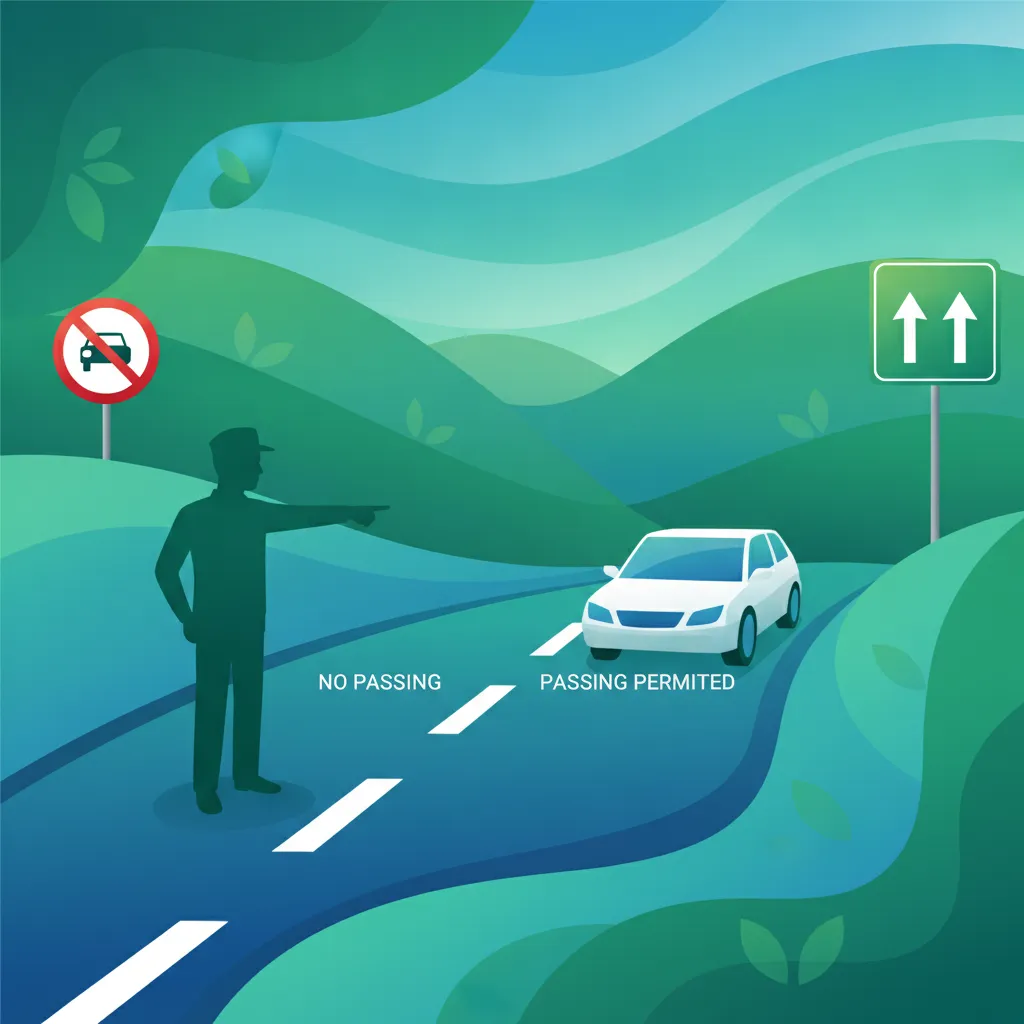
This lesson covers the various road surface markings that motorcyclists must be aware of, such as lane lines, turn arrows, and dedicated bike lanes. It explains how to interpret solid and broken lines, the meaning of specific arrows for turning or lane changes, and the significance of pedestrian crossing markings. Understanding these visual cues is essential for maintaining lane discipline and performing safe road maneuvers.

Road markings painted directly onto the asphalt provide continuous guidance and carry the same legal weight as vertical traffic signs. This lesson explains the differences between solid and broken longitudinal lines, channelizing arrows, and restricted zones like dedicated bus or bicycle paths. You will discover how to properly align your moped within your lane, execute lawful line changes, and respect painted buffer zones to prevent dangerous side-swipe accidents in dense traffic.

Learners will explore the fundamentals of maintaining correct lane discipline, focusing on appropriate lane positioning, understanding lane markings, and executing lane changes safely. Emphasis is placed on the unique considerations for large passenger vehicles within the lane, such as width and maneuverability. The lesson also addresses the impact of proper lane discipline on overall traffic flow and safety.
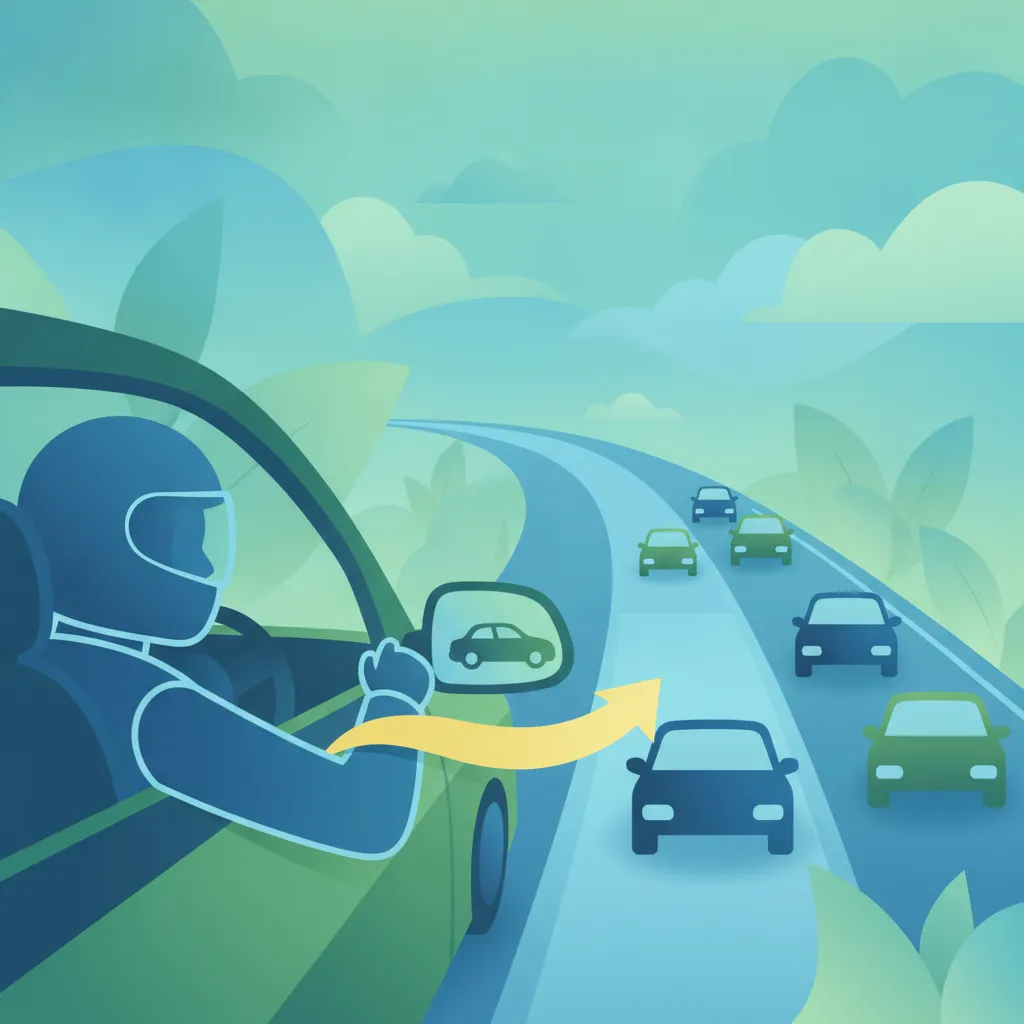
This lesson details the techniques for merging onto busy expressways and executing safe lane changes in urban traffic conditions. It explains how to match the speed of highway traffic in the acceleration lane and select safe gaps for merging. Drivers will learn how to eliminate blind spots and signal early to maintain smooth traffic flow.

This lesson focuses on the critical importance of lane discipline and proper lane usage for large goods vehicles. Learners will understand the challenges posed by wider vehicle dimensions, the necessity of maintaining adequate lane occupancy, and the need for precise lane keeping. Emphasis is placed on selecting appropriate lanes, adhering to traffic flow, and ensuring general highway safety.
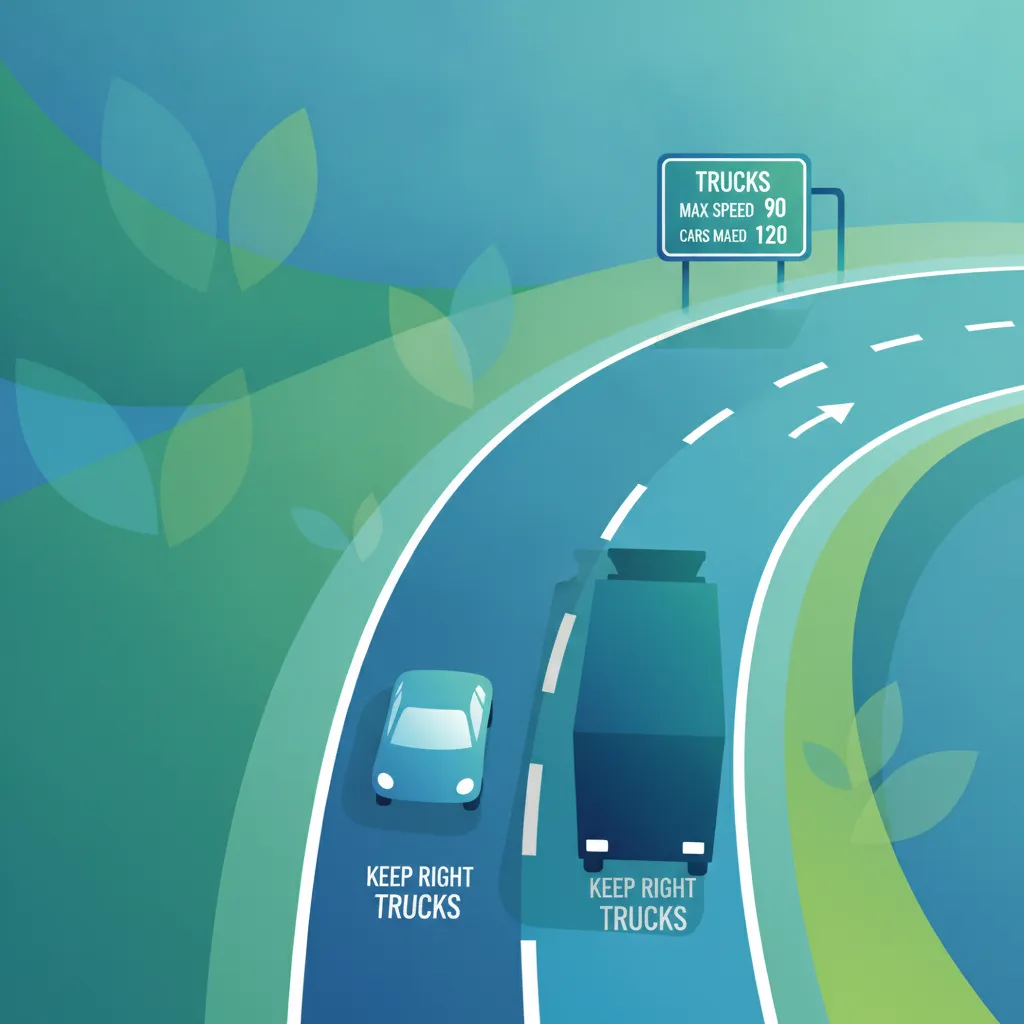
This lesson addresses the specific considerations for goods vehicle operation on highways and expressways, covering speed limits, lane discipline, safe merging, and overtaking. Learners will learn how to adapt to traffic flow, manage heavy vehicle dynamics at higher speeds, and ensure safe operation. The lesson emphasizes the importance of vigilance and proper lane usage to prevent accidents.

This lesson focuses on the role of directional arrows and guidance markings in indicating lane assignments and intended vehicle movements. Learners will learn to interpret turn arrows, lane-specific directions, and lane assignment at intersections and roadways. Real-world examples demonstrate how these markings aid drivers in navigating complex road networks, especially at junctions and roundabouts.
Find clear answers to common questions learners have about Load Securing and Weight Limits. Learn how the lesson is structured, which driving theory objectives it supports, and how it fits into the overall learning path of units and curriculum progression in Turkey. These explanations help you understand key concepts, lesson flow, and exam focused study goals.
Exceeding the registered weight limit is a violation of traffic law that results in fines and may lead to the vehicle being removed from the road until the load is corrected. It also significantly increases braking distance and tire wear, making it a frequent topic in safety-related theory questions.
Weight should be distributed as low as possible and centered within the vehicle to maintain balance. Heavy items should be placed toward the middle, not at the extreme rear or on the roof, to ensure the steering and suspension systems remain effective.
Yes, any load that extends beyond the dimensions of your vehicle must be clearly marked and comply with specific visibility requirements under Turkish traffic law. Failure to properly flag protruding cargo is a common cause for both accidents and exam penalties.
Yes, the theory test often asks how roof loads affect stability, particularly regarding crosswinds and cornering speed. Always remember that roof loads increase the center of gravity and require you to drive at lower speeds.
Use our comprehensive practice search to find exactly the Turkish driving theory questions you need to master. Whether reviewing specific road signs, traffic rules, or first aid scenarios, select your perfect practice set and boost your confidence for the official ehliyet sınavı.