
This lesson explores the essential classification system and dimensional limits for professional goods vehicles in Turkey. You will learn the maximum legal allowances for height, width, and length, ensuring you can operate your vehicle safely and in full compliance with traffic regulations. Mastering these parameters is a fundamental requirement for your professional C, C1, C1E, or CE license exam.

Lesson content overview
Operating a heavy goods vehicle (HGV) in Turkey requires more than just mastering physical driving maneuvers. It demands a precise, comprehensive understanding of the legal frameworks governing vehicle size, weight, and categorization. The fundamental regulations are set forth in the Turkish Highway Traffic Regulation (Karayolları Trafik Yönetmeliği), derived from the Highway Traffic Law No. 2918 (2918 Sayılı Karayolları Trafik Kanunu).
These regulations establish strict dimensional limits to ensure public safety, protect transport infrastructure (such as historic bridges, tunnels, and overpasses), and maintain steady traffic flow on the national road network. Failure to comply with these limits can result in severe legal penalties, cargo impoundment, damage to public property, and catastrophic accidents.
The Turkish licensing and regulatory system classifies goods vehicles primarily based on their Maximum Authorized Mass (MAM)—known locally as Azami Yüklü Ağırlık—and their configuration (whether they are solo rigid vehicles or vehicle-trailer combinations).
The C1 license category is designed for medium-duty goods vehicles.
The C license category covers heavy rigid vehicles.
The C1E category introduces light vehicle-trailer combinations.
The CE category is the highest tier of professional goods vehicle licensing.
A common misunderstanding is assuming that any trailer can be pulled with a standard C1 or C license. If the trailer's MAM exceeds 750 kg, you must upgrade your license to the respective "E" (combination) category (C1E or CE).
Overall length refers to the absolute measurement from the frontmost point of the vehicle (including any bumpers or bull-bars) to the rearmost point (including tail-lifts or coupling mechanisms).
+-----------------------------------------------------------+
|                      LENGTH LIMITS                        |
+-------------------+---------------------------------------+
| Category C1 Solo  |  7.50 Metres                          |
| Category C Solo   | 12.00 Metres                          |
| Category C1E      | 12.00 Metres                          |
| Category CE       | 18.75 Metres (Articulated/Drawbar)    |
+-------------------+---------------------------------------+
Longer vehicles have a much wider turning radius (dönüş yarıçapı) and exhibit off-tracking (where the trailer wheels cut the corner inward compared to the path of the tractor unit). When navigating tight roundabouts or urban junctions in ancient Turkish cities, drivers must utilize late-apex turning techniques, sweeping wide to prevent the trailer wheels from climbing curbs or striking pedestrians and street furniture.
Width restrictions ensure that heavy vehicles can remain completely within standard highway lanes and pass oncoming traffic safely on narrower national and municipal roads.
The maximum legal width for standard goods vehicles in Turkey is 2.55 meters. This limit applies to the bodywork, mudguards, and cargo of all standard rigid trucks and trailers.
For refrigerated goods vehicles (frigorifik taşıtlar), the legal maximum width is extended to 2.60 meters. This additional 5 centimeters is permitted exclusively to accommodate the thick, insulated side walls necessary for maintaining temperature-controlled supply chains.
The official width calculation does not include safety devices like side-view mirrors, provided they can fold when the vehicle is stationary. However, mirror brackets and glass must not extend excessively beyond the vehicle body. When passing through narrow toll booths, bridge portals, or construction zones, drivers must remain highly conscious of mirror overhang.
Any cargo that extends laterally beyond the physical sideboards of the vehicle, pushing the total width past 2.55 meters (or 2.60 meters for refrigerated cargo), is a critical violation of loading regulations. It requires specialized marking, escorting, and permits.
Height clearance is an absolute physical constraint. Unlike width or length, where minor miscalculations might only cause a vehicle to scrape a curb, height violations often result in high-impact collisions with solid concrete infrastructure.
Under the Karayolları Trafik Yönetmeliği, the maximum allowable height for all goods vehicles (including the tractor, trailer, and any cargo or mounted equipment) is 4.00 meters.
Drivers must never assume that all bridges and overpasses on their route accommodate 4.00-meter vehicles. While modern motorways (otoyol) are built to high clearance standards, local municipal roads, rural underpasses, and historic stone arches across Anatolia may have clearances significantly below 4.00 meters.
Measure Actual Loaded Height: Never rely solely on the theoretical height listed in the vehicle manual. Measure from the ground to the highest point of the load or the wind deflector.
Account for Add-Ons: Include air conditioning units, exhaust stacks, GPS antennas, or tarpaulin peaks in your final measurement.
Check Route Signs: Consult up-to-date route maps, GPS units designed for trucks, and physical road signs to identify low-clearance bridges.
Monitor Low-Clearance Indicators: Keep a sharp eye out for overhead warning signs, hanging chains, or electronic warning detectors.
A vehicle can be well within its legal length, width, and height limits, yet remain highly unsafe and illegal due to poor load distribution and exceeding maximum axle loads (dingil ağırlığı).
The stability of a commercial vehicle relies on keeping its center of gravity as low and central as possible.
The fraction of the total vehicle weight that is transmitted to the road surface by a single axle or group of axles. Under Turkish law, maximum limits are set (e.g., 10 tonnes for a single driving axle) to prevent pavement damage and road rutting.
When a cargo item is physically indivisible (such as large industrial boilers, construction machinery, wind turbine blades, or concrete beams) and cannot fit within standard dimensions, it must be transported under strict "out-of-gauge" protocols.
Any transport operation that exceeds standard length, width, or height limits requires an Oversized Load Permit (Özel İzin Belgesi) issued by the Turkish General Directorate of Highways (Karayolları Genel Müdürlüğü - KGM).
Ignoring dimensional limits leads to immediate and long-term consequences that affect a driver's career and the financial health of the transport operator.
| Nature of Violation | Direct Legal & Safety Consequence |
|---|---|
| Exceeding Standard Height Limit | Direct collision with bridges/tunnels, vehicle impoundment, liability for infrastructure damage, suspension of professional driving credentials (SRC Belgesi). |
| Exceeding Standard Width Limit | Striking oncoming vehicles in narrow lanes, side-swiping roadside barriers, immediate fines, and refusal to cross toll bridges. |
| Improper Load Distribution | Loss of steering control, increased braking distances, rollover accidents, and rapid tire blowouts. |
| Operating Out-of-Gauge without Permit | Severe administrative fines under Law 2918, immediate halting of transport, and vehicle impoundment until a permit is secured. |
Before advancing to more specialized modules, ensure you have fully mastered the core facts of this lesson.
                  +---------------------------------------+
                  |  UNDERSTAND LICENSE CATEGORY (MAM)    |
                  |          (C1, C, C1E, CE)             |
                  +-------------------+-------------------+
                                      |
                                      v
                  +---------------------------------------+
                  |  APPLY PHYSICAL DIMENSIONAL LIMITS    |
                  |  Length: Up to 18.75m | Width: 2.55m  |
                  |            Height: 4.00m              |
                  +-------------------+-------------------+
                                      |
                                      v
                  +---------------------------------------+
                  |    ENSURE LOAD DISTRIBUTION BALANCE   |
                  |     (Axle Weight & Low Center of      |
                  |               Gravity)                |
                  +---------------------------------------+
Explore all units and lessons included in this driving theory course.
Lesson content overview
Explore all units and lessons included in this driving theory course.
Explore search topics learners often look for when studying Vehicle Classification and Dimensional Limits. These topics reflect common questions about road rules, driving situations, safety guidance, and lesson level theory preparation for learners in Turkey.
Browse additional driving theory lessons that cover connected traffic rules, road signs, and common driving situations related to this topic. Improve your understanding of how different rules interact across everyday traffic scenarios.
Understand the core physics of heavy vehicle load management and its impact on steering and braking. Learn how correct axle load distribution ensures safe handling and compliance with Turkish highway regulations to prevent rollover risks and suspension damage when transporting cargo.

This lesson delves into the principles of weight distribution and load limits for goods vehicles, emphasizing the impact on vehicle stability and safety. It examines the concept of Gross Vehicle Weight (GVW) and the legal limits imposed on individual axles to prevent overloading. Learners will explore how improper weight distribution affects the centre of gravity, braking performance, and handling characteristics.

This lesson focuses on the essential principles of load planning and weight distribution for goods vehicles. Learners will understand how to assess cargo weight, determine optimal placement, and maintain a low centre of gravity to ensure vehicle stability. The lesson emphasizes legal load limits, the dangers of overloading, and the impact of uneven load distribution on handling and braking.

This lesson explains the legal guidelines and safety physics for carrying passengers and securing cargo inside or on top of a vehicle. It details how excess weight or poorly distributed cargo negatively affects vehicle handling, braking, and fuel efficiency. Drivers will learn the legal payload limits specified under Turkish Category B regulations.

This lesson focuses on speed regulation for goods vehicles, highlighting how vehicle weight, load, and road conditions influence safe operating speeds. Learners will understand legal speed limits for various road types and the necessity of adapting speed to traffic flow and environmental conditions. The lesson also emphasizes the importance of maintaining appropriate speed to ensure vehicle control.

This lesson focuses on the importance of maintaining safe following distances for goods vehicles, taking into account longer braking distances and increased load. Learners will learn how to calculate appropriate gaps based on speed, road conditions, and vehicle dynamics. The lesson emphasizes safe following practices to prevent rear-end collisions and improve overall traffic safety in Turkey.

This lesson focuses on protecting vulnerable road users, such as pedestrians, cyclists, and motorcyclists, in mixed traffic environments. Learners will examine specific strategies for increased vigilance, anticipatory driving, and properly yielding to these users. The lesson also covers high-risk zones, such as school areas and public transport stops, emphasizing the need for heightened safety.

This lesson focuses on the critical importance of lane discipline and proper lane usage for large goods vehicles. Learners will understand the challenges posed by wider vehicle dimensions, the necessity of maintaining adequate lane occupancy, and the need for precise lane keeping. Emphasis is placed on selecting appropriate lanes, adhering to traffic flow, and ensuring general highway safety.

This lesson explores the legal and practical aspects of route planning for goods vehicles, emphasizing the importance of selecting suitable routes that adhere to road restrictions. Learners will learn how to identify roads with weight limits, height clearance, and prohibited zones for heavy vehicles. They will also discover how to use navigation systems and truck-specific GPS effectively.
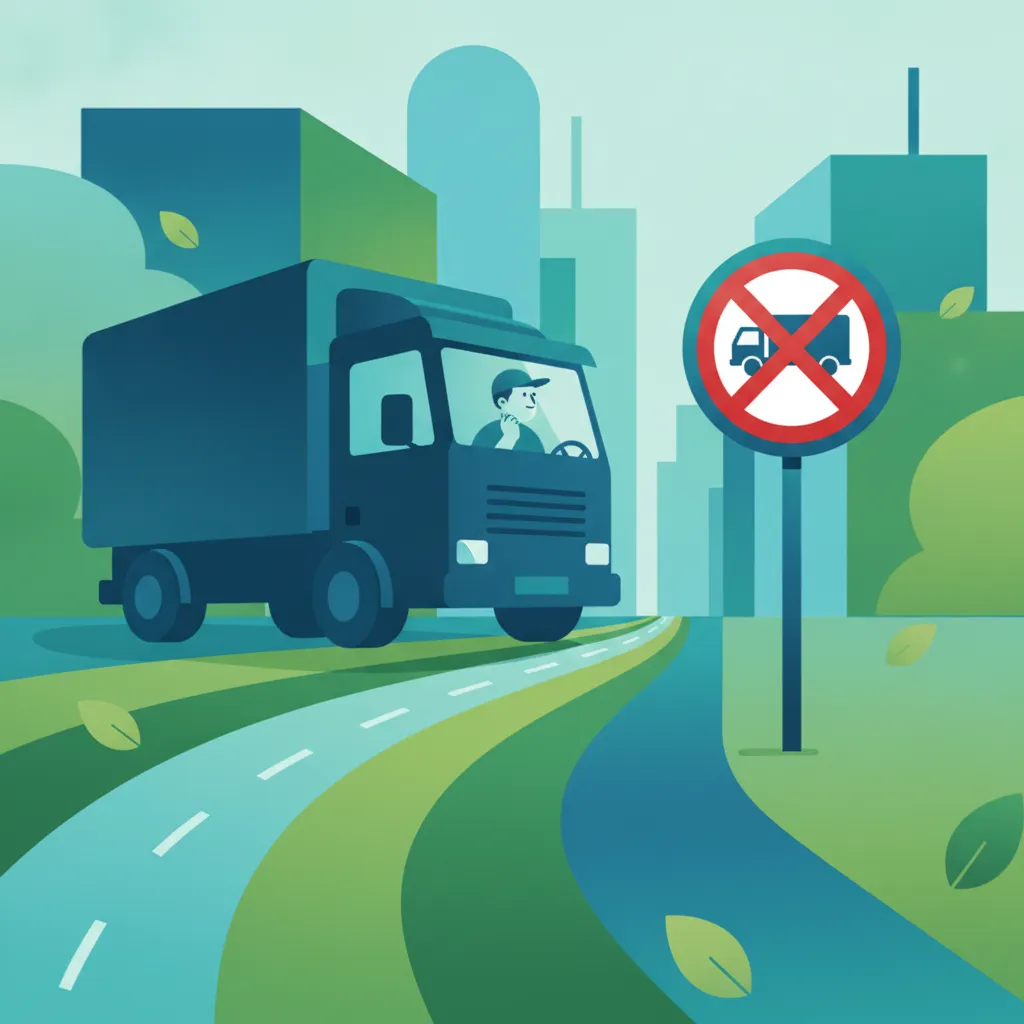
This lesson focuses on the various access restrictions imposed on heavy goods vehicles within Turkish road networks. Learners will understand the reasons for restrictions such as low bridge clearances, tunnel usage, construction zones, and urban delivery area limitations. The lesson also covers how to recognize and comply with legal notices and signage indicating restricted commercial zones.

This lesson examines the effects of load dynamics on vehicle stability during acceleration and deceleration. Learners will learn how cargo can shift and affect handling, particularly during sudden speed changes or emergency braking situations. The lesson emphasizes proper load securing, gradual acceleration, and controlled braking to maintain stability and prevent serious accidents.
Learn the legal requirements for transporting indivisible, oversized loads that exceed standard dimension limits. This guide covers the process for obtaining special permits, the necessity of escort vehicles, and the operational restrictions required to navigate Turkish roads safely while avoiding heavy traffic fines.

This lesson provides an overview of the regulations governing the transport of hazardous materials and dangerous goods in Turkey. Learners will become familiar with international (ADR) and national requirements for labeling, placarding, load securing, and documentation. The lesson also covers specific route restrictions and safety procedures that must be followed during transit.
This lesson focuses on speed regulation for goods vehicles, highlighting how vehicle weight, load, and road conditions influence safe operating speeds. Learners will understand legal speed limits for various road types and the necessity of adapting speed to traffic flow and environmental conditions. The lesson also emphasizes the importance of maintaining appropriate speed to ensure vehicle control.

This lesson provides a detailed overview of cargo securing techniques and the legal requirements for securing loads on goods vehicles. It covers the proper use of straps, chains, tarpaulins, and other securing methods to prevent cargo shift during transit. Learners will learn how to assess the need for additional restraints based on cargo type, weight, and dynamic transport conditions.
This lesson explains the legal guidelines and safety physics for carrying passengers and securing cargo inside or on top of a vehicle. It details how excess weight or poorly distributed cargo negatively affects vehicle handling, braking, and fuel efficiency. Drivers will learn the legal payload limits specified under Turkish Category B regulations.
This lesson focuses on the critical importance of lane discipline and proper lane usage for large goods vehicles. Learners will understand the challenges posed by wider vehicle dimensions, the necessity of maintaining adequate lane occupancy, and the need for precise lane keeping. Emphasis is placed on selecting appropriate lanes, adhering to traffic flow, and ensuring general highway safety.
This lesson focuses on the essential principles of load planning and weight distribution for goods vehicles. Learners will understand how to assess cargo weight, determine optimal placement, and maintain a low centre of gravity to ensure vehicle stability. The lesson emphasizes legal load limits, the dangers of overloading, and the impact of uneven load distribution on handling and braking.
This lesson focuses on the importance of maintaining safe following distances for goods vehicles, taking into account longer braking distances and increased load. Learners will learn how to calculate appropriate gaps based on speed, road conditions, and vehicle dynamics. The lesson emphasizes safe following practices to prevent rear-end collisions and improve overall traffic safety in Turkey.
This lesson delves into the principles of weight distribution and load limits for goods vehicles, emphasizing the impact on vehicle stability and safety. It examines the concept of Gross Vehicle Weight (GVW) and the legal limits imposed on individual axles to prevent overloading. Learners will explore how improper weight distribution affects the centre of gravity, braking performance, and handling characteristics.
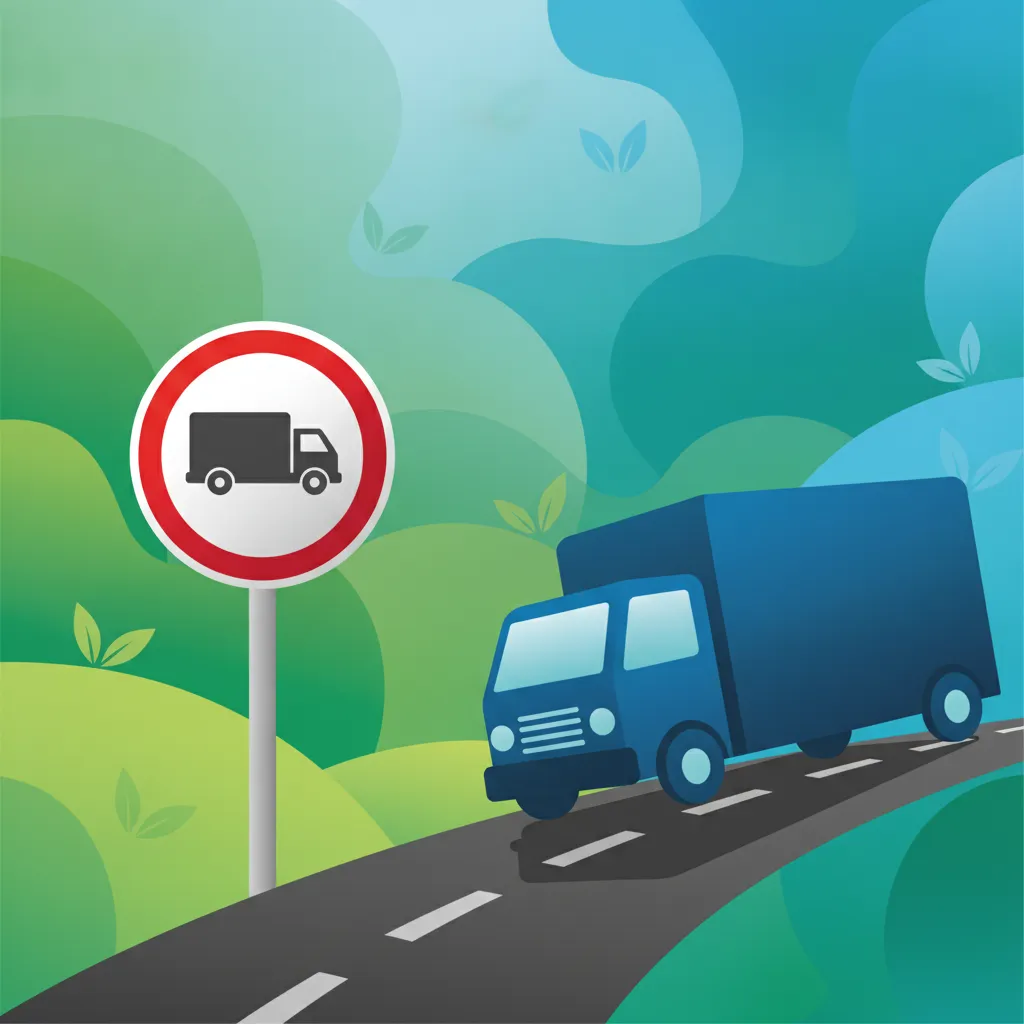
This lesson focuses on traffic signs and road markings that are specifically relevant to goods vehicles in Turkey. Learners will become familiar with signs indicating prohibited routes, weight limits, height restrictions, hazardous material transport, and lane usage regulations. The lesson emphasizes the importance of accurately interpreting these signs to ensure compliance with traffic laws.
This lesson explores the legal and practical aspects of route planning for goods vehicles, emphasizing the importance of selecting suitable routes that adhere to road restrictions. Learners will learn how to identify roads with weight limits, height clearance, and prohibited zones for heavy vehicles. They will also discover how to use navigation systems and truck-specific GPS effectively.
Find clear answers to common questions learners have about Vehicle Classification and Dimensional Limits. Learn how the lesson is structured, which driving theory objectives it supports, and how it fits into the overall learning path of units and curriculum progression in Turkey. These explanations help you understand key concepts, lesson flow, and exam focused study goals.
The theory exam often tests your ability to identify if your vehicle can pass through specific height-restricted bridges or narrow roads. Knowing your vehicle dimensions is a primary safety requirement to prevent collisions with infrastructure.
Yes, while some general road rules apply to all, articulated vehicles (CE) have different turning radii and length considerations compared to rigid goods vehicles (C). The exam will distinguish between these categories.
Turkish traffic laws enforce strict dimensional limits to protect bridge integrity, road surfaces, and urban street flow. As a professional driver, you are legally responsible for knowing if your vehicle exceeds these limits on any chosen route.
A common mistake is ignoring the additional height added by a loaded cargo or failing to account for the width of side mirrors. Always remember to consider the total envelope of the vehicle, including any mounted equipment.
Use our comprehensive practice search to find exactly the Turkish driving theory questions you need to master. Whether reviewing specific road signs, traffic rules, or first aid scenarios, select your perfect practice set and boost your confidence for the official ehliyet sınavı.