
This lesson details the critical record-keeping obligations for professional goods vehicle drivers in Turkey. You will learn the importance of maintaining accurate logbooks, permits, and administrative documents to ensure legal compliance and professional safety on the road.

Lesson content overview
Operating heavy goods vehicles (HGVs) under C1, C, C1E, or CE licenses involves far more than physical vehicle handling and spatial awareness. In Turkey, professional freight transport is a heavily regulated sector where administrative compliance is directly linked to road safety, corporate liability, and national security.
Every professional driver is considered an operator of a high-risk mobile asset. Under the Turkish Highway Traffic Law No. 2918 (Karayolları Trafik Kanunu) and the Turkish Highway Traffic Regulation (Karayolları Trafik Yönetmeliği), maintaining precise, up-to-date, and legally compliant documentation is a non-negotiable duty. This lesson details the exact documentation requirements, the legal framework governing records, and the practical implications of record keeping for goods vehicle operators in Turkey.
Documentation is the legal bridge between the driver, the vehicle, the operating company, and enforcement authorities such as the traffic police (Trafik Polisi), gendarmerie (Jandarma), and ministry inspectors. Accurate paperwork serves several core functions:
In Turkey, roadside document checks are frequent and thorough. Inspectors do not merely check if a document exists; they verify its expiration date, its authenticity through digital databases (such as e-Devlet integration), and its exact alignment with the physical vehicle and cargo.
A professional driver must carry a specific set of personal documents at all times. Operating an HGV without these active credentials is a severe violation that results in immediate vehicle immobilization and heavy financial penalties.
The driver must hold a valid license corresponding to the exact gross vehicle weight (GVW) and configuration of the vehicle:
Having an HGV license alone is insufficient for commercial operations in Turkey. Drivers must obtain and carry an SRC Certificate (Mesleki Yeterlilik Belgesi), issued by the Ministry of Transport and Infrastructure:
Under Article 79 of the Turkish Highway Traffic Regulation, commercial drivers must undergo a comprehensive psychotechnical evaluation every 5 years. This computerized and clinical assessment measures reflex times, spatial awareness, stress tolerance, and peripheral vision. The physical card or digital e-Devlet registration must be valid and verified.
Every commercial trailer and tractor unit must be legally registered and certified as fit for the road. The documentation inside the vehicle cab must include:
Commonly referred to as the Ruhsat, this official booklet contains critical technical information about the vehicle, including its empty weight, maximum permissible laden weight, axle limits, chassis number, and the registered owner's details.
While passenger cars in Turkey undergo technical safety inspections every two years, commercial goods vehicles must undergo inspections annually.
The inspection ensures steering, braking, suspension, emissions, and lighting systems meet strict safety standards. The driver must carry the physical inspection document or be ready to show the digital confirmation via the central database.
Operating a commercial vehicle with an expired TÜVTÜRK inspection is a serious offense. If detected during a roadside check, the vehicle may be towed immediately to an authorized compound, and the operator will receive a penalty fine.
Commercial transport presents high liability risks. A driver must never operate a vehicle without verifying that all insurance documents are active, correct, and stored safely in the cabin.
Commonly known as Trafik Sigortası, this mandatory policy covers physical and material damage caused to third parties in an accident.
While not always a traffic-police requirement, carrying proof of cargo insurance (such as CMR insurance for international transport or domestic carrier liability coverage) is vital for commercial logistics operations. It protects the driver and operator from cargo damage claims.
Managing driver fatigue is a fundamental safety pillar. The tachograph system (Takoğraf) is an electronic or digital device that automatically records vehicle speed, distance covered, and the driver's exact daily activity periods (driving, active work, standby, and rest).
Commercial freight vehicles with a maximum permissible weight exceeding 3,500 kg must be equipped with an approved tachograph device.
A personalized smart card issued to individual HGV drivers that records digital logs of driving activity, rest periods, and vehicle speeds. The card stores data for at least 28 days and must be kept clean, functional, and inserted into the vehicle unit whenever the HGV is in motion.
The tachograph acts as an unalterable digital logbook. Drivers must adhere strictly to these limits, which are monitored during inspections:
Card Insertion: Insert your personalized driver card into Slot 1 of the digital tachograph unit before starting any vehicle operations.
Manual Entries: Manually input your activities (e.g., rest or other work) performed since the card was last withdrawn.
Real-Time Monitoring: Keep an eye on the tachograph display to monitor your remaining driving time and upcoming mandatory rest periods.
Data Retrieval and Printouts: Ensure the transport company downloads data from the driver card at least once every 28 days, and from the vehicle unit at least once every 90 days. If the card is damaged, generate a manual printout at the end of the shift and sign it.
A professional driver does not simply transport an "empty" space; they transport valuable, heavy, or sometimes hazardous materials. The documentation for the cargo must match the load perfectly.
Under Turkish tax laws, any goods transported from one location to another must be accompanied by an official dispatch waybill (Sevk İrsaliyesi). This document tracks the sender, recipient, type of cargo, and quantity. It is used by both tax authorities and traffic police to verify that the cargo is legal and authorized.
For domestic or international transport operations, the bill of lading serves as the contract of carriage. It details the conditions of transport and must be signed by the driver upon loading, indicating receipt of the goods in apparent good order.
Some loads exceed legal weights and dimensions. In such cases, drivers must carry:
To understand the practical importance of documentation, let us examine how proper record keeping directly affects roadside scenarios.
A driver of an articulated vehicle (CE license) is pulled over at an official Roadside Inspection Station (Yol Kenarı Denetim İstasyonu) operated by the Ministry of Transport. The inspector requests the driver's license, SRC 4 card, Psychotechnical report, the vehicle's registration booklet, the annual TÜVTÜRK certificate, and the dispatch waybill.
During a highway collision involving a commercial truck, the public prosecutor and insurance investigators immediately secure the tachograph system and vehicle inspection files.
The following table summarizes common commercial documentation violations in Turkey and their immediate operational impacts:
| Documentation Issue | Immediate Operational Impact | Secondary Legal Consequence |
|---|---|---|
| Expired or Incorrect License Class | Immediate vehicle immobilization; towing to a secure lot. | Heavy administrative fines; driver and owner prosecuted. |
| Missing SRC or Psychotechnical Card | Driver prohibited from continuing the journey. | Owner company fined for employing unqualified personnel. |
| Expired TÜVTÜRK Technical Inspection | Vehicle banned from public roads until inspected. | Fines issued; mandatory referral to nearest TÜVTÜRK station. |
| Tachograph Tampering or Manipulation | Vehicle seizure for detailed forensic inspection. | Driver license suspension; criminal charges for fraud/forgery. |
| Missing Hazardous Materials Permit (ADR) | Emergency securement of the cargo; high-risk impoundment. | Severe environmental safety fines; business license suspension. |
Explore all units and lessons included in this driving theory course.
Lesson content overview
Explore all units and lessons included in this driving theory course.
Explore search topics learners often look for when studying Importance of Accurate Documentation and Record Keeping. These topics reflect common questions about road rules, driving situations, safety guidance, and lesson level theory preparation for learners in Turkey.
Browse additional driving theory lessons that cover connected traffic rules, road signs, and common driving situations related to this topic. Improve your understanding of how different rules interact across everyday traffic scenarios.
Learn the legal requirements for digital tachograph usage in Turkey, including mandatory break intervals and daily driving limits for C class license holders. Understand how these electronic logs ensure safety and regulatory compliance during commercial freight operations on Turkish roads.

This lesson emphasizes the critical importance of maintaining accurate and up-to-date documentation for professional goods vehicle operation. It covers essential documents such as driver's licences, vehicle registration, logbooks, cargo permits, and inspection certificates. Learners will understand the legal requirements for record keeping and the role of tachographs in monitoring driver activity.
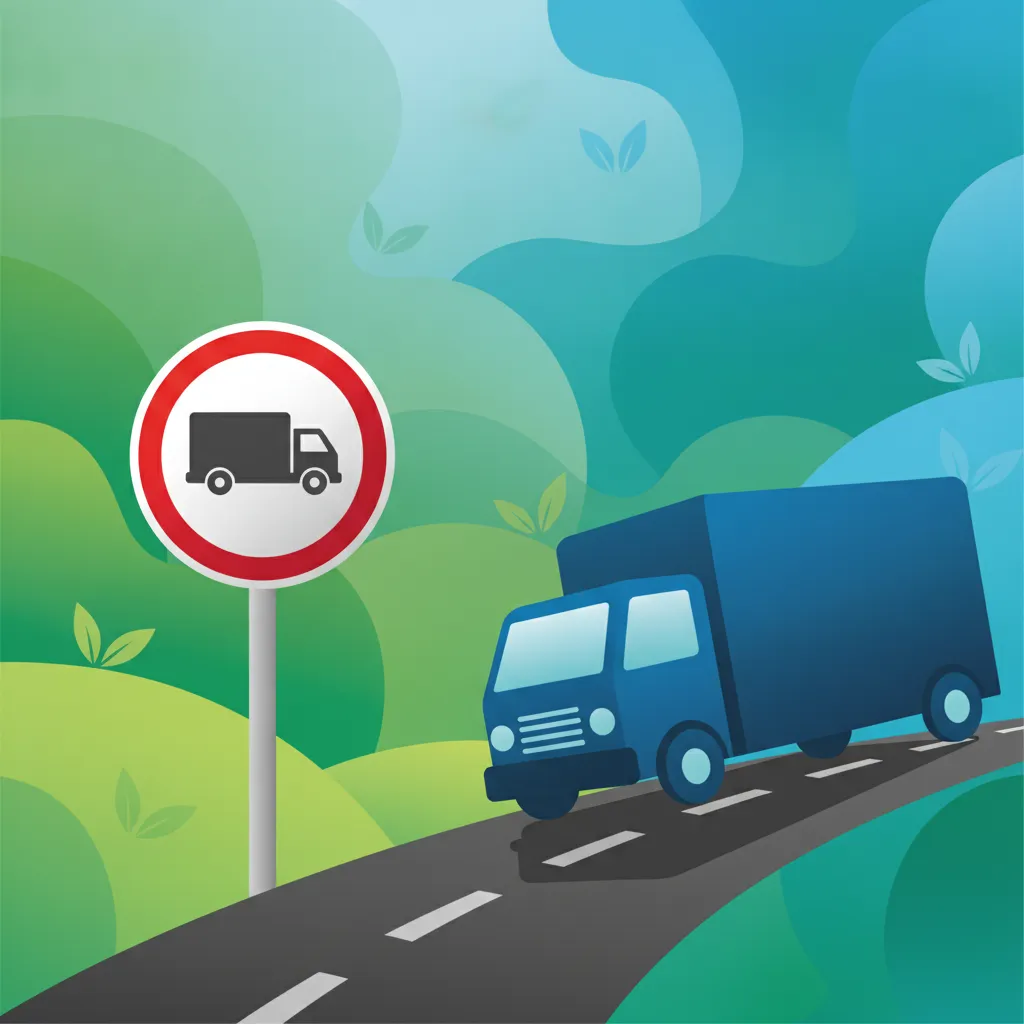
This lesson focuses on traffic signs and road markings that are specifically relevant to goods vehicles in Turkey. Learners will become familiar with signs indicating prohibited routes, weight limits, height restrictions, hazardous material transport, and lane usage regulations. The lesson emphasizes the importance of accurately interpreting these signs to ensure compliance with traffic laws.
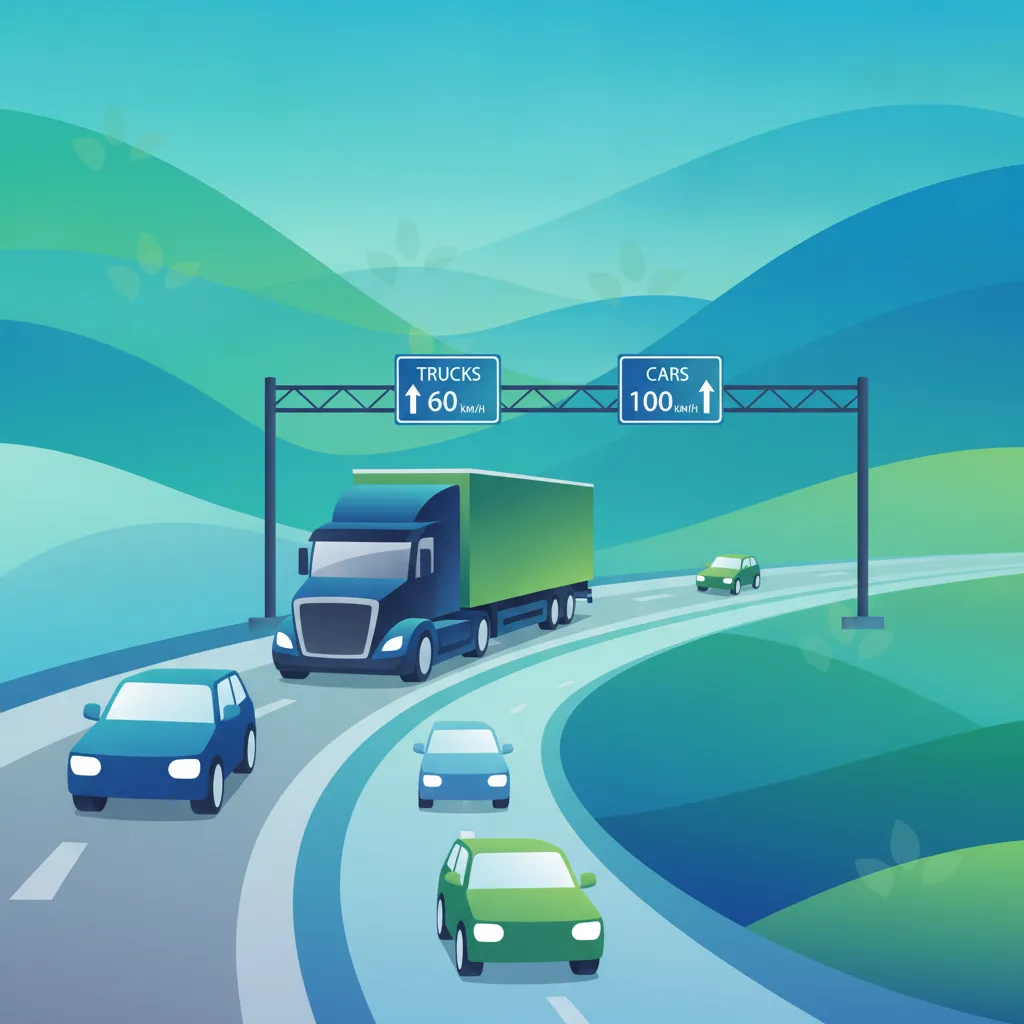
This lesson focuses on speed regulation for goods vehicles, highlighting how vehicle weight, load, and road conditions influence safe operating speeds. Learners will understand legal speed limits for various road types and the necessity of adapting speed to traffic flow and environmental conditions. The lesson also emphasizes the importance of maintaining appropriate speed to ensure vehicle control.

This lesson provides a detailed overview of the classification system for goods vehicles in Turkey, focusing on the specific dimensional limits for each category. Learners will become familiar with the maximum allowable length, width, and height for these vehicles, as defined by Turkish law. Understanding these limits is crucial for ensuring compliance with road regulations and avoiding serious violations.

This lesson focuses on the unique requirements and best practices for operating passenger vehicles on highways and expressways. Topics include maintaining appropriate speed, adhering to lane discipline, executing safe overtaking maneuvers, and managing merges and exits. Emphasis is placed on ensuring a smooth ride for passengers while integrating safely with faster-moving traffic.

This lesson focuses on managing vehicle speed according to different road environments—urban, rural, and highways—while complying with legal speed limits and traffic flow. Learners will understand how to adjust speed for varying road conditions, traffic density, and safety considerations, ensuring a balance between efficiency and risk mitigation.

This lesson focuses on the importance of maintaining safe following distances for goods vehicles, taking into account longer braking distances and increased load. Learners will learn how to calculate appropriate gaps based on speed, road conditions, and vehicle dynamics. The lesson emphasizes safe following practices to prevent rear-end collisions and improve overall traffic safety in Turkey.
This lesson delves into the ethical responsibilities and professional standards expected of goods vehicle drivers, emphasizing their pivotal role in ensuring traffic safety. It explores the duty of care owed to other road users and the broader societal expectations placed upon professional drivers. Learners will examine how their conduct directly influences public trust and overall traffic flow in urban environments.
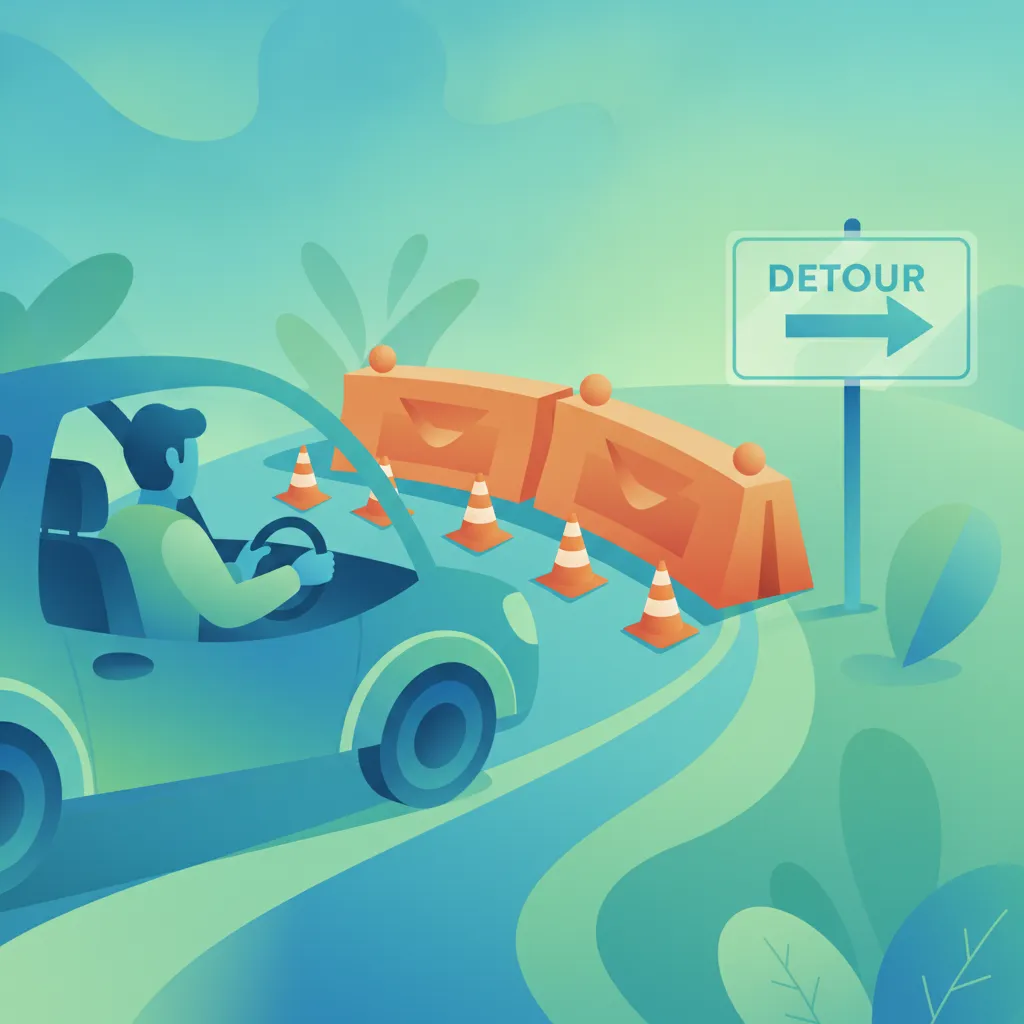
This lesson focuses on effectively managing road closures and detours that affect goods vehicle routes. Learners will explore strategies for obtaining real-time information, updating navigation systems, and planning alternate routes to maintain efficiency and compliance. Emphasis is placed on safety considerations, communication with dispatch centers, and adhering to traffic management.
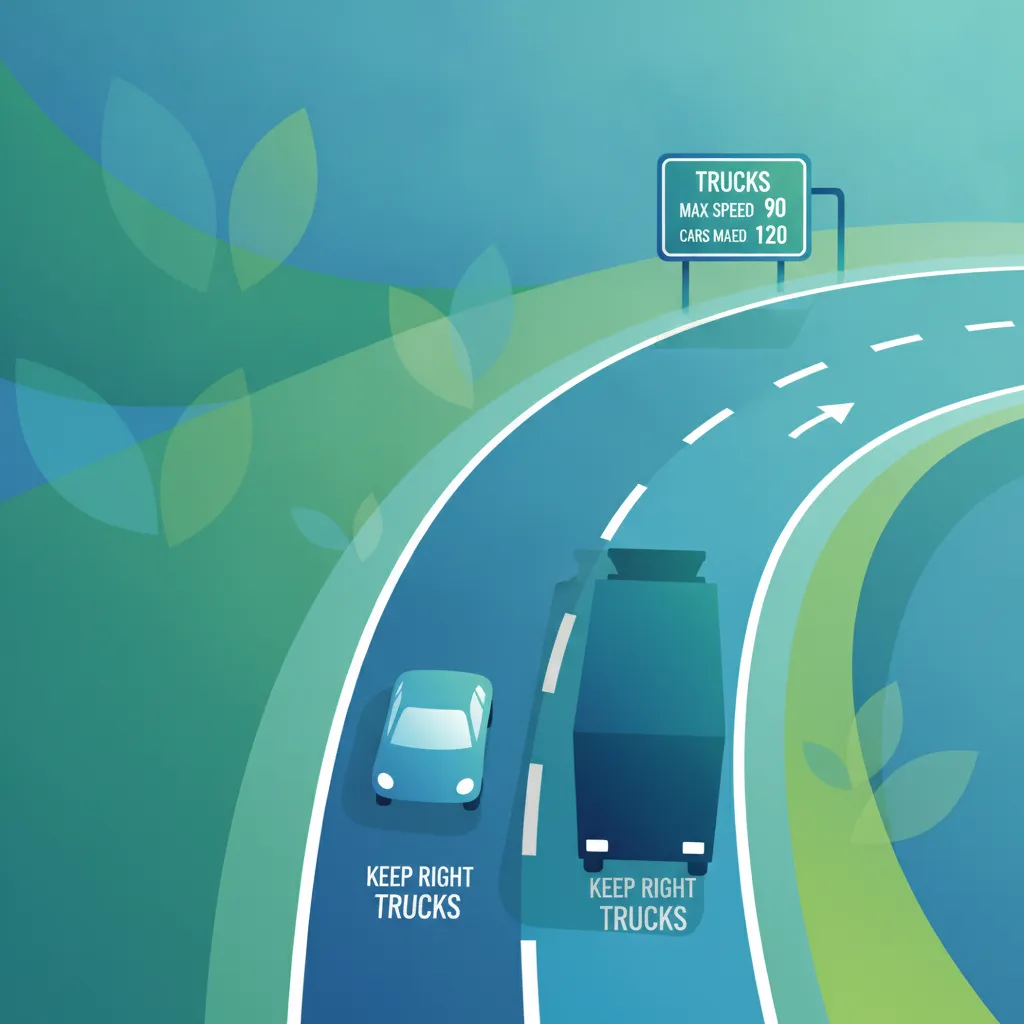
This lesson addresses the specific considerations for goods vehicle operation on highways and expressways, covering speed limits, lane discipline, safe merging, and overtaking. Learners will learn how to adapt to traffic flow, manage heavy vehicle dynamics at higher speeds, and ensure safe operation. The lesson emphasizes the importance of vigilance and proper lane usage to prevent accidents.
Examine the legal framework governing professional goods vehicle operators in Turkey, including the consequences of documentation failures and administrative penalties. This lesson provides an overview of the role of the driver in maintaining traffic safety and adhering to official transport regulations.
This lesson outlines the spectrum of penalties and legal consequences that goods vehicle drivers may face for violating traffic regulations. It details the types of infractions, ranging from minor violations to serious offenses, and explains the corresponding fines, points, and license suspensions. Learners will gain an understanding of the enforcement mechanisms and how repeat offenses can exacerbate penalties.
This lesson provides an overview of the penalties and legal consequences associated with traffic violations and non-compliance in goods vehicle operation. Learners will learn about the fines, demerit points, and potential license suspensions that can result from various infractions. The lesson emphasizes the importance of adhering to regulations and the impact of repeated offenses on drivers.
In this lesson, participants will learn about the specific offences and penalties that apply to passenger vehicle drivers, focusing on violations that directly jeopardize passenger safety and public security. The content outlines the legal repercussions of non-compliance, including fines, licence suspensions, and other enforcement actions. Understanding these penalties reinforces the critical nature of adhering to traffic laws and safety protocols in professional passenger transport.
This lesson details the statutory duties imposed on motor vehicle drivers by Turkish traffic legislation to maintain order on public roads. It emphasizes mandatory seat belt usage, mobile phone bans, vehicle inspection rules, and general compliance with police directions. Understanding these duties ensures drivers avoid heavy penalties and maintain road safety.
This lesson outlines the legal framework governing passenger vehicle operation, highlighting the penalties for various offences, such as speeding, failure to adhere to stop procedures, or neglecting passenger safety protocols. Learners will understand the importance of compliance to avoid fines, licence suspension, or other legal actions, and the role of regulatory bodies in enforcement.

This lesson covers the severe administrative, financial, and criminal penalties associated with serious traffic violations in Turkey. It outlines the legal processes for driving licence suspension, vehicle impoundment, and mandatory driver retraining programs. Motorists will understand the long-term impact of a criminal driving record.
This lesson examines the integral role of the goods vehicle driver in contributing to overall traffic safety and a positive safety culture. It focuses on proactive driving behaviors, hazard identification, and effective risk management strategies. Communication techniques with other road users, compliance with traffic flow regulations, and competent emergency responses are highlighted as essential skills.

This lesson focuses on the importance of maintaining professional conduct when interacting with traffic authorities, law enforcement, and the general public. Learners will explore communication techniques that convey respect and courtesy, even in stressful situations. Emphasis is placed on upholding a positive image of the transportation industry and resolving conflicts amicably on the road.
Violating Turkish traffic regulations results in serious legal and financial consequences designed to hold drivers accountable and ensure public safety. This lesson outlines the specific penalty points assigned to common infractions, the fine structure for speeding and illegal parking, and the conditions under which your moped or driving licence can be seized. Understanding these administrative penalties reinforces the importance of maintaining strict, daily compliance with national traffic laws.
In this lesson, learners will be introduced to the legal framework governing traffic penalties in Turkey, including the various fines, licence suspensions, and criminal charges that may result from traffic violations. It will cover the points system, the severity of penalties for specific offences such as speeding and reckless driving, and the legal processes involved in enforcement.
Find clear answers to common questions learners have about Importance of Accurate Documentation and Record Keeping. Learn how the lesson is structured, which driving theory objectives it supports, and how it fits into the overall learning path of units and curriculum progression in Turkey. These explanations help you understand key concepts, lesson flow, and exam focused study goals.
Accurate logbooks ensure compliance with legal driving and rest time regulations. Falsified or missing records can lead to severe fines, suspension of your driving licence, and liability issues in the event of an accident.
Missing mandatory permits may result in immediate fines, the detention of your vehicle, and points added to your licence record. It is vital to ensure all paperwork is up to date before starting your journey.
Yes, international goods transport involves additional customs and transit documents compared to domestic transport. These are subject to international agreements and specific Turkish export/import regulations.
Documentation often includes the service and inspection history of your vehicle. Keeping these records verifies that your vehicle is legally fit to operate on Turkish highways, which is checked during official inspections.
Use our comprehensive practice search to find exactly the Turkish driving theory questions you need to master. Whether reviewing specific road signs, traffic rules, or first aid scenarios, select your perfect practice set and boost your confidence for the official ehliyet sınavı.