
This lesson explores how the physical dimensions of large passenger vehicles influence your driving control. By understanding the relationship between length, width, height, and vehicle stability, you will gain the essential skills required for the Turkish Class D theory exam and safe professional driving.

Lesson content overview
Operating a passenger-carrying vehicle under a Turkish Class D licence (D Sınıfı Sürücü Belgesi) demands a profound understanding of how physical dimensions influence vehicle behavior. Unlike standard passenger cars, commercial buses, coaches, and minibuses possess substantial length, width, height, and wheelbase configurations. These physical attributes directly dictate how the vehicle corners, maintains stability, reacts to braking inputs, and interacts with surrounding traffic.
Failing to respect these physical limits is a primary cause of commercial vehicle accidents, overhead clearance structural damage, and lane-encroachment collisions. This lesson provides an exhaustive breakdown of vehicle dimensions and their dynamic consequences, preparing you for both your official theoretical exam and safe, everyday operation on Turkish highways and urban streets.
The maneuverability of any passenger vehicle is heavily constrained by its wheelbase (aks açıklığı)—the distance between the center of the front axle and the center of the rear axle. This dimension dictates the vehicle's turning capability and path-following behavior.
The turning radius is the radius of the smallest circular turn a vehicle can execute.
Longer wheelbases dramatically increase the practical turning radius. A standard coach of 12 meters in length cannot navigate tight turns using the same steering lines as a passenger car.
When any vehicle turns, the rear wheels do not follow the exact path of the front wheels; instead, they cut inward toward the center of the turn. This phenomenon is known as off-tracking or rear-wheel cut-in.
The degree of off-tracking is directly proportional to the length of the wheelbase. In long Class D passenger buses, off-tracking is highly pronounced:
Approach: Position the vehicle toward the center-left portion of your lane, keeping an eye on your right mirrors for any overtaking cyclists or motorcyclists.
Delayed Steer (Buttonhook Turn): Do not turn the steering wheel immediately upon reaching the corner. Drive deeper into the intersection before initiating the turn.
The Pivot Point: Wait until your front wheels are aligned past the curb line of the intersecting street before turning the steering wheel sharply to the right.
Mirror Monitoring: Continuously check the right side-mirror to ensure the rear wheels clear the curb and any roadside obstacles safely.
While the rear wheels cut inward, the portion of the bus body extending behind the rear axle (the rear overhang) swings in the opposite direction. This is known as tail swing.
For example, when turning sharply to the right, the rear bumper of a bus can swing up to a meter to the left. If you are parked next to a wall or another vehicle, turning the wheels fully and accelerating will swing the rear of your bus directly into the obstacle.
According to the Turkish Highway Traffic Regulation (Karayolları Trafik Yönetmeliği), the maximum legal width for most standard passenger-carrying commercial vehicles is 2.55 metres (excluding side-view mirrors). Navigating a vehicle of this width requires exceptional lane discipline and specialized mirror techniques.
Standard traffic lanes on Turkish highways and urban roads vary between 3.00 and 3.50 meters in width. On narrow urban streets or historic roads, lanes can be narrower than 2.75 meters.
With a vehicle width of 2.55 meters, you have very little lateral margin for error.
The Mirror Hazard: Side-view mirrors protrude significantly past the 2.55-meter body width. Always account for mirror clearance when driving near utility poles, traffic signs, or high-sided commercial vehicles in adjacent lanes.
The width and structural design of large passenger vehicles create massive blind spots (kör noktalar). These areas are categorized into two primary zones:
The extensive blind spots running along both sides of the vehicle, particularly on the right (passenger) side. Because the driver sits on the left, the right-side blind spot is much larger and can easily hide entire passenger cars, motorcycles, or cyclists.
The area directly behind the vehicle where the rearview mirror cannot show trailing traffic. On coaches and buses without a rear window, this zone relies entirely on side mirrors, backing cameras, or assistance from a conductor.
To manage these zones safely, a Class D driver must implement systematic visual scanning routines.
Under Turkish traffic laws, the standard maximum legal height limit for vehicles is 4.00 metres. However, many double-decker buses, high-floor coaches, and specialized transit buses operate very close to this limit. Real-time awareness of your vehicle's exact physical height is a safety-critical operational requirement.
In Turkey, the legal and physical dimensions of a vehicle relative to the road infrastructure are referred to as gabari. The Turkish Directorate General of Highways (Karayolları Genel Müdürlüğü) uses specific regulatory signs to warn drivers of restricted height clearances.
Drivers must dynamically plan their routes to avoid vertical clearance hazards, which commonly include:
Dynamic Height Changes: Remember that your vehicle's height is dynamic. A fully loaded bus sits lower on its suspension. An empty bus rides higher, reducing your clearance margins. Furthermore, road repaving can raise the road surface, reducing a bridge's posted clearance height without notice.
The overall length of a Class D vehicle—which can range from 10 to over 15 meters for articulated buses—directly alters its longitudinal driving dynamics, particularly regarding acceleration, overtaking, and stopping distances.
A larger, longer passenger vehicle naturally carries significantly more mass than a standard passenger car. Even when equipped with advanced pneumatic braking systems, the physical stopping distance is vastly increased due to the momentum of this mass.
Because a bus is much longer, the driver must maintain a much larger space cushion. If a vehicle ahead brakes suddenly, a bus requires up to twice the distance of a car to come to a complete halt safely.
A vehicle's wheelbase and track width determine its stability envelope. While a longer wheelbase provides a smoother ride for passengers, it introduces distinct stability challenges, particularly when combined with a high center of gravity.
Buses and coaches are tall vehicles with heavy components (like passenger luggage compartments and rooftop HVAC systems) located relatively high off the ground. This raises the vehicle’s center of gravity (ağırlık merkezi).
Because of their extensive side surface area, high-sided passenger vehicles act like sails in heavy crosswinds (yan rüzgarlar).
Turkish Highway Traffic Law (Karayolları Trafik Kanunu No. 2918) enforces strict compliance guidelines regarding vehicle dimensions to maintain structural safety and public order.
| Environmental Factor | Physical Impact on Vehicle Dimensions | Required Driver Adjustment |
|---|---|---|
| Rain / Snow / Ice | Reduces tire traction, dramatically extending the already long braking distance of heavy passenger vehicles. | Double the standard following distance to at least 8 seconds; reduce speed before entering curves. |
| Heavy Passenger Load | Lowers the vehicle suspension (reducing overall height slightly) but shifts the center of gravity and increases momentum. | Account for longer braking times; reduce cornering speeds to counter weight transfer. |
| High Winds (Crosswinds) | Exerts extreme lateral force on the long, flat side surfaces of high-roof buses. | Reduce highway speeds; maintain a firm two-handed grip on the steering wheel; be alert on bridges. |
| Narrow Urban Streets | Demands high precision due to minimal clearance margins between parked cars and building overhangs. | Drive at crawling speeds; use hazard lights if necessary; utilize a helper or conductor to guide through tight spots. |
Explore all units and lessons included in this driving theory course.
Lesson content overview
Explore all units and lessons included in this driving theory course.
Explore search topics learners often look for when studying Impact of Vehicle Dimensions on Driving Dynamics. These topics reflect common questions about road rules, driving situations, safety guidance, and lesson level theory preparation for learners in Turkey.
Browse additional driving theory lessons that cover connected traffic rules, road signs, and common driving situations related to this topic. Improve your understanding of how different rules interact across everyday traffic scenarios.
Learn the theory behind navigating tight urban streets and managing intersections with long vehicles. This lesson explains how to coordinate with other road users, handle bus stops, and manage blind spots safely within the requirements of the Turkish Class D driving theory curriculum for professional transport.
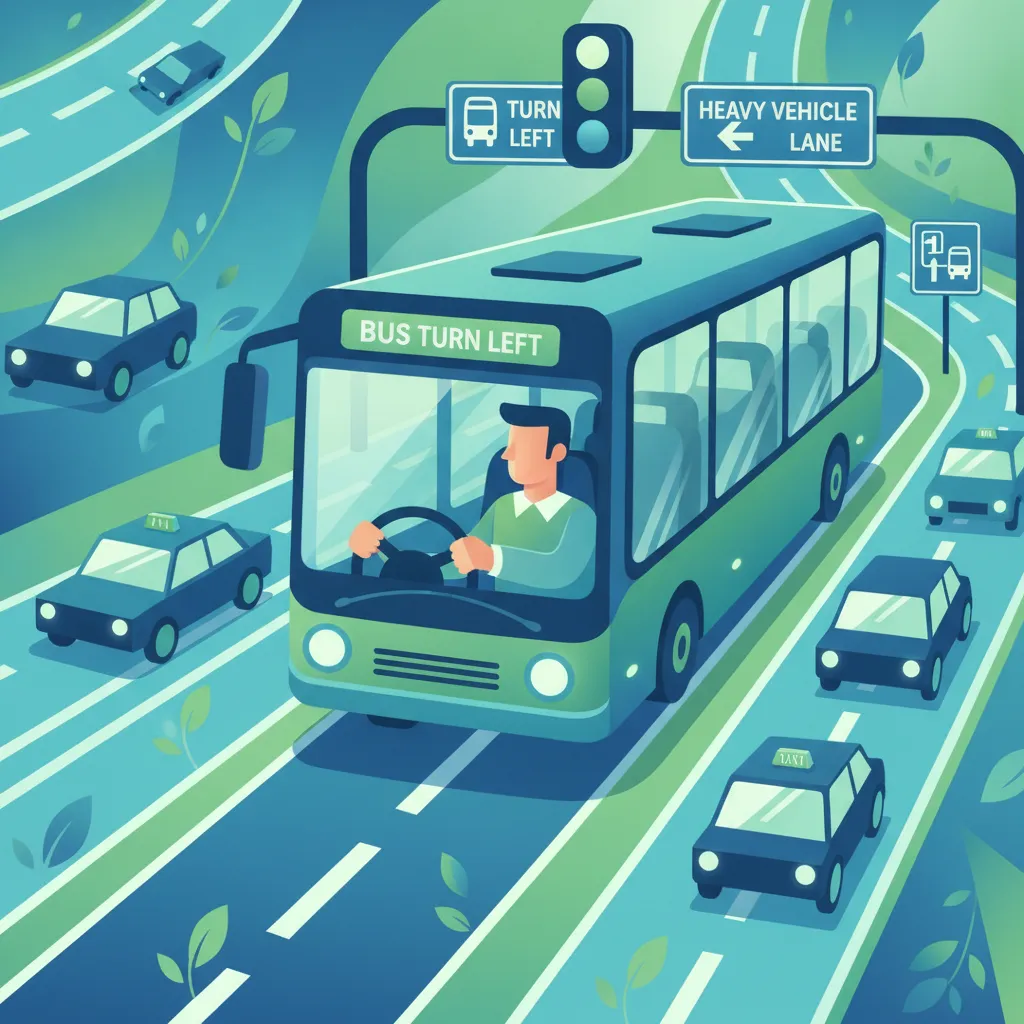
Learners will explore strategies for navigating congested urban traffic environments while operating large passenger vehicles. The lesson covers lane selection, adherence to traffic signals, and the use of bus lanes where applicable. Understanding how to maintain smooth traffic flow while ensuring passenger safety is crucial for efficient urban transportation.

This lesson delves into specific manoeuvring strategies required when navigating both tight urban environments and open rural roads with large passenger vehicles. Learners will explore techniques for handling narrow streets, tight turns, and intersections, while maintaining safety and efficiency. The content emphasizes planning and execution of manoeuvres based on road conditions and vehicle dimensions.

This lesson focuses on the challenges and techniques required when maneuvering goods vehicles in confined spaces such as loading docks, narrow streets, and urban environments. It addresses the importance of spatial awareness, precision driving, and understanding vehicle dimensions to avoid collisions. Learners will explore strategies for effective parking, reversing, and handling blind spots safely.

Learners will explore the fundamentals of maintaining correct lane discipline, focusing on appropriate lane positioning, understanding lane markings, and executing lane changes safely. Emphasis is placed on the unique considerations for large passenger vehicles within the lane, such as width and maneuverability. The lesson also addresses the impact of proper lane discipline on overall traffic flow and safety.
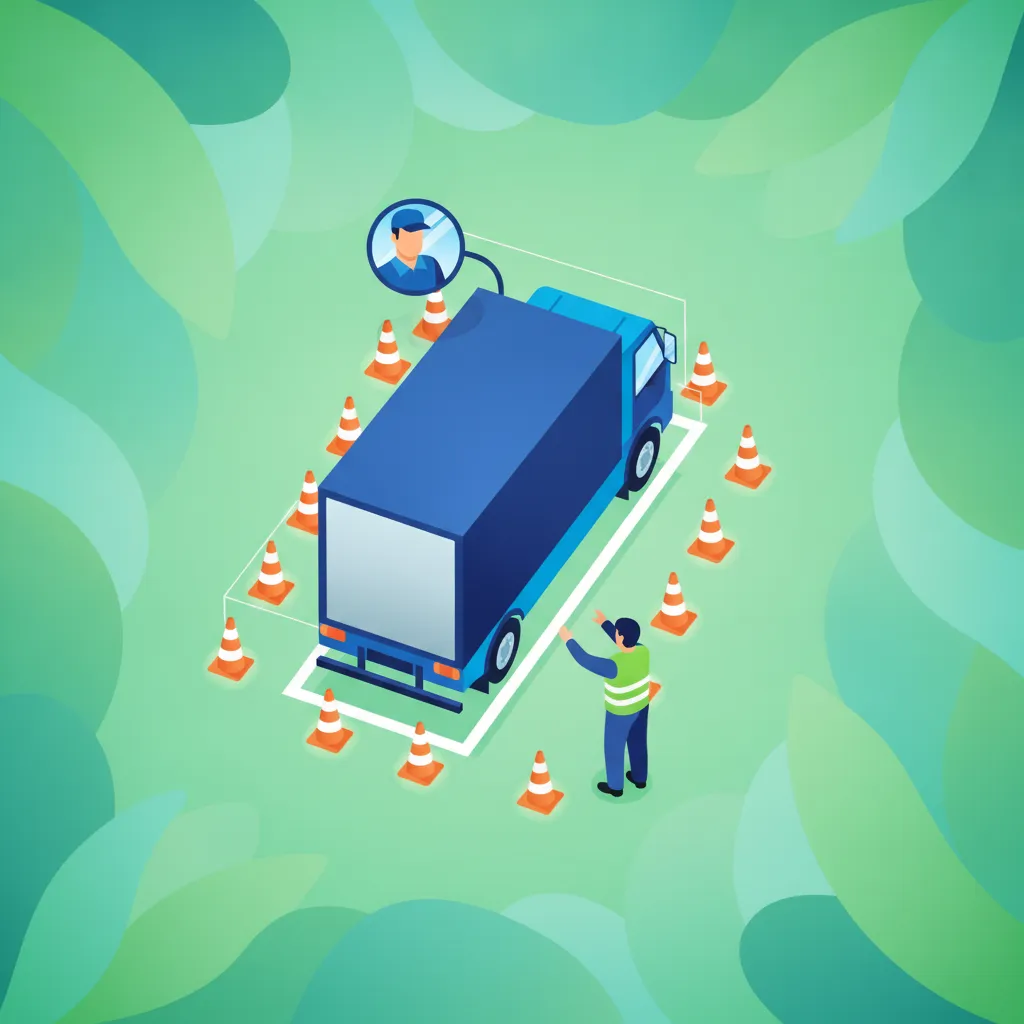
Learners will acquire skills for safely reversing large passenger vehicles in limited spaces, such as bus bays and loading docks. The lesson covers the effective use of mirrors, rear-view cameras, and precise steering inputs to navigate obstacles. Emphasis is placed on slow, controlled movements and constant observation to avoid collisions.
Understand the legal requirements and safety standards for operating large vehicles on Turkish highways. This guide covers lane discipline, maintaining safe following distances, handling lateral wind gusts, and navigating long-distance routes while adhering to official traffic rules for passenger transport professionals.

This lesson focuses on the unique requirements and best practices for operating passenger vehicles on highways and expressways. Topics include maintaining appropriate speed, adhering to lane discipline, executing safe overtaking maneuvers, and managing merges and exits. Emphasis is placed on ensuring a smooth ride for passengers while integrating safely with faster-moving traffic.
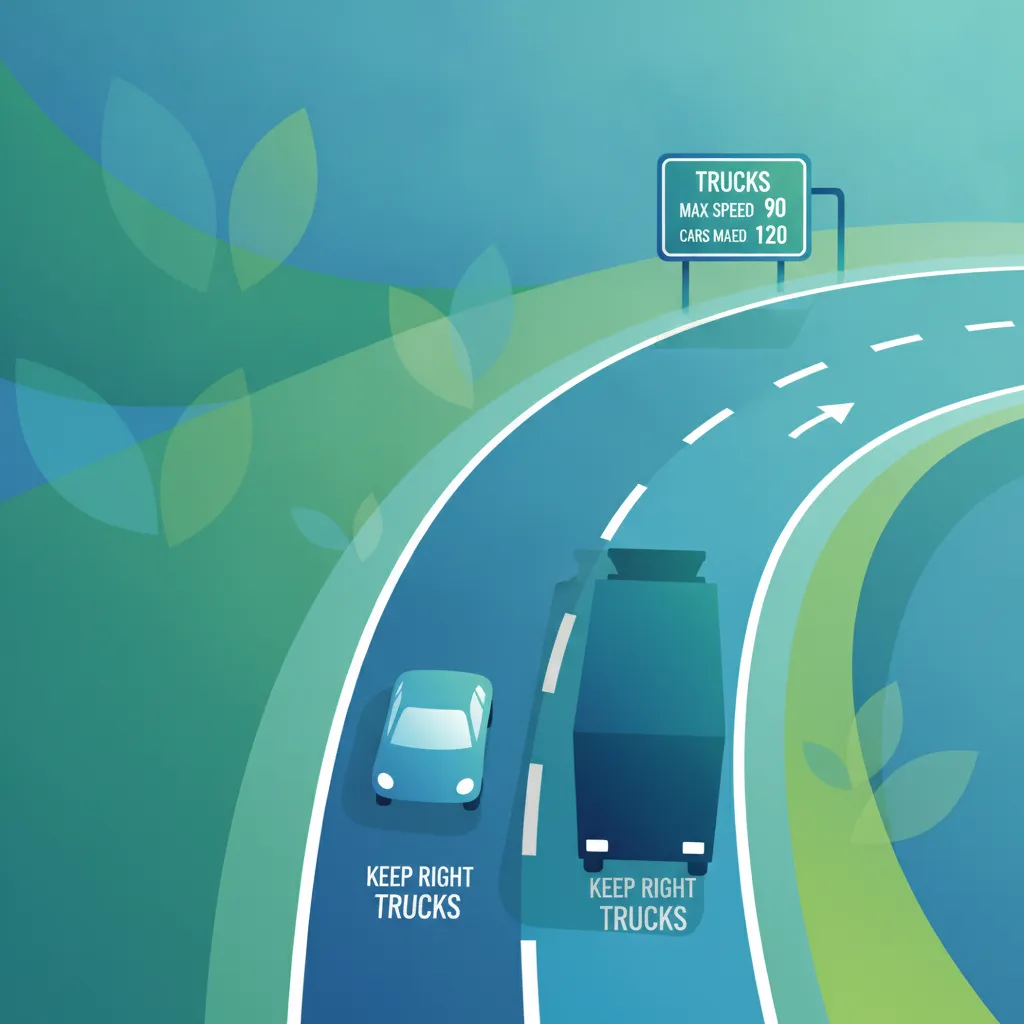
This lesson addresses the specific considerations for goods vehicle operation on highways and expressways, covering speed limits, lane discipline, safe merging, and overtaking. Learners will learn how to adapt to traffic flow, manage heavy vehicle dynamics at higher speeds, and ensure safe operation. The lesson emphasizes the importance of vigilance and proper lane usage to prevent accidents.
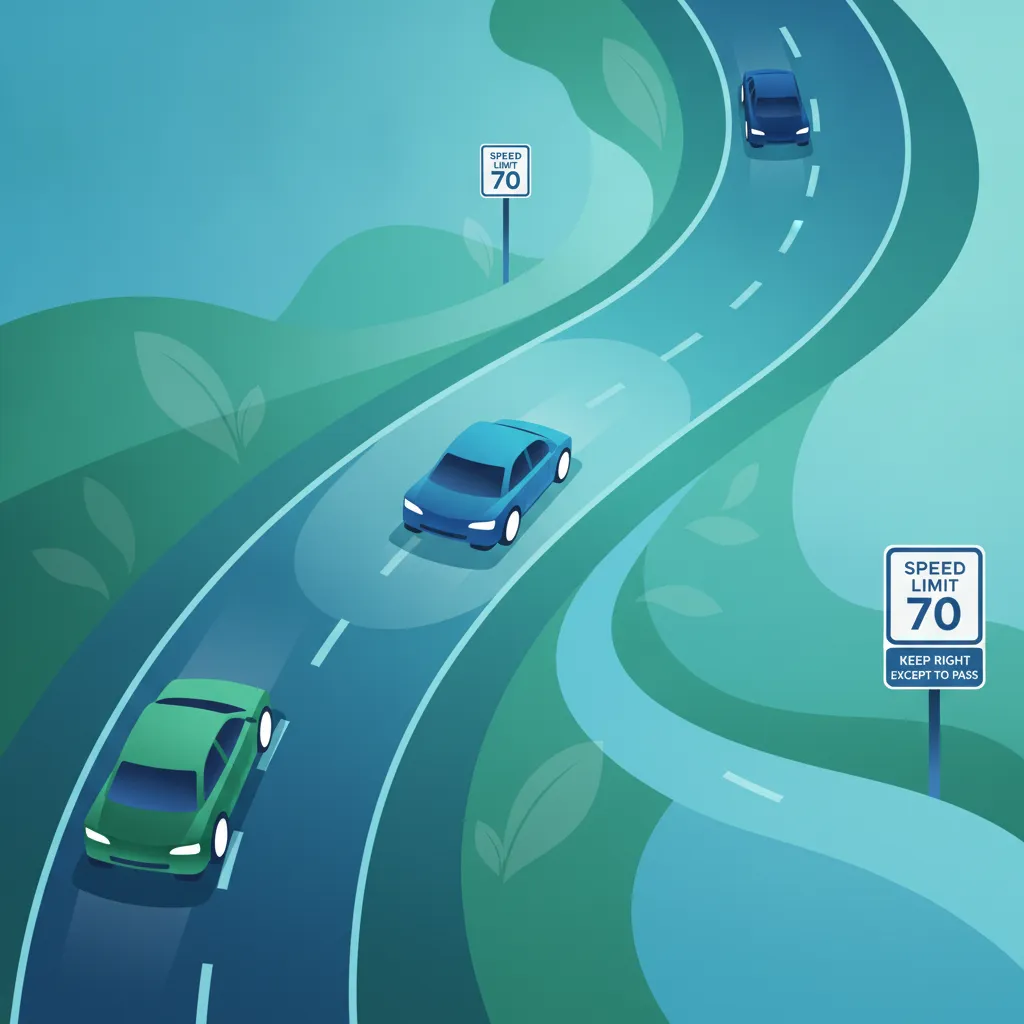
This lesson explains the specific rules, driving etiquette, and safety protocols for operating a vehicle on high-speed Turkish motorways. It covers correct lane usage, overtaking procedures, emergency lane restrictions, and how to maintain consistent high speeds safely. Drivers will learn to avoid dangerous tailgating and sudden lane changes.
Find clear answers to common questions learners have about Impact of Vehicle Dimensions on Driving Dynamics. Learn how the lesson is structured, which driving theory objectives it supports, and how it fits into the overall learning path of units and curriculum progression in Turkey. These explanations help you understand key concepts, lesson flow, and exam focused study goals.
Understanding dimensions is vital for identifying safe turning paths and avoiding obstacles. In the exam, you will encounter scenarios where correct anticipation of turning space is required to ensure road safety.
Vehicle height determines your clearance under tunnels, bridges, and trees. Being aware of your height prevents accidents and ensures you follow legal vertical clearance restrictions.
Yes, longer vehicles have larger blind spots. You must master the use of side and wide-angle mirrors to compensate for the reduced visibility caused by your vehicle's length.
A longer wheelbase increases the turning radius, meaning the rear wheels follow a tighter path than the front wheels. This requires you to swing wider during turns to avoid hitting curbs or other road users.
Use our comprehensive practice search to find exactly the Turkish driving theory questions you need to master. Whether reviewing specific road signs, traffic rules, or first aid scenarios, select your perfect practice set and boost your confidence for the official ehliyet sınavı.