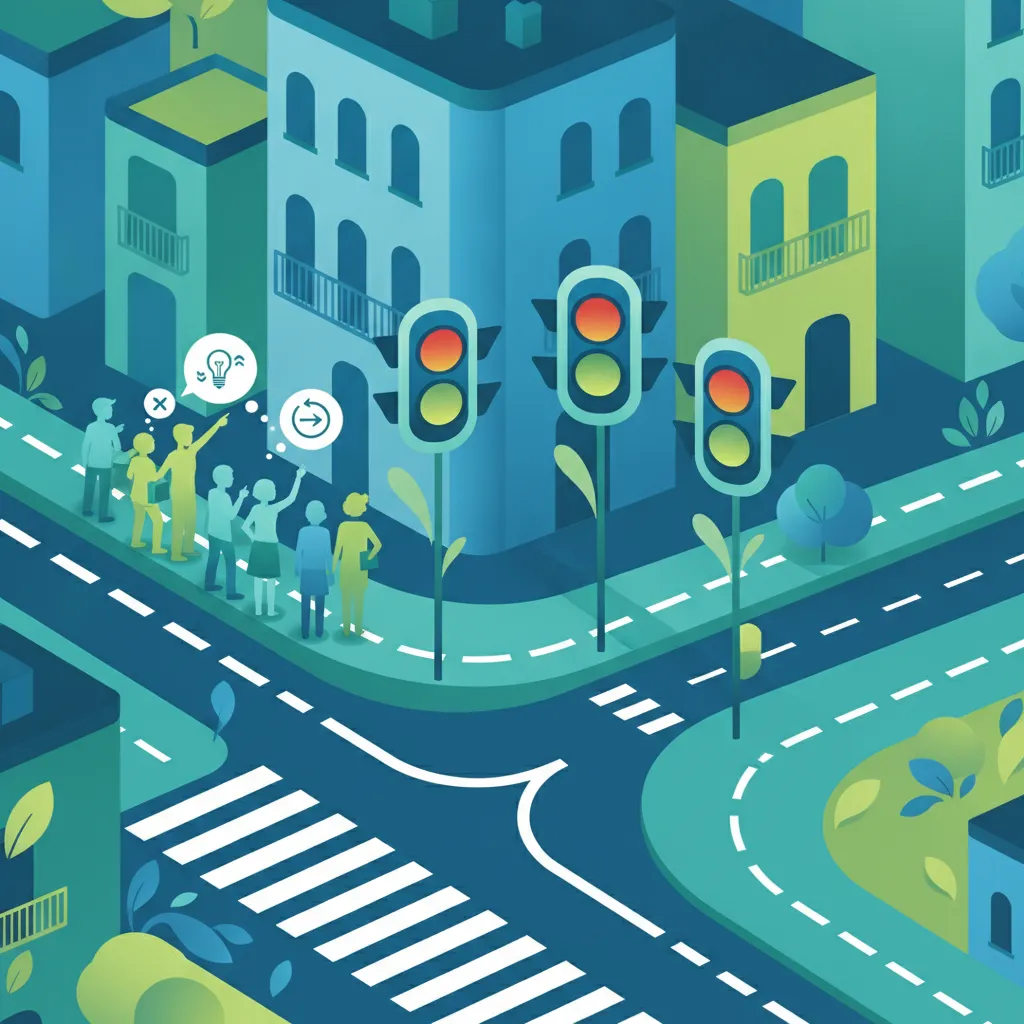
This lesson guides you through the essential interpretation of traffic lights, signals, and road markings required for Category AM riders in Austria. Understanding these visual cues is critical for navigating junctions safely and ensuring you respond correctly to every signal on the road. This knowledge builds directly upon the road signs introduced in the previous lesson, completing your foundation for interpreting the Austrian StVO.
Lesson content overview
Traffic signals and road markings are fundamental visual communication tools on Austrian roads. For AM license holders riding mopeds and small scooters, correctly interpreting and responding to these signals is paramount for maintaining safety, ensuring smooth traffic flow, and avoiding potential collisions. This lesson delves into the meaning of various traffic light phases and the significance of different road surface markings, providing a solid foundation for safe riding, particularly at complex intersections.
Understanding these signals goes beyond mere memorization; it requires grasping the underlying logic and the immediate implications for your riding behavior. By standardizing actions at critical points like junctions and pedestrian crossings, these controls prevent ambiguity and allow for rapid, safe decision-making. This knowledge is crucial for your theoretical exam and, more importantly, for navigating real-world traffic scenarios confidently and safely.
Traffic lights, also known as traffic signals, control the flow of vehicles and pedestrians at intersections by assigning right-of-way sequentially. Their distinct colors – red, amber (yellow), and green – convey mandatory actions, dictating when you must stop, proceed with caution, or are permitted to continue. Mastering these phases is critical for preventing accidents and ensuring orderly movement, especially at busy urban junctions.
A red light is the most unambiguous signal: it requires all vehicles facing it to come to a complete stop. This mandate prevents entry into the intersecting traffic flow, which has priority during this phase, thus preventing collisions.
When confronted with a red light, you must stop your moped or scooter before the stop line. If no stop line is visible, you must stop before entering the intersection itself, ensuring you do not obstruct crossing traffic or pedestrian pathways. Failing to obey a red light is a serious offense in Austrian traffic law (StVO) and carries significant penalties, not to mention the high risk of a collision.
A green light indicates that you have permission to proceed through the intersection. However, this permission is not absolute and does not grant unrestricted right-of-way over all other road users. It signifies that your path is clear of conflicting vehicular traffic controlled by the same signal cycle.
Even with a green light, you must exercise caution. Always be prepared to yield to pedestrians who may still be crossing or entering the intersection, and to any vehicles that may still be clearing the junction from a previous phase. If you intend to turn, you must also yield to oncoming traffic that is proceeding straight, unless a protected green arrow specifically grants you exclusive right-of-way for your turn.
The amber light (often called a yellow light) is a transitional signal that serves different purposes depending on its state: steady or flashing. It bridges the gap between the green and red phases, demanding careful and immediate decision-making from riders.
A steady amber light indicates that the green phase is ending and a red light is imminent. Its primary purpose is to give riders enough time to safely bring their vehicles to a stop before the intersection.
The rule for a steady amber light is crucial for safety: you must stop if you can do so safely before the stop line or intersection. If you are already so close to the intersection when the light turns amber that stopping safely would require harsh braking, creating a dangerous situation, you are permitted to continue through the intersection. However, this should not be interpreted as an invitation to accelerate and "beat" the light. The intent is to avoid sudden stops that could cause rear-end collisions. Anticipation is key here; watch for signals turning amber well in advance.
Accelerating to clear an amber light when you could have safely stopped is a common violation and significantly increases collision risk. Always prioritize safety and be prepared to stop.
A flashing amber light signals caution and indicates that normal traffic light sequencing is not active. This often occurs at less busy intersections, during off-peak hours, or when signals are temporarily out of service. It removes the explicit right-of-way dictated by red/green phases and reverts control to standard priority rules, often indicated by road signs.
When encountering a flashing amber light, you must proceed with extreme caution. This signal does not grant you priority over other traffic or pedestrians. Instead, it places the full responsibility on you to ensure the intersection is clear before proceeding. You must yield to all other road users, including those on intersecting roads and pedestrians, who may have the right-of-way based on priority rules or road markings (like stop or yield signs). Always be prepared to stop and check for traffic from all directions before entering the junction.
Sometimes, a green light may be accompanied by a protected green arrow pointing in a specific direction (e.g., left, right, or straight). This arrow signifies that traffic moving in the indicated direction has an exclusive right-of-way, meaning no conflicting traffic (including oncoming vehicles or pedestrians) will be permitted to enter the intersection during that specific phase. When you see a protected green arrow, you may proceed confidently in the direction of the arrow, provided the path is physically clear. This is particularly helpful for turning movements at complex intersections.
Beyond traffic lights, the road surface itself is covered with various markings that provide critical guidance, define lane usage, and specify stopping or yielding requirements. These markings work in conjunction with signs and signals to ensure safe and orderly movement for all road users, including Austrian AM riders.
A stop line is a solid, thick white line painted across a lane at an intersection or before a pedestrian crossing. Its purpose is to clearly designate the exact point at which vehicles must stop when commanded by a red traffic light or a stop sign.
When required to stop, your moped or scooter's front wheel must be positioned before the stop line. Crossing this line can obstruct the view of other road users, interfere with pedestrian flow, or even trigger detection loops for traffic signals, causing confusion. If there is no stop line, the stopping point is generally considered to be before the intersection itself, where you have a clear view of crossing traffic without entering their path.
A yield line (also known as a give-way line) is another vital road marking, typically appearing as a series of inverted white triangles painted on the road surface. This marking, often accompanied by a yield sign, indicates that you must yield to other traffic that has the right-of-way before proceeding.
When approaching a yield line, you are not necessarily required to come to a complete stop, but you must slow down and be prepared to stop if necessary. Your primary duty is to assess the traffic situation on the main road and ensure there are no vehicles approaching from either direction that would be forced to slow down or change course if you were to proceed. You only enter the intersection or merge when it is safe to do so without impeding priority traffic.
Lane markings are lines painted on the road surface to separate lanes, regulate lane changes, and guide the direction of traffic. Understanding their variations is crucial for maintaining lane discipline and performing maneuvers like overtaking safely.
Pedestrian crossings, especially those marked with broad white stripes known as zebra crossings, are dedicated areas where pedestrians have the legal right-of-way to cross the road. These markings are designed to enhance pedestrian safety and are often placed at points with high foot traffic.
When approaching a zebra crossing, you must be extremely vigilant. If a pedestrian is waiting to cross, or has already stepped onto the crossing, you must stop before the crossing line to allow them to cross safely. You should only proceed once the crossing is completely clear and there is no further danger to pedestrians. Even if the crossing appears clear, always slow down and scan for individuals who might suddenly decide to cross.
Always assume pedestrians might not see you or misjudge your speed. Prioritize their safety by being prepared to stop well in advance.
Turn arrow markings are directional arrows painted directly on the road surface, usually within specific lanes leading up to an intersection. These markings indicate that a particular lane is dedicated to a specific turning movement (e.g., left turn, right turn, or straight ahead).
When you see turn arrow markings, you must position your moped or scooter in the appropriate lane well in advance of the intersection. Once you are in a lane designated by an arrow, you are generally required to follow that direction. Changing lanes after these arrows, especially if a solid line or other traffic makes it unsafe, is dangerous and can lead to collisions as you cut across the path of other vehicles. These markings help organize traffic flow and prevent drivers from making sudden, unpredictable maneuvers.
Adhering to traffic signals and road markings is not just a matter of good riding practice; it's a legal obligation under Austrian road traffic law (Straßenverkehrsordnung - StVO). Violations can lead to severe consequences, including fines, points on your license, and in serious cases, license suspension.
Even experienced riders can sometimes make errors in judgment or observation when interacting with traffic signals and road markings. For AM riders, who are often newer to the road, understanding these common pitfalls is vital for proactive safety.
Your approach to traffic signals and road markings must adapt to changing environmental and traffic conditions. What is safe and appropriate in clear, dry weather may not be in adverse circumstances.
The rules governing traffic signals and road markings are not arbitrary; they are based on fundamental principles of safety, traffic engineering, and human behavior.
By deeply understanding these rules and the reasons behind them, you not only improve your own safety but also contribute to the overall safety and efficiency of the Austrian road network.
This lesson covers the interpretation of Austrian traffic lights and road markings essential for AM riders, including the mandatory stop requirement at red lights, the conditional stopping rule for steady amber, and the caution-based approach for flashing amber signals. It explains critical road markings such as stop lines, yield lines, lane dividers (solid, broken, and double lines), zebra crossings, and turn arrow markings. The content also addresses contextual factors like weather and light conditions that affect how you should interpret and respond to signals. Understanding these visual controls is crucial for both passing the Austrian theory exam and navigating real-world traffic safely.
A short set of high-value points that capture the most important learning from this lesson.
A red light requires a complete stop before the stop line or intersection, not crossing it
A steady amber light means stop if you can do so safely; only proceed if stopping would cause immediate danger
A flashing amber light removes signal-based priority - you must yield to all other traffic and pedestrians
Different lane markings have specific meanings: solid lines prohibit crossing, broken lines permit it when safe
Zebra crossings give pedestrians absolute priority; you must stop for anyone on or entering the crossing
Explore all units and lessons included in this driving theory course.
Green light grants permission but not absolute right-of-way - always yield to pedestrians and vehicles clearing the intersection
Position your moped with the front wheel before the stop line, never crossing or straddling it
A yield line (white triangles) means slow down and prepare to stop, not an automatic right to proceed
Double solid white lines are absolute no-cross zones for overtaking or lane changes
Protected green arrows provide exclusive right-of-way only for the indicated turning direction
Accelerating through an amber light instead of preparing to stop - this increases rear-end collision risk
Entering an intersection on flashing amber without yielding, assuming you have priority over other traffic
Crossing a solid white line to overtake or change lanes where it is explicitly prohibited
Attempting to turn from a lane that does not match the turn arrow marking on the road surface
Failing to stop for pedestrians at zebra crossings who are waiting to cross or already on the crossing
Lesson content overview
A short set of high-value points that capture the most important learning from this lesson.
A red light requires a complete stop before the stop line or intersection, not crossing it
A steady amber light means stop if you can do so safely; only proceed if stopping would cause immediate danger
A flashing amber light removes signal-based priority - you must yield to all other traffic and pedestrians
Different lane markings have specific meanings: solid lines prohibit crossing, broken lines permit it when safe
Zebra crossings give pedestrians absolute priority; you must stop for anyone on or entering the crossing
Explore all units and lessons included in this driving theory course.
Green light grants permission but not absolute right-of-way - always yield to pedestrians and vehicles clearing the intersection
Position your moped with the front wheel before the stop line, never crossing or straddling it
A yield line (white triangles) means slow down and prepare to stop, not an automatic right to proceed
Double solid white lines are absolute no-cross zones for overtaking or lane changes
Protected green arrows provide exclusive right-of-way only for the indicated turning direction
Accelerating through an amber light instead of preparing to stop - this increases rear-end collision risk
Entering an intersection on flashing amber without yielding, assuming you have priority over other traffic
Crossing a solid white line to overtake or change lanes where it is explicitly prohibited
Attempting to turn from a lane that does not match the turn arrow marking on the road surface
Failing to stop for pedestrians at zebra crossings who are waiting to cross or already on the crossing
Explore search topics learners often look for when studying Traffic Signals and Road Markings. These topics reflect common questions about road rules, driving situations, safety guidance, and lesson level theory preparation for learners in Austria.
Browse additional driving theory lessons that cover connected traffic rules, road signs, and common driving situations related to this topic. Improve your understanding of how different rules interact across everyday traffic scenarios.
Explore complex scenarios involving traffic light phases and advanced interpretation of Austrian road markings. Understand how to navigate junctions and urban environments safely beyond basic recognition.
This lesson details the various types of road markings and their significance for guiding traffic and ensuring safety. Learners will understand the rules associated with solid versus broken lane lines, the instructions provided by directional arrows painted on the road, and the purpose of stop lines and pedestrian crossing markings. The content emphasizes how these markings work in conjunction with signs to regulate traffic flow and define legal lane usage.
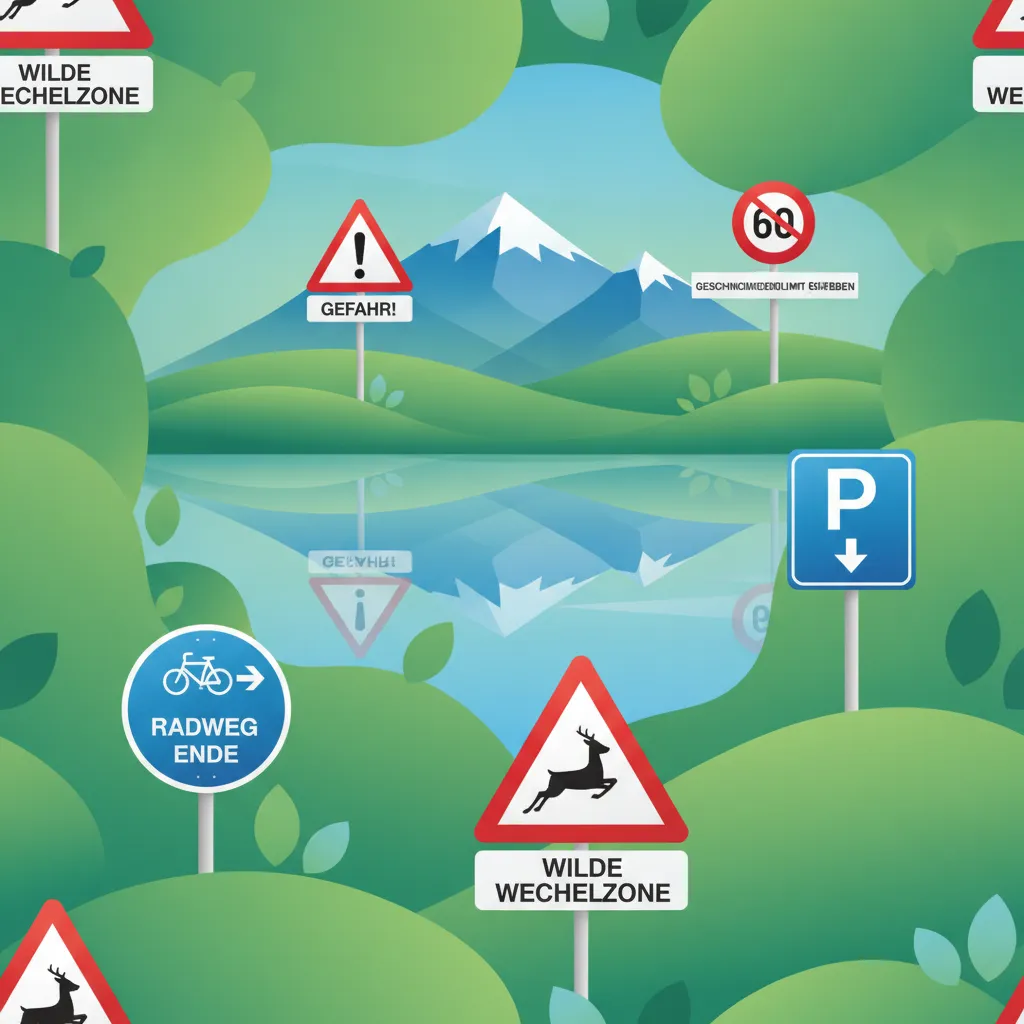
This lesson categorizes and explains the different types of Austrian road signs, including warning, regulatory, and informational signs. It details how the shape and color of a sign indicate its function, such as communicating speed limits, prohibitions, or mandatory actions. Understanding this visual system is fundamental for making correct and safe decisions while riding.
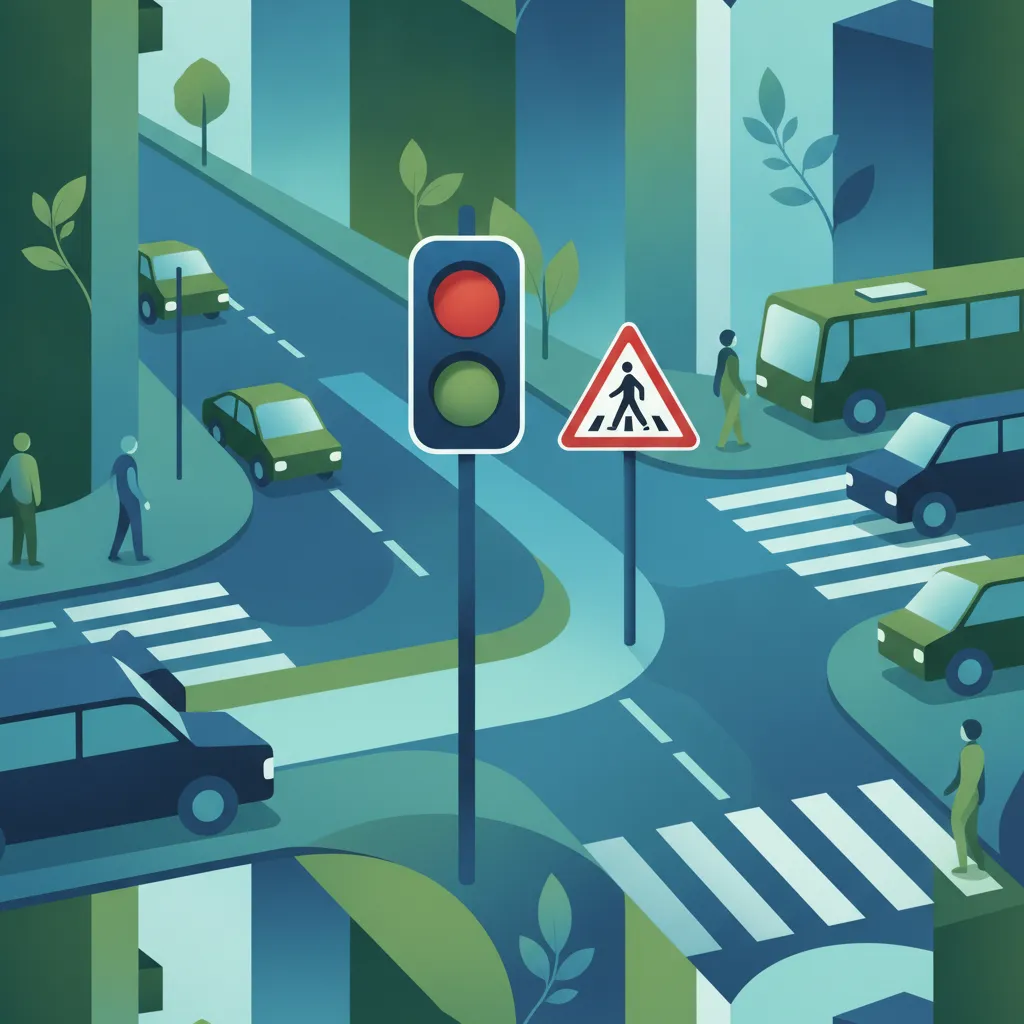
This lesson explains the operation and meaning of traffic light signals in Austria, including the standard red, yellow, and green phases, as well as flashing signals and arrows. It also covers other priority control devices, such as stop signs and yield signs, which are used to manage right-of-way at intersections. Understanding the hierarchy between these signals and signs is crucial for navigating junctions safely and in compliance with the law.
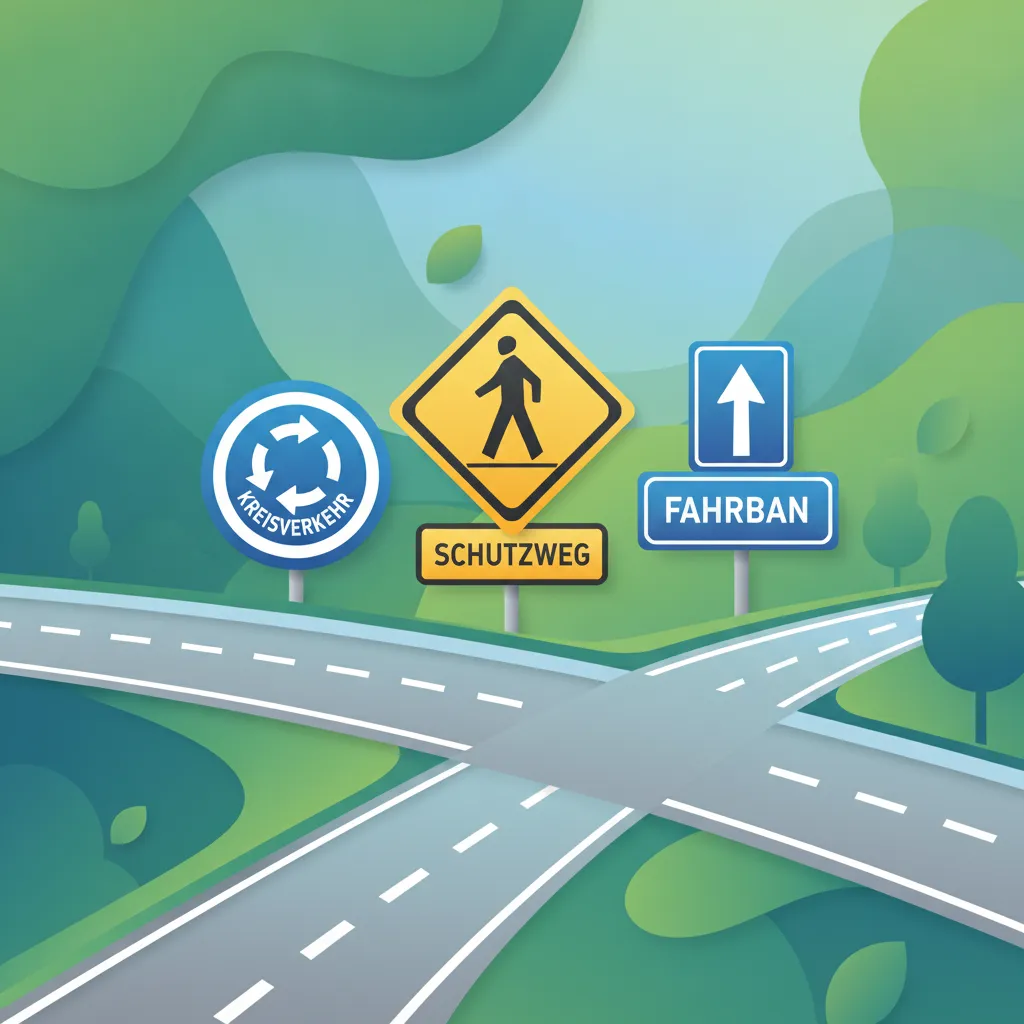
This lesson covers the specific regulations associated with special Austrian road signs and areas. It details the rules for 'Schutzweg' (protected pedestrian crossings), 'Kreisverkehr' (roundabouts), and the distinction between 'Fahrbahn' (road) and 'Fahrstreifen' (lane). Understanding these specific contexts is essential for safe navigation in urban and suburban environments.

This lesson focuses on clear communication with other road users through the correct use of signals. It covers the proper operation of turn indicators, including the importance of cancelling them after a maneuver, and the use of brake lights. Additionally, it reviews standard hand signals for turning and stopping, which serve as a vital backup or supplementary communication tool.

This lesson details the mandatory lighting and reflector requirements for Category AM vehicles in Austria. It explains the functions of different light settings, including daytime running lights, and their importance for being seen. Additionally, it covers the legal standards for protective helmets, a critical component of rider safety.
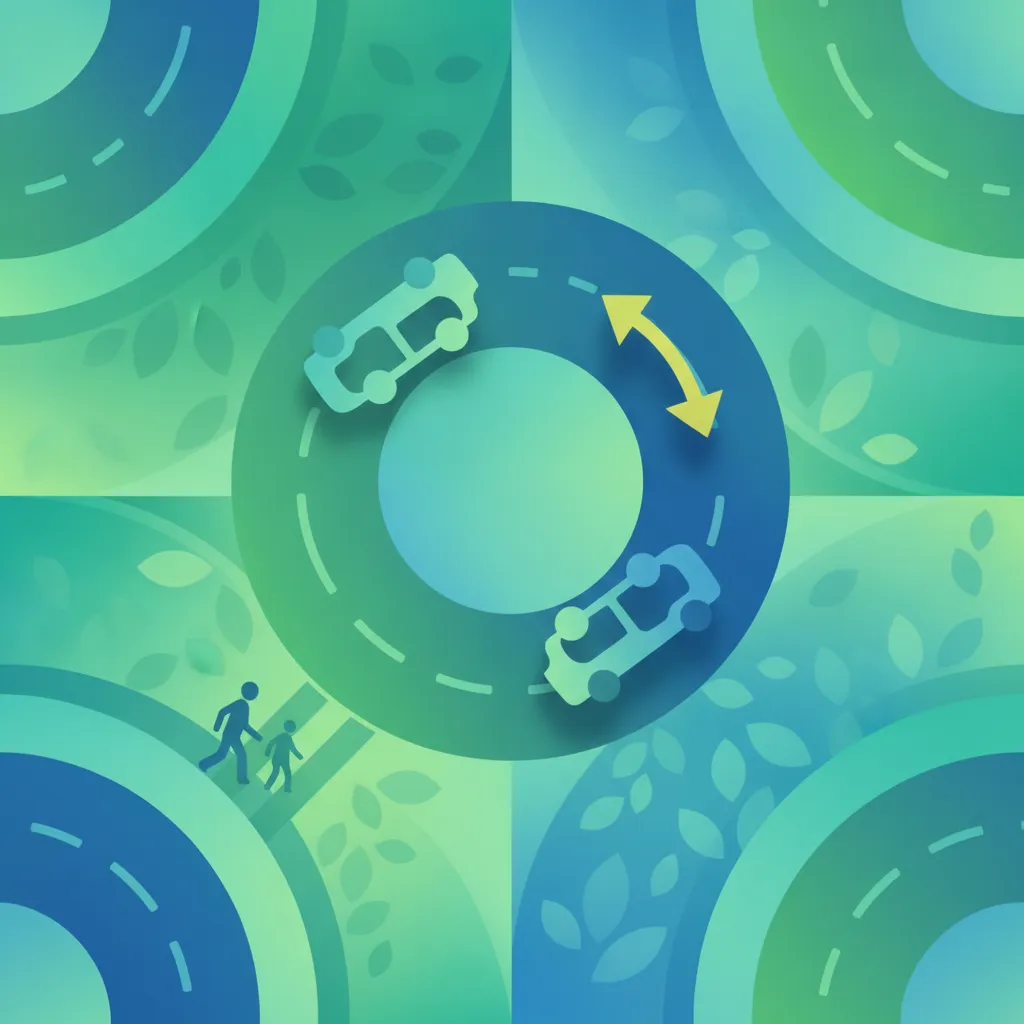
This lesson provides clear instructions for maneuvering through single and multi-lane roundabouts. It covers the critical rule of giving way to traffic already in the circle, proper lane selection based on the intended exit, and the correct use of indicators when entering and exiting. Mastering roundabouts is key to efficient and safe travel in modern Austrian traffic systems.
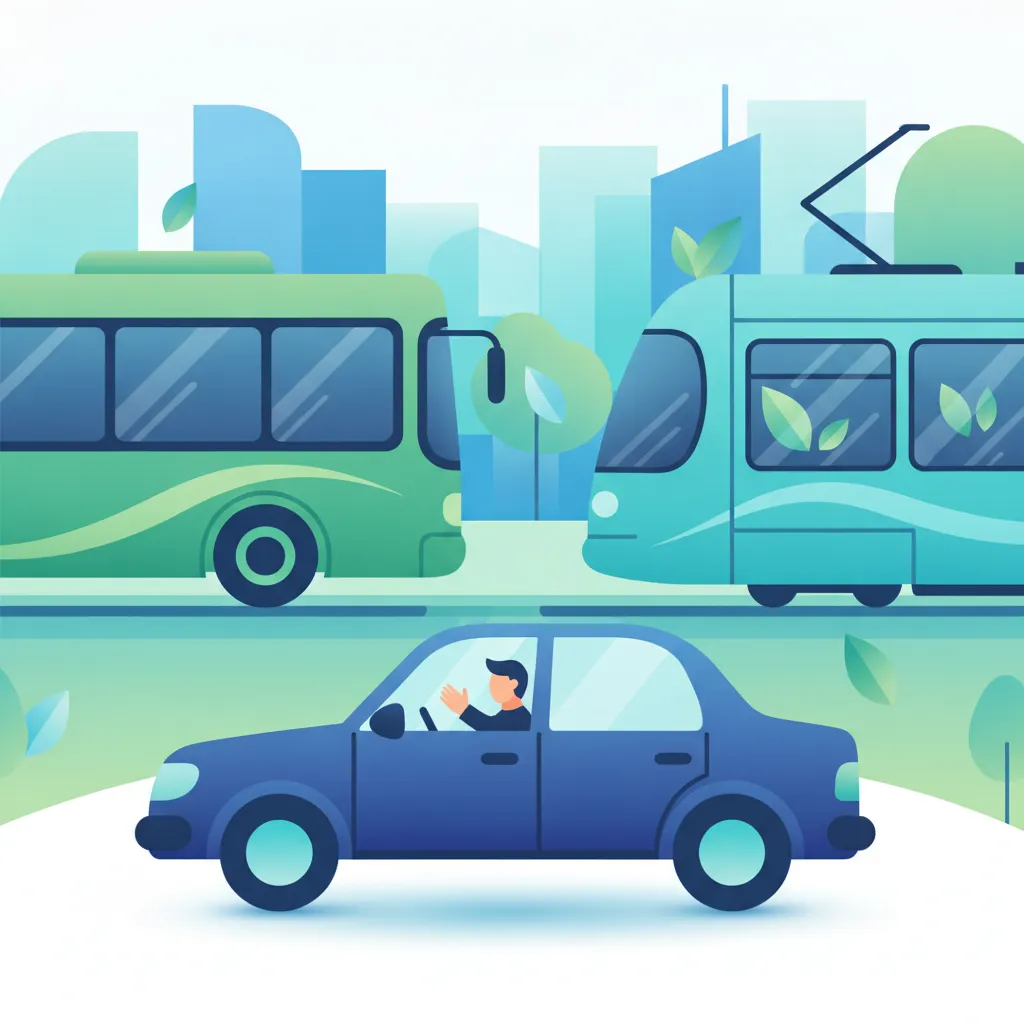
This lesson addresses the specific challenges of interacting with larger vehicles like buses and trams in an urban environment. It explains how to signal intentions clearly and predictably to avoid conflicts in shared spaces. Key topics include safely crossing tram tracks and maintaining awareness around public transport stops.
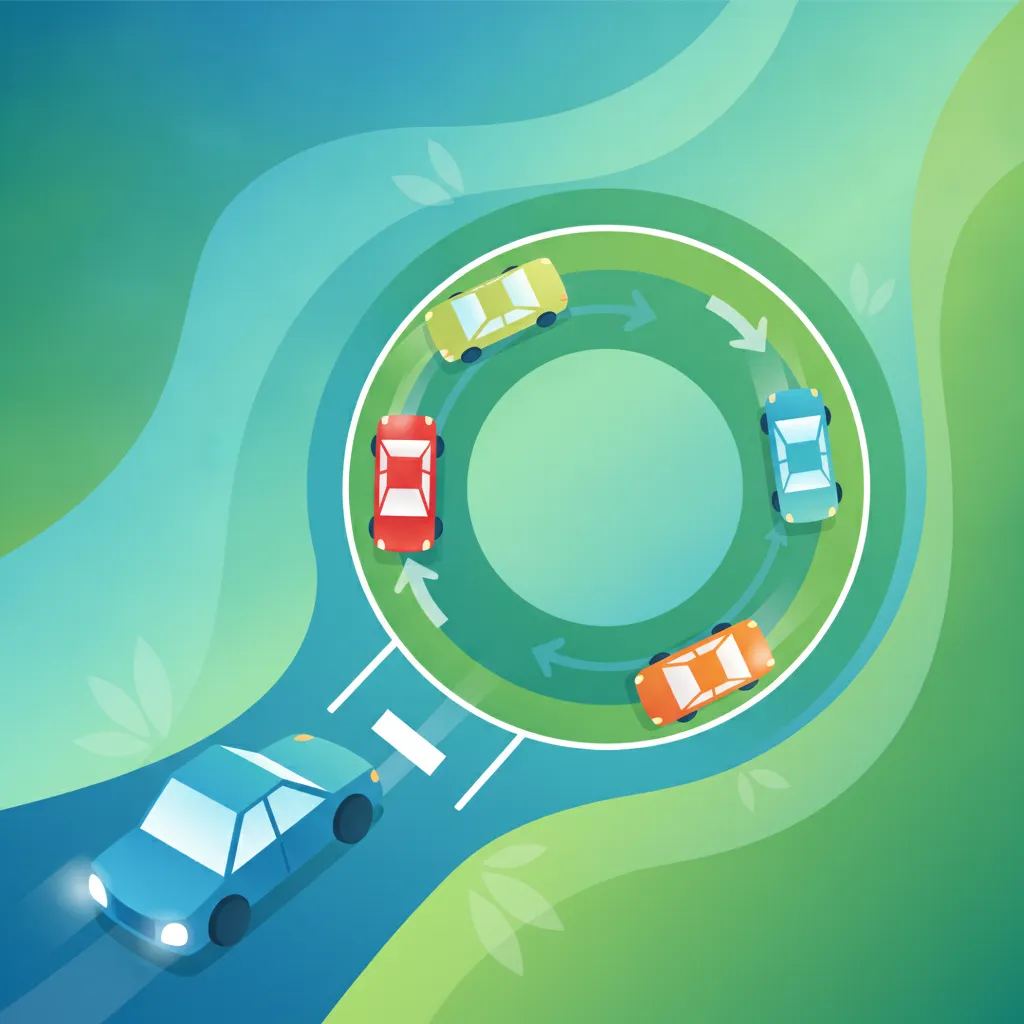
This lesson provides clear instructions on how to safely navigate roundabouts. It explains the critical rule of yielding to traffic already circulating and how to choose the correct lane based on the intended exit. The content also covers proper signaling procedures for entering and exiting the roundabout to communicate intentions clearly.

This lesson covers the interaction with various forms of urban traffic control. It includes anticipating traffic light cycles to avoid stopping in an intersection and following the directions given by police or road work personnel. Smooth cooperation with these systems ensures better traffic flow and safety for everyone.
Learn about typical errors and misunderstandings Austrian AM riders make with traffic lights and road markings. Understand how to avoid these mistakes for safer navigation and exam preparation.

This lesson focuses on warning signs, which are designed to alert drivers to potential hazards ahead. Learners will explore the meanings of signs indicating sharp curves, changes in road surface, potential animal crossings, and upcoming construction zones. The content explains how the characteristic triangular shape and symbols convey specific dangers, enabling drivers to anticipate conditions and adjust their speed and attention accordingly.
This lesson categorizes and explains the different types of Austrian road signs, including warning, regulatory, and informational signs. It details how the shape and color of a sign indicate its function, such as communicating speed limits, prohibitions, or mandatory actions. Understanding this visual system is fundamental for making correct and safe decisions while riding.
This lesson details the various types of road markings and their significance for guiding traffic and ensuring safety. Learners will understand the rules associated with solid versus broken lane lines, the instructions provided by directional arrows painted on the road, and the purpose of stop lines and pedestrian crossing markings. The content emphasizes how these markings work in conjunction with signs to regulate traffic flow and define legal lane usage.
This lesson explains the operation and meaning of traffic light signals in Austria, including the standard red, yellow, and green phases, as well as flashing signals and arrows. It also covers other priority control devices, such as stop signs and yield signs, which are used to manage right-of-way at intersections. Understanding the hierarchy between these signals and signs is crucial for navigating junctions safely and in compliance with the law.
This lesson covers the specific regulations associated with special Austrian road signs and areas. It details the rules for 'Schutzweg' (protected pedestrian crossings), 'Kreisverkehr' (roundabouts), and the distinction between 'Fahrbahn' (road) and 'Fahrstreifen' (lane). Understanding these specific contexts is essential for safe navigation in urban and suburban environments.
This lesson addresses the specific challenges of interacting with larger vehicles like buses and trams in an urban environment. It explains how to signal intentions clearly and predictably to avoid conflicts in shared spaces. Key topics include safely crossing tram tracks and maintaining awareness around public transport stops.
This lesson focuses on clear communication with other road users through the correct use of signals. It covers the proper operation of turn indicators, including the importance of cancelling them after a maneuver, and the use of brake lights. Additionally, it reviews standard hand signals for turning and stopping, which serve as a vital backup or supplementary communication tool.

This lesson teaches a safe and systematic process for approaching and crossing intersections. It covers how to correctly assess priority based on signs and general rules, adjust speed appropriately, and perform thorough visual checks. Emphasis is placed on anticipating the actions of other road users to prevent conflicts at junctions.
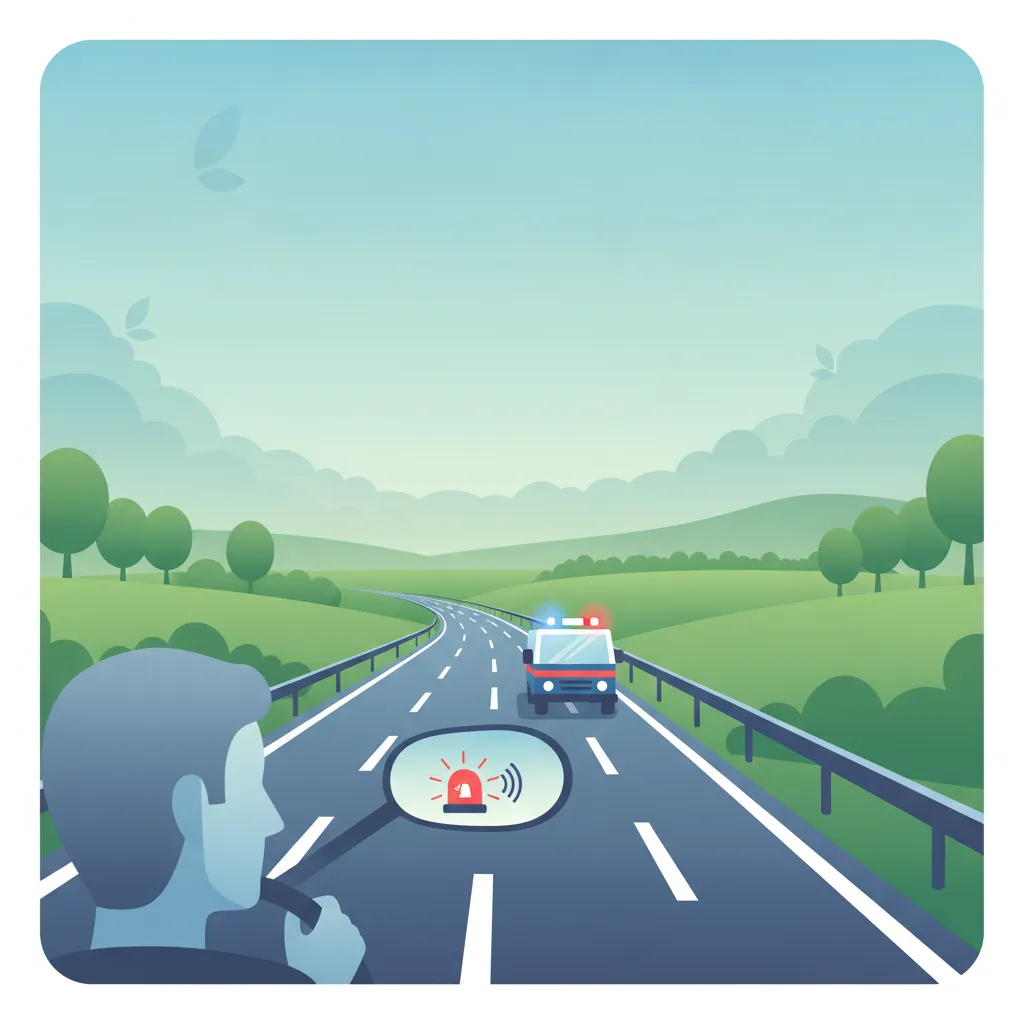
This lesson explains the correct protocol when encountering emergency vehicles with active sirens and lights. It details the legal requirement to yield the right-of-way and provides practical guidance on how to pull over safely and efficiently. Understanding these procedures helps ensure emergency services can reach their destination without delay.

This lesson introduces the foundational elements of Austrian traffic culture, placing a strong emphasis on cooperation, courtesy, and effective non-verbal communication between road users. It delves into the societal expectations for driver behavior, highlighting how mutual respect and clear signaling enhance safety for everyone. By understanding and applying these norms, drivers can contribute to a more harmonious and predictable traffic environment, reducing conflicts and potential accidents.
Find clear answers to common questions learners have about Traffic Signals and Road Markings. Learn how the lesson is structured, which driving theory objectives it supports, and how it fits into the overall learning path of units and curriculum progression in Austria. These explanations help you understand key concepts, lesson flow, and exam focused study goals.
In Austria, an amber light means you must stop if you can do so safely before the stop line. You should not accelerate to cross if you are far enough away to stop without harsh braking.
Generally, traffic signals (lights) take priority over road signs. However, if a police officer is directing traffic, their instructions override both lights and road signs.
Always stop completely behind the white stop line. Avoid stopping too far in the middle of the junction or blocking the pedestrian crossing area (Schutzweg), as this is a common reason for losing points in the theory test.
A broken white line indicates that overtaking is permitted if it is safe to do so. However, as an AM rider, always ensure you have enough power and space before attempting to overtake, and watch for oncoming traffic.
Refine your study plan by searching for specific Austrian driving theory practice sets. Pinpoint questions related to particular road rules, signs, or challenge levels, and begin practicing immediately to reinforce your knowledge and excel in your official exam with confidence. Get started with focused revision today.