
This lesson introduces the vital concepts of Austrian traffic culture, focusing on how mutual cooperation and non-verbal communication create a safe road environment. By understanding these societal expectations, you will build the foundation needed to handle complex traffic scenarios effectively during your Category B practical and theory exams.

Lesson content overview
Welcome to this lesson from the Austrian Driving License B Theory Course. Driving in Austria involves more than just knowing traffic laws and signs; it requires an understanding of the implicit rules of engagement that define Austrian traffic culture. This lesson will explore the foundational elements of this culture, emphasizing cooperation, courtesy, and effective communication among all road users. By embracing these standards, you contribute to a safer, more predictable, and harmonious traffic environment, ultimately reducing conflicts and preventing accidents.
Austrian traffic culture is built on a framework of socially accepted behaviors and gestures designed to foster cooperative road use. It goes beyond the mere legal requirements, embedding principles of courtesy, predictability, and empathy into everyday driving. The underlying logic for this approach is multi-faceted, prioritizing safety, efficiency, and alignment with the spirit of the Road Traffic Act (StVO).
Predictable actions are crucial for safety, as they reduce surprises and allow all road users sufficient time to react, significantly lowering accident risk. Cooperation also enhances traffic efficiency, smoothing flow and minimizing unnecessary delays or stops. While not every aspect of traffic culture is codified in law, these norms consistently align with and complement formal legal rules, reinforcing a responsible driving mindset.
Effective participation in Austrian road traffic hinges on several core principles that guide interactions between all users. These principles promote a respectful and anticipatory driving style.
Mutual respect is the cornerstone of cooperative driving. It means treating every road user with consideration, acknowledging their rights, and recognizing their vulnerabilities. This principle extends to fellow drivers, cyclists, pedestrians, and public transport passengers alike. Practicing mutual respect helps reduce aggression on the roads, increases overall safety, and actively promotes a cooperative atmosphere. Drivers are expected to anticipate courteous behavior from others and reciprocate it consistently.
For example, showing professional courtesy involves allowing a cyclist to merge into traffic before you if it's safe and feasible, rather than forcing them to wait. Similarly, you should never cut off a pedestrian attempting to use a crosswalk. While related to specific legal rights, mutual respect operates within this framework, ensuring courtesy and consideration without necessarily surrendering legal priority.
Clear and predictable signaling is fundamental to avoiding misunderstandings and preventing collisions. It involves the early, consistent, and unambiguous use of your vehicle's signals, such as turn indicators and brake lights. In situations where vehicle signals might fail, appropriate hand gestures must be used.
The expectation in Austria is to engage your turn signals at least three seconds before initiating a turn or a lane change. This early warning provides other road users ample time to anticipate your actions and adjust their own driving accordingly. A common misconception is that a brief or delayed signal is sufficient; however, underestimating the necessary signaling distance can lead to dangerous situations.
Yielding courtesy refers to voluntarily giving way to another road user who is already executing a maneuver, even if you technically have the legal priority. This proactive approach facilitates smoother traffic flow, prevents standoffs, and builds trust among drivers. It can involve proactively slowing down to allow a vehicle to merge safely onto a main road or a roundabout in heavy traffic, even when the law might grant you the right of way.
This concept is supplementary to formal priority rules like § 8 StVO, which defines legal right-of-way. It's important not to confuse yielding courtesy with being legally forced to stop or surrendering your priority entirely. Instead, it's about facilitating the safe execution of another driver's maneuver when practical.
Right-of-way awareness encompasses understanding both statutory priority, which is defined by road signs and the StVO, and practical precedence, which considers existing movements. This means recognizing who is already moving through an intersection or has entered it first, irrespective of initial legal priority.
For instance, if a vehicle has already entered an intersection and is proceeding, you are expected to stop and give way, even if a sign technically grants you priority upon your arrival. This principle is crucial for preventing deadlocks and accidents at intersections. Misunderstanding this can lead to collisions, as believing legal priority always overrules actual movement is a common error.
Defensive cooperation involves proactively adjusting your driving based on the anticipated behavior or potential mistakes of others, all while maintaining safe margins. This approach acknowledges human error and significantly reduces the risk of crashes.
Practical applications include creating sufficient gaps for other vehicles to merge or braking earlier than strictly necessary if you anticipate another driver might make an error. It is about safe anticipation rather than aggressive yielding. For example, allowing a slower vehicle to merge by adjusting your speed, rather than forcing an overtaking maneuver in a risky spot, exemplifies defensive cooperation.
Vulnerable road users, such as pedestrians, cyclists, and tram passengers, face a higher risk of injury in the event of a collision due to their lack of protective barriers. Consequently, drivers must afford them additional space, time, and clear signals.
Specific actions include reducing speed when approaching pedestrian crossings, especially unmarked ones, and providing ample clearance (a minimum of 1.5 meters) when overtaking cyclists. When interacting with tram passengers, drivers must allow adequate time for them to board or alight safely at stops. A common misunderstanding is assuming vulnerable users can adapt to your speed or ignoring their limited visibility and reaction times.
Situational courtesy means adjusting your driving behavior based on the immediate context and the perceived intentions of other road users, with the goal of fostering smoother traffic flow in dynamic environments. This flexible approach improves overall traffic efficiency in varying conditions, such as heavy urban traffic or congested highways.
An example in an urban setting might be slowing slightly to allow a vehicle to merge into your lane when a gap exists, even if you are in a continuous lane. On a highway, it could involve permitting another vehicle to change lanes safely during heavy traffic by adjusting your speed. This form of courtesy is balanced with maintaining safety and respecting legal rights; it is not about always yielding, but about facilitating movement when safe and beneficial.
Austrian traffic laws (StVO) provide the legal framework that underpins and reinforces many of these cultural cooperation standards. Understanding the relevant sections helps drivers navigate interactions both legally and culturally.
§ 8 StVO – Priority: This fundamental rule dictates that vehicles must yield to those with priority, as indicated by signs or traffic signals. It is mandatory at intersections, roundabouts, and on priority roads, preventing collisions by clearly defining the right of way. A correct application involves stopping for a vehicle already in a roundabout that entered before you. Incorrect application would be ignoring a vehicle already in the intersection despite you having a priority sign.
§ 34 StVO – Intersection Rules: This rule specifies that vehicles must give way if another vehicle is already in the intersection when they arrive, especially at intersections without explicit priority signs. This is crucial for avoiding deadlocks. Incorrect application would be entering an intersection when another vehicle is already proceeding through it.
§ 9 StVO – Right of Way (Crosswalks): Vehicles approaching a crosswalk must yield to pedestrians, regardless of traffic signs. This mandatory rule protects the most vulnerable road users. Failure to stop when a pedestrian is on the crosswalk is a serious violation.
§ 18 StVO – Pedestrians: This section covers general conduct around pedestrians, emphasizing caution and respect.
§ 21 StVO – Cyclists: Cyclists have the right to use the full lane where overtaking is unsafe. Drivers overtaking cyclists must maintain a safe distance.
The current guideline mandates a minimum distance of 1.5 meters when overtaking a cyclist. Overtaking too closely dramatically increases risk for cyclists.
§ 36 StVO – Trams: Drivers must exercise particular caution around trams, especially when passengers are boarding or alighting at stops.
§ 39 StVO – Indicators: Drivers are legally required to give clear approval signals before turning or changing lanes. This is mandatory for all turning and lane change maneuvers and allows other road users to anticipate movements. Changing lanes without signaling is incorrect and dangerous.
§ 41 StVO – Hazard Lights: Hazard warning lights must only be used when a vehicle is stationary and poses a danger, such as a breakdown or during sudden, significant slowing of traffic (e.g., at the end of a traffic jam on a motorway). Using hazard lights while driving normally, for instance in heavy rain, is incorrect as it can mislead other drivers about your intentions.
§ 10 StVO – Overtaking: Overtaking is prohibited where indicated by signs or markings, and must always be performed safely, with careful consideration of oncoming traffic and road conditions. Overtaking on the right on a multi-lane road where traffic is flowing is generally permitted in Austria, but specific conditions apply, and it is not a free-for-all.
§ 38 StVO – Speed Limits: Observing speed limits is mandatory on all roads, particularly in built-up areas and near vulnerable users like school zones. Exceeding these limits significantly reduces stopping distances and increases collision risk.
§ 44 StVO – Night Driving: Dipped beam headlights must be used when visibility is limited, such as at night, in tunnels, or in poor weather conditions. High beams should be used only when no other vehicles are approaching or ahead, to prevent blinding other drivers.
Despite clear rules and cultural expectations, certain behaviors are frequently misunderstood or violated, leading to increased risk and conflict on Austrian roads.
Traffic culture and cooperation standards are not static; they require adaptation based on environmental and situational contexts.
Adhering to Austrian traffic culture and cooperation standards has direct, measurable benefits, while violations carry significant risks.
Positive Outcomes of Adherence:
Negative Outcomes of Violations:
Understanding the psychological aspects of driving, such as human reaction times (approximately 0.75 seconds on average), underscores why early signaling is so critical. It provides other drivers the necessary time to perceive, process, and react safely. Furthermore, social norms dictate that people naturally yield to those already in motion, and embracing this human factor helps avoid deadlocks and promotes a cooperative driving environment.
These scenarios illustrate how traffic culture and cooperation standards are applied in everyday Austrian driving.
Urban Intersection with Traffic Lights and Pedestrians
Cyclist Overtaking on a Narrow Rural Road
Lane Change on a Congested Urban Highway
Vehicle with Trailer Approaching a Non-Priority T-Junction
This lesson provides the foundational understanding of Austrian traffic culture. To deepen your knowledge and apply these principles effectively, it is essential to connect them with other areas of your Austrian Driving License B Theory Course. The concepts of core behavior rules (Vorrang, Nachrang, Rechtsregel), road sharing with vulnerable users, psychological aspects of road participation, and ethical driving considerations all build upon the cultural norms discussed here. Applying these principles will be vital when learning about specific maneuvers such as intersections, overtaking, and navigating city traffic.
Austrian traffic culture is built on mutual respect, predictable signaling, and proactive cooperation among all road users. Key principles include signaling at least three seconds before maneuvers, maintaining safe overtaking distances (1.5m for cyclists), and yielding to pedestrians at all crosswalks regardless of traffic lights. Defensive cooperation requires anticipating potential errors from others and adjusting your driving accordingly, while right-of-way awareness encompasses both legal priority under StVO and practical precedence of vehicles already in motion. Understanding and applying these cultural norms significantly reduces collision risk, improves traffic flow, and protects vulnerable road users.
A short set of high-value points that capture the most important learning from this lesson.
Cooperative driving in Austria extends beyond legal rules to include socially accepted behaviors that enhance safety and traffic flow
Early and predictable signaling (at least 3 seconds) is fundamental to preventing collisions and maintaining road harmony
Defensive cooperation means anticipating others' potential mistakes and adjusting your driving proactively to maintain safety margins
Vulnerable road users (cyclists, pedestrians, tram passengers) require additional space, time, and consideration due to their higher injury risk
Right-of-way awareness requires understanding both legal priority and practical precedence of vehicles already in motion
Explore all units and lessons included in this driving theory course.
Signal at least 3 seconds before any turn or lane change; brief or delayed signals create dangerous surprises
Maintain minimum 1.5 meters lateral clearance when overtaking cyclists, as mandated by StVO § 21
Yield to pedestrians at all crosswalks (marked or unmarked) regardless of traffic light status, per StVO § 9
Yielding courtesy is voluntary and supplements legal priority; it facilitates flow without surrendering your right of way
Hazard lights are only for stationary vehicles posing danger or sudden traffic slowdowns, not for driving in rain or fog
Indicating turns only as the maneuver begins rather than three seconds in advance, surprising other road users
Entering an intersection despite a vehicle already proceeding through it, believing a priority sign overrides actual movement
Passing cyclists with insufficient lateral clearance (less than 1.5m), creating severe risk of side-swipe accidents
Proceeding through a crosswalk when pedestrians are still crossing because your traffic light turned green
Using hazard lights while driving normally in poor weather, which misleads other drivers about your vehicle's status
Lesson content overview
A short set of high-value points that capture the most important learning from this lesson.
Cooperative driving in Austria extends beyond legal rules to include socially accepted behaviors that enhance safety and traffic flow
Early and predictable signaling (at least 3 seconds) is fundamental to preventing collisions and maintaining road harmony
Defensive cooperation means anticipating others' potential mistakes and adjusting your driving proactively to maintain safety margins
Vulnerable road users (cyclists, pedestrians, tram passengers) require additional space, time, and consideration due to their higher injury risk
Right-of-way awareness requires understanding both legal priority and practical precedence of vehicles already in motion
Explore all units and lessons included in this driving theory course.
Signal at least 3 seconds before any turn or lane change; brief or delayed signals create dangerous surprises
Maintain minimum 1.5 meters lateral clearance when overtaking cyclists, as mandated by StVO § 21
Yield to pedestrians at all crosswalks (marked or unmarked) regardless of traffic light status, per StVO § 9
Yielding courtesy is voluntary and supplements legal priority; it facilitates flow without surrendering your right of way
Hazard lights are only for stationary vehicles posing danger or sudden traffic slowdowns, not for driving in rain or fog
Indicating turns only as the maneuver begins rather than three seconds in advance, surprising other road users
Entering an intersection despite a vehicle already proceeding through it, believing a priority sign overrides actual movement
Passing cyclists with insufficient lateral clearance (less than 1.5m), creating severe risk of side-swipe accidents
Proceeding through a crosswalk when pedestrians are still crossing because your traffic light turned green
Using hazard lights while driving normally in poor weather, which misleads other drivers about your vehicle's status
Explore search topics learners often look for when studying Traffic Culture and Cooperation Standards. These topics reflect common questions about road rules, driving situations, safety guidance, and lesson level theory preparation for learners in Austria.
Browse additional driving theory lessons that cover connected traffic rules, road signs, and common driving situations related to this topic. Improve your understanding of how different rules interact across everyday traffic scenarios.
Explore the vital role of cooperation and courtesy in Austrian traffic, focusing on the specific rules and considerations for protecting pedestrians, cyclists, and other vulnerable road users. Learn how to drive defensively and empathetically.
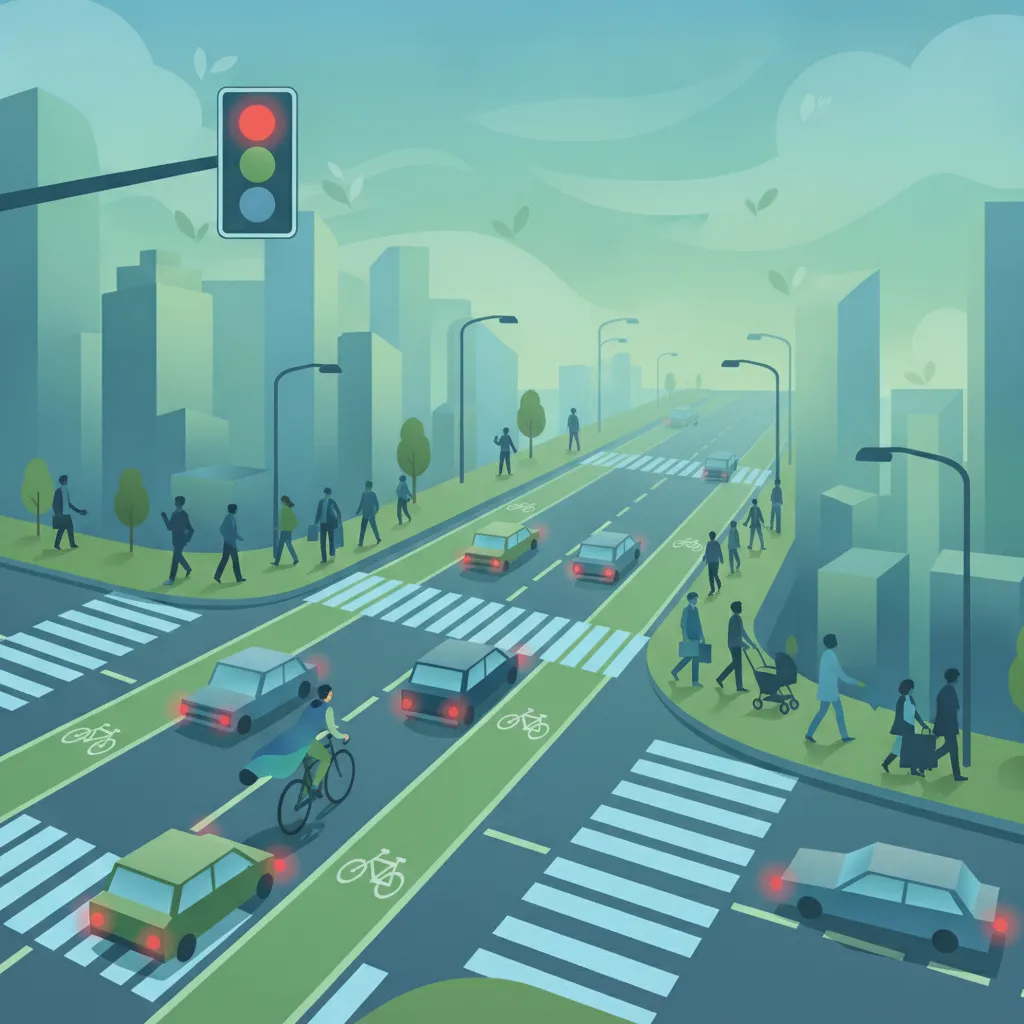
This lesson teaches drivers how to safely coexist with cyclists and pedestrians, who are prevalent in urban areas. It covers the rules for dedicated bike lanes (Radweg), the importance of yielding to pedestrians in designated zones, and the need for extra caution when turning or opening car doors. Maintaining safe overtaking distances and anticipating the movements of these vulnerable road users are key themes for preventing accidents.

This lesson focuses on the critical skill of sharing the road safely with vulnerable users, such as pedestrians, cyclists, and e-scooter riders. It details the legally required distance buffers for overtaking and emphasizes heightened awareness in sensitive areas like school zones and designated pedestrian crossings. The content provides guidelines for interacting with bicycle lanes and shared spaces to foster a protective and respectful driving attitude towards those most at risk.

This lesson provides advanced strategies for proactively managing interactions with vulnerable road users to prevent conflicts before they arise. It teaches drivers to predict the likely behavior of pedestrians, cyclists, and e-scooter riders, especially at intersections and in congested areas. Key techniques include maintaining larger safety distances, covering the brake, and making eye contact to ensure mutual awareness and avoid accidents.

This lesson reinforces the critical importance of protecting vulnerable road users in dense urban settings. It teaches drivers to be hyper-aware of pedestrians and cyclists, especially near intersections and crosswalks. Key techniques include reducing speed, making eye contact to confirm intentions, and giving ample space.

Cyclists and e-scooter riders are highly vulnerable and can be hard to see from a high driving position. This lesson focuses on the critical danger points, such as making right turns across cycle lanes and checking blind spots before pulling away from a stop. It teaches the importance of giving ample space when overtaking and anticipating their movements in busy city traffic.
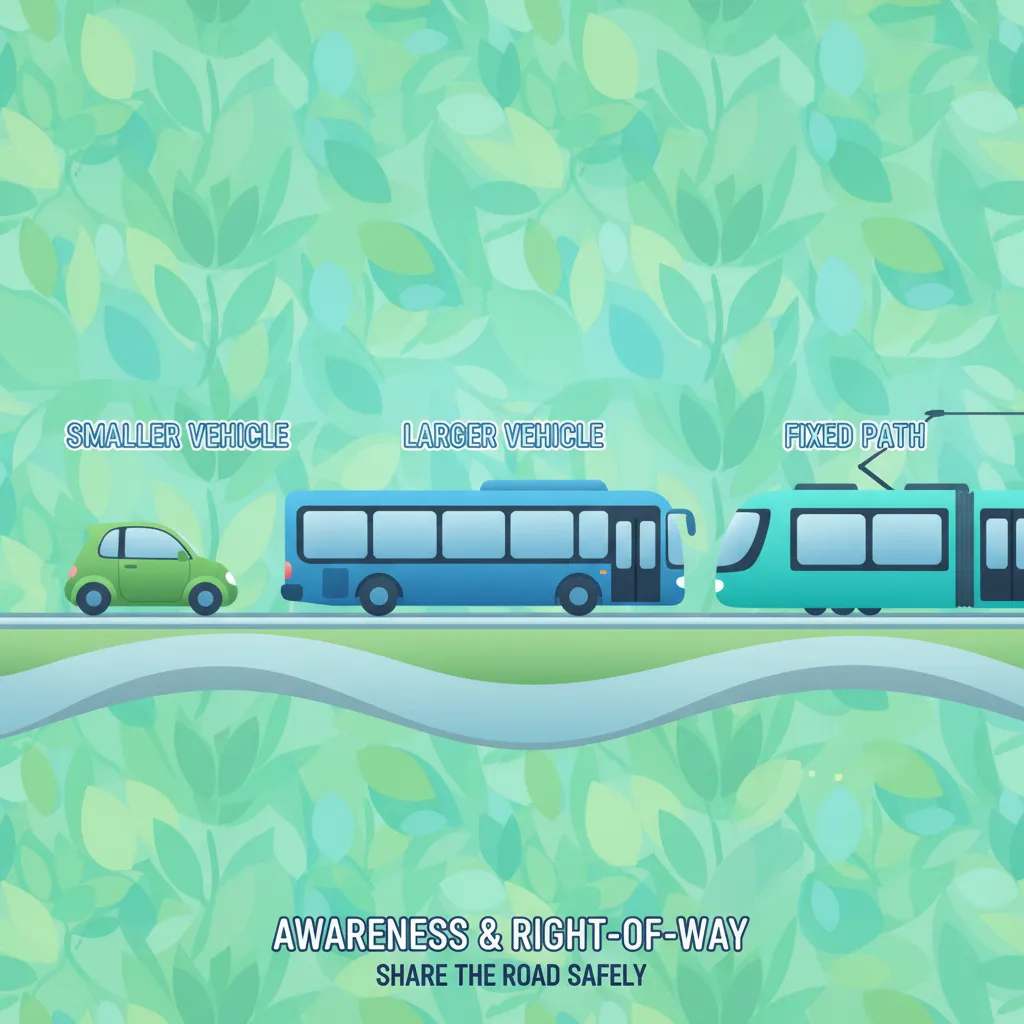
This lesson provides specific guidance for sharing the road with different types of vehicles in Austria. It covers the dangers of large vehicle blind spots, the rules for navigating near buses and dedicated tram tracks, and common conflict points at intersections. Understanding the behavior and limitations of other vehicles is key to safely navigating complex urban environments.
This lesson addresses the specific challenges of interacting with larger vehicles like buses and trams in an urban environment. It explains how to signal intentions clearly and predictably to avoid conflicts in shared spaces. Key topics include safely crossing tram tracks and maintaining awareness around public transport stops.
This lesson consolidates knowledge by applying it to common everyday driving situations. It offers practical tips on topics like smooth driving for fuel efficiency, managing distractions in the cabin, and maintaining courtesy in frustrating traffic. The content reinforces defensive driving principles as a constant habit, helping learners transition from theoretical knowledge to confident, safe, and responsible real-world driving.
This lesson introduces the proactive mindset of defensive driving, which focuses on anticipating potential hazards rather than just reacting to them. It teaches techniques for systematic risk assessment, including scanning the road ahead, checking mirrors frequently, and being aware of the potential actions of other road users. By adopting these safe habits, drivers can create a buffer of safety around their vehicle and significantly reduce the likelihood of being involved in an accident.

This lesson explores the distinct challenges of urban driving, focusing on managing the vehicle in dense, slow-moving, or stop-and-go traffic. It covers strategies for effective lane management, anticipating traffic signal changes, and navigating common city road features like one-way streets and traffic calming measures. Understanding these dynamics helps reduce stress and improve safety in congested environments.
Understand the principles of cooperative driving in Austria, focusing on yielding courtesy, predictable signaling, and the critical differences between legal right-of-way and practical precedence at intersections. Essential for safe navigation.

This lesson provides a comprehensive explanation of Austria's right-of-way laws, which are fundamental to intersection safety. It covers the meaning of different priority signs and clarifies the 'Rechts vor Links' (priority to the right) rule that applies at unmarked junctions. A clear understanding of these rules is essential to prevent conflicts and collisions in urban and rural settings.

This lesson explains the core principles of Vorrang (having priority) and Nachrang (the obligation to yield) which form the basis of the Austrian traffic hierarchy. Learners will understand how priority roads are designated by signs and how drivers on secondary roads must yield right-of-way. The content clarifies the legal foundation for these rules under the Austrian road traffic act (StVO), providing a clear framework for decision-making at intersections.
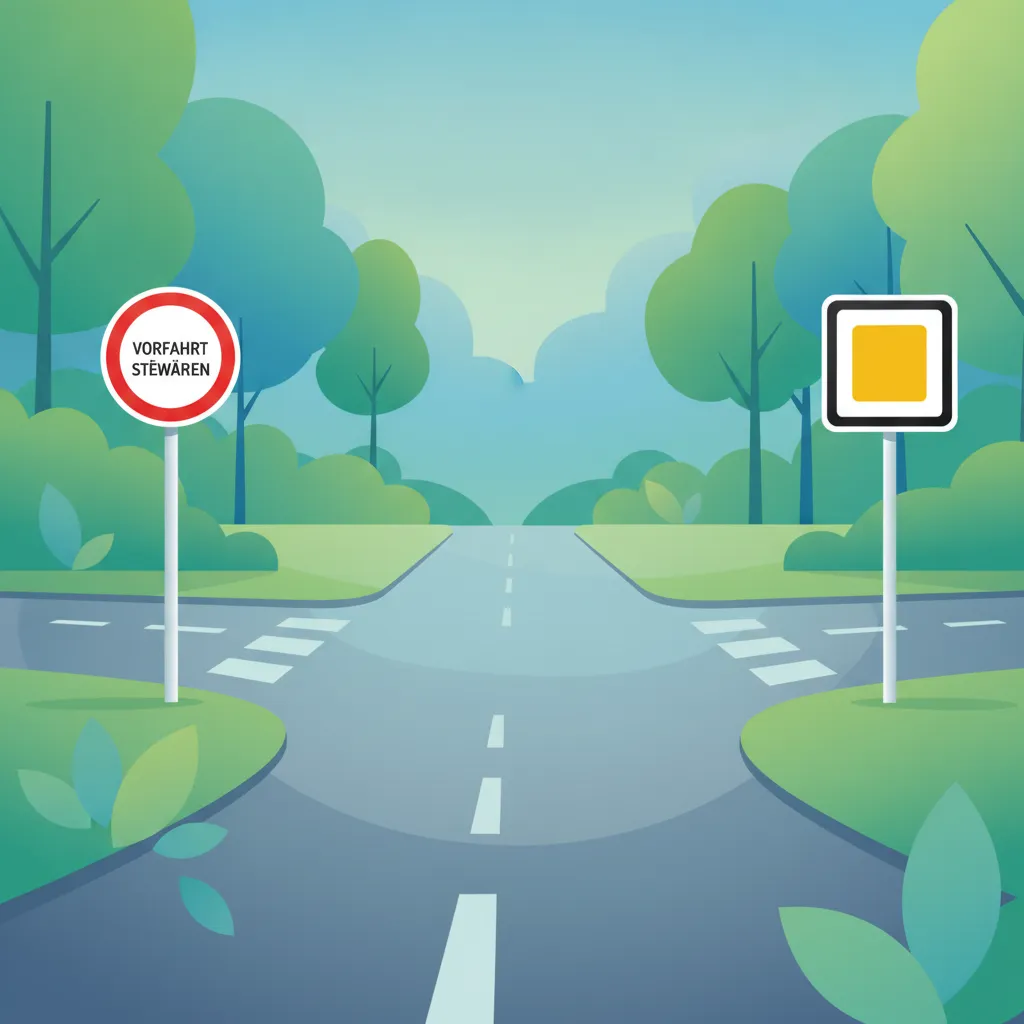
This lesson explains the fundamental concepts of priority that govern traffic at Austrian junctions. It differentiates between having priority ('Vorfahrt') and the duty to yield ('Nachrang'), detailing the signs that establish these rules. Correct application of these principles is critical for preventing collisions at intersections and roundabouts.
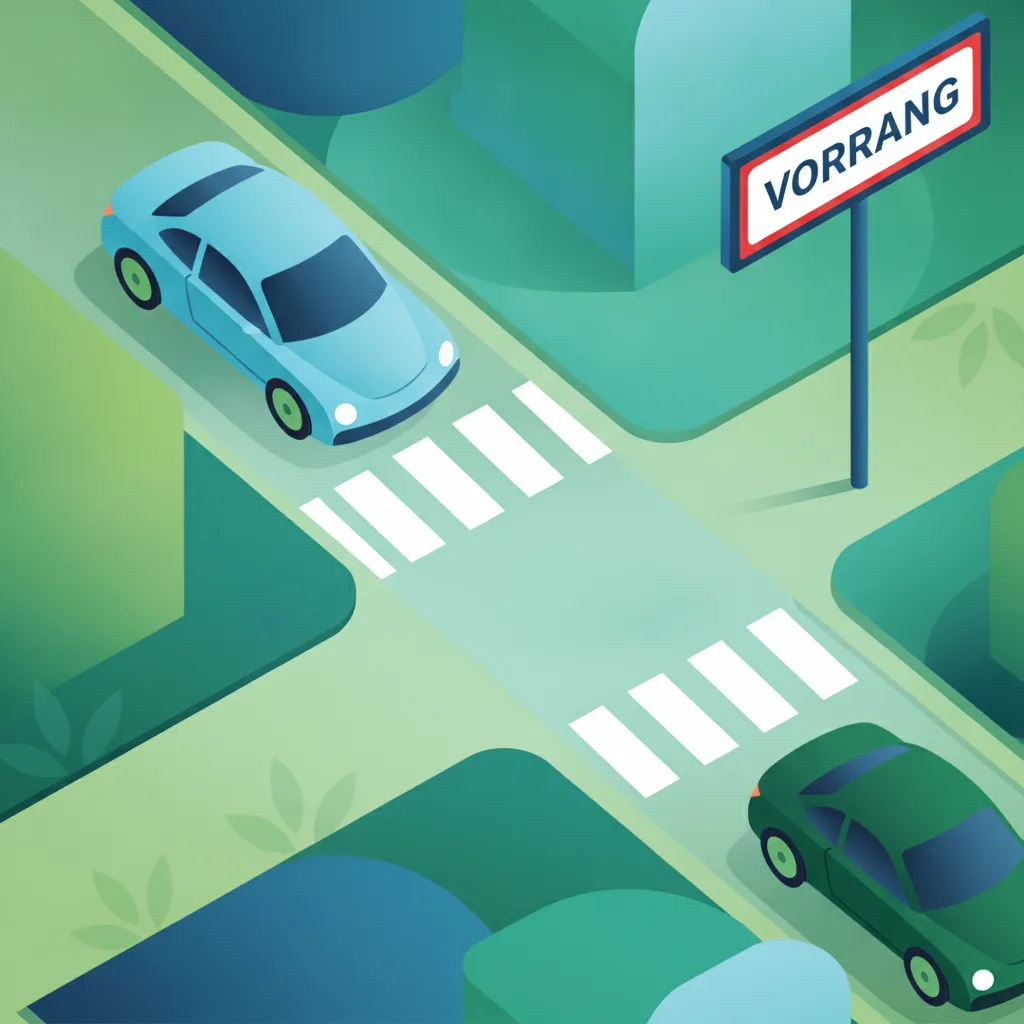
This lesson provides a detailed analysis of the core Austrian traffic rules that govern priority at junctions and in traffic. It focuses on the principles of Vorrang (having priority), Nachrang (yielding), and the Rechtsregel (default right-of-way from the right). Learners will understand the hierarchy of these rules and their application at various types of intersections, from unmarked junctions to those controlled by priority road signs, ensuring correct and safe decision-making.
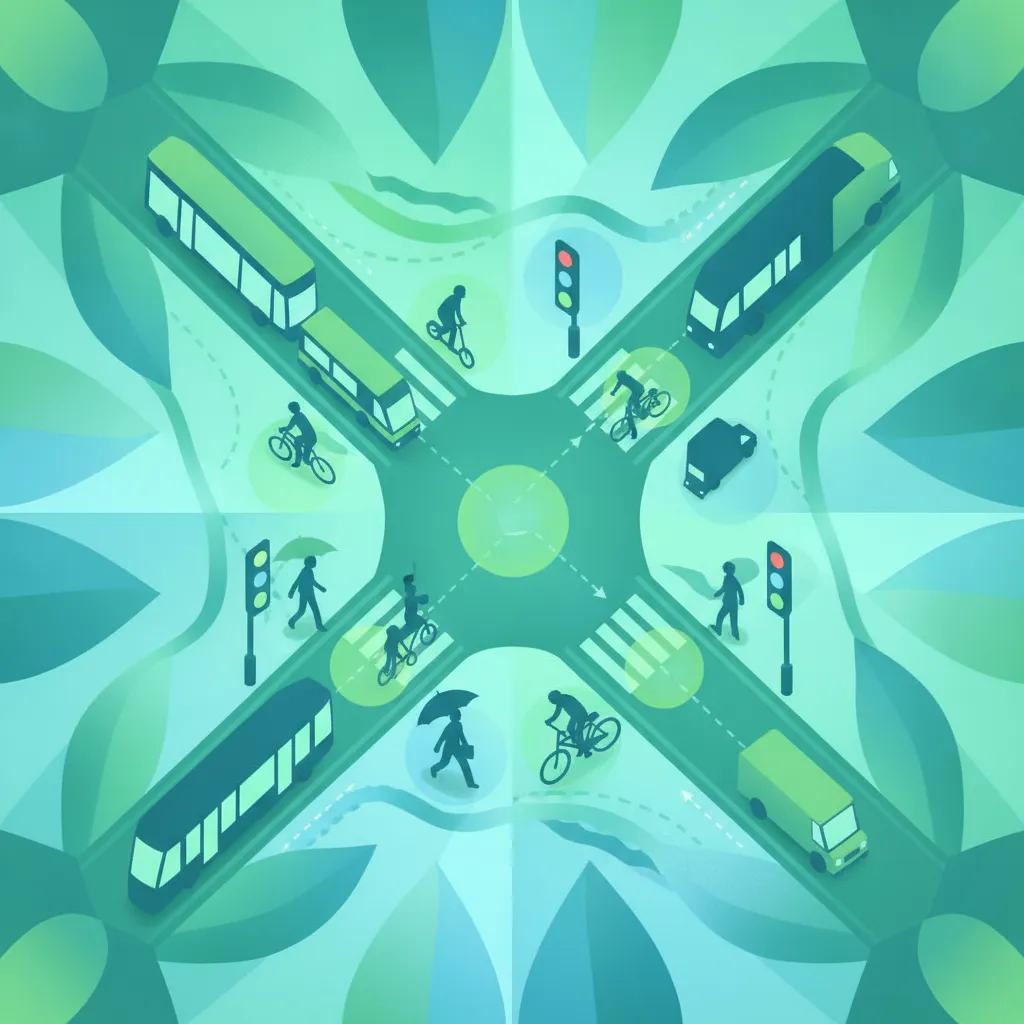
This lesson examines various common intersection layouts, including T-intersections, four-way junctions, and complex multi-lane crossings. It explains how right-of-way is determined in each scenario, whether through traffic signals, stop or yield signs, or the default right-hand rule. Understanding how to identify conflict points and apply the correct priority rule is essential for preventing collisions and ensuring smooth traffic movement.
This lesson explains the operation and meaning of traffic light signals in Austria, including the standard red, yellow, and green phases, as well as flashing signals and arrows. It also covers other priority control devices, such as stop signs and yield signs, which are used to manage right-of-way at intersections. Understanding the hierarchy between these signals and signs is crucial for navigating junctions safely and in compliance with the law.
This lesson focuses on the rules for navigating roundabouts (Kreisverkehr) in Austria. It highlights the fundamental give-way rule, where traffic entering the roundabout must yield to traffic already circulating within it. Learners will understand the correct procedures for lane selection, signaling intent to exit, and maintaining safe traffic flow, supported by explanations of specific Austrian roundabout signage.

This lesson addresses advanced manoeuvres that require precise timing and judgment, such as merging onto a motorway from an acceleration lane. It explains the importance of matching the speed of the traffic flow and finding a safe gap before moving over. The content also covers procedures for navigating lane drops and the 'zipper merge' (Reißverschlusssystem) principle in congested situations, promoting efficient and cooperative driving.

This lesson provides a detailed guide to executing turning manoeuvres safely and correctly at both intersections and roundabouts. It explains the importance of proper lane positioning well in advance of the turn, the correct timing for signaling, and the necessity of checking for pedestrians and cyclists. The content also reinforces priority rules that apply when turning, particularly when crossing the path of oncoming traffic during a left turn.
This lesson details the specific regulations and best practices for driving in areas with high pedestrian activity, such as bus stops and school zones. It explains the driver's obligation to stop for school buses with flashing lights and to yield to public buses pulling out from a stop. The content emphasizes the requirement to significantly reduce speed in marked school zones to ensure the safety of children.
Find clear answers to common questions learners have about Traffic Culture and Cooperation Standards. Learn how the lesson is structured, which driving theory objectives it supports, and how it fits into the overall learning path of units and curriculum progression in Austria. These explanations help you understand key concepts, lesson flow, and exam focused study goals.
The Austrian theory exam evaluates your ability to make safe decisions in complex scenarios. Understanding traffic culture helps you predict other users' actions and choose the most cooperative, safe approach, which is a key part of the examiner's assessment.
Rules are the written legal requirements of the StVO, while culture covers the unwritten expectations of courtesy. Cooperation means yielding when it promotes flow even if you have the right-of-way, or using signals to assist others, making the road safer for everyone.
Predictability is your strongest tool. Using turn signals early, maintaining clear lane positioning, and making eye contact with pedestrians at crossings are the most important forms of communication to avoid accidents.
Yes, 'forced' politeness, such as stopping to let someone out when it contradicts priority rules, can confuse other drivers and create dangerous bottlenecks. Always follow traffic laws first; cooperative behaviour should happen within the bounds of the law.
Refine your study plan by searching for specific Austrian driving theory practice sets. Pinpoint questions related to particular road rules, signs, or challenge levels, and begin practicing immediately to reinforce your knowledge and excel in your official exam with confidence. Get started with focused revision today.