
This lesson details the critical safety protocols for handling a vehicle breakdown while operating heavy goods vehicles in Austria. It covers essential steps for securing the scene, managing traffic, and ensuring driver safety in line with Austrian road regulations. You will learn the correct sequence of actions to protect yourself and others during emergency situations, preparing you for both real-world operations and specific sections of your C category theory exam.

Lesson content overview
Experiencing a vehicle breakdown, especially in a heavy goods vehicle (HGV), can be a stressful and dangerous situation. For professional drivers in the Austrian Driving License Theory Course for Heavy Goods Vehicles (Categories C, C1, C1E, CE), understanding and meticulously following standardized breakdown procedures is not just a recommendation—it's a legal obligation and a critical aspect of road safety. This lesson outlines the comprehensive steps to handle a vehicle breakdown safely, minimizing risks for yourself, other road users, and your cargo.
The primary goal of these procedures is to prevent secondary accidents, ensure the safety of the driver and any passengers, and facilitate prompt assistance. Heavy goods vehicles pose unique challenges during a breakdown due due to their size, weight, and the potential for extensive road obstruction. Therefore, swift, correct actions are paramount to comply with Austrian traffic legislation and uphold professional driving standards.
The first and most crucial step upon recognizing a breakdown is to bring your heavy goods vehicle to a safe halt without obstructing traffic or creating further hazards. This immediate action prevents potential collisions and allows you to address the situation from a secure position.
The ideal stopping location varies significantly depending on the road type and prevailing traffic conditions. Your priority must always be to move the vehicle as far away from the active carriageway as possible.
Never stop in a traffic lane unless it is absolutely impossible to move the vehicle. Stopping in a live lane, especially for a heavy goods vehicle, creates an immediate and severe hazard for high-speed traffic.
Once your vehicle is stationary, the next critical step is to make it as visible as possible to other road users. This is achieved through a combination of mandatory safety equipment designed to warn approaching traffic of the hazard.
Immediately after stopping your vehicle in a safe location, activate your hazard warning lights (also known as hazard flashers or Warnblinkanlage). These are amber lights on your vehicle that flash simultaneously, indicating that your vehicle is stationary and potentially posing a danger.
Some modern heavy goods vehicles may have systems that automatically activate hazard lights when the vehicle comes to a sudden stop or when its speed drops to zero under certain conditions. Always confirm manual activation if you suspect the automatic system has not engaged.
The warning triangle (Pannendreieck) is a reflective, collapsible safety device used to provide an additional, static warning to approaching traffic, particularly on roads with higher speeds or limited visibility. Correct placement is crucial for its effectiveness.
When deploying or retrieving the warning triangle, always be vigilant of traffic. Walk against the flow of traffic to better see approaching vehicles and stay as far off the carriageway as possible.
Your personal safety is paramount when dealing with a breakdown. A high-visibility vest (Warnweste) is designed to make you easily seen by other road users, especially in low light or adverse weather conditions.
Heavy goods vehicles are typically required to carry a high-visibility vest as part of their mandatory safety equipment. Always ensure your vehicle is equipped with a compliant vest.
Once visible, the next step is to ensure your heavy goods vehicle cannot move unintentionally, which is particularly critical given its size and weight, especially on gradients.
With your vehicle safely stopped and secured, and visibility measures in place, the next step is to contact appropriate assistance.
For non-emergency breakdowns that do not pose an immediate danger to other traffic, your first call should typically be to roadside assistance. This could be your fleet's dedicated support service, a national motoring club (like ÖAMTC or ARBÖ in Austria, or ADAC for international drivers), or your insurance provider's breakdown service.
In situations where your breakdown creates an immediate and severe danger to road safety, you must contact emergency services by dialling 112, the universal European emergency number.
Never delay calling 112 if the situation is urgent and dangerous. Prompt reporting can save lives and prevent further incidents.
After taking immediate safety measures and contacting assistance, you must continually assess the situation.
Adherence to specific sections of the Austrian Road Traffic Regulations (Straßenverkehrsordnung, StVO) is mandatory for all drivers, especially those operating heavy goods vehicles.
Failure to comply with these regulations can result in significant fines, points on your license, and can lead to severe legal consequences, including liability for damages, if your non-compliance contributes to a secondary accident.
Ignoring or improperly executing breakdown procedures can have serious ramifications.
| Violation | Why It's Wrong | Correct Behavior | Consequence (Austria) |
|---|---|---|---|
| Failure to activate hazard lights | Reduces vehicle visibility, causes confusion for other drivers. | Turn on hazard lights immediately after stopping. | Fine, increased risk of rear-end collision. |
| Incorrect placement of warning triangle | Provides insufficient warning distance, especially on high-speed roads. | Place triangle at the legally mandated distance (10m, 30m, or 100m) based on speed. | Fine, potential liability in case of accident. |
| Exiting vehicle without high-visibility vest | Significantly reduces driver's visibility to approaching traffic, especially at night or in bad weather. | Wear vest before stepping onto the roadway. | Fine, greatly increased personal injury risk. |
| Leaving vehicle unattended in a hazardous spot | An unattended vehicle becomes an unpredictable obstacle; driver is unavailable to react. | Remain in a safe area (behind guardrail, inside secured vehicle) until assistance arrives. | Potential criminal liability if obstruction causes accident. |
| Not contacting emergency services when danger exists | Authorities cannot mitigate severe hazards (e.g., blocked lane, hazardous cargo). | Call 112 immediately with precise location and situation details. | Legal repercussions, delayed emergency response, increased hazard. |
| Not securing load before stopping | Load may shift upon sudden braking or vehicle movement, causing instability or spills. | Assess and secure load as much as possible before coming to a complete stop or before exiting the vehicle. | Accident risk, fines for load shift, cargo damage. |
Breakdown procedures must be adapted to different environmental and situational factors.
Understanding these procedures becomes clearer through practical examples.
A C category truck experiences engine failure on the A1 motorway where the speed limit is 130 km/h, approximately 2 km from the nearest exit.
A heavily loaded C1E combination vehicle suffers a tire puncture on a rural road with an 80 km/h speed limit, on a slight downhill slope.
A light C1 delivery vehicle breaks down due to an electrical fault near a busy urban intersection during peak traffic hours.
The breakdown procedures are not arbitrary rules; they are rooted in fundamental principles of safety, physics, and human perception.
Mastering breakdown procedures is a core competency for all heavy goods vehicle drivers in Austria. By adhering to these guidelines, you uphold your professional responsibility, safeguard lives, and comply with traffic law.
Identify Safest Stopping Location: Immediately pull over to the hard shoulder, road edge, or a suitable parking bay, as far off the carriageway as possible.
Activate Hazard Warning Lights: Switch on your hazard lights immediately after stopping to warn other traffic.
Secure the Vehicle: Engage the handbrake, select neutral gear, and use wheel chocks if on an incline or with a heavy load.
Don High-Visibility Vest: Put on your high-visibility vest before exiting the vehicle onto a public roadway.
Deploy Warning Triangle: Place the triangle at the legally mandated distance (10m, 30m, or 100m) behind your vehicle, adjusting for poor visibility or specific road features.
Contact Assistance: Call your roadside assistance provider for technical help. For immediate dangers (e.g., blocking a motorway lane, fire, accident), immediately call 112.
Assess and Wait Safely: Continuously monitor the situation, stay in a safe location (e.g., behind a guardrail), and await professional help. Do not attempt unsafe repairs or movements.
Maintain Situational Awareness: Be constantly aware of traffic, weather conditions, and any potential risks to yourself or others.
This lesson covers the complete breakdown procedure for heavy goods vehicles in Austria, emphasizing that safety-first actions prevent secondary accidents. Key steps include pulling to the safest location, activating hazard lights, wearing a high-visibility vest before exiting, and deploying the warning triangle at legally specified distances based on road speed limits. The lesson details when to call roadside assistance versus emergency services (112), explains mandatory vehicle securing measures including wheel chocks and load checks, and provides practical scenarios for motorway, rural road, and urban breakdowns. Failure to follow these procedures violates Austrian traffic law and can result in fines, license points, and legal liability if non-compliance causes an accident.
A short set of high-value points that capture the most important learning from this lesson.
Always activate hazard lights immediately when your vehicle poses a danger or obstruction on a public road, as required by StVO § 18a.
Deploy the warning triangle at the legally mandated distance behind your vehicle: 10m for speeds up to 30 km/h, 30m for 30-50 km/h, and 100m for speeds over 50 km/h.
Put on your high-visibility vest before exiting the vehicle on any public road, regardless of time of day or weather, per StVO § 22.
Call 112 immediately when your breakdown creates immediate danger, such as blocking a motorway lane, not just roadside assistance.
Secure your vehicle with handbrake, neutral gear, and wheel chocks on inclines before exiting, especially when carrying a heavy load.
Explore all units and lessons included in this driving theory course.
Warning triangle distances: 10m (≤30 km/h), 30m (30-50 km/h), 100m (>50 km/h), with extra distance needed in poor visibility or on blind curves.
Hazard lights (Warnblinkanlage) must stay on until the vehicle is in a completely safe location or professional assistance has secured the scene.
On motorways, wait behind the guardrail for assistance rather than staying in or near the vehicle.
Wheel chocks (Unterlegkeile) are essential for heavy goods vehicles on any incline or when heavily loaded.
Provide precise location details when calling for help, including road name, kilometre marker, direction of travel, and vehicle registration.
Placing the warning triangle too close to the vehicle, especially on high-speed roads where 100m is required for adequate reaction time.
Exiting the vehicle without wearing a high-visibility vest first, which is mandatory under StVO § 22.
Calling roadside assistance instead of 112 when the vehicle is blocking a traffic lane on a motorway or expressway.
Failing to check load security before exiting, which can lead to cargo shift and instability especially on slopes.
Not securing the vehicle properly with handbrake and wheel chocks before performing any breakdown tasks.
Lesson content overview
A short set of high-value points that capture the most important learning from this lesson.
Always activate hazard lights immediately when your vehicle poses a danger or obstruction on a public road, as required by StVO § 18a.
Deploy the warning triangle at the legally mandated distance behind your vehicle: 10m for speeds up to 30 km/h, 30m for 30-50 km/h, and 100m for speeds over 50 km/h.
Put on your high-visibility vest before exiting the vehicle on any public road, regardless of time of day or weather, per StVO § 22.
Call 112 immediately when your breakdown creates immediate danger, such as blocking a motorway lane, not just roadside assistance.
Secure your vehicle with handbrake, neutral gear, and wheel chocks on inclines before exiting, especially when carrying a heavy load.
Explore all units and lessons included in this driving theory course.
Warning triangle distances: 10m (≤30 km/h), 30m (30-50 km/h), 100m (>50 km/h), with extra distance needed in poor visibility or on blind curves.
Hazard lights (Warnblinkanlage) must stay on until the vehicle is in a completely safe location or professional assistance has secured the scene.
On motorways, wait behind the guardrail for assistance rather than staying in or near the vehicle.
Wheel chocks (Unterlegkeile) are essential for heavy goods vehicles on any incline or when heavily loaded.
Provide precise location details when calling for help, including road name, kilometre marker, direction of travel, and vehicle registration.
Placing the warning triangle too close to the vehicle, especially on high-speed roads where 100m is required for adequate reaction time.
Exiting the vehicle without wearing a high-visibility vest first, which is mandatory under StVO § 22.
Calling roadside assistance instead of 112 when the vehicle is blocking a traffic lane on a motorway or expressway.
Failing to check load security before exiting, which can lead to cargo shift and instability especially on slopes.
Not securing the vehicle properly with handbrake and wheel chocks before performing any breakdown tasks.
Explore search topics learners often look for when studying Procedures for Breakdowns and Roadside Assistance. These topics reflect common questions about road rules, driving situations, safety guidance, and lesson level theory preparation for learners in Austria.
Browse additional driving theory lessons that cover connected traffic rules, road signs, and common driving situations related to this topic. Improve your understanding of how different rules interact across everyday traffic scenarios.
Learn essential safety protocols for heavy vehicle breakdowns in Austria. Understand correct procedures for stopping, signalling, securing the vehicle, and contacting roadside assistance or emergency services according to StVO regulations.
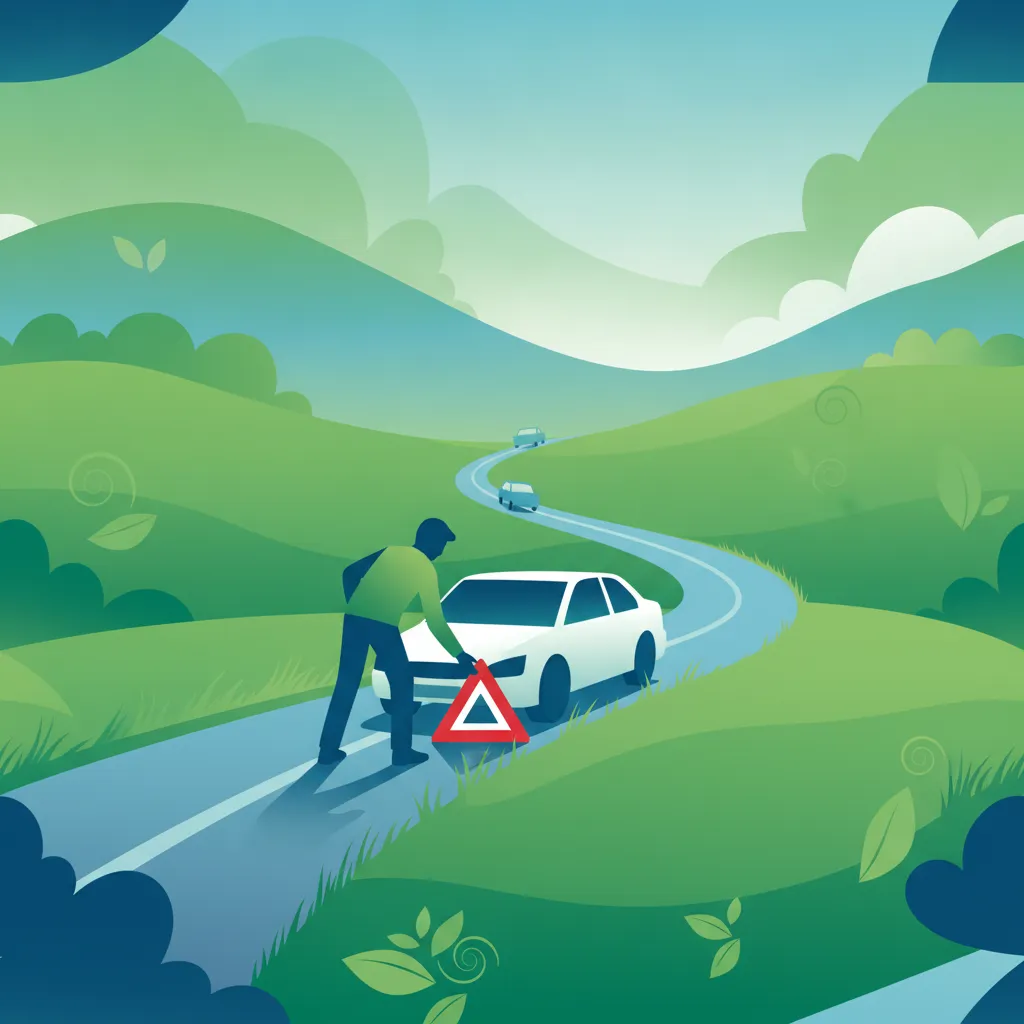
A breakdown requires a calm, systematic response to keep everyone safe. This lesson details the procedure: move to the safest possible location, activate hazard lights, secure the vehicle, and deploy warning triangles. It emphasizes the importance of moving passengers to a safe place away from the vehicle, especially on a motorway, before contacting your company or the breakdown services.

This lesson provides a step-by-step guide for safely managing a vehicle breakdown on the road. It covers the correct procedure for pulling over to a safe location, activating hazard lights, and wearing a high-visibility vest. Learners will understand the legal requirement and correct placement of the warning triangle to alert oncoming traffic, as well as the necessary information to provide when contacting roadside assistance services.

This lesson details the general traffic rules applicable to heavy goods vehicles on Austrian roads, highlighting differences from passenger car regulations. It covers key topics such as right-of-way at intersections, specific rules for overtaking, maintaining proper lane discipline, and adhering to designated speed limits. Understanding these rules is critical for safe integration into mixed traffic.

This lesson prepares drivers for the emergency scenario of a shifting or lost load. It covers how to react to the sudden change in vehicle handling, safely pull over, and assess the situation. The lesson also explains the driver's responsibility for securing the scene and reporting the incident to prevent hazards for other road users.
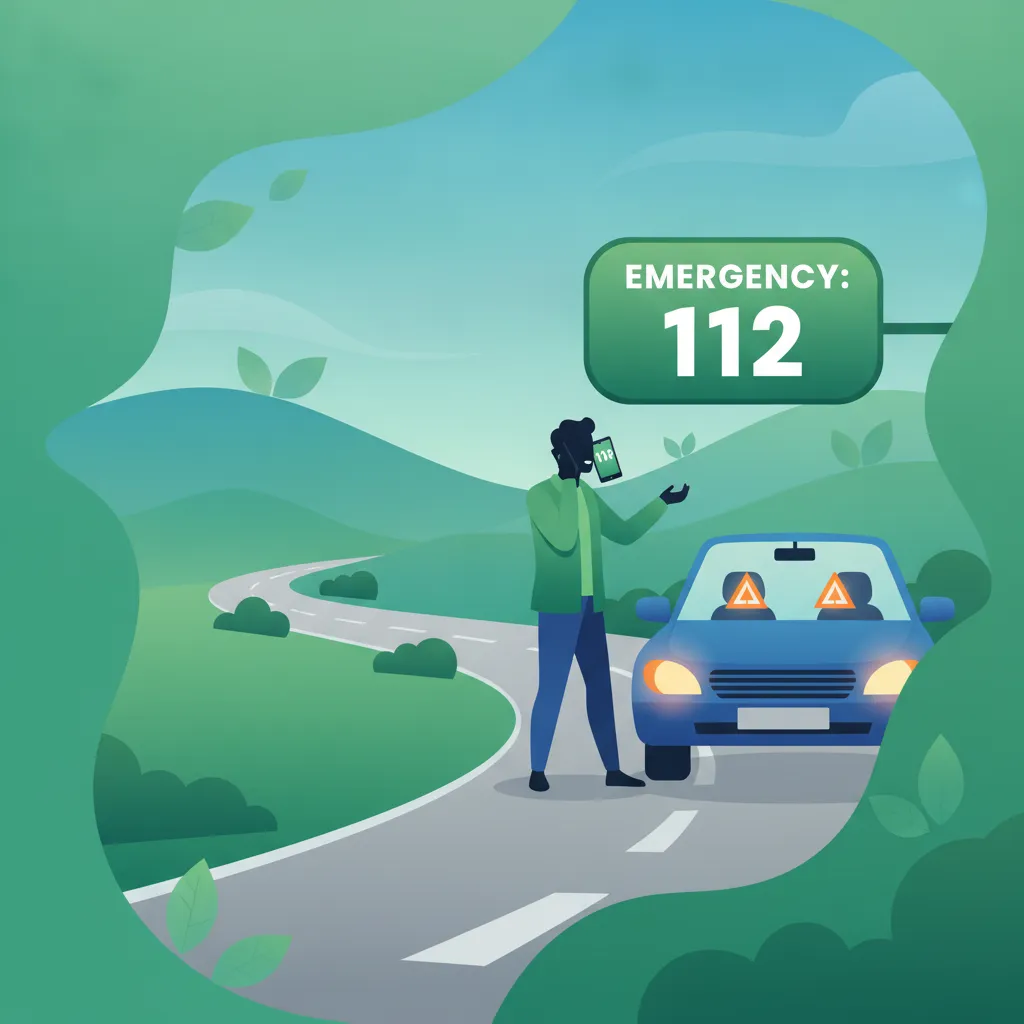
This final lesson summarizes the core principles of responding to any on-road emergency, from a breakdown to an accident. It reinforces the priorities of personal safety, securing the scene to protect others, and providing clear, concise information when calling the pan-European emergency number, 112. This knowledge is essential for managing any unforeseen incident effectively.

This lesson outlines the significant legal responsibilities placed on heavy-vehicle drivers under Austrian law, emphasizing a strong duty of care and professional conduct. It covers the obligation to perform thorough pre-trip inspections, comply with all load and weight regulations, and uphold safety standards to protect all road users. Adherence to these principles is crucial for professional and safe operation.
This lesson provides an overview of the legal framework governing heavy vehicle drivers in Austria. It details the potential penalties for violations, including fines, penalty points, and the risk of licence suspension. A clear understanding of these consequences reinforces the importance of compliant and responsible driving.
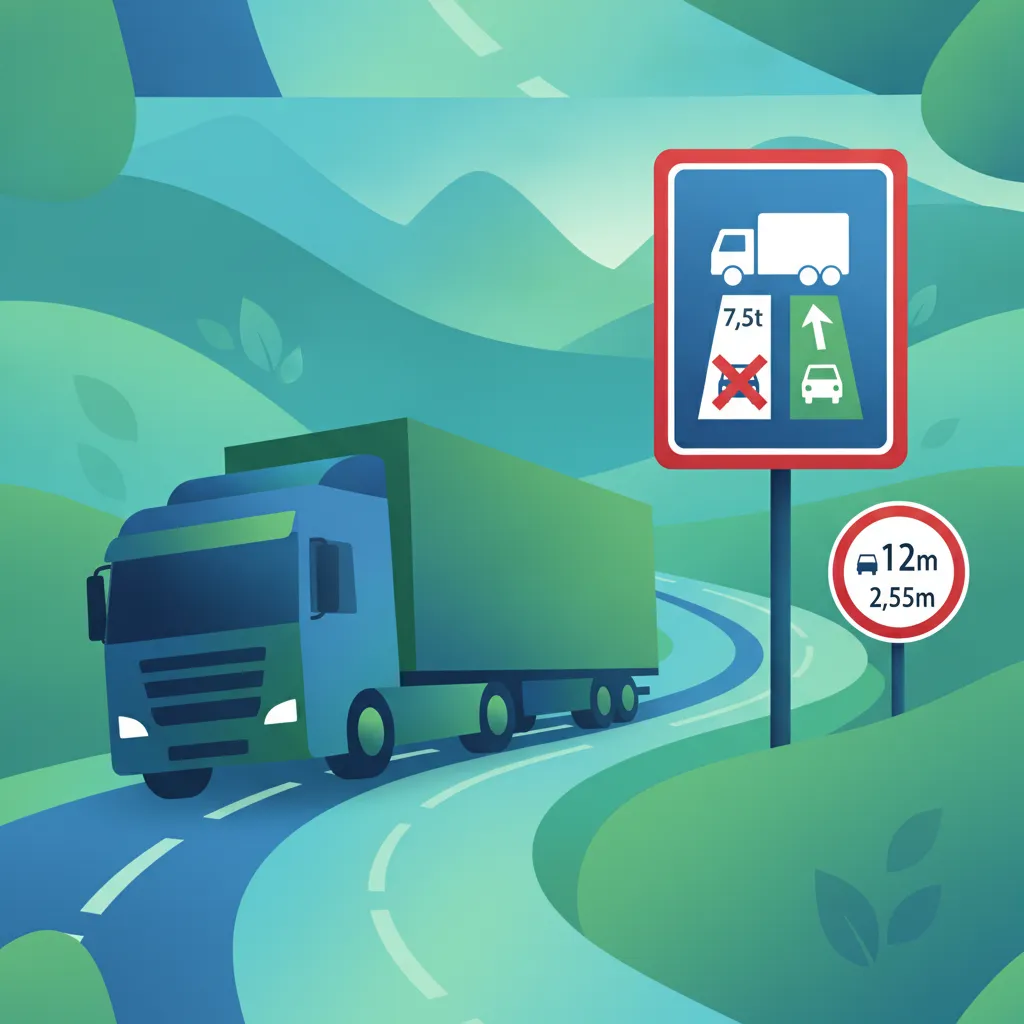
This lesson focuses on the specific Austrian road signs and supplemental plates that apply to heavy goods vehicles. It explains how to interpret signage indicating weight limits, height and width restrictions, lane usage rules, and other critical regulatory information. Correctly understanding these signs is essential for legal compliance and safe navigation on Austria's roads.
This lesson explains the system of penalties and enforcement for heavy vehicle operations in Austria. It covers the fines and penalty points associated with common traffic violations, such as overloading or insecure loads. Learners will understand the role of authorities in conducting roadside checks and inspections to ensure regulatory compliance.
This lesson covers the legal requirements for regular maintenance and periodic roadworthiness certification (known as the 'Pickerl' or TÜV inspection) in Austria. It explains the importance of adhering to manufacturer-recommended service intervals. Maintaining a certified, roadworthy vehicle is a core legal responsibility for any operator or driver.
Explore typical breakdown situations for heavy goods vehicles in Austria, focusing on driver actions, risk assessment, and preventative measures. Understand how to handle emergencies, secure loads, and comply with traffic laws to ensure safety.
This lesson provides a step-by-step guide for safely managing a vehicle breakdown on the road. It covers the correct procedure for pulling over to a safe location, activating hazard lights, and wearing a high-visibility vest. Learners will understand the legal requirement and correct placement of the warning triangle to alert oncoming traffic, as well as the necessary information to provide when contacting roadside assistance services.
A breakdown requires a calm, systematic response to keep everyone safe. This lesson details the procedure: move to the safest possible location, activate hazard lights, secure the vehicle, and deploy warning triangles. It emphasizes the importance of moving passengers to a safe place away from the vehicle, especially on a motorway, before contacting your company or the breakdown services.
This lesson provides an overview of the legal framework governing heavy vehicle drivers in Austria. It details the potential penalties for violations, including fines, penalty points, and the risk of licence suspension. A clear understanding of these consequences reinforces the importance of compliant and responsible driving.
This lesson prepares drivers for the emergency scenario of a shifting or lost load. It covers how to react to the sudden change in vehicle handling, safely pull over, and assess the situation. The lesson also explains the driver's responsibility for securing the scene and reporting the incident to prevent hazards for other road users.

This lesson highlights the serious risks of driving while fatigued. It teaches drivers to recognize the physical and mental symptoms of fatigue and explains the legal regulations regarding driving hours and mandatory rest breaks. The lesson also offers practical strategies for managing alertness and ensuring fitness to drive.
This lesson outlines the significant legal responsibilities placed on heavy-vehicle drivers under Austrian law, emphasizing a strong duty of care and professional conduct. It covers the obligation to perform thorough pre-trip inspections, comply with all load and weight regulations, and uphold safety standards to protect all road users. Adherence to these principles is crucial for professional and safe operation.
This final lesson summarizes the core principles of responding to any on-road emergency, from a breakdown to an accident. It reinforces the priorities of personal safety, securing the scene to protect others, and providing clear, concise information when calling the pan-European emergency number, 112. This knowledge is essential for managing any unforeseen incident effectively.
This lesson covers the practical aspects of planning a route for a heavy goods vehicle. It explains how to use maps and specialized GPS systems to identify and avoid roads with height, weight, or other restrictions. Proactive route planning is essential for ensuring an efficient, legal, and safe journey.
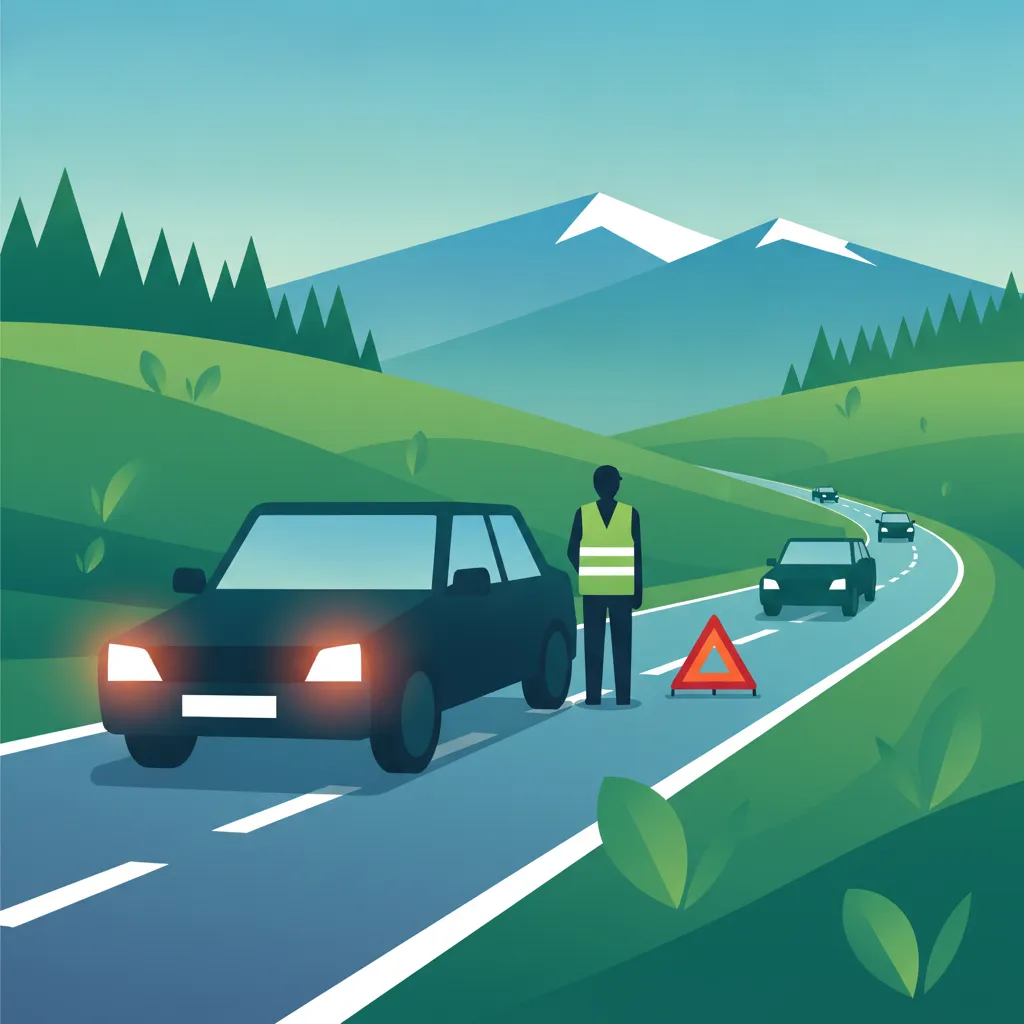
This lesson equips riders with the knowledge to manage an unexpected breakdown or accident. It outlines the steps for securing the vehicle and scene safely, including the use of hazard lights and a reflective vest. It also covers the procedure for contacting emergency services and providing essential information.

This lesson details the legal ramifications of operating an overloaded heavy vehicle in Austria, which include significant fines and penalty points. It also emphasizes the severe safety risks, such as compromised braking performance and increased mechanical stress on the vehicle. Understanding these consequences reinforces the importance of strict adherence to weight limits.
Find clear answers to common questions learners have about Procedures for Breakdowns and Roadside Assistance. Learn how the lesson is structured, which driving theory objectives it supports, and how it fits into the overall learning path of units and curriculum progression in Austria. These explanations help you understand key concepts, lesson flow, and exam focused study goals.
On motorways, the warning triangle must be placed at least 100 meters behind the vehicle to provide adequate warning to oncoming traffic. On other roads, it should be placed at a distance that ensures drivers are alerted in time to react safely, typically 50 meters.
Yes, for professional drivers in the C, C1, C1E, or CE categories, wearing a high-visibility vest is a critical safety requirement before exiting the vehicle at the roadside to ensure you are clearly visible to other road users.
In a tunnel, switch on your hazard lights immediately and pull as far to the right as possible or into an emergency bay. Turn off the engine, leave the keys in the ignition, and evacuate via the marked escape routes if necessary, while following official tunnel safety protocols.
Contact emergency services via 112 if your vehicle is blocking a live lane, posing an immediate danger to other traffic, or if there is a fire or medical emergency. Use professional roadside assistance services for general mechanical failures that do not pose an immediate danger.
Refine your study plan by searching for specific Austrian driving theory practice sets. Pinpoint questions related to particular road rules, signs, or challenge levels, and begin practicing immediately to reinforce your knowledge and excel in your official exam with confidence. Get started with focused revision today.