
This lesson guides you through the critical task of route planning for heavy goods vehicles on the Austrian road network. You will learn to identify and respect signage regarding weight, height, and length restrictions, ensuring that you maintain both legal compliance and road safety. This is a vital skill for both your official theory exam and your future professional career as a driver.
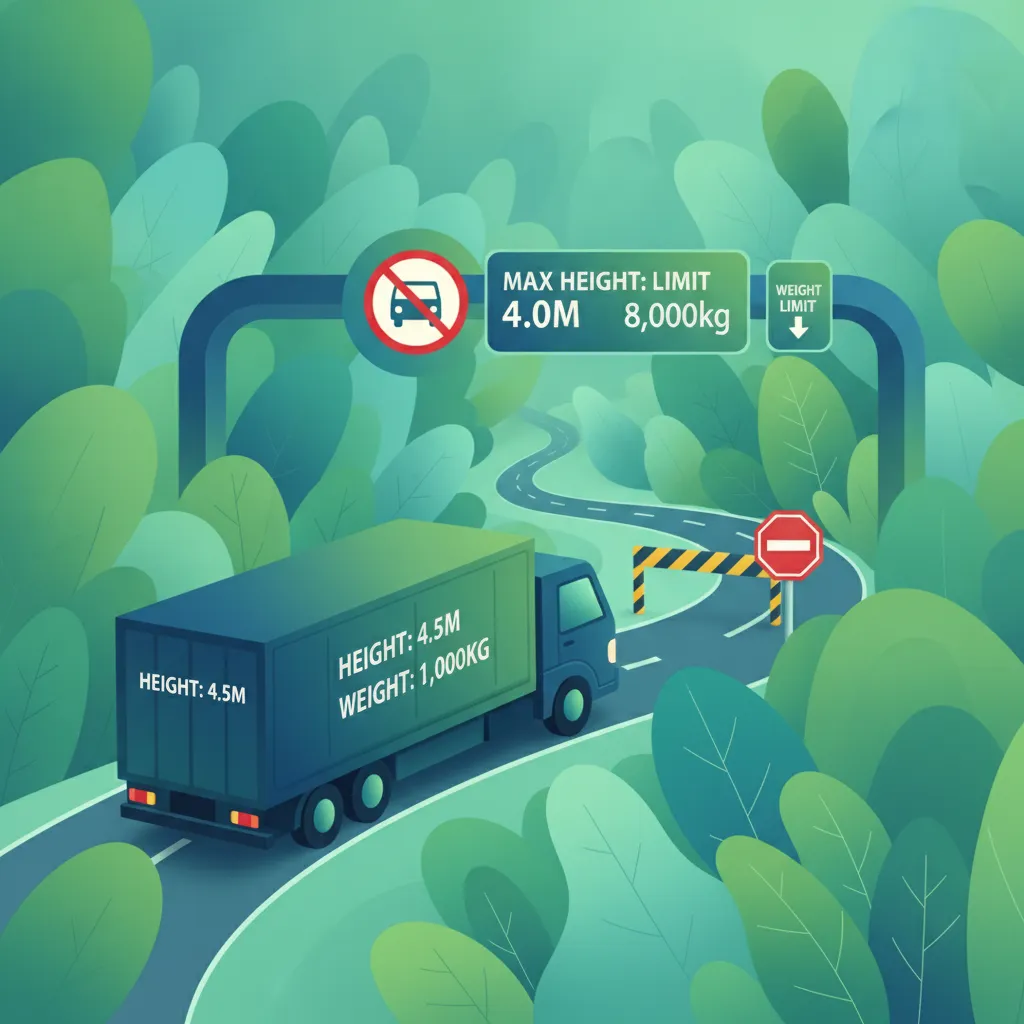
Lesson content overview
Effective route planning is a cornerstone of professional heavy goods vehicle (HGV) operation. For drivers operating in Austria and across Europe, understanding and adhering to road restrictions related to vehicle load, height, width, and length is not merely a recommendation—it is a legal and safety imperative. Proactive route planning safeguards against legal violations, prevents costly vehicle and infrastructure damage, and ensures the safety of all road users. This comprehensive guide, part of your Austrian Driving License Theory Course for Heavy Goods Vehicles, delves into the practical aspects of preparing for an efficient, legal, and safe journey.
The sheer size and weight of heavy goods vehicles mean that even minor miscalculations in route planning can lead to significant consequences. Collisions with low bridges or tunnels, damage to overloaded roads or bridges, and delays from having to reroute can incur substantial costs, fines, and potentially severe accidents. Therefore, the process of selecting a safe and legal route must consider the physical limits of the vehicle, the infrastructure limits of the road network, and dynamic conditions such as weather or ongoing construction. This careful consideration ensures physical compatibility with the infrastructure and strict legal compliance with all posted regulations.
Before any route can be planned, a comprehensive understanding of the vehicle itself is essential. The unique characteristics of your HGV dictate which roads, tunnels, and bridges can be safely and legally traversed.
Each heavy goods vehicle possesses specific dimensions that are crucial for route planning. These include its total height (including any loaded cargo), overall width, and total length (especially relevant for vehicle combinations like articulated trucks or road trains). The Gross Vehicle Weight (GVW) represents the total weight of the vehicle when loaded, encompassing the vehicle's curb weight, its payload, fuel, and all fluids. All these parameters must remain within the maximum permissible dimensions for each road category, whether it's an Autobahn, Schnellstraße, or a local road.
Beyond the total GVW, the distribution of weight across individual axles, known as axle loads, is equally critical. Roads and bridges are designed to withstand specific pressures. An unevenly distributed load, or an excessive load on a single axle, can concentrate stress on the road surface or bridge structure, potentially causing damage even if the overall GVW is within limits. Proper load distribution ensures that each axle's weight remains below its permitted maximum and below the limits of the infrastructure.
Payload refers to the maximum weight of cargo that can be safely loaded onto the vehicle, derived from the difference between the GVW and the vehicle's unladen (curb) weight. Accurate payload calculation is vital to avoid overloading. Furthermore, how this payload is distributed within the vehicle significantly impacts stability, braking performance, and, crucially, individual axle loads. Incorrect distribution can lead to dangerous load shifts, potentially altering the vehicle's effective height or width, and compromising stability.
Always verify your vehicle's exact dimensions and loaded weight before departure. Even slight variations due to different cargo or equipment can impact compliance with restrictions.
Austria's diverse topography, from flat plains to challenging Alpine passes, features a road network with various restrictions designed to ensure safety and preserve infrastructure. Heavy vehicle drivers must be acutely aware of these limitations.
Height restrictions limit the vertical clearance for vehicles, primarily encountered at tunnels, overpasses, and under bridges. These limits are non-negotiable and demand precise adherence.
Permanent height limits are fixed and apply indefinitely to structures like tunnels and highway overpasses. These are usually clearly marked with traffic signs. Temporary height limits, however, may arise due to road works, scaffolding, or other temporary structures, and are indicated by temporary signage. Drivers must verify clearances before entering any potentially restricted area.
The total height of your vehicle includes the highest point of its structure or load. This measurement should always be taken with the vehicle loaded, as suspension compression or load shifts can influence actual height. For open loads, remember to account for any part of the cargo that extends above the vehicle's structure.
A frequent mistake is underestimating the actual height of the loaded vehicle, or forgetting to account for the additional height of a trailer. Road surfaces can also be uneven, and sharp inclines or declines can momentarily increase the effective height of a vehicle's extremities, particularly when entering or exiting tunnels. A safety margin is therefore highly recommended. For instance, a 3.5-metre high trailer must avoid a tunnel with a clear height of 3.4 metres.
Weight restrictions are imposed to protect the structural integrity of roads, bridges, and other infrastructure elements. These limitations can apply to the total GVW of the vehicle or to the load on individual axles.
Specific roads or sections, particularly in rural or mountainous areas, may have limits on the total GVW they can accommodate. These limits are crucial for preventing pavement damage and maintaining road longevity. Drivers must ensure their vehicle's GVW does not exceed these posted limits.
Even if the GVW is within limits, exceeding individual axle load restrictions can still cause damage to roads or bridges. This is particularly relevant for heavy specialized vehicles or those with highly concentrated loads. Proper load distribution across all axles is therefore paramount.
Bridges are designed and classified according to their load-bearing capacity. These classifications are often displayed on signage at the bridge approach, indicating the maximum permissible weight or class of vehicle allowed to cross. In Austria, bridge load classifications are critical. For example, a bridge with a load limit of 20 tonnes prohibits a vehicle with a GVW of 22 tonnes. Assuming all bridges can bear any heavy vehicle, or ignoring temporary load reductions due to construction, are common, dangerous mistakes.
Restrictions on vehicle width and overall length impact lane usage, the ability to pass through narrow sections, and safe navigation of curves and intersections.
While standard width limits apply generally (e.g., 2.55 metres for most HGVs in Austria), some narrow roads, bridges, or tunnels may have tighter width restrictions. Wider vehicles may be barred from these routes to prevent collisions with infrastructure or other vehicles. For example, a road with a width limit of 2.75 metres permits a truck width of 2.6 metres, but a 2.8 metre truck would be prohibited.
For articulated vehicles and road trains, overall length restrictions are critical. These limits ensure that long vehicle combinations can safely negotiate tight turns, roundabouts, and urban environments without obstructing traffic or striking roadside objects. Compliance is mandatory, often indicated by specific signage for vehicle combinations.
Modern technology provides powerful tools to assist HGV drivers in planning compliant routes. However, these tools must be used correctly and supplemented with traditional methods.
Generic navigation apps are often insufficient for heavy goods vehicles as they typically do not account for height, weight, width, and length restrictions. Specialized HGV GPS systems and navigation software are designed with integrated databases containing these critical restrictions. They can calculate routes that automatically avoid non-compliant roads, tunnels, and bridges.
The accuracy of HGV navigation systems relies heavily on up-to-date restriction databases. Road conditions, temporary closures, and new restrictions can emerge rapidly. Drivers should ensure their GPS software is regularly updated. Furthermore, systems that provide real-time traffic updates are invaluable for identifying dynamic conditions that might affect route viability, such as sudden closures or temporary weight limits due to incidents or weather.
While technology is helpful, manual map interpretation remains a vital skill. Physical maps and online mapping services can be used to cross-reference routes, identify potential problem areas, and plan alternative detours. Drivers should always visually confirm signage en-route, even if their GPS indicates a clear path, as unexpected or very recent changes might not yet be reflected in digital data. Some jurisdictions may legally require drivers to carry up-to-date route information.
Road signs are the primary means by which authorities communicate restrictions. Understanding and obeying these signs is a fundamental responsibility of every HGV driver.
Austria, like other European countries, uses a standardized system of road signs. Mandatory restriction signs, often circular with a red border, indicate prohibitions or specific requirements.
Temporary restriction signs are erected to manage specific, often short-term, conditions. These signs are legally binding while displayed and take precedence over permanent signage. They might indicate weight limits during bridge repairs, height restrictions due to overhead construction, or width limitations for temporary lane reductions. Ignoring these signs can lead to severe fines, infrastructure damage, and even criminal liability.
Always obey temporary restriction signs. They are legally binding and are put in place for safety, often due to immediate hazards or structural weaknesses.
Effective HGV route planning extends beyond the initial pre-trip assessment. Drivers must be prepared to make dynamic adjustments en-route based on evolving conditions.
Adverse weather conditions can significantly alter road safety and effective restrictions. Heavy snowfall and freezing rain can reduce the bearing capacity of roads and bridges, necessitating temporary weight reductions. Reduced visibility in fog or heavy rain can obscure vital signage, requiring drivers to reduce speed and exercise extreme caution. Alpine passes are particularly susceptible to weather-related changes, often leading to temporary closures or equipment requirements (e.g., snow chains).
Road construction and maintenance projects frequently introduce temporary restrictions, diversions, or lane closures. These are typically well-signed, but drivers must remain vigilant for unexpected changes. Relying on outdated GPS data can lead to inadvertently breaching temporary limits. Real-time traffic information systems and attentive observation of roadside signage are crucial here.
Accidents, natural disasters (landslides, floods), or unforeseen events can lead to sudden road closures or new temporary restrictions. In such situations, drivers must be prepared to implement pre-planned alternative routes or use their navigation systems to find new compliant paths. Flexibility and quick decision-making are vital.
Violating HGV restrictions carries severe legal consequences in Austria, ranging from substantial fines to points on the license, and even vehicle impoundment or criminal charges in cases of serious damage or endangerment.
To mitigate risks from measurement inaccuracies, load shifts, or uneven road surfaces, always incorporate a safety margin into your height and width calculations. For instance, if a tunnel is marked 4.0 meters, aim for a vehicle height that is comfortably below this, if possible, allowing a buffer for unforeseen circumstances. This proactive approach significantly reduces the risk of incidents.
Effective HGV route planning is an iterative process that begins before departure and continues throughout the journey.
Route planning for heavy goods vehicles in Austria requires comprehensive pre-trip preparation that accounts for vehicle dimensions, axle loads, and road infrastructure limits. Drivers must accurately measure their loaded vehicle height, width, length, and GVW, then cross-reference these against permanent and temporary restrictions along their planned route using HGV-specific navigation systems. Key restrictions include height limits at tunnels and bridges (C16), gross vehicle weight limits (C13), axle load limits (C14), and width restrictions (C17)—all of which are legally enforced and non-negotiable. Dynamic conditions such as weather, construction, and incidents require ongoing vigilance and the willingness to reroute immediately when restrictions change.
A short set of high-value points that capture the most important learning from this lesson.
Your vehicle's total height, width, length, and GVW must all remain below posted limits for each road segment you traverse.
Axle load distribution matters independently of overall GVW—a vehicle within weight limits can still exceed individual axle restrictions.
Temporary restriction signs are legally binding and take precedence over permanent signage; they must always be obeyed.
Generic GPS navigation is insufficient for HGVs—specialized HGV-specific systems with updated restriction databases are essential.
Always measure your loaded vehicle dimensions and add a safety margin before departure to account for suspension compression and load shifts.
Explore all units and lessons included in this driving theory course.
C13 sign = maximum GVW, C14 = maximum axle load, C16 = maximum height, C17 = maximum width—all prohibit vehicles exceeding the stated value.
In Austria, bridges and tunnels have permanent height and weight limits that must be verified against your vehicle's loaded specifications.
Adverse weather conditions in Alpine regions can introduce temporary weight restrictions that are not reflected in permanent signage.
Vehicle height includes the highest point of cargo and can increase on inclines, declines, or due to uneven load distribution.
Real-time GPS updates are critical because temporary restrictions from construction, incidents, or weather can close routes without warning.
Assuming a trailer's unloaded height applies when loaded, or forgetting that cargo above the cab increases total vehicle height.
Crossing a bridge with GVW within limits but with an axle load exceeding the posted maximum due to poor load distribution.
Trusting an HGV GPS system without verifying its restriction database is current, leading to missed temporary limits.
Proceeding through a tunnel despite a posted height restriction, believing slight clearance is acceptable or that the sign does not apply.
Ignoring temporary electronic signs at Alpine passes that reduce weight limits due to snow or structural concerns.
Lesson content overview
A short set of high-value points that capture the most important learning from this lesson.
Your vehicle's total height, width, length, and GVW must all remain below posted limits for each road segment you traverse.
Axle load distribution matters independently of overall GVW—a vehicle within weight limits can still exceed individual axle restrictions.
Temporary restriction signs are legally binding and take precedence over permanent signage; they must always be obeyed.
Generic GPS navigation is insufficient for HGVs—specialized HGV-specific systems with updated restriction databases are essential.
Always measure your loaded vehicle dimensions and add a safety margin before departure to account for suspension compression and load shifts.
Explore all units and lessons included in this driving theory course.
C13 sign = maximum GVW, C14 = maximum axle load, C16 = maximum height, C17 = maximum width—all prohibit vehicles exceeding the stated value.
In Austria, bridges and tunnels have permanent height and weight limits that must be verified against your vehicle's loaded specifications.
Adverse weather conditions in Alpine regions can introduce temporary weight restrictions that are not reflected in permanent signage.
Vehicle height includes the highest point of cargo and can increase on inclines, declines, or due to uneven load distribution.
Real-time GPS updates are critical because temporary restrictions from construction, incidents, or weather can close routes without warning.
Assuming a trailer's unloaded height applies when loaded, or forgetting that cargo above the cab increases total vehicle height.
Crossing a bridge with GVW within limits but with an axle load exceeding the posted maximum due to poor load distribution.
Trusting an HGV GPS system without verifying its restriction database is current, leading to missed temporary limits.
Proceeding through a tunnel despite a posted height restriction, believing slight clearance is acceptable or that the sign does not apply.
Ignoring temporary electronic signs at Alpine passes that reduce weight limits due to snow or structural concerns.
Explore search topics learners often look for when studying Route Planning for Load, Height, and Weight Restrictions. These topics reflect common questions about road rules, driving situations, safety guidance, and lesson level theory preparation for learners in Austria.
Browse additional driving theory lessons that cover connected traffic rules, road signs, and common driving situations related to this topic. Improve your understanding of how different rules interact across everyday traffic scenarios.
Learn to navigate complex route planning challenges for HGVs in Austria, focusing on advanced strategies for overcoming multiple restrictions. Essential theory for safe and legal heavy vehicle operation and exam success.

This lesson addresses the challenge of manoeuvring a large vehicle through streets not designed for its size. It covers how to assess vertical and horizontal clearances, plan the vehicle's path through tight turns, and heed all restrictive signage. Careful planning and slow, precise control are essential for success.

This lesson focuses on the legal restrictions concerning a heavy vehicle's dimensions, including maximum height, width, and length. It teaches drivers how to interpret road signs and supplemental plates that indicate these limits. This knowledge is crucial for route planning, especially when navigating under bridges, through tunnels, and on restricted roads.
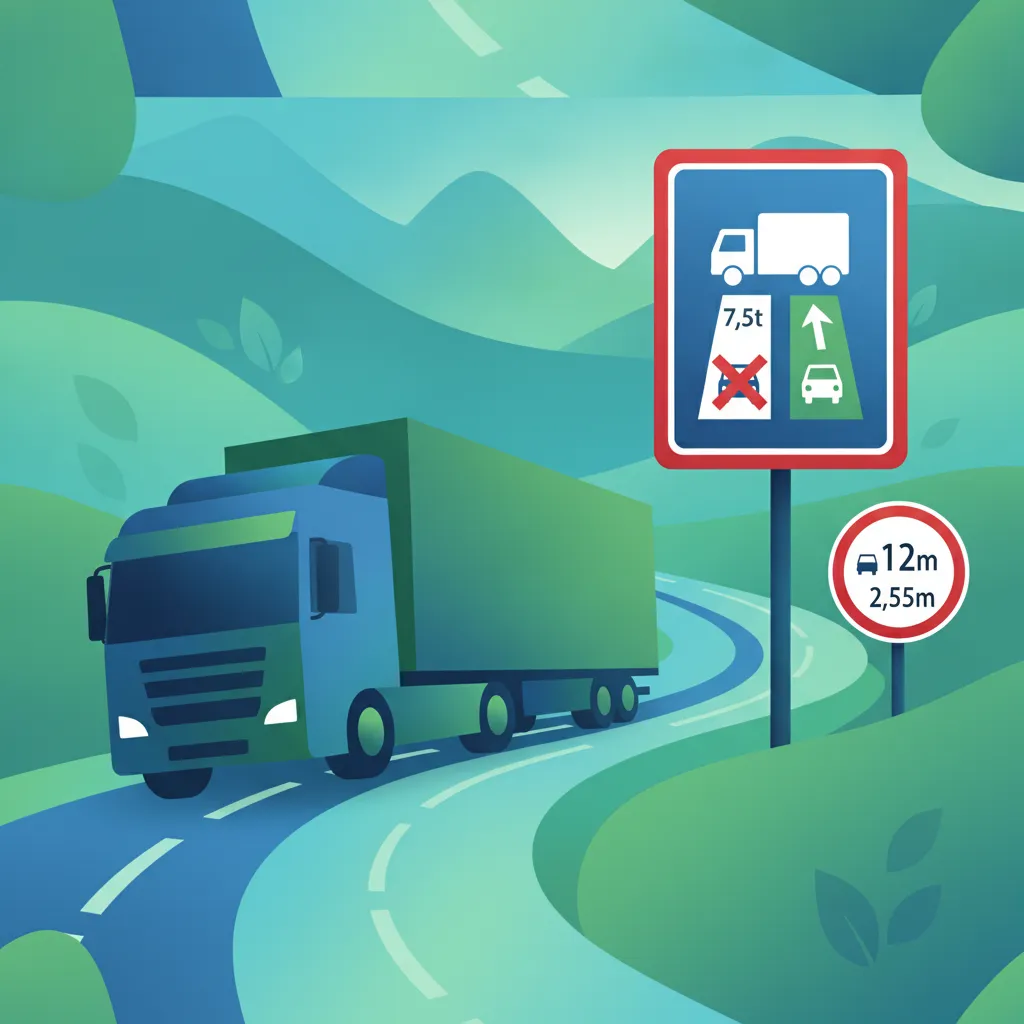
This lesson focuses on the specific Austrian road signs and supplemental plates that apply to heavy goods vehicles. It explains how to interpret signage indicating weight limits, height and width restrictions, lane usage rules, and other critical regulatory information. Correctly understanding these signs is essential for legal compliance and safe navigation on Austria's roads.

This lesson details the general traffic rules applicable to heavy goods vehicles on Austrian roads, highlighting differences from passenger car regulations. It covers key topics such as right-of-way at intersections, specific rules for overtaking, maintaining proper lane discipline, and adhering to designated speed limits. Understanding these rules is critical for safe integration into mixed traffic.

This lesson details the regulations for heavy goods vehicles on Austria's high-speed road network. It covers the specific speed limits, rules on lane usage (e.g., when overtaking is permitted), and procedures for entering and exiting the motorway. Adherence to these rules is crucial for safety in a fast-paced environment.

This lesson covers the specific weight restrictions that apply to sensitive infrastructure like Alpine passes and bridges throughout Austria. It explains how to identify these limits through road signage and incorporate them into route planning. Adhering to these restrictions is vital for preventing structural damage and ensuring safety in challenging terrain.
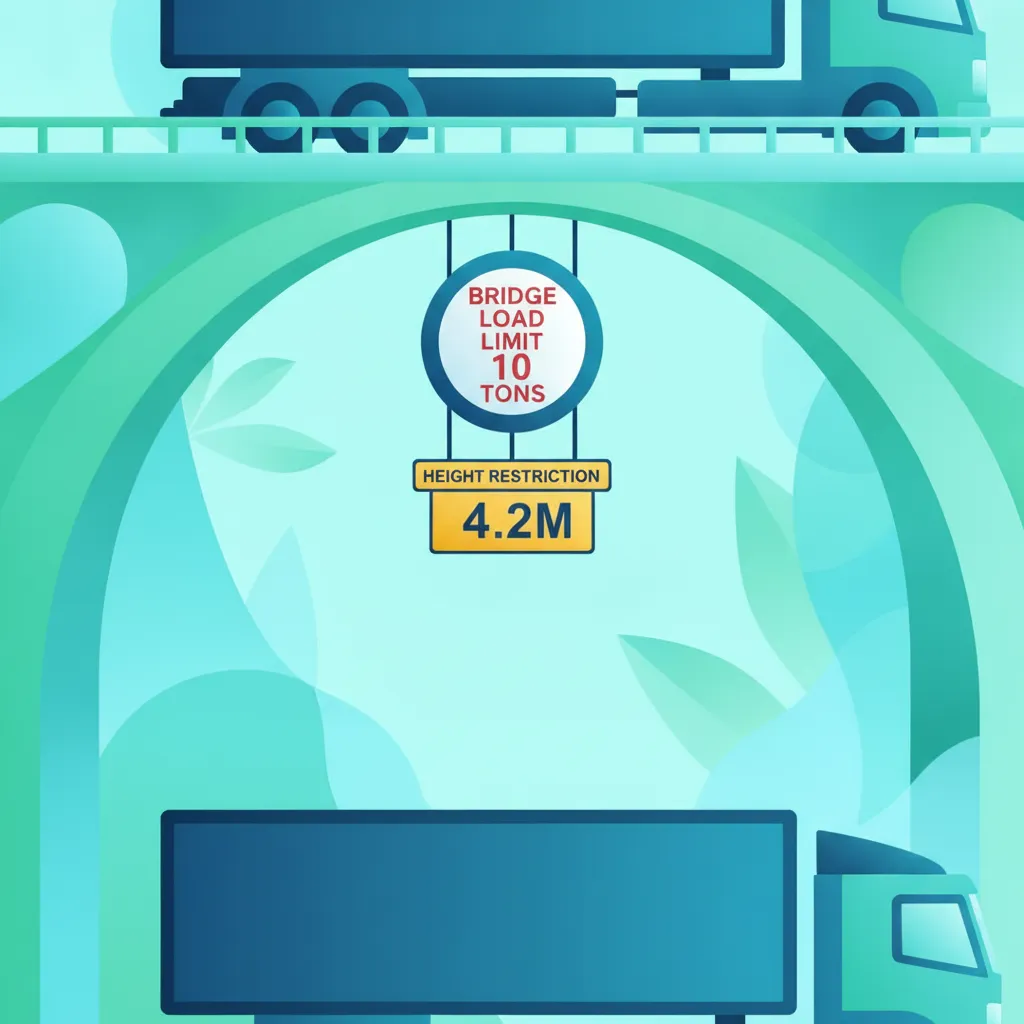
This lesson focuses on the critical importance of observing posted weight and height limits for bridges and other structures. It explains how to read the relevant signage and stresses the driver's responsibility to know their vehicle's exact height and weight. Ignoring these limits can lead to catastrophic structural failure and severe legal consequences.

This lesson consolidates the legal restrictions on the maximum dimensions and weight for different vehicle combinations in Austria. It covers how to read signs indicating these limits and the importance of compliance for route planning. Adhering to these regulations is essential for legal operation and avoiding fines.

This lesson prepares drivers for the demanding conditions of Alpine driving. It covers techniques for managing speed on steep up-hill and down-hill sections, being prepared for sudden weather changes, and following safety protocols inside mountain tunnels. This specialized knowledge is essential for operating safely in mountainous terrain.

This lesson outlines the standardized procedure for handling a vehicle breakdown safely. It covers pulling over to a safe location, activating hazard lights, deploying the warning triangle, and wearing a high-visibility vest. It also explains when and how to contact roadside assistance or emergency services.
Master the interpretation of Austrian road signs related to height, width, and weight restrictions for heavy goods vehicles. Crucial theory knowledge for safe driving and passing your Austrian driving theory exam.
This lesson focuses on the specific Austrian road signs and supplemental plates that apply to heavy goods vehicles. It explains how to interpret signage indicating weight limits, height and width restrictions, lane usage rules, and other critical regulatory information. Correctly understanding these signs is essential for legal compliance and safe navigation on Austria's roads.
This lesson focuses on the legal restrictions concerning a heavy vehicle's dimensions, including maximum height, width, and length. It teaches drivers how to interpret road signs and supplemental plates that indicate these limits. This knowledge is crucial for route planning, especially when navigating under bridges, through tunnels, and on restricted roads.
This lesson covers the specific weight restrictions that apply to sensitive infrastructure like Alpine passes and bridges throughout Austria. It explains how to identify these limits through road signage and incorporate them into route planning. Adhering to these restrictions is vital for preventing structural damage and ensuring safety in challenging terrain.
This lesson focuses on the critical importance of observing posted weight and height limits for bridges and other structures. It explains how to read the relevant signage and stresses the driver's responsibility to know their vehicle's exact height and weight. Ignoring these limits can lead to catastrophic structural failure and severe legal consequences.
This lesson consolidates the legal restrictions on the maximum dimensions and weight for different vehicle combinations in Austria. It covers how to read signs indicating these limits and the importance of compliance for route planning. Adhering to these regulations is essential for legal operation and avoiding fines.
This lesson addresses the challenge of manoeuvring a large vehicle through streets not designed for its size. It covers how to assess vertical and horizontal clearances, plan the vehicle's path through tight turns, and heed all restrictive signage. Careful planning and slow, precise control are essential for success.

This lesson details the legal ramifications of operating an overloaded heavy vehicle in Austria, which include significant fines and penalty points. It also emphasizes the severe safety risks, such as compromised braking performance and increased mechanical stress on the vehicle. Understanding these consequences reinforces the importance of strict adherence to weight limits.
This lesson details the general traffic rules applicable to heavy goods vehicles on Austrian roads, highlighting differences from passenger car regulations. It covers key topics such as right-of-way at intersections, specific rules for overtaking, maintaining proper lane discipline, and adhering to designated speed limits. Understanding these rules is critical for safe integration into mixed traffic.
This lesson details the regulations for heavy goods vehicles on Austria's high-speed road network. It covers the specific speed limits, rules on lane usage (e.g., when overtaking is permitted), and procedures for entering and exiting the motorway. Adherence to these rules is crucial for safety in a fast-paced environment.

This lesson covers the various lighting and reflector systems required on heavy goods vehicles in Austria. It explains the function and legal requirements for headlights, taillights, brake lights, indicators, and reflective markings. Ensuring all lighting systems are operational is essential for visibility and communicating intentions to other road users.
Find clear answers to common questions learners have about Route Planning for Load, Height, and Weight Restrictions. Learn how the lesson is structured, which driving theory objectives it supports, and how it fits into the overall learning path of units and curriculum progression in Austria. These explanations help you understand key concepts, lesson flow, and exam focused study goals.
Heavy vehicles have significantly larger dimensions and higher mass, making them susceptible to bridge height limits, weight-restricted bridges, and narrow mountain passes that standard cars can navigate safely. Failing to account for these can result in severe traffic disruption, accidents, or heavy fines.
No, standard GPS often ignores vehicle dimensions, potentially routing you onto roads with height or weight limits. Professional drivers must use specialized navigation systems that allow for the input of height, width, length, and weight data.
Always look for the round red-bordered sign with a weight value in tonnes (t). Remember that this refers to the actual mass, not the permissible total mass, unless otherwise specified. Always check your current load status before crossing.
Yes, many Alpine roads have seasonal restrictions and mandatory equipment rules. Route planning in Austria must account for weather, gradients, and specific prohibitions for HGVs during certain times or conditions.
Refine your study plan by searching for specific Austrian driving theory practice sets. Pinpoint questions related to particular road rules, signs, or challenge levels, and begin practicing immediately to reinforce your knowledge and excel in your official exam with confidence. Get started with focused revision today.