
This lesson details the legal consequences of traffic violations for heavy vehicle drivers in Austria, including penalty points and enforcement protocols. It serves as a vital component of your professional preparation, ensuring you understand the strict regulatory environment governing heavy transport.
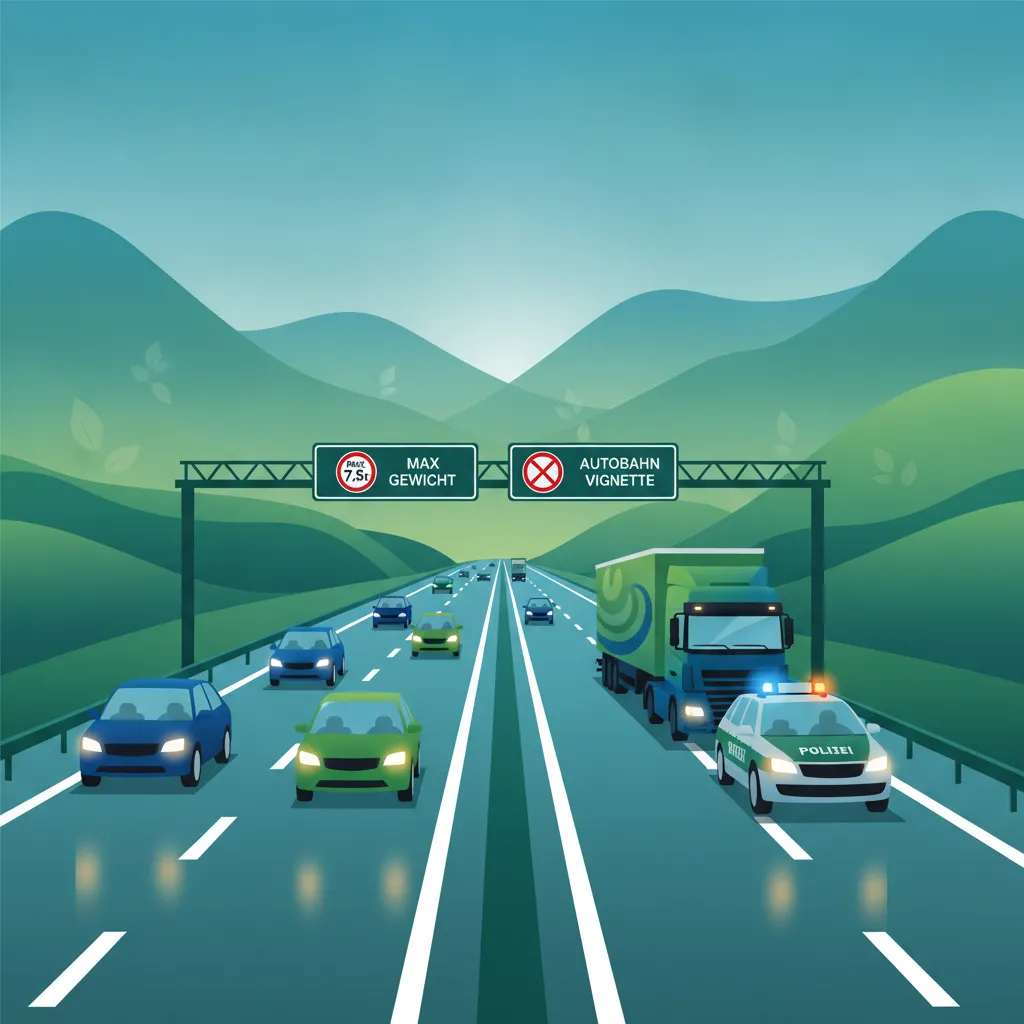
Lesson content overview
Operating a heavy goods vehicle (HGV) in Austria comes with significant responsibilities, not only for road safety but also for adherence to a comprehensive system of laws and regulations. This lesson, part of the Austrian Driving License Theory Course for Heavy Goods Vehicles (C, C1, C1E, CE), explains the framework of penalties and enforcement mechanisms in place to ensure these rules are followed. Understanding this system is crucial for every professional driver, as it directly impacts your license, financial standing, and ability to operate legally.
The robust enforcement framework for heavy vehicles is designed to protect infrastructure, enhance overall road safety, and safeguard all road users from the potential hazards associated with non-compliant HGV operations. From routine roadside checks to severe administrative measures, drivers and transport companies are held accountable for maintaining vehicle roadworthiness, proper loading, and adherence to traffic laws.
At the core of heavy vehicle operation in Austria is the principle of legal responsibility. Both the driver and the transport company (operator) are legally accountable for ensuring that the vehicle, its load, and its operation comply with all applicable regulations at all times. This responsibility is absolute and cannot be delegated away entirely.
The obligation of both the driver and the operating company to ensure continuous compliance with all relevant traffic laws, vehicle regulations, and load securing standards.
The primary purpose of this legal allocation is to ensure that those in control of the vehicle's condition and operation are held accountable for safety. Failure to meet these legal responsibilities can lead to a range of severe consequences, including substantial fines, the accumulation of penalty points, vehicle impoundment, or even the suspension of a driver's license. Proactive adherence to regulations, regular checks, and thorough documentation are essential practices to fulfill these obligations and avoid legal repercussions.
Austria employs a demerit point system, known as the Verkehrsabzeichenverfahren, for serious traffic violations. This system is designed to deter repeated offenses by escalating the consequences for drivers who frequently breach traffic laws. Unlike simple fines, penalty points are recorded against a driver's license and can lead to more severe administrative actions.
Each specific traffic violation that is deemed serious enough carries a certain number of points. These points are added to a driver's record and accumulate over time. The exact number of points depends on the severity and nature of the offense. For instance, minor infractions typically incur fewer points (e.g., 1–2 points), while serious violations such as significant overloading or driving with an unsecured load can result in a higher number (e.g., 3–6 points).
The accumulation of a specified number of points within a certain timeframe triggers administrative actions. These can range from mandatory driver improvement courses and psychological evaluations to the temporary suspension or even permanent revocation of the driving license. The system aims to identify and address unsafe driving patterns, ultimately enhancing road safety for everyone.
Regularly checking your driver's license record for accumulated points can help you stay informed and take corrective action if necessary. Preventing point accumulation is always the best approach.
Monetary penalties, known as Geldstrafen, are a direct and immediate consequence for traffic violations in Austria. These fines serve as a deterrent and help to compensate for the societal costs associated with non-compliant road use, such as infrastructure damage, increased accident risk, and environmental impact. The fine structure for heavy vehicles is often more stringent than for passenger cars, reflecting the greater potential for harm or damage that HGVs can cause.
Fines vary significantly based on the severity and specific nature of the violation. For some offenses, there are fixed fines, meaning a standard amount is levied. For others, particularly those involving quantifiable metrics like overloading, the fine may be variable, increasing proportionally with the degree of non-compliance (e.g., the percentage by which a vehicle is overloaded). Serious offenses, such as reckless endangerment or operating a dangerously unroadworthy vehicle, can result in very high fines and, in some cases, criminal charges.
In addition to direct financial costs, fines can impact transport companies through reputational damage and increased insurance premiums. For drivers, repeated fines can lead to financial strain and, when combined with penalty points, may jeopardize their driving privileges. Therefore, understanding the potential financial repercussions is a vital aspect of responsible heavy vehicle operation.
To ensure continuous compliance with heavy vehicle regulations, Austrian enforcement agencies conduct systematic checks and inspections. These Kontrollen und Überwachungen (controls and monitoring) are proactive measures designed to verify that vehicles are roadworthy, loads are secured, and documentation is in order.
Roadside checks are performed by traffic police, specialized transport police, and authorized inspection agencies. They can occur at any time and location, including dedicated weighbridges, service areas, and border crossings. The scope of these checks is comprehensive, often including:
Non-compliance discovered during a roadside check can lead to immediate and severe consequences. Depending on the violation, these may include:
Drivers are legally obligated to cooperate with enforcement agencies during these checks. Refusal to comply can lead to further penalties, including immediate fines, possible license suspension, and even legal prosecution.
Understanding specific types of violations is crucial for heavy vehicle drivers. Here, we detail the most frequent offenses in Austria and their associated risks and penalties.
Overloading refers to exceeding the legally permitted weight limits for a heavy vehicle. This can manifest in two primary ways:
The highest total weight, including vehicle, fuel, driver, passengers, and cargo, that a vehicle is legally permitted to have. This limit is set by the manufacturer and enforced by law.
Overloading significantly compromises vehicle safety. It extends braking distances, reduces steering responsiveness, increases tire wear and blowout risk, and places excessive stress on suspension and chassis components. Furthermore, it causes accelerated damage to road infrastructure, leading to higher maintenance costs for public authorities.
Associated Rules and Penalties: Compliance with §§ 13 and 17 of the Austrian Road Traffic Act (Straßenverkehrsordnung - StVO) is mandatory. Penalties for overloading include substantial fines and the accumulation of penalty points. The severity of the fine typically increases with the percentage of overload. In severe cases, particularly if the overloading poses an immediate danger, the vehicle may be impounded, and the driver may face a license suspension.
A common misunderstanding is that a vehicle is within limits if the cargo appears to fit. Always verify the actual weight using scales and ensure proper load distribution to prevent axle overloads, even if the total mass is acceptable.
An unsecured load, or insecure load, is cargo that is not properly restrained against shifting, falling, or rolling during transport. Proper Ladungssicherung (load securing) is not just a regulatory requirement; it is a critical safety measure. Even a small shift in cargo can significantly alter a heavy vehicle's center of gravity, affecting stability and potentially leading to a loss of control, especially during braking, cornering, or evasive maneuvers.
Subcategories of unsecured loads include:
Associated Rules and Penalties: Load securing must comply with specific guidelines, primarily based on § 23 of the StVO, which emphasizes that cargo must be secured such that it cannot shift, roll, fall over, fall off, or make noise, even during emergency braking or sudden evasive maneuvers. Violations result in fines and penalty points. If an unsecured load leads to an accident or poses a grave risk, more severe legal consequences, including criminal charges, may follow.
Vehicle roadworthiness refers to a heavy vehicle's overall condition, ensuring it meets safety and environmental standards. A crucial aspect of maintaining roadworthiness in Austria is the mandatory periodic technical inspection, often colloquially referred to as TÜV (though TÜV is a specific inspection body, the term is widely used for the inspection itself).
These inspections are legally mandated under § 21 of the Austrian Road Traffic Licensing Regulations (Straßenverkehrs-Zulassungs-Ordnung - StVZO). They involve a thorough examination of mechanical components, including:
Associated Rules and Penalties: Heavy vehicles typically require an annual technical inspection. After major repairs or modifications, a special inspection may be necessary. Operating a vehicle with an expired inspection sticker or significant defects discovered during an inspection leads to fines and possible vehicle impoundment. An expired sticker automatically deems the vehicle unroadworthy from a legal perspective, even if it appears to be in good condition.
Beyond major defects uncovered in technical inspections, faulty vehicle components encountered during day-to-day operations are also subject to penalties. This includes issues such as non-functional headlights, brake lights, turn signals, worn tires, or damaged mirrors. Pre-trip checks are essential to identify and rectify these issues before commencing a journey.
Equally important is documentation. Heavy vehicle drivers are legally required to carry specific documents at all times while operating the vehicle. These typically include:
Associated Rules and Penalties: Driving with faulty lighting or other safety-critical components detected during a roadside check will result in fines and penalty points. Missing or invalid documentation will also incur fines and may lead to delays, further inspections, or even vehicle detainment until proper documentation can be produced. Compliance with § 65 StVO outlines the powers of enforcement regarding documentation.
For serious violations or the accumulation of too many penalty points, a driver may face a Fahrverbot, which is a temporary license suspension or driving ban. This means the driver cannot legally operate any motor vehicle for the duration of the suspension period.
Triggers for License Suspension:
Types of Suspensions:
A license suspension has significant practical implications for a professional heavy vehicle driver, directly impacting their livelihood. It is therefore paramount to understand that point accumulation and serious offenses are not merely about fines but about the continued ability to drive professionally.
Effective enforcement is crucial for maintaining road safety and regulatory compliance within the heavy vehicle sector. Several agencies play distinct but overlapping roles in Kontrolle und Überwachung across Austria.
The general police force conducts routine traffic checks and responds to incidents across all road types. They are authorized to stop heavy vehicles, verify driver documentation, assess vehicle condition for obvious defects, and administer sobriety tests. Their primary role is to ensure general traffic safety and enforce the StVO.
Many regions have specialized transport police units or dedicated sections within the broader police force that focus specifically on commercial transport. These units possess in-depth knowledge of HGV-specific regulations, including those concerning load securing, driving and rest times, dangerous goods transport, and technical requirements. They often operate at designated inspection points with specialized equipment, such as mobile weighbridges.
Road safety authorities and vehicle inspection bodies also play a vital role. While not directly involved in roadside stops, they set and monitor standards for vehicle inspections (TÜV) and can be involved in investigations following serious incidents or in audits of transport companies.
Enforcement Powers: As outlined in § 65 StVO, these agencies have extensive powers, including:
Drivers must always comply with the lawful instructions of enforcement officers. Non-compliance can lead to further penalties and escalate the situation significantly.
Enforcement of heavy vehicle regulations can be influenced by various contextual factors. Understanding these conditional variations helps drivers anticipate and respond appropriately.
Being prepared for these variations means conducting more thorough pre-trip checks in challenging conditions and being extra vigilant about load security and vehicle performance.
The most effective way to manage penalties and enforcement is to prevent violations from occurring in the first place. A proactive approach to heavy vehicle operation involves continuous vigilance and adherence to best practices.
Thorough Pre-Trip Checks: Before every journey, inspect your vehicle's brakes, lights, tires, steering, and all securing devices. Verify that all required documentation is present and valid.
Accurate Weight Management: Always know your vehicle's maximum permissible mass (Mmax) and axle load limits. Utilize available weighing facilities to ensure compliance, especially when carrying variable or unknown loads.
Expert Load Securing: Apply the principles of Ladungssicherung diligently. Use appropriate securing methods (e.g., lashing, blocking, bracing) with adequate strength for the specific cargo. Distribute the load evenly to avoid axle overloads.
Regular Maintenance and Inspections: Adhere strictly to the schedule for mandatory technical inspections (TÜV). Address any maintenance issues promptly to ensure ongoing roadworthiness.
Stay Updated on Regulations: Traffic laws and regulations can change. Keep yourself informed about the latest requirements for heavy vehicle operation in Austria.
Tachograph Compliance: Strictly adhere to driving and rest time regulations. Accurate tachograph records are crucial during inspections.
Compliance leads to stable vehicle handling, safe braking performance, reduced wear and tear on roads, and most importantly, the avoidance of fines, penalty points, and potential license suspension. It also contributes significantly to your professional reputation and overall road safety.
The primary legal foundations for penalties and enforcement for heavy vehicles in Austria are:
Straßenverkehrsordnung - StVO): This comprehensive act covers general traffic rules, speed limits, right-of-way, and specific regulations for heavy vehicles, including those related to load securing (§ 23) and enforcement powers (§ 65).Straßenverkehrs-Zulassungs-Ordnung - StVZO): This ordinance primarily deals with the technical requirements for vehicles, including maximum dimensions, weights, and the mandatory periodic technical inspection (TÜV under § 21).Strafgesetz): While less common for routine traffic infractions, serious offenses such as reckless endangerment or causing significant damage due to gross negligence can lead to criminal prosecution under this code.These regulations are often supplemented by various ordinances and directives, including EU regulations for international transport, which are integrated into Austrian law.
Understanding the rules in theory is one thing; applying them in real-world scenarios is another. Here are a few examples that illustrate how penalties and enforcement mechanisms come into play.
Ladungssicherung principles, endangering other road users.TÜV-Plakette) on a heavy vehicle's windscreen expired three months ago.The system of penalties and enforcement for heavy vehicle operation in Austria is comprehensive and designed to ensure the highest standards of road safety and regulatory compliance. Professional drivers must diligently adhere to maximum permissible mass and axle load limits, understand and implement robust Ladungssicherung techniques, and ensure their vehicles undergo timely and thorough technical inspections.
Ignorance of the law is not an excuse. Each driver and transport company is legally responsible for preventing violations. Consequences for non-compliance range from immediate fines and the accumulation of penalty points to severe measures like license suspension, vehicle impoundment, and potential criminal charges. Proactive checks, continuous education, and a commitment to safe practices are the best defense against these penalties and contribute significantly to overall road safety for everyone in Austria.
This lesson covers Austria's comprehensive penalty and enforcement system for heavy goods vehicles, emphasizing that both drivers and operators bear legal responsibility for continuous compliance. The penalty point system (Verkehrsabzeichenverfahren) records serious violations and can trigger escalating consequences including license suspension, while monetary fines (Geldstrafen) vary based on violation severity and may increase proportionally for measurable offenses like overloading. Roadside inspections are thorough and can result in immediate penalties, vehicle detention, or prohibition of further travel. Key violations include exceeding maximum permissible mass, inadequate load securing, and operating with expired technical inspections. Professional drivers must conduct thorough pre-trip checks, maintain accurate weight verification, apply proper Ladungssicherung techniques, and stay current with regulations to avoid penalties and protect their driving privileges.
A short set of high-value points that capture the most important learning from this lesson.
Both drivers and transport companies hold absolute legal responsibility for vehicle compliance, load security, and adherence to traffic laws at all times
Austria's penalty point system (Verkehrsabzeichenverfahren) escalates consequences for repeated serious violations, potentially leading to license suspension
Overloading can occur as total mass overloading or axle load overloading; both compromise vehicle safety and incur proportional fines
Proper load securing (Ladungssicherung) must prevent cargo from shifting even during emergency braking, per § 23 StVO
Roadside inspections are comprehensive and can include weight verification, load assessment, vehicle condition checks, documentation review, and tachograph analysis
Explore all units and lessons included in this driving theory course.
Mmax (Maximum Permissible Mass) is the highest total weight including vehicle, fuel, driver, passengers, and cargo that a vehicle is legally permitted to carry
Roadside checks may occur anywhere including weighbridges, service areas, and border crossings; non-compliance can lead to vehicle detention or prohibition of travel
An expired technical inspection (TÜV) legally deems a vehicle unroadworthy regardless of its apparent condition
Enforcement intensity varies by context: stricter scrutiny applies on alpine roads (load distribution, brakes), motorways (speed, stability), and urban areas (vulnerable road users)
License suspension can result from point accumulation within a timeframe or from severe single offenses like dangerous overloading or DUI
Assuming a vehicle is within weight limits based on visual appearance rather than verifying actual weight on scales
Using insufficient or faulty tie-downs assuming the cargo looks stable without considering emergency maneuvers
Operating with expired documentation or assuming a vehicle is roadworthy simply because it appears to function normally
Failing to check axle load distribution, which can exceed limits even when total vehicle mass is acceptable
Not cooperating fully with enforcement officers, which can lead to additional penalties beyond the original violation
Lesson content overview
A short set of high-value points that capture the most important learning from this lesson.
Both drivers and transport companies hold absolute legal responsibility for vehicle compliance, load security, and adherence to traffic laws at all times
Austria's penalty point system (Verkehrsabzeichenverfahren) escalates consequences for repeated serious violations, potentially leading to license suspension
Overloading can occur as total mass overloading or axle load overloading; both compromise vehicle safety and incur proportional fines
Proper load securing (Ladungssicherung) must prevent cargo from shifting even during emergency braking, per § 23 StVO
Roadside inspections are comprehensive and can include weight verification, load assessment, vehicle condition checks, documentation review, and tachograph analysis
Explore all units and lessons included in this driving theory course.
Mmax (Maximum Permissible Mass) is the highest total weight including vehicle, fuel, driver, passengers, and cargo that a vehicle is legally permitted to carry
Roadside checks may occur anywhere including weighbridges, service areas, and border crossings; non-compliance can lead to vehicle detention or prohibition of travel
An expired technical inspection (TÜV) legally deems a vehicle unroadworthy regardless of its apparent condition
Enforcement intensity varies by context: stricter scrutiny applies on alpine roads (load distribution, brakes), motorways (speed, stability), and urban areas (vulnerable road users)
License suspension can result from point accumulation within a timeframe or from severe single offenses like dangerous overloading or DUI
Assuming a vehicle is within weight limits based on visual appearance rather than verifying actual weight on scales
Using insufficient or faulty tie-downs assuming the cargo looks stable without considering emergency maneuvers
Operating with expired documentation or assuming a vehicle is roadworthy simply because it appears to function normally
Failing to check axle load distribution, which can exceed limits even when total vehicle mass is acceptable
Not cooperating fully with enforcement officers, which can lead to additional penalties beyond the original violation
Explore search topics learners often look for when studying Penalties and Enforcement in Heavy Vehicle Operation. These topics reflect common questions about road rules, driving situations, safety guidance, and lesson level theory preparation for learners in Austria.
Browse additional driving theory lessons that cover connected traffic rules, road signs, and common driving situations related to this topic. Improve your understanding of how different rules interact across everyday traffic scenarios.
Explore the detailed consequences of traffic violations for heavy goods vehicle operators in Austria. Understand fines, penalty points, license suspension, and the specific rules governing overloading and load securing.

This lesson details the legal ramifications of operating an overloaded heavy vehicle in Austria, which include significant fines and penalty points. It also emphasizes the severe safety risks, such as compromised braking performance and increased mechanical stress on the vehicle. Understanding these consequences reinforces the importance of strict adherence to weight limits.

This lesson provides an overview of the legal framework governing heavy vehicle drivers in Austria. It details the potential penalties for violations, including fines, penalty points, and the risk of licence suspension. A clear understanding of these consequences reinforces the importance of compliant and responsible driving.
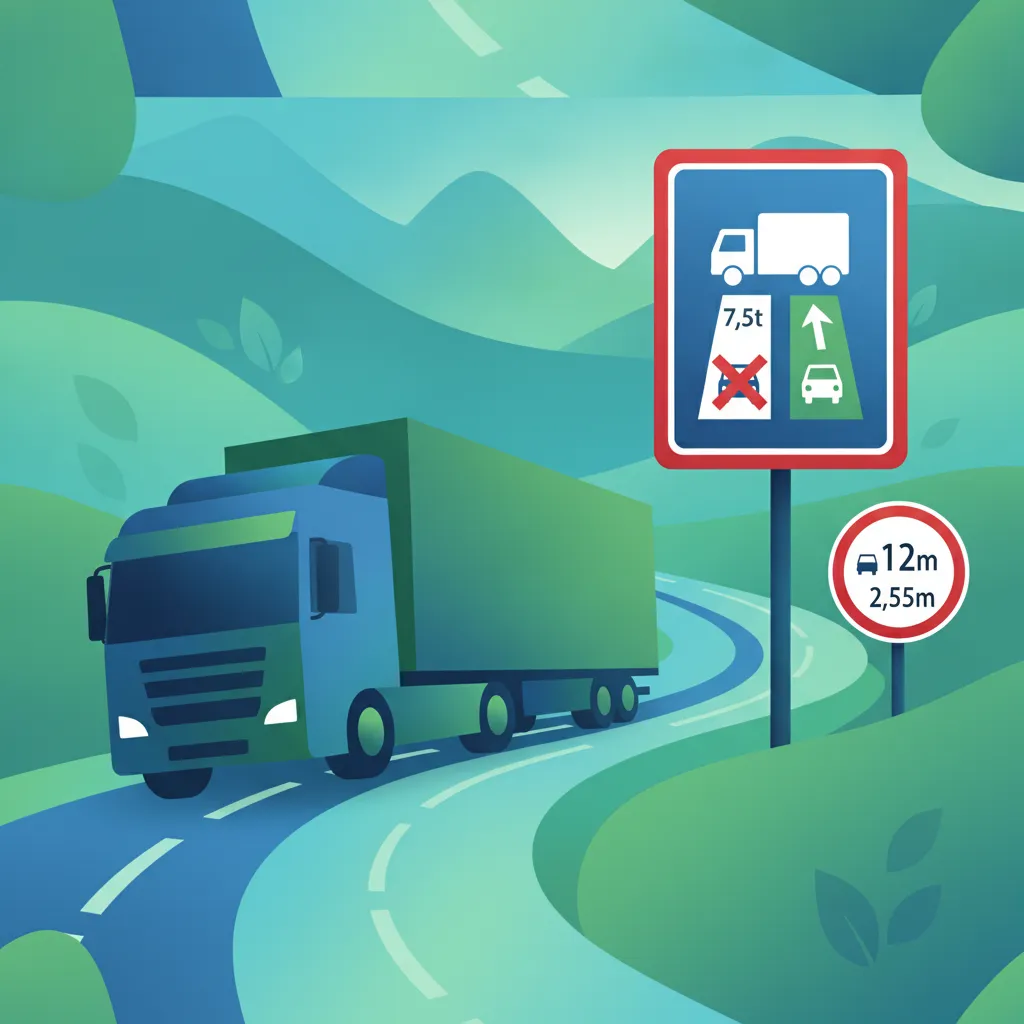
This lesson focuses on the specific Austrian road signs and supplemental plates that apply to heavy goods vehicles. It explains how to interpret signage indicating weight limits, height and width restrictions, lane usage rules, and other critical regulatory information. Correctly understanding these signs is essential for legal compliance and safe navigation on Austria's roads.

This lesson details the general traffic rules applicable to heavy goods vehicles on Austrian roads, highlighting differences from passenger car regulations. It covers key topics such as right-of-way at intersections, specific rules for overtaking, maintaining proper lane discipline, and adhering to designated speed limits. Understanding these rules is critical for safe integration into mixed traffic.

This lesson focuses on the legal restrictions concerning a heavy vehicle's dimensions, including maximum height, width, and length. It teaches drivers how to interpret road signs and supplemental plates that indicate these limits. This knowledge is crucial for route planning, especially when navigating under bridges, through tunnels, and on restricted roads.

This lesson details the regulations for heavy goods vehicles on Austria's high-speed road network. It covers the specific speed limits, rules on lane usage (e.g., when overtaking is permitted), and procedures for entering and exiting the motorway. Adherence to these rules is crucial for safety in a fast-paced environment.

This lesson consolidates the legal restrictions on the maximum dimensions and weight for different vehicle combinations in Austria. It covers how to read signs indicating these limits and the importance of compliance for route planning. Adhering to these regulations is essential for legal operation and avoiding fines.

This lesson outlines the significant legal responsibilities placed on heavy-vehicle drivers under Austrian law, emphasizing a strong duty of care and professional conduct. It covers the obligation to perform thorough pre-trip inspections, comply with all load and weight regulations, and uphold safety standards to protect all road users. Adherence to these principles is crucial for professional and safe operation.

This lesson provides a clear overview of the legal penalties for traffic violations in Austria. It details the system of fines, demerit points, and the conditions that can lead to license suspension or revocation. Understanding these consequences reinforces the importance of lawful and responsible riding.
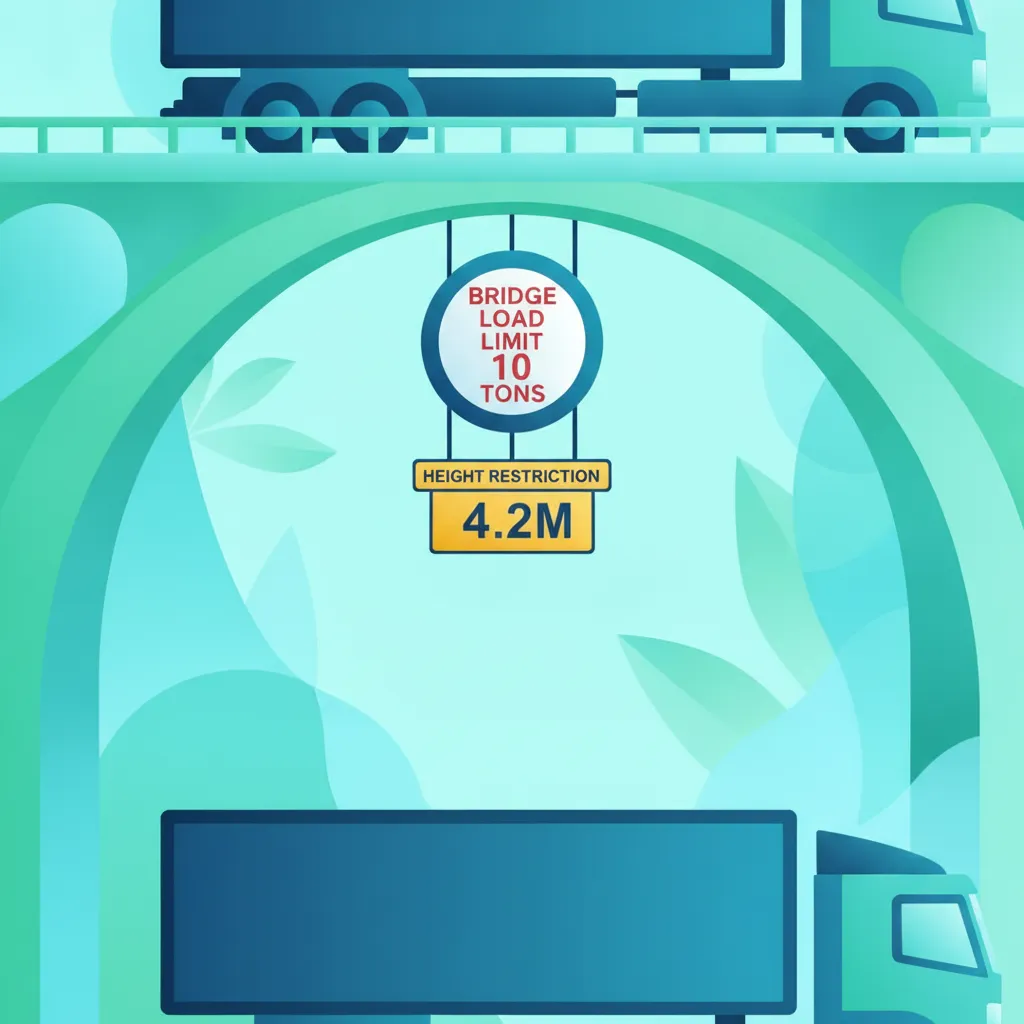
This lesson focuses on the critical importance of observing posted weight and height limits for bridges and other structures. It explains how to read the relevant signage and stresses the driver's responsibility to know their vehicle's exact height and weight. Ignoring these limits can lead to catastrophic structural failure and severe legal consequences.
Learn about the procedures and importance of roadside inspections for heavy goods vehicles in Austria. Understand vehicle roadworthiness checks, documentation requirements, and the impact of compliance on operational legality.
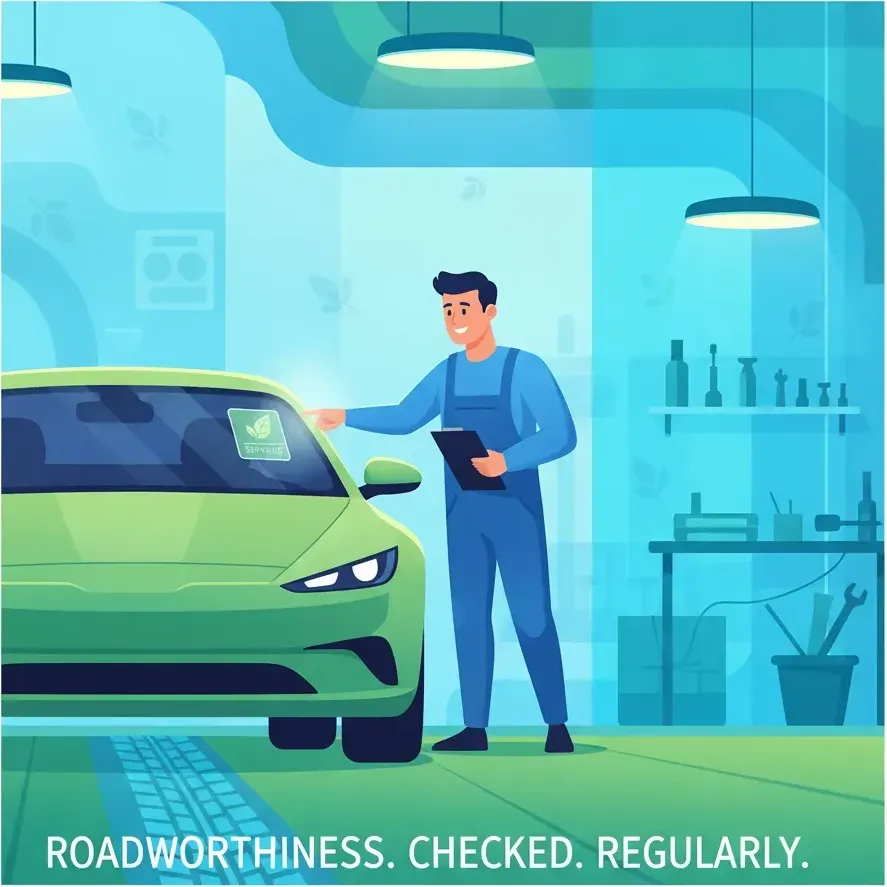
This lesson covers the legal requirements for regular maintenance and periodic roadworthiness certification (known as the 'Pickerl' or TÜV inspection) in Austria. It explains the importance of adhering to manufacturer-recommended service intervals. Maintaining a certified, roadworthy vehicle is a core legal responsibility for any operator or driver.
This lesson focuses on the specific Austrian road signs and supplemental plates that apply to heavy goods vehicles. It explains how to interpret signage indicating weight limits, height and width restrictions, lane usage rules, and other critical regulatory information. Correctly understanding these signs is essential for legal compliance and safe navigation on Austria's roads.

This lesson teaches the systematic procedure for conducting a thorough pre-trip walk-around inspection. It provides a checklist of critical components to examine, including tyres, lights, braking systems, and load security. Performing this daily check is a legal requirement and a fundamental practice for preventing mechanical failures and ensuring safety.

This lesson outlines the standardized procedure for handling a vehicle breakdown safely. It covers pulling over to a safe location, activating hazard lights, deploying the warning triangle, and wearing a high-visibility vest. It also explains when and how to contact roadside assistance or emergency services.

This lesson emphasizes the need to inspect all load-securing equipment as part of the daily pre-trip check. It teaches drivers how to look for signs of wear, damage, or malfunction in straps, chains, ratchets, and other devices. Verifying the integrity of this equipment is essential before every journey to ensure the load remains secure.
This lesson provides an overview of the legal framework governing heavy vehicle drivers in Austria. It details the potential penalties for violations, including fines, penalty points, and the risk of licence suspension. A clear understanding of these consequences reinforces the importance of compliant and responsible driving.
This lesson consolidates the legal restrictions on the maximum dimensions and weight for different vehicle combinations in Austria. It covers how to read signs indicating these limits and the importance of compliance for route planning. Adhering to these regulations is essential for legal operation and avoiding fines.
This lesson focuses on the legal restrictions concerning a heavy vehicle's dimensions, including maximum height, width, and length. It teaches drivers how to interpret road signs and supplemental plates that indicate these limits. This knowledge is crucial for route planning, especially when navigating under bridges, through tunnels, and on restricted roads.
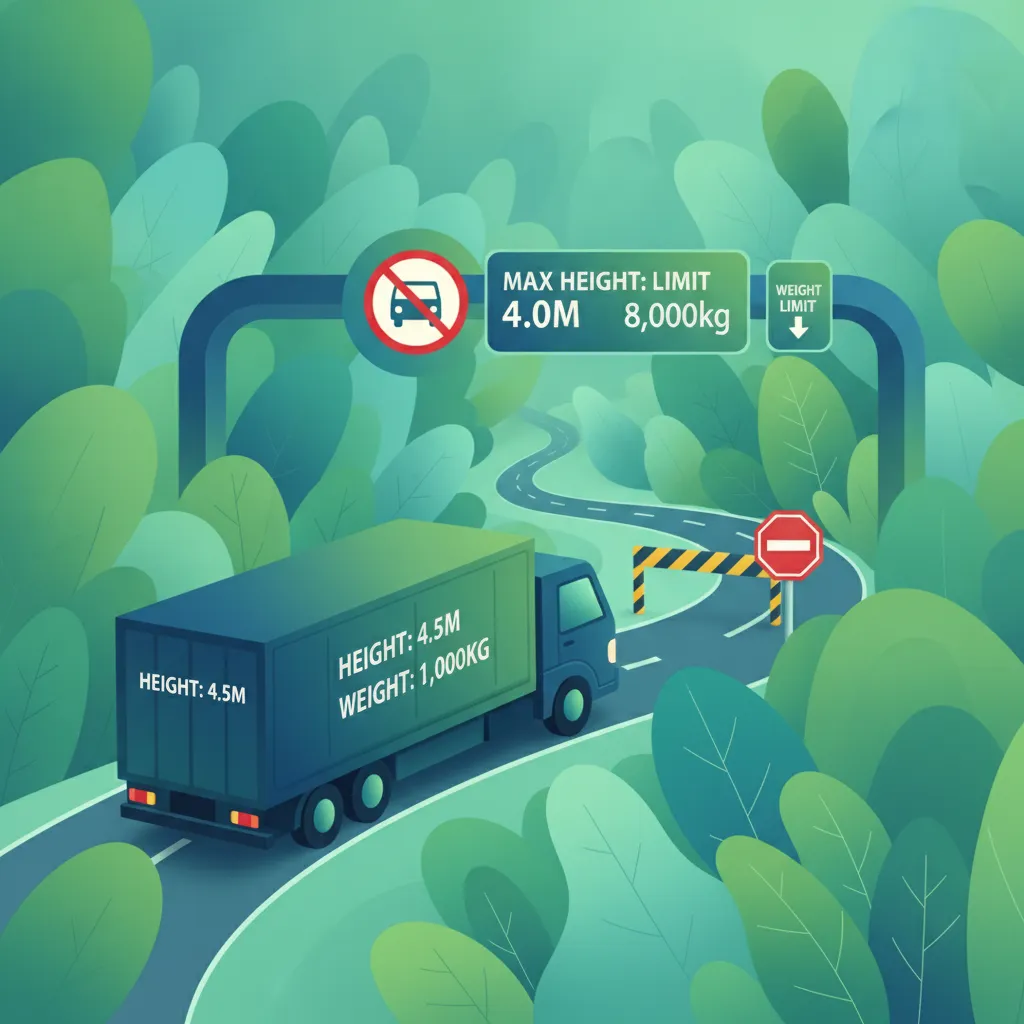
This lesson covers the practical aspects of planning a route for a heavy goods vehicle. It explains how to use maps and specialized GPS systems to identify and avoid roads with height, weight, or other restrictions. Proactive route planning is essential for ensuring an efficient, legal, and safe journey.
This lesson details the legal ramifications of operating an overloaded heavy vehicle in Austria, which include significant fines and penalty points. It also emphasizes the severe safety risks, such as compromised braking performance and increased mechanical stress on the vehicle. Understanding these consequences reinforces the importance of strict adherence to weight limits.
Find clear answers to common questions learners have about Penalties and Enforcement in Heavy Vehicle Operation. Learn how the lesson is structured, which driving theory objectives it supports, and how it fits into the overall learning path of units and curriculum progression in Austria. These explanations help you understand key concepts, lesson flow, and exam focused study goals.
Roadside inspections primarily focus on technical roadworthiness, such as tyre condition and brake systems, as well as adherence to loading limits, load securing, and documentation for driving times and rest periods.
While basic traffic rules apply to all, professional drivers of heavy vehicles are often held to higher standards, and certain violations regarding weight limits or transport dangerous goods carry significantly heavier fines and stricter legal consequences.
If a vehicle is overloaded, the journey will typically be prohibited until the load is adjusted or removed to comply with permissible limits, and the driver and vehicle operator will face fines based on the percentage of the overload.
Austria uses a system where serious traffic offenses result in penalty points. For professional drivers, repeated violations can lead to mandatory remedial training or the suspension of the driving license, impacting their ability to work.
Refine your study plan by searching for specific Austrian driving theory practice sets. Pinpoint questions related to particular road rules, signs, or challenge levels, and begin practicing immediately to reinforce your knowledge and excel in your official exam with confidence. Get started with focused revision today.