
This lesson explores the serious legal and safety implications of operating heavy goods vehicles beyond their permitted mass limits in Austria. It bridges the technical knowledge of vehicle weight with the regulatory consequences you must master to ensure compliance and safe transport operations. This understanding is essential for both your theory examination and your future professional practice as a heavy vehicle driver.

Lesson content overview
Operating a heavy goods vehicle (HGV) within legal weight limits is a fundamental responsibility for every professional driver in Austria. Exceeding these limits, known as overloading, carries significant legal consequences, including substantial financial penalties and penalty points on the driver's license. Beyond the legal ramifications, overloading severely compromises vehicle safety, accelerates wear and tear, and poses a direct threat to road infrastructure, such as bridges and alpine passes.
This lesson, part of the Austrian Driving License Theory Course for Heavy Goods Vehicles (C, C1, C1E, CE), will delve into the precise legal framework governing vehicle weight, the penalties for non-compliance, and the critical safety implications of operating an overloaded truck. Understanding these aspects is crucial for ensuring both legal adherence and the safety of all road users.
Strict adherence to vehicle weight limits is paramount for heavy goods vehicles in Austria. These regulations are not arbitrary; they are meticulously designed to ensure vehicle stability, prevent excessive wear on components, guarantee effective braking performance, and protect the country's road infrastructure from premature damage. Professional drivers must internalize these limits as an integral part of their operational duties.
Overloading occurs when a vehicle operates with an actual mass that exceeds its legally permissible overall mass (zGG) or its individual axle load limits (Achslast). This excess weight places undue strain on every part of the vehicle, from its chassis and suspension to its braking system and tires.
To standardize penalties and assess risk, overloading is typically categorized based on the percentage by which the legal limit is exceeded:
It is a common misunderstanding to assume that a small overload is harmless. The cumulative effect of minor overloads, especially over long distances or challenging terrains like alpine passes, can lead to critical component failure. Loads must be accurately calculated and measured before departure to prevent any form of overloading, whether intentional or accidental. Factors often overlooked include the weight of fuel, water, and even passengers.
The foundation of weight compliance for heavy goods vehicles lies in two key concepts: the permissible overall mass and axle load limits.
The maximum total mass (vehicle + cargo + fuel + passengers) allowed by law for a specific vehicle. This value is legally binding and is recorded in the vehicle's registration documents (Fahrzeugschein).
The zGG is the absolute maximum weight your vehicle, in its loaded state, is permitted to have. Exceeding this figure is a direct violation, regardless of how the weight is distributed. For example, if your truck has a zGG of 18 tonnes, its total weight, including everything onboard, must not exceed 18,000 kilograms.
The maximum load that may be placed on a given axle or axle group. These limits are crucial for protecting both the vehicle's structural integrity and the road infrastructure, especially bridges.
Even if the overall mass is within limits, an improper distribution of cargo can lead to one or more axles being overloaded. For instance, concentrating too much weight at the rear of a trailer can overload its rear axle, even if the total trailer weight is acceptable. This can cause severe stress on the axle, tires, and suspension, and significantly increase the risk of damage to specific sections of roads or bridges designed for lower point loads. Drivers must always consider both the total weight and its distribution across all axles.
Operating an overloaded heavy goods vehicle in Austria triggers a cascade of legal penalties, designed to deter non-compliance and reinforce the importance of safety and infrastructure preservation. These penalties primarily consist of financial fines and the accumulation of penalty points on the driver's license, with the severity directly linked to the degree of overloading.
Monetary fines are the most immediate consequence of an overloading offence. The amount of the fine is proportional to the percentage by which the vehicle's permissible overall mass or axle load limits are exceeded. The higher the overload, the more severe the fine, reflecting the increased risk posed to safety and infrastructure.
Generally, the fine ranges are structured as follows:
It is crucial for drivers to understand that these fines are a direct financial consequence of failing to comply with weight regulations. These monetary penalties serve as an immediate deterrent and help compensate for the increased wear and tear on roads and bridges caused by overweight vehicles.
In addition to financial penalties, overloading offences in Austria can result in the accumulation of penalty points on a driver's record, managed through the official Verkehrssünderkartei (Traffic Offender Index). This point-based system provides a progressive deterrent for repeated infractions.
The official point record system for drivers in Austria, where points are added for traffic violations and retained for a specified period. Accumulation of points can lead to additional measures, including license suspension.
The number of points allocated depends on the severity of the overload:
Points are retained on a driver's record for a specified period. Accumulating too many points within a certain timeframe can trigger additional measures, such as mandatory advanced training courses, additional fines, or, in severe cases, the temporary or permanent suspension of the driving license. Drivers should not mistakenly believe that paying a fine removes the points; points remain on the record until their statutory expiration.
The responsibility for ensuring a heavy goods vehicle operates within legal weight limits extends beyond just the driver. In Austria, both the professional driver and the employer (or fleet manager) can be held liable for overloading offences. This shared responsibility reflects the higher safety stakes associated with commercial transport and the professional obligations of all parties involved.
The legal obligation for drivers of heavy goods vehicles (HGVs) to ensure their vehicle, and any combination, complies with all applicable weight restrictions. This includes checking loads before departure and during transit.
Drivers are legally required to verify the mass of their vehicle and its cargo. Ignorance of the actual weight is generally not accepted as a defence. Repeated overloading offences can lead to severe consequences for the driver, including the suspension or revocation of their professional driving license.
Employers and transport companies have a legal duty to provide adequate training, ensure proper weighing facilities are available, and implement systems that prevent overloading.
If an overloading incident occurs, authorities will often investigate the practices of the transport company. Employers can face substantial fines if they are found to have neglected their duties, such as failing to provide accurate load information, pressuring drivers to carry excessive loads, or not maintaining properly calibrated weighing equipment. This dual liability underscores the importance of a comprehensive safety culture within the transport industry.
Beyond the severe legal penalties, the most critical aspect of overloading is its detrimental impact on safety. An overloaded vehicle fundamentally alters its operational characteristics, significantly increasing the risk of accidents and mechanical failure. These practical ramifications directly threaten the driver, other road users, and the longevity of the vehicle itself.
One of the most immediate and dangerous consequences of overloading is the severe degradation of braking performance. The fundamental physics of motion dictate that a heavier vehicle carries more kinetic energy, which the braking system must dissipate to bring the vehicle to a stop.
Drivers of overloaded vehicles may find that their truck does not respond as expected in critical situations, particularly when unexpected obstacles or traffic conditions require emergency braking. This compromised braking capability significantly elevates accident risk.
Austria's intricate network of roads includes numerous bridges, tunnels, and challenging alpine passes. These structures are engineered to specific load capacities. Overloaded heavy goods vehicles pose a direct and severe threat to their structural integrity.
Compliance with weight limits, particularly those signposted for specific sections of road or structures, is not just about avoiding fines; it is about preserving vital public infrastructure and ensuring its safety for all users.
An overloaded heavy goods vehicle exhibits significantly altered handling characteristics, often making it unstable and difficult to control, especially during maneuvers or in adverse conditions.
These factors combine to create a driving environment where the vehicle is less predictable and more challenging to manage, significantly increasing the likelihood and severity of an accident.
Authorities employ various methods to detect and verify vehicle weights, ensuring compliance with legal limits. Professional drivers should always be prepared for load checks and understand the technologies used for enforcement.
Accurate measurement of vehicle mass is crucial for both compliance and enforcement. Several methods are used:
Drivers are legally obligated to allow authorities to check their load upon request, as mandated by Austrian regulations like § 16 StVZO. Refusal can lead to additional penalties.
Enforcement of weight limits is a continuous effort by police and transport authorities in Austria. Drivers should anticipate and be prepared for roadside inspections at any time.
During an inspection, officers will verify the vehicle's registration documents (Fahrzeugschein) to confirm its permissible overall mass and axle load limits, comparing these against the actual measured weight. Any discrepancies will lead to immediate consequences, including fines, penalty points, and potentially being ordered to rectify the overload before proceeding. This could mean offloading cargo, which incurs additional costs and delays.
Proactive measures and diligent practices are essential for professional heavy goods vehicle drivers to prevent overloading and ensure compliance with Austrian regulations. Adhering to these best practices safeguards against legal penalties, enhances road safety, and extends the lifespan of the vehicle and infrastructure.
The most effective way to prevent overloading is through meticulous load planning and precise distribution of cargo. This process should begin well before the vehicle even departs.
Know Your Limits: Always consult the vehicle's registration document (Fahrzeugschein) to confirm the specific permissible overall mass (zGG) and individual axle load limits (Achslast) for your vehicle and trailer combination. Do not rely on general assumptions.
Calculate Tare Weight: Understand the exact tare weight (empty weight) of your vehicle, including a full tank of fuel, driver, and essential equipment.
Determine Payload: Calculate the maximum available payload (Nutzlast) by subtracting the tare weight from the zGG. This is the maximum weight of cargo you can carry.
Weigh Cargo: Do not estimate cargo weight. Use calibrated scales to accurately weigh each item or batch of cargo before loading. Compare the total cargo weight against your calculated payload.
Distribute Evenly: Load the cargo to ensure even weight distribution across all axles. Heavy items should generally be placed towards the center of the loading area. Avoid concentrating too much weight over one axle, which can lead to an axle overload even if the total vehicle weight is within limits.
Consider Dynamic Shifts: Account for potential cargo shifts during transit. Secure the load properly using appropriate securing methods (straps, chocks, nets) to prevent movement that could cause an uneven distribution or damage.
Final Verification: Whenever possible, perform a final static weigh-in of the fully loaded vehicle at a certified weighbridge before departure. This provides absolute confirmation of compliance.
Common misunderstandings include relying solely on visual checks or inaccurate load plans generated by logistics software without actual measurement. While software can assist, it must always be verified against the vehicle's actual specifications and the measured weight of the cargo.
Beyond the general permissible overall mass and axle load limits, drivers must also be vigilant for special or temporary weight restrictions that apply to specific roads, bridges, or environmental conditions.
Always observe and obey all posted road signs, especially those indicating weight restrictions. These signs are placed for safety and infrastructure protection.
Adhering to weight limits for heavy goods vehicles in Austria is not merely a bureaucratic formality; it is a critical component of professional driving responsibility, ensuring safety, protecting infrastructure, and maintaining legal compliance.
StVZO and StVO, mandates strict adherence to permissible overall mass (zGG) and axle load limits (Achslast) for all heavy goods vehicles.Verkehrssünderkartei. Repeated offences can lead to license suspension.Understanding and internalizing these principles is fundamental for every professional heavy goods vehicle driver. Compliance ensures legal operation, contributes to road safety for everyone, and upholds the high standards of the transport profession.
This lesson covers the legal and safety consequences of overloading heavy goods vehicles in Austria, where overloading is classified as minor (up to 5%), significant (5-10%), or severe (10%+), each triggering proportional fines and penalty points on the Verkehrssünderkartei. Both drivers and employers share legal responsibility for ensuring compliance with zGG and Achslast limits, with drivers required to verify weights before departure. Beyond legal penalties, overloading compromises braking performance, increases stopping distances, raises the risk of brake fade, reduces vehicle stability, and damages road infrastructure. Prevention through accurate load planning, certified weighing, proper distribution, and adherence to all posted restrictions is essential for legal compliance and road safety.
A short set of high-value points that capture the most important learning from this lesson.
Overloading is categorized by percentage: minor (up to 5%), significant (5-10%), and severe (10%+), each with escalating penalties and safety risks
The permissible overall mass (zGG) is the absolute maximum total weight, while axle load limits (Achslast) restrict weight distribution on individual axles
Both the professional driver and employer share legal liability for weight limit violations, not just the driver alone
Overloading severely degrades braking performance, increasing stopping distances and risk of brake fade, especially on alpine descents
Permanent damage to infrastructure like bridges and alpine passes can result from repeated axle overloads, with drivers held liable for repairs
Explore all units and lessons included in this driving theory course.
zGG (zulässiges Gesamtgewicht) is your vehicle's legally binding maximum total mass shown in the Fahrzeugschein
Even if total mass is within limits, improper cargo distribution can overload individual axles and violate Achslast limits
Minor overloads are not harmless; the cumulative effect on components can cause critical failure over time
Penalty points from overloading remain on the Verkehrssünderkartei until their statutory expiration; paying fines does not remove them
Weigh-in-Motion (WiM) systems can screen vehicles in motion, with overweight vehicles directed to static weighbridges for verification
Assuming a small overload under 5% is negligible and carries no real safety or legal risk
Relying solely on visual checks or logistics software estimates instead of actual weighing at certified scales
Failing to account for tare weight (fuel, driver, equipment) when calculating available payload capacity
Overlooking temporary weight restrictions on alpine routes, bridges, and construction detours
Believing that employer responsibility excuses the driver from personal liability for load verification
Lesson content overview
A short set of high-value points that capture the most important learning from this lesson.
Overloading is categorized by percentage: minor (up to 5%), significant (5-10%), and severe (10%+), each with escalating penalties and safety risks
The permissible overall mass (zGG) is the absolute maximum total weight, while axle load limits (Achslast) restrict weight distribution on individual axles
Both the professional driver and employer share legal liability for weight limit violations, not just the driver alone
Overloading severely degrades braking performance, increasing stopping distances and risk of brake fade, especially on alpine descents
Permanent damage to infrastructure like bridges and alpine passes can result from repeated axle overloads, with drivers held liable for repairs
Explore all units and lessons included in this driving theory course.
zGG (zulässiges Gesamtgewicht) is your vehicle's legally binding maximum total mass shown in the Fahrzeugschein
Even if total mass is within limits, improper cargo distribution can overload individual axles and violate Achslast limits
Minor overloads are not harmless; the cumulative effect on components can cause critical failure over time
Penalty points from overloading remain on the Verkehrssünderkartei until their statutory expiration; paying fines does not remove them
Weigh-in-Motion (WiM) systems can screen vehicles in motion, with overweight vehicles directed to static weighbridges for verification
Assuming a small overload under 5% is negligible and carries no real safety or legal risk
Relying solely on visual checks or logistics software estimates instead of actual weighing at certified scales
Failing to account for tare weight (fuel, driver, equipment) when calculating available payload capacity
Overlooking temporary weight restrictions on alpine routes, bridges, and construction detours
Believing that employer responsibility excuses the driver from personal liability for load verification
Explore search topics learners often look for when studying Legal Consequences of Overloading. These topics reflect common questions about road rules, driving situations, safety guidance, and lesson level theory preparation for learners in Austria.
Browse additional driving theory lessons that cover connected traffic rules, road signs, and common driving situations related to this topic. Improve your understanding of how different rules interact across everyday traffic scenarios.
Understand the specific Austrian fines and penalty points associated with overloading heavy goods vehicles. This lesson details the legal framework and consequences for drivers and employers, focusing on compliance with HGV theory.
This lesson explains the system of penalties and enforcement for heavy vehicle operations in Austria. It covers the fines and penalty points associated with common traffic violations, such as overloading or insecure loads. Learners will understand the role of authorities in conducting roadside checks and inspections to ensure regulatory compliance.

This lesson provides an overview of the legal framework governing heavy vehicle drivers in Austria. It details the potential penalties for violations, including fines, penalty points, and the risk of licence suspension. A clear understanding of these consequences reinforces the importance of compliant and responsible driving.
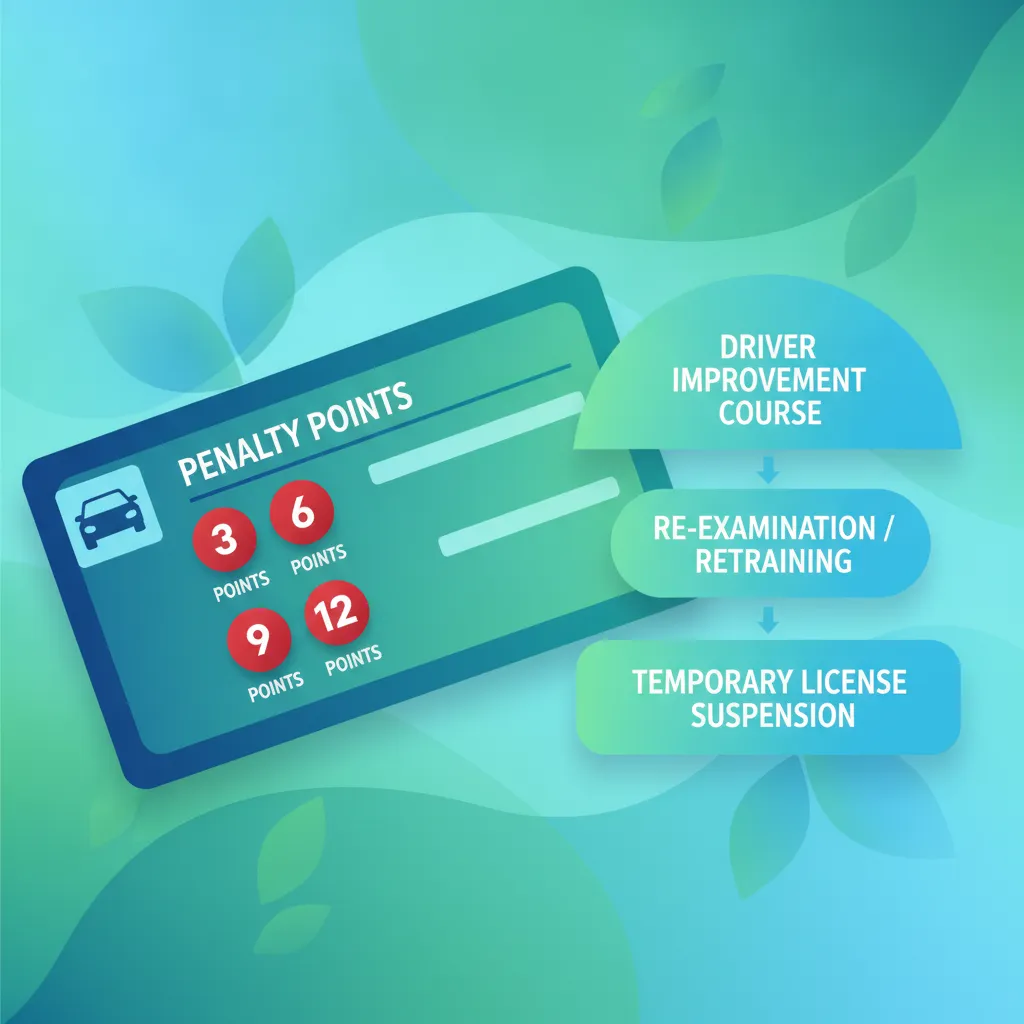
This lesson offers a clear explanation of the Austrian system of penalties for traffic offenses, including the demerit points system (Vormerksystem). It details which violations lead to points, the accumulation process, and the consequences at each stage, such as mandatory driver improvement courses and potential license suspension (Fahrverbot). Understanding this system provides a strong incentive for consistent compliance with all traffic regulations.

This lesson provides an overview of the legal framework for traffic enforcement in Austria. It explains the structure of fines for common offenses, the demerit point system that can lead to licence suspension, and the more severe consequences for major violations. Understanding these penalties reinforces the importance of consistent adherence to all traffic laws.

This lesson provides a clear overview of the legal penalties for traffic violations in Austria. It details the system of fines, demerit points, and the conditions that can lead to license suspension or revocation. Understanding these consequences reinforces the importance of lawful and responsible riding.

This lesson provides a comprehensive overview of a driver's legal responsibilities and the potential consequences of failing to adhere to traffic laws. Learners will explore the concept of liability in the event of an accident and the structure of the official penalty catalogue. The material covers the impact of fines, demerit points, and potential driving bans (Fahrverbot) on one's license, as well as the effects on insurance premiums.

This lesson consolidates the legal restrictions on the maximum dimensions and weight for different vehicle combinations in Austria. It covers how to read signs indicating these limits and the importance of compliance for route planning. Adhering to these regulations is essential for legal operation and avoiding fines.

This lesson details the general traffic rules applicable to heavy goods vehicles on Austrian roads, highlighting differences from passenger car regulations. It covers key topics such as right-of-way at intersections, specific rules for overtaking, maintaining proper lane discipline, and adhering to designated speed limits. Understanding these rules is critical for safe integration into mixed traffic.

This lesson focuses on the legal restrictions concerning a heavy vehicle's dimensions, including maximum height, width, and length. It teaches drivers how to interpret road signs and supplemental plates that indicate these limits. This knowledge is crucial for route planning, especially when navigating under bridges, through tunnels, and on restricted roads.

This lesson covers the specific weight restrictions that apply to sensitive infrastructure like Alpine passes and bridges throughout Austria. It explains how to identify these limits through road signage and incorporate them into route planning. Adhering to these restrictions is vital for preventing structural damage and ensuring safety in challenging terrain.
Explore the critical safety implications of overloading heavy vehicles in Austria, such as degraded braking performance, reduced vehicle stability, and increased risk of accidents. Learn how overloading impacts handling on roads and alpine passes.

This lesson explains the various factors that determine the total stopping distance of a heavy vehicle. It covers the effects of speed, vehicle weight, road conditions, and driver reaction time. Understanding these variables helps drivers to maintain a safe following distance and anticipate how much space is needed to stop.

This lesson details the regulations for heavy goods vehicles on Austria's high-speed road network. It covers the specific speed limits, rules on lane usage (e.g., when overtaking is permitted), and procedures for entering and exiting the motorway. Adherence to these rules is crucial for safety in a fast-paced environment.
This lesson explains the system of penalties and enforcement for heavy vehicle operations in Austria. It covers the fines and penalty points associated with common traffic violations, such as overloading or insecure loads. Learners will understand the role of authorities in conducting roadside checks and inspections to ensure regulatory compliance.

This lesson outlines the standardized procedure for handling a vehicle breakdown safely. It covers pulling over to a safe location, activating hazard lights, deploying the warning triangle, and wearing a high-visibility vest. It also explains when and how to contact roadside assistance or emergency services.
This lesson covers the specific weight restrictions that apply to sensitive infrastructure like Alpine passes and bridges throughout Austria. It explains how to identify these limits through road signage and incorporate them into route planning. Adhering to these restrictions is vital for preventing structural damage and ensuring safety in challenging terrain.

This lesson explains the critical relationship between load distribution, the vehicle's centre of gravity, and its stability. It details how incorrect placement of cargo can negatively affect handling, increase the risk of rollovers, and reduce braking efficiency. Achieving a balanced load is a key component of safe heavy vehicle operation.
This lesson focuses on the legal restrictions concerning a heavy vehicle's dimensions, including maximum height, width, and length. It teaches drivers how to interpret road signs and supplemental plates that indicate these limits. This knowledge is crucial for route planning, especially when navigating under bridges, through tunnels, and on restricted roads.
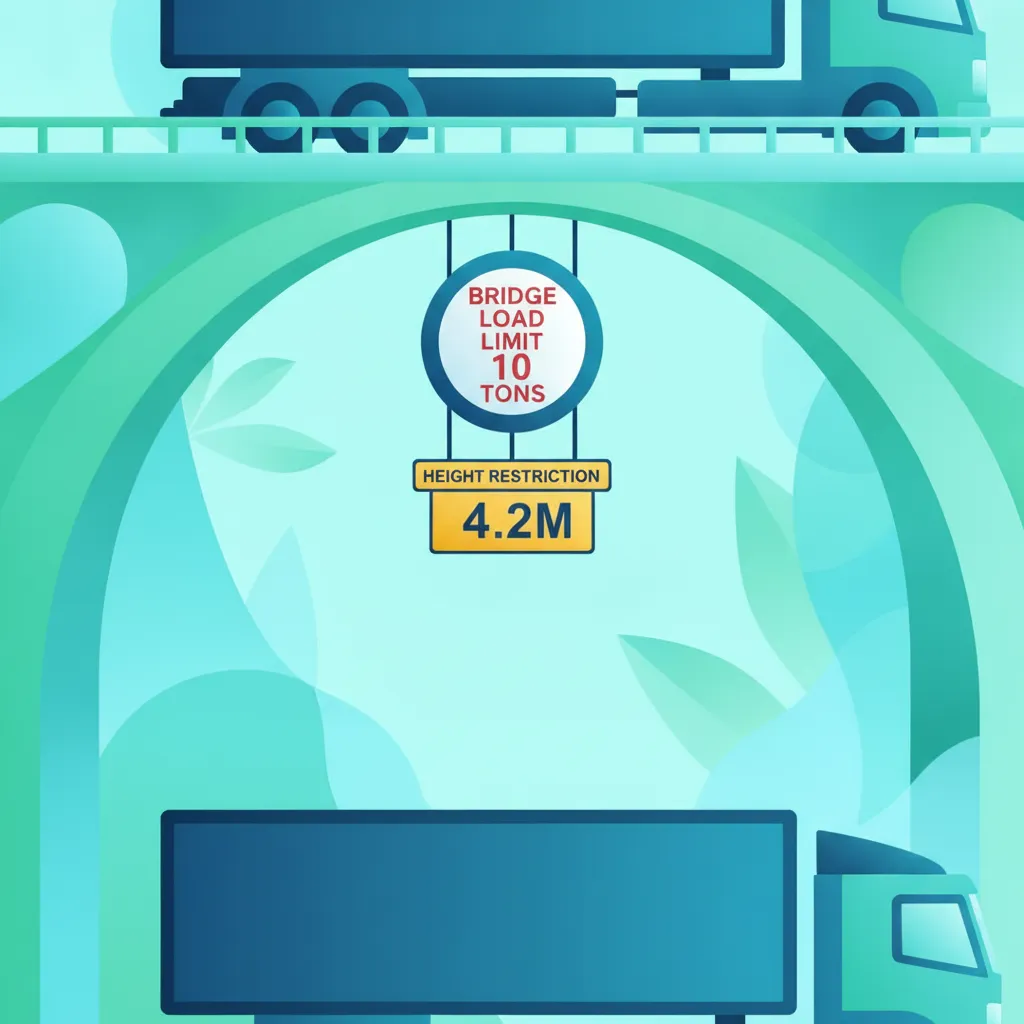
This lesson focuses on the critical importance of observing posted weight and height limits for bridges and other structures. It explains how to read the relevant signage and stresses the driver's responsibility to know their vehicle's exact height and weight. Ignoring these limits can lead to catastrophic structural failure and severe legal consequences.
This lesson details the general traffic rules applicable to heavy goods vehicles on Austrian roads, highlighting differences from passenger car regulations. It covers key topics such as right-of-way at intersections, specific rules for overtaking, maintaining proper lane discipline, and adhering to designated speed limits. Understanding these rules is critical for safe integration into mixed traffic.

This lesson explains the severe consequences of a load shift while the vehicle is in motion. It details how sudden movement of cargo can drastically alter the vehicle's stability, making it difficult to steer or brake effectively. This can lead to a loss of control or a rollover, highlighting the importance of proper load securing.
Find clear answers to common questions learners have about Legal Consequences of Overloading. Learn how the lesson is structured, which driving theory objectives it supports, and how it fits into the overall learning path of units and curriculum progression in Austria. These explanations help you understand key concepts, lesson flow, and exam focused study goals.
Overloading often results in significant administrative fines for both the driver and the vehicle owner. In severe cases, the vehicle may be prohibited from further travel until the excess load is removed, and recurring violations can lead to points against your licence or increased scrutiny by authorities.
Yes. Even slight overloading increases the kinetic energy the braking system must dissipate. This leads to increased stopping distances, risk of brake fade on alpine descents, and potential mechanical failure, which is a key focus of Austrian heavy vehicle safety theory.
In Austrian law, both the driver and the transport operator share responsibility. As a professional driver, it is your duty to verify the weight before departure; you are legally expected to prevent the operation of a vehicle that exceeds its defined mass limits.
Overloading raises the centre of gravity and exceeds the design specifications of the suspension and tyres. This makes the vehicle prone to tipping in roundabouts or sharp bends, significantly increasing the risk of rollovers.
Refine your study plan by searching for specific Austrian driving theory practice sets. Pinpoint questions related to particular road rules, signs, or challenge levels, and begin practicing immediately to reinforce your knowledge and excel in your official exam with confidence. Get started with focused revision today.